Ingredients 4 Person(s)

Save this for later 📌
Pin this article to your Pinterest board so the full list is one tap away when you need it.
Save on PinterestDirections
Step 1: Choose the right asparagus
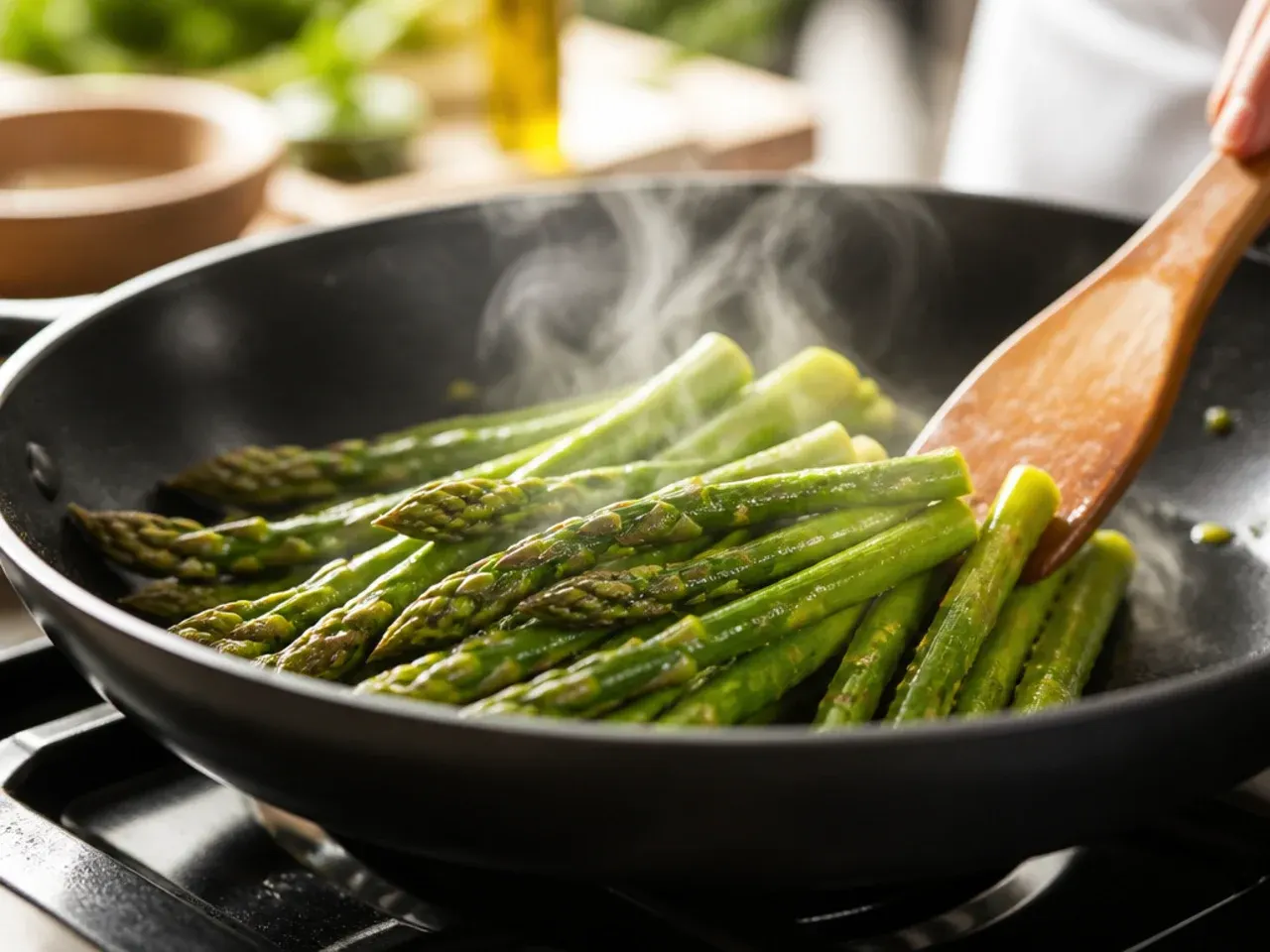
Pick spears with tight, dry tips and stalks that are firm and squeak slightly when rubbed together; avoid any with wrinkled skin or wet, slimy tips. Choose a mix of thicker spears (for shaving into ribbons) and medium spears (for blanching), about 700 g (1½ lb) total.
Step 2: Trim the woody ends
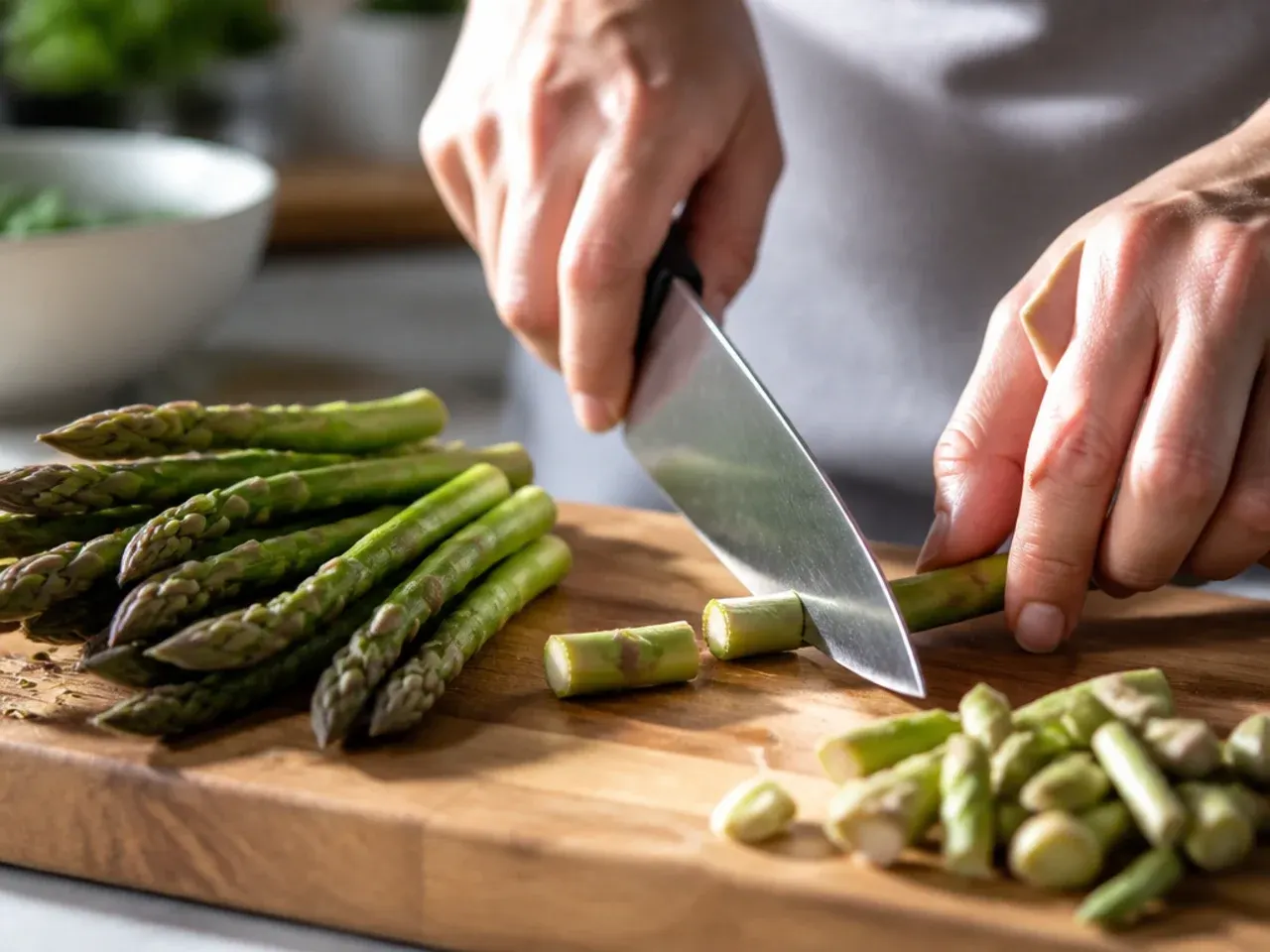
Hold each spear near the base and bend it gently; it will snap naturally where the tough, fibrous part begins. Alternatively, line the spears up and trim about 2-3 cm (1 inch) off the bottom with a knife, then discard the ends or save them for stock.
Step 3: Separate spears for shaving
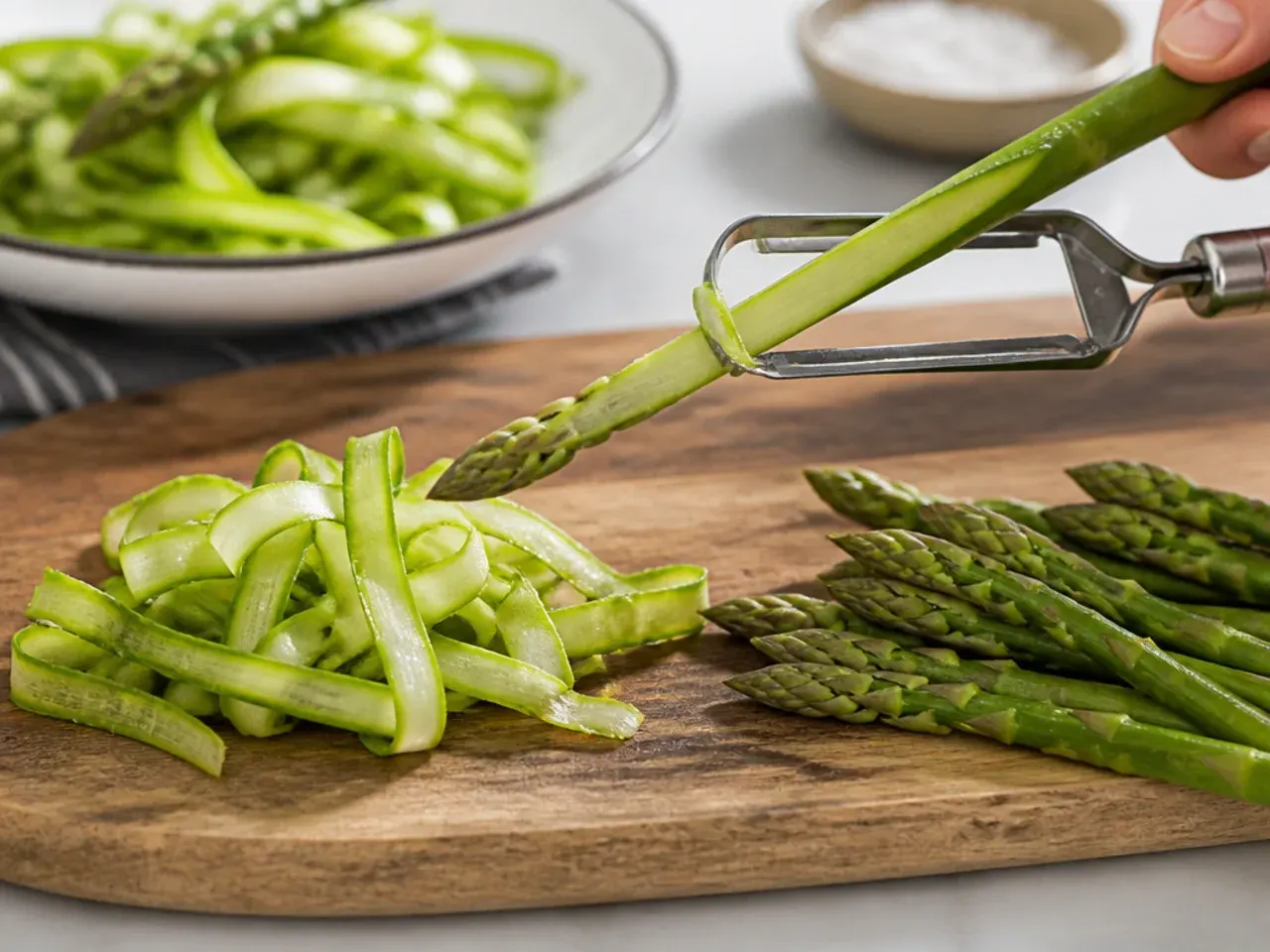
Set aside the 6-8 thickest, straightest spears for shaving into ribbons later; these give the salad its signature texture. Keep the remaining, thinner spears whole for blanching and slicing into bite-sized pieces.
Step 4: Rinse and dry the spears
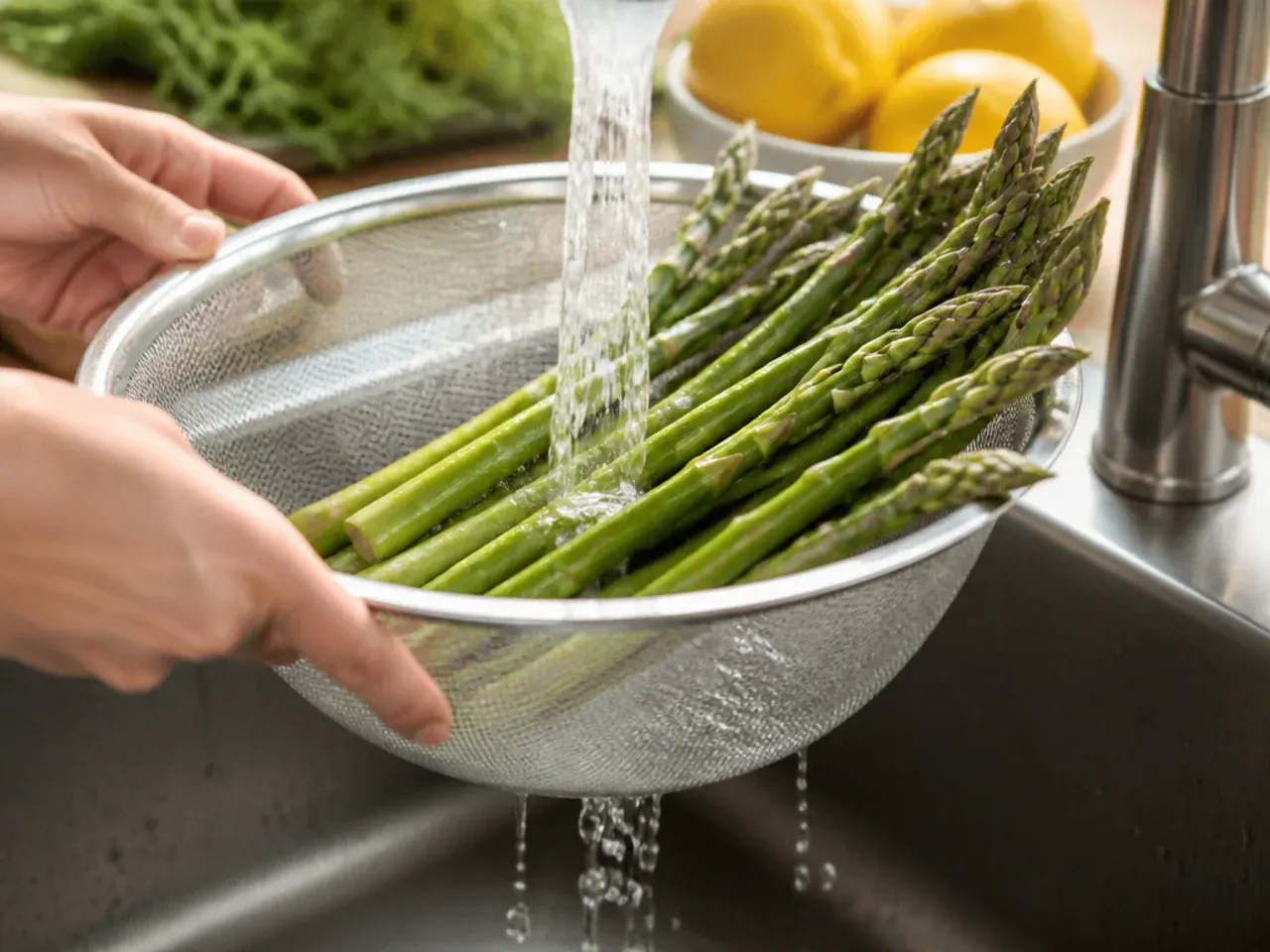
Rinse all the asparagus under cold running water to remove any grit, especially near the tips where sand collects. Pat dry thoroughly with a clean tea towel, since wet spears spit in hot oil and dilute vinaigrette later.
Step 5: Bring a pot of water to a rolling boil
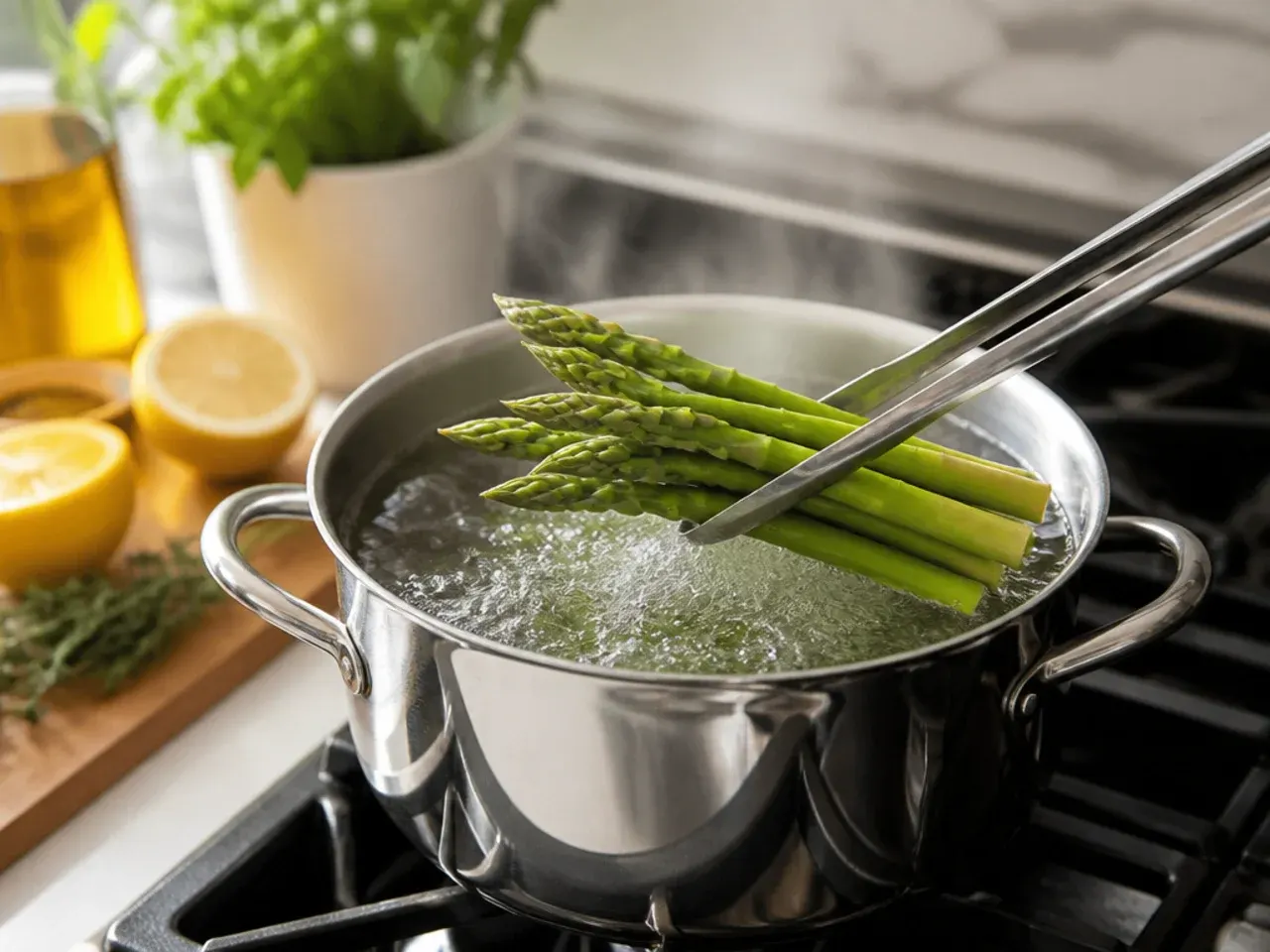
Fill a large pot two-thirds full with water and bring it to a full rolling boil over high heat. Salt it generously, about 17 g (1 tablespoon) per 2 litres (2 quarts), so the asparagus is seasoned from the inside out.
Step 6: Prepare an ice bath
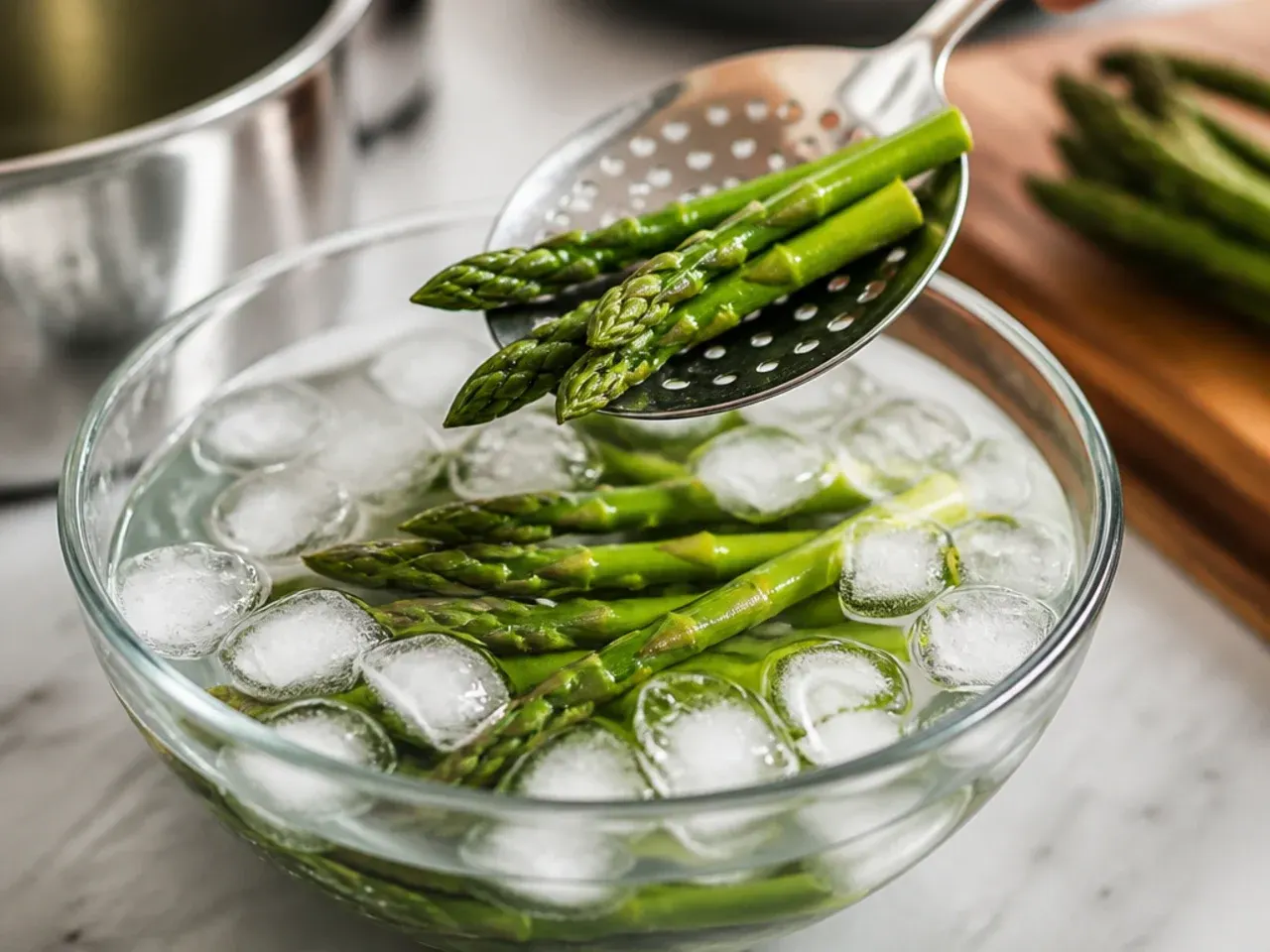
While the water heats, fill a large bowl with cold water and a generous handful of ice cubes. Set it right next to the stove so you can move quickly once the asparagus is cooked, since every extra second in hot water dulls the colour.
Step 7: Blanch the asparagus spears
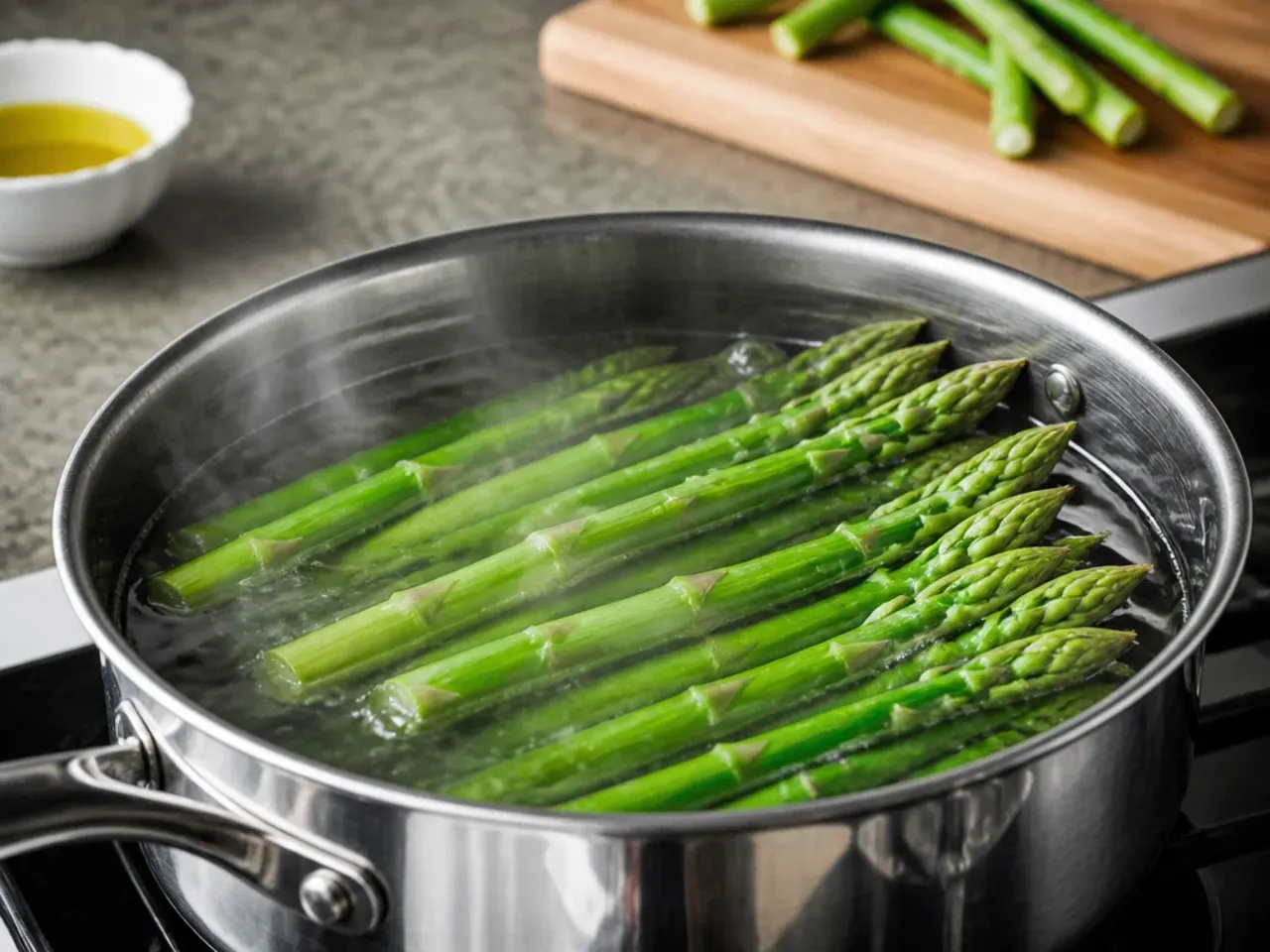
Lower the medium spears (not the reserved shaving spears) into the boiling water and cook for 90 seconds to 2 minutes, until bright green and just bendable but still crisp at the centre. Thicker spears may need up to 2½ minutes; test one by piercing the thickest part with a knife tip.
Step 8: Shock the spears in the ice bath
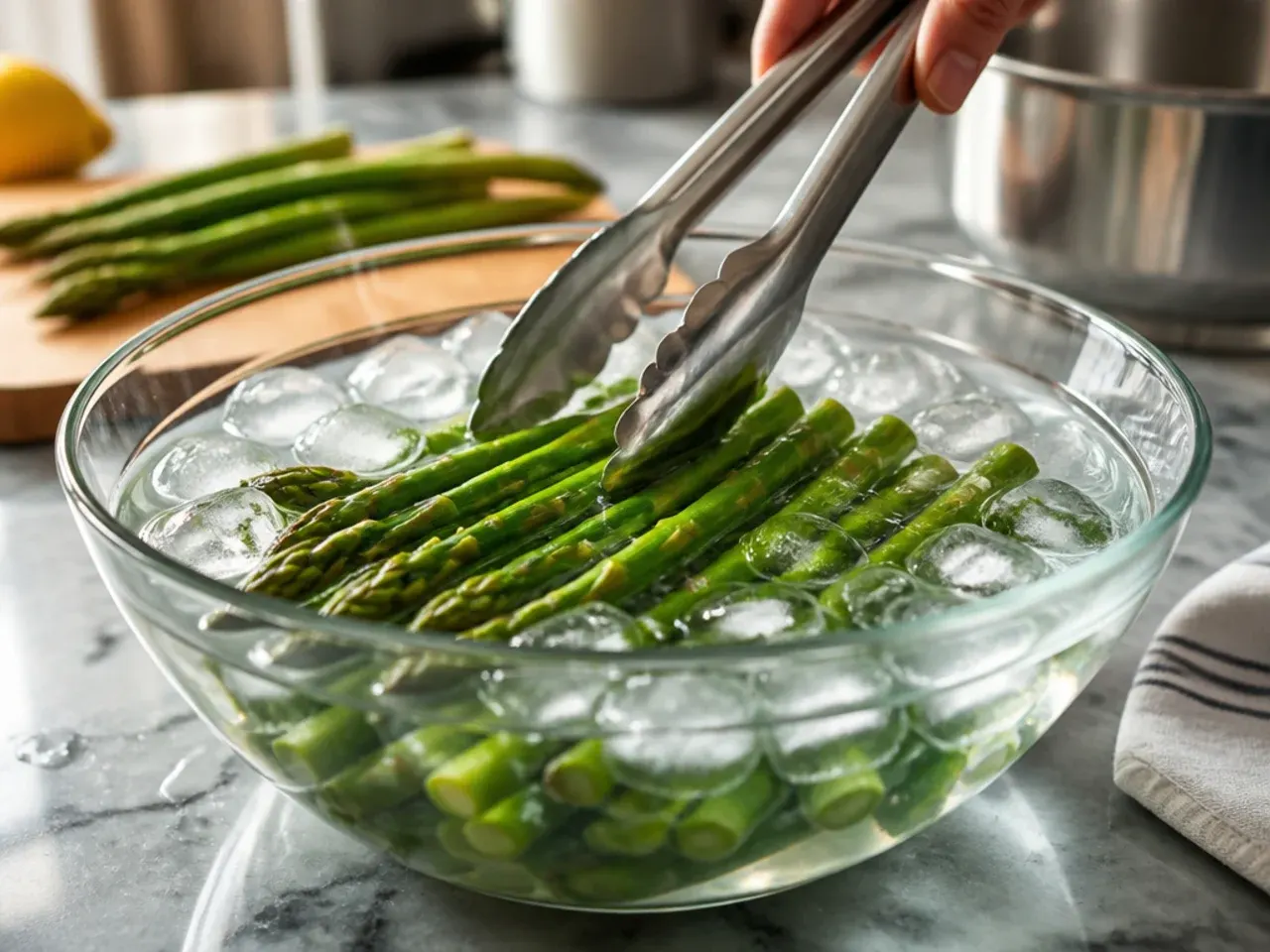
Using tongs, transfer the spears straight from the boiling water into the ice bath. Submerge fully and leave for 1-2 minutes, until completely cold; this locks in the bright green colour and stops the cooking instantly.
Step 9: Drain and dry the blanched spears
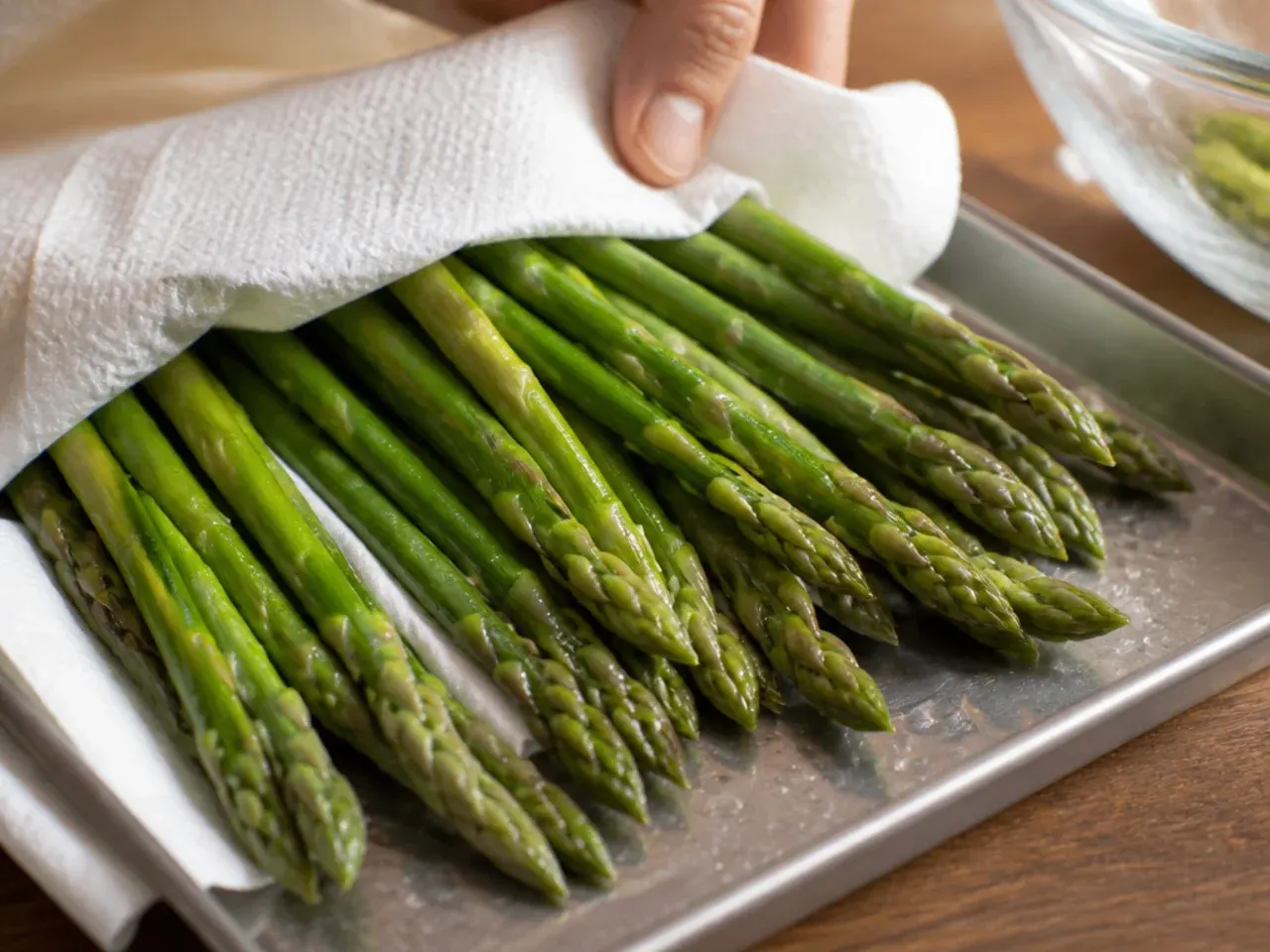
Lift the spears out of the ice bath and drain in a colander. Spread them on a clean tea towel or kitchen paper and pat completely dry, since any lingering water will water down the vinaigrette.
Step 10: Slice the blanched spears
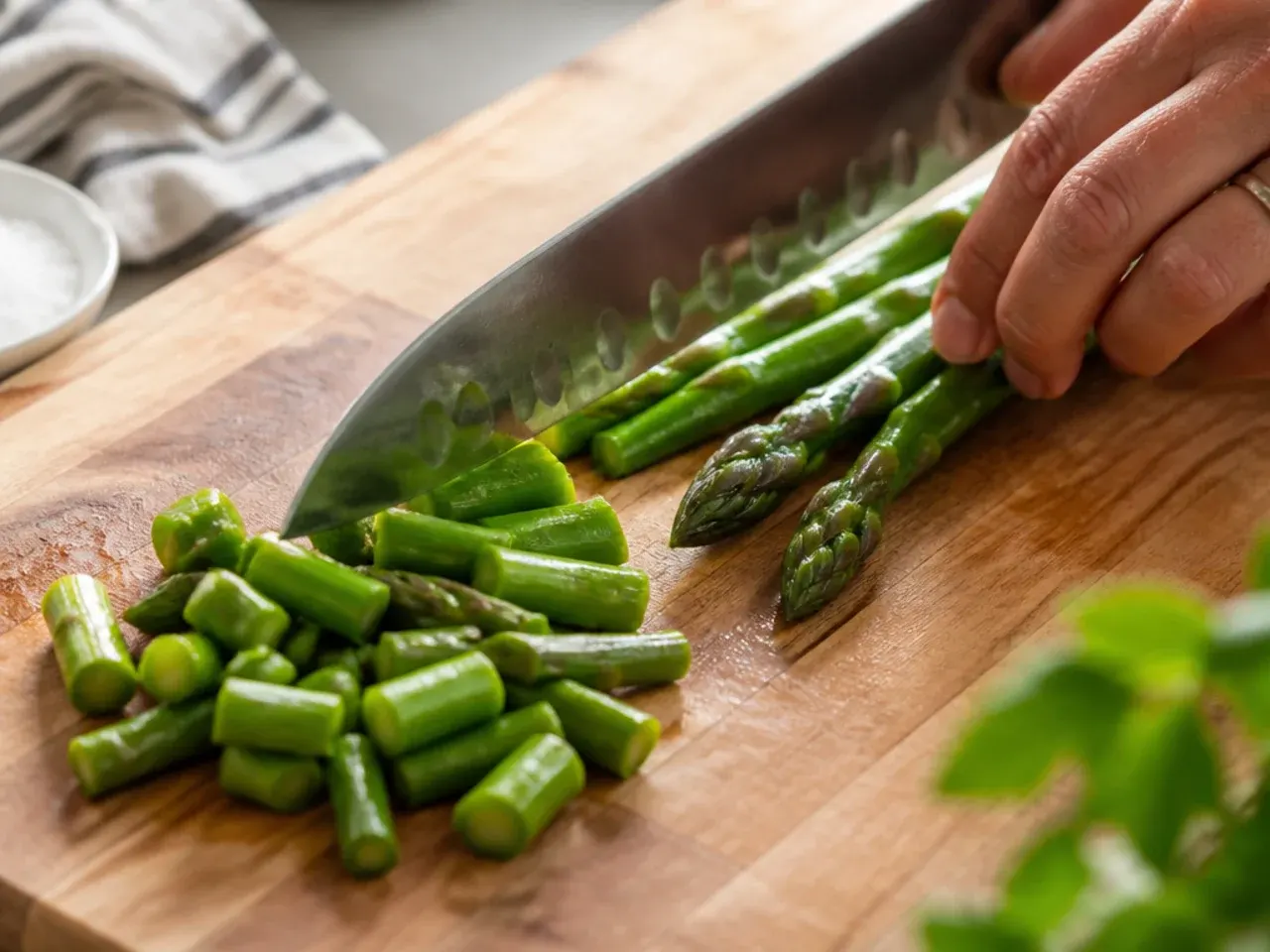
Cut the cooled, dried spears on the diagonal into 4-5 cm (1½-2 inch) pieces, keeping the tips whole for presentation. Set the pieces aside in a large mixing bowl.
Step 11: Shave the reserved spears into ribbons
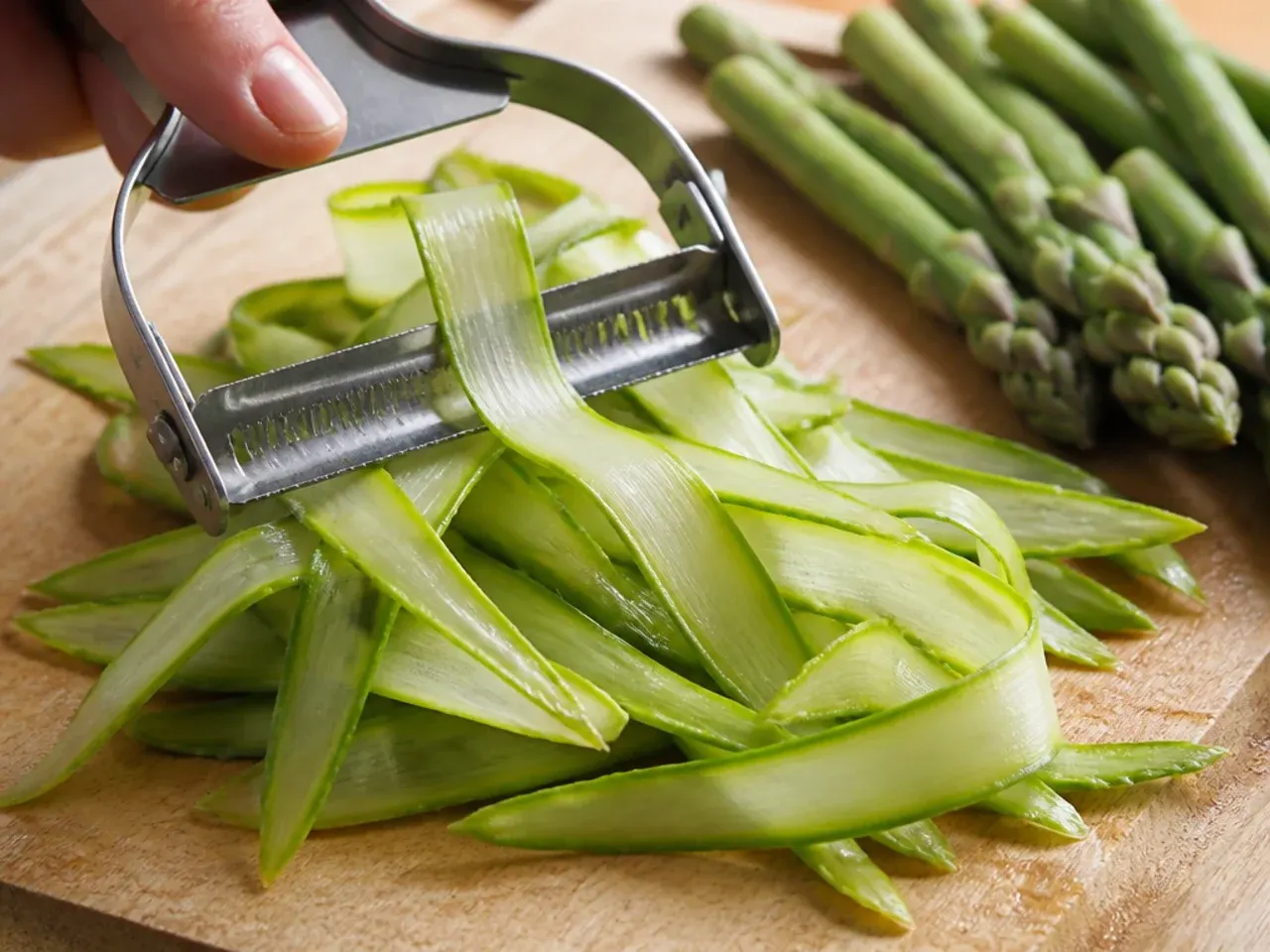
Lay the reserved raw, thick spears flat on a board and run a vegetable peeler firmly along the length of each one, from tip to base, to create long, thin ribbons. Work over a plate and stop shaving once you reach the woody centre core; discard the core.
Step 12: Thinly slice the shallot
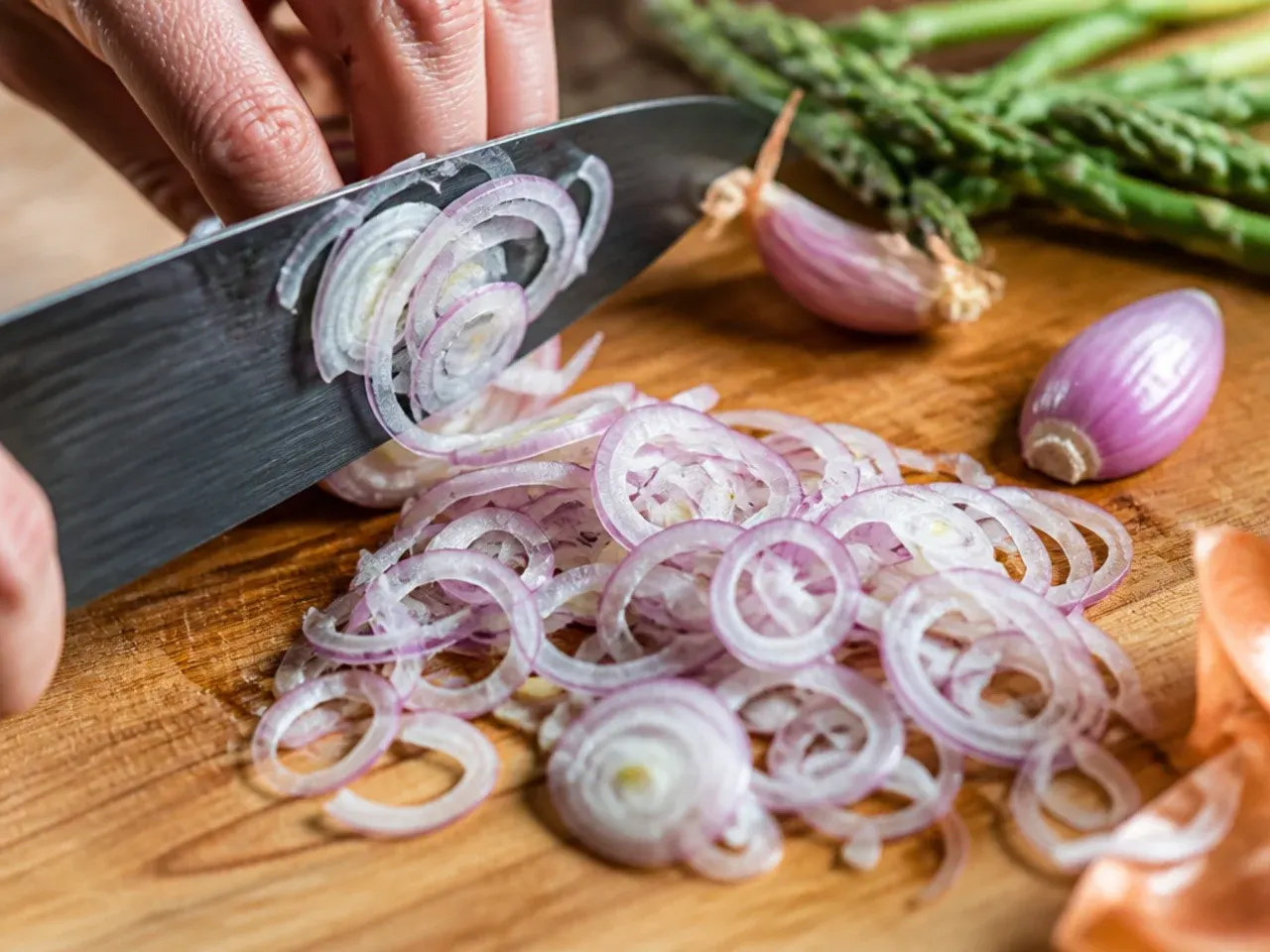
Peel the shallot and slice it into paper-thin rings using a sharp knife or a mandoline set to its thinnest setting. Aim for slices so fine they're almost translucent, so they soften rather than overpower the salad.
Step 13: Soak the shallot in cold water
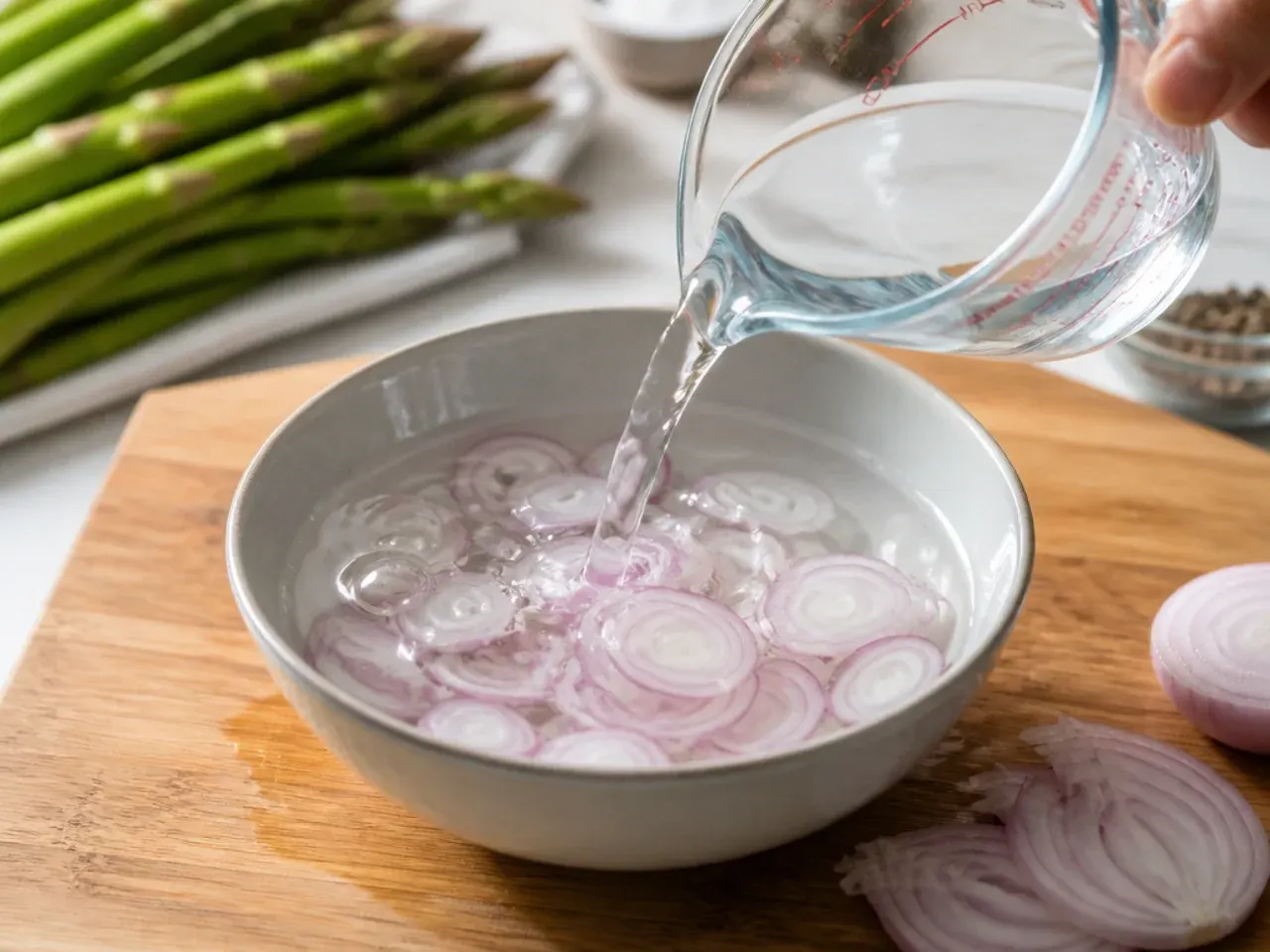
Place the sliced shallot in a small bowl of cold water and let it sit for 5-10 minutes. This mellows the sharp, raw bite and keeps the shallot from dominating every forkful.
Step 14: Thinly slice the radishes
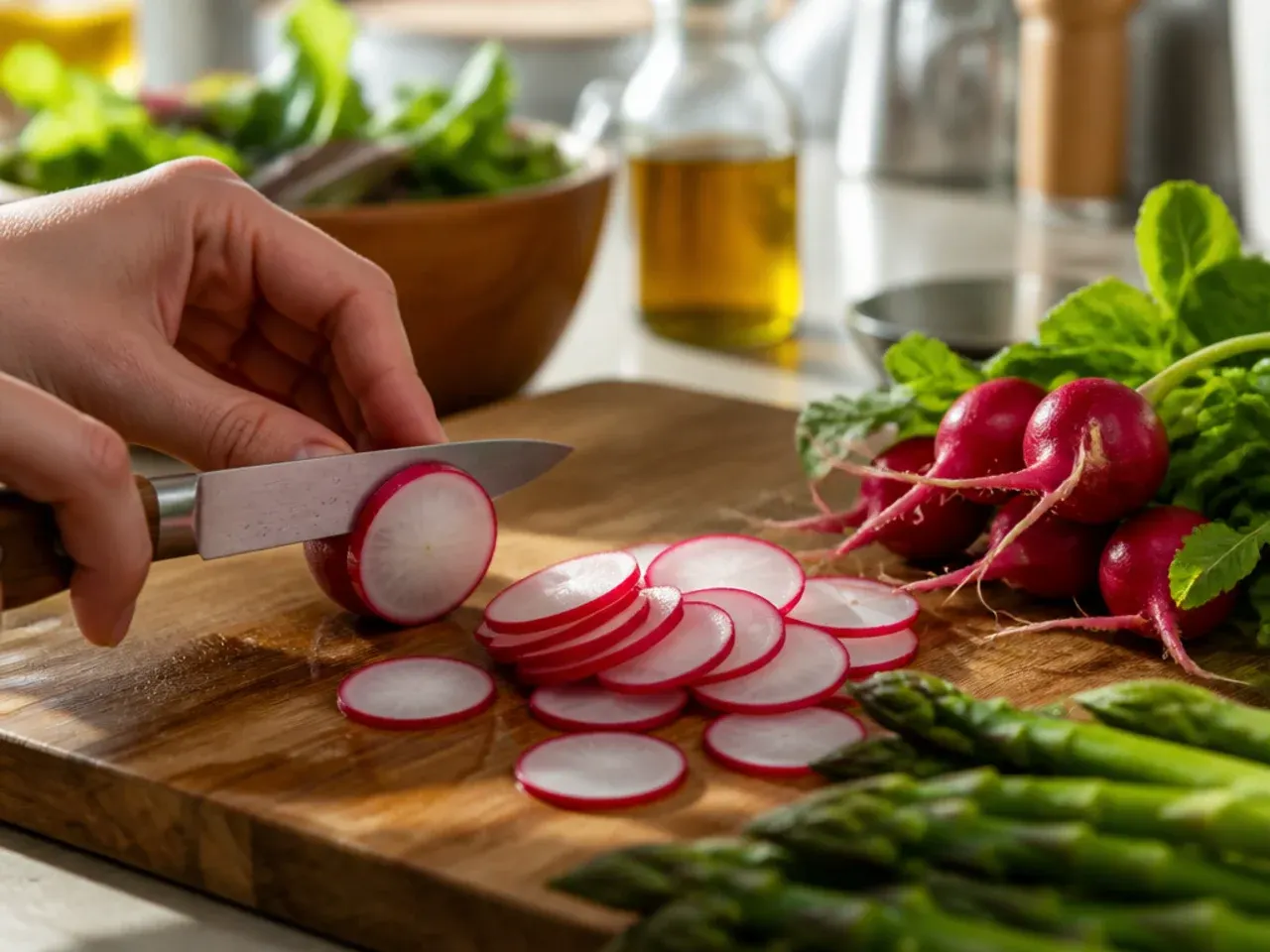
Top and tail the radishes, then slice them into thin rounds, about 2-3 mm thick, using a sharp knife or mandoline. Thin slices stay crisp and pick up the vinaigrette better than thick chunks.
Step 15: Toast the pine nuts
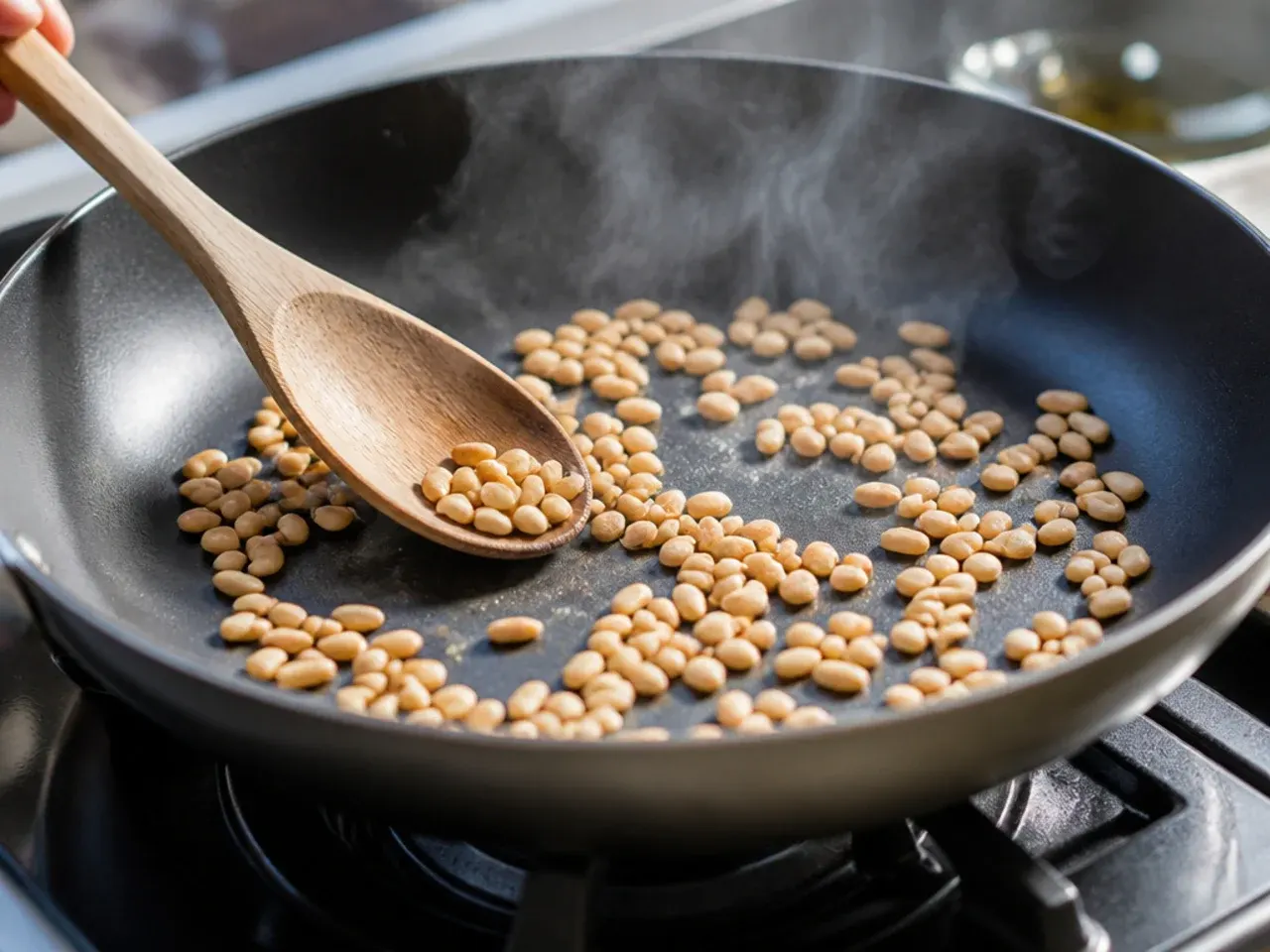
Scatter 30 g (¼ cup) pine nuts in a dry frying pan over medium-low heat with no oil. Shake the pan frequently and toast for 3-4 minutes, until golden and fragrant; watch closely, as they can burn within seconds once they start to colour.
Step 16: Cool the toasted pine nuts
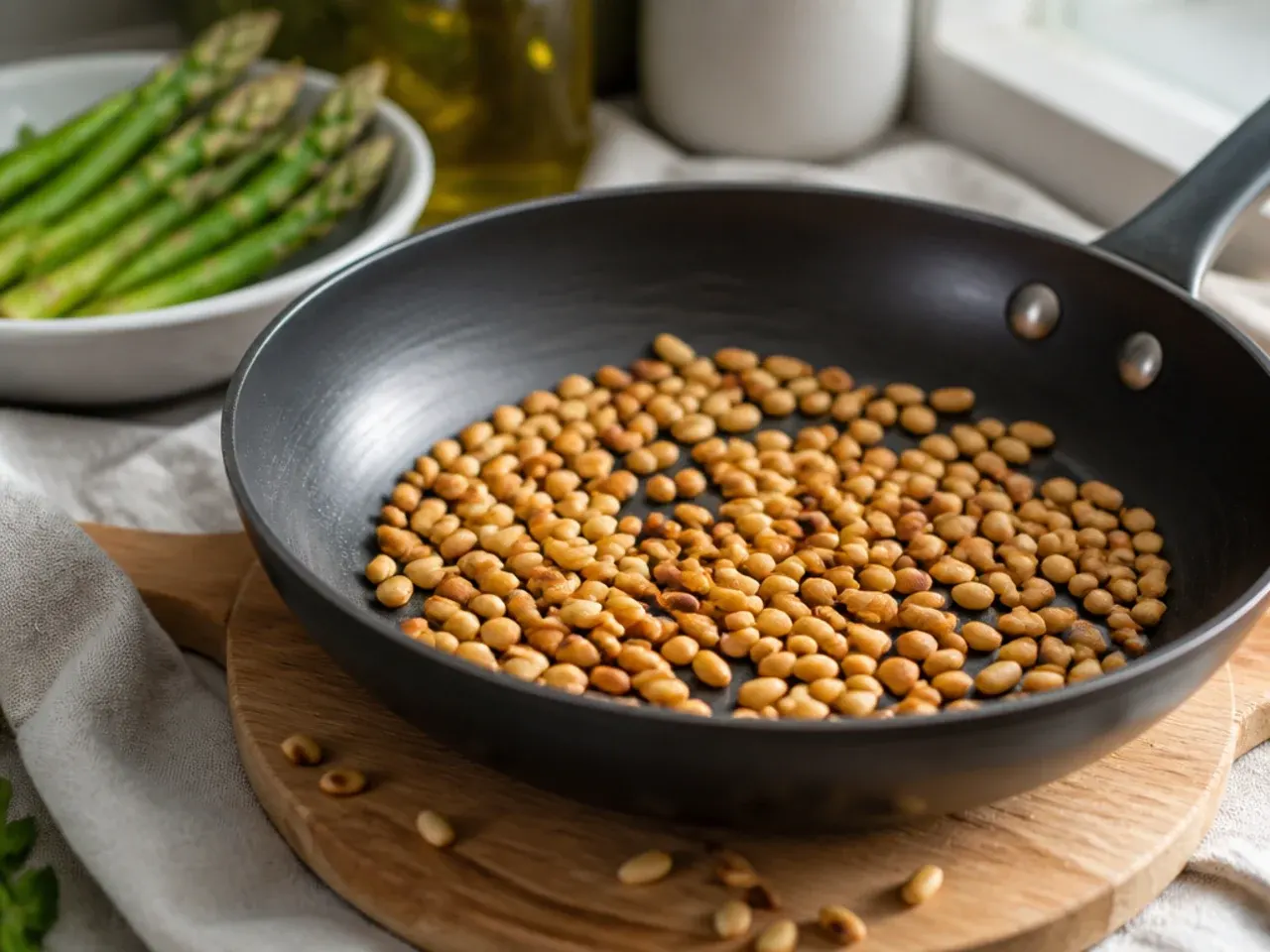
Immediately tip the toasted pine nuts onto a plate to stop them cooking further in residual pan heat. Let them cool completely, about 5 minutes, so they stay crunchy when added to the salad.
Step 17: Zest the lemon
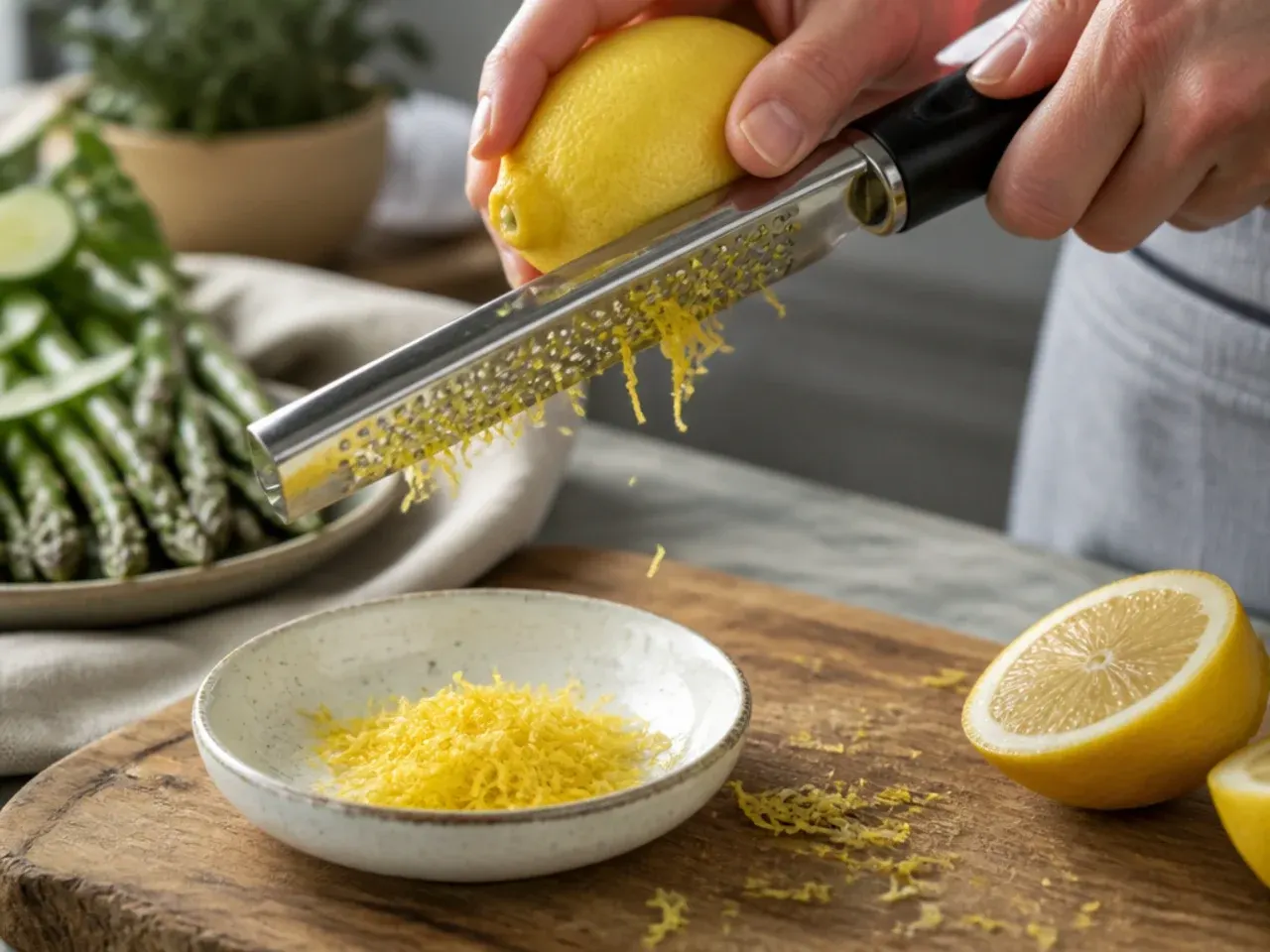
Wash the lemon and use a microplane to remove just the yellow outer zest, avoiding the bitter white pith underneath. You'll need about 1 teaspoon of zest for the vinaigrette.
Step 18: Juice the lemon
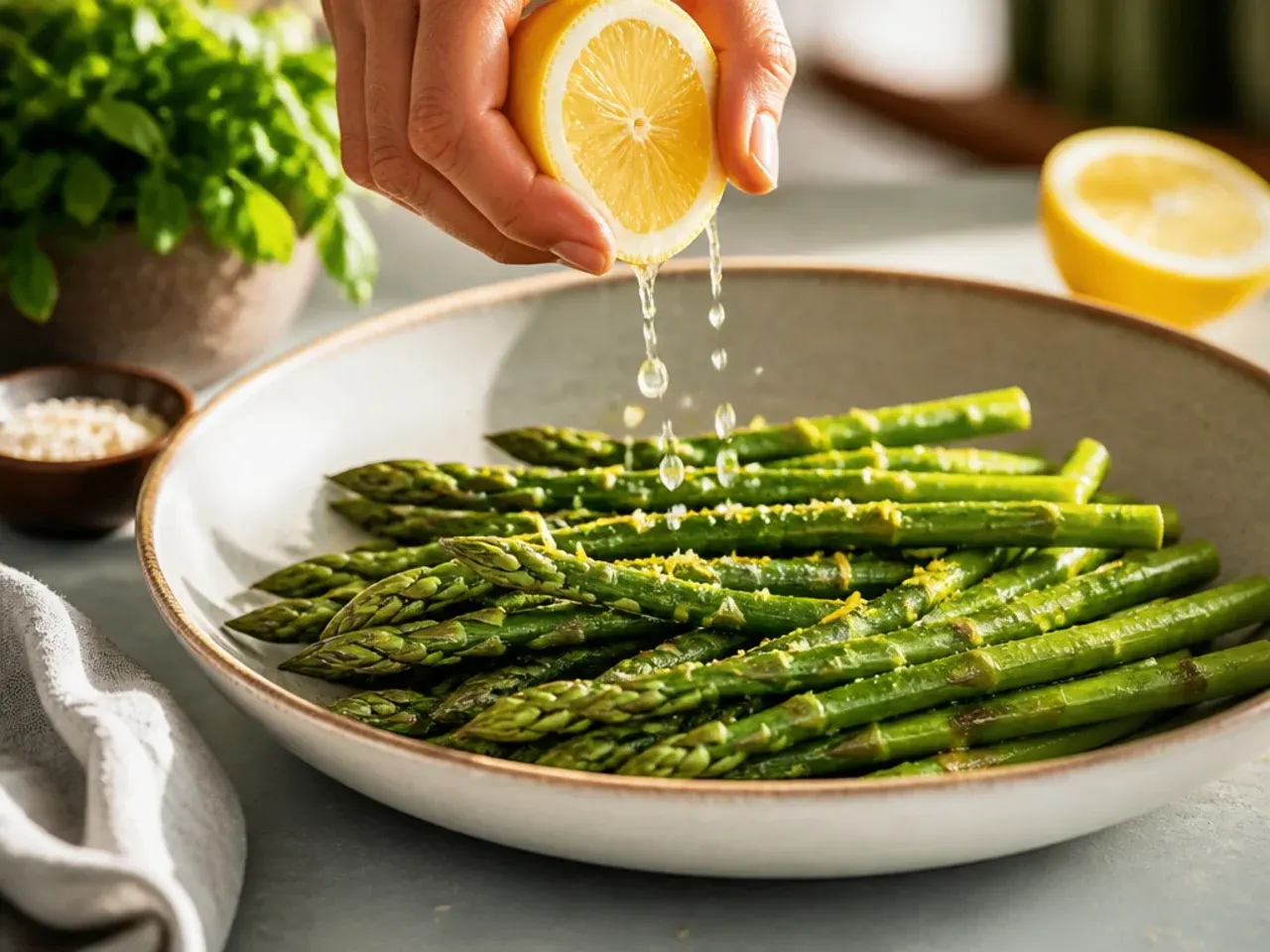
Roll the zested lemon firmly on the counter to loosen the juice, then halve it and squeeze through a sieve to catch any pips. You should get about 45 ml (3 tablespoons) of juice; add a second lemon if it falls short.
Step 19: Whisk the vinaigrette base
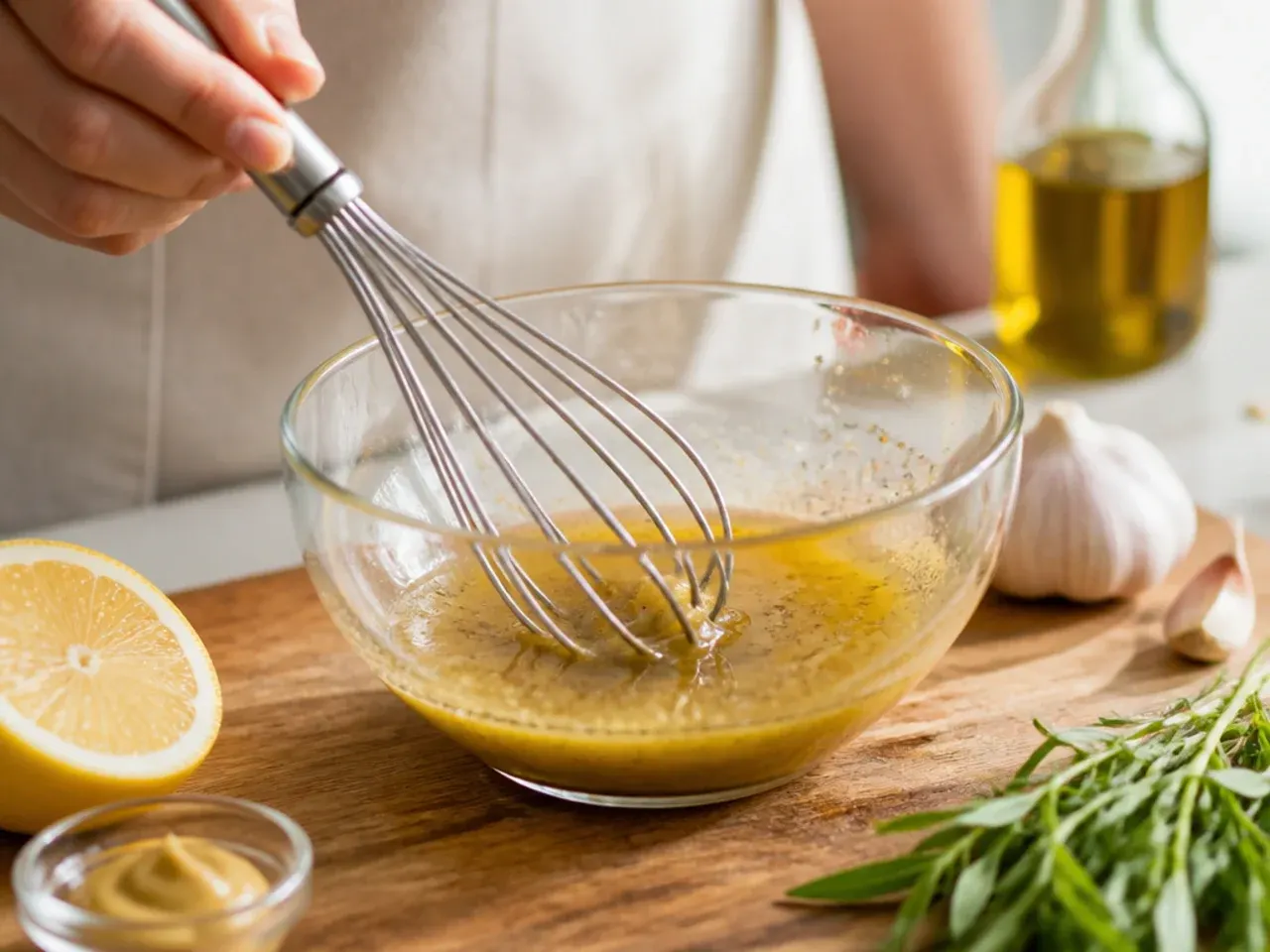
In a small bowl, whisk together the lemon juice, lemon zest, Dijon mustard, honey and grated garlic until smooth and combined. The mustard and honey help the dressing emulsify and cling to the asparagus rather than pooling at the bottom of the bowl.
Step 20: Emulsify with olive oil
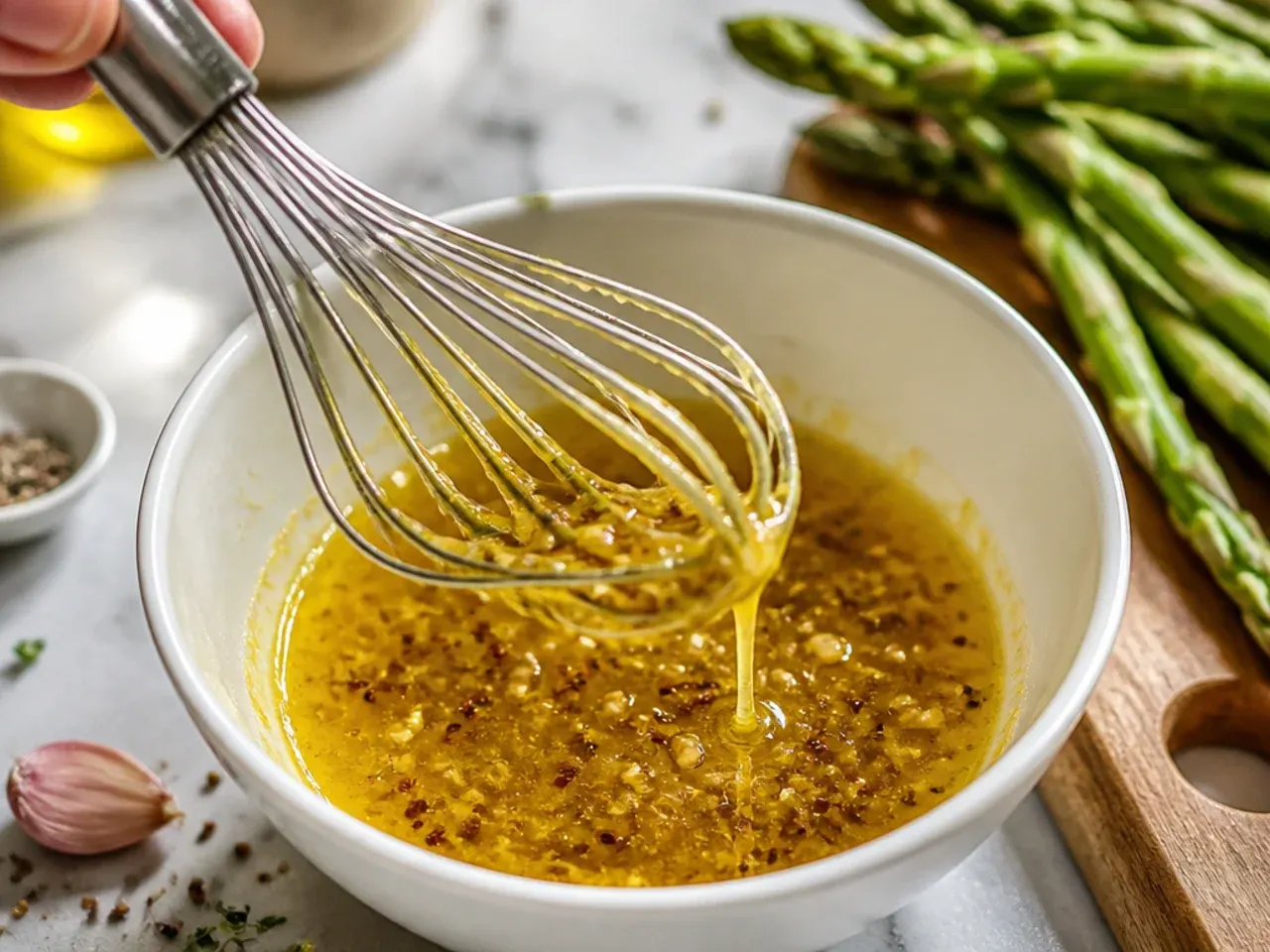
While whisking constantly, drizzle in 60 ml (¼ cup) olive oil in a slow, steady stream. Keep whisking until the vinaigrette turns pale, thick and glossy, a sign it has fully emulsified rather than separated.
Step 21: Season and taste the vinaigrette
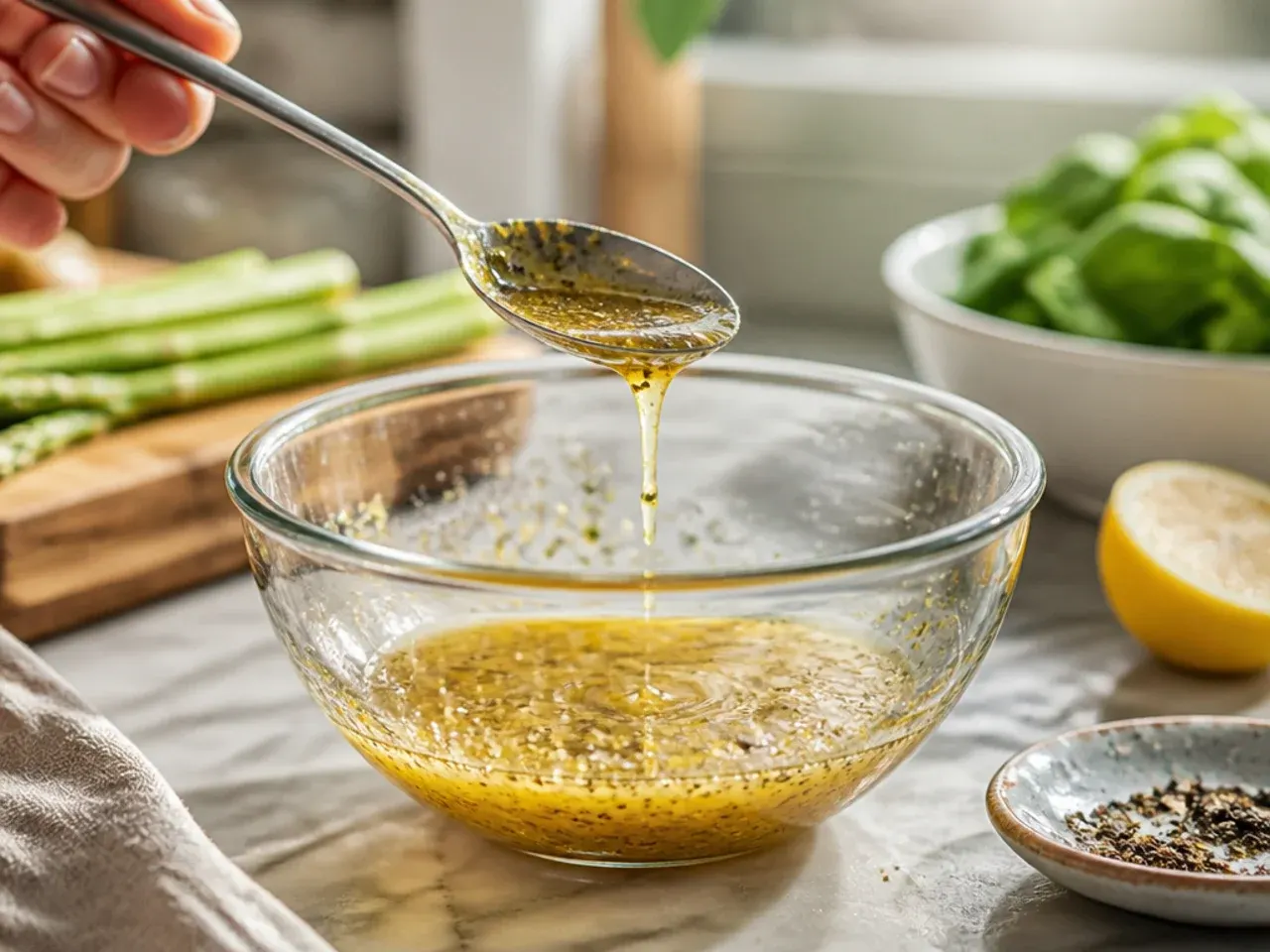
Whisk in ½ teaspoon of the sea salt and a good grind of black pepper, then taste on a spare asparagus ribbon. Adjust with more lemon juice for brightness or a touch more honey if it tastes sharp.
Step 22: Drain and dry the shallot
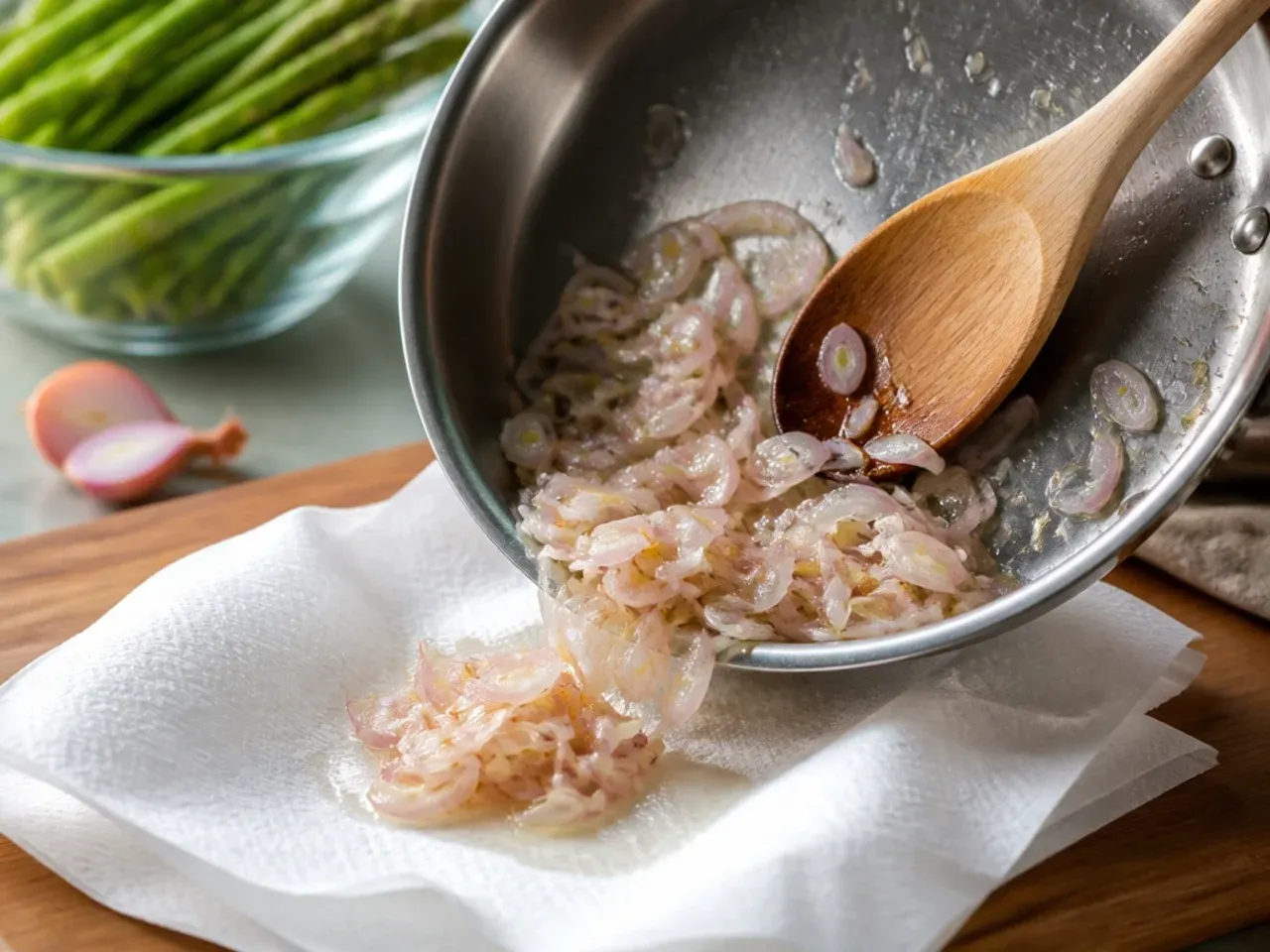
Drain the soaked shallot in a small sieve and pat it dry with kitchen paper. Wet shallot will thin out the vinaigrette once tossed through the salad, so make sure it's properly dried.
Step 23: Combine the asparagus in a large bowl
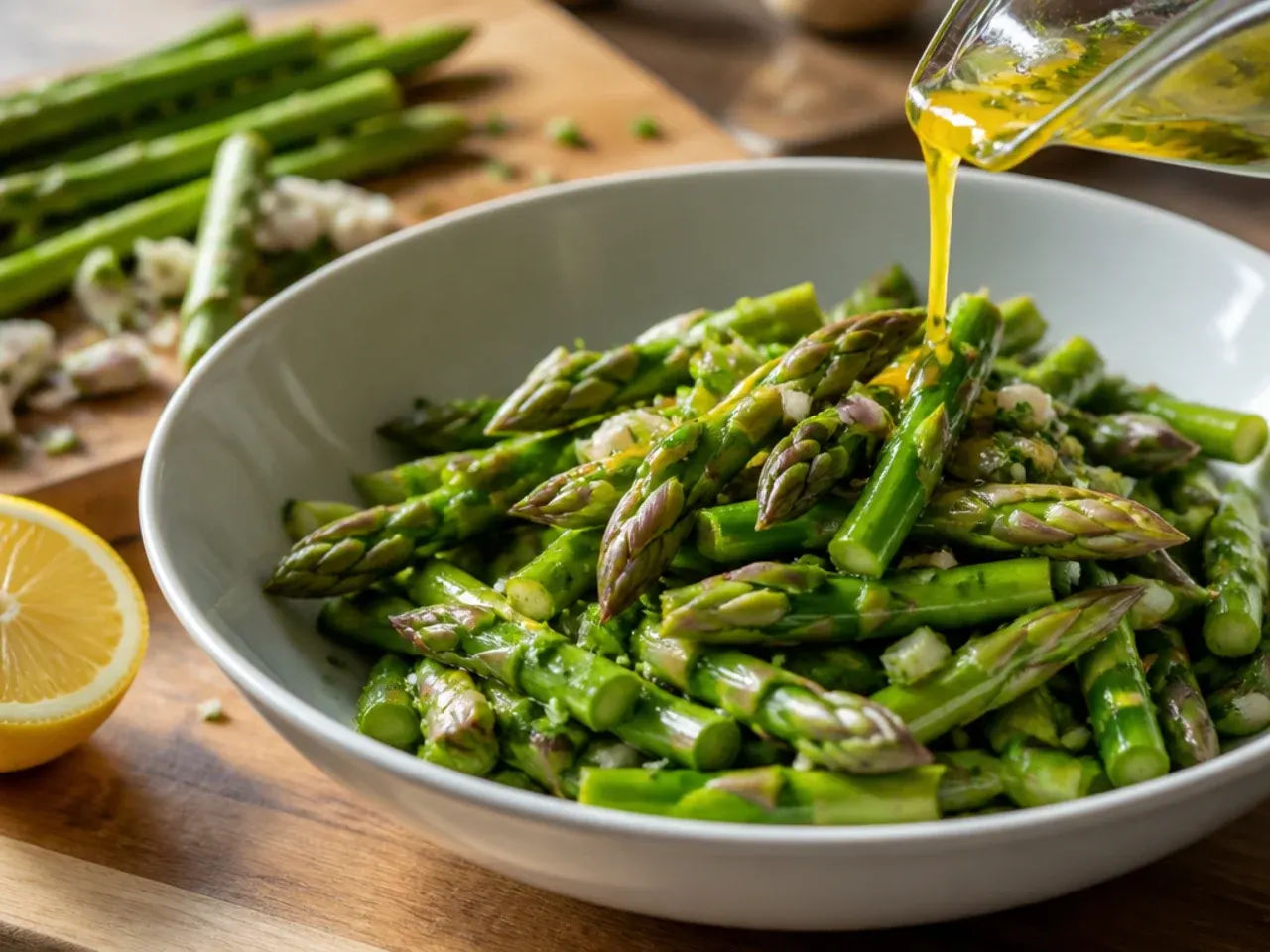
Add the sliced blanched asparagus pieces and the shaved raw ribbons to a large, wide salad bowl. Toss them gently with your hands to distribute the tips and ribbons evenly.
Step 24: Add the radish and shallot
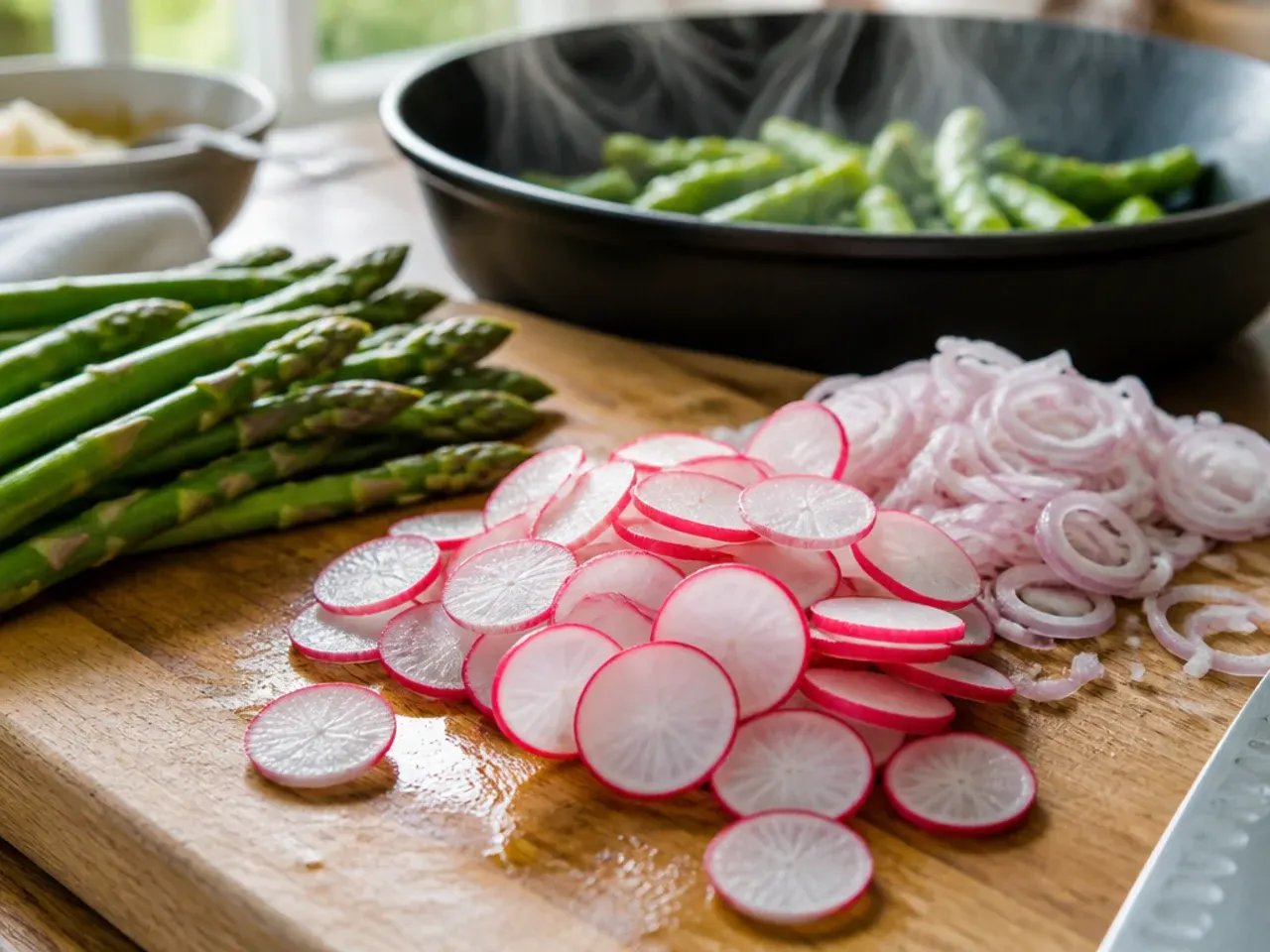
Scatter the sliced radish and drained shallot over the asparagus. Toss lightly again so the pink and white slices are spread throughout rather than clumped in one spot.
Step 25: Dress the salad
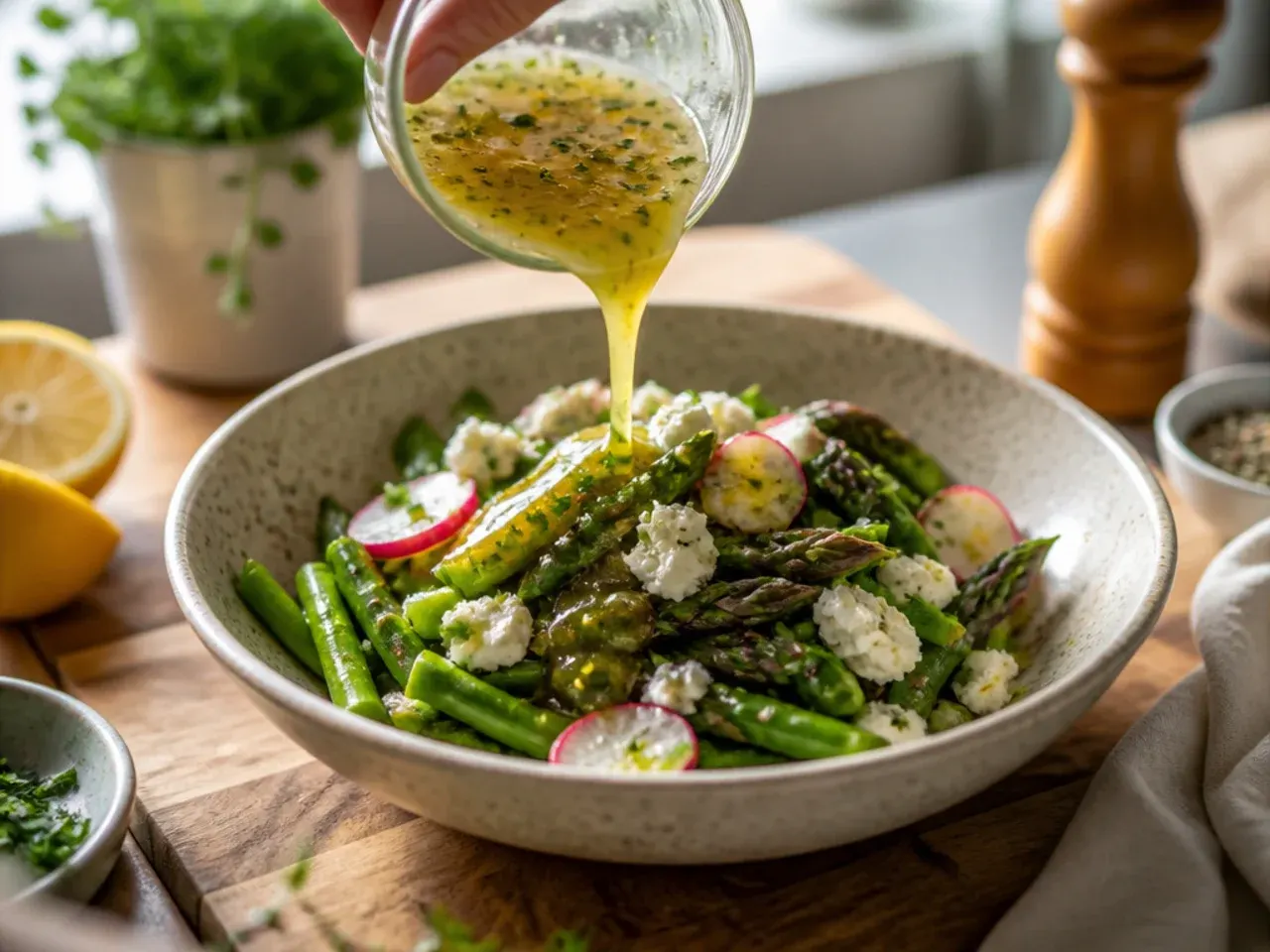
Drizzle about two-thirds of the vinaigrette over the asparagus mixture. Toss gently with tongs or your hands for 30 seconds, until every piece is lightly coated and glossy, being careful not to bruise the ribbons.
Step 26: Taste and adjust seasoning
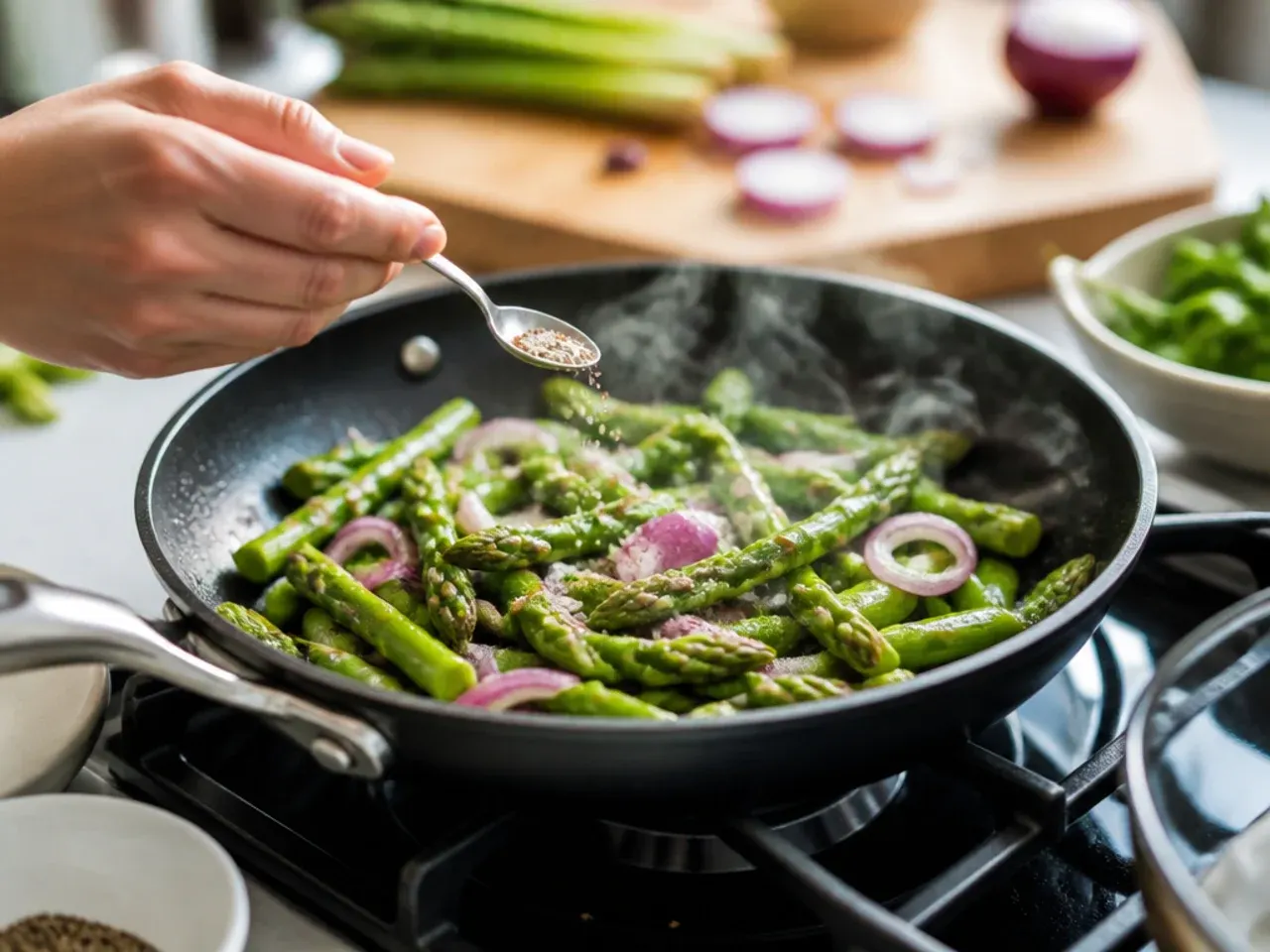
Taste a forkful and add a pinch more salt, pepper or lemon juice if needed; asparagus can handle more acid than you'd expect. Add extra dressing now only if the salad still looks dry in patches.
Step 27: Arrange on a serving platter
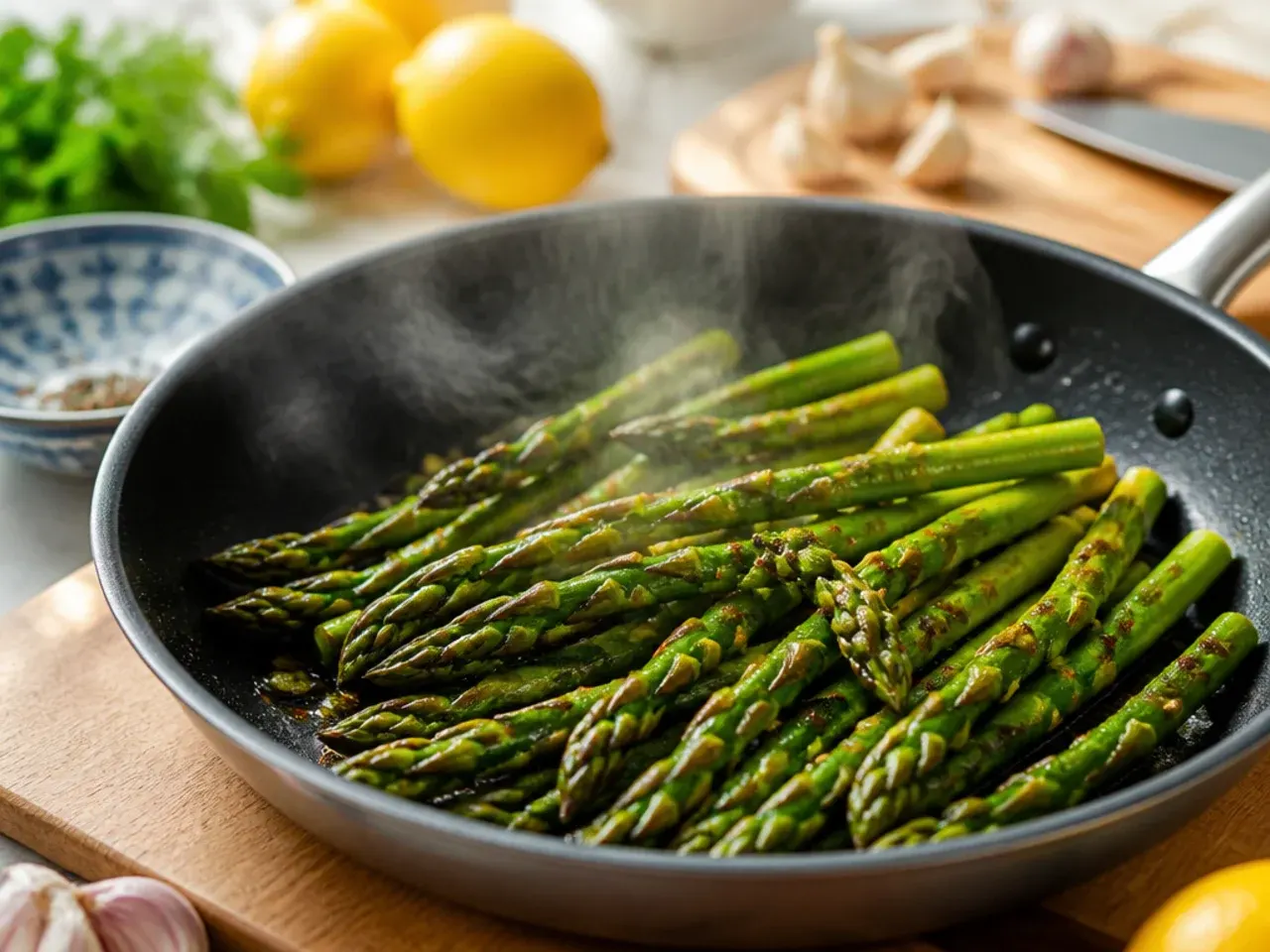
Transfer the dressed asparagus to a wide, shallow serving platter rather than a deep bowl, spreading it out so the ribbons and tips are visible. This also helps the salad stay crisp instead of steaming under its own weight.
Step 28: Add the feta
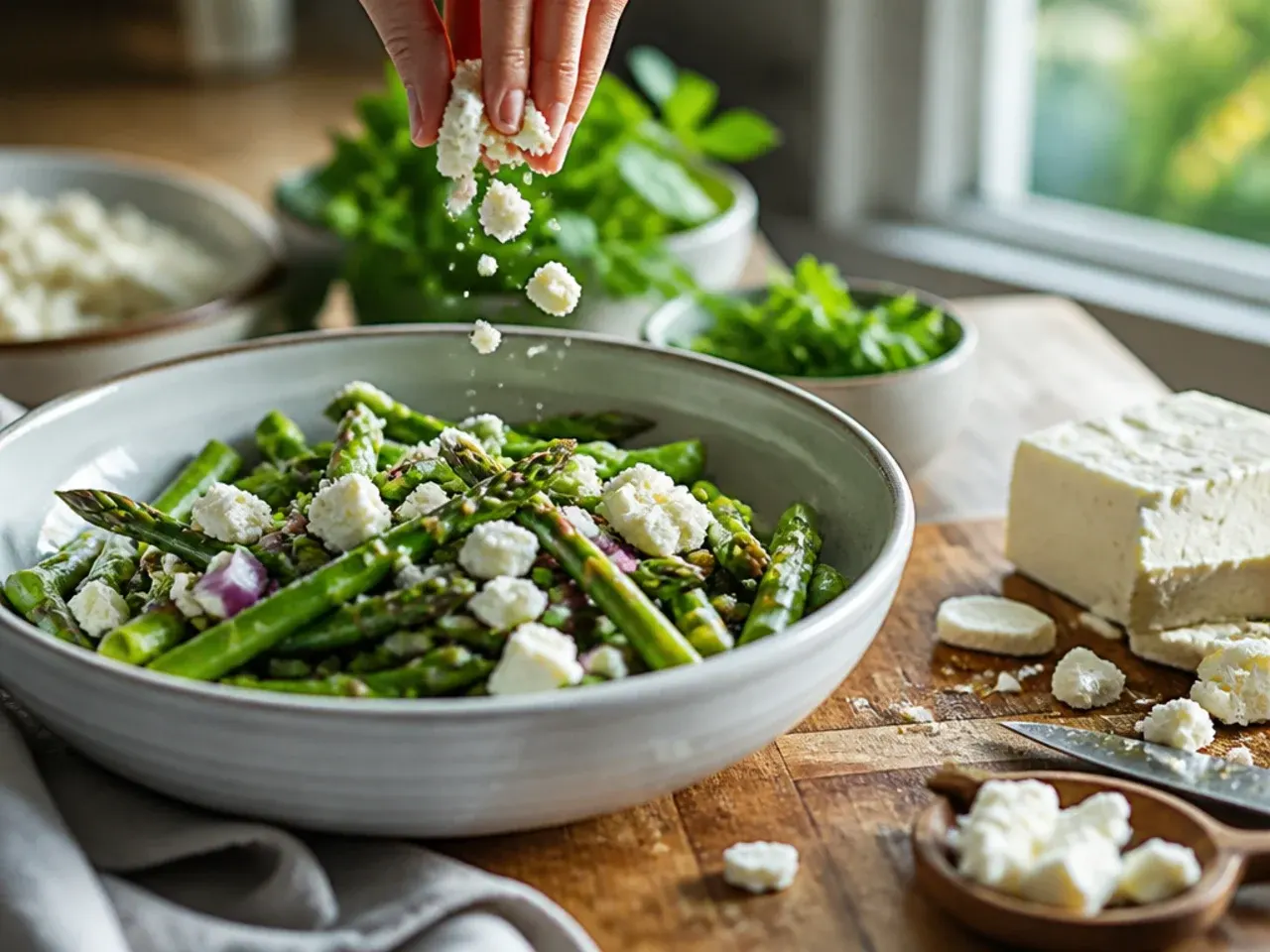
Crumble 100 g (3½ oz) feta over the top in uneven, rustic chunks rather than fine crumbs, so you get pockets of creamy, salty cheese in each bite. Distribute it evenly across the platter.
Step 29: Finish with pine nuts, mint and Parmesan
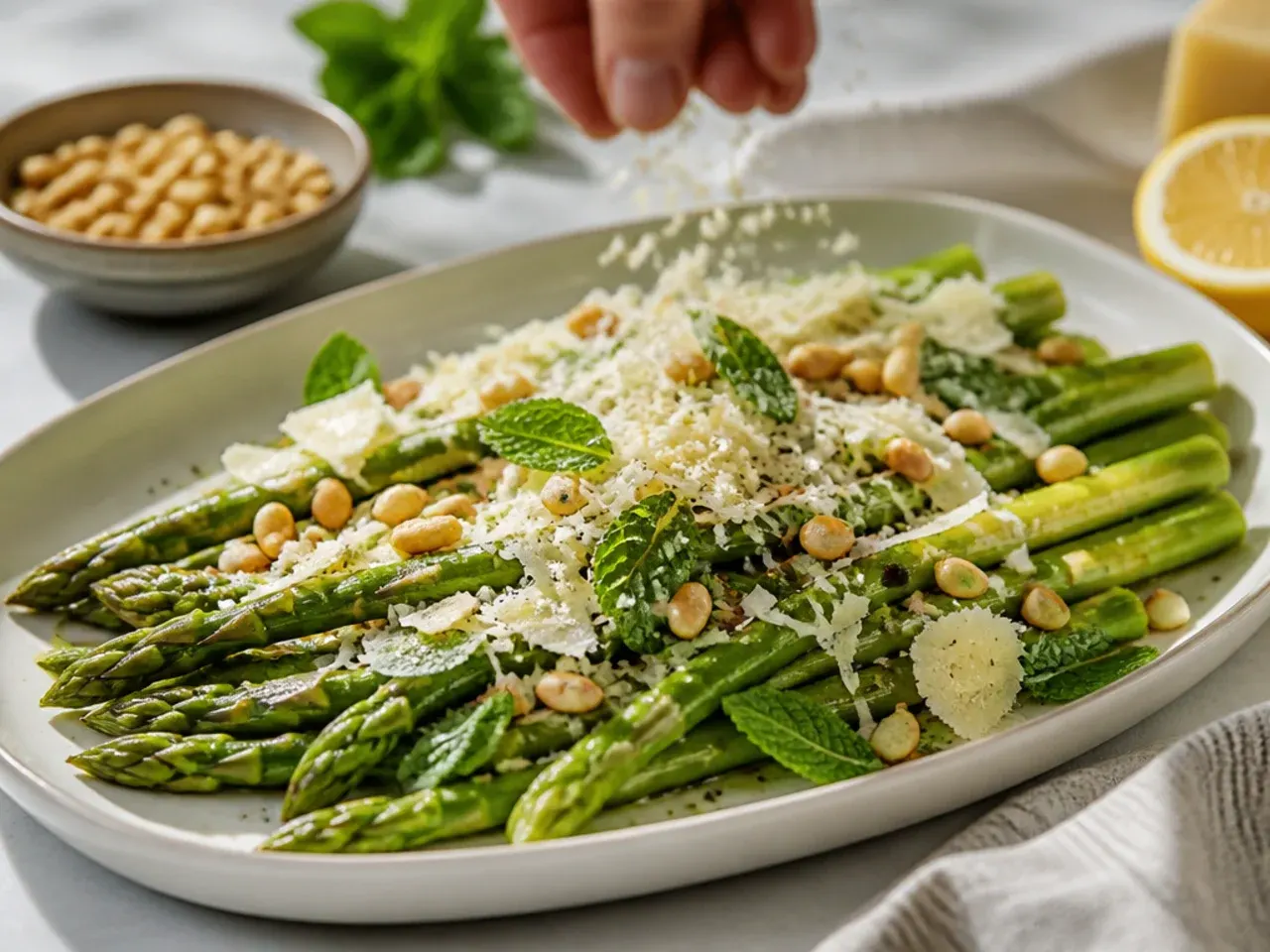
Scatter the cooled toasted pine nuts and torn mint leaves over the salad. Use a peeler to shave 20 g (¾ oz) Parmesan curls over the top for a second layer of savoury flavour and colour contrast.
Step 30: Drizzle, rest briefly and serve
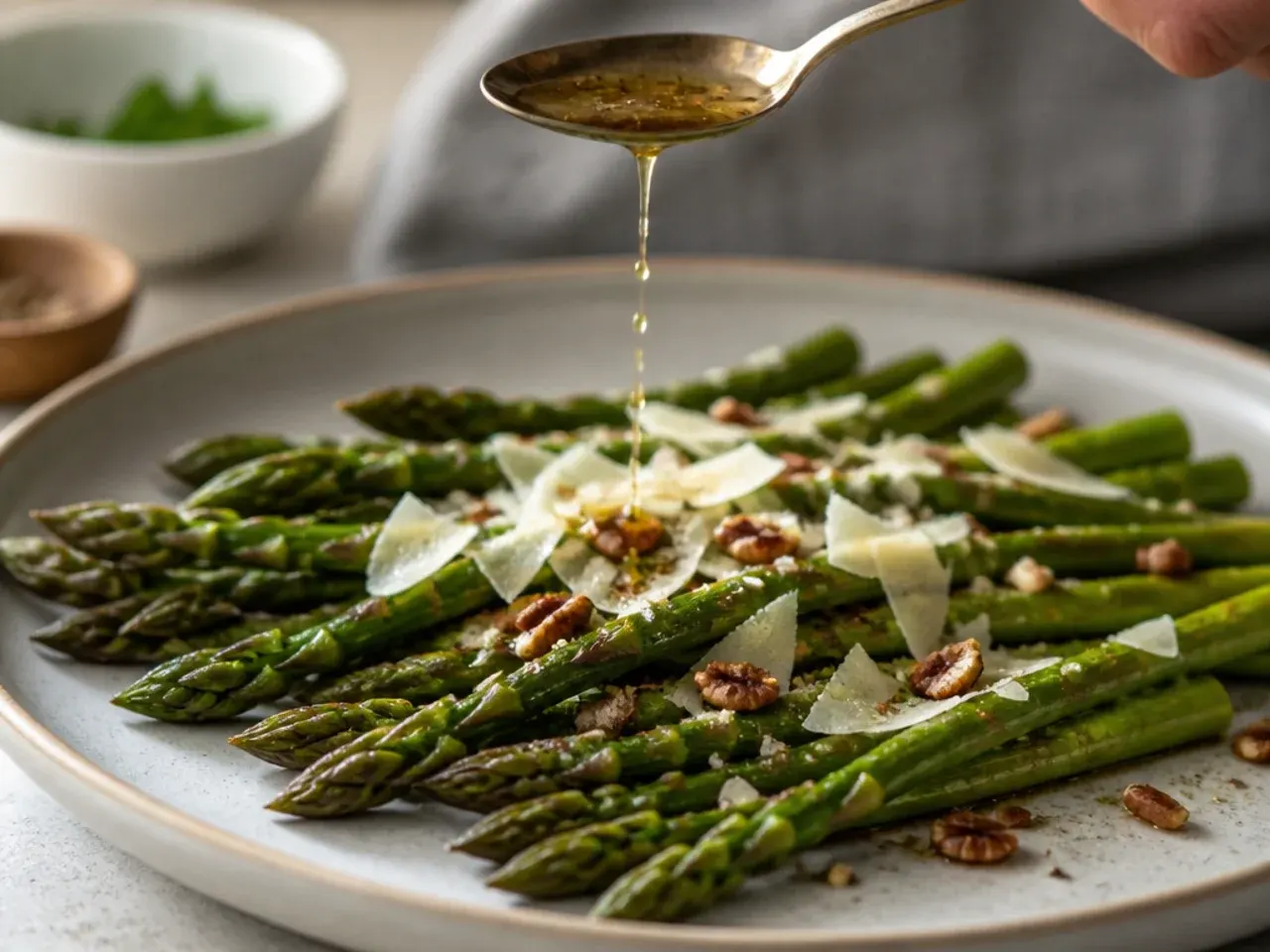
Drizzle the remaining vinaigrette over the finished salad and finish with a final crack of black pepper. Let it sit for 2-3 minutes so the flavours settle, then serve immediately while the asparagus is still crisp.
Pro Tips for Foolproof Asparagus Salad
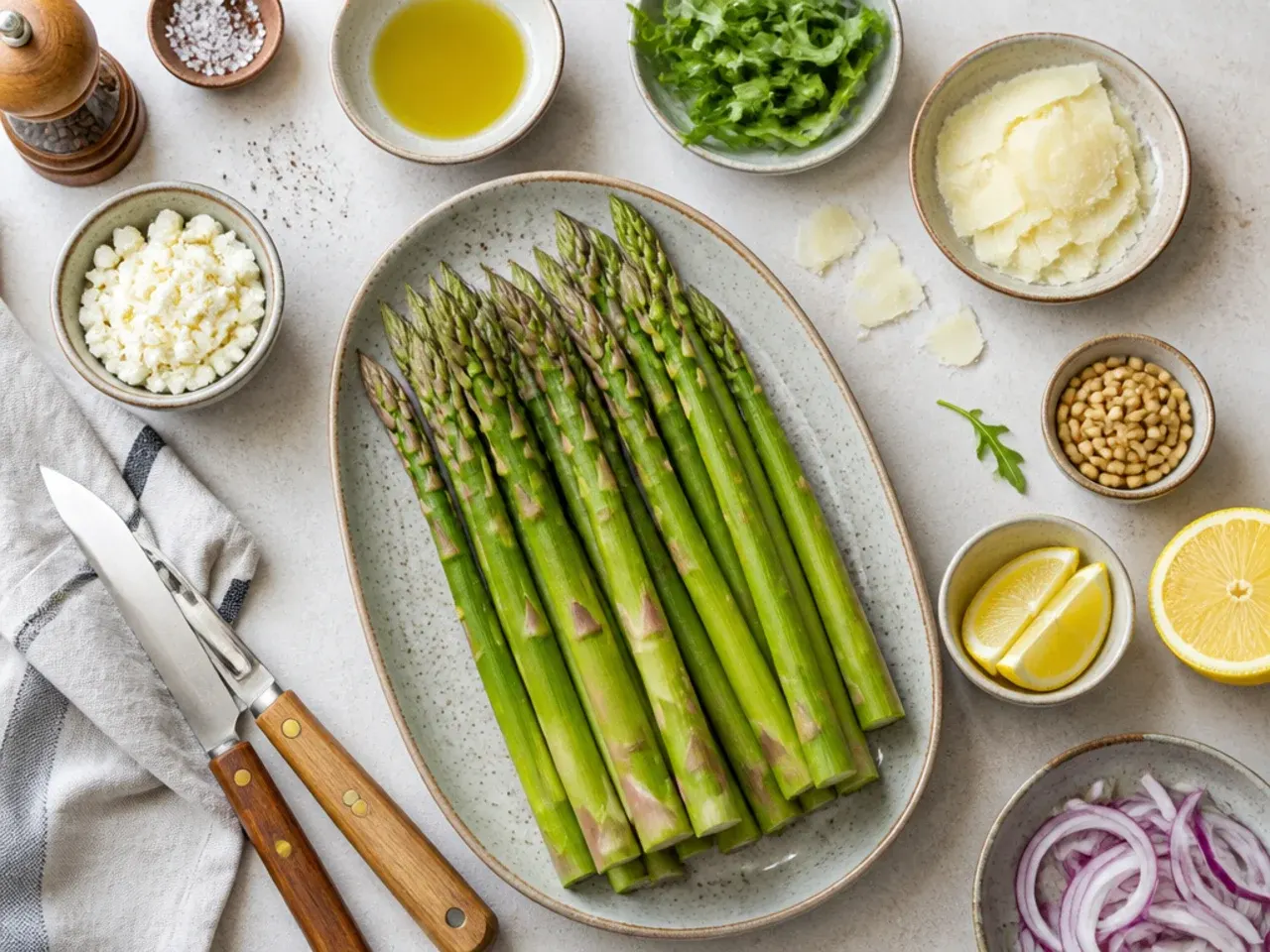
Buy asparagus with tight, dry tips and firm stalks, and use the thickest spears for shaving into ribbons since thin spears tear rather than curl on a peeler. Never let the blanched spears sit wet, because trapped water dilutes the vinaigrette and turns the salad limp within the hour. Salt the blanching water like the sea, and once the spears are shocked cold and patted fully dry, dress them right away so the vinaigrette clings before any moisture creeps back in. Toast the pine nuts in a dry pan rather than the oven so you can pull them the instant they smell nutty, since they scorch within seconds of browning.
Storage and Make-Ahead Tips
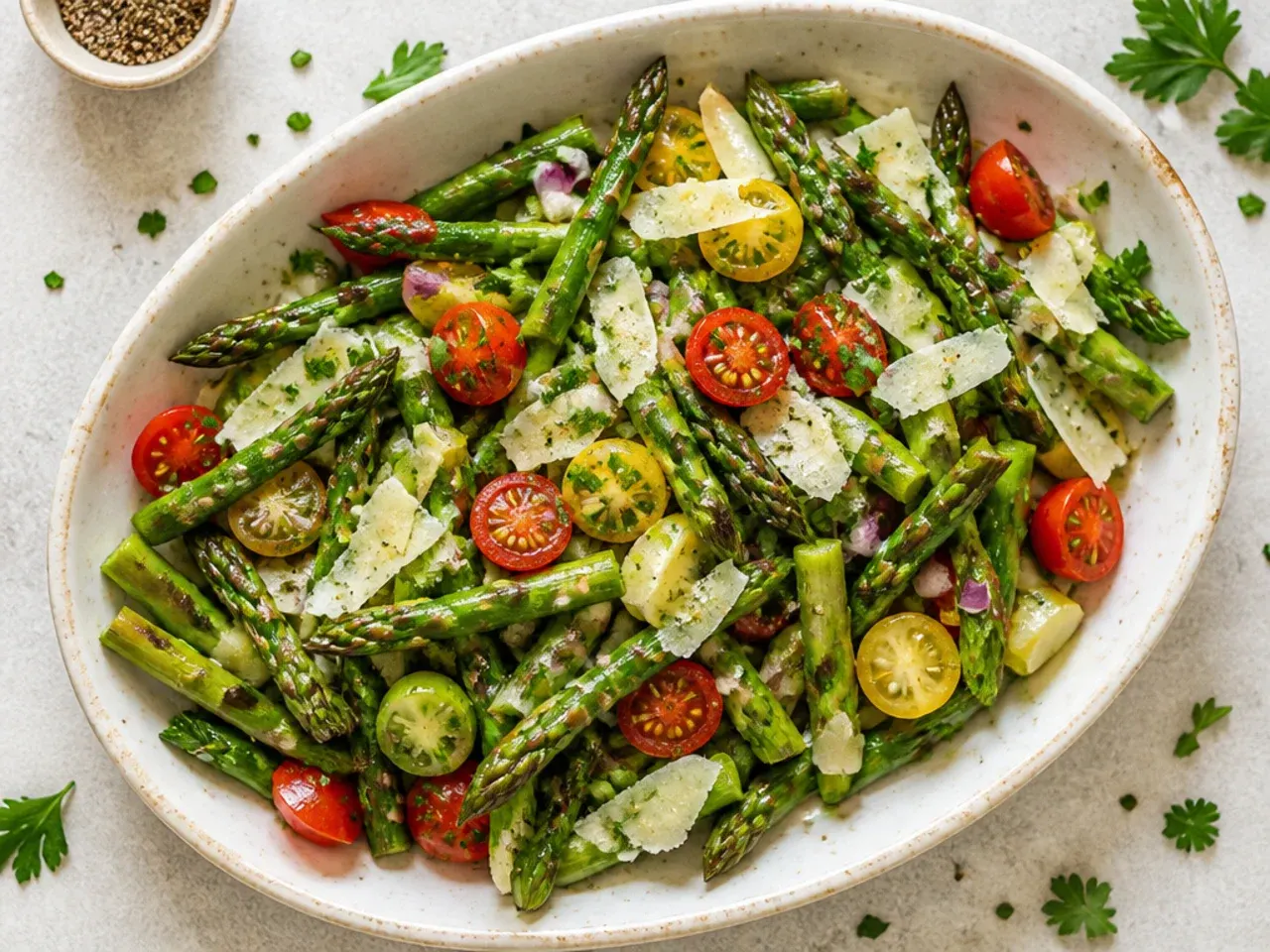
Blanch the asparagus, make the vinaigrette and prep the radish, shallot and pine nuts up to 2 days ahead, storing each part separately and chilled so nothing goes soggy. Keep the vinaigrette in a sealed jar at room temperature for up to a day or refrigerated for up to 5 days, whisking again before use since the oil separates. Only toss the salad together within 30-45 minutes of serving; dressed asparagus turns watery and the greens lose their bite if it sits much longer. Leftovers keep in an airtight container in the fridge for up to 2 days, though the texture softens, so treat it as a next-day lunch rather than a repeat centrepiece.
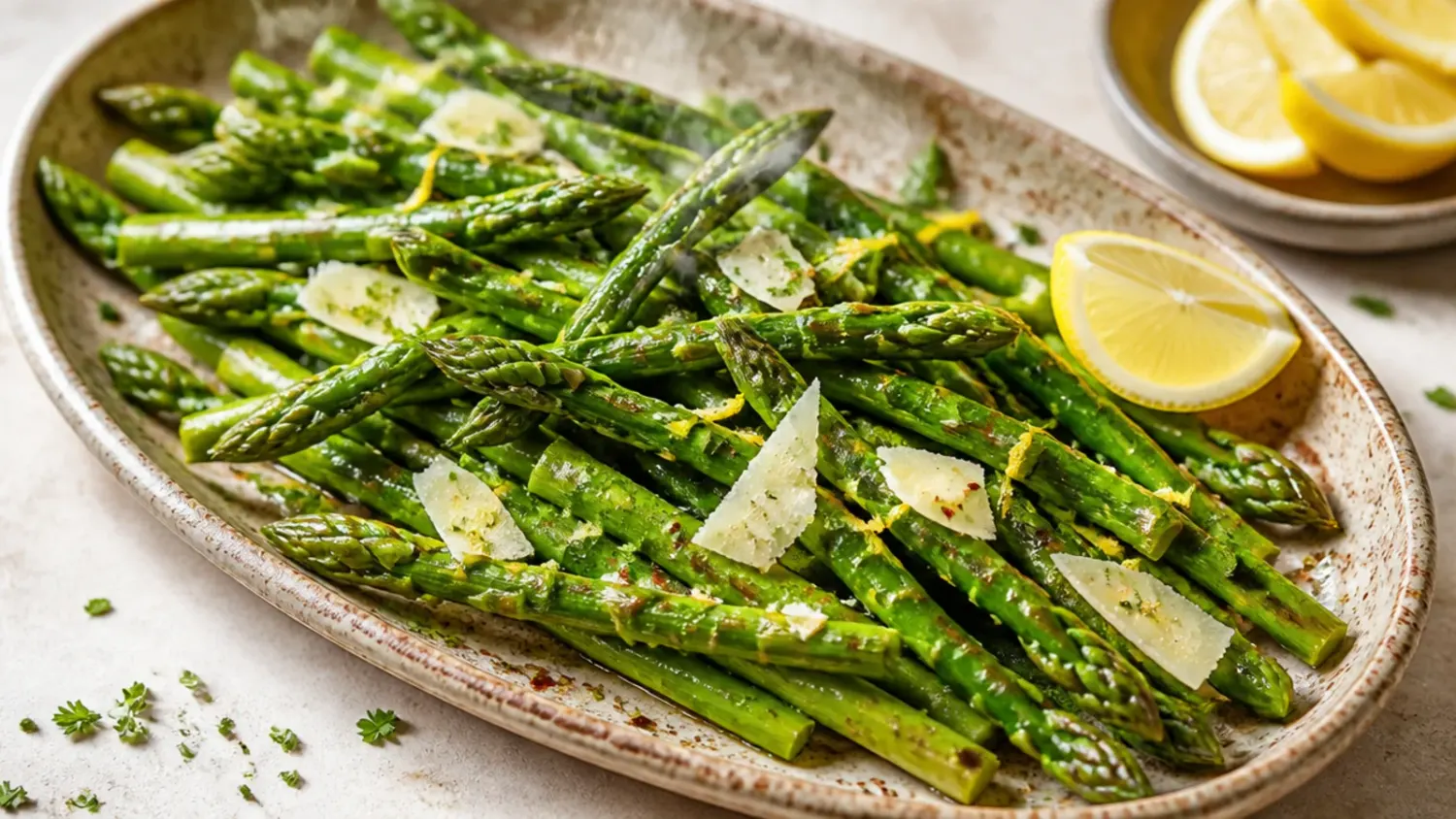
Foolproof asparagus salad recipes made in 30 easy steps, with crisp blanched spears, shaved ribbons, feta and a bright lemon vinaigrette. For more asparagus recipes inspiration, browse the full Asparagus Recipes board — every idea there is written for real home kitchens, not professional bakers.
Frequently Asked Questions
You can prep every component ahead but shouldn't toss the whole salad together too early. Blanch and dry the asparagus, make the vinaigrette, and slice the radish and shallot up to 2 days in advance, storing each part separately in the fridge. Combine and dress the salad within 30-45 minutes of serving so the asparagus stays crisp instead of turning watery. This staged approach is what makes the recipe genuinely foolproof for entertaining.

Related Recipes
Save this for later 📌
Pin this article to your Pinterest board so the full list is one tap away when you need it.
Save on Pinterest