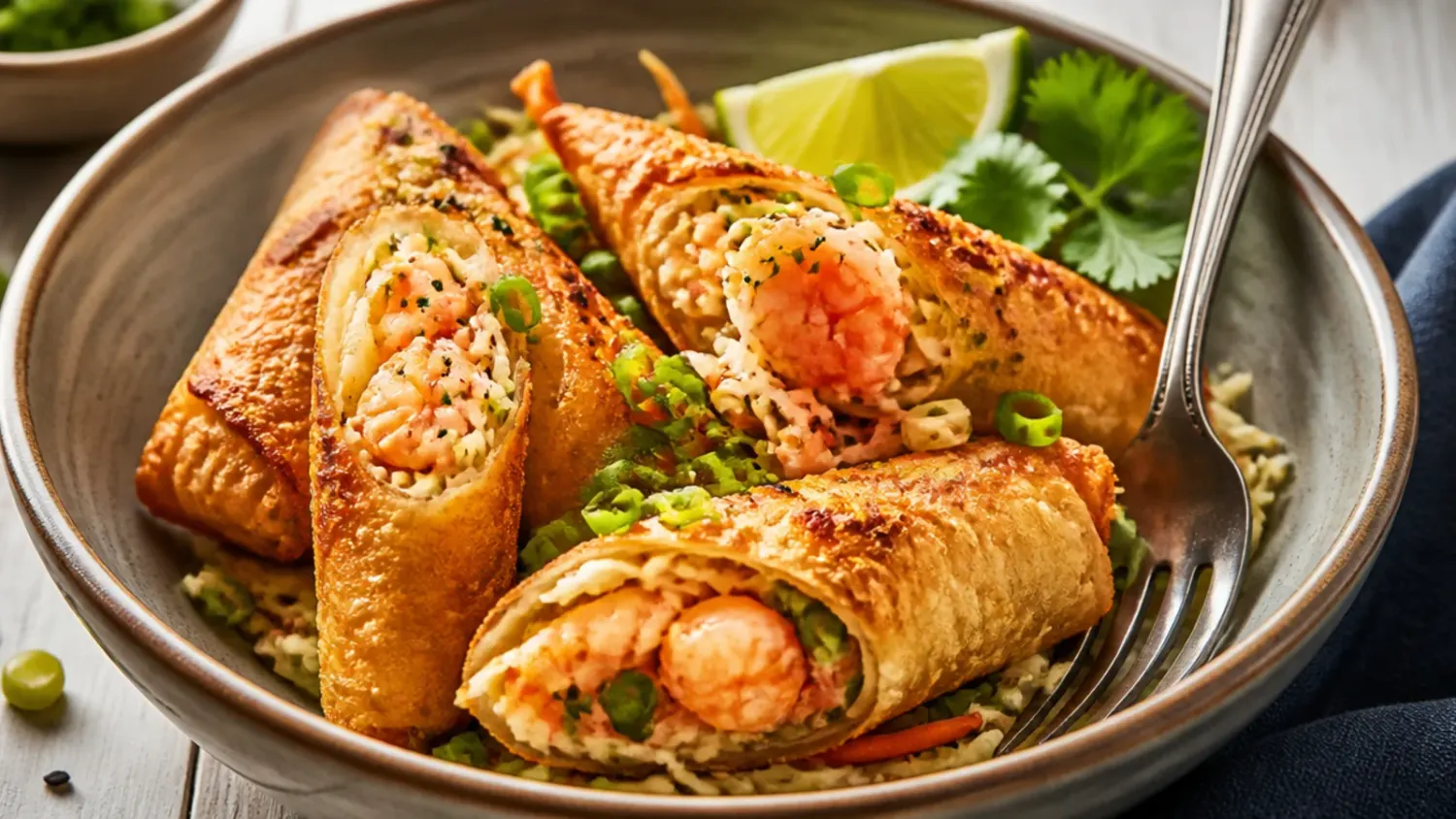
Ingredients 4 Person(s)
Save this for later 📌
Pin this article to your Pinterest board so the full list is one tap away when you need it.
Save on PinterestDirections
Step 1: Prep and dry the shrimp
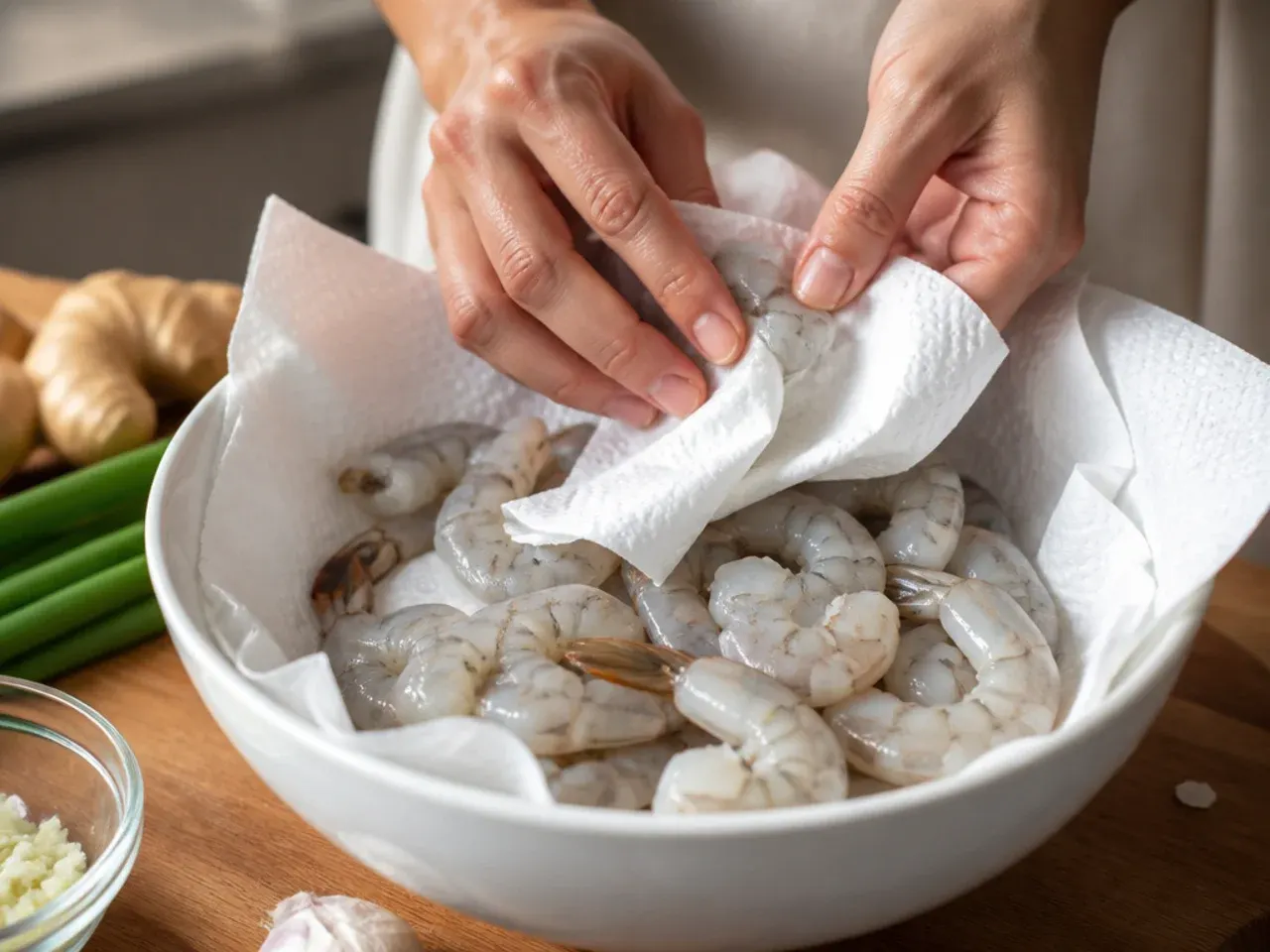
Pat 500 g (1 lb) peeled, deveined shrimp completely dry with kitchen paper and season lightly with a pinch of salt and pepper. Removing surface moisture now is what lets them sear rather than steam once they hit the hot pan in step 5.
Step 2: Whisk the stir-fry sauce
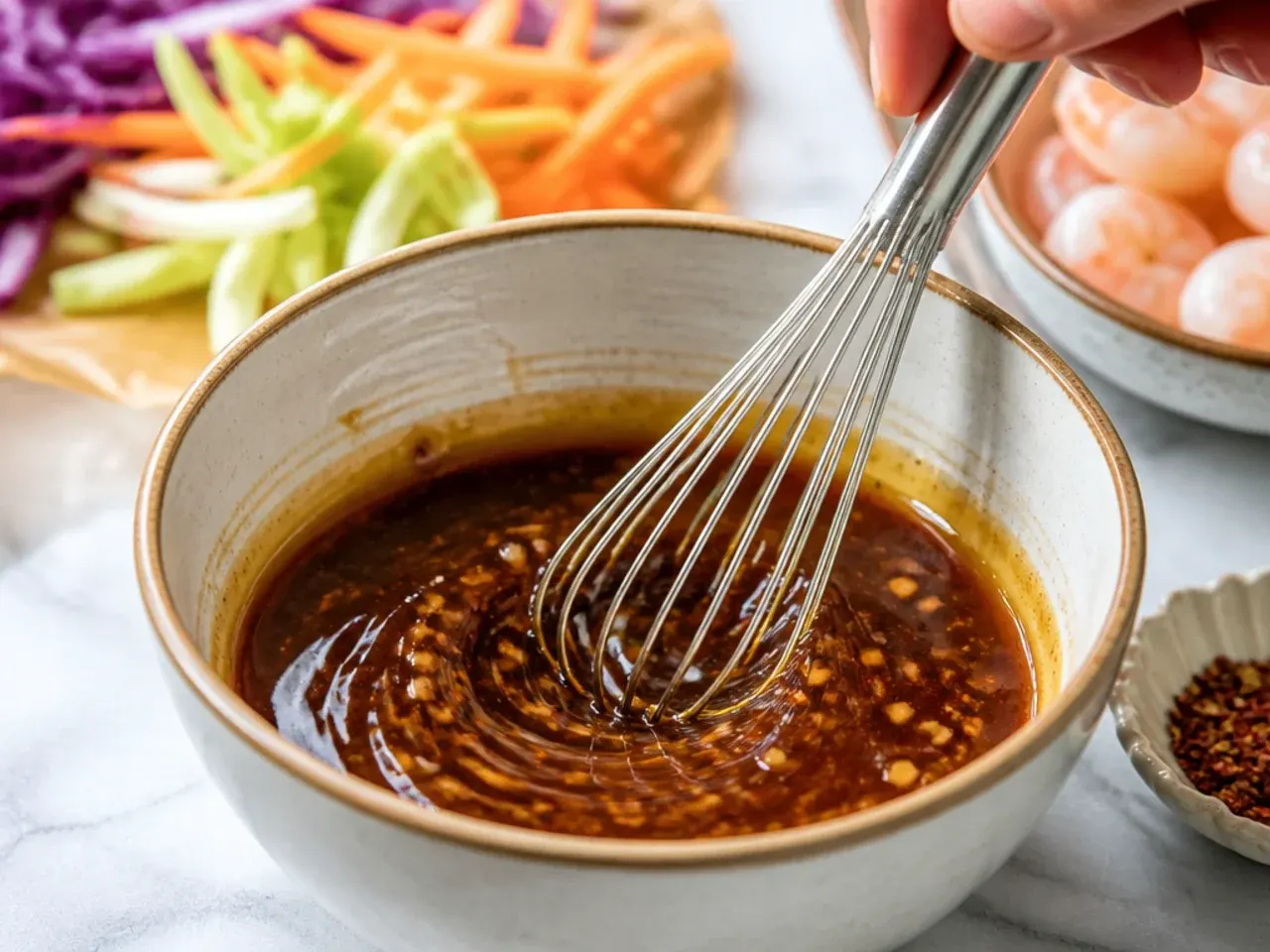
In a small jug, whisk together 60 ml (1/4 cup) low-sodium soy sauce, 15 ml (1 tbsp) rice vinegar and 15 g (1 tbsp) light brown sugar until the sugar fully dissolves. Set the sauce aside so it's ready to pour straight in later, keeping the cooking moving without pauses.
Step 3: Prep the vegetables
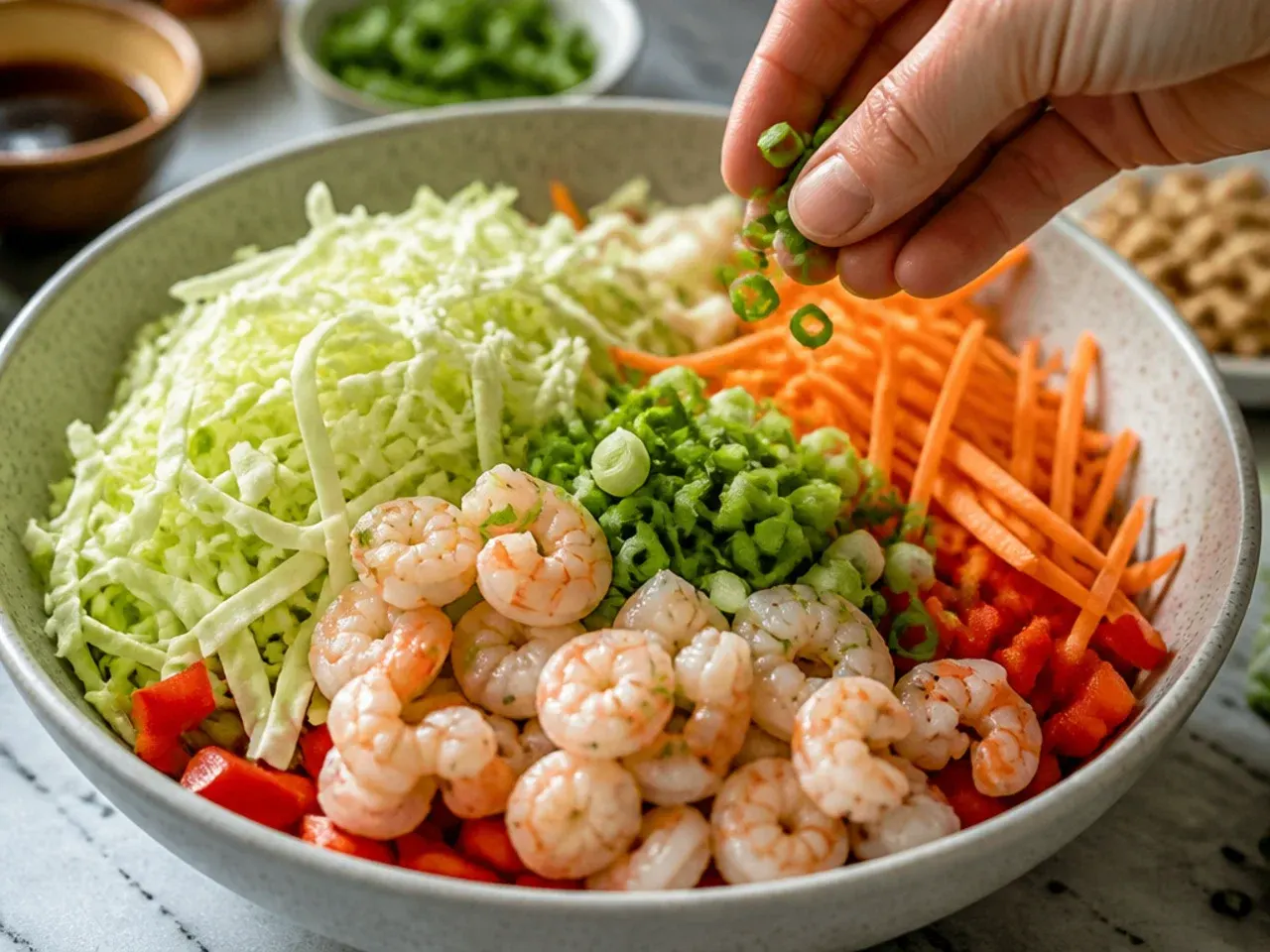
Dice 1 medium yellow onion (150 g), mince 3 garlic cloves and grate 1 tsp (5 g) fresh ginger. Measure out 400 g (14 oz) coleslaw mix and slice 3 spring onions, keeping the green tops separate to use as a garnish.
Step 4: Heat the pan
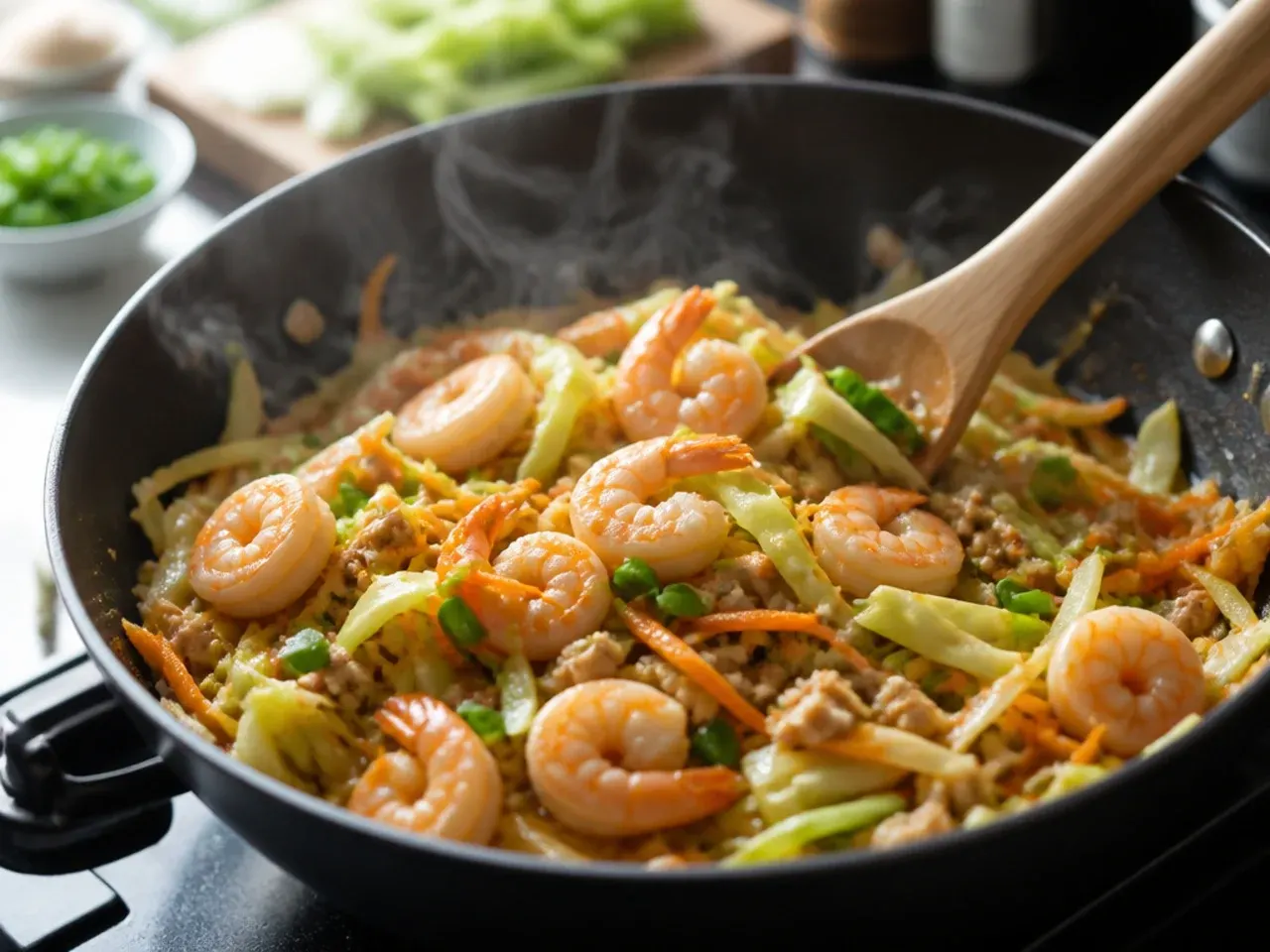
Set a large wok or heavy skillet over medium-high heat and add 15 ml (1 tbsp) sesame oil, swirling to coat the base. Wait 1-2 minutes until the oil shimmers and moves easily across the pan - this tells you it's hot enough to sear rather than stew the shrimp.
Step 5: Sear the shrimp
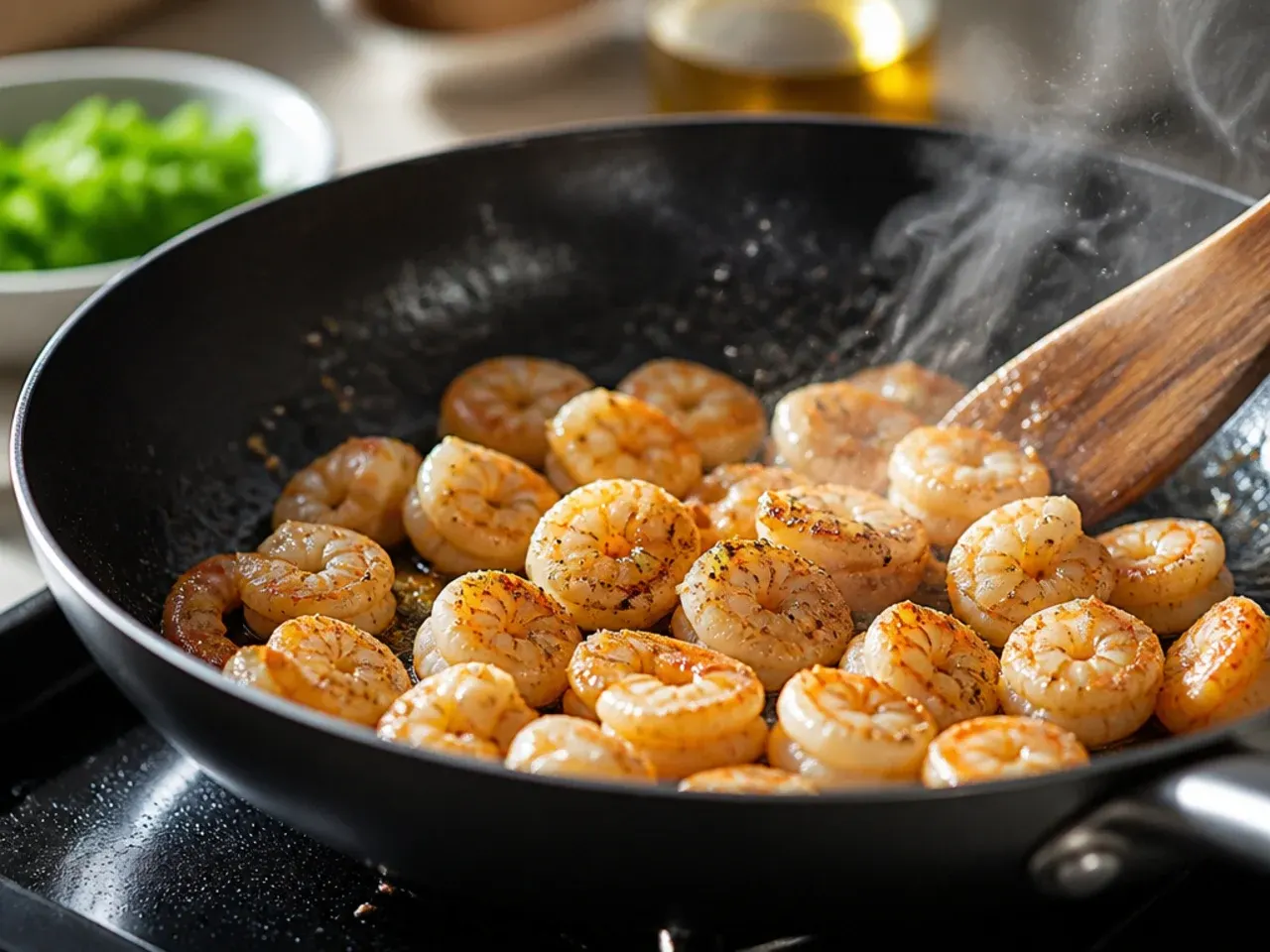
Lay the shrimp in the pan in a single layer and cook undisturbed for 90 seconds, then flip and cook a further 60-90 seconds until opaque and pink with lightly golden edges. Work in two batches if the pan looks crowded, since overcrowding causes the shrimp to steam instead of sear.
Step 6: Rest the shrimp
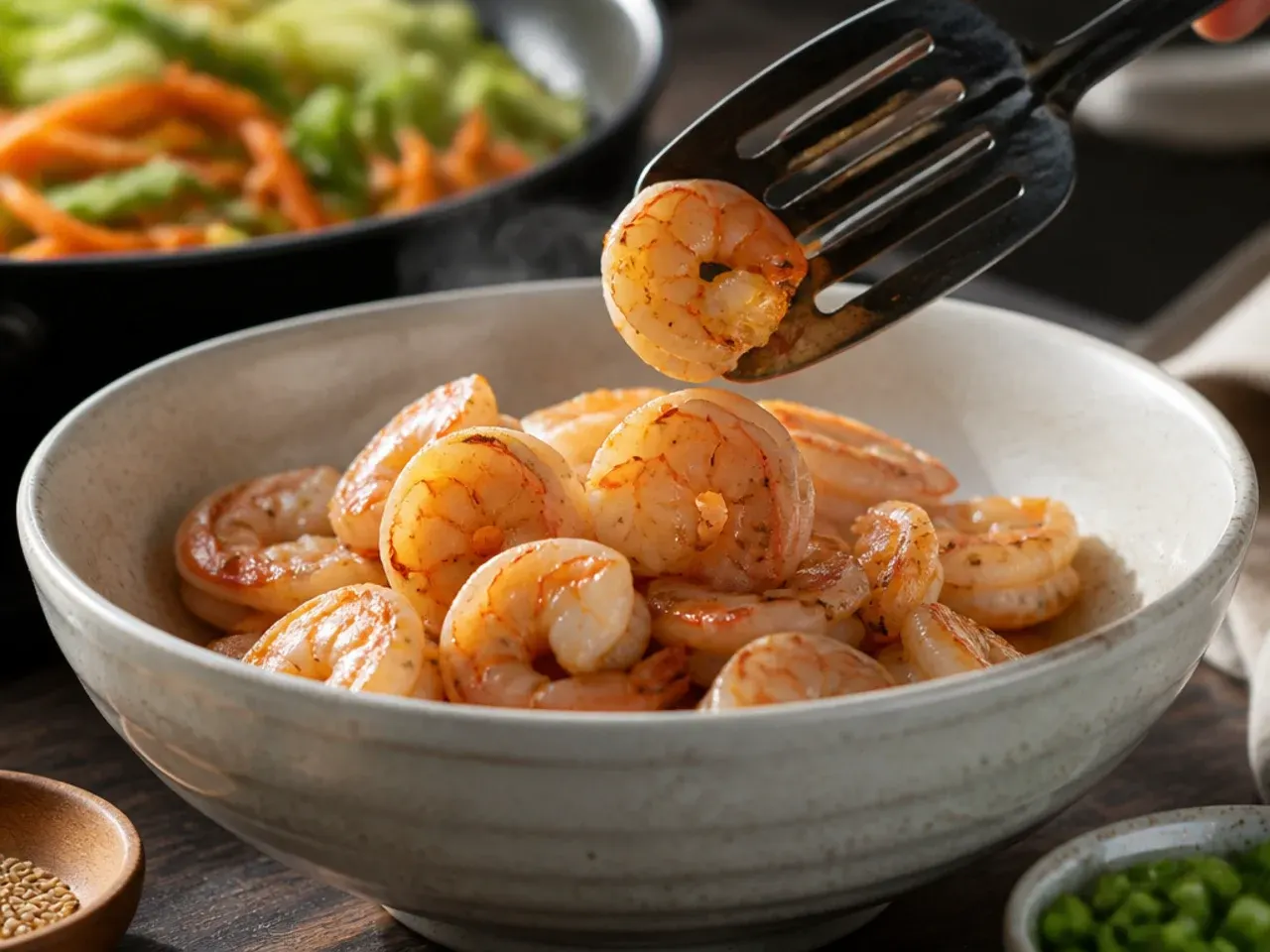
Transfer the seared shrimp to a clean bowl and set aside - they'll keep cooking gently from residual heat. Leave any browned bits stuck to the pan, as they add flavour to the vegetables in the next steps.
Step 7: Sauté the onion
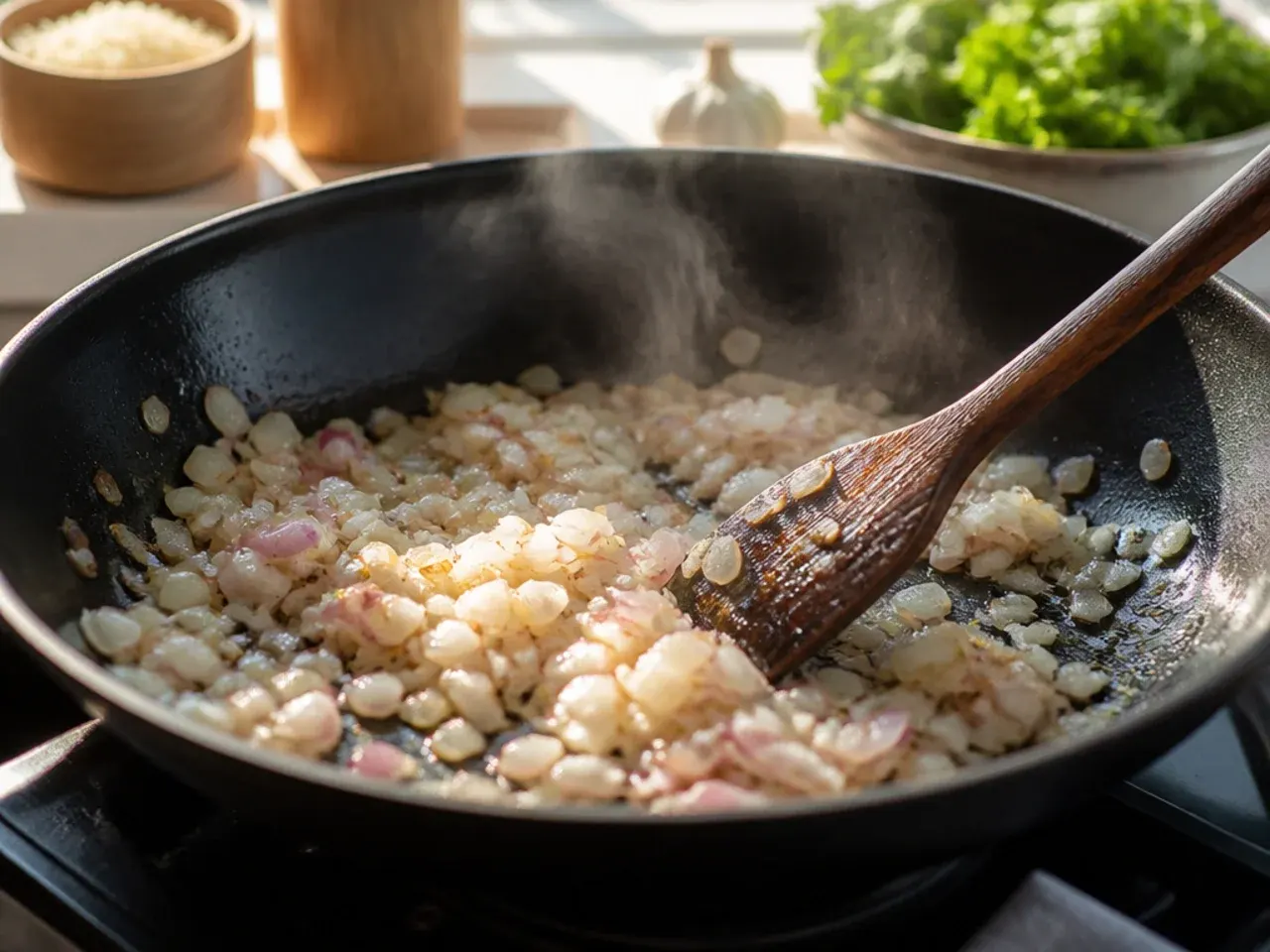
Add the remaining 15 ml (1 tbsp) sesame oil to the same pan and tip in the diced onion. Cook for 2-3 minutes, stirring occasionally, until the onion turns translucent and softens at the edges.
Step 8: Add garlic and ginger
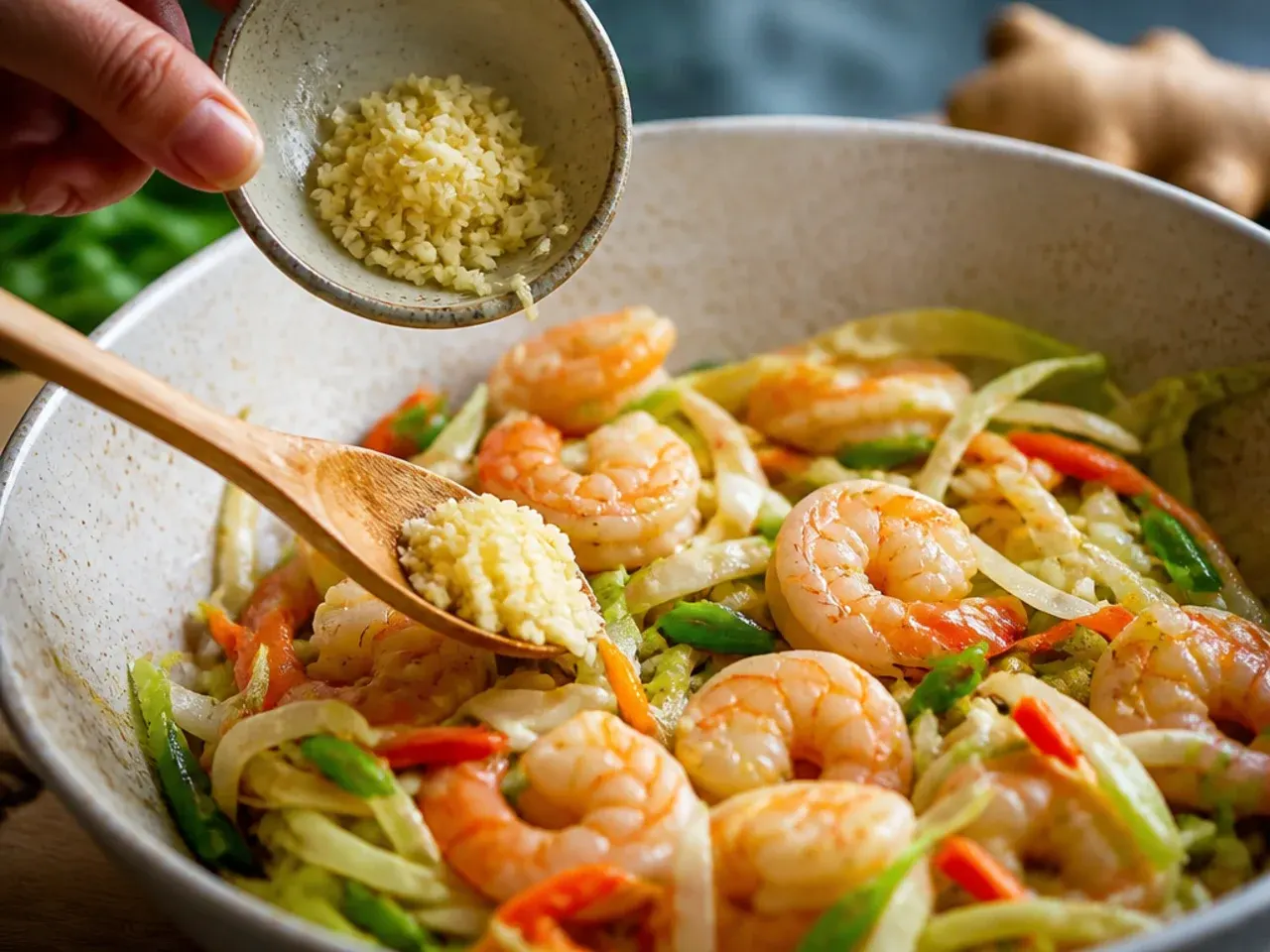
Stir the minced garlic and grated ginger into the softened onion and cook for 30-45 seconds, stirring constantly, just until fragrant. Keep the heat at medium so the garlic doesn't catch and turn bitter.
Step 9: Add the coleslaw mix
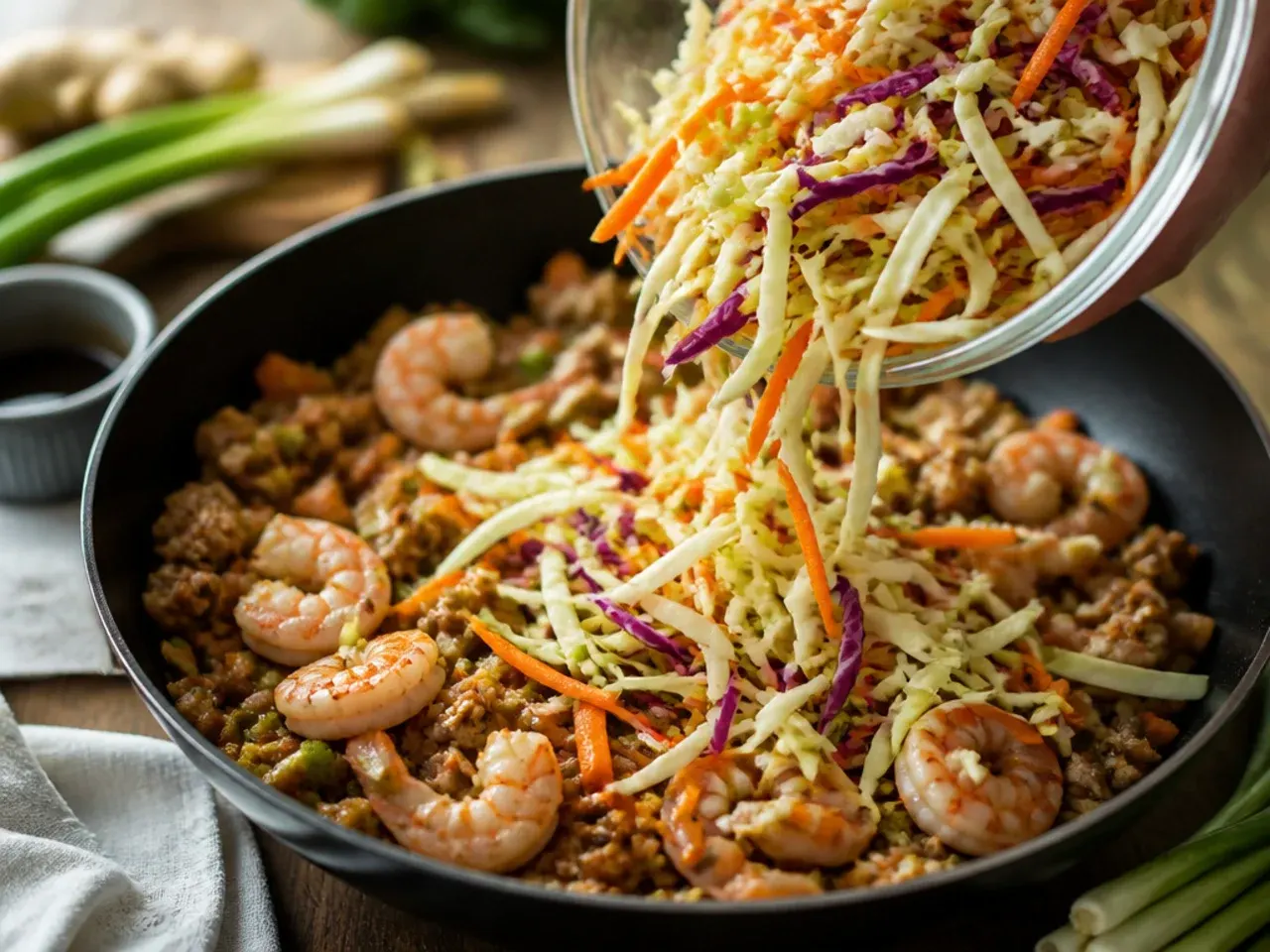
Tip the 400 g (14 oz) coleslaw mix into the pan and toss to coat it in the oil and aromatics. It will look like a lot of cabbage at first but wilts down quickly over the heat.
Step 10: Cook until just wilted
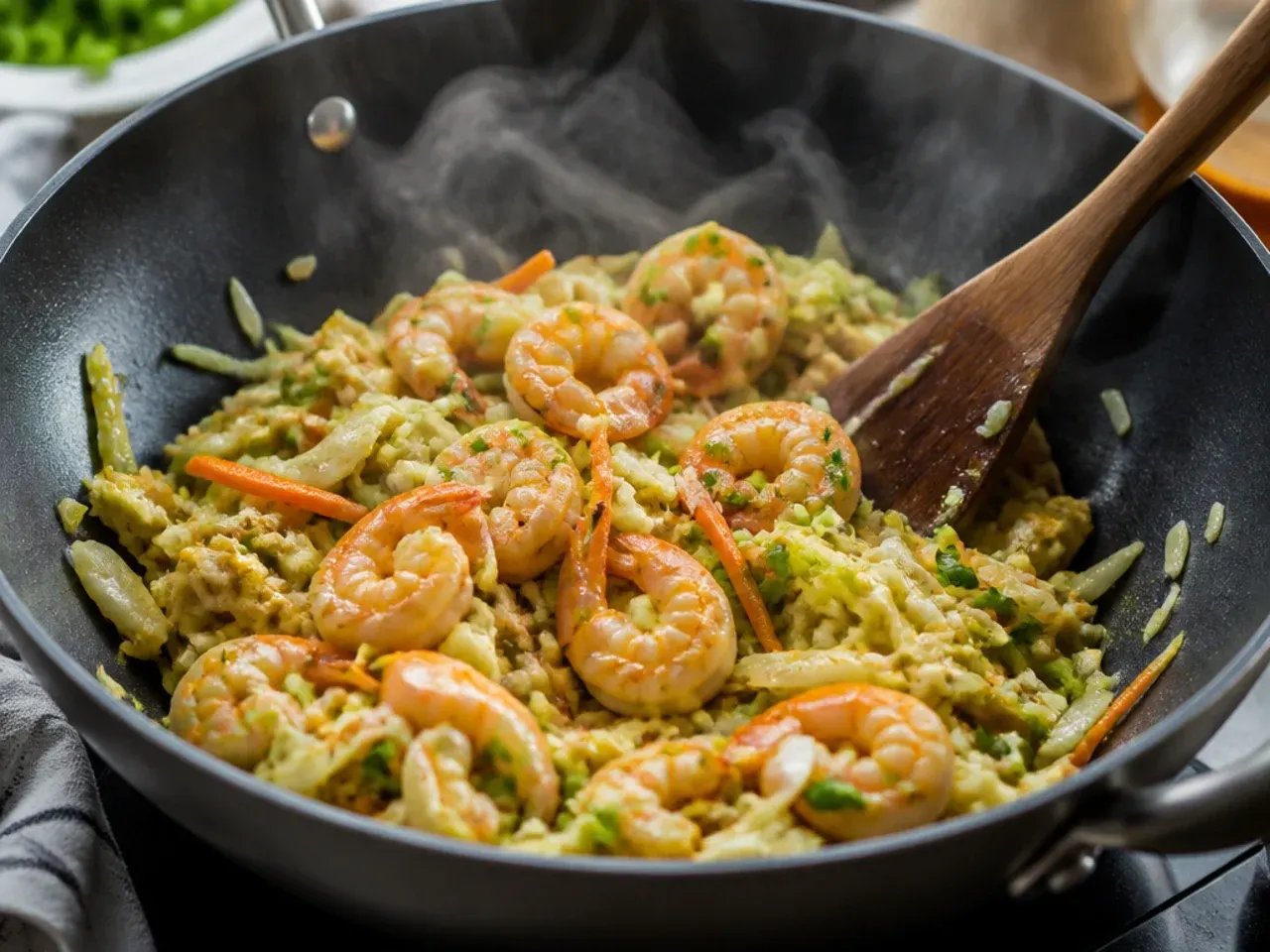
Stir-fry the cabbage and carrot for 3-4 minutes, tossing roughly every minute, until glossy and softened but still with a slight bite. Stop at this point - cooking it much longer makes the vegetables watery and takes away the crunch.
Step 11: Pour in the sauce
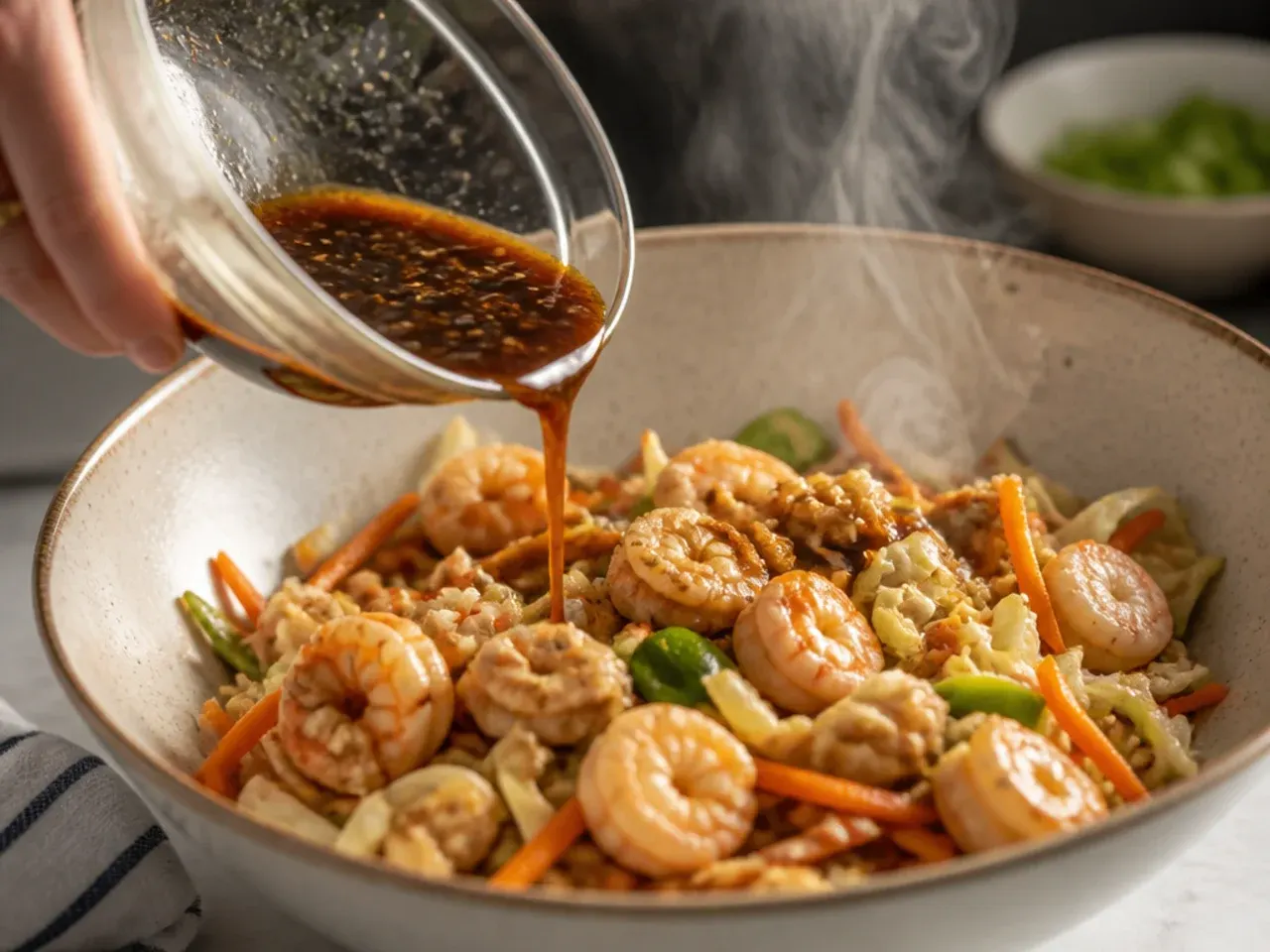
Pour the reserved soy sauce mixture over the cabbage and stir to coat everything evenly. Let it bubble for 30-60 seconds so it thickens slightly and clings to the vegetables rather than pooling at the bottom of the pan.
Step 12: Return the shrimp to the pan
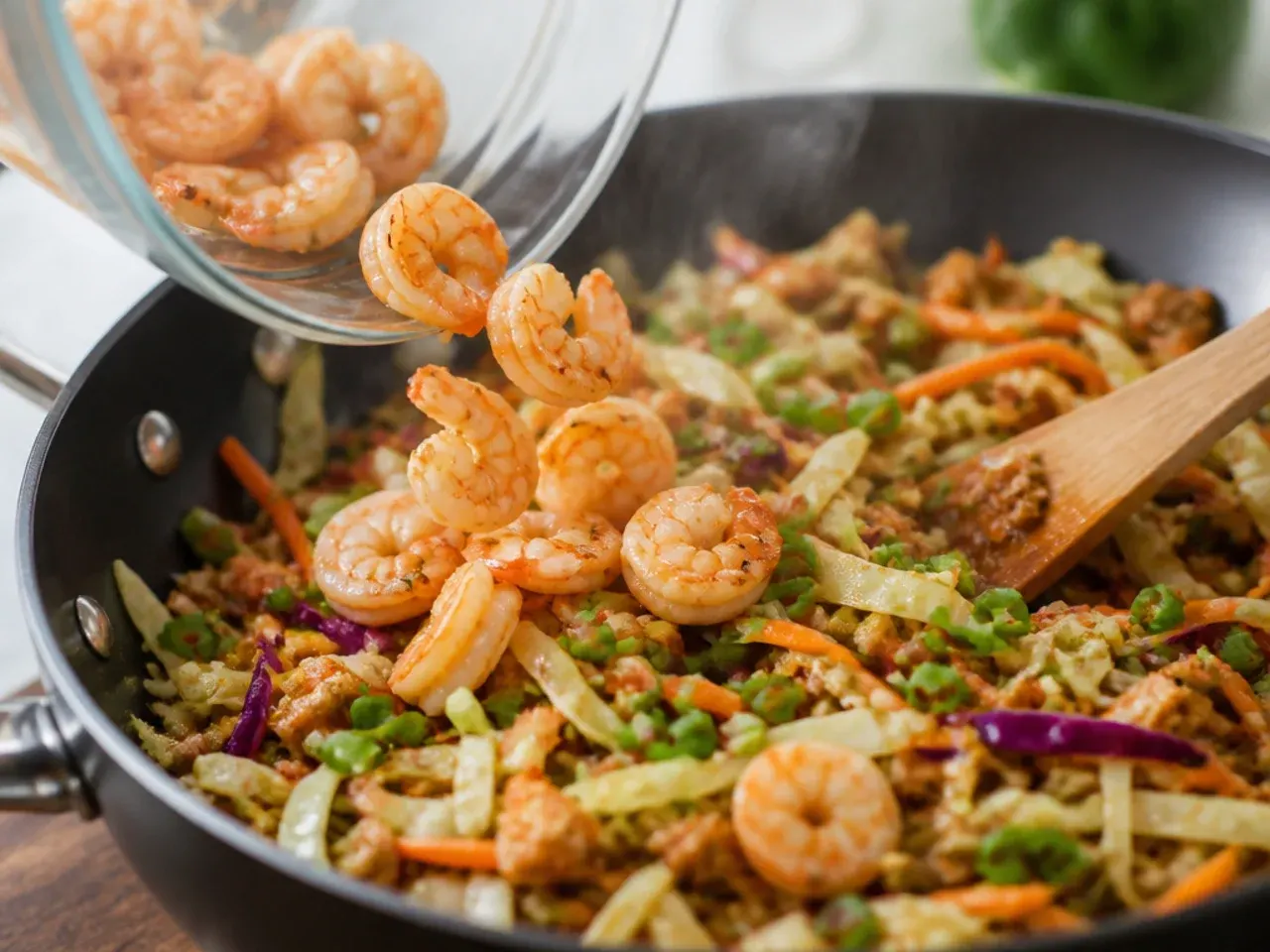
Add the seared shrimp and any juices collected in the bowl back into the pan. Toss gently for 1-2 minutes, just until warmed through - any longer and the shrimp turn rubbery.
Step 13: Toss everything together
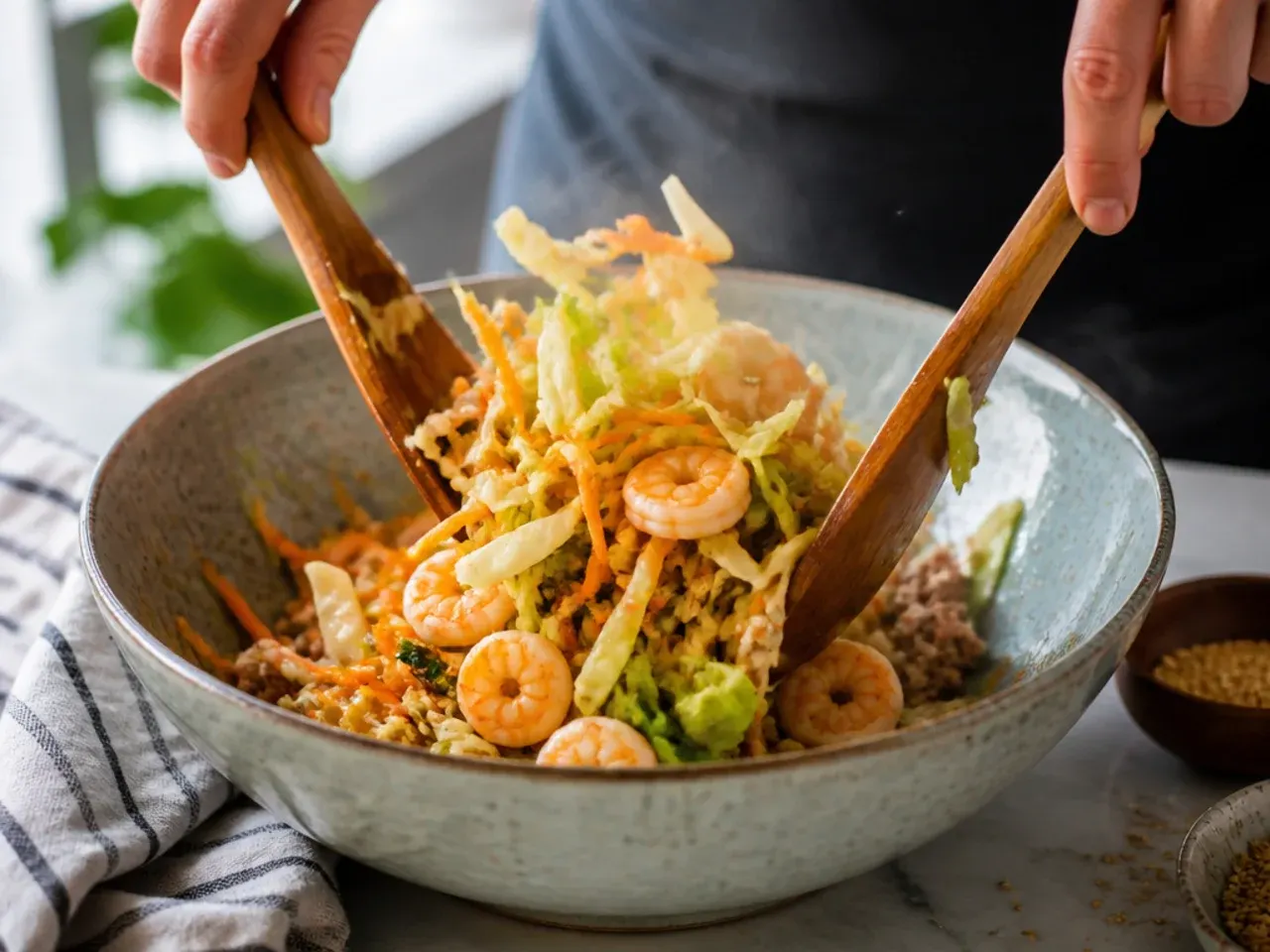
Give the whole pan a final toss so the shrimp, cabbage and sauce are evenly distributed. Taste and adjust with an extra splash of soy sauce or a small pinch of brown sugar if needed.
Step 14: Finish with garnishes
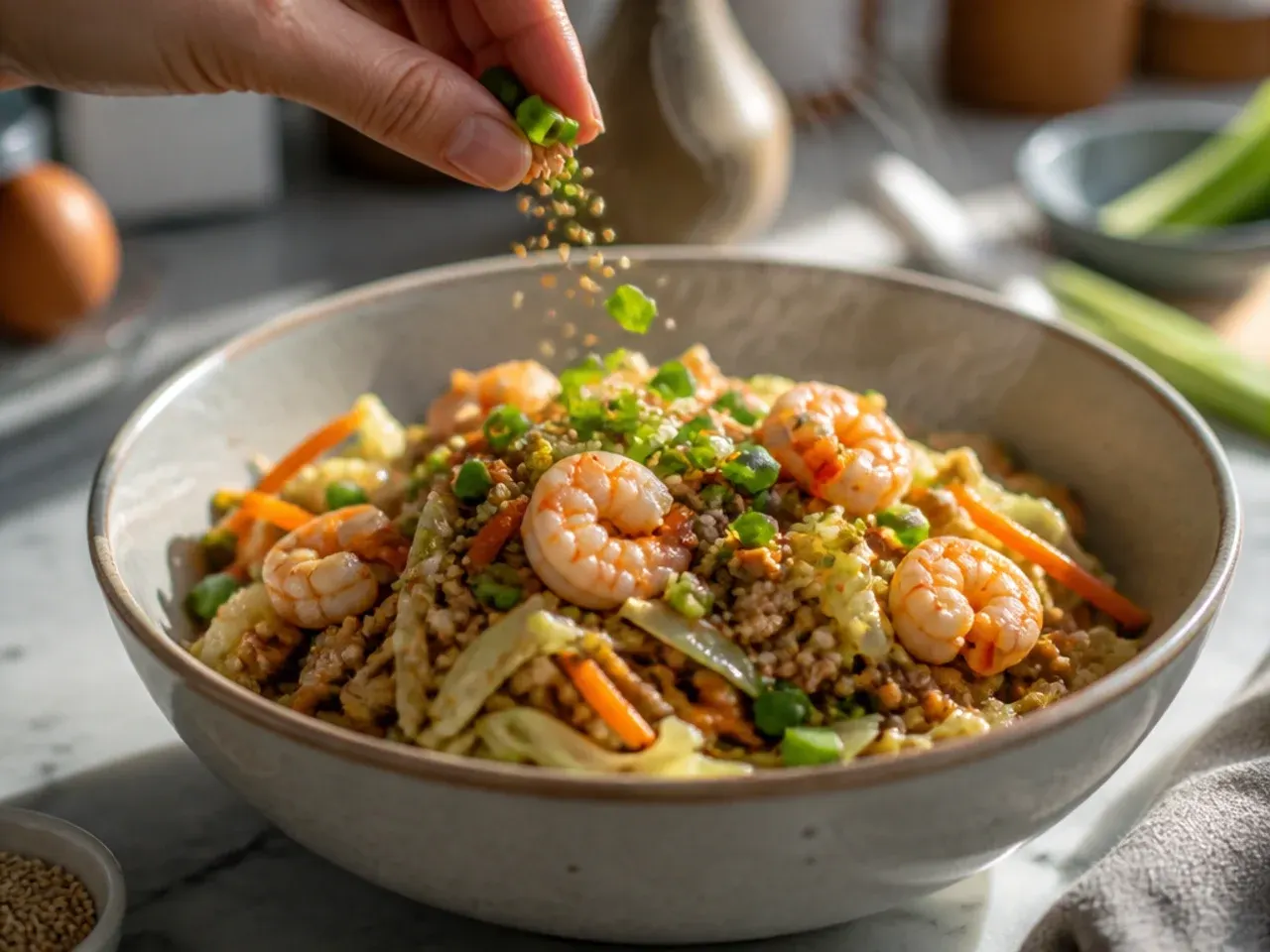
Take the pan off the heat and scatter over the sliced spring onion greens and 1 tbsp toasted sesame seeds. Drizzle with a little sriracha if you'd like some heat.
Step 15: Serve immediately
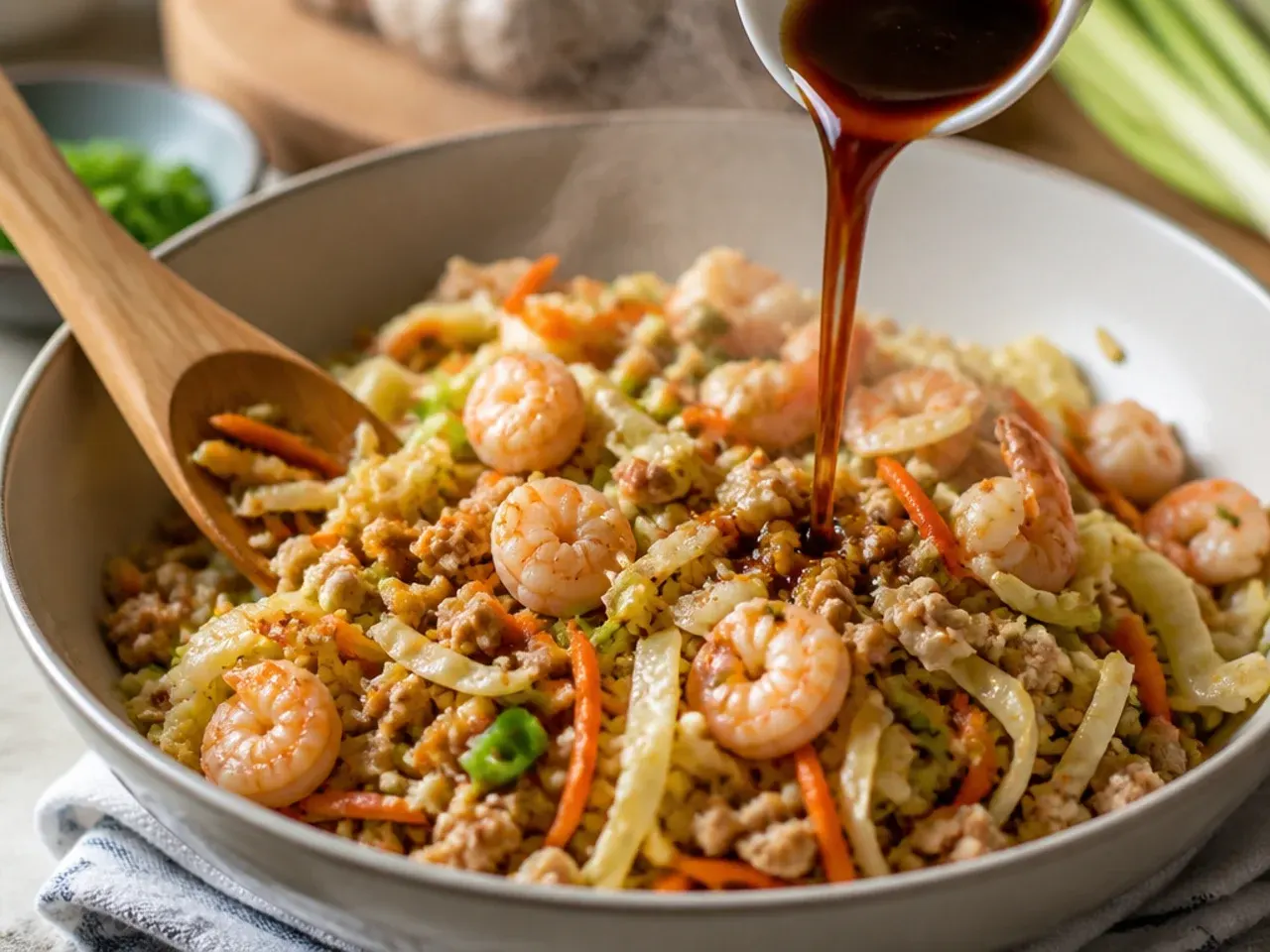
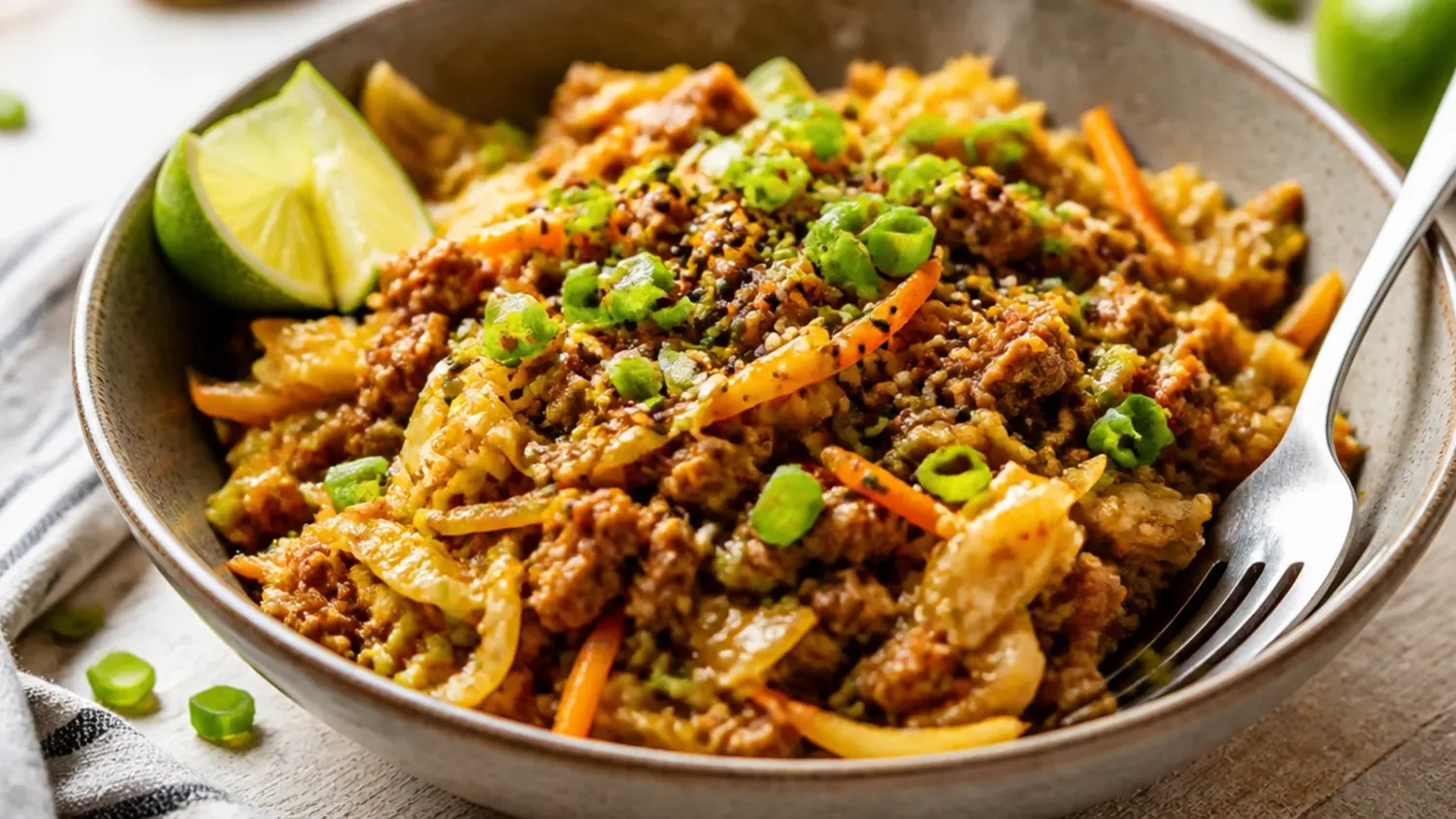
Divide the shrimp egg roll in a bowl between 4 bowls while still hot and serve straight away for the best texture. Pair with steamed rice or cauliflower rice if you'd like a heartier meal.
Pro Tips for the Best Shrimp Egg Roll in a Bowl
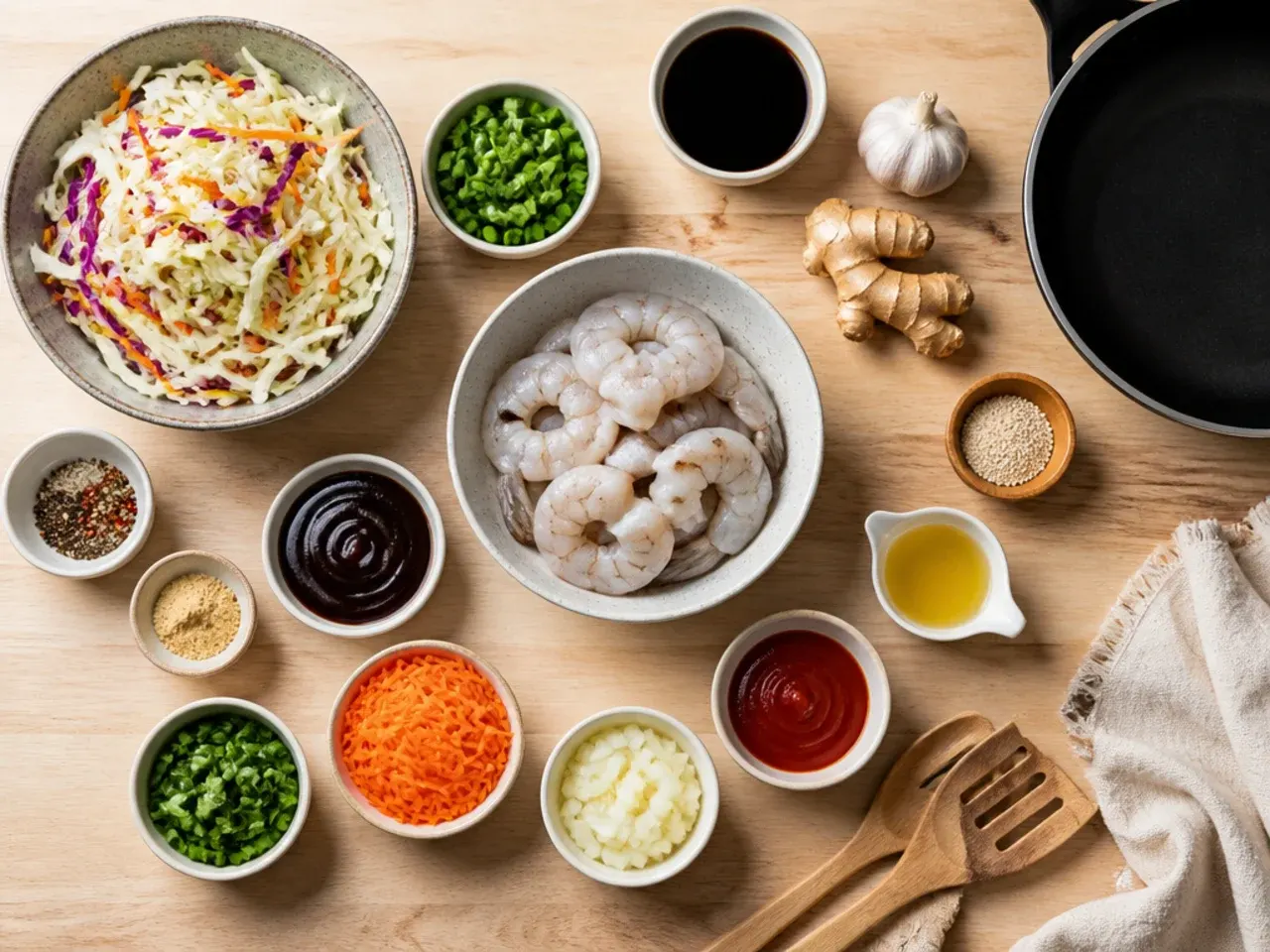
Pat the shrimp completely dry before they hit the pan - any surface moisture makes them steam instead of sear, so you lose that light golden crust. Cook the shrimp in a single layer and don't crowd the pan, working in two batches if needed, since overcrowded shrimp release liquid and turn rubbery rather than browning. Whisk the sauce in a separate jug before you start cooking so it's ready to pour the moment the cabbage is wilted, keeping the whole process moving quickly. Taste the finished dish before serving and adjust with an extra splash of soy sauce or a small pinch of brown sugar, since soy sauce brands vary a lot in saltiness.
Storage and Reheating
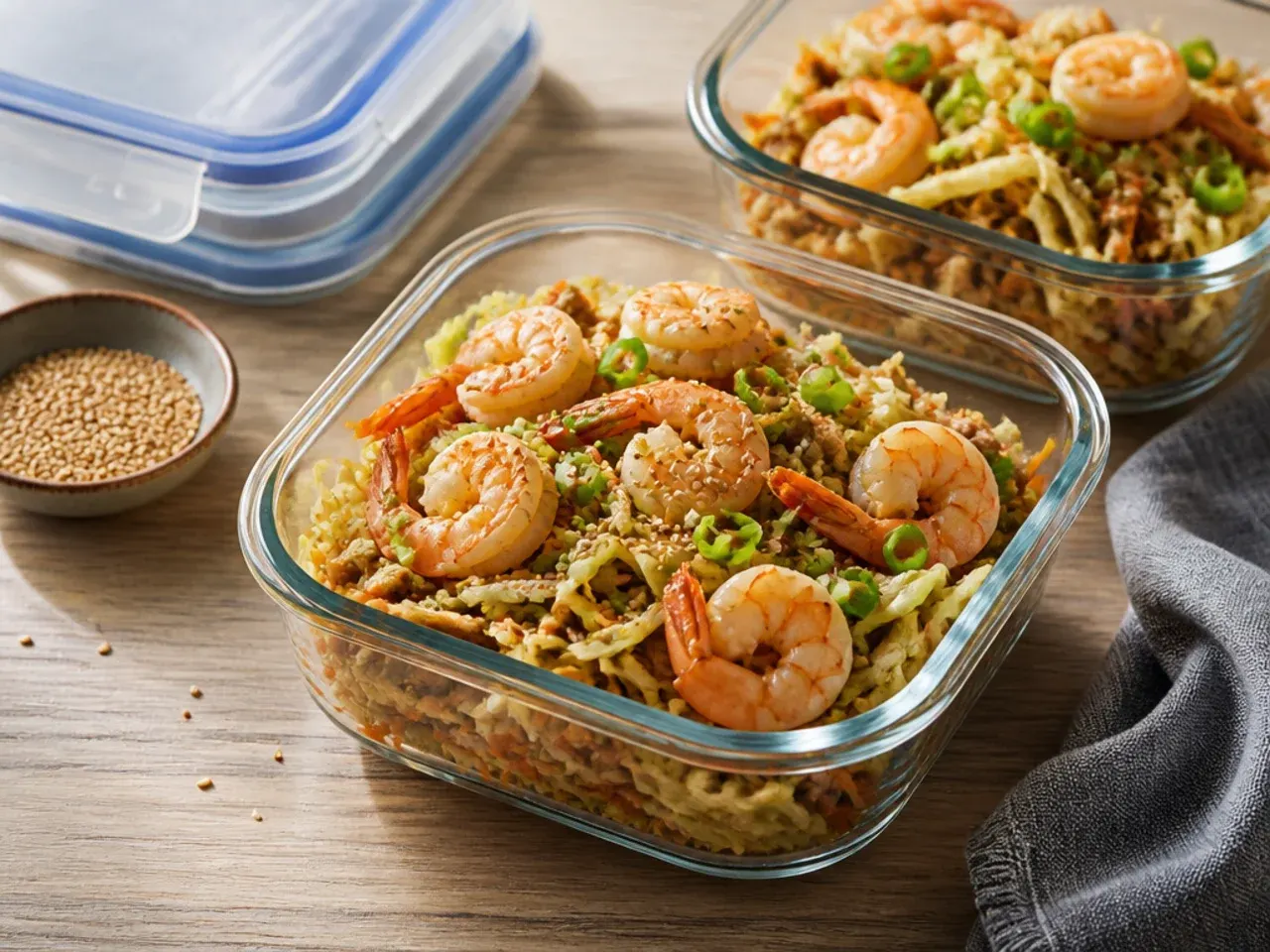
Let the shrimp egg roll in a bowl cool for no more than two hours, then transfer it to an airtight container and refrigerate for up to 3-4 days. For longer storage, freeze in individual portions for up to 2-3 months and thaw overnight in the fridge before reheating, since the cabbage texture holds up better than freezing the whole batch at once. Reheat gently in a skillet over medium heat for 4-5 minutes, stirring often and adding a splash of water or soy sauce to loosen the sauce, rather than microwaving, which tends to overcook the shrimp and make them chewy. Scatter over fresh spring onion or sesame seeds after reheating to bring back some of the original crunch and colour.
This shrimp egg roll in a bowl is a 30-minute skillet dinner with juicy prawns, crunchy cabbage and a garlicky soy sauce. For more egg roll in a bowl inspiration, browse the full Egg Roll in a Bowl board — every idea there is written for real home kitchens, not professional bakers.
Frequently Asked Questions
Yes, it freezes reasonably well for up to 2-3 months if cooled completely and stored in airtight, portion-sized containers or freezer bags with the air pressed out. Thaw it overnight in the fridge rather than at room temperature, then reheat gently in a skillet. Shrimp can turn a little firmer after freezing and reheating compared with fresh, so it's best eaten within the first month for the closest texture to freshly cooked.

Related Recipes
Save this for later 📌
Pin this article to your Pinterest board so the full list is one tap away when you need it.
Save on Pinterest