15 Sourdough French Toast Casserole Ideas

This sourdough French toast casserole turns tangy day-old bread into a make-ahead breakfast bake with a crisp top and custardy centre. If you love french toast casserole inspiration, start with our French Toast Casserole collection, then browse the full Comfort Dinners hub for more.

Save this for later 📌
Pin this article to your Pinterest board so the full list is one tap away when you need it.
Save on PinterestComfort Dinners
Beginner
Recipes
15 ideas
Table of Contents
- Why You'll Love These
- 1. Classic Sourdough French Toast Casserole
- 2. Easy 5-Ingredient Sourdough Casserole
- 3. Cozy Spiced Chai Sourdough Casserole
- 4. Simple Overnight Sourdough Casserole
- 5. Creamy Extra-Custard Sourdough Casserole
- 6. Loaded Caramel Pecan Bacon Sourdough Casserole
- 7. Best-Ever Streusel-Topped Sourdough Casserole
- 8. Cheesy Cream Cheese-Swirled Sourdough Casserole
- 9. Budget Day-Old Sourdough Casserole
- 10. Crowd-Pleasing Mixed Berry Sourdough Casserole
- 11. Make-Ahead Freezer Sourdough Casserole
- 12. Family Chocolate Chip Sourdough Casserole
- 13. Festive Cranberry Orange Sourdough Casserole
- 14. Quick No-Soak Sourdough Casserole
- 15. Homemade Sourdough-from-Scratch Casserole
- Pro Tips
- Serving Suggestions
- Storage and Reheating
- The Master Recipe
Why You'll Love These
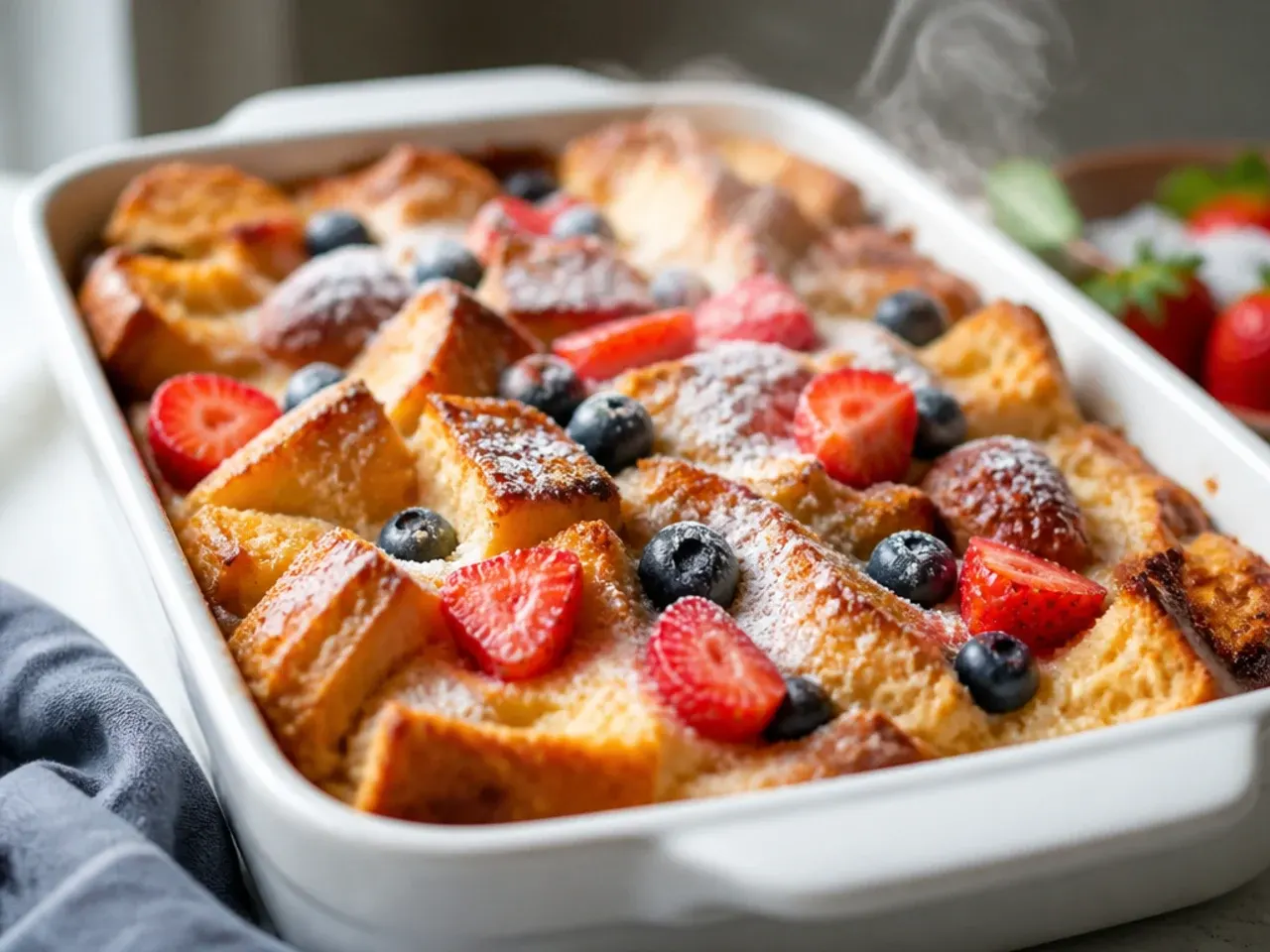
A sourdough French toast casserole takes the tang and chew of a good crusty loaf and turns it into a hands-off bake, so you soak the bread the night before and just slide it into the oven in the morning. Sourdough's firmer, less sweet crumb holds its shape far better than soft sandwich bread, giving you distinct custardy pockets instead of a mushy middle. The natural tang cuts through the sweetness of maple syrup and cinnamon, which is why this version is popular even with people who don't usually reach for a sweet breakfast. Every variation below only changes a swap or two, so you can build your own favourite fast.
1. Classic Sourdough French Toast Casserole

This is the base recipe everything else riffs on: cubed day-old sourdough soaked in a custard of eggs, whole milk, a splash of cream, vanilla and plenty of ground cinnamon. Leave the crusts on, since they crisp up nicely at the edges and add texture the crumb alone can't give. Let the bread sit in the fridge for at least an hour, though overnight gives the best result because sourdough is denser than enriched bread and needs longer to soak all the way through. Bake uncovered at 180°C (350°F) until the top is deep golden and the centre no longer wobbles, about 40-45 minutes.
2. Easy 5-Ingredient Sourdough Casserole
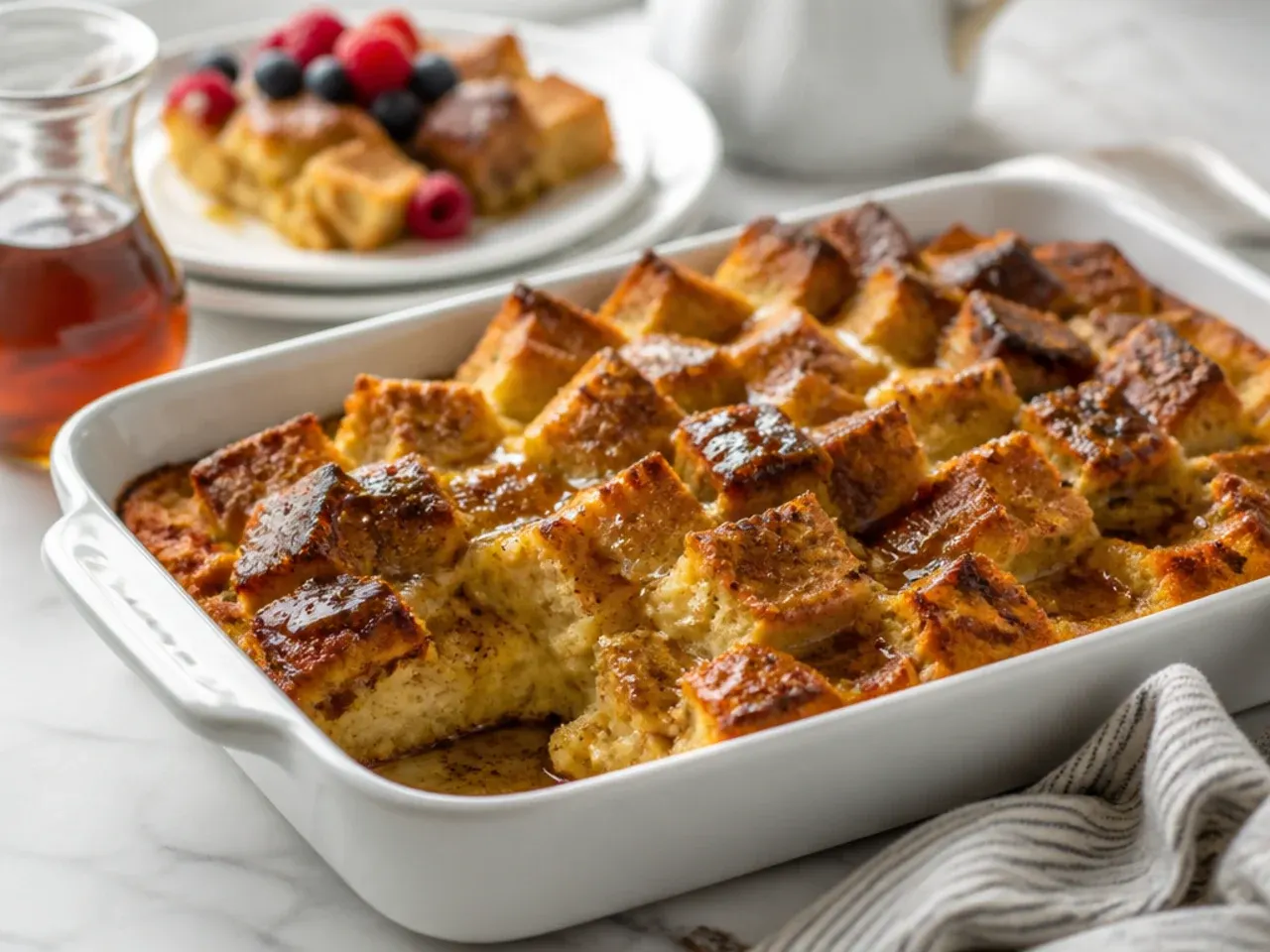
For the fewest dishes and least prep, stick to sourdough, eggs, milk, sugar and vanilla, skipping cream, spices and any topping entirely. Whisk the custard directly in a jug, pour it over cubed bread in the dish, and press the cubes down with a spatula so every piece gets coated, since sourdough's firmer crumb needs a bit more encouragement to soak up liquid than softer breads. It won't have the same depth as the classic version, but it bakes just as well and is the one to reach for on a weekday when you still want a hot breakfast. A pat of butter dotted over the top before baking helps the surface brown without any extra topping.
3. Cozy Spiced Chai Sourdough Casserole

Steep a chai tea bag in the warmed milk for 5 minutes before making the custard, or stir in a mix of cinnamon, cardamom, ginger and clove for the same warming effect. The sourdough's tang plays especially well against these deeper spices, giving a more grown-up flavour than a plain cinnamon bake. Add a tablespoon of dark brown sugar in place of some of the caster sugar for a richer, almost toffee-like sweetness. This is the version to make on a cold morning when you want something that smells like the whole kitchen has been spiced.
4. Simple Overnight Sourdough Casserole

Assemble the custard-soaked sourdough the night before, cover the dish tightly with cling film or foil, and refrigerate for 8-12 hours so the dense crumb has time to fully absorb the custard. Take the dish out while the oven preheats to 180°C (350°F) so it isn't going in stone cold, which can leave the centre underdone. This is the version to plan for guests staying over, since all the work happens the evening before and breakfast is just a bake away. Cover loosely with foil for the first 20 minutes if the top is browning faster than the centre is setting.
5. Creamy Extra-Custard Sourdough Casserole

Swap half the milk for double cream and add an extra egg yolk or two to make the custard richer, which balances sourdough's leaner, tangier crumb with a filling that stays soft and almost pudding-like in the centre. Because sourdough absorbs more slowly than enriched bread, cut it slightly smaller than usual so the extra custard soaks through evenly rather than pooling at the bottom. Bake at a slightly lower 170°C (340°F) for a touch longer, around 45-50 minutes, so the outside doesn't set before the extra cream cooks through. This version is best served in smaller portions since it's noticeably richer than the classic bake.
Save this for later 📌
Pin this article to your Pinterest board so the full list is one tap away when you need it.
Save on Pinterest6. Loaded Caramel Pecan Bacon Sourdough Casserole
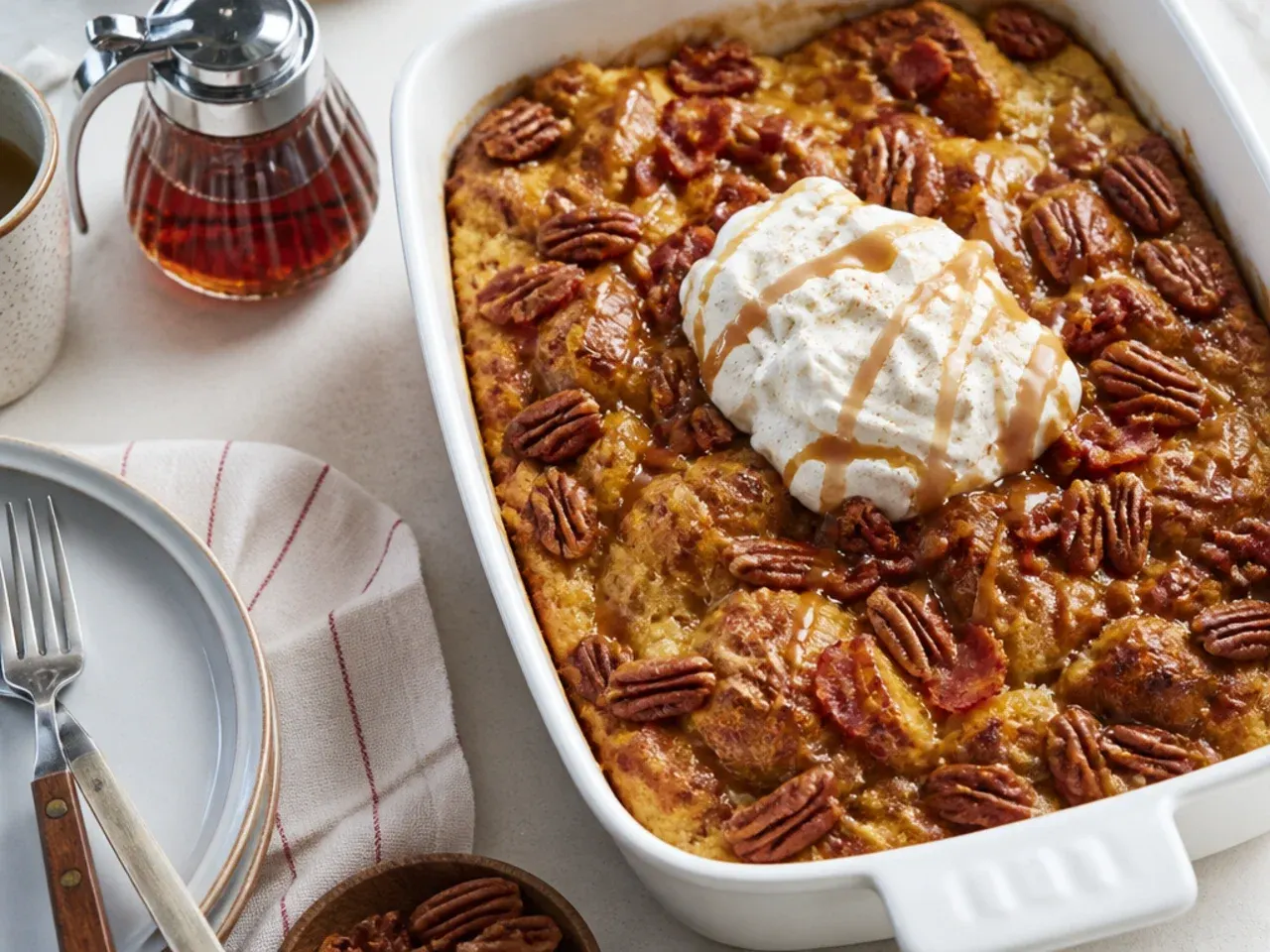
Scatter cooked, crumbled streaky bacon through the bread before pouring over the custard, then top with chopped pecans and a caramel drizzle added in the last 10 minutes of baking so it doesn't burn. The salty bacon against sourdough's tang and the sweet caramel gives a proper sweet-savoury balance that plainer versions don't have. Toast the pecans in a dry pan for a couple of minutes first to bring out more flavour before scattering them on. This is the version worth making when you want brunch to feel like a genuine occasion rather than a quick breakfast.
7. Best-Ever Streusel-Topped Sourdough Casserole

The topping is what earns this version its name: a crumble of cold butter, brown sugar, flour and cinnamon rubbed together and scattered over the soaked sourdough just before it goes in the oven. As it bakes, the streusel forms a crisp, sugary crust that plays off the crusty sourdough chunks poking through, giving two layers of crunch against the soft custard beneath. Keep the streusel pieces slightly coarse rather than fine sand, since bigger pieces hold their crunch better after baking. This is the version worth doubling the topping for if you're serving it to guests.
8. Cheesy Cream Cheese-Swirled Sourdough Casserole

Dot small spoonfuls of softened cream cheese or mascarpone between the sourdough layers before pouring over the custard, so it melts into soft, tangy pockets rather than mixing all the way through. The extra tang from the cream cheese actually complements sourdough's natural sourness rather than fighting it, unlike with sweeter breads. A light dusting of lemon zest over the top before baking sharpens the flavour further. Slice this one slightly smaller than the classic version, since the cheese pockets make each portion feel heavier.
9. Budget Day-Old Sourdough Casserole

Slightly stale sourdough is genuinely preferable here, since its firmer, drier crumb soaks up custard evenly without collapsing, so there's no need to buy a fresh loaf. If your loaf is only a day or two old, cube it and leave it uncovered on the counter for a few hours, or dry it in a low oven at 120°C (250°F) for 10-15 minutes, to get the same effect. Basic pantry spices like cinnamon and a splash of vanilla essence do the same job as pricier extracts, so there's no need for anything fancy. This version proves you don't need special ingredients to get a good bake, just the right bread texture, and it's an easy way to use up the end of a loaf.
10. Crowd-Pleasing Mixed Berry Sourdough Casserole
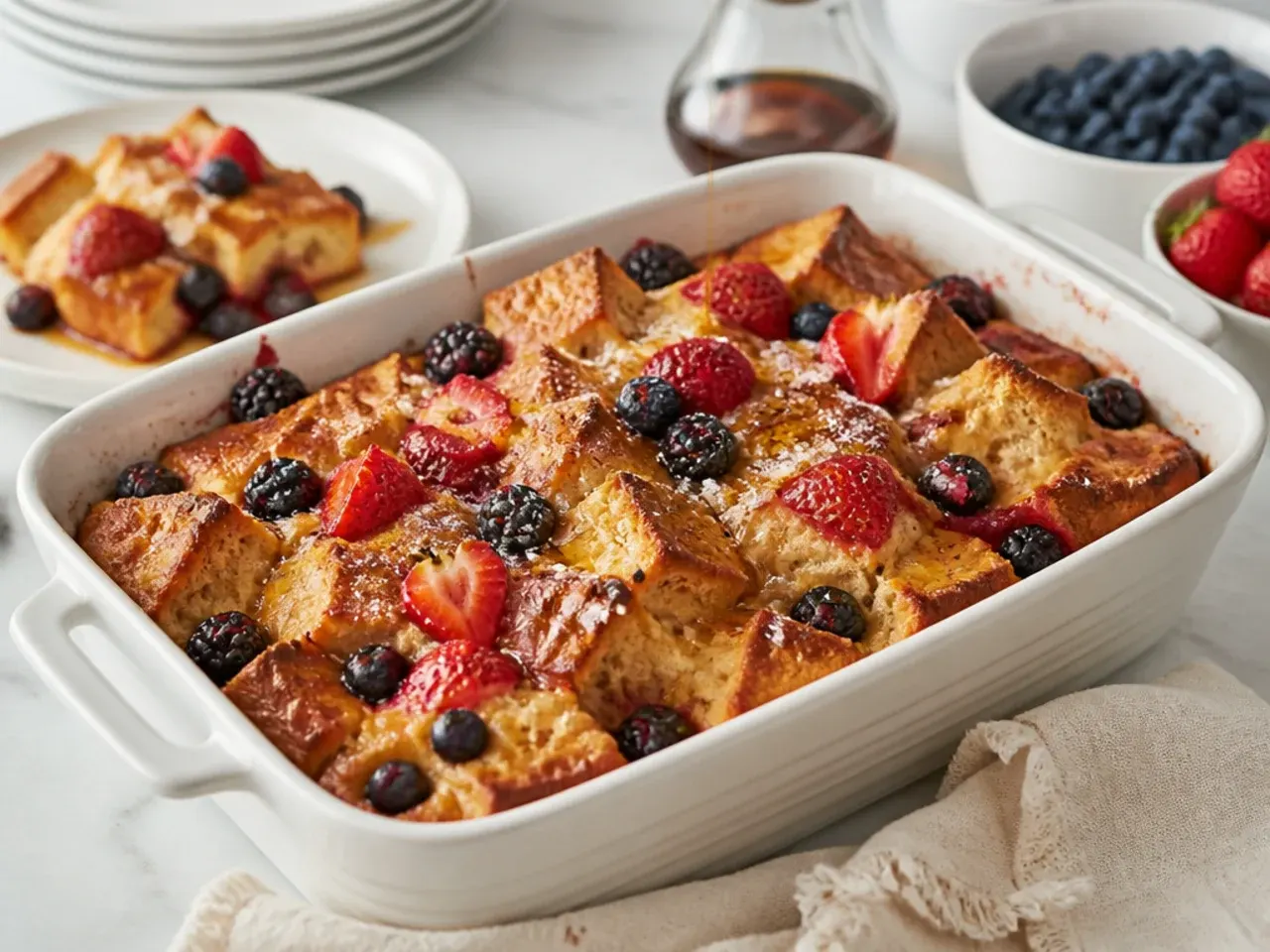
Fold a mix of fresh or frozen blueberries, raspberries and sliced strawberries through the bread before adding the custard, keeping a handful back to scatter over the top for colour. If using frozen berries, don't thaw them first, as they'll release less liquid into the custard and keep the bake from turning watery. The berries' tartness pairs naturally with sourdough's own tang, so the whole dish reads less sugary than a berry bake made with sweet bread. Serve with a dollop of yoghurt rather than more syrup, since the fruit already adds plenty of sweetness.
Save this for later 📌
Pin this article to your Pinterest board so the full list is one tap away when you need it.
Save on Pinterest11. Make-Ahead Freezer Sourdough Casserole

Assemble the full unbaked casserole in a freezer-safe dish, wrap it tightly in a double layer of cling film and foil, and freeze for up to two months rather than only refrigerating overnight. Thaw it in the fridge for a full 24 hours before baking, since baking from frozen leads to an undercooked centre and an overdone top. Sourdough freezes and thaws especially well because its firmer structure resists going soggy the way softer breads can after being frozen soaked in custard. Once thawed, bake exactly as you would a fresh casserole, adding an extra 5-10 minutes if the dish is still cold in the middle.
12. Family Chocolate Chip Sourdough Casserole

Stir a handful of mini chocolate chips through the bread before pouring the custard over, and add a few more on top so they melt into visible pools as it bakes. Mini chips work better than standard-size ones here, since they distribute more evenly through the cubed bread and melt faster. Sourdough's tang keeps this version from tasting overly sweet even with the chocolate, so it's worth keeping the spice simple, just vanilla and a touch of cinnamon, so the chocolate stays the star. A light drizzle of melted chocolate over the top after baking makes it feel extra special for a birthday breakfast.
13. Festive Cranberry Orange Sourdough Casserole

Add orange zest and a splash of orange juice to the custard, then fold dried cranberries through the bread for a Christmas-morning version with a bit of extra tartness on top of the sourdough's own tang. The citrus keeps the bake from tasting one-note sweet, which matters when it's sitting alongside a big holiday spread. A brush of orange glaze, just icing sugar loosened with a little orange juice, over the top after baking gives it a festive shine without needing a full frosting. This one holds up especially well made the night before, since the flavours deepen as it sits.
14. Quick No-Soak Sourdough Casserole
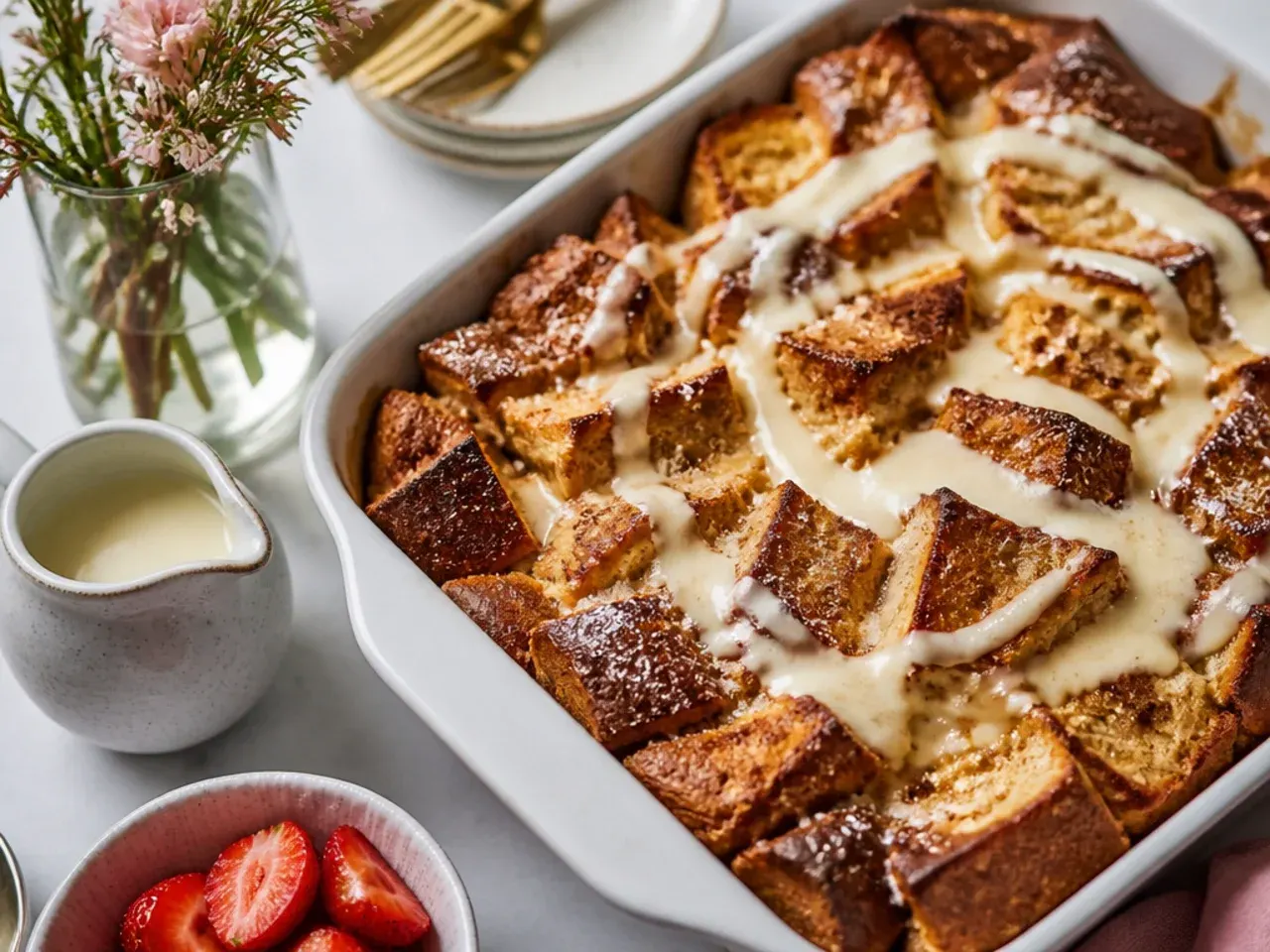
When you're short on time, cut the sourdough into smaller cubes than usual, around 2 cm, so the custard reaches the centre of each piece faster without needing a long soak. Whisk the custard, pour it over, press the bread down firmly with a spatula, and go straight into a hot oven at 190°C (375°F) for 30-35 minutes. The texture will be a touch less custardy than an overnight version since sourdough absorbs more slowly than soft bread, but it's still a genuinely fast route to a hot baked breakfast. This is the version to use when guests turn up unannounced and you still want to serve something warm.
15. Homemade Sourdough-from-Scratch Casserole

If you're baking your own sourdough loaf first, bake it a day or two ahead so the crumb has time to firm up, since a very fresh loaf can be too moist to soak evenly. Once cooled and cubed, treat it exactly as you would shop-bought sourdough in the classic recipe, though a well-fermented loaf with a stronger tang will give the finished bake a more pronounced sour-sweet contrast. The flavour pay-off is real: a from-scratch loaf gives a deeper, more complex base than most bought sourdough. This is the version for a special occasion when you want to say the whole thing was made from scratch, starter and all.
Pro Tips
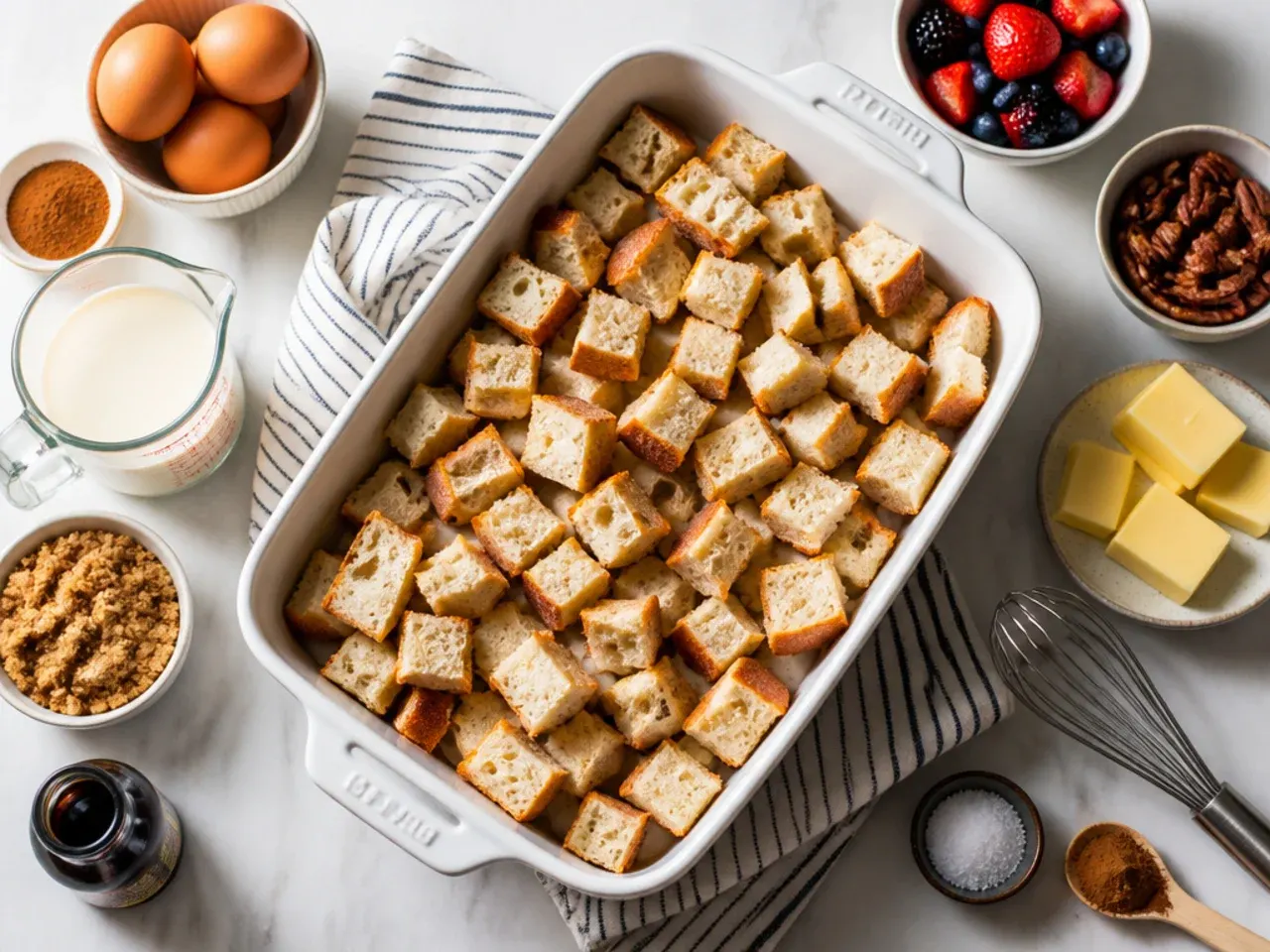
Use bread that's at least a day old, or dry fresh sourdough cubes in a low oven first, since fresh bread can turn gluey once soaked and doesn't give the same custardy-yet-firm texture. Leave the crusts on rather than trimming them off, as the crusty edges crisp up in the oven and add welcome texture against the soft centre. Press the bread down into the custard after pouring so the top layer doesn't dry out and burn before the centre sets. Check doneness with a knife inserted near the centre: it should come out mostly clean with just a little moist custard, not wet batter, and if the top browns too fast, tent it loosely with foil for the last 10-15 minutes.
Serving Suggestions

Serve warm, straight from the dish, with warmed maple syrup poured at the table so it doesn't soak in and turn the top soggy before serving. A dollop of Greek yoghurt or a spoonful of whipped cream on the side balances the tang of the sourdough with a bit of creaminess. Fresh fruit, berries, sliced banana or a few orange segments, adds brightness and makes the plate feel more like a full breakfast. For a crowd, set out toppings buffet-style, syrup, nuts, fruit and yoghurt, so everyone can dress their own slice.
Storage and Reheating

Cover leftovers and keep them in the fridge for up to 3-4 days; the texture holds up well since the custard has already set and sourdough's sturdier crumb doesn't turn mushy as it sits. Reheat individual portions in the microwave for 30-45 seconds, or warm a larger amount covered in foil in a 160°C (320°F) oven for 15 minutes so the centre heats through without the top drying out. To freeze baked leftovers, wrap portions tightly and freeze for up to 2 months, then thaw overnight in the fridge before reheating. Avoid reheating from frozen in the microwave alone, as the edges will overcook before the centre warms.
The Recipe
The Master Recipe
20 min
45 min
1 hr 5 min (plus 1 hr soak)
8
Beginner
Ingredients 8 Person(s)
Directions
Step 1: Prepare the bread

Cube the sourdough into roughly 3 cm pieces, leaving the crusts on. If the loaf is very fresh rather than day-old, spread the cubes on a tray and dry them in a 120°C (250°F) oven for 10-15 minutes, then let them cool before using.
Step 2: Grease the dish and add the bread

Butter a 23 x 33 cm (9 x 13 in) baking dish and tip in the cubed sourdough, spreading it out evenly so there are no large gaps.
Step 3: Make the custard

In a large jug or bowl, whisk together the eggs, whole milk, double cream, light brown sugar, vanilla extract, cinnamon, nutmeg and salt until fully combined and no streaks of egg remain.
Step 4: Soak the casserole

Pour the custard evenly over the sourdough, then press the cubes down firmly with a spatula so every piece is coated, since sourdough absorbs more slowly than softer bread. Cover the dish and refrigerate for at least 1 hour, or up to overnight for the best texture.
Step 5: Bring to room temperature
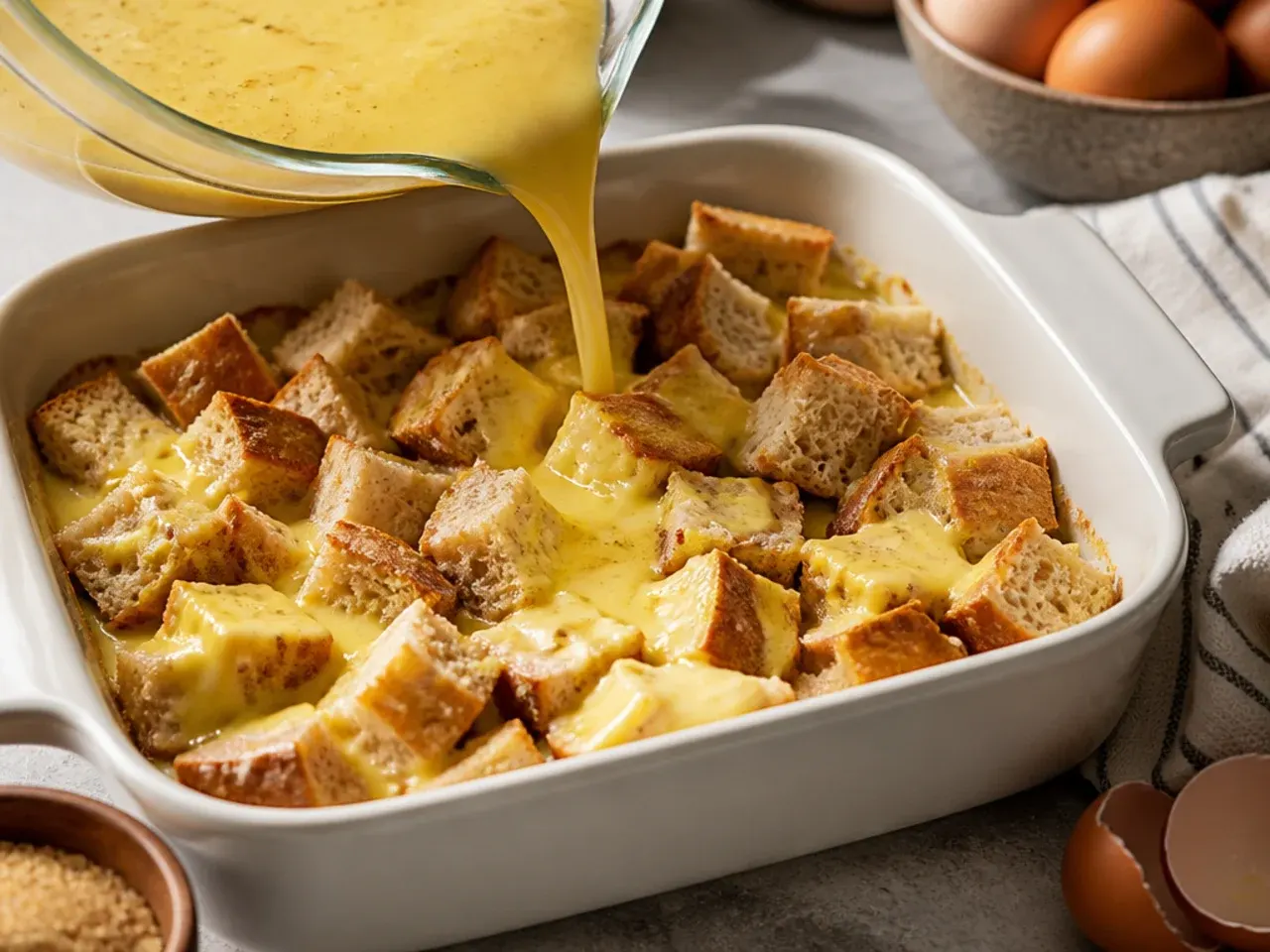
Remove the dish from the fridge and let it sit at room temperature for 15-20 minutes while the oven preheats to 180°C (350°F), so the casserole isn't going into the oven stone cold.
Step 6: Bake

Bake uncovered for 40-45 minutes, until the top is deep golden and a knife inserted near the centre comes out mostly clean. Tent loosely with foil if the top browns too quickly.
Step 7: Rest and serve

Let the casserole rest for 5-10 minutes so the custard fully sets before slicing. Serve warm with maple syrup poured at the table.
Frequently Asked Questions
Yes, and it's actually the preferred method for sourdough because the denser crumb needs longer to soak all the way through than softer bread. Assemble the casserole up to the point of baking, cover it tightly and refrigerate for 8-12 hours. In the morning, let it sit at room temperature for 15-20 minutes while the oven preheats, then bake as directed. This resting time gives a softer, more custardy centre than a quick 1-hour soak.
Save this for later 📌
Pin this article to your Pinterest board so the full list is one tap away when you need it.
Save on Pinterest