15 Scone Recipes I Wish I Tried Sooner

These flaky sourdough scones turn leftover starter discard into 15 tender, buttery variations, from classic vanilla to loaded chocolate chip. If you love scones inspiration, start with our Scone Recipes collection, then browse the full Desserts hub for more.

Save this for later 📌
Pin this article to your Pinterest board so the full list is one tap away when you need it.
Save on PinterestDesserts
Beginner
Recipes
15 ideas
Table of Contents
- Why You'll Love These
- 1. Classic Vanilla Sourdough Scones
- 2. Easy One-Bowl Sourdough Scones
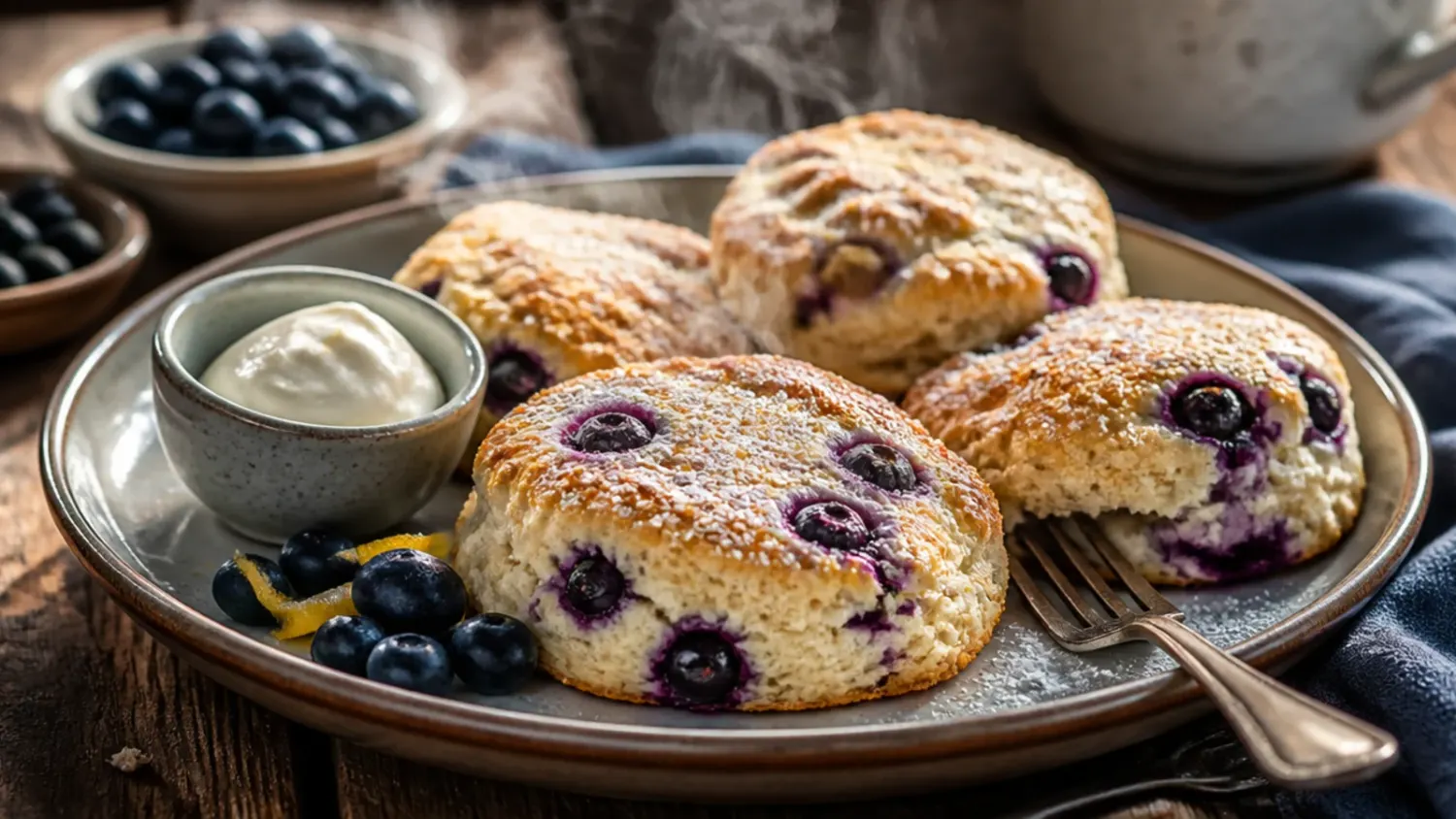
- 3. Fresh Lemon and Blueberry Sourdough Scones
- 4. Cozy Cinnamon Sugar Sourdough Scones
- 5. Creamy Clotted Cream Sourdough Scones
- 6. Simple Four-Ingredient Sourdough Scones
- 7. Zesty Orange and Cranberry Sourdough Scones
- 8. Wholesome Wholemeal Sourdough Scones
- 9. Budget-Friendly Pantry Sourdough Scones
- 10. 30-Minute Weeknight Sourdough Scones
- 11. Rustic Cheddar and Chive Sourdough Scones
- 12. Loaded Chocolate Chip Sourdough Scones
- 13. Family-Size Sourdough Scone Traybake
- 14. Best-Ever Flaky Sourdough Scones
- 15. Quick No-Chill Drop Sourdough Scones
- Pro Tips
- Serving Suggestions
- Storage and Reheating
- The Master Recipe
Why You'll Love These

Sourdough scones turn the discard you'd normally tip down the sink into the flakiest, most tender scones you've ever pulled from the oven. The mild tang from cold, unfed starter works with the butter rather than against it, giving a subtle depth that plain buttermilk scones can't match. Because the discard adds moisture and acidity, you get a taller rise and a softer crumb without any extra kneading or resting time. Whether you like yours plain with jam and clotted cream or loaded with chocolate chips, this base recipe adapts to fifteen different flavours below.
1. Classic Vanilla Sourdough Scones

This is the base recipe every other variation below builds on: cold discard, grated frozen butter, and a splash of double cream folded together until just combined. A teaspoon of vanilla extract rounds out the tang from the starter without masking it. Brush the tops with beaten egg and a scatter of demerara sugar before baking so they come out with a glossy, crackly top. Serve warm with strawberry jam and clotted cream for the definitive cream-tea scone.
2. Easy One-Bowl Sourdough Scones

Skip the food processor and the separate mixing bowls: rub the butter into the flour with your fingertips straight in the bowl you'll mix everything in. Stir the discard, cream and egg together first so you only fold wet into dry once, which keeps the gluten from overworking. This version is ready for the oven in under 15 minutes of hands-on time, making it the one to reach for on a lazy Sunday morning. Cut into 8 wedges rather than fussing with a round cutter to save even more time.
3. Fresh Lemon and Blueberry Sourdough Scones

Rub the zest of one large lemon into the sugar before mixing so the oils perfume the whole batch, then fold through 100 g (3/4 cup) of fresh blueberries at the very end. Toss the berries in a spoonful of the measured flour first so they don't bleed purple streaks through the dough. Because fresh berries add extra moisture, chill this dough for a full 30 minutes before baking to keep the scones from spreading. A simple lemon glaze drizzled on once cooled brightens the tang from the discard beautifully.
4. Cozy Cinnamon Sugar Sourdough Scones

Swap the caster sugar for light brown sugar and add 4 g (1 1/2 tsp) ground cinnamon plus a pinch of nutmeg to the dry ingredients for a warm, spiced base. Roll the shaped dough in a cinnamon-sugar mix before the final chill so every side gets a coating that turns crisp and slightly caramelised in the oven. These are the ones to bake on a cold morning when the kitchen could use the smell of cinnamon in it. A simple icing sugar glaze finishes them off if you want something closer to a coffee-shop treat.
5. Creamy Clotted Cream Sourdough Scones

Replace the double cream in the base recipe with clotted cream, warmed just enough to loosen it, for a noticeably richer, denser crumb. Because clotted cream carries more fat than double cream, cut the butter back to 90 g (6 tbsp) so the dough doesn't turn greasy. This variation stays moist for an extra day compared with the classic version, so it's a good choice if you're baking ahead. Cut smaller than usual, about 5 cm rounds, since the richer dough rises less than the plainer versions.
Save this for later 📌
Pin this article to your Pinterest board so the full list is one tap away when you need it.
Save on Pinterest6. Simple Four-Ingredient Sourdough Scones

For the days you don't want to measure sugar, salt and baking powder separately, this pared-back version uses just self-raising flour, cold discard, cold butter and cream. Self-raising flour already contains the raising agent and a little salt, so it removes two ingredients from the classic recipe without changing the rise. The trade-off is a slightly less sweet scone, which actually suits savoury toppings like butter and cheese better than the sugared versions. Keep everything cold and handle the dough as little as possible, exactly as with the base recipe.
7. Zesty Orange and Cranberry Sourdough Scones

Rub orange zest into the sugar and swap the vanilla for 15 ml (1 tbsp) of orange juice to sharpen the flavour against the tang of the discard. Dried cranberries, about 75 g (1/2 cup), go in at the same point as the wet ingredients so they distribute evenly without breaking apart. This combination is the one to make around the festive season, when a citrussy, fruity scone feels more seasonal than a plain one. A thin orange glaze, just icing sugar loosened with a little juice, is the right finish rather than clotted cream.
8. Wholesome Wholemeal Sourdough Scones
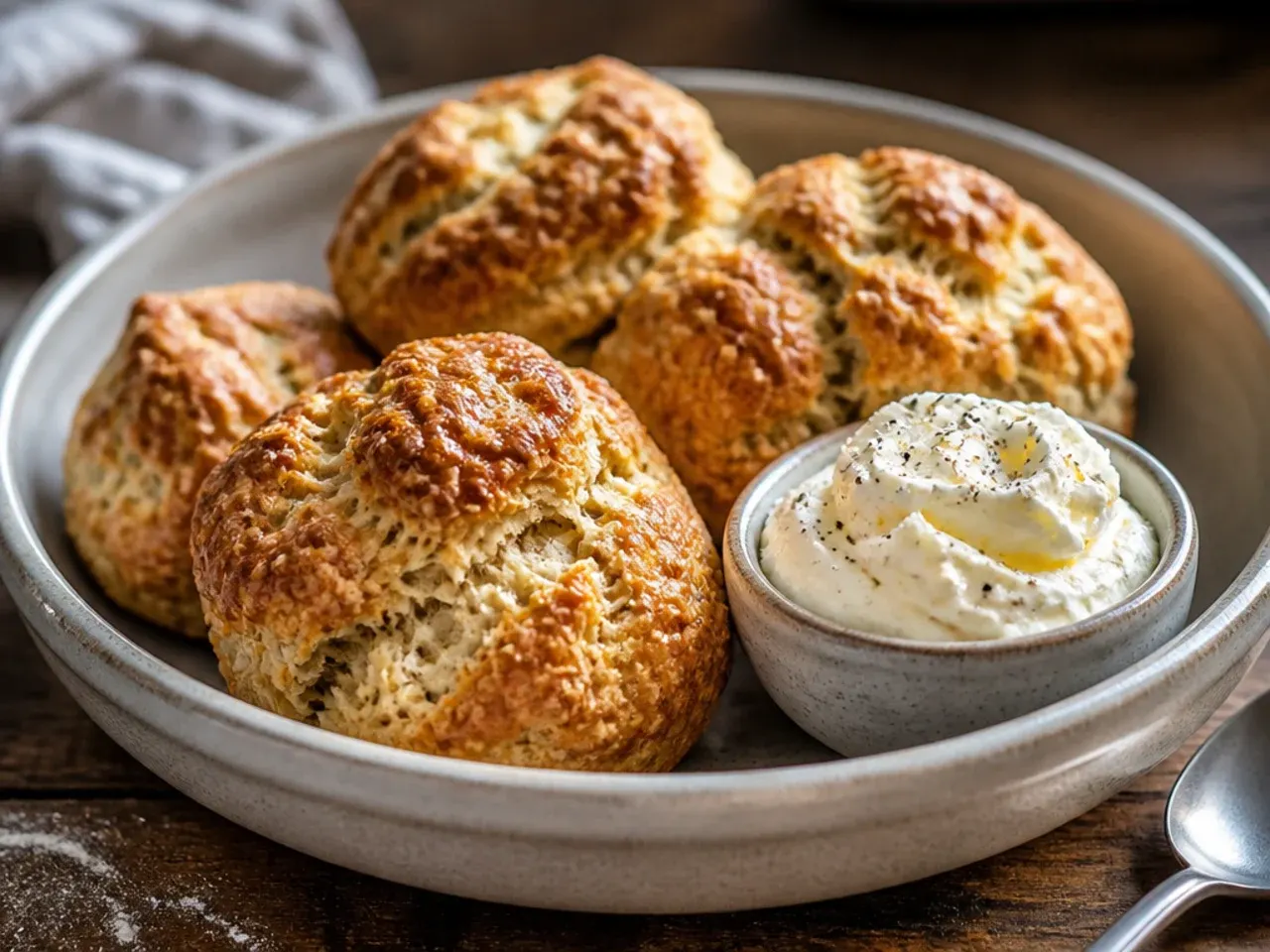
Swap half the plain flour, 175 g (1 1/2 cups), for wholemeal (whole wheat) flour to add fibre and a nuttier flavour that pairs well with the sourdough tang. Wholemeal flour absorbs more liquid, so add an extra 15 ml (1 tbsp) of cream if the dough feels dry and crumbly rather than soft. 21 g (1 tbsp) of honey in place of half the sugar keeps these from tasting worthy at the expense of flavour. They're denser than the classic version, so give them the full 20 minutes in the oven and check the base is golden before pulling them out.
9. Budget-Friendly Pantry Sourdough Scones

This version uses only what's already sitting in most kitchens: plain flour, sourdough discard, butter, milk instead of cream, and whatever sugar you have to hand. Milk makes the dough slightly wetter than cream does, so add it a tablespoon at a time until the dough just comes together rather than tipping it all in at once. Skip the egg wash and simply brush the tops with a splash of the milk before baking to save the extra egg. These scones cost a fraction of the loaded versions but still get their lift and tang entirely from the discard.
10. 30-Minute Weeknight Sourdough Scones

For this speed version, freeze the butter and grate it directly into the flour so it's evenly distributed in seconds rather than minutes of rubbing in by hand. Skip the chilling step and go straight from shaping to the oven; the dough will spread slightly more, but a hot 220°C (425°F) oven sets the outside fast enough to limit it. Cut the dough into 8 wedges in one go instead of stamping rounds, which saves the time of re-rolling scraps. Start to finish, including baking, this version is on the table in under 30 minutes.
Save this for later 📌
Pin this article to your Pinterest board so the full list is one tap away when you need it.
Save on Pinterest11. Rustic Cheddar and Chive Sourdough Scones

Drop the sugar and vanilla entirely and fold in 100 g (1 cup) of grated mature cheddar and a small handful of chopped chives for a savoury version that pairs with soup instead of jam. A pinch of cayenne or smoked paprika in the dry ingredients gives a subtle warmth that plays well against the cheese. Shape this dough freeform rather than cutting neat rounds, patting it into a rough circle and cutting it into 8 rustic wedges. Extra grated cheddar scattered over the tops before baking gives you a crisp, golden crust.
12. Loaded Chocolate Chip Sourdough Scones

Fold in 150 g (1 cup) of dark chocolate chips along with the wet ingredients for the most indulgent version of the base recipe. Freeze the chocolate chips for 10 minutes beforehand so they don't melt into streaks while the dough is being mixed. 5 g (1 tbsp) of cocoa powder swapped in for the same amount of flour turns this into a double-chocolate scone if you want to go further. These are richest served just warm, when the chocolate is still slightly soft.
13. Family-Size Sourdough Scone Traybake

Double the base recipe and pat the dough into one large 20 cm round on a baking tray instead of cutting individual scones, then score it into 8 wedges with a sharp knife before baking. Baking as one large round rather than separate scones means a longer bake, around 28-30 minutes, so check the centre wedge is cooked through before pulling it out. This is the version to make when feeding a crowd at a family brunch, since everyone breaks off their own piece at the table. Leave the scored lines slightly deeper than you think you need to, as the dough puffs and can seal them up otherwise.
14. Best-Ever Flaky Sourdough Scones

For the flakiest possible layers, use the lamination trick: pat the dough into a rectangle, fold it into thirds like a letter, then repeat two more times before the final shaping. Each fold builds thin layers of butter and dough that puff and separate in the oven, giving a noticeably taller, flakier scone than the one-fold classic version. Keep the dough moving quickly and return it to the fridge for 5 minutes between folds if it starts to feel soft or sticky. This is the version worth the extra 15 minutes of effort when you want bakery-quality results at home.
15. Quick No-Chill Drop Sourdough Scones

Skip cutting altogether and drop spoonfuls of the wetter version of this dough, made with an extra 15 ml (1 tbsp) of cream, straight onto the baking tray for rustic drop scones. Because there's no shaping or chilling step, this is the fastest way from mixing bowl to oven, at the cost of the neat wedge shape. Use two spoons to portion the dough rather than a scoop, easing it off with a second spoon so the edges stay rough and craggy. These bake a few minutes faster than cut scones, so start checking at 15 minutes.
Pro Tips
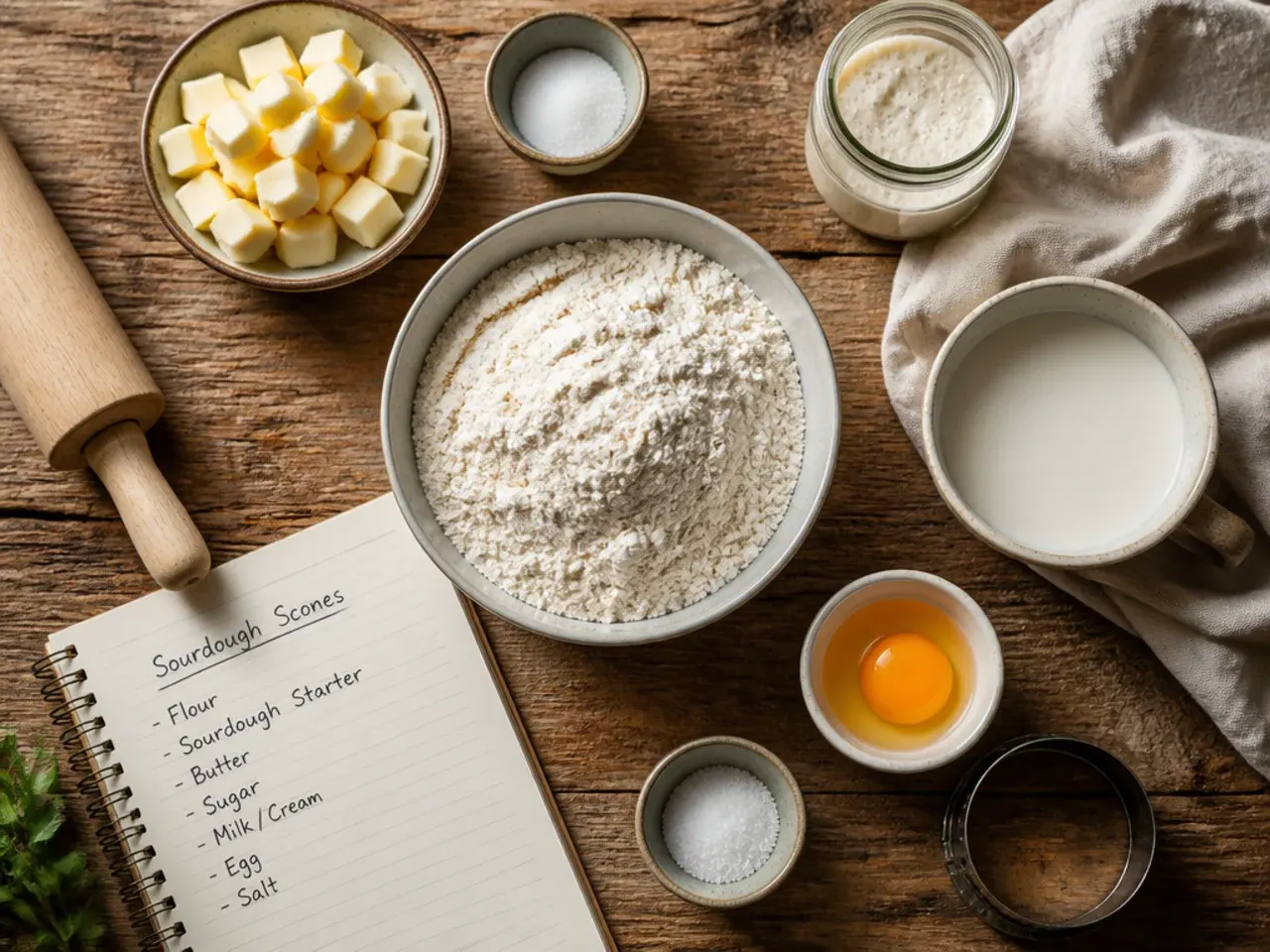
Keep every cold ingredient actually cold: grate the butter straight from the freezer and use discard straight from the fridge, since warm fat is the single biggest cause of flat, greasy scones. Handle the dough as little as possible once the wet and dry ingredients meet; overworking develops gluten and turns a tender scone tough. Always chill the shaped, cut scones for at least 20-30 minutes before they go in the oven, which firms the butter back up and gives a noticeably taller rise. Use a sharp cutter and push straight down without twisting, since a twisting motion seals the edges and stops the scones rising evenly.
Serving Suggestions

Split warm scones in half and serve the classic way, with strawberry or raspberry jam and a generous spoonful of clotted cream. Savoury versions like the cheddar and chive scones are best alongside a bowl of tomato or leek and potato soup for a simple lunch. For a brunch spread, set out a platter of several variations, some glazes and a bowl of softened butter, and let everyone build their own plate. A pot of proper tea, brewed strong with milk, is the traditional pairing that ties the whole spread together.
Storage and Reheating

Baked scones keep in an airtight container at room temperature for up to 2 days, or in the fridge for up to 5 days once fully cooled. To freeze, wrap cooled scones individually and freeze for up to 3 months, or freeze the cut, unbaked dough on a tray until firm before bagging it up for up to 3 weeks. Reheat baked scones from frozen in a 180°C (350°F) oven for about 10 minutes, or thaw first and warm for 5 minutes for a fresher texture. Unbaked frozen dough can go straight into a hot 200°C (400°F) oven, just add 5-8 minutes to the original bake time.
The Recipe
The Master Recipe
40 min
20 min
1 hr
8
Beginner
Ingredients 8 Person(s)
Directions
Step 1: Chill your ingredients
Freeze 115 g (4 oz) unsalted butter for 15 minutes, then grate it on the large holes of a box grater and return it to the freezer while you prep everything else. Take the sourdough discard straight from the fridge; it should be cold, not room temperature, to help keep the fat solid until the scones hit the oven. Line a baking tray with parchment paper and preheat the oven to 200°C (400°F) so it's fully up to temperature before the dough is ready.
Step 2: Mix the dry ingredients
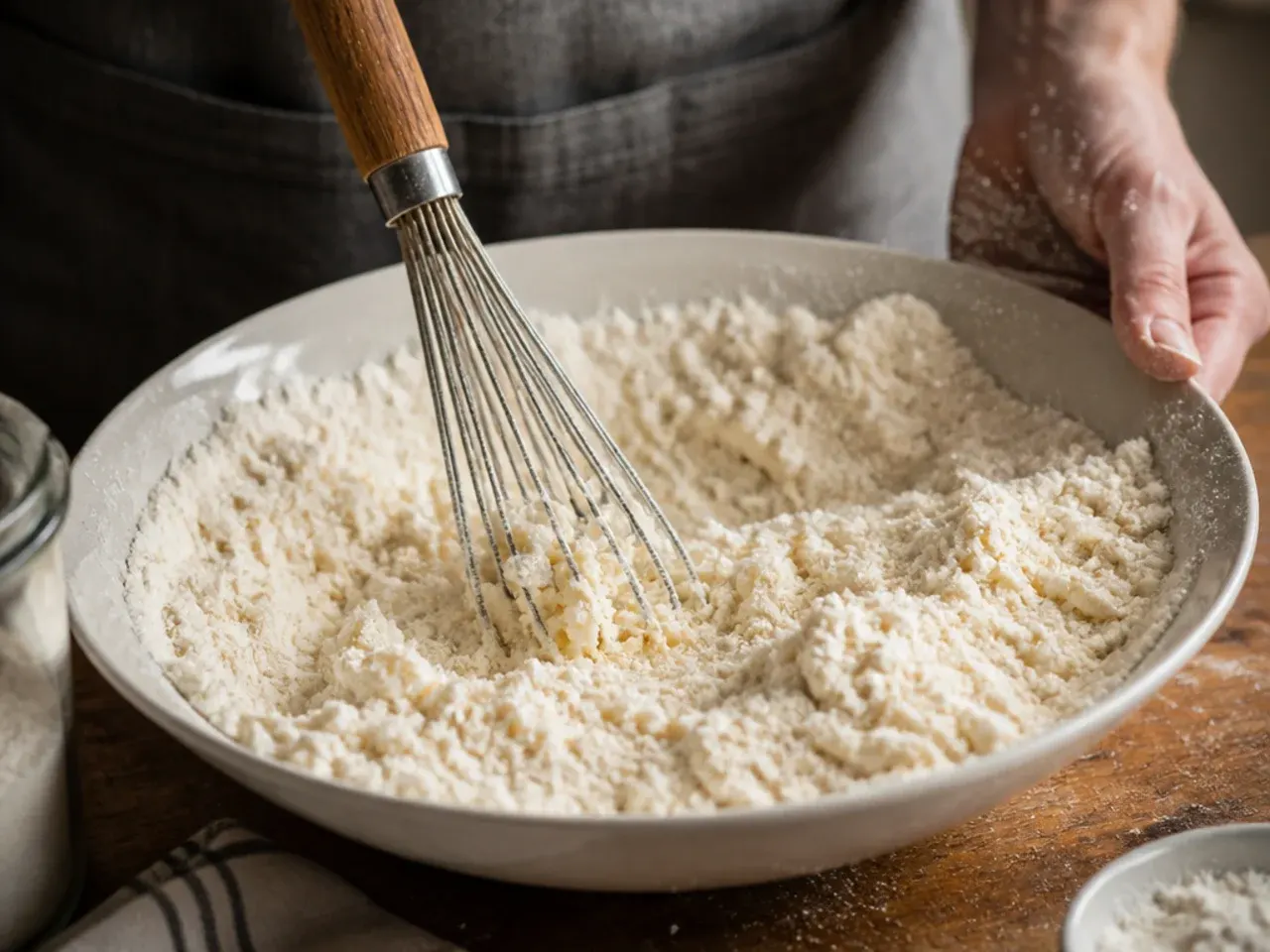
In a large bowl, whisk together 350 g (12 oz) plain flour, 50 g (1/4 cup) caster sugar, 10 g (2 tsp) baking powder and 3 g (1/2 tsp) salt until evenly combined. Whisking rather than stirring makes sure the baking powder is spread through the flour, which prevents pockets of extra rise or bitterness in the finished scones.
Step 3: Rub in the butter
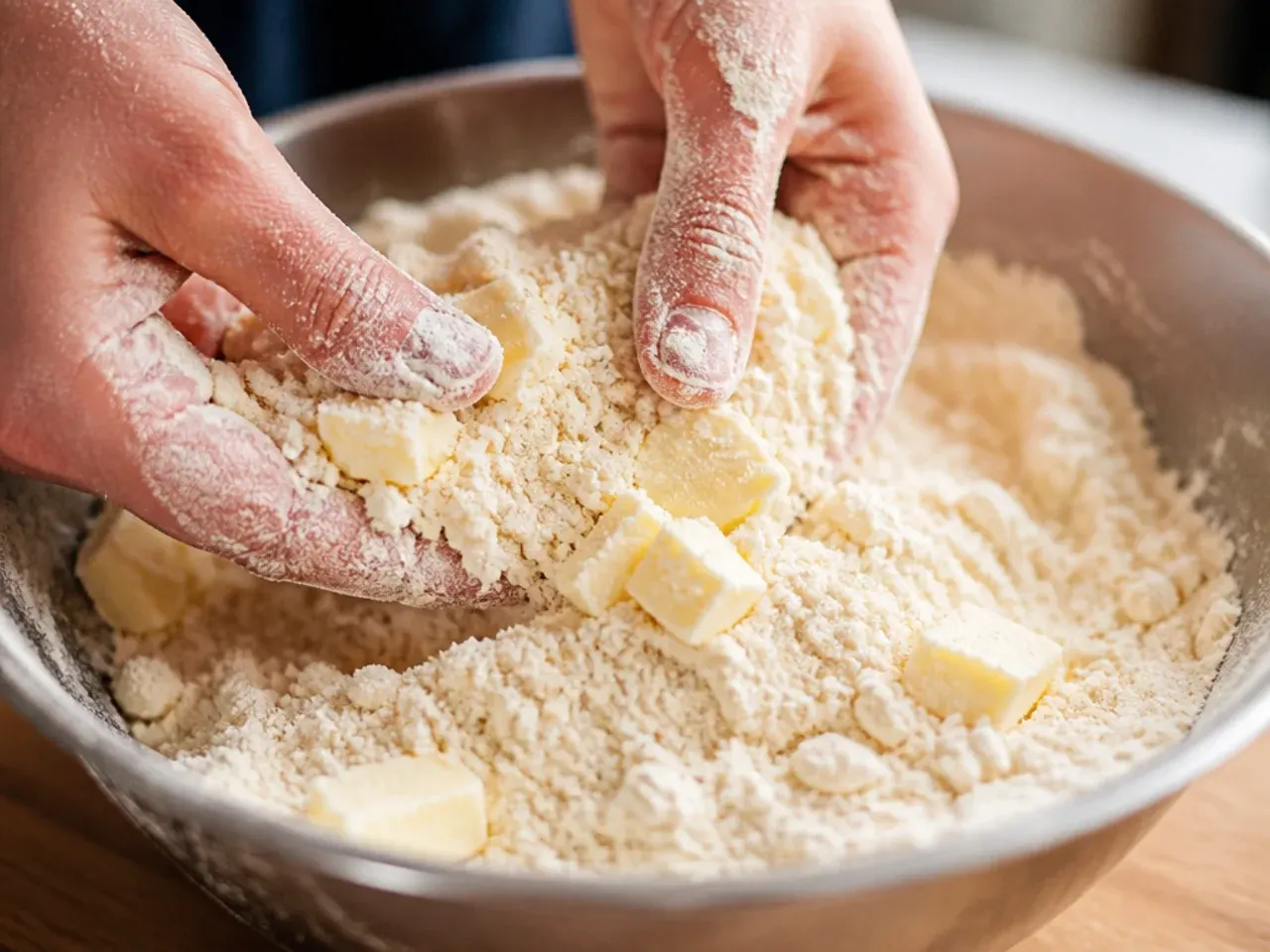
Tip the grated frozen butter into the dry ingredients and toss it through with your fingertips or two knives until the mixture looks like coarse, damp breadcrumbs with a few pea-sized lumps remaining. Work quickly and avoid using your palms too much, since the warmth from your hands will start to melt the butter and flatten the finished scones.
Step 4: Combine the wet ingredients
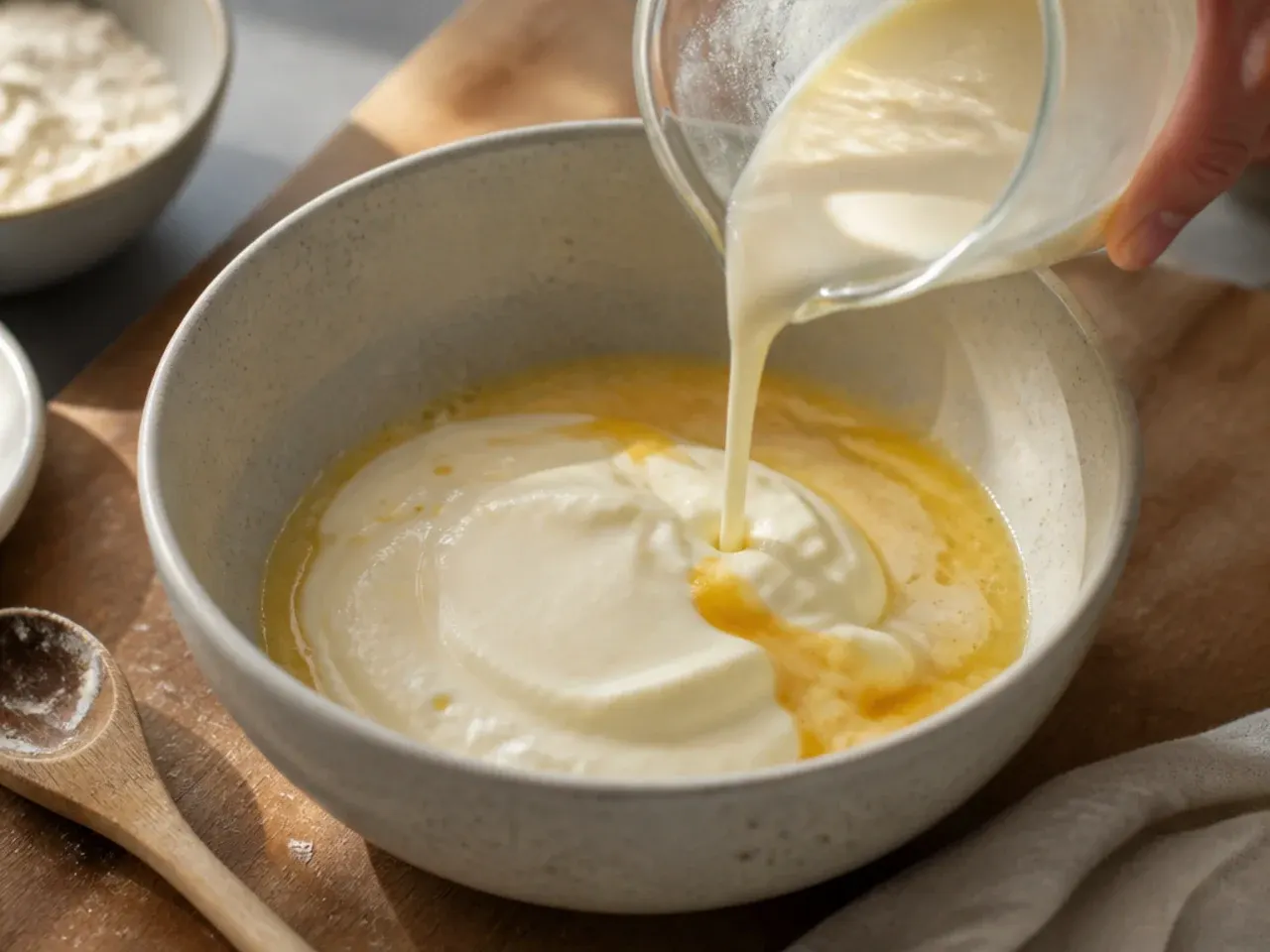
In a separate bowl or jug, whisk together 150 g (1/2 cup plus 2 tbsp) cold sourdough discard, 80 ml (1/3 cup) cold double cream, 1 beaten egg and 5 ml (1 tsp) vanilla extract until smooth. Make a well in the centre of the dry ingredients and pour in the wet mixture.
Step 5: Bring the dough together
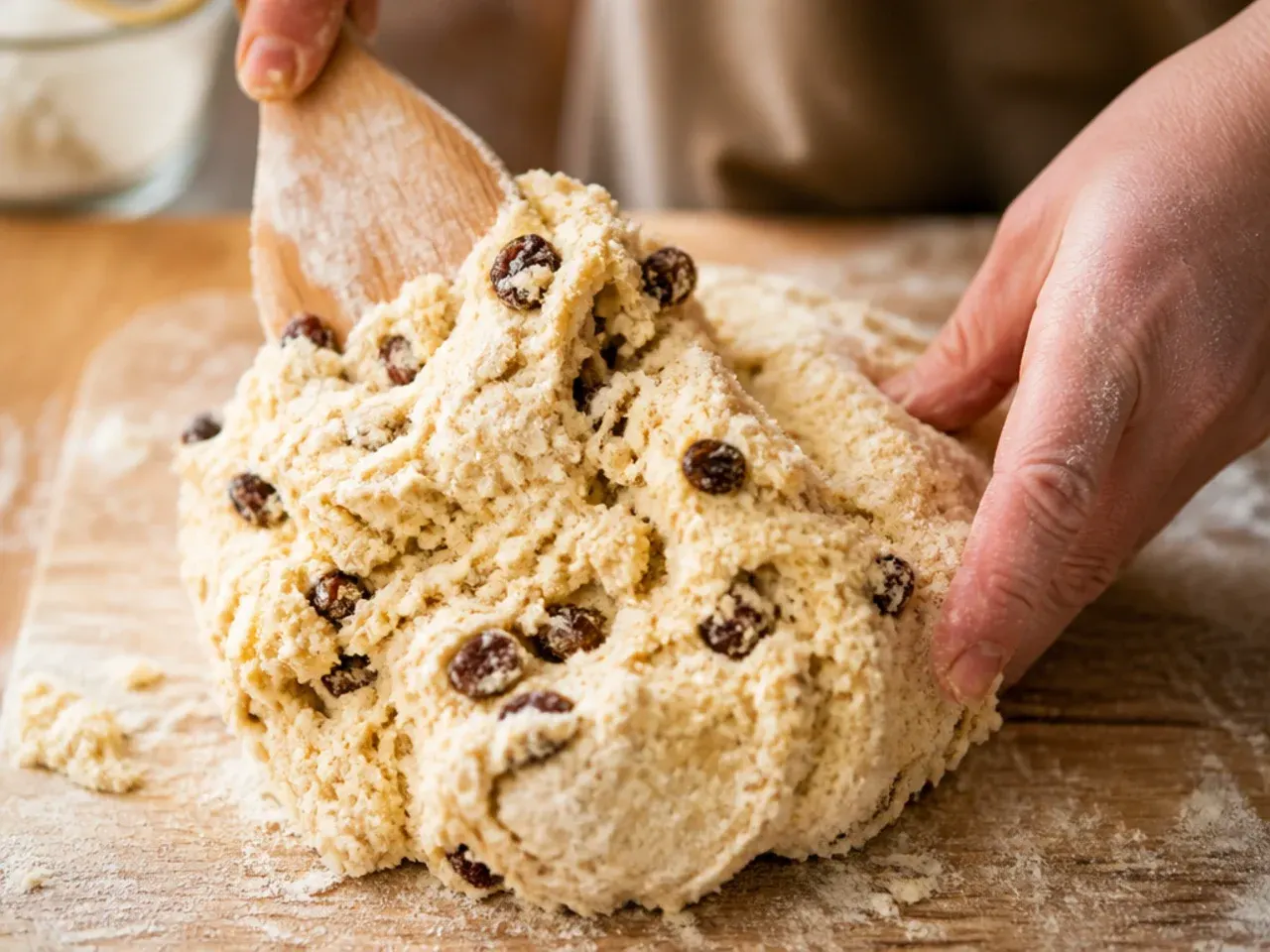
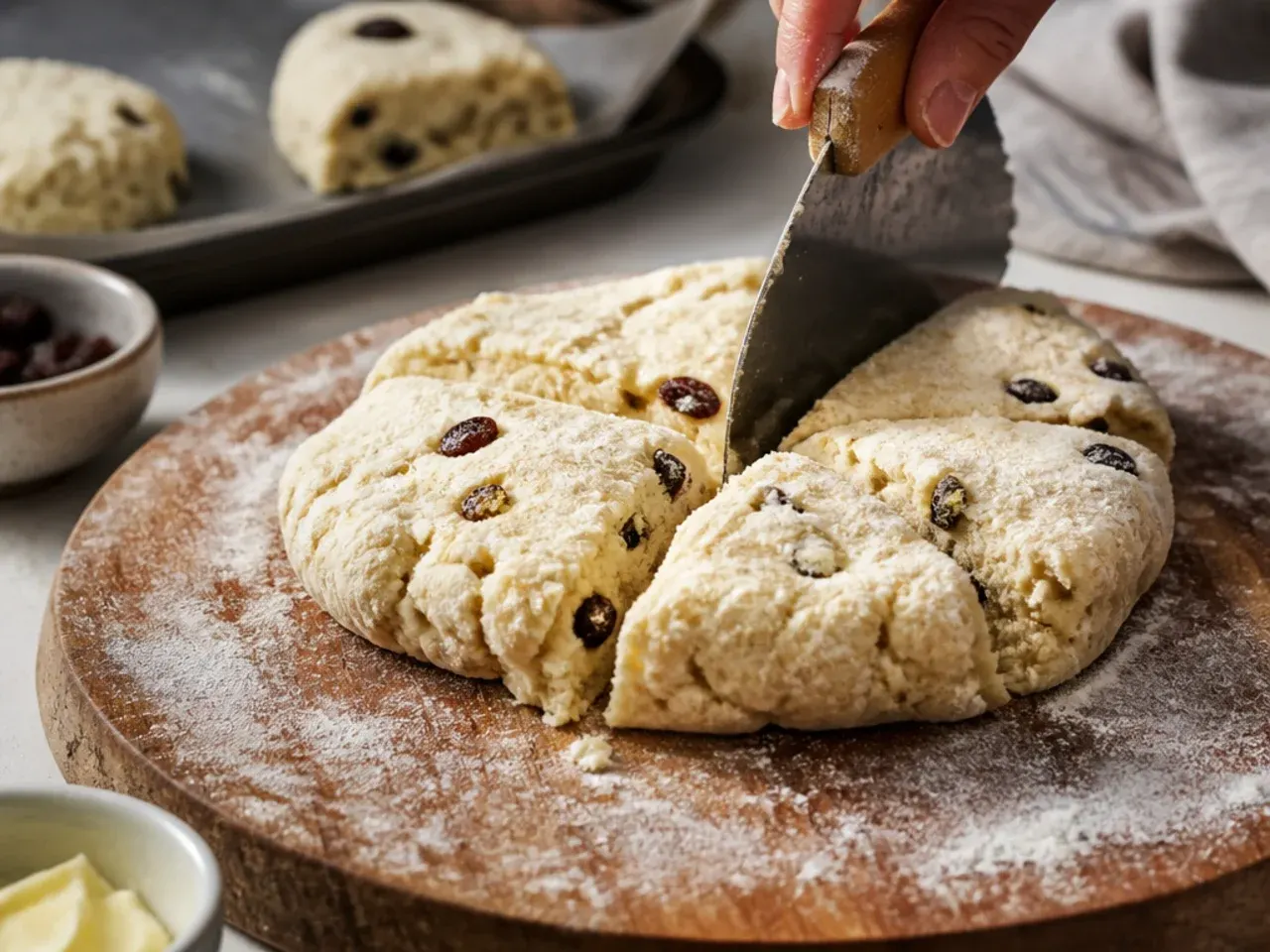
Fold the wet and dry ingredients together with a rubber spatula or your hands, using no more than 10-12 folds, until the dough just comes together with no dry flour visible; it should look shaggy, not smooth. Turn the dough out onto a lightly floured surface and pat it gently into a round disc about 4 cm (1 1/2 inches) thick, then cut into 8 wedges or stamp out rounds with a floured 6 cm cutter.
Step 6: Chill before baking
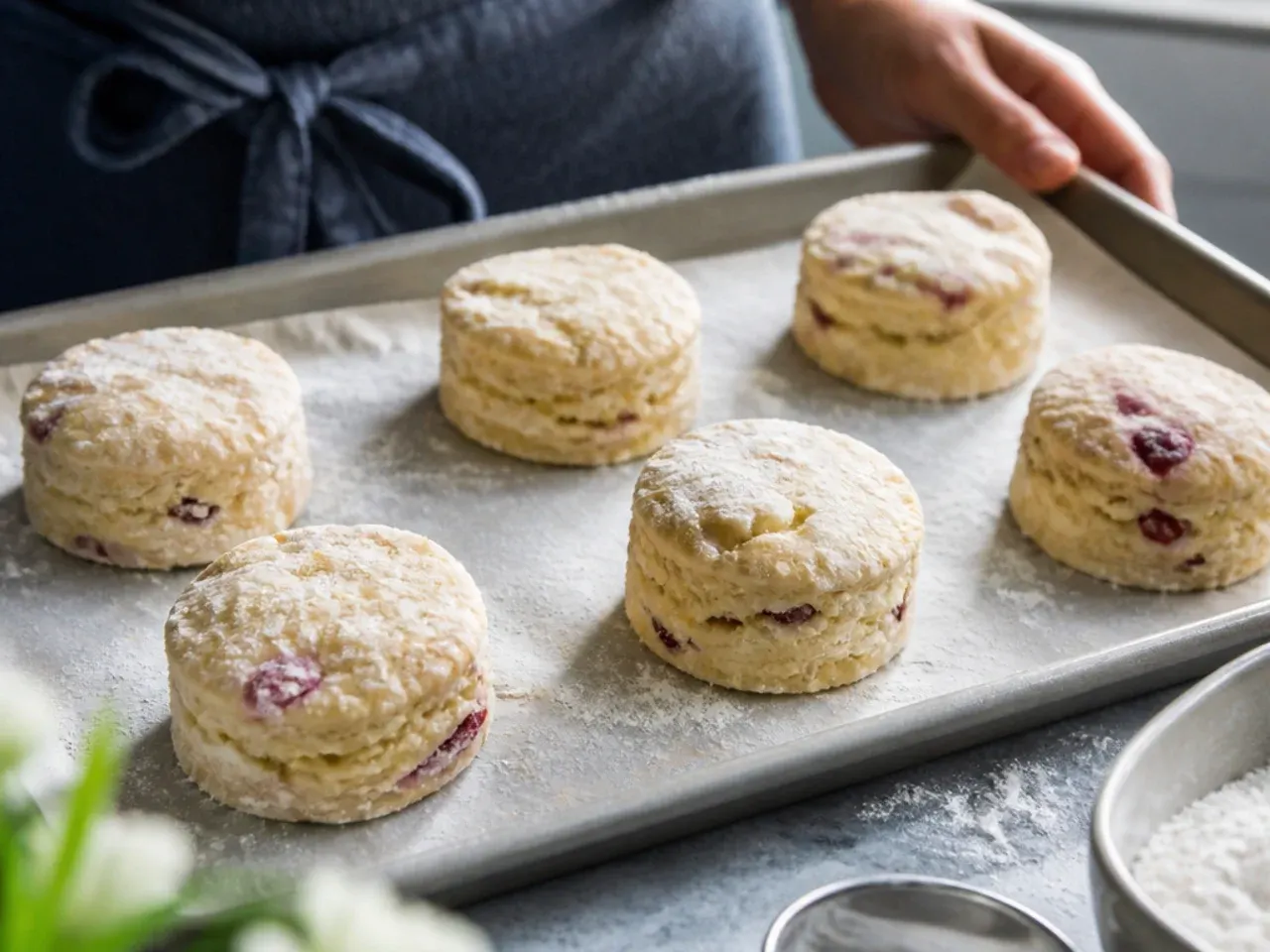
Transfer the shaped scones to the lined tray, spaced 4 cm (1 1/2 inches) apart, and put the whole tray in the freezer for 20 minutes or the fridge for 30 minutes. This second chill firms the butter back up after handling and is the step most responsible for a tall, even rise.
Step 7: Egg wash and bake

Brush the tops of the chilled scones with the second beaten egg and scatter over 15 g (1 tbsp) demerara sugar, then bake at 200°C (400°F) for 18-20 minutes, until the tops are golden and the bases sound hollow when tapped. Cool on the tray for 5 minutes before moving to a wire rack, and serve warm with jam and clotted cream.
Frequently Asked Questions
Yes, active starter works just as well as discard in this recipe; the small amount of extra lift it gives simply produces a marginally taller scone. Older, more sour discard, several days past feeding, gives a noticeably tangier flavour that works particularly well in the savoury cheddar and chive variation. Younger, fresher discard has a milder taste that suits the sweeter versions like the vanilla or chocolate chip scones better. Either way, make sure whatever you use is cold from the fridge rather than at room temperature, since a warm starter will soften the butter too early.
Save this for later 📌
Pin this article to your Pinterest board so the full list is one tap away when you need it.
Save on Pinterest