15 Velveeta Rotel Dip Tips I Learned the Hard Way

Fifteen honest lessons from years of making velveeta rotel dip, so your next batch comes out silky instead of split. If you love rotel dip inspiration, start with our Rotel Dip Recipes collection, then browse the full Sides, Dips & Snacks hub for more.

Save this for later 📌
Pin this article to your Pinterest board so the full list is one tap away when you need it.
Save on PinterestSides, Dips & Snacks
Beginner
Kitchen Journal
7 steps
Table of Contents
- Lesson 1: Cube the Cheese Before It Ever Meets Heat
- Lesson 2: Keeping the Rotel Liquid In Was the Fix I Didn't Expect
- Lesson 3: High Heat Is the Enemy, Even When You're Impatient
- Lesson 4: Draining the Mince Properly Stopped the Oil Slick
- Lesson 5: A Real Cheese Swap Nearly Ruined a Party
- Lesson 6: Microwave Bursts Beat One Long Blast
- Lesson 7: Milk Rescues a Dip That's Gone Too Thick
- Lesson 8: The Slow Cooker Is the Real MVP for Parties
- Lesson 9: Sautéing the Onion First Changed the Flavour Completely
- Lesson 10: Don't Trust the Clock, Trust the Spoon
- Lesson 11: Fresh Coriander Belongs on Top, Not Stirred In
- Lesson 12: Reheating on High Undoes All Your Careful Work
- Lesson 13: Freezing It Was a One-Time Experiment I Won't Repeat
- Lesson 14: Seasoning Needs a Taste Test Before Serving, Not After
- Lesson 15: The Right Serving Dish Keeps It Warmer for Longer
- What I'd Tell a Friend Trying This
- The Recipe I Used
Lesson 1: Cube the Cheese Before It Ever Meets Heat

The first few times I made this, I dropped the block in whole and stood there stirring a stubborn brick for twenty minutes while the edges scorched. Now I cut the 450 g (1 lb) block into roughly 2 cm (¾ in) cubes before anything touches the pan, and it melts in a fraction of the time with none of the burnt bits stuck to the bottom. Smaller cubes also melt evenly, so you don't get that patchwork of solid lumps floating in liquid cheese.
Lesson 2: Keeping the Rotel Liquid In Was the Fix I Didn't Expect

I used to tip the tomatoes into a sieve out of habit, the way I would for most recipes, and ended up with a thick, almost pasty dip that clumped instead of flowing. The juice from the tin carries a lot of the flavour and, more importantly, it's the liquid that keeps the melted cheese loose and pourable. Now I add the full 300 g (10.5 oz) tin, juice and all, straight into the pot.
Lesson 3: High Heat Is the Enemy, Even When You're Impatient

On a night I was rushing before guests arrived, I cranked the hob to medium-high to speed things along and watched the cheese seize into greasy, grainy clumps within minutes. Velveeta melts best low and slow, so now I keep it on medium-low the entire time and just accept the extra five or six minutes it takes. If I see any bubbling at the edges, I pull it off the heat for a moment rather than let it scorch.
Lesson 4: Draining the Mince Properly Stopped the Oil Slick

For a long time my velveeta rotel dip had this greasy sheen on top that I assumed was just how it was supposed to look. It turned out I wasn't draining the browned beef mince well enough, and the leftover fat had nowhere to go but the surface once the cheese melted. Now I tip the cooked mince into a sieve and press it with a spoon before it goes anywhere near the cheese, and the top stays smooth instead of shiny.
Lesson 5: A Real Cheese Swap Nearly Ruined a Party

I once tried to make this feel a bit more grown-up by swapping half the Velveeta for a sharp cheddar, thinking it would taste better. Instead the cheddar split into oily curds the moment it hit real heat, because it simply can't take the sustained melting that a processed cheese product can. I learned to save the good cheddar for topping, not for the base, and let the Velveeta do the melting work it's actually built for.
Lesson 6: Microwave Bursts Beat One Long Blast
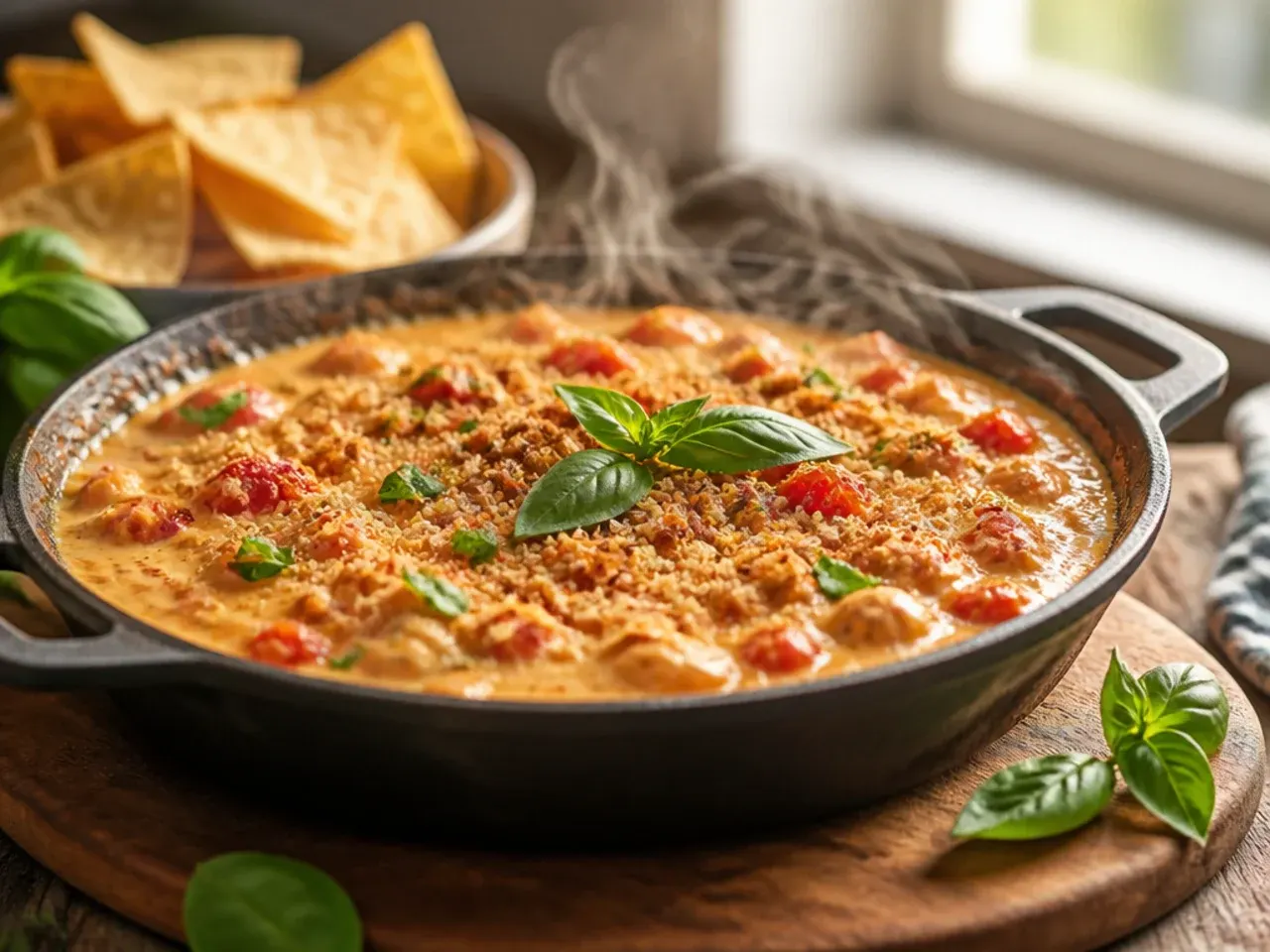
The first time I tried the microwave route for a quick single-serve batch, I ran it on full power for two minutes straight and pulled out a bowl of rubbery, separated cheese. Now I use 50% power in 30-second bursts, stirring every single time, and stop the moment it's smooth rather than waiting for it to look fully melted. It only takes a few extra stirs, but the texture difference is night and day.
Lesson 7: Milk Rescues a Dip That's Gone Too Thick

There's always a batch where the dip tightens up faster than expected, usually because the cheese had less residual moisture than usual. Rather than panic, I now keep a small jug of whole milk nearby and stir in 30 ml (2 tbsp) at a time over low heat until it loosens back up. It comes back to a pourable, glossy texture within a minute or two, and nobody at the table ever knows it wobbled.
Lesson 8: The Slow Cooker Is the Real MVP for Parties

I spent years babysitting a pot on the hob, stirring constantly so nothing caught, before I finally tried a slow cooker for a big gathering. Cooking on low for about 2 hours, stirring every 20 minutes or so, gave a smoother result with almost no effort, and the warm setting afterwards kept it silky for the rest of the evening. I haven't made velveeta rotel dip on the stovetop for a party since.
Lesson 9: Sautéing the Onion First Changed the Flavour Completely

My early versions had raw, sharp onion bits that never quite softened even after the cheese melted around them. Now I sauté the diced onion in a touch of oil for 3-4 minutes until translucent before it goes anywhere near the cheese, which mellows the bite and brings out a little sweetness. It's a small extra step but it stops the onion from being the one jarring texture in an otherwise smooth dip.
Lesson 10: Don't Trust the Clock, Trust the Spoon

I used to pull the dip the moment my timer hit the number a recipe suggested, only to find solid cheese cubes still holding their shape underneath a melted top layer. Every hob, every pot, and every block of Velveeta melts at a slightly different pace, so now I judge doneness by dragging a spoon through the centre and checking for any resistance. If the spoon meets a lump, it needs another minute or two, timer be damned.
Lesson 11: Fresh Coriander Belongs on Top, Not Stirred In

I once stirred a handful of chopped coriander straight into the hot dip, and by the time it reached the table it had wilted into dark, slimy flecks that looked more like debris than garnish. Now I scatter it on just before serving, so it stays bright green and adds a fresh, herby lift against the rich cheese. It takes ten extra seconds and makes the whole bowl look far more appetising.
Lesson 12: Reheating on High Undoes All Your Careful Work

Leftover velveeta rotel dip felt like a gift until I reheated a bowl on full microwave power and watched it split into pools of orange grease the moment it cooled slightly. Now I always bring it back gently, either in a small pot over low heat or in 30-second microwave bursts at reduced power, stirring between each one. It takes patience, but the dip comes back just as smooth as it was the first time around.
Lesson 13: Freezing It Was a One-Time Experiment I Won't Repeat
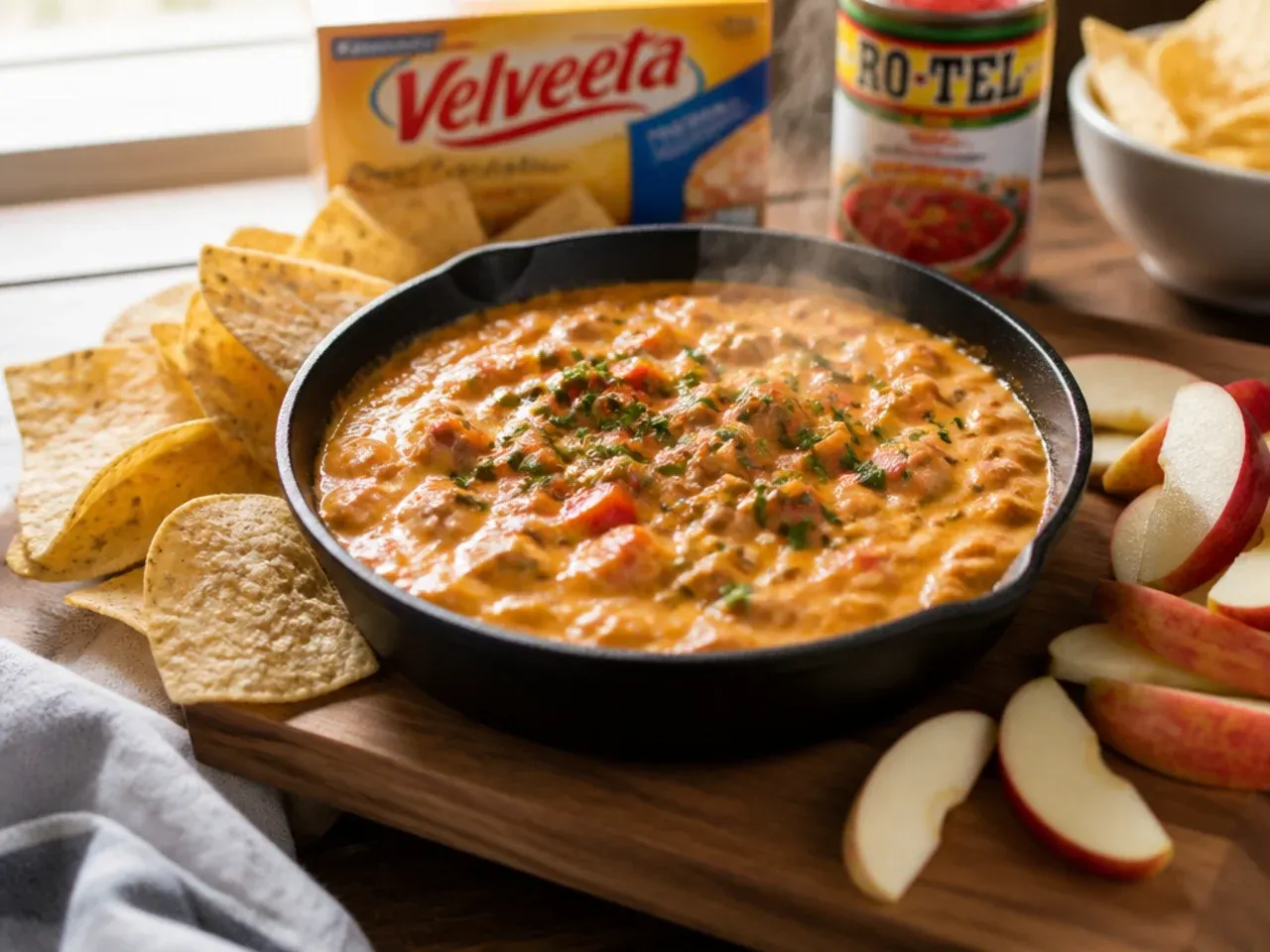
Wanting to save a big batch, I once froze half the pot in an airtight container, thawed it overnight in the fridge, and reheated it hoping for the best. The texture came back noticeably grainier than fresh, with tiny flecks of separated fat no amount of stirring could fully smooth out. I still make big batches, but now I just plan to eat leftovers within 2-3 days from the fridge rather than freeze them.
Lesson 14: Seasoning Needs a Taste Test Before Serving, Not After

I used to assume the Rotel and any taco seasoning I'd added would automatically balance out, and more than once served a batch that tasted flat because I never actually tasted it before setting it out. Now I always dip a chip in right before serving and adjust with a pinch more chilli powder or cumin if it needs it. The Rotel tin varies in spice level between batches, so this quick check has saved more than one bland bowl.
Lesson 15: The Right Serving Dish Keeps It Warmer for Longer
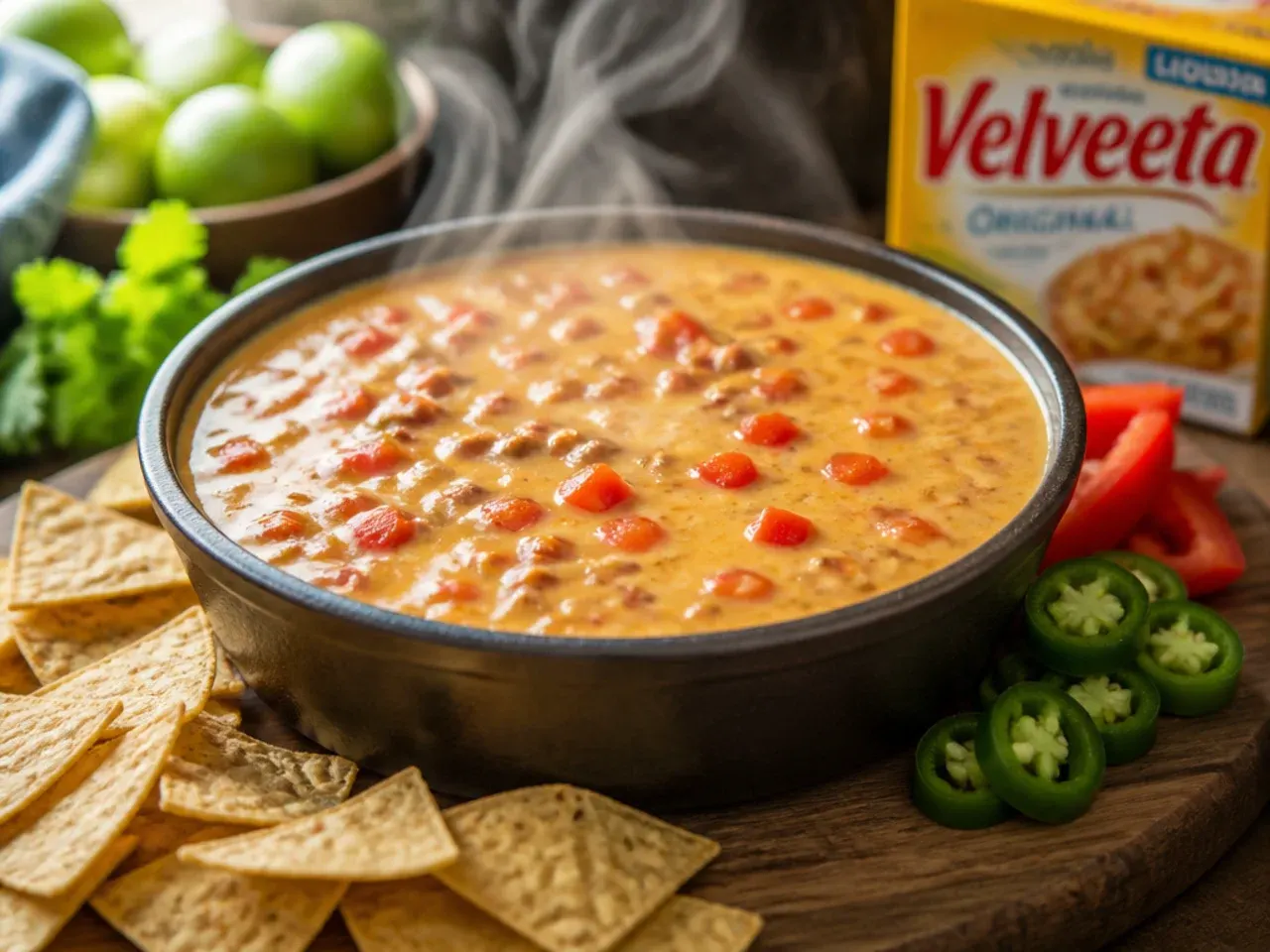
I learned the hard way that a wide, shallow bowl loses heat fast, and within twenty minutes of serving the dip had gone thick and started to skin over on top. Switching to a smaller, deeper bowl, or better yet leaving it in the slow cooker on warm and just ladling from there, keeps the surface area to volume ratio in your favour. It's a simple swap that means the dip stays scoopable through an entire evening instead of just the first ten minutes.
What I'd Tell a Friend Trying This

Cube the cheese, keep the Rotel liquid, and never let the heat get above medium-low, because those three habits alone fix most of the problems people run into with velveeta rotel dip. Drain your meat properly, taste before you serve, and if you're feeding a crowd, just use the slow cooker and thank yourself later. It's a forgiving recipe once you respect the cheese, and honestly one of the easiest crowd-pleasers you'll ever make.
The Recipe
The Recipe I Used
15 min
25 min
40 min
8
Beginner
Ingredients 8 Person(s)
Directions
Step 1: Cube the Velveeta
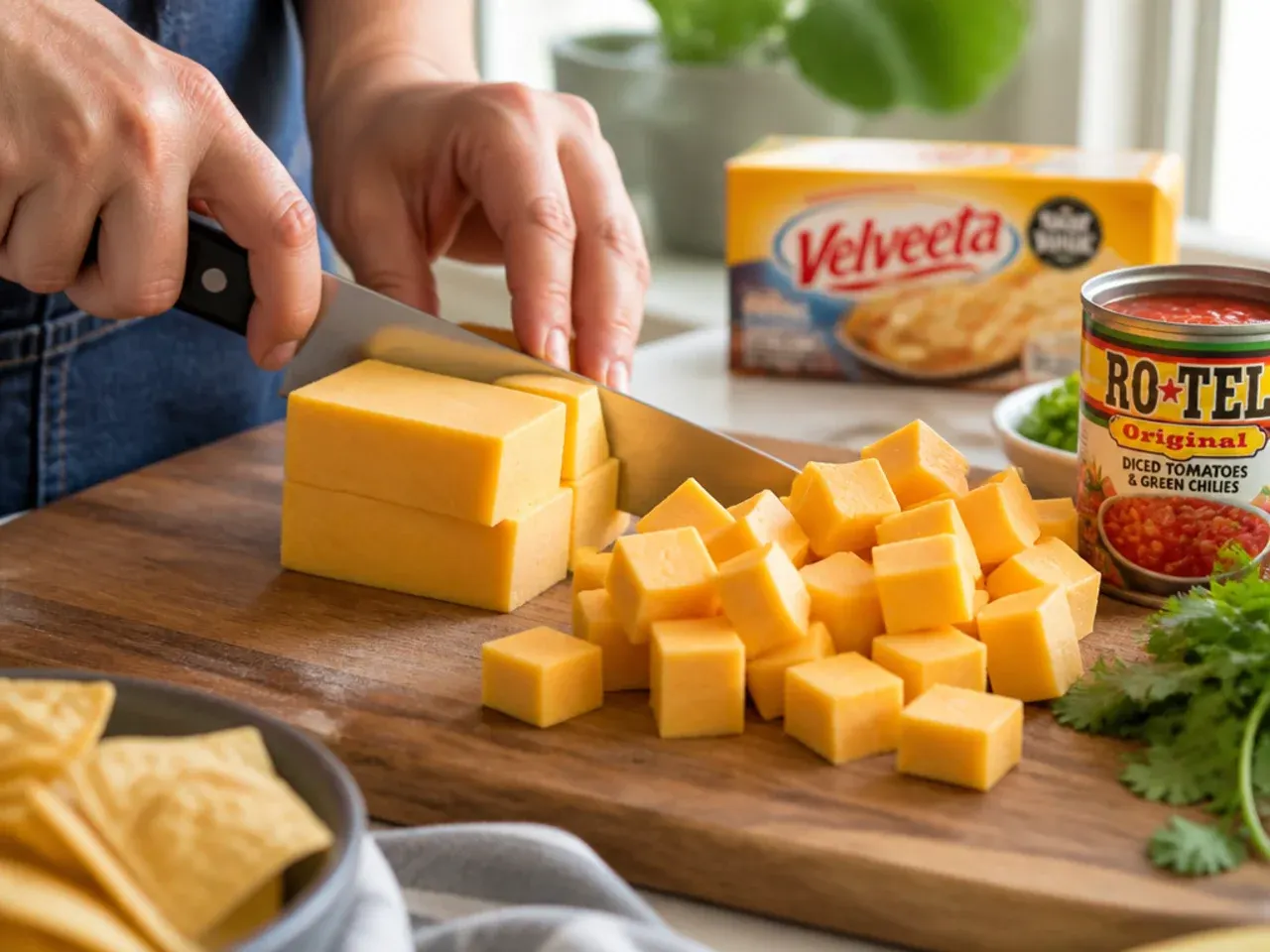
Cut the 450 g (1 lb) block of Velveeta into roughly 2 cm (¾ in) cubes and set aside. Smaller, even cubes melt faster and more evenly, so don't skip this even if you're in a hurry.
Step 2: Brown and Drain the Mince
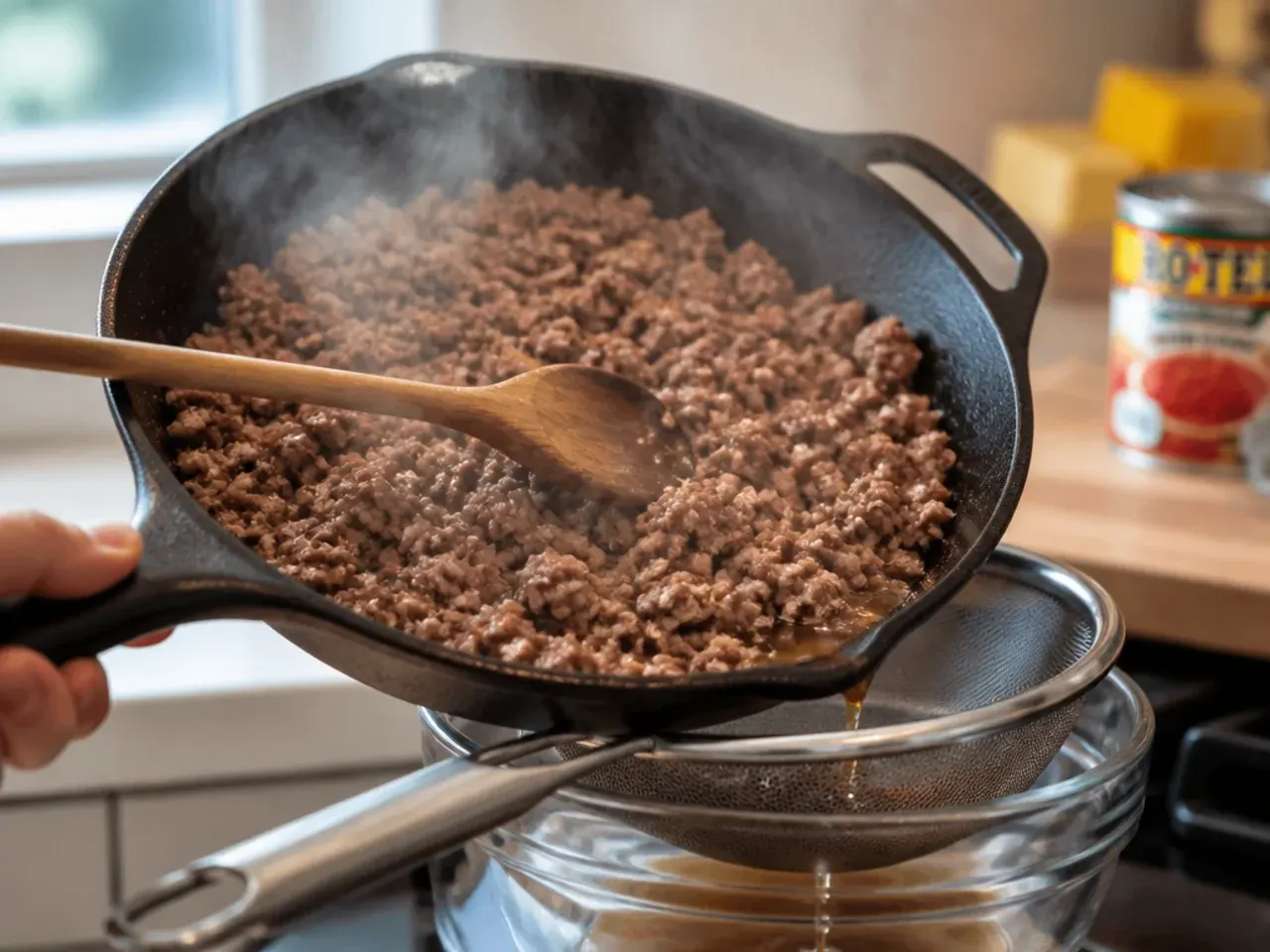
Brown the beef mince in a large pot or pan over medium heat for 6-8 minutes, breaking it up as it cooks, until no pink remains. Tip it into a sieve and press with a spoon to remove as much fat as possible, then set aside.
Step 3: Sauté the Onion and Garlic
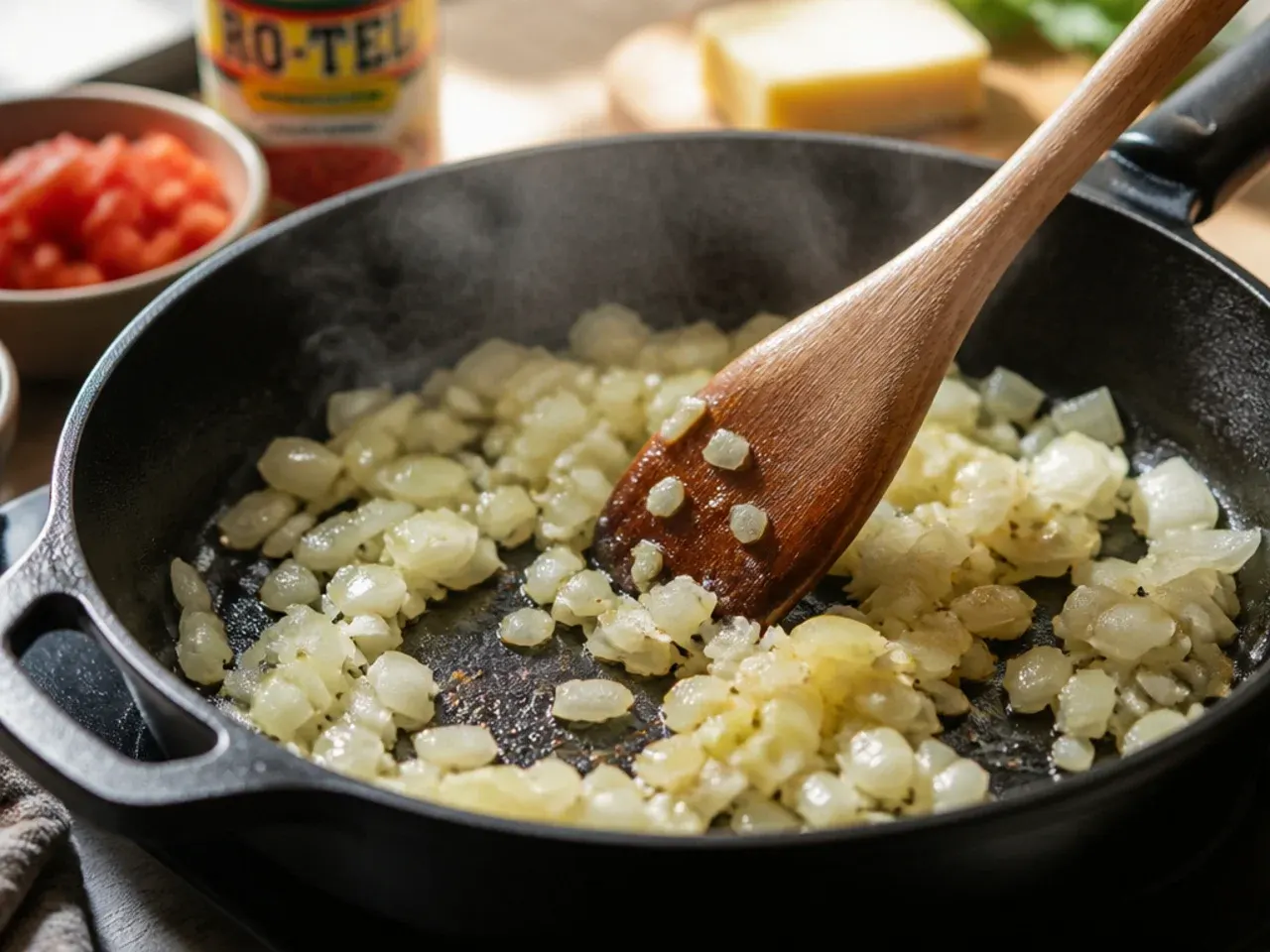
In the same pot, heat 1 tbsp of vegetable oil over medium heat and sauté the diced onion for 3-4 minutes until translucent. Add the minced garlic and cook for 30 seconds more, just until fragrant.
Step 4: Combine Everything in the Pot
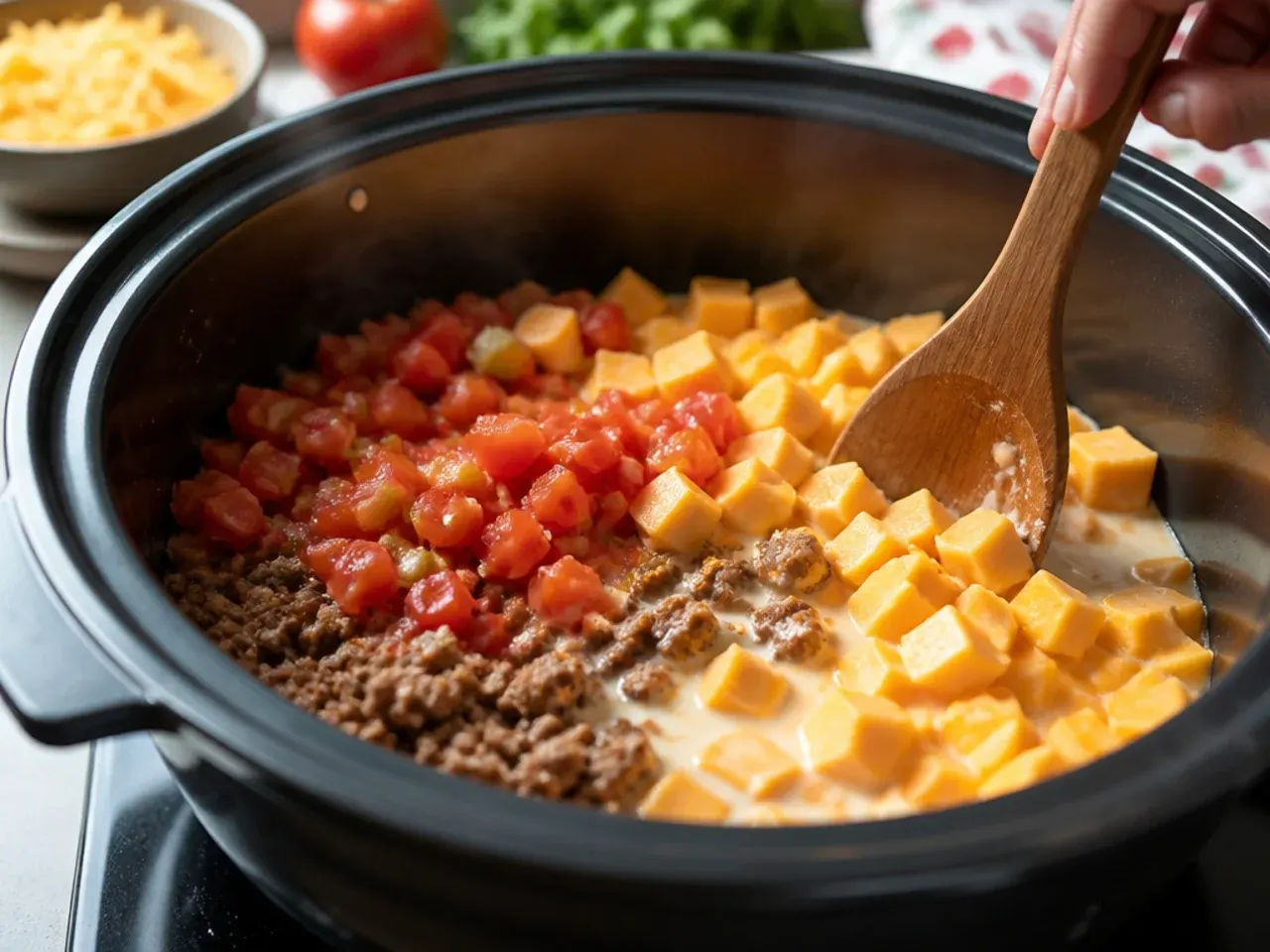
Return the drained mince to the pot along with the cubed Velveeta and the whole tin of Rotel, juice included. Stir in the chilli powder and cumin so everything is evenly distributed before you add heat.
Step 5: Melt Low and Slow

Reduce the heat to medium-low and cook for 10-15 minutes, stirring every minute or two, until every cube of cheese has fully melted and the dip looks smooth and glossy. Drag a spoon through the centre to check for any stubborn lumps before moving on.
Step 6: Adjust the Consistency

If the dip looks thick or heavy rather than pourable, stir in 30 ml (2 tbsp) of whole milk at a time over low heat until it loosens to a smooth, spoonable texture. Taste at this point and add an extra pinch of chilli powder or cumin if the Rotel tin was on the milder side.
Step 7: Finish and Serve

Transfer the dip to a smaller, deeper serving bowl or a slow cooker on the warm setting to help it hold its texture longer. Scatter the fresh coriander over the top just before serving and set out with plenty of tortilla chips for scooping.
Frequently Asked Questions
Grainy dip almost always comes down to heat that's too high or a swap away from Velveeta itself. Real cheddar or other natural cheeses separate into oily curds under the sustained heat needed to melt a full block, while Velveeta is formulated to stay smooth. Keep the heat at medium-low or below on the stovetop, and on the microwave use 50% power in short bursts, stirring between each one, to avoid the same problem.
Save this for later 📌
Pin this article to your Pinterest board so the full list is one tap away when you need it.
Save on Pinterest