25 Cheesy Potato Soup Mistakes I Made (and Fixes)

25 honest, hard-won lessons from making cheesy potato soup on repeat, including exactly what to fix for a thick, silky, never-grainy bowl. If you love potato soup inspiration, start with our Potato Soup collection, then browse the full Cozy Soups & Chili hub for more.

Save this for later 📌
Pin this article to your Pinterest board so the full list is one tap away when you need it.
Save on PinterestCozy Soups & Chili
Intermediate
Kitchen Journal
7 steps
Table of Contents
- Lesson 1: Pre-Shredded Cheese Was Sabotaging My Texture
- Lesson 2: I Used to Dump All the Cheese in at Once
- Lesson 3: Boiling the Soup After the Cheese Went In
- Lesson 4: Skipping the Roux Because It Felt Like an Extra Step
- Lesson 5: Not Cooking the Roux Long Enough
- Lesson 6: Picking the Wrong Potato
- Lesson 7: Cutting the Potatoes Unevenly
- Lesson 8: Adding Garlic Too Early
- Lesson 9: Using Water and Stock Cubes Instead of Real Stock
- Lesson 10: Simmering Too Hard Instead of Gently
- Lesson 11: Not Mashing Any of the Potatoes
- Lesson 12: Blitzing the Whole Pot with an Immersion Blender
- Lesson 13: Adding Milk and Cream Too Early
- Lesson 14: Using Only Milk, No Cream
- Lesson 15: Salting Before Tasting the Cheese
- Lesson 16: Cooking the Bacon in a Separate Pan
- Lesson 17: Not Deglazing the Pot After the Bacon
- Lesson 18: Reheating Leftovers on High Heat
- Lesson 19: Freezing the Finished Soup with All the Dairy Already In
- Lesson 20: Letting Cut Potatoes Sit Out Too Long
- Lesson 21: Skipping the Soured Cream
- Lesson 22: Not Tasting Before Serving
- Lesson 23: Forgetting the Toppings
- Lesson 24: Not Letting the Soup Rest Before Serving
Lesson 1: Pre-Shredded Cheese Was Sabotaging My Texture

The first few times I made this, I grabbed a bag of pre-shredded cheddar because it was faster, and every batch turned slightly grainy instead of silky. Bagged cheese is coated in starch and anti-caking agents that stop it melting cleanly into a soup base. Now I always grate a 225 g (8 oz) block of mature cheddar myself; it takes an extra five minutes and the difference in smoothness is enormous.
Lesson 2: I Used to Dump All the Cheese in at Once

Tipping the whole 225 g of cheddar into a hot pot in one go used to leave me with stringy clumps floating in thin broth. Cheese needs time and gentle heat to emulsify, so now I add it a handful at a time, stirring until each addition disappears before the next goes in. It takes maybe two extra minutes total, and the soup comes out properly glossy instead of separated.
Lesson 3: Boiling the Soup After the Cheese Went In

Early on I'd get impatient and crank the heat back up once the cheese was stirred through, thinking it would thicken faster. Instead the proteins in the cheese would seize and the pot would break into greasy little curds floating in watery broth. These days the burner goes to low the moment the cheese starts melting, and it never touches a boil again.
Lesson 4: Skipping the Roux Because It Felt Like an Extra Step

I tried making this soup without a butter-and-flour roux more than once, hoping the potato starch alone would thicken things. It never did; the broth stayed thin and the fat separated no matter how much cheese I added. Now I always melt 45 g (3 tbsp) of butter, whisk in 45 g (1/3 cup) of flour, and cook it for a full two minutes before adding any liquid.
Lesson 5: Not Cooking the Roux Long Enough

Even after I started making a roux, I used to rush it and add stock within thirty seconds of the flour going in. The soup ended up with a faint raw, pasty aftertaste I couldn't place at first. I now cook the butter and flour together for a full 1-2 minutes, stirring constantly, until it smells faintly toasty and turns a pale golden colour.
Lesson 6: Picking the Wrong Potato

I used waxy red potatoes for my first batch because that's what I had, and they stayed firm and almost bouncy instead of breaking down into anything creamy. Starchy potatoes are what give this soup its body. Yukon Golds are my go-to now, at 900 g (2 lb) per batch, because they hold some shape while still breaking down enough to thicken the broth.
Lesson 7: Cutting the Potatoes Unevenly

When I chopped potatoes roughly by eye, some pieces fell apart to mush while others were still crunchy in the centre at the same 15-minute mark. Uneven pieces cook at completely different rates in the same pot of simmering liquid. I dice everything into consistent 1.5 cm cubes now, and every piece finishes at exactly the same time.
Lesson 8: Adding Garlic Too Early

I used to throw the garlic in with the onion and celery right at the start, and by the time the vegetables softened the garlic had scorched and turned bitter. Garlic burns fast in a hot pot, usually within a minute of hitting the fat. I hold it back until the onion and celery have softened for 5-6 minutes, then stir it in for just 30 seconds before the flour goes anywhere near the pot.
Lesson 9: Using Water and Stock Cubes Instead of Real Stock

In the name of saving a few pounds at the shop, I made this soup with a stock cube dissolved in water more than once, and the finished bowl tasted flat no matter how much cheese I added. Real chicken stock carries a depth that bouillon just can't fake. I now use 700 ml (3 cups) of proper chicken stock, and it's the single biggest flavour upgrade I've made to this recipe.
Lesson 10: Simmering Too Hard Instead of Gently

I used to leave the pot at a rolling boil the whole time the potatoes cooked, thinking it would speed things along. What actually happened was the outsides of the cubes turned to mush while the centres stayed slightly firm. A gentle simmer for 12-15 minutes, with the lid ajar, cooks the potatoes through evenly without battering them apart.
Lesson 11: Not Mashing Any of the Potatoes

For a long time I left every potato cube whole, assuming the roux alone would make the soup thick enough. It never quite got there; the soup stayed more like a brothy potato stew than a proper creamy soup. Now I mash about a third of the potatoes right in the pot with the back of a spoon before adding the dairy, and that's what gives it real body.
Lesson 12: Blitzing the Whole Pot with an Immersion Blender

The opposite mistake came later, when I over-corrected and blended the entire pot smooth. Potatoes release a lot of starch when fully pureed, and the soup turned gluey and almost paste-like once it cooled slightly. I only mash a portion by hand now, or pulse an immersion blender for a few seconds at most, so there's still texture left in the bowl.
Lesson 13: Adding Milk and Cream Too Early

I used to pour the milk and cream in while the potatoes were still simmering hard, and the soup would occasionally split into little flecks of fat floating on thin liquid. Dairy doesn't like sustained high heat. I add the 240 ml (1 cup) of milk and 240 ml (1 cup) of double cream only once the potatoes are tender and the heat is already down to low.
Lesson 14: Using Only Milk, No Cream

Trying to make a lighter version, I once made the whole soup with milk and no cream at all, and it tasted thin and slightly watery no matter how much cheese I stirred in. Cream carries fat that gives the soup its rich, coating mouthfeel. Splitting the dairy between 240 ml (1 cup) milk and 240 ml (1 cup) double cream gives me the best balance of lightness and richness.
Lesson 15: Salting Before Tasting the Cheese

I used to season generously with salt before the cheese went in, forgetting cheddar itself is quite salty. More than once the finished soup was borderline too salty to enjoy. Now I add only a light 1 teaspoon of salt while the potatoes cook, and I don't do a final seasoning check until after the cheese and soured cream are fully stirred through.
Lesson 16: Cooking the Bacon in a Separate Pan

For ages I fried my bacon in a different pan to save on washing up, not realising I was throwing away a layer of flavour. Bacon fat left in the bottom of the soup pot seasons the onion and celery as they cook. I now crisp 6 rashers directly in the soup pot first, set the bacon aside for topping, and build the whole soup on top of that residual fat.
Lesson 17: Not Deglazing the Pot After the Bacon

Even after I started cooking bacon in the main pot, I'd sometimes rush straight to adding the roux and miss the browned bits stuck to the bottom. That fond is pure flavour, and skipping it meant a slightly flatter-tasting soup. Now when I pour in the stock, I give the bottom of the pot a good scrape with a wooden spoon to lift every bit of it back into the broth.
Lesson 18: Reheating Leftovers on High Heat

My first attempt at reheating leftovers in the microwave on full power left me with a broken, oily-looking soup and rubbery clumps of cheese. High, fast heat is exactly what curdles dairy and cheese. I reheat gently now, either in short 30-second microwave bursts stirred between each one, or slowly on the stovetop over low heat with a splash of extra milk stirred in.
Lesson 19: Freezing the Finished Soup with All the Dairy Already In

I once froze a full batch, cream, cheese and all, and thawed it to a grainy, separated mess that no amount of stirring could fix. Dairy just doesn't freeze and thaw cleanly once it's fully incorporated. If I know I'm freezing a batch, I now stop before adding the milk, cream and cheese, freeze the potato-and-stock base, and stir the dairy in fresh after reheating.
Lesson 20: Letting Cut Potatoes Sit Out Too Long

I've left peeled, diced potatoes sitting on the chopping board while I finished prepping everything else, and come back to find them turning grey at the edges. Exposed potato flesh oxidises quickly once it's cut. I either dice them last, right before they go in the pot, or drop them into a bowl of cold water if I need a few extra minutes.
Lesson 21: Skipping the Soured Cream

For a while I left soured cream out of the recipe entirely, thinking milk and cream were doing enough on their own. The soup tasted a little flat and one-note, missing the gentle tang that cuts through all that richness. Stirring in 120 g (1/2 cup) of soured cream at the very end, off the heat, is what finally made the flavour taste balanced instead of just heavy.
Lesson 22: Not Tasting Before Serving

I used to plate this soup up straight after the cheese melted in, assuming it was automatically ready. More often than not it needed another pinch of salt or a crack of black pepper once everything had come together. Now I always taste a spoonful right before serving and adjust with the 1/2 teaspoon of pepper or a little extra salt as needed.
Lesson 23: Forgetting the Toppings

On busy weeknights I'd sometimes serve this soup completely plain, straight from the pot into the bowl. It tasted fine, but it was missing the crunch and freshness that make it feel like a proper meal instead of just thick potato broth. A scattering of the crispy bacon, an extra handful of grated cheddar, and some chopped chives on top makes a genuinely noticeable difference now.
Lesson 24: Not Letting the Soup Rest Before Serving

Straight off the heat, I used to ladle the soup into bowls immediately, and it always seemed slightly thinner than I expected. Potato soup keeps thickening for a few minutes after the heat is off, as the starch continues to set up. I let the pot sit, lid off, for about 5 minutes before serving now, and the texture is noticeably better for that short wait.
Lesson 25: Doubting a 7-Step Recipe Could Taste This Good

I honestly assumed a soup this comforting had to involve some complicated technique I was missing. It doesn't; it just needs each of the small things above done in the right order and at the right heat. Once I stopped skipping steps to save time, this became one of the most reliably good things I cook, with barely any more effort than the rushed version I started with.
What I'd Tell a Friend Trying This

Don't rush the cheese, and don't rush the heat back up once it's in; those two things alone fix most of what can go wrong here. Use a real block of cheddar, a proper stock, and Yukon Gold potatoes if you can get them, and mash roughly a third of the pot by hand for body. Give it five minutes to rest before you serve it, taste it once more, and you'll end up with a bowl that tastes like it took far longer than it actually did.
The Recipe
The Recipe I Used
20 min
40 min
1 hr
6
Intermediate
Ingredients 6 Person(s)
Directions
Step 1: Crisp the bacon
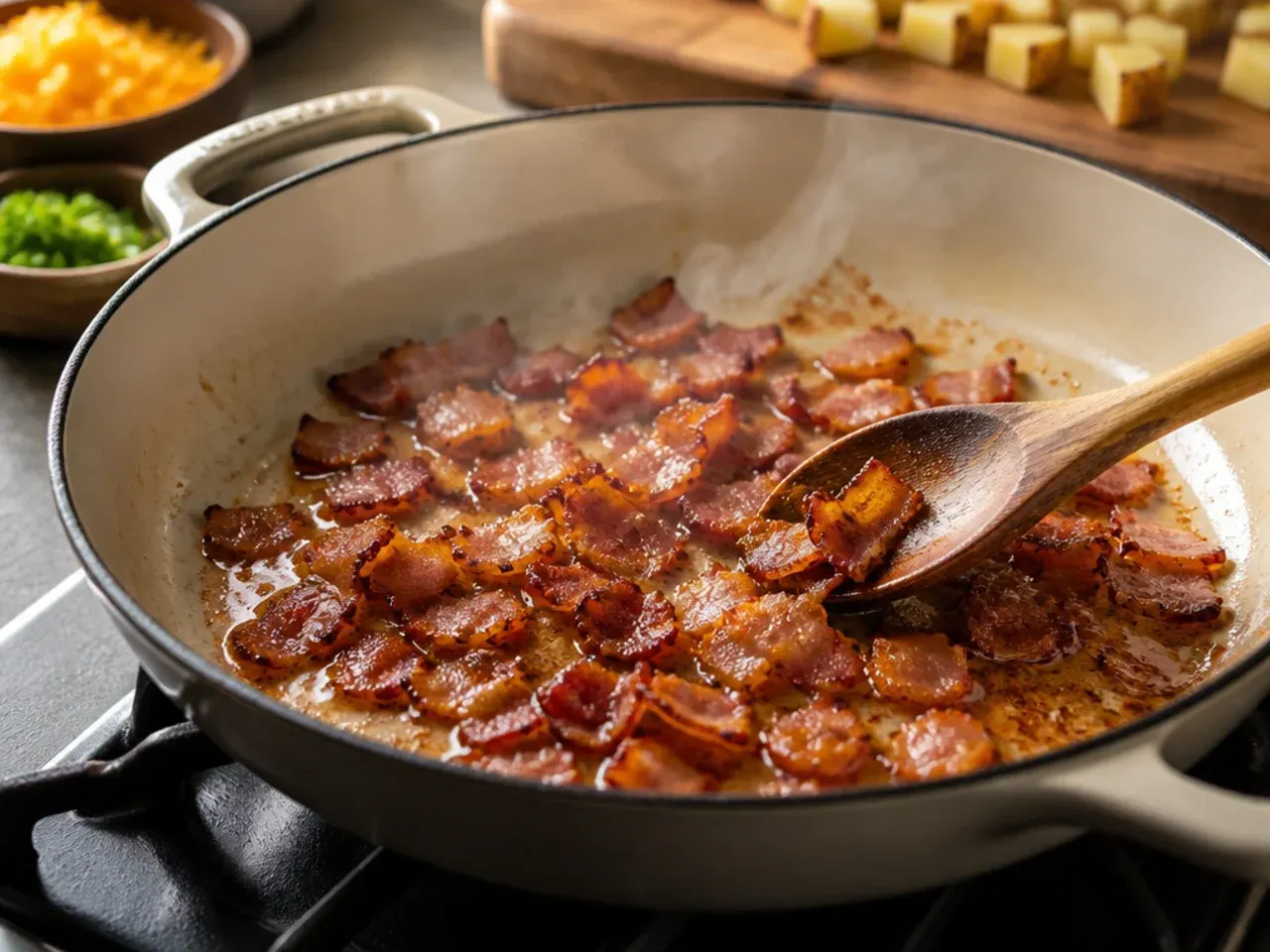
In a large, heavy-bottomed pot or Dutch oven, cook the 6 rashers of bacon over medium heat for 6-7 minutes, turning occasionally, until deeply crisp. Transfer the bacon to a paper-towel-lined plate and crumble once cool enough to handle. Leave about 1 tablespoon of the rendered fat in the pot and discard the rest.
Step 2: Soften the onion and celery
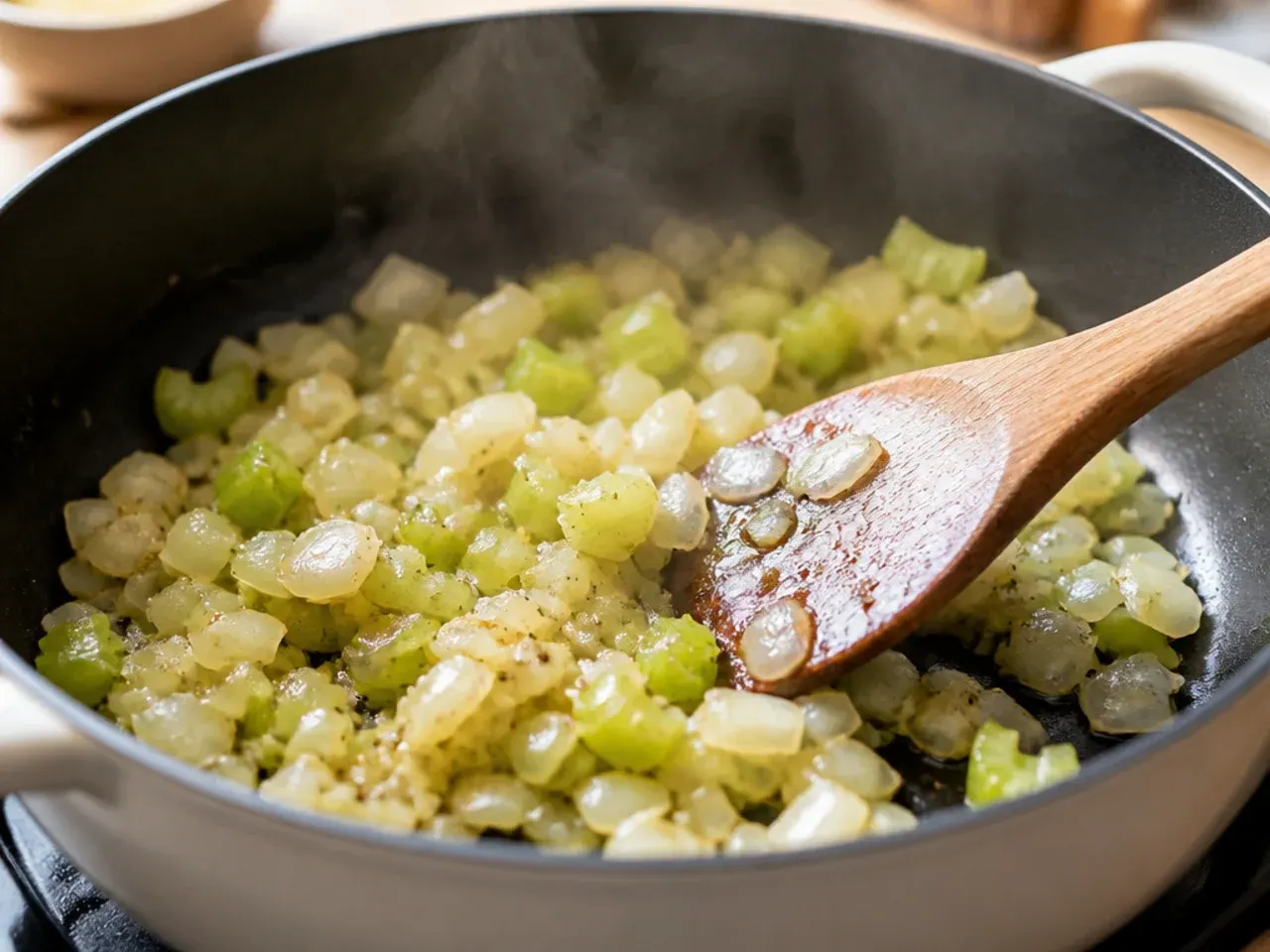
Add the 45 g (3 tbsp) of butter to the fat left in the pot and melt over medium heat. Add the diced onion and celery and cook for 5-6 minutes, stirring occasionally, until soft and translucent but not browned. Stir in the garlic and cook for a further 30 seconds until fragrant.
Step 3: Build the roux
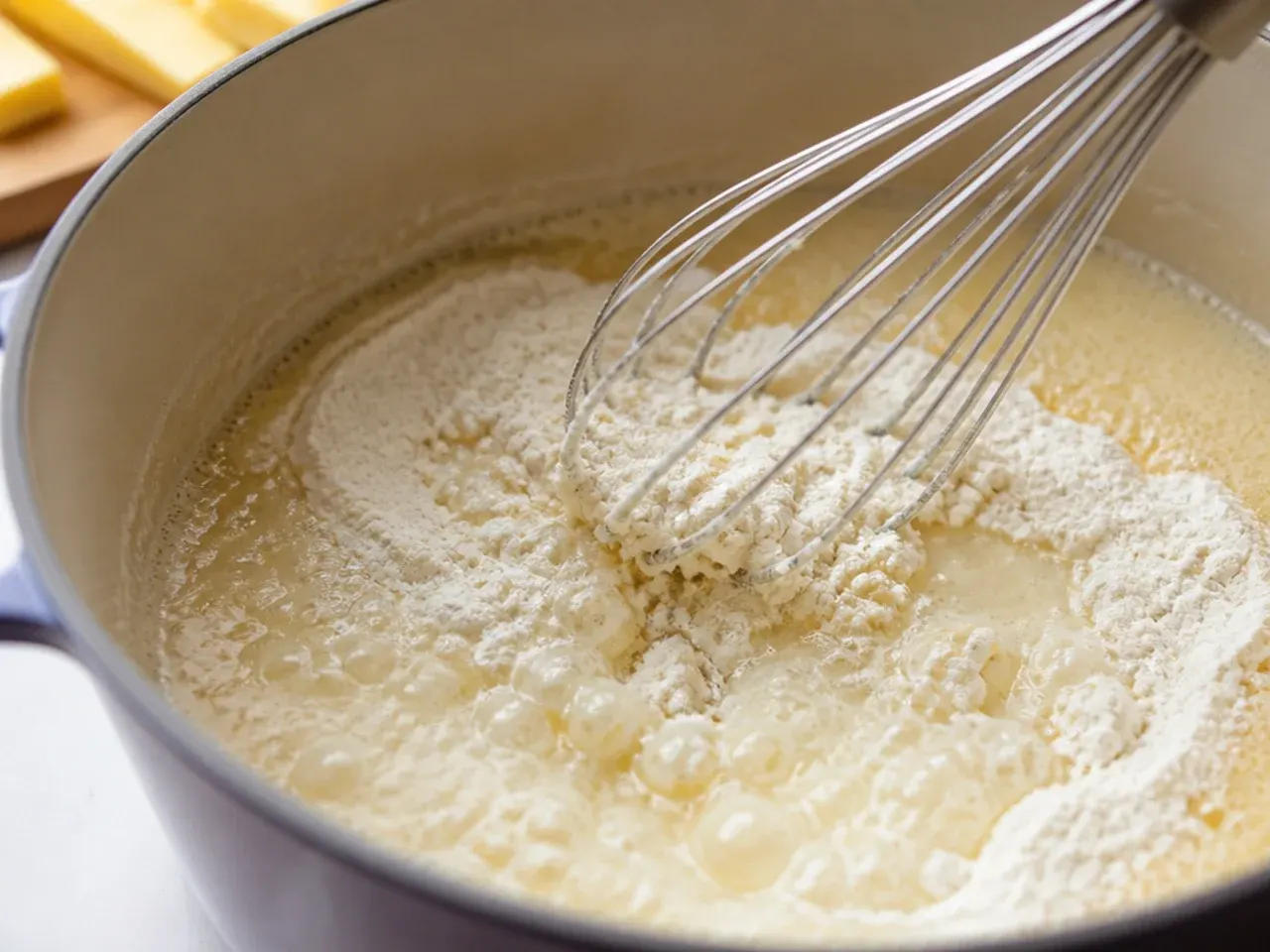
Sprinkle the 45 g (1/3 cup) of flour evenly over the softened vegetables and stir constantly for 1-2 minutes, until the mixture turns a pale golden colour and smells lightly toasted. This short cooking time gets rid of any raw, pasty flavour before the liquid goes in. Keep the heat at medium so it doesn't catch and burn on the bottom of the pot.
Step 4: Simmer the potatoes
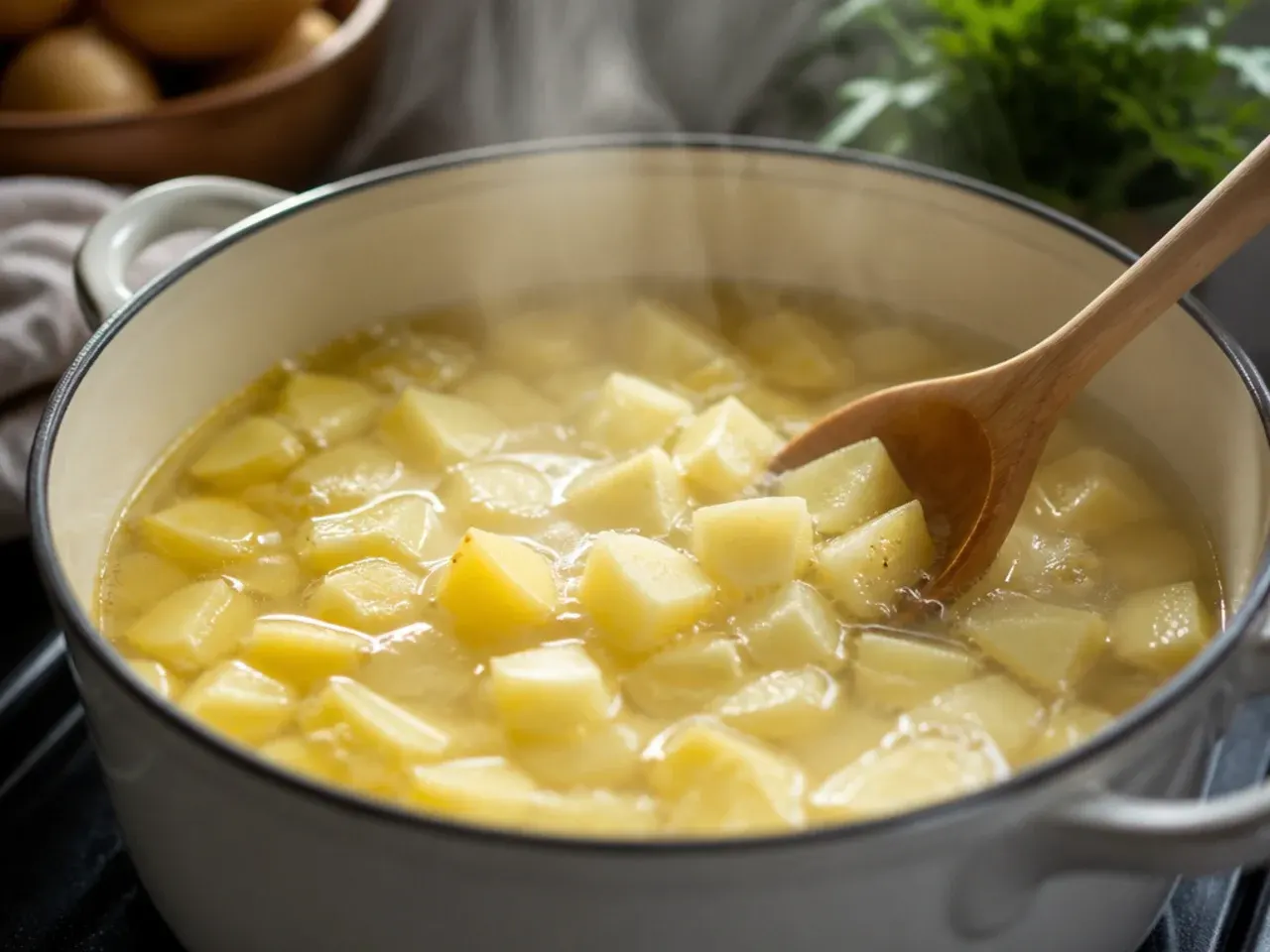
Slowly pour in the 700 ml (3 cups) of chicken stock, whisking as you go to smooth out the roux and scraping up any browned bits from the bottom of the pot. Add the 900 g (2 lb) of diced potatoes, bring to a boil, then reduce the heat to a gentle simmer. Cover partially and cook for 12-15 minutes, until the potatoes are completely fork-tender.
Step 5: Mash for creaminess
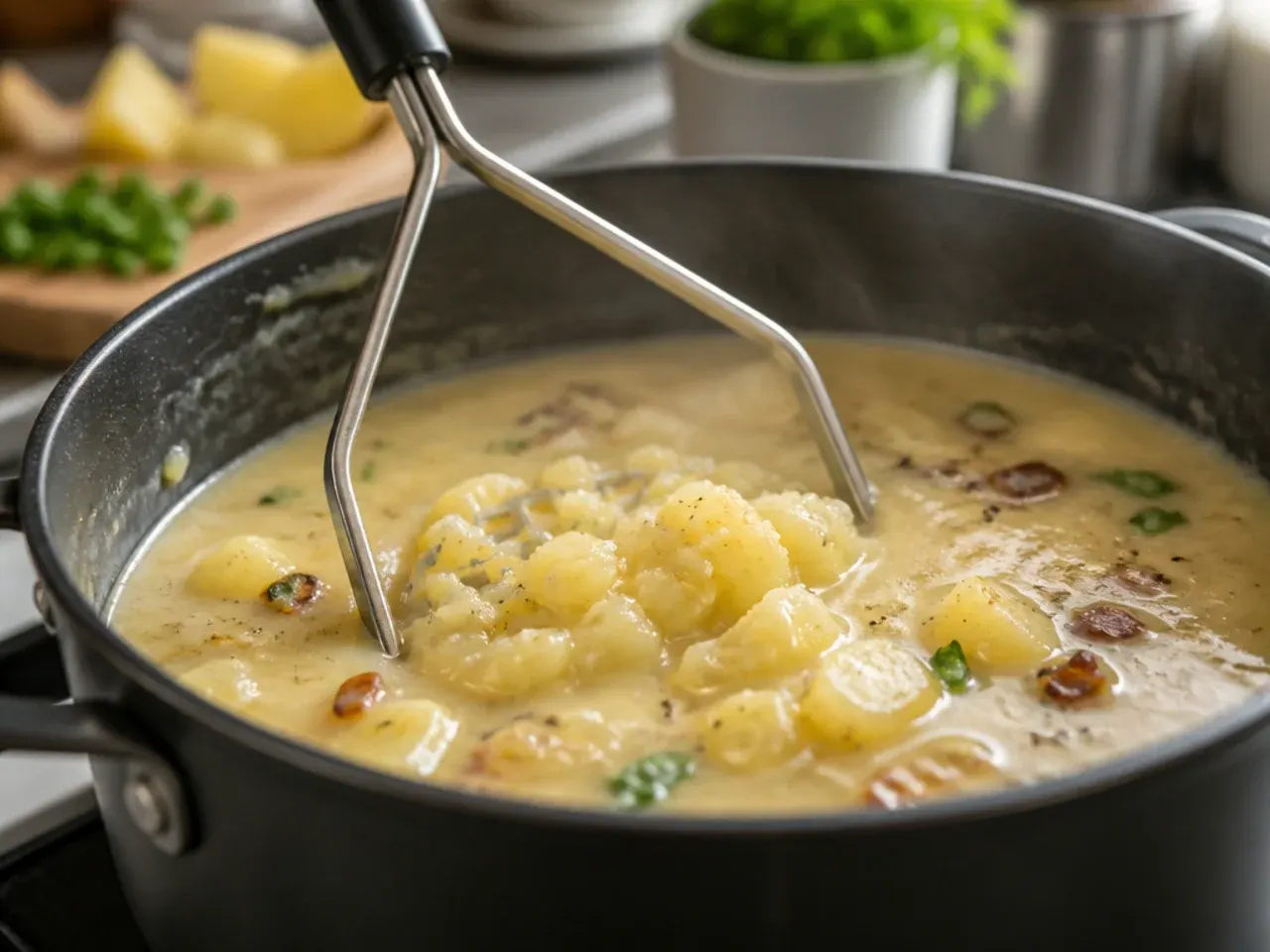
Using a potato masher or the back of a wooden spoon, mash about a third of the potatoes directly in the pot to thicken the broth, leaving the rest in soft chunks. This gives the soup body without turning it into a smooth puree. If you prefer an even creamier result, pulse an immersion blender for 2-3 seconds at most.
Step 6: Stir in the dairy and cheese

Reduce the heat to low, then stir in the 240 ml (1 cup) of milk and 240 ml (1 cup) of double cream. Add the 225 g (8 oz) of grated cheddar a handful at a time, stirring until each addition has fully melted before adding the next. Stir in the 120 g (1/2 cup) of soured cream along with the salt and pepper, keeping the heat low so the soup never returns to a boil.
Step 7: Rest and serve

Take the pot off the heat and let the soup sit, uncovered, for about 5 minutes; it will thicken noticeably as it stands. Taste and adjust the seasoning with extra salt or pepper if needed. Ladle into bowls and top with the crispy bacon, a little extra grated cheddar, and chopped chives if you like.
Frequently Asked Questions
Yukon Gold potatoes are my top pick because they have enough starch to thicken the soup when mashed, but still hold a little shape instead of dissolving completely. Russets work too and give an even creamier result, though they break down faster so keep a closer eye on the cook time. Avoid waxy varieties like red or new potatoes, since they stay too firm and never give the soup real body. Whichever you choose, cut them into even 1.5 cm cubes so they cook at the same rate.
Save this for later 📌
Pin this article to your Pinterest board so the full list is one tap away when you need it.
Save on Pinterest