
Ingredients 6 Person(s)

Save this for later 📌
Pin this article to your Pinterest board so the full list is one tap away when you need it.
Save on PinterestDirections
Step 1: Prep your ingredients

Wash and peel 1.3 kg (2¾ lb) Yukon Gold potatoes, then cut them into even 2cm (¾-inch) cubes so they cook at the same rate. Dice the onion, mince the garlic, and dice the bacon before you start cooking so everything is ready to go.
Step 2: Cook the bacon
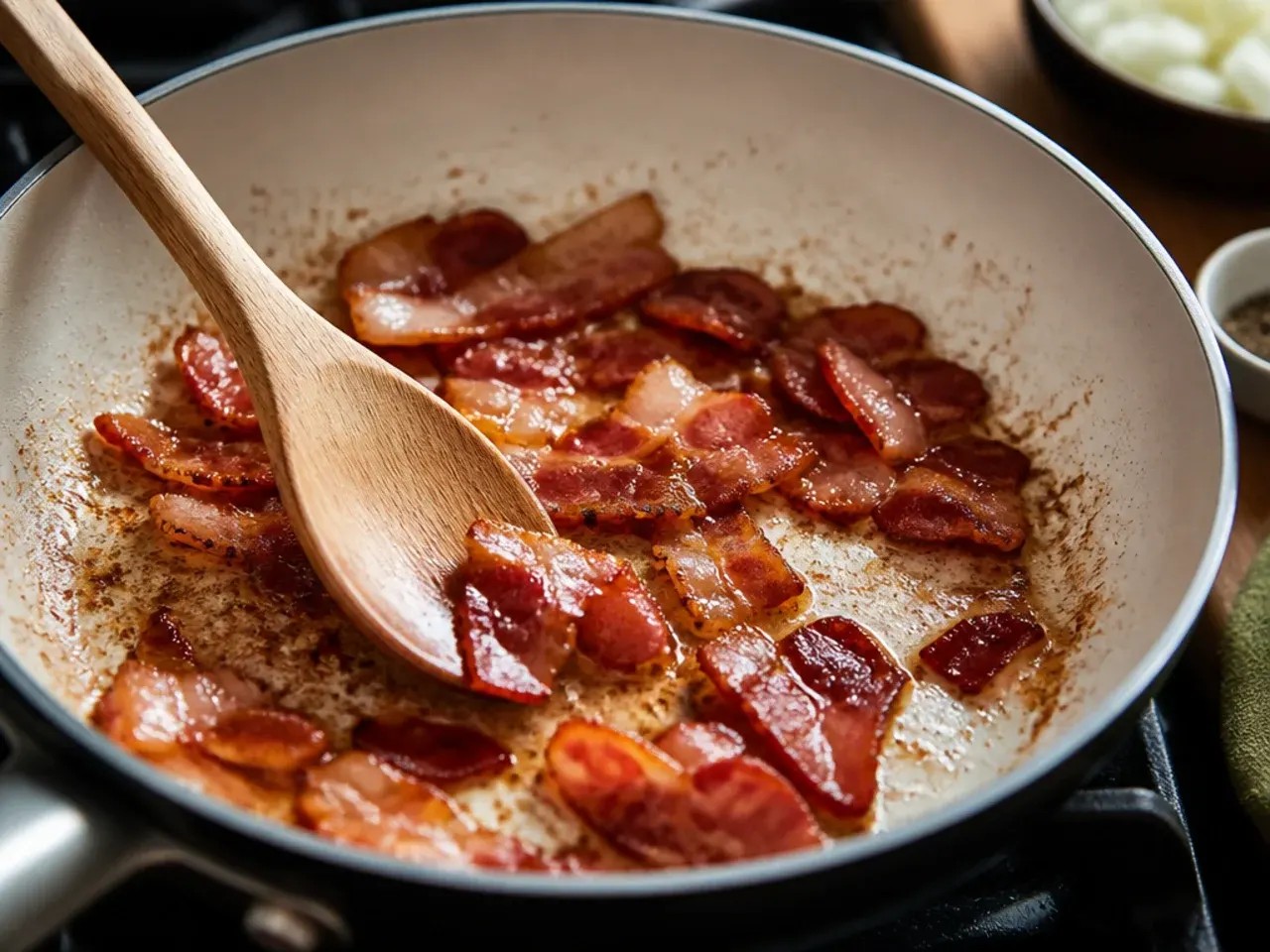
Set a large, heavy-bottomed pot or Dutch oven over medium heat and add the 170 g (6 oz) diced bacon. Cook for 6-8 minutes, stirring occasionally, until the pieces are crisp and deep golden brown.
Step 3: Remove and drain the bacon
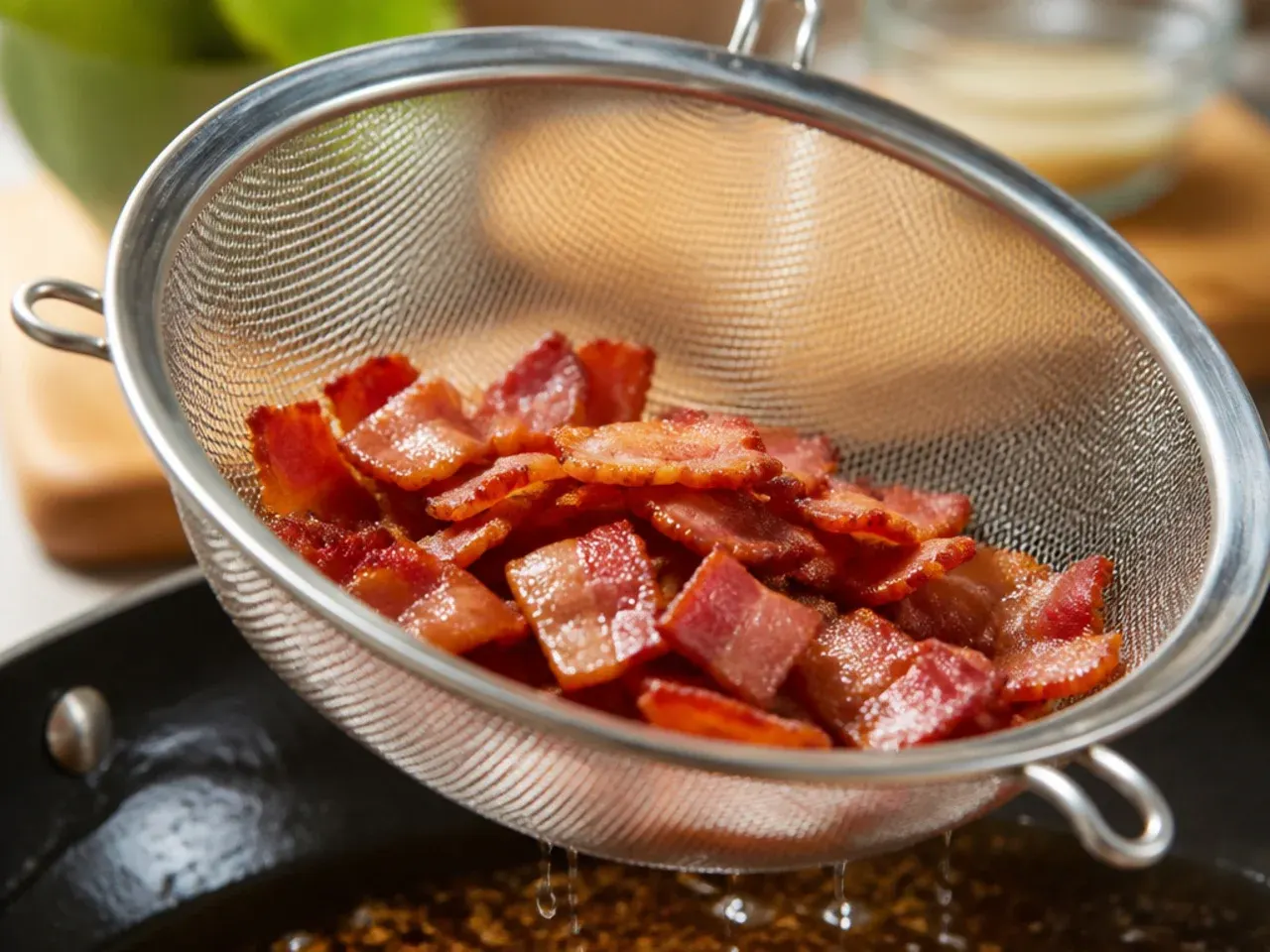
Use a slotted spoon to transfer the crispy bacon to a plate lined with kitchen paper, leaving the rendered fat behind in the pot. Set the bacon aside for later — you'll use about two-thirds in the soup and the rest for garnish.
Step 4: Melt the butter
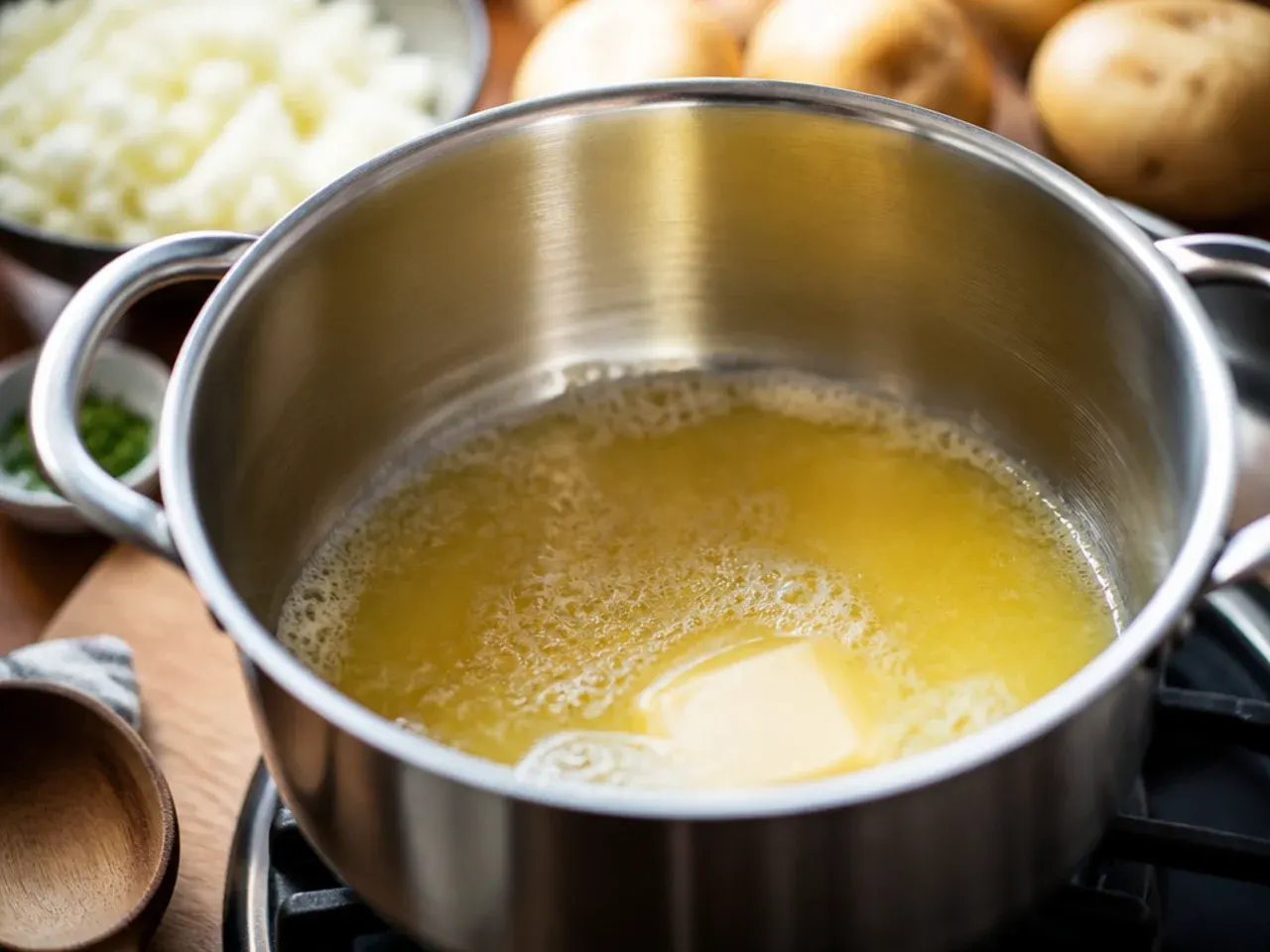
Add 55 g (4 tbsp) unsalted butter to the bacon fat still in the pot and let it melt over medium heat, swirling to combine, about 1 minute. This butter-and-bacon-fat base is what gives the soup its rich, savoury backbone.
Step 5: Sauté the onion
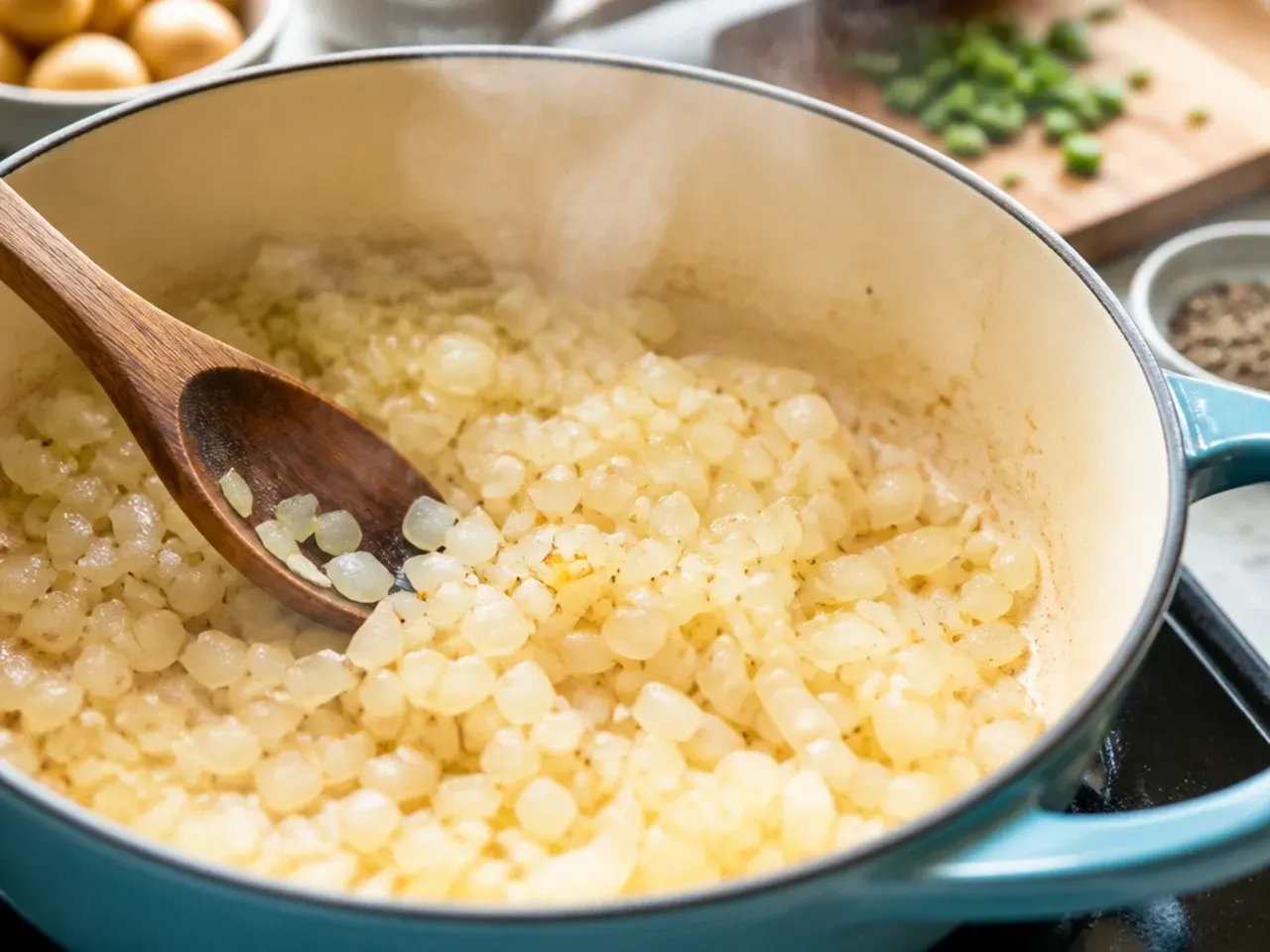
Add the finely diced onion to the pot and cook for 4-5 minutes, stirring often, until it turns soft and translucent but not browned. Lower the heat slightly if the edges start to catch colour too quickly.
Step 6: Add the garlic

Stir in the 3 minced garlic cloves and cook for just 30-60 seconds, until fragrant. Keep stirring constantly here, since garlic can turn bitter within seconds if it scorches.
Step 7: Make the roux
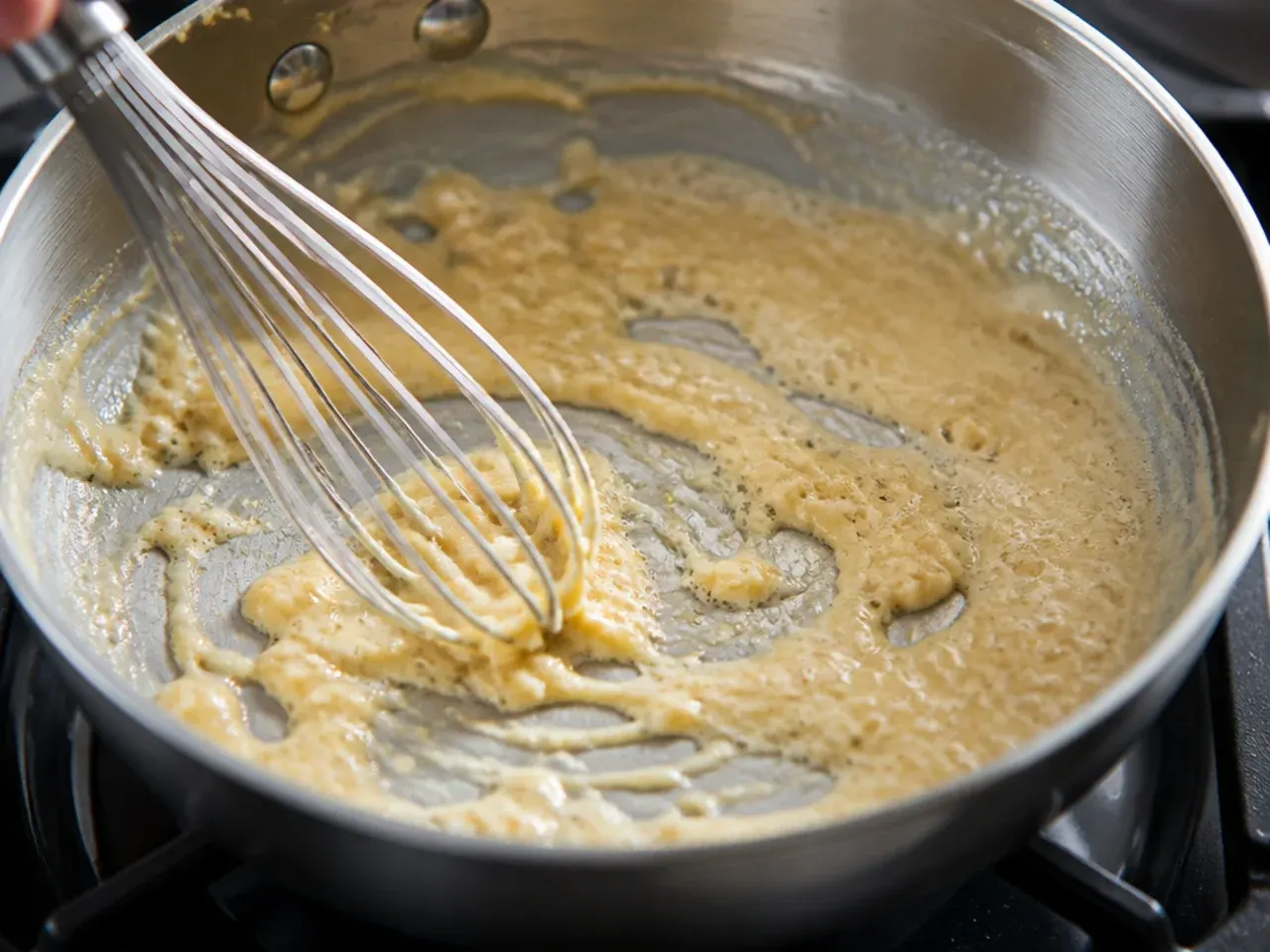
Sprinkle 45 g (⅓ cup) plain flour evenly over the onion mixture and stir to coat everything into a thick paste. Cook the roux for 1-2 minutes, stirring constantly, until it smells lightly toasted and no raw flour taste remains.
Step 8: Whisk in the stock gradually
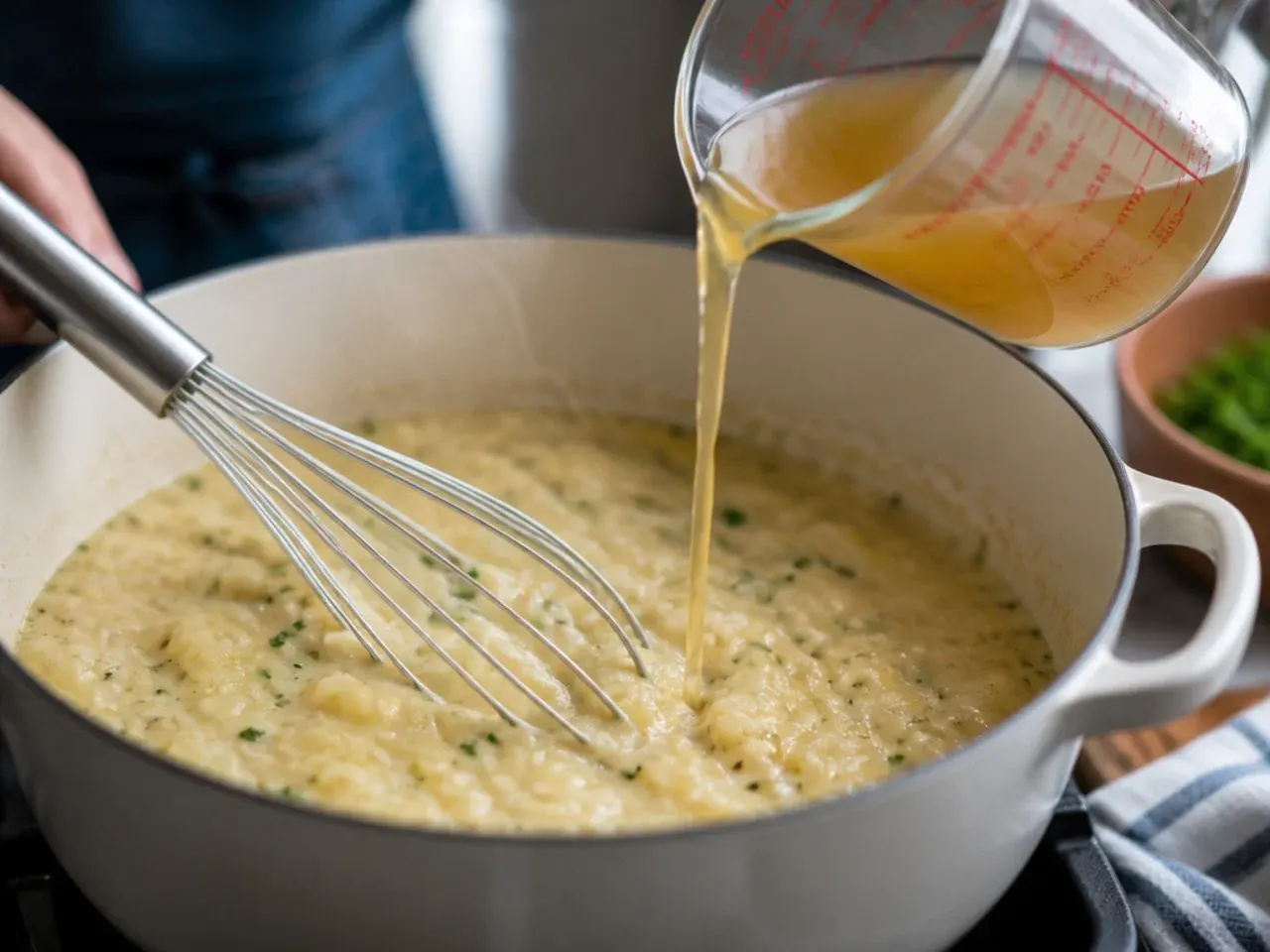
Pour in the 950 ml (4 cups) chicken stock a splash at a time, whisking constantly to smooth out any lumps before adding more. Once about a third of the stock is in, pour the rest in a steady stream while whisking.
Step 9: Scrape the pot

Use your whisk or a wooden spoon to scrape up any browned bits stuck to the bottom of the pot. Those bits are packed with flavour and will dissolve into the broth as you stir.
Step 10: Add the potatoes

Tip in the cubed potatoes and stir well so they're fully submerged in the stock. If the liquid doesn't quite cover them, top up with a splash of water or extra stock.
Step 11: Season the base
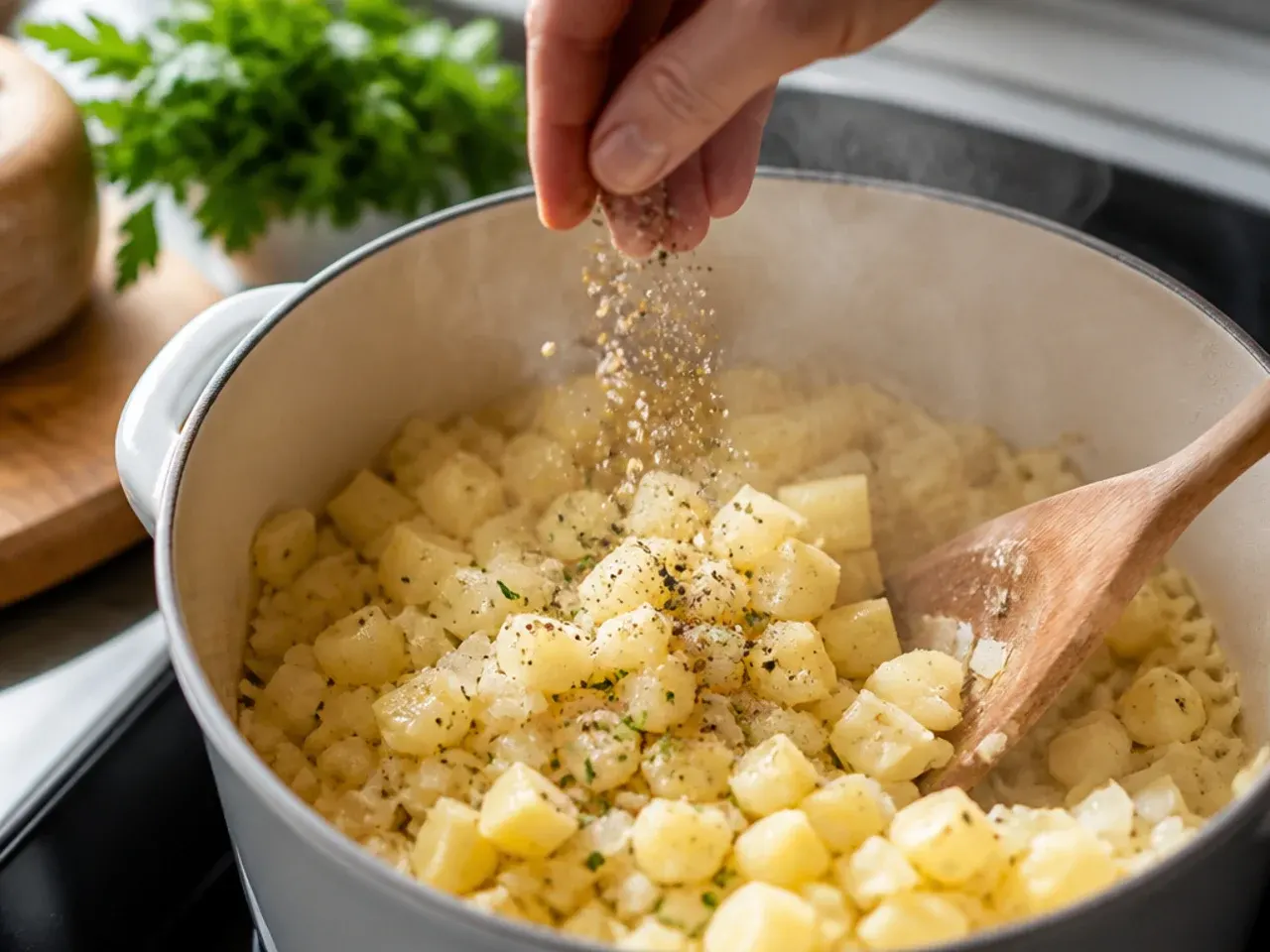
Stir in 1 tsp fresh thyme leaves, 1 tsp salt, and ½ tsp black pepper. Keep the seasoning moderate for now, since you can always adjust it again at the end.
Step 12: Bring to a boil
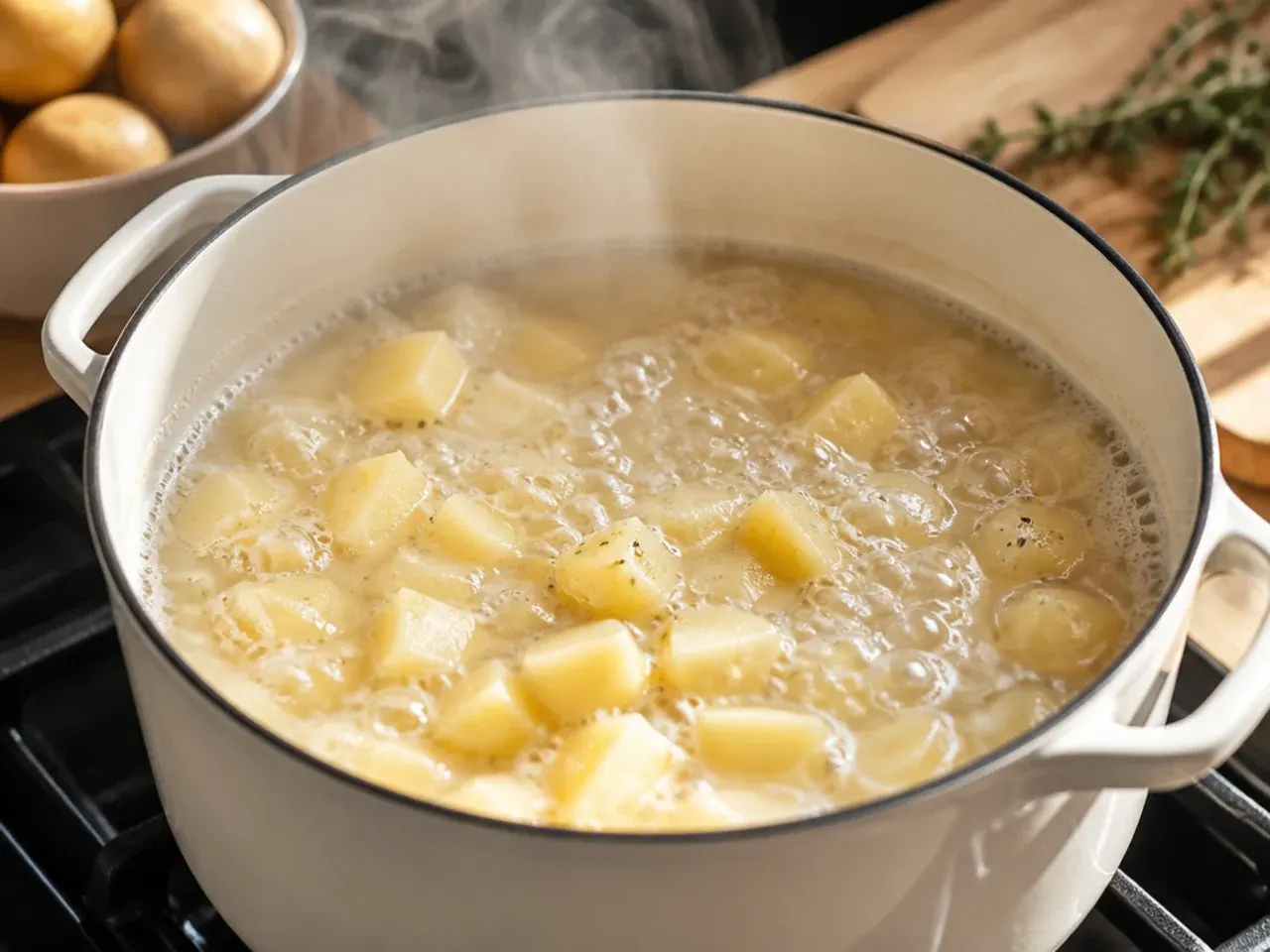
Turn the heat up to medium-high and bring the soup to a full boil, uncovered, which should take about 5 minutes. Watch for large, steady bubbles breaking across the whole surface.
Step 13: Reduce to a simmer

As soon as it boils, reduce the heat to medium-low so the soup holds a gentle simmer with small, steady bubbles rather than a rolling boil. Partially cover the pot with a lid, leaving a small gap for steam to escape.
Step 14: Simmer until tender
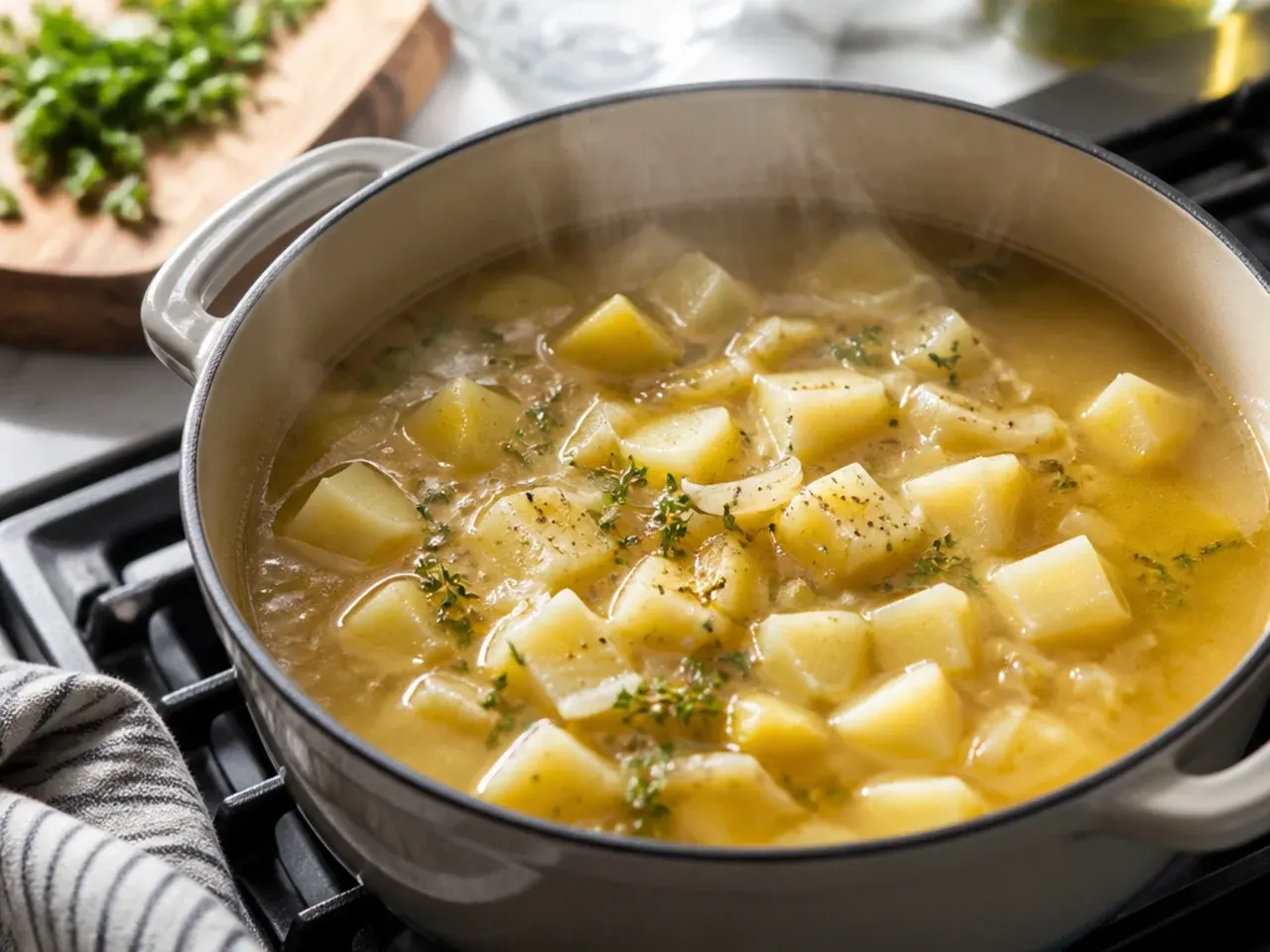
Let the potatoes simmer for 18-22 minutes, stirring occasionally so nothing catches on the bottom. They're ready when a fork slides into a cube with almost no resistance.
Step 15: Check doneness

Pull out a larger cube and press it against the side of the pot with a spoon — it should mash easily and feel soft all the way through. If there's still a firm centre, give it another 3-4 minutes.
Step 16: Mash a portion of the potatoes

Take a potato masher or the back of a large spoon and roughly mash about a quarter of the potatoes directly in the pot, leaving the rest in chunky pieces. This is what naturally thickens the soup and gives it that classic creamy-but-chunky texture, no extra cornflour needed.
Step 17: Lower the heat
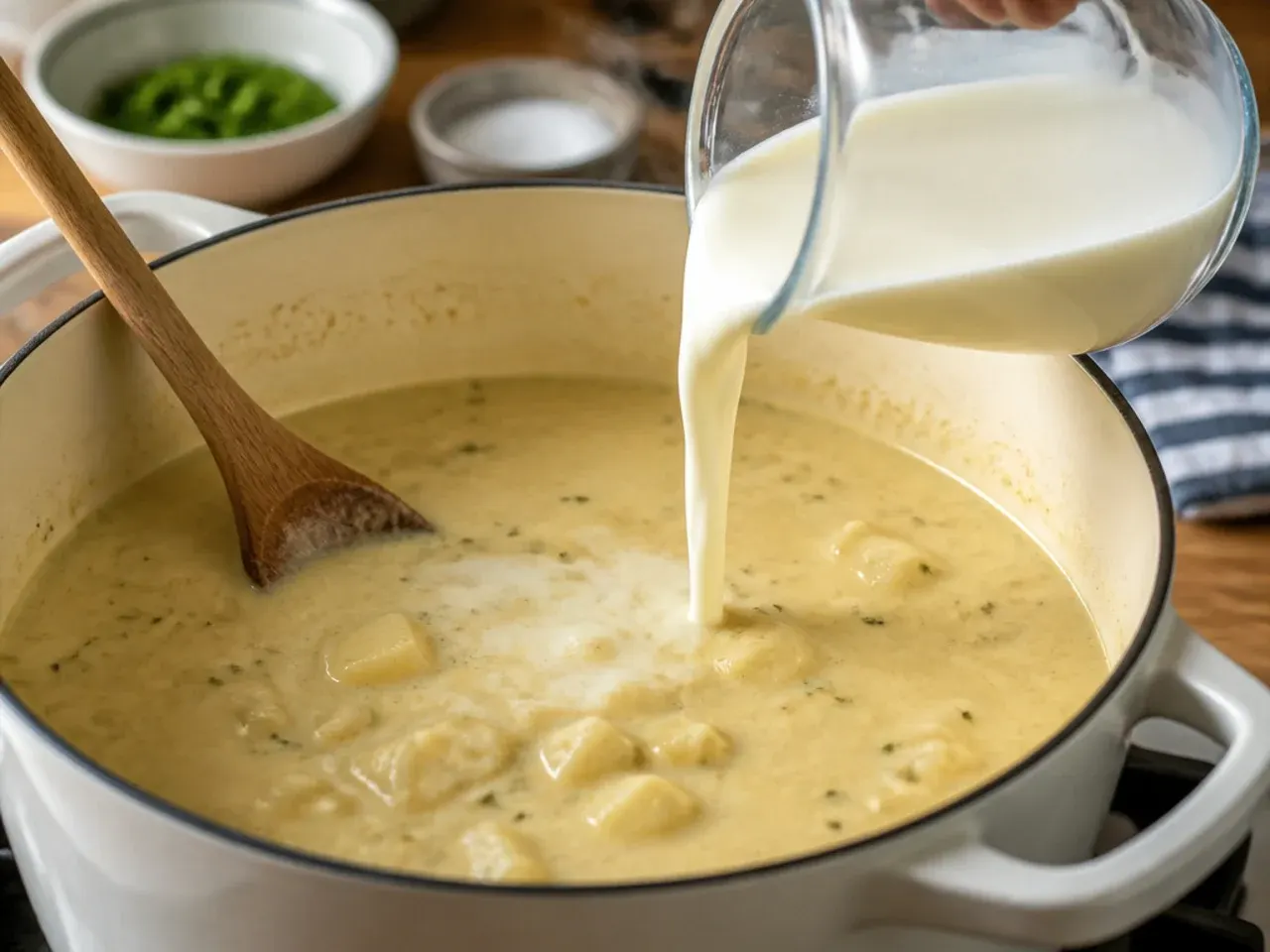
Reduce the heat to low so the pot is just barely simmering, or take it off the heat entirely and rely on residual warmth. This protects the dairy you're about to add from splitting or curdling.
Step 18: Stir in the milk
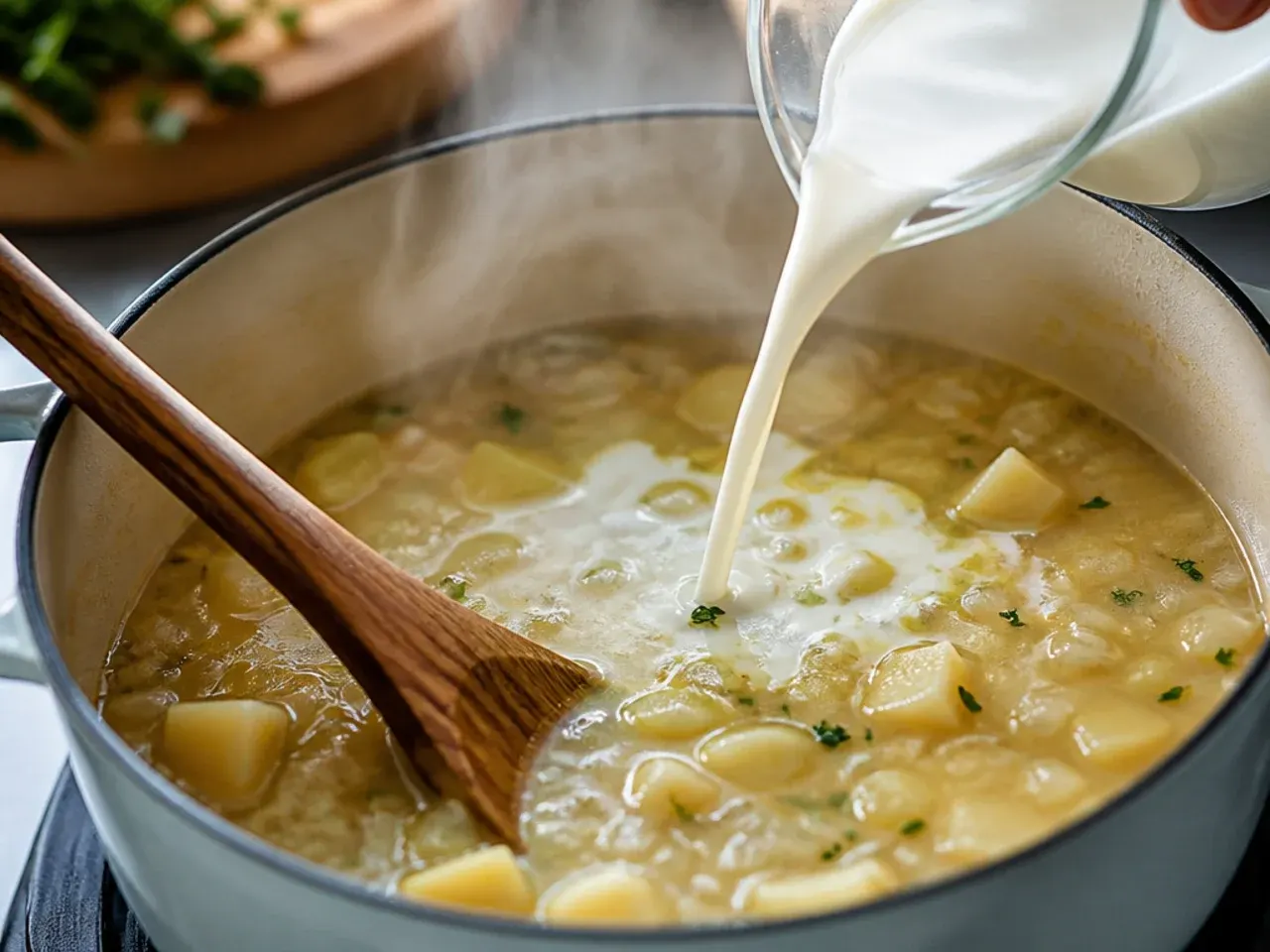
Pour in the 240 ml (1 cup) whole milk and stir gently until fully incorporated. The soup should loosen slightly and take on a paler, creamier colour.
Step 19: Stir in the cream

Add the 240 ml (1 cup) double cream (heavy cream) and stir through. This is what pushes the soup from creamy-ish to genuinely rich and silky.
Step 20: Temper the soured cream
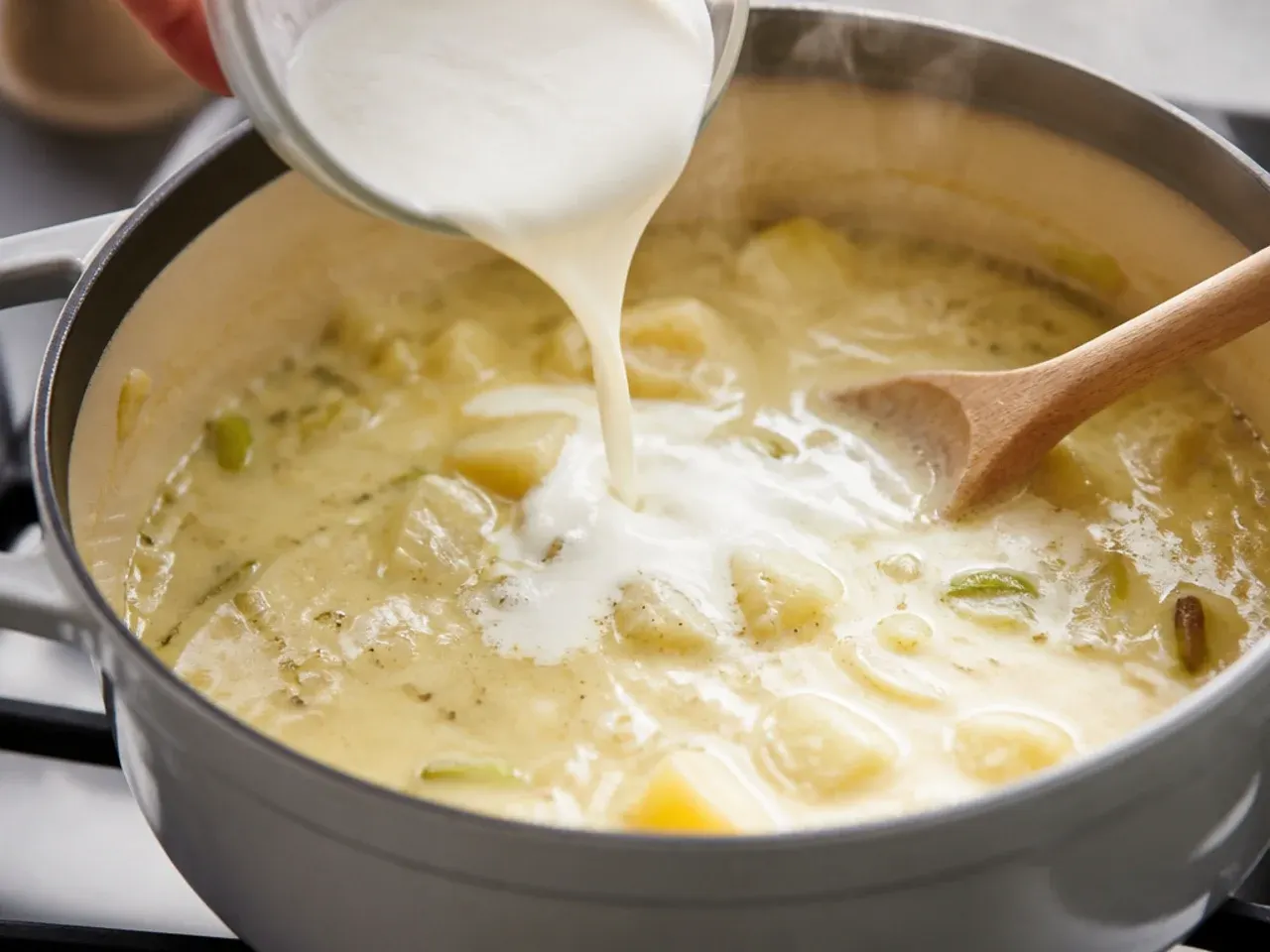
Spoon 2-3 tablespoons of the hot soup into a small bowl with the 120 g (½ cup) soured cream and whisk together first. Tempering it like this warms the soured cream gradually so it blends in smoothly instead of curdling into little flecks.
Step 21: Stir the soured cream mixture back in

Pour the tempered soured cream mixture back into the pot and stir until fully combined. The soup should now look glossy, thick, and evenly pale gold.
Step 22: Add the cheese gradually

Add the 170 g (1½ cups) grated mature cheddar a handful at a time, stirring after each addition until it melts completely before adding more. Adding it gradually keeps the cheese from clumping or turning stringy.
Step 23: Stir until smooth

Keep stirring gently over low heat for 2-3 minutes until the soup is completely smooth, glossy, and thick enough to coat the back of a spoon. Do not let it come back to a boil at this stage.
Step 24: Fold in most of the bacon

Stir about two-thirds of the reserved crispy bacon into the pot, saving the rest for garnish on top. This distributes smoky flavour and little crunchy bites through every spoonful.
Step 25: Taste and adjust

Taste the soup and adjust the seasoning, adding a little more salt, pepper, or thyme as needed. If it tastes flat, a small pinch of extra salt usually brings all the flavours into focus.
Step 26: Adjust the consistency

If the soup feels too thick, stir in a splash more warm stock or milk, about 60 ml (¼ cup) at a time, until it reaches the consistency you like. If it's thinner than you'd like, let it simmer uncovered on low for another 5 minutes to reduce slightly.
Step 27: Keep it warm gently

If you're not serving right away, keep the soup on the lowest possible heat, stirring occasionally, rather than leaving it over direct heat unattended. This stops a skin forming on top and keeps the dairy from scorching on the base of the pot.
Step 28: Ladle into bowls

Ladle the hot soup into bowls, filling each about three-quarters full to leave room for toppings. This batch yields six generous portions.
Step 29: Garnish

Top each bowl with the remaining crispy bacon, a scattering of extra grated cheddar, and a sprinkle of the 15 g (2 tbsp) chopped fresh chives. A crack of black pepper over the top finishes it nicely.
Step 30: Serve immediately
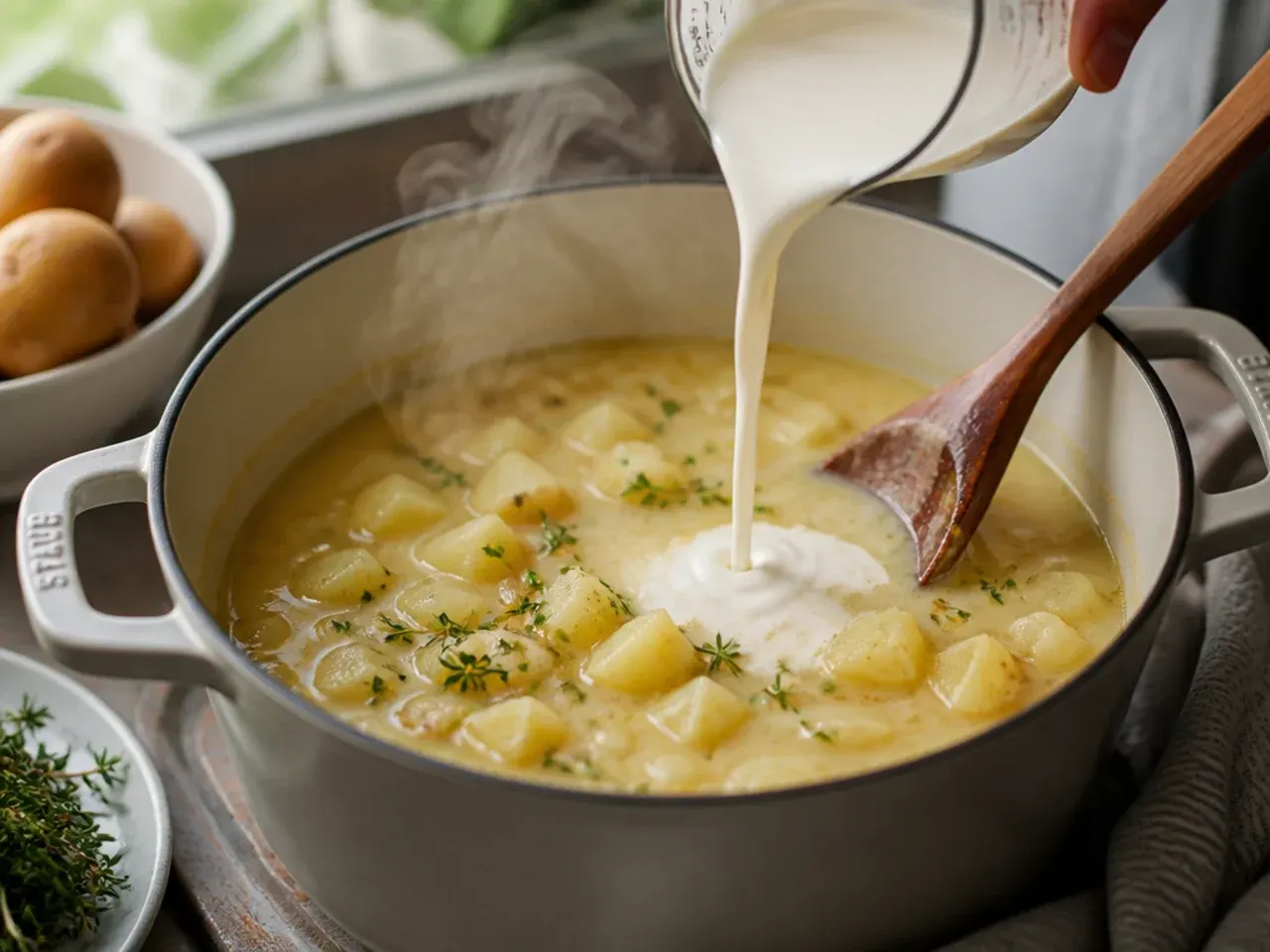
Serve the creamy potato soup straight away while it's hot, with crusty bread or dinner rolls on the side for dipping. Leftovers can go straight into an airtight container once the soup has cooled to room temperature.
Pro Tips for Perfect Creamy Potato Soup

Use starchy Yukon Gold or Russet potatoes rather than waxy reds, since their natural starch breaks down slightly as they simmer and thickens the soup without extra flour. Mash roughly a quarter of the cooked potatoes right in the pot with a fork or masher, leaving the rest in soft chunks, so every spoonful has both body and texture. Always pull the pot off direct heat before stirring in the soured cream and cheese, because a hard boil is what causes dairy to split into a grainy mess. Taste right before serving and adjust the salt, since potatoes soak up seasoning as they cook and a batch that tasted right at the simmer stage often needs one more pinch.
Storage and Make-Ahead Tips

Cool the soup completely, then store it in an airtight container in the fridge for up to 4 days, giving it a good stir before reheating since it thickens considerably as it chills. Reheat gently on the stove over low-medium heat, stirring often, and splash in a little extra milk or stock to loosen it back to a spoonable consistency. Freezing works for up to 2 months, but the dairy can separate slightly on thawing, so whisk vigorously or blitz briefly with an immersion blender once it's warmed back through. For a head start, dice the potatoes, onion, and bacon up to a day ahead and keep them covered separately in the fridge, so the actual cooking takes barely 40 minutes.
This creamy potato soup turns humble spuds into a silky, cheese-flecked bowl of comfort in about an hour, with no fuss and no fancy equipment. For more potato soup inspiration, browse the full Potato Soup board — every idea there is written for real home kitchens, not professional bakers.
Frequently Asked Questions
Yes — you can make the full batch up to 2 days ahead and store it covered in the fridge, since the flavour actually deepens overnight. Reheat it gently on the stove over low-medium heat, stirring often, and add a splash of milk or stock to bring back the original consistency because it thickens considerably as it chills. Avoid microwaving in short high-power bursts, which can make the dairy separate. If you want to prep even further ahead, chop the potatoes, onion, and bacon up to a day in advance and refrigerate them separately, then cook everything fresh on the day.

Related Recipes



Save this for later 📌
Pin this article to your Pinterest board so the full list is one tap away when you need it.
Save on Pinterest