3 Gumbo vs Jambalaya Recipes Compared
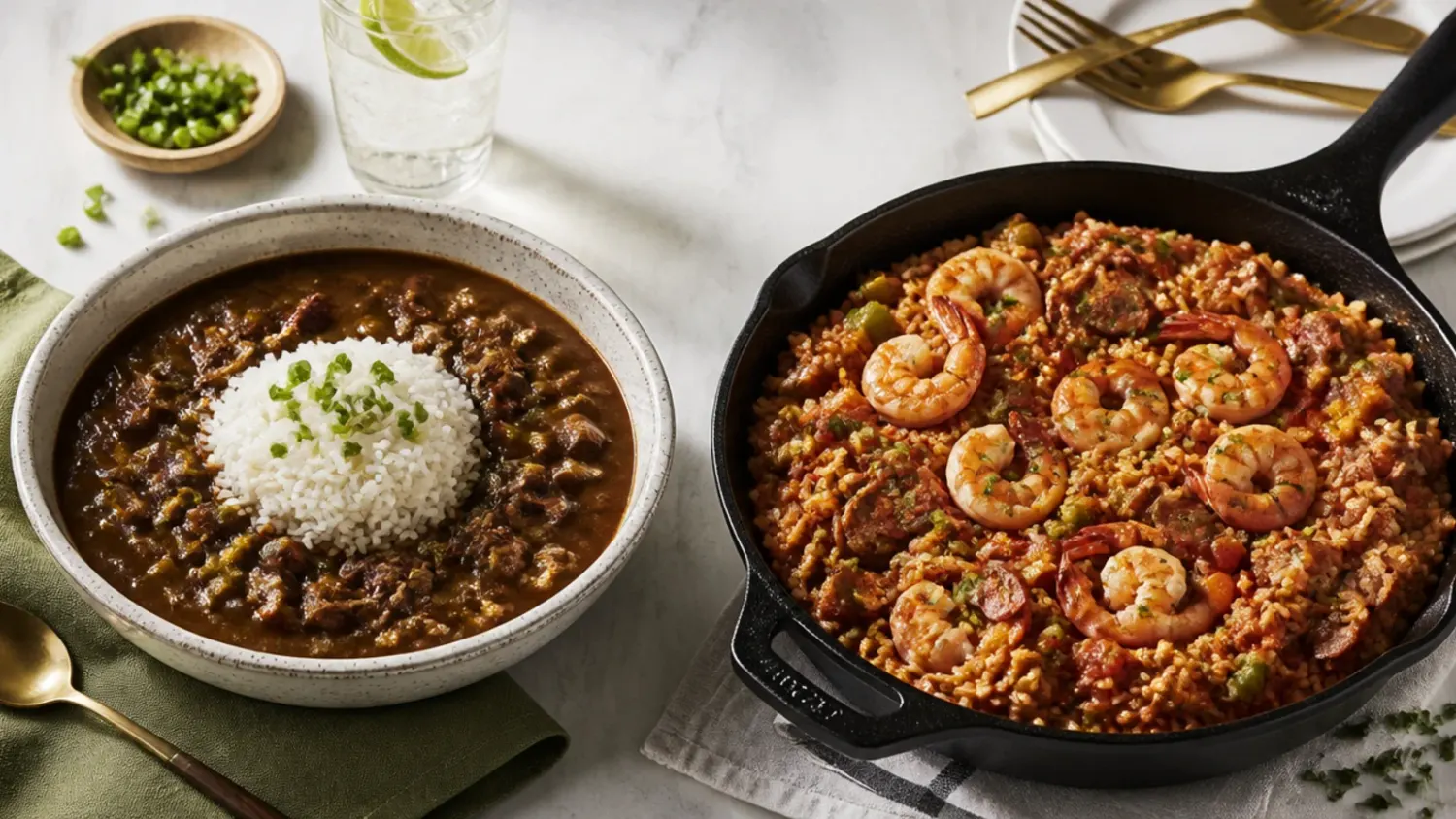
Gumbo vs jambalaya explained clearly: what makes each dish different, which is cheaper, easier and tastier, plus a foolproof gumbo recipe to try first. If you love gumbo recipe inspiration, start with our Gumbo Recipes collection, then browse the full Dinner Recipes hub for more.
Save this for later 📌
Pin this article to your Pinterest board so the full list is one tap away when you need it.
Save on PinterestDinner Recipes
Intermediate
Comparison
3 compared
Table of Contents
Option 1: Gumbo (The Thick, Roux-Based Stew)
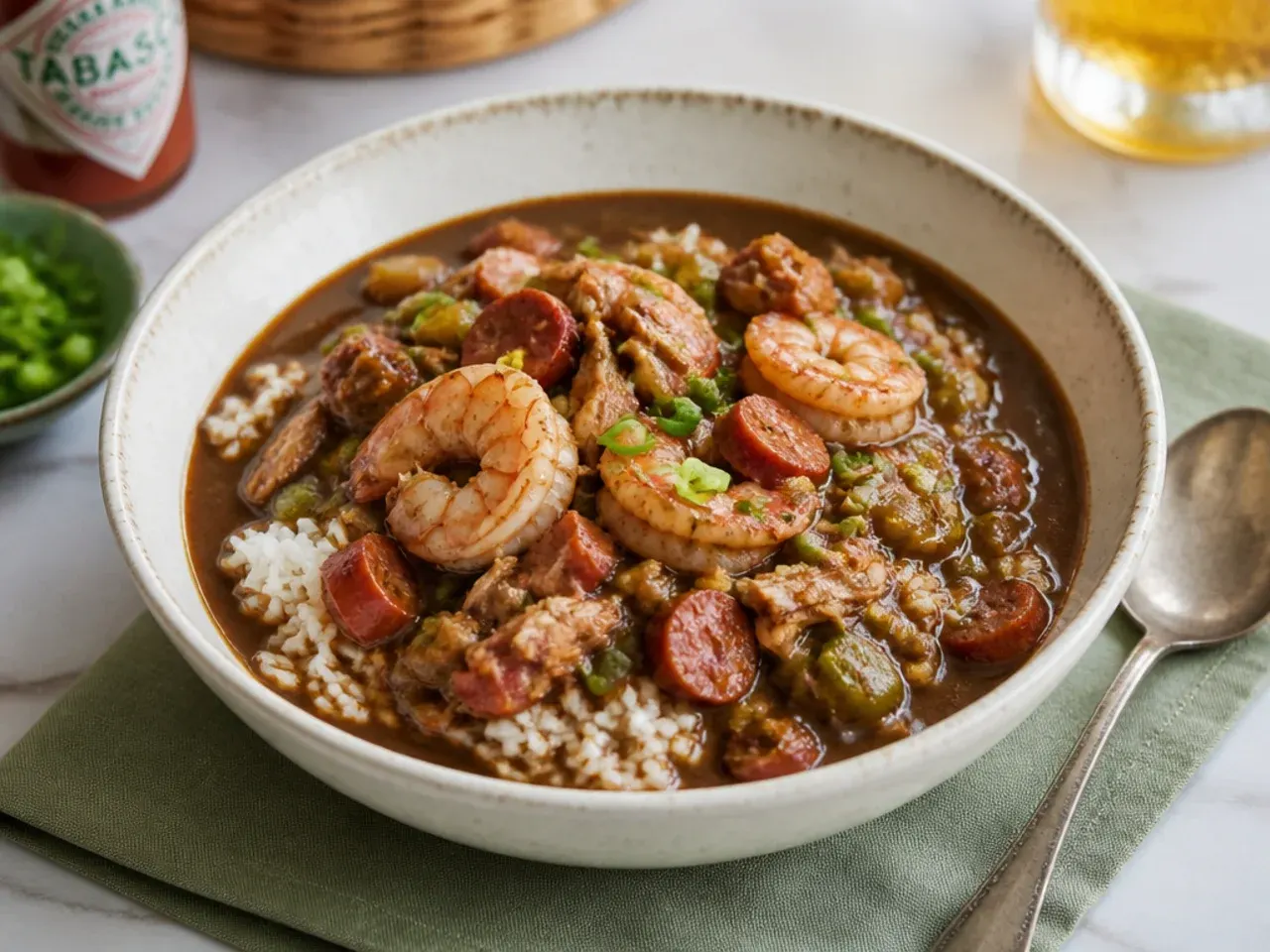
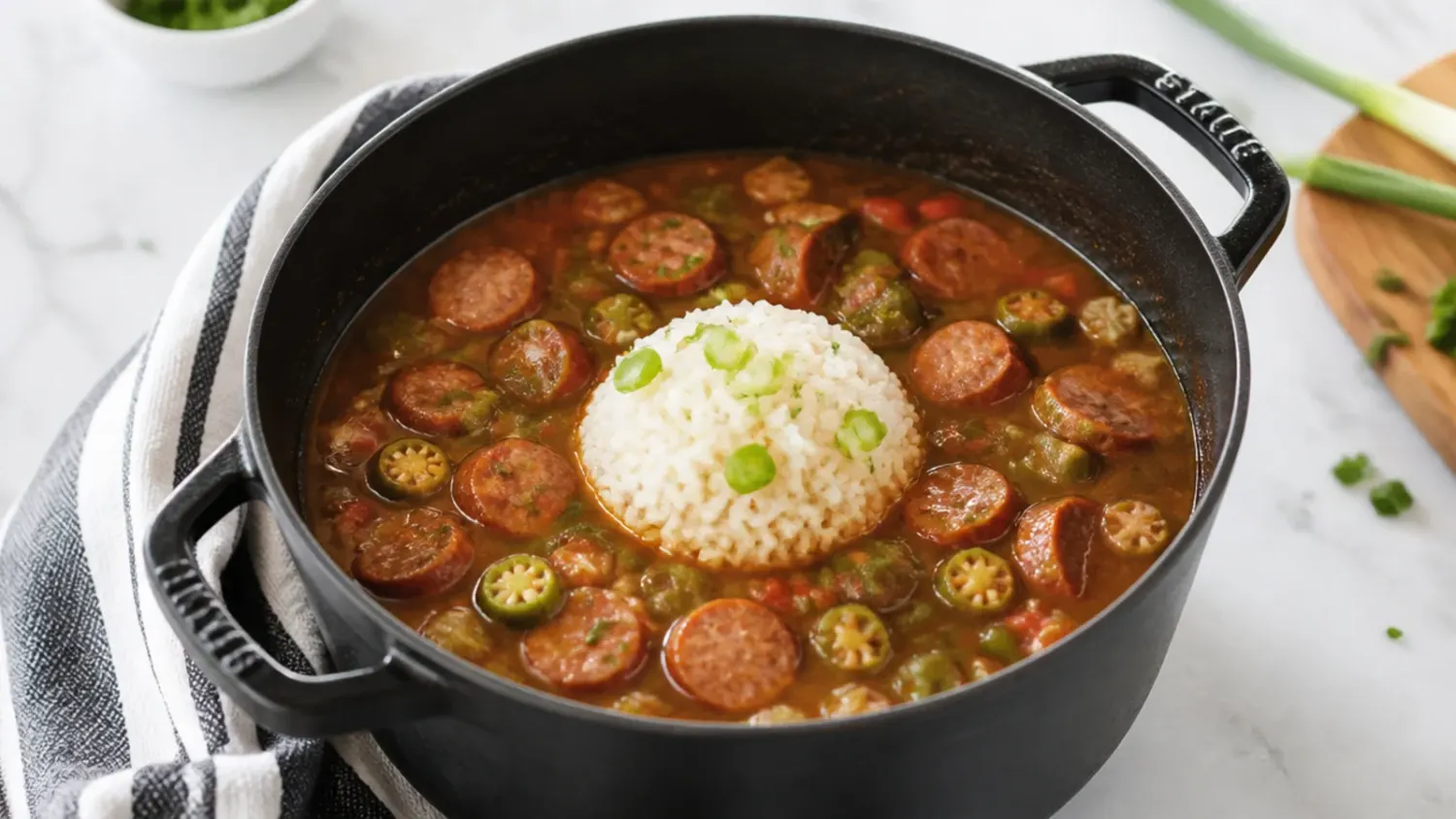
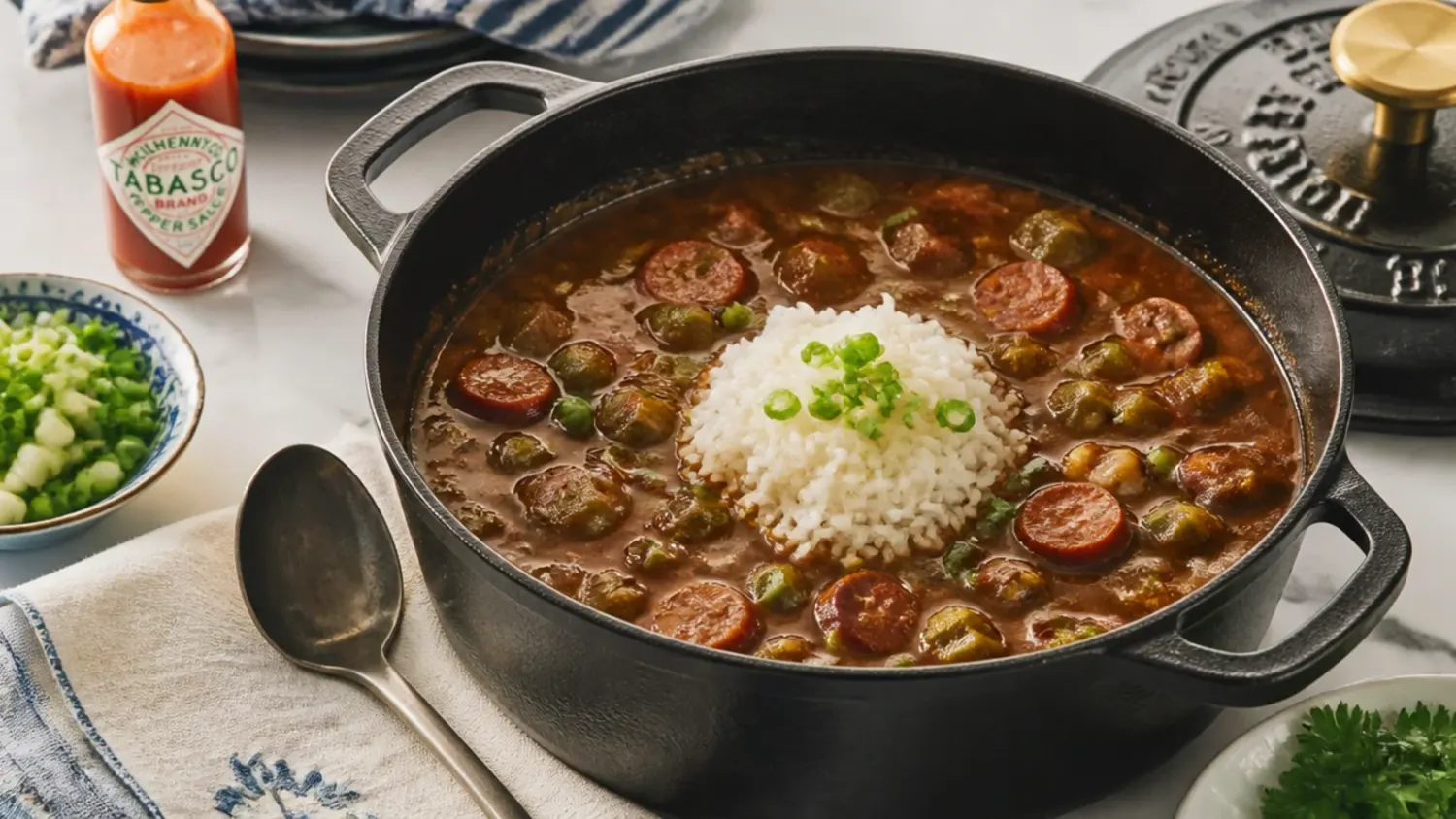
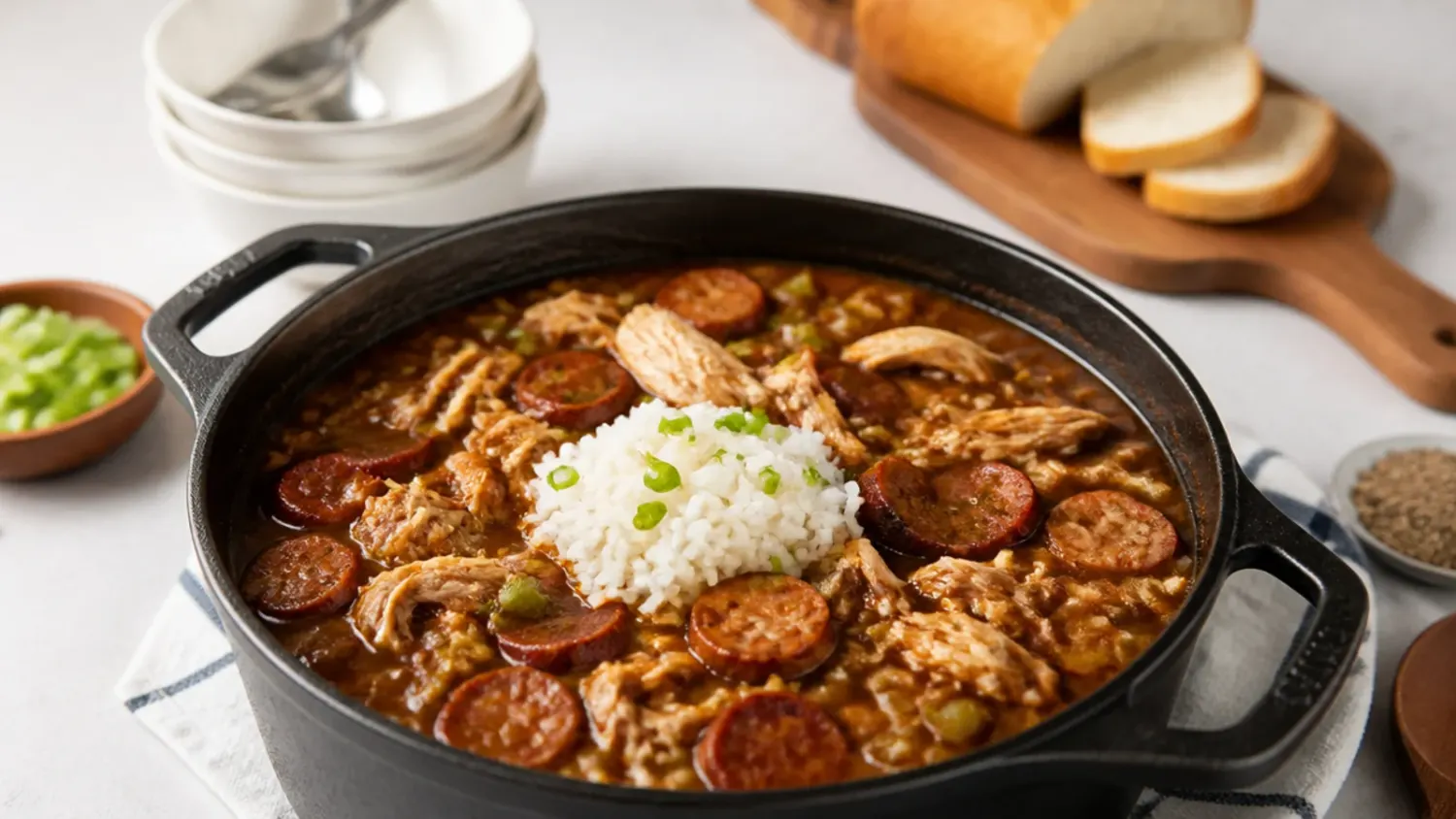
Gumbo is a slow-cooked Louisiana stew built on a dark roux and the holy trinity of onion, celery and green bell pepper, then ladled over a scoop of rice cooked separately. The defining move is the roux: equal parts flour and oil (1 cup flour to about 2/3 to 3/4 cup oil) stirred over medium-low heat for 30 to 45 minutes until it reaches the color of dark chocolate or an old penny. It is thickened by that roux plus one of two Louisiana thickeners, okra (which also adds body when sliced and simmered) or filé powder (ground sassafras, stirred in off the heat at the very end so it does not turn stringy). Classic proteins are andouille sausage, chicken and shrimp, and Creole versions add tomatoes while Cajun versions stay dark and tomato-free. Because the rice never cooks in the pot, gumbo stays soupy and pourable, and the flavor keeps deepening the longer it simmers, usually 60 to 90 minutes.
Option 2: Jambalaya (The One-Pot Rice Dish)
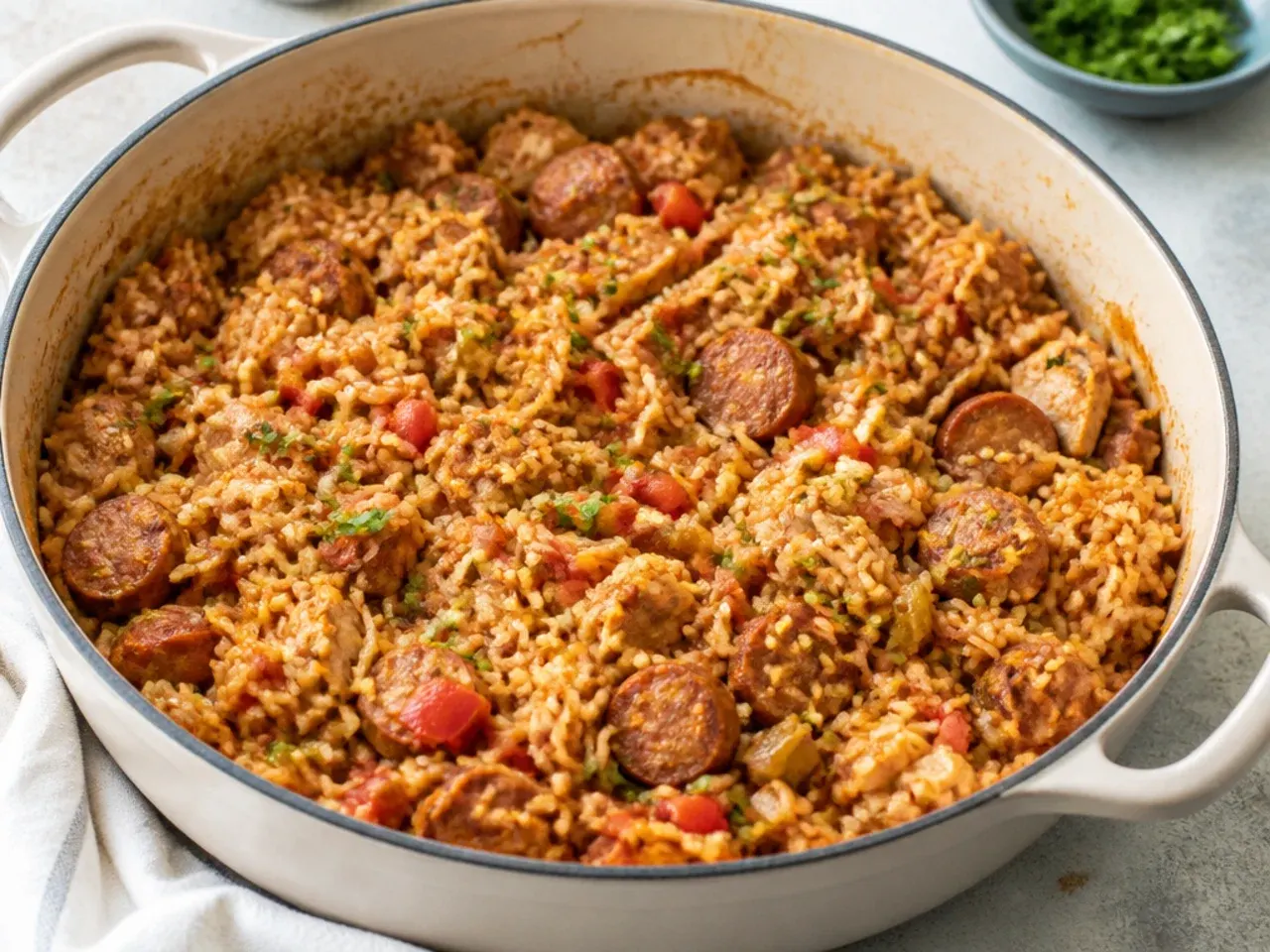
Jambalaya is a one-pot rice dish where long-grain rice cooks directly in the seasoned stock, absorbing the liquid so the finished plate is moist but not soupy. You brown andouille sausage and chicken, sweat the same holy trinity, toast the rice in the fat, then add stock at roughly a 1 to 1.5 ratio of rice to liquid and simmer covered for about 25 minutes until the grains are tender. There are two camps: Creole (or red) jambalaya includes tomatoes and often shrimp, while Cajun (brown) jambalaya skips tomatoes and gets its color from browned meat and a caramelized fond on the pot bottom. No roux and no separate rice pot are needed, which makes it noticeably faster and more forgiving than gumbo. The trade-off is that jambalaya has one shot to nail the rice: too much stir or too much liquid and it turns gummy, so you leave the lid on and resist stirring once it simmers.
Cost Comparison
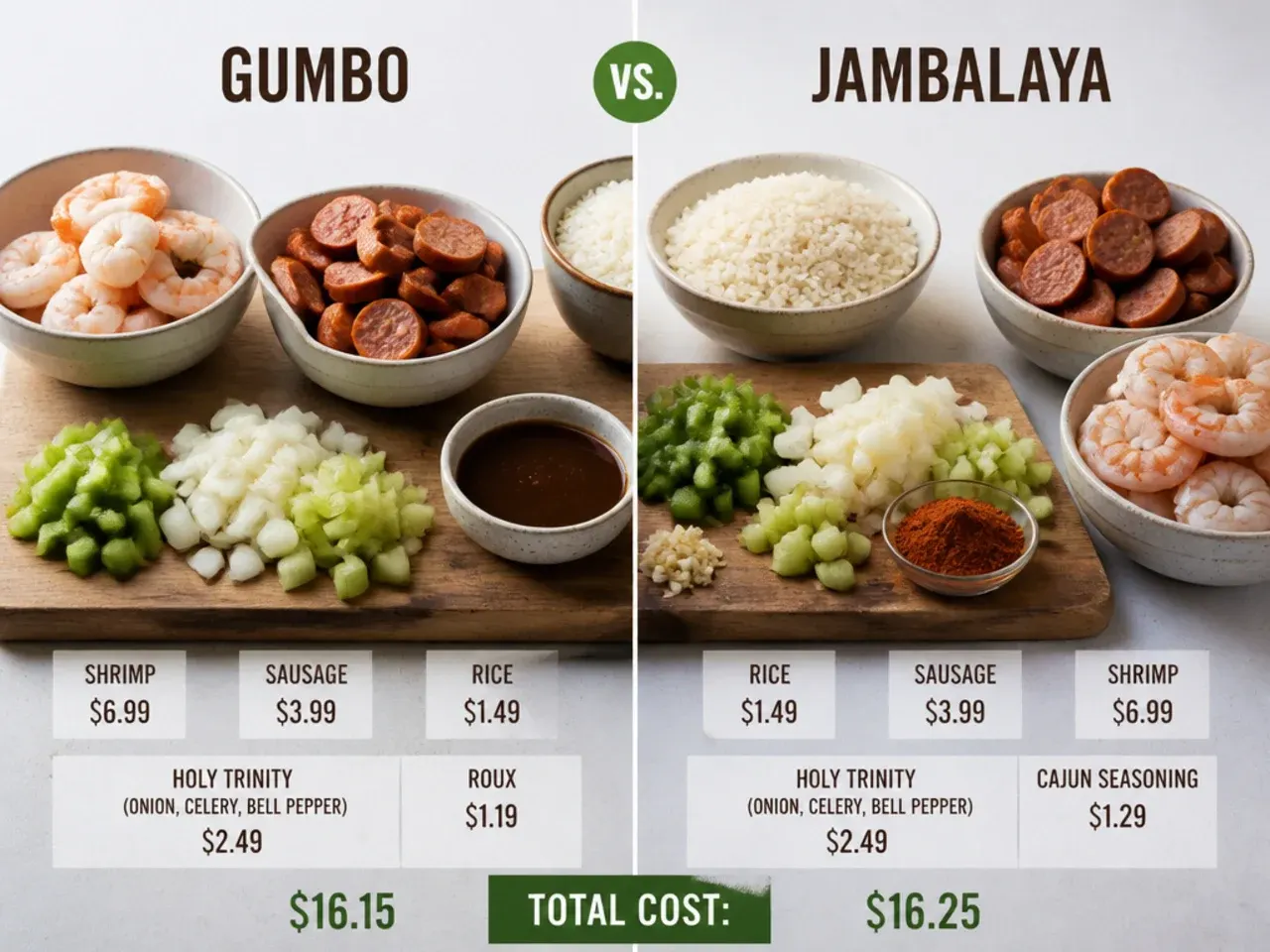
Both dishes are budget-friendly because they stretch a little meat across many servings, but jambalaya is slightly cheaper per pot because it skips shrimp and uses less protein overall. A gumbo for 10 typically runs about GBP 18 to 24: andouille or smoked sausage (GBP 5 to 6), chicken thighs or a rotisserie bird (GBP 4 to 5), shrimp (GBP 5 to 7), plus the trinity, stock and a bag of flour for the roux. A Cajun jambalaya for 6 to 8 lands closer to GBP 10 to 14, since a bag of long-grain rice costs under GBP 2 and the rice bulks out the dish instead of extra meat. The single biggest cost swing is shrimp, so if you are cooking on a tight budget, a sausage-and-chicken jambalaya wins. To trim gumbo costs, drop the shrimp, use chicken thighs instead of a whole bird, and buy frozen sliced okra.
Taste and Texture
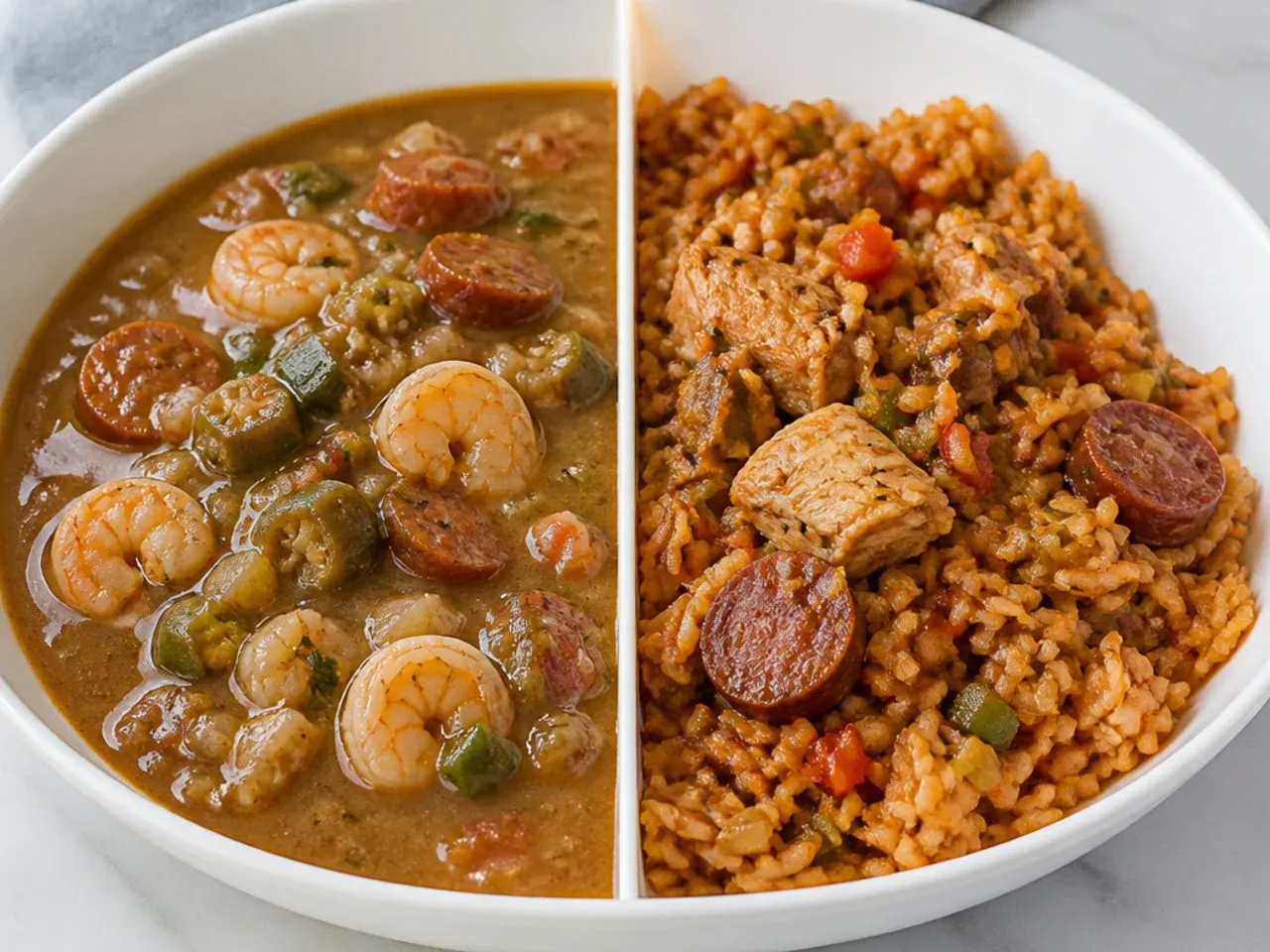
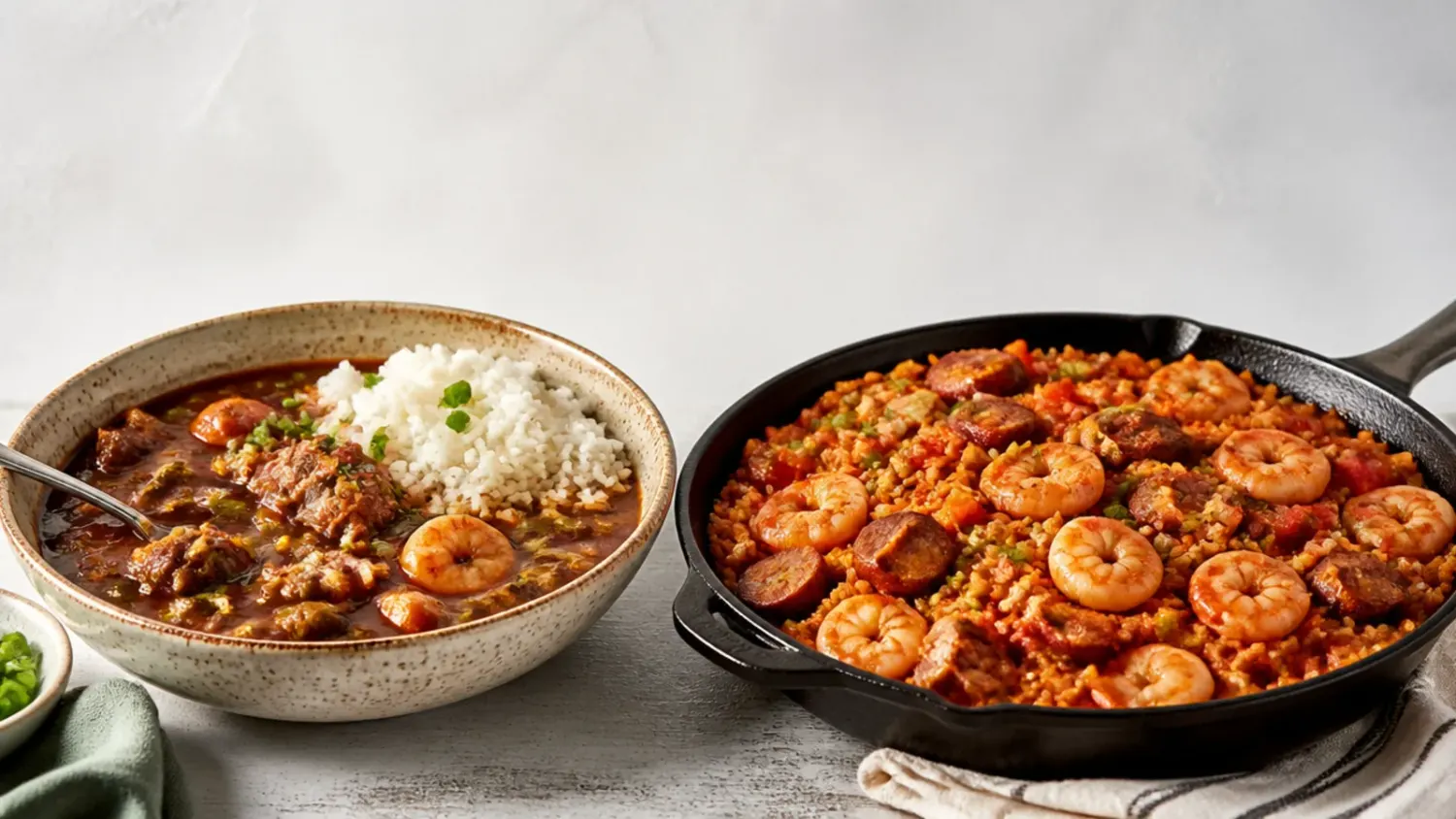
Gumbo tastes deep, smoky and complex because the dark roux contributes a toasted, almost nutty backbone that no other Louisiana dish has, and its loose, brothy body coats the rice you spoon it over. Jambalaya tastes brighter and more direct, with each rice grain seasoned by the stock, sausage fat and cayenne, so the spice hits in every bite rather than being spread through a broth. Texture is the clearest split: gumbo is a pourable stew served over separately cooked rice, while jambalaya is a moist, fluffy pilaf-style dish you eat with a fork. Neither is inherently spicier, since you control heat with cayenne and the sausage, but gumbo distributes that heat evenly through the broth while jambalaya concentrates it grain by grain. If you love silky, spoonable, sauce-forward food go gumbo; if you want a heartier, drier, forkable plate go jambalaya.
Time and Effort
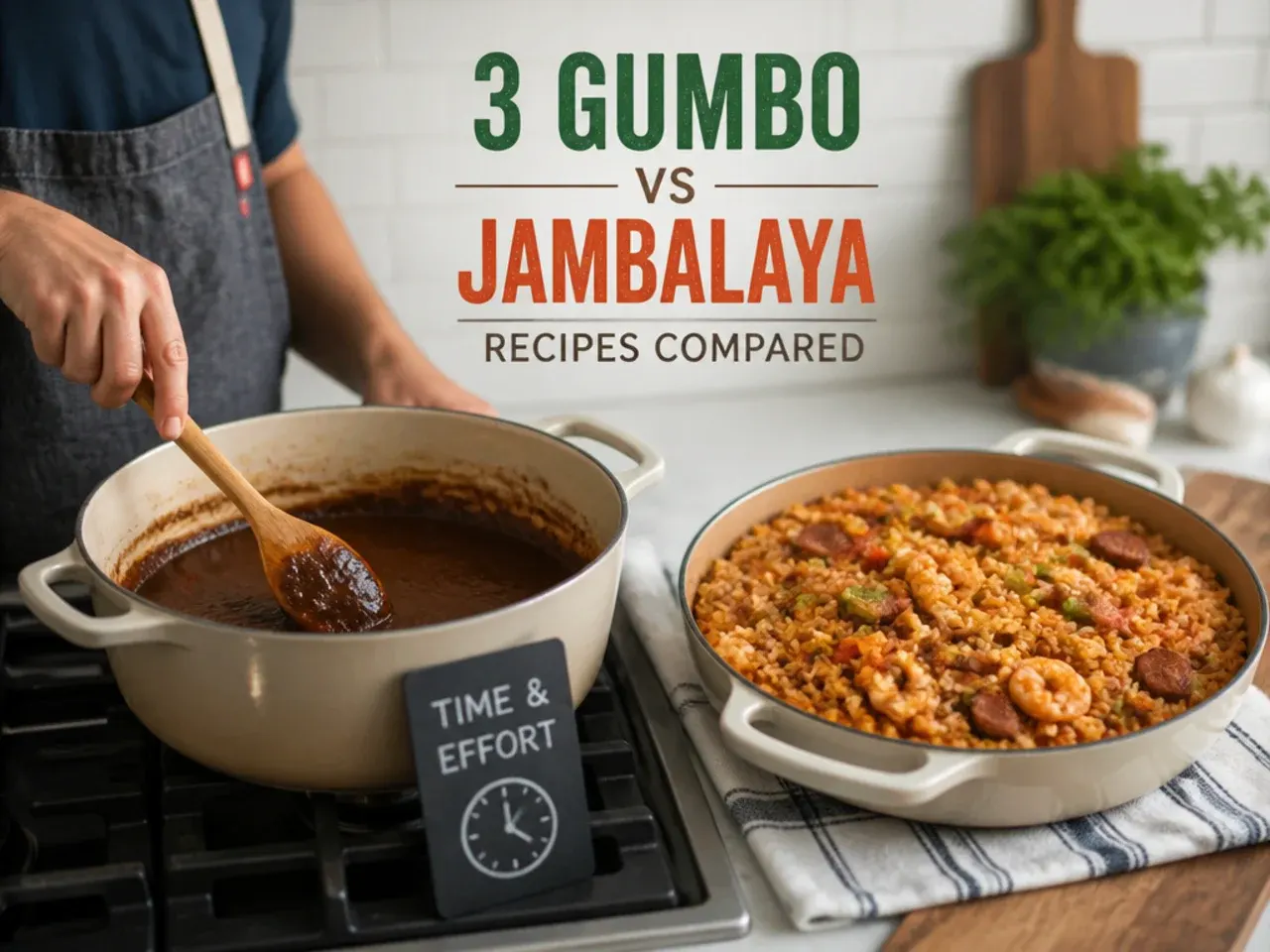
Jambalaya is the clear winner on speed and skill: it is a genuine one-pot meal that goes from cutting board to table in about 45 to 55 minutes, with the rice doing the work while you leave the lid on. Gumbo asks for more patience and more technique, mostly because of the roux, which needs 30 to 45 minutes of near-constant stirring over medium-low heat, and if you rush it or let it scorch even slightly you have to start over. After the roux, gumbo still needs 60 to 90 minutes of simmering plus a separate pot of rice, pushing total time to around 2 hours. Jambalaya also forgives distraction better, whereas gumbo's roux stage demands you stand at the stove and stir. For a weeknight or a first attempt, jambalaya is far less stressful; for a weekend project where the reward is depth of flavor, gumbo is worth the effort.
Best Choice by Situation
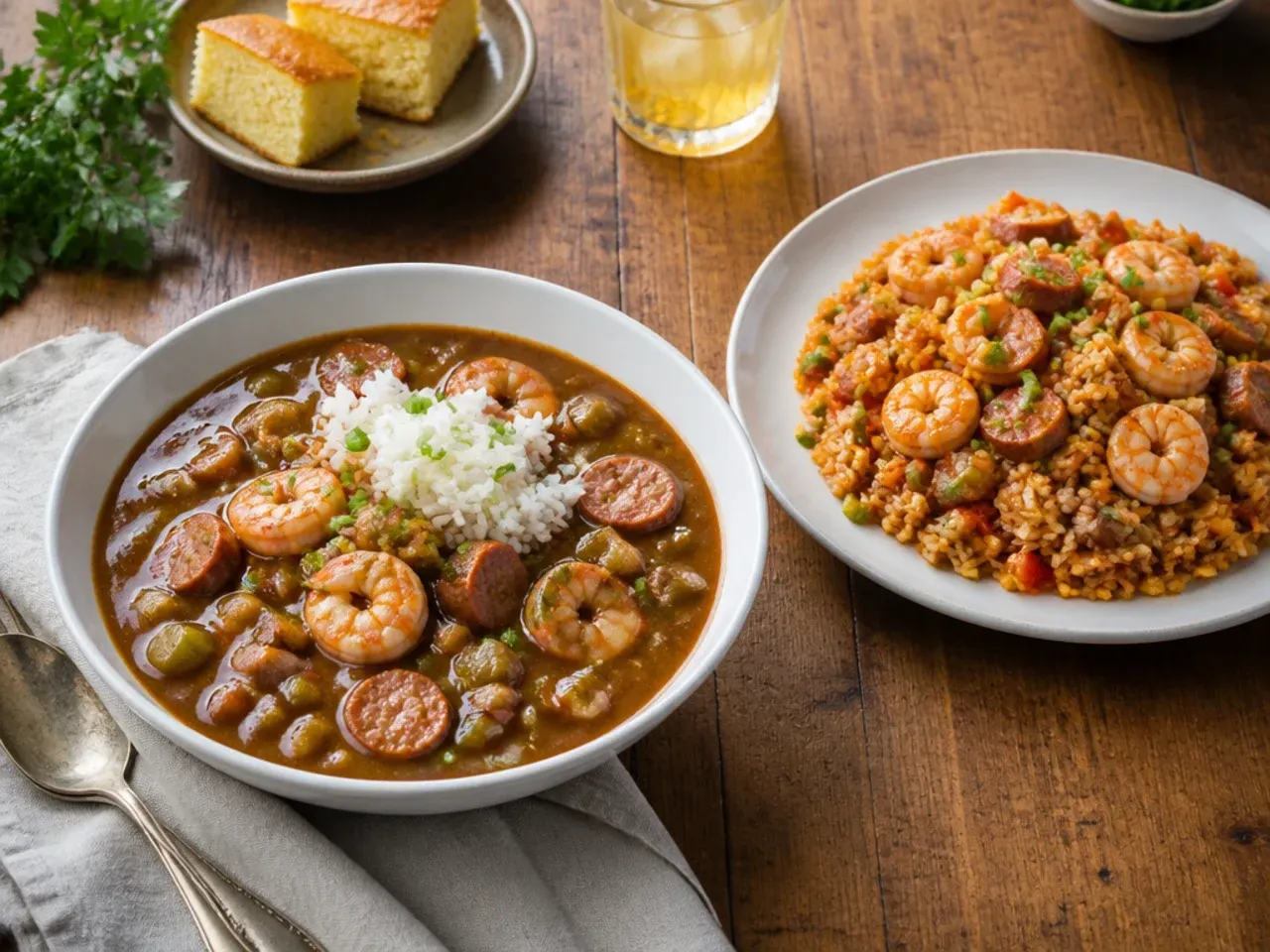
Choose jambalaya for weeknights, beginners and one-pot cleanup, or when you want to feed a crowd cheaply from a single pan with minimal technique. Choose gumbo when you have a lazy weekend afternoon, want that unmistakable dark-roux depth, or are serving it as the centerpiece of a Mardi Gras or game-day spread where the ladle-over-rice presentation shines. For meal prep, gumbo is the better keeper: it freezes beautifully for up to 3 months and tastes even better reheated the next day, while jambalaya's rice softens on freezing and is best eaten fresh. If you are cooking to impress or to learn a real skill, gumbo's roux is the trophy; if you are cooking to eat well tonight without fuss, jambalaya wins. When in doubt, start with the gumbo recipe below, because mastering a roux unlocks etouffee, sauce piquante and countless other Louisiana dishes.
The Recipe
The Recipe We Recommend
20 min
1 hr 45 min
2 hr 5 min
10
Intermediate
Ingredients 10 Person(s)
Directions
Step 1: Make the dark roux
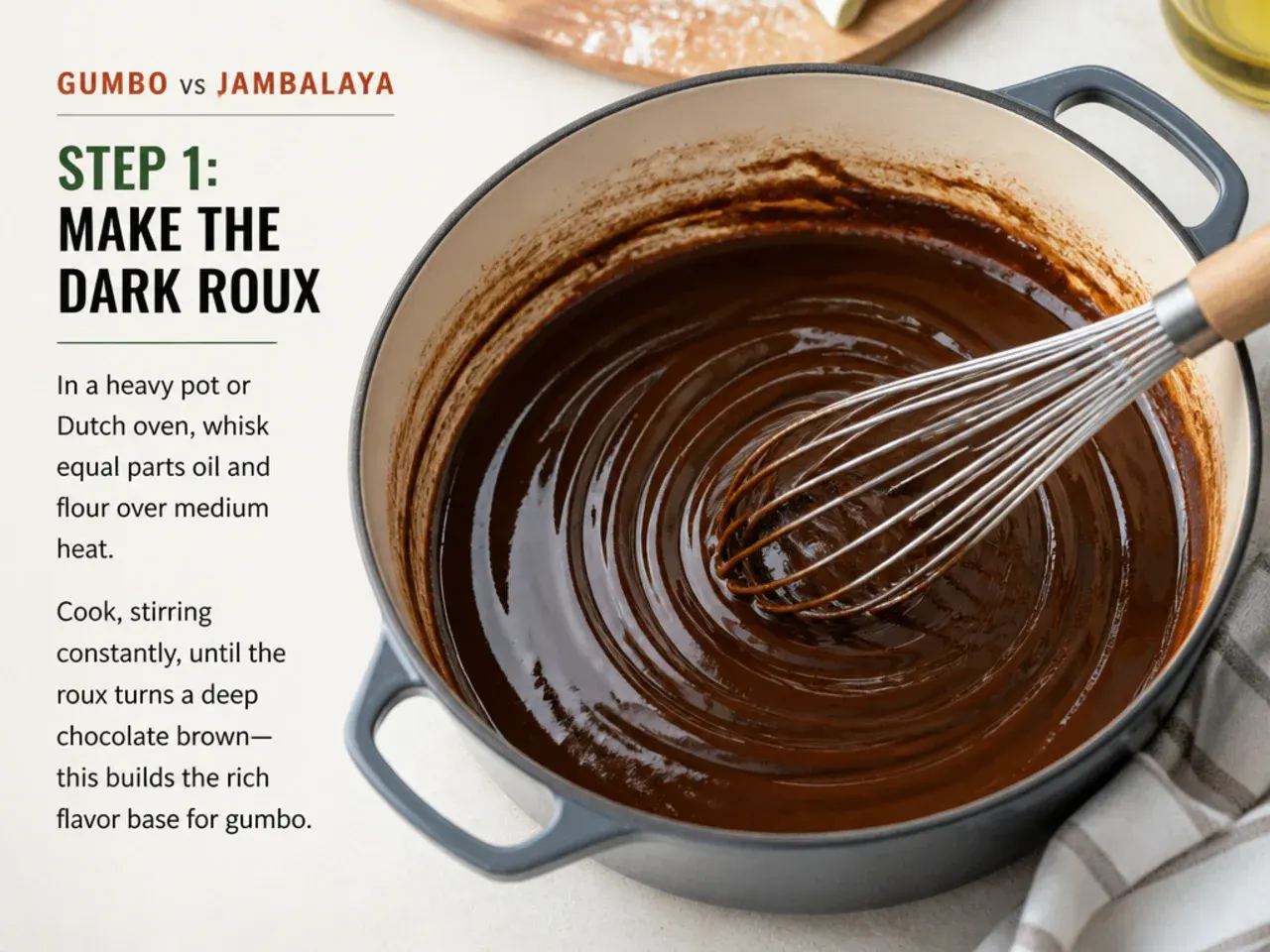
In a heavy-bottomed pot or Dutch oven, whisk the oil and flour together over medium-low heat. Stir constantly with a wooden spoon or whisk for 30 to 45 minutes, scraping the bottom and corners, until the roux turns the color of dark chocolate or an old penny. Do not walk away and do not let it scorch; if you see black flecks, it has burned and you must start over. This is the flavor foundation of the whole gumbo, so patience here pays off.
Step 2: Cook the holy trinity
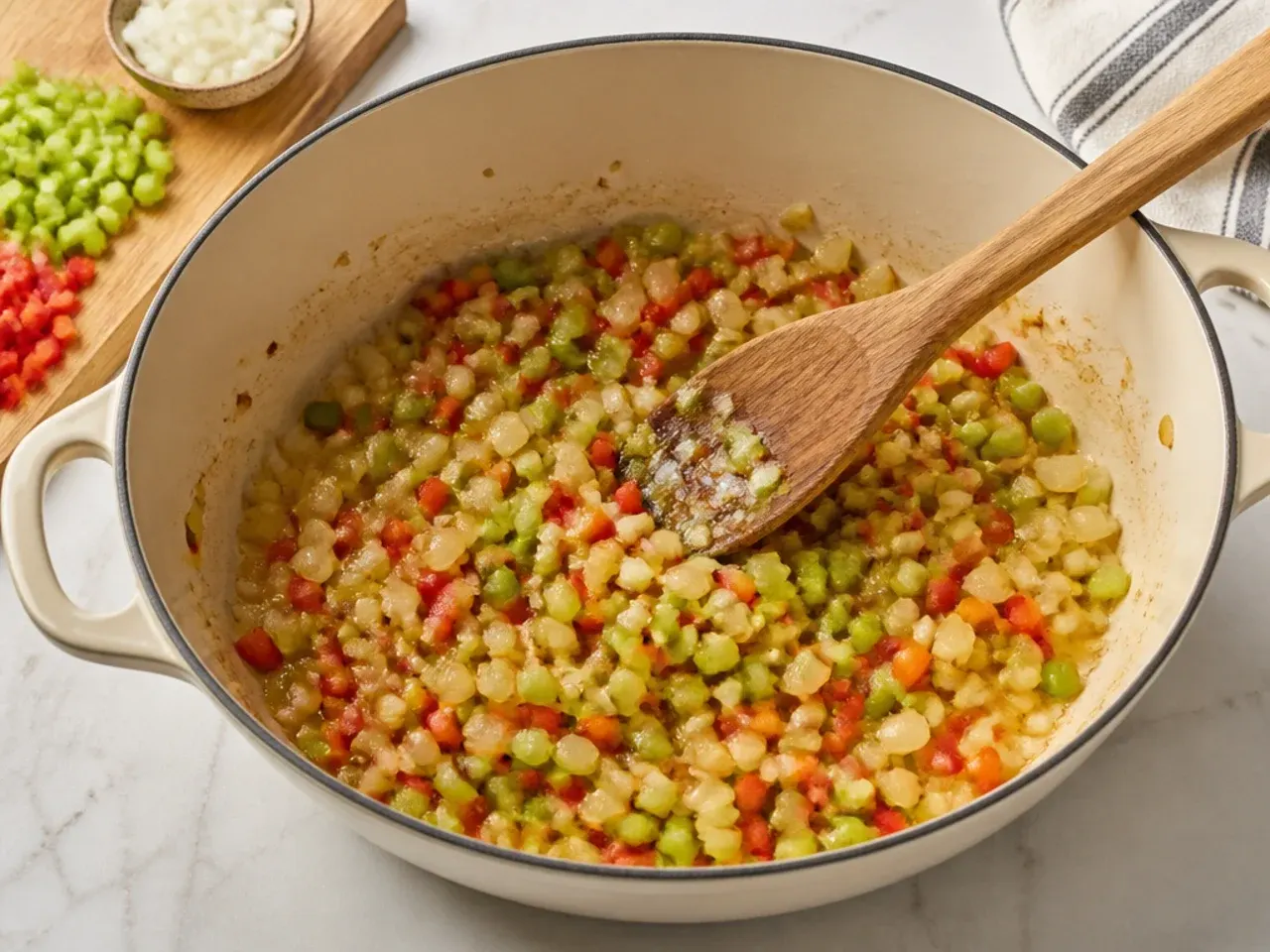
Add the diced onion, green bell pepper and celery straight into the finished roux. The vegetables will sizzle and stop the roux from cooking further, so stir them in well. Cook for 6 to 8 minutes until softened, then stir in the minced garlic and cook 1 minute more until fragrant.
Step 3: Brown the sausage and chicken
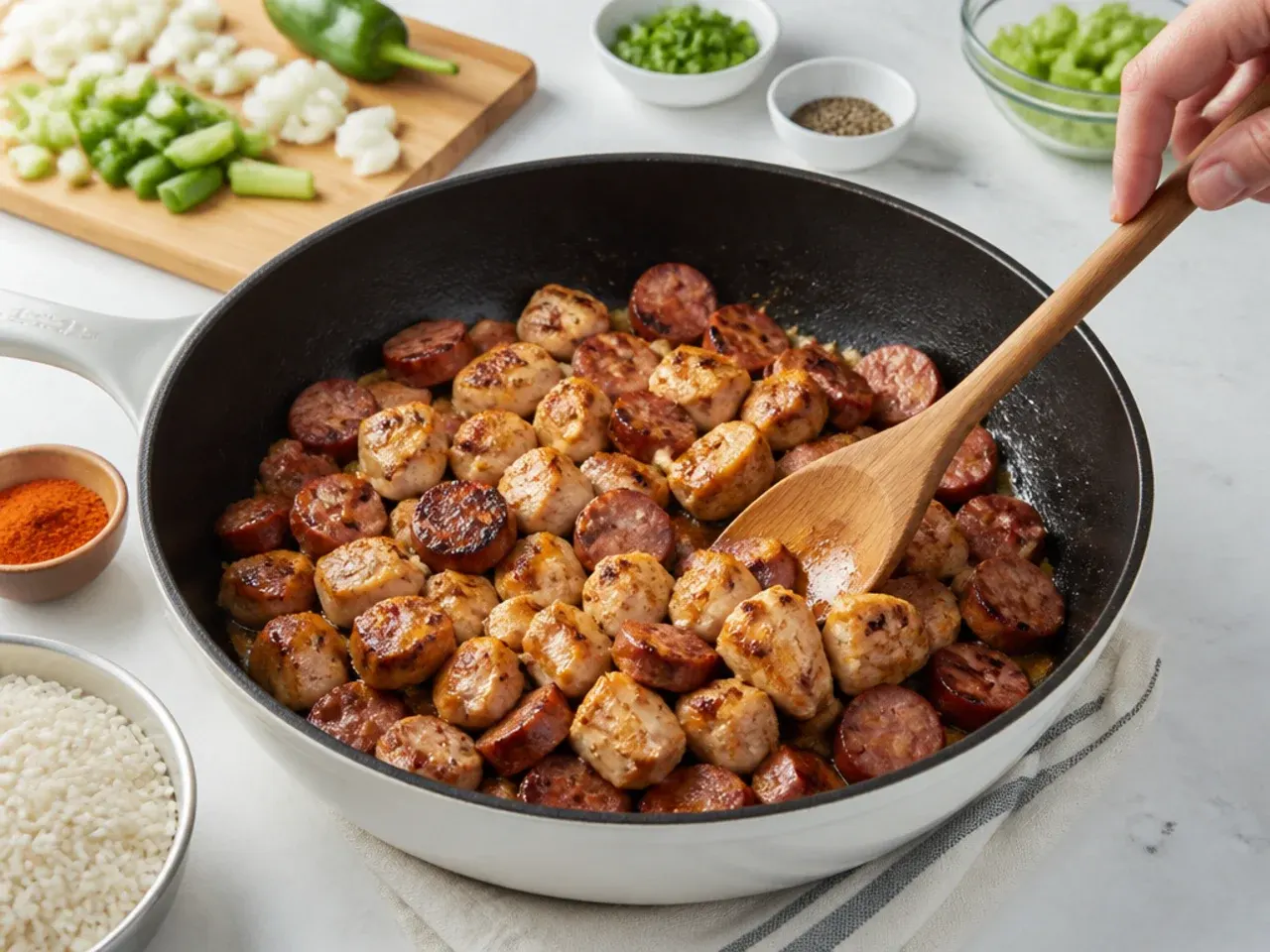
In a separate skillet over medium-high heat, brown the sliced andouille sausage for 2 to 3 minutes per side, then set aside. In the same pan, sear the chicken thigh chunks for about 4 minutes until browned on the outside. Browning both proteins builds extra smoky, savory flavor that plain simmering cannot.
Step 4: Build the pot and add stock
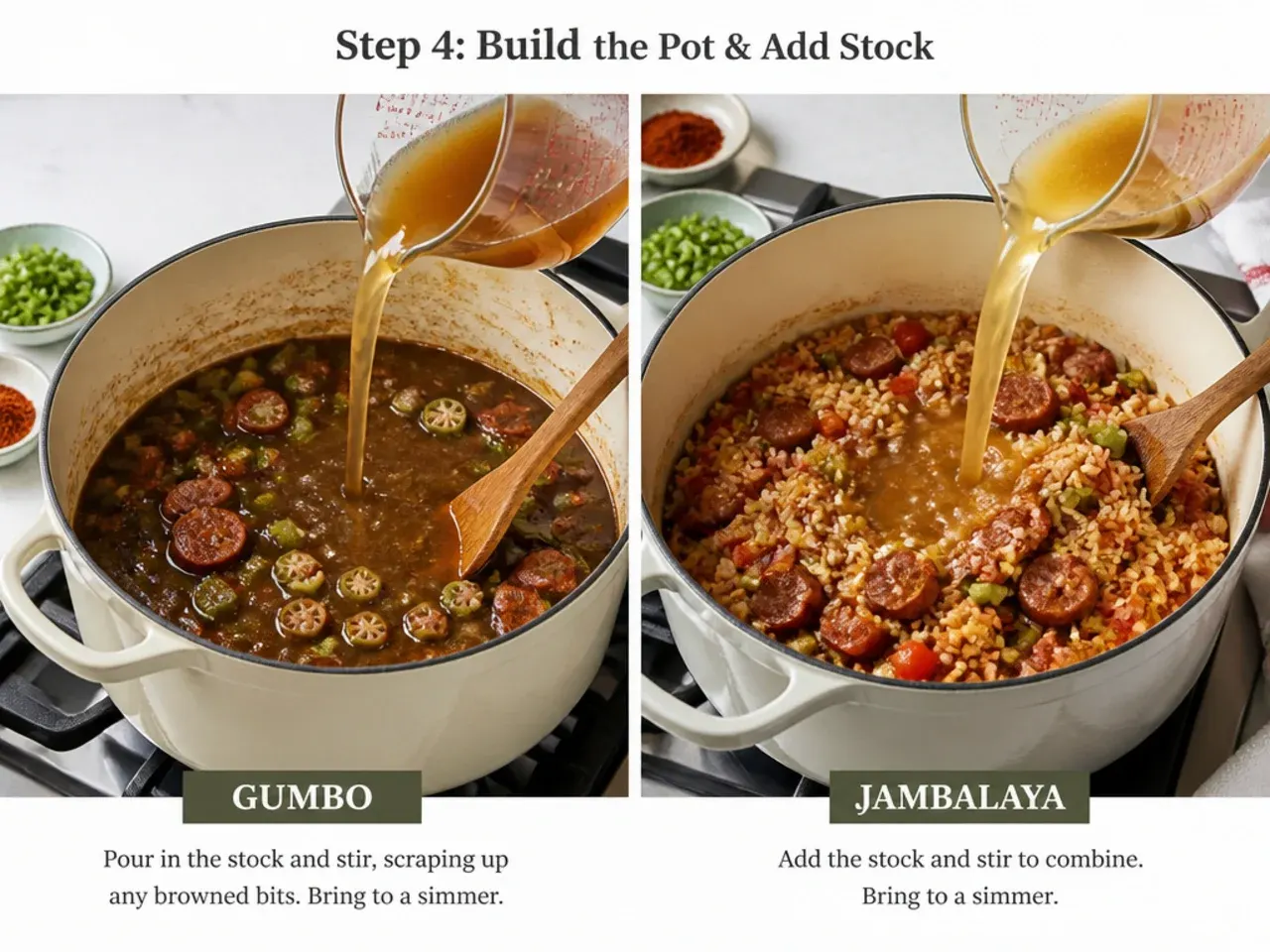
Slowly pour the chicken stock into the roux and vegetables, stirring constantly so the roux dissolves smoothly with no lumps. Add the browned sausage, chicken, Cajun seasoning and bay leaves. Bring to a gentle boil, stirring so nothing sticks to the bottom.
Step 5: Simmer low and slow
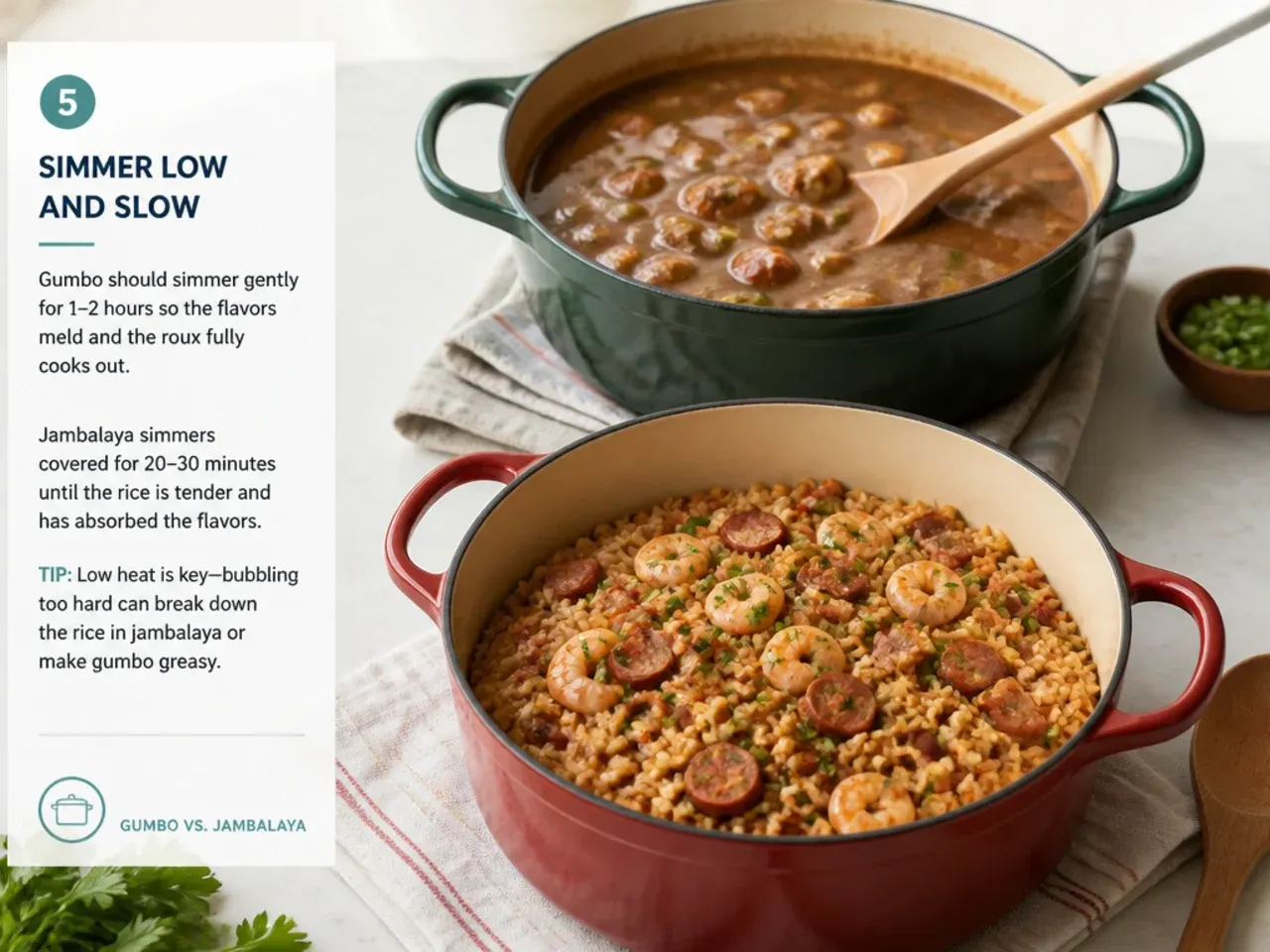
Reduce the heat to low and simmer uncovered for 60 to 90 minutes, stirring occasionally. The gumbo will thicken slightly and the flavors will deepen as it reduces. Skim any oil that rises to the surface for a cleaner-tasting stew.
Step 6: Add the shrimp
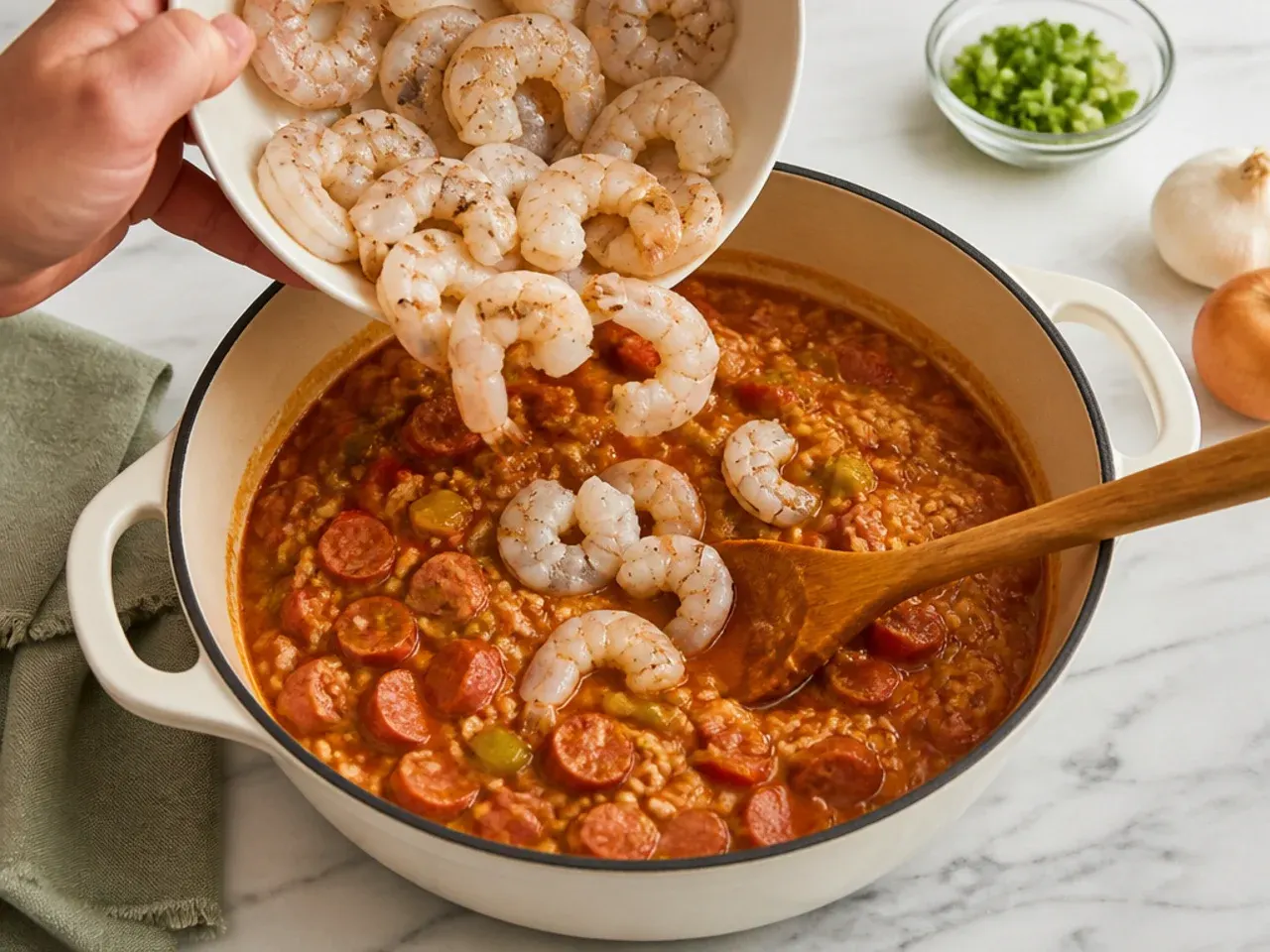
Stir in the raw shrimp and simmer just 3 to 5 minutes, until they turn pink and opaque. Shrimp overcook fast and go rubbery, so add them near the end and stop as soon as they curl. Taste and adjust with more Cajun seasoning, salt and pepper, then remove the bay leaves.
Step 7: Serve over rice
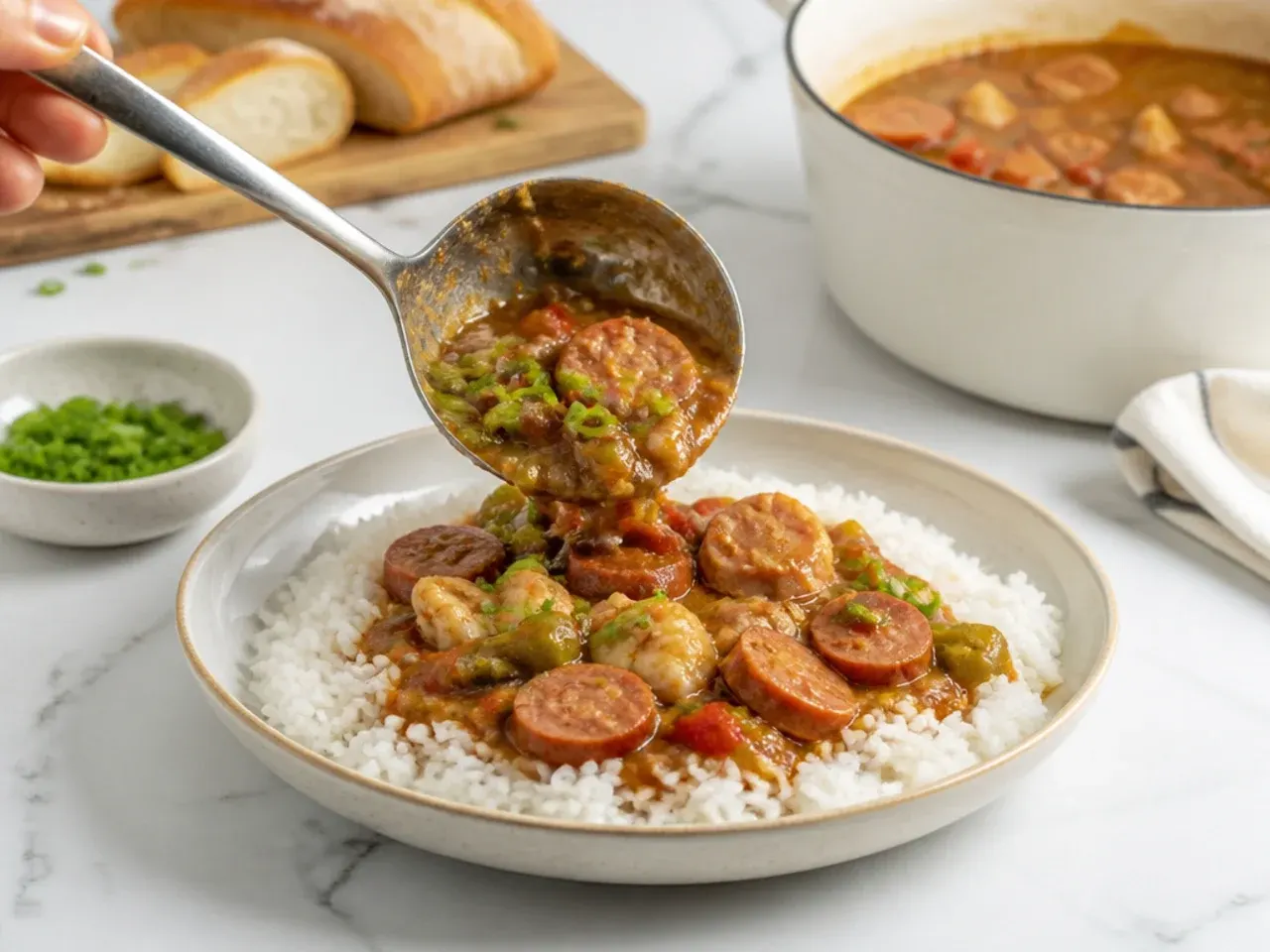
Cook long-grain white rice separately according to the package, never in the gumbo pot. Scoop a mound of hot rice into each bowl and ladle the gumbo over the top. Finish with sliced green onions and a little chopped parsley, and serve with hot sauce on the side.
Frequently Asked Questions
Gumbo is a thick, soupy stew thickened with a dark roux (and often okra or file), served over rice that is cooked separately. Jambalaya is a one-pot rice dish where the rice cooks directly in the seasoned stock and absorbs the liquid, so it is moist but not soupy. In short: gumbo is a stew you spoon over rice, jambalaya is the rice itself.
Save this for later 📌
Pin this article to your Pinterest board so the full list is one tap away when you need it.
Save on Pinterest