3 Mango Sticky Rice vs Rice Pudding Recipes
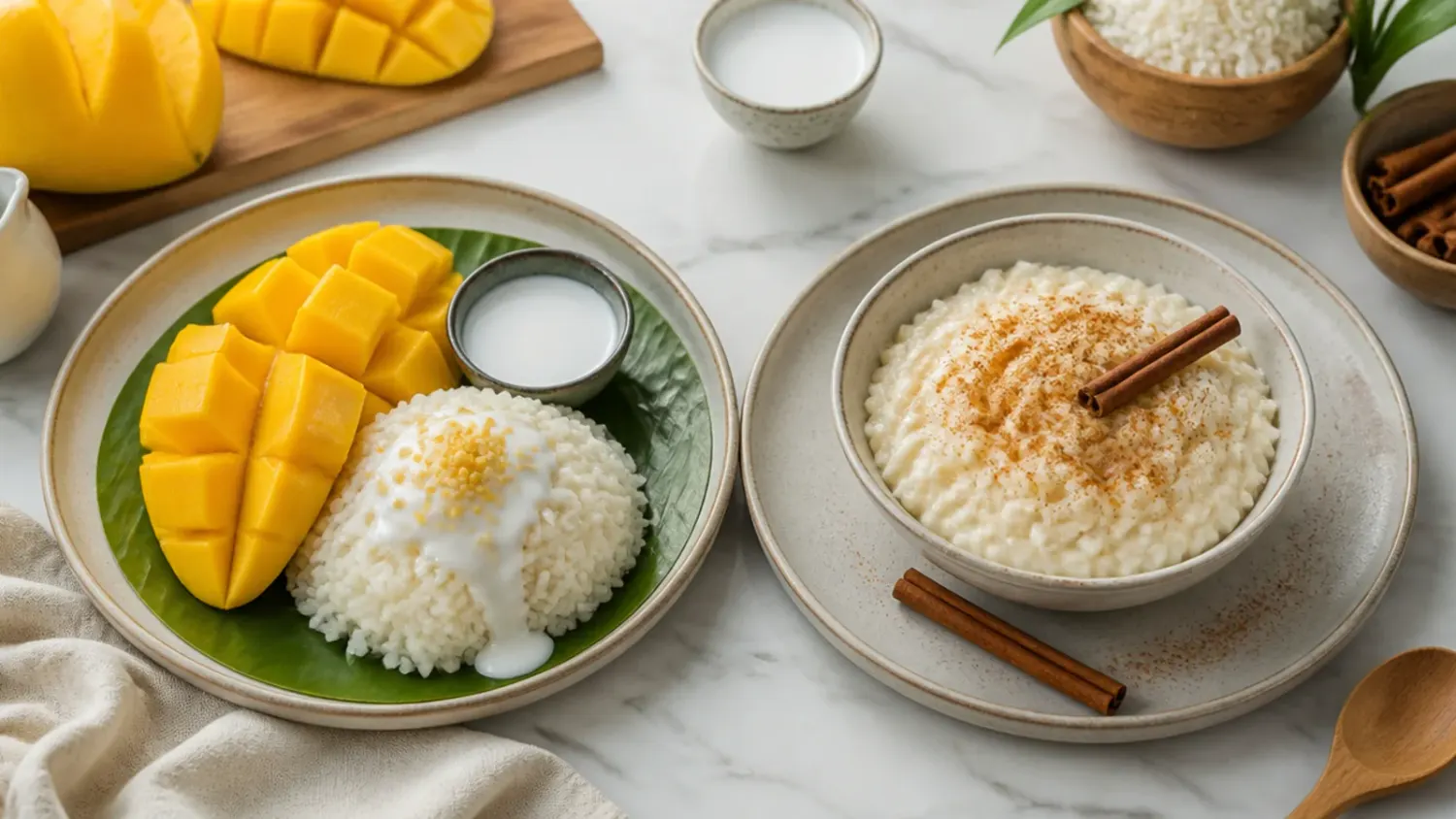
Mango sticky rice vs pudding: we compare the real cost, taste, texture and effort so you know exactly which creamy rice dessert to make tonight. If you love mango sticky rice inspiration, start with our Mango Sticky Rice Recipes collection, then browse the full Desserts hub for more.
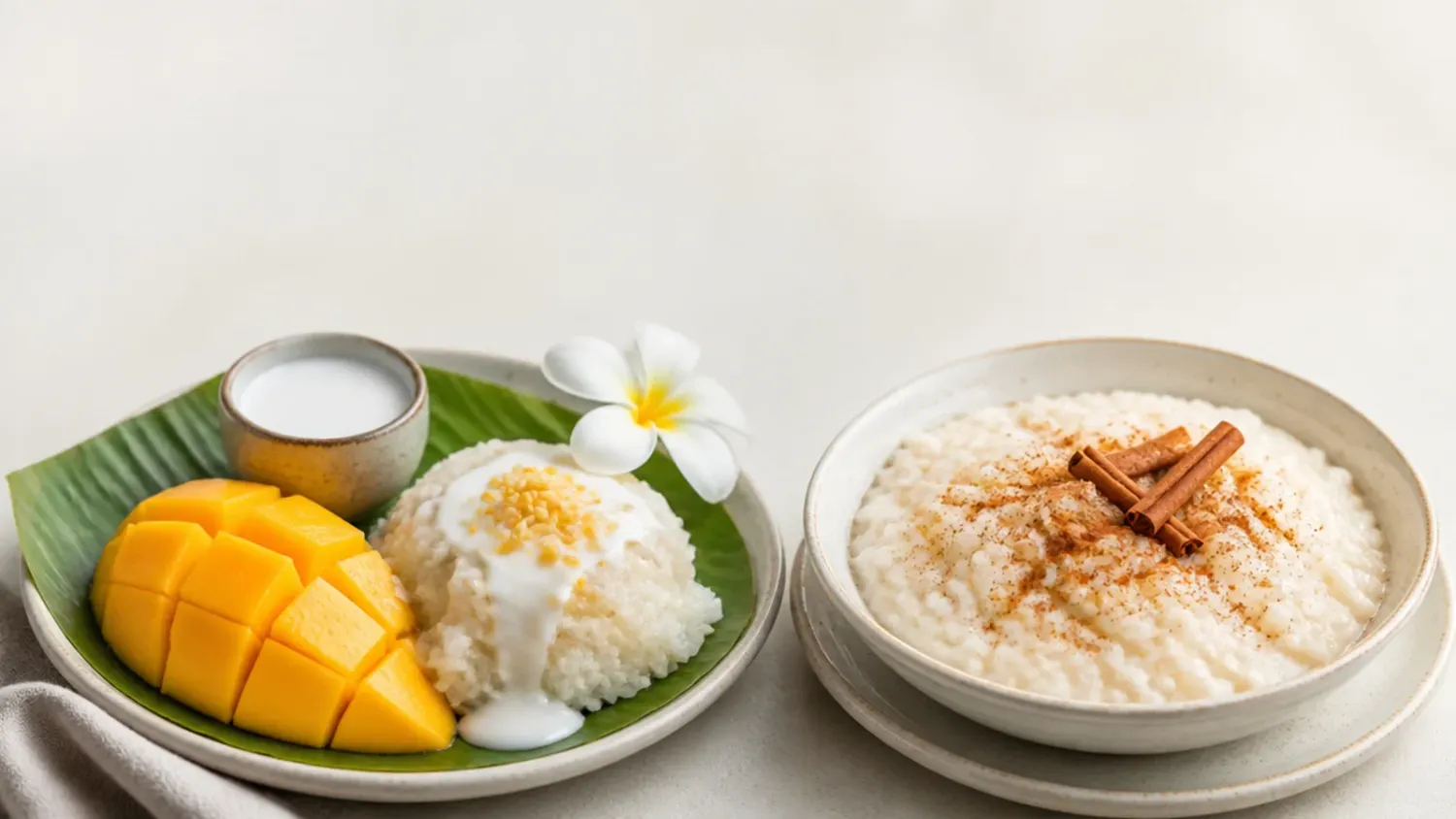
Save this for later 📌
Pin this article to your Pinterest board so the full list is one tap away when you need it.
Save on PinterestDesserts
Beginner
Comparison
3 compared
Table of Contents
Option 1: Thai Mango Sticky Rice
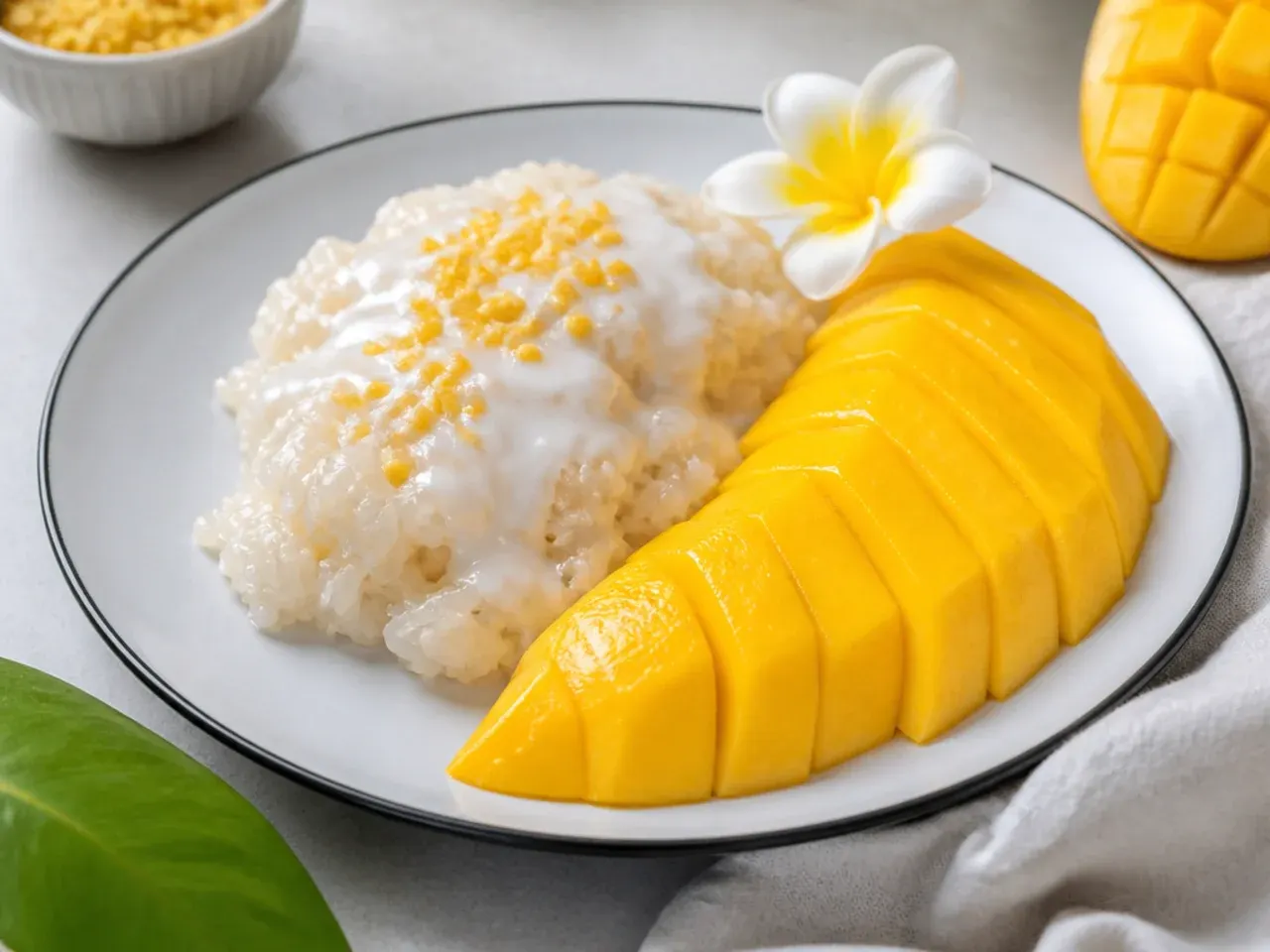
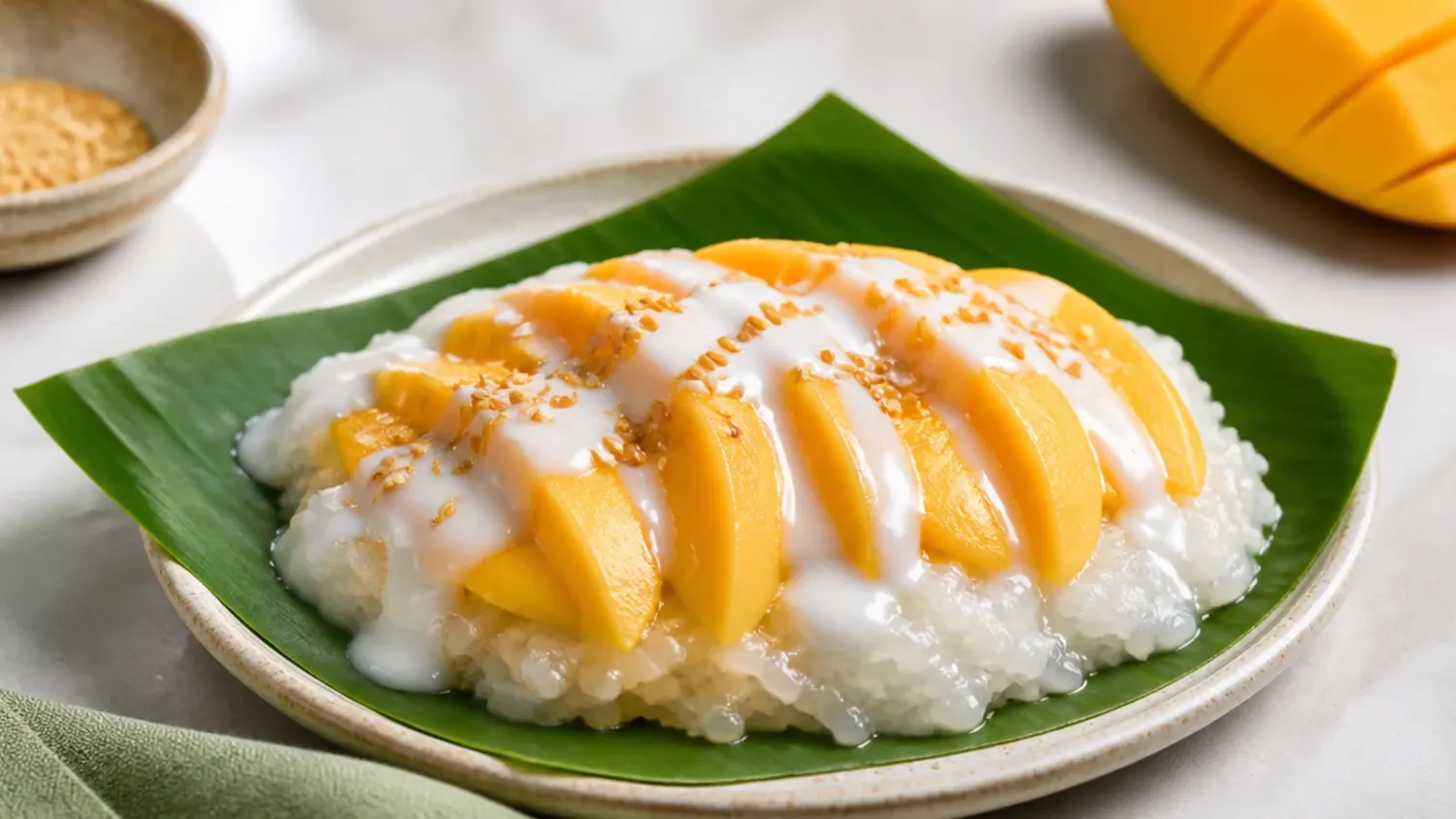
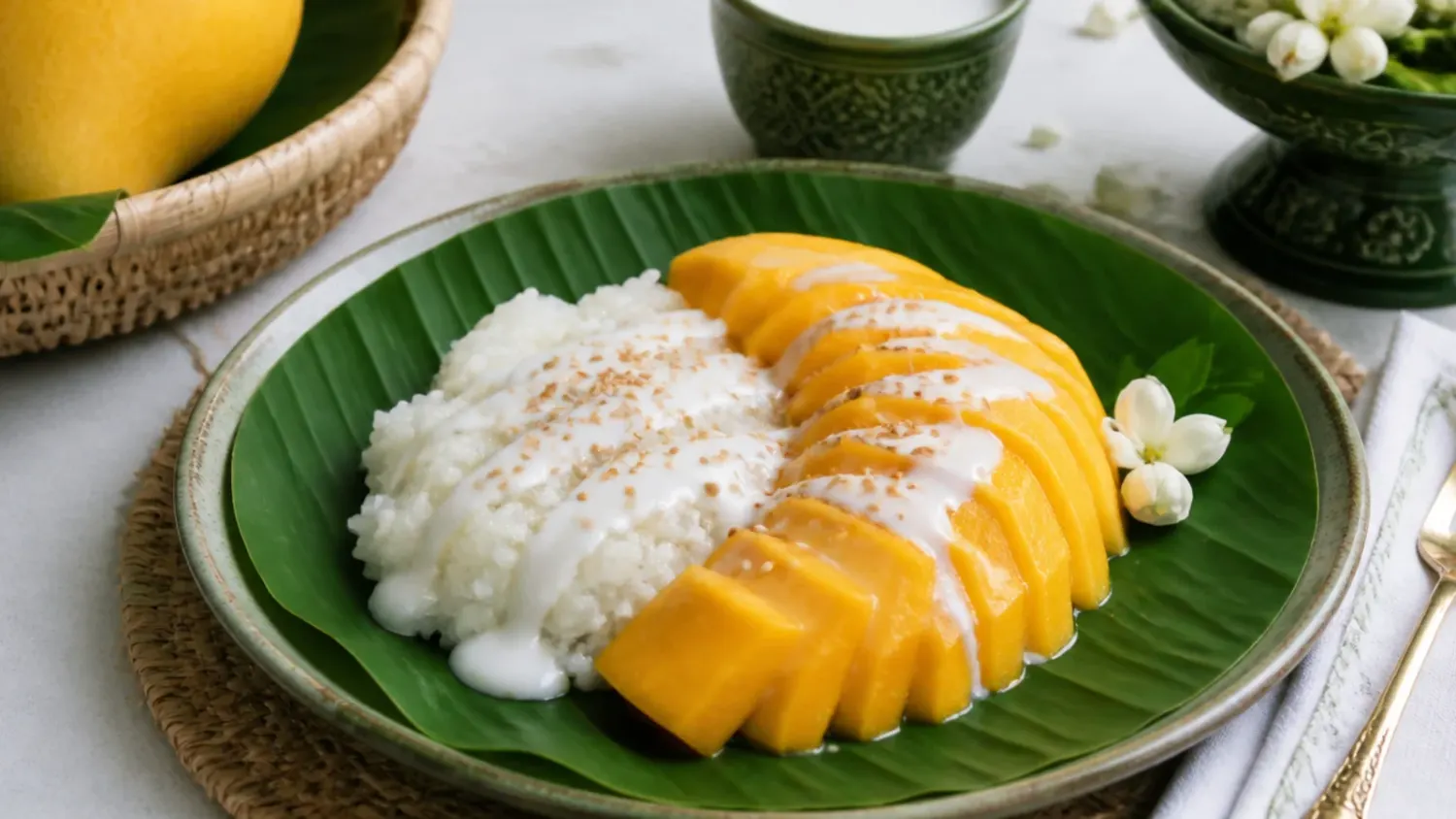
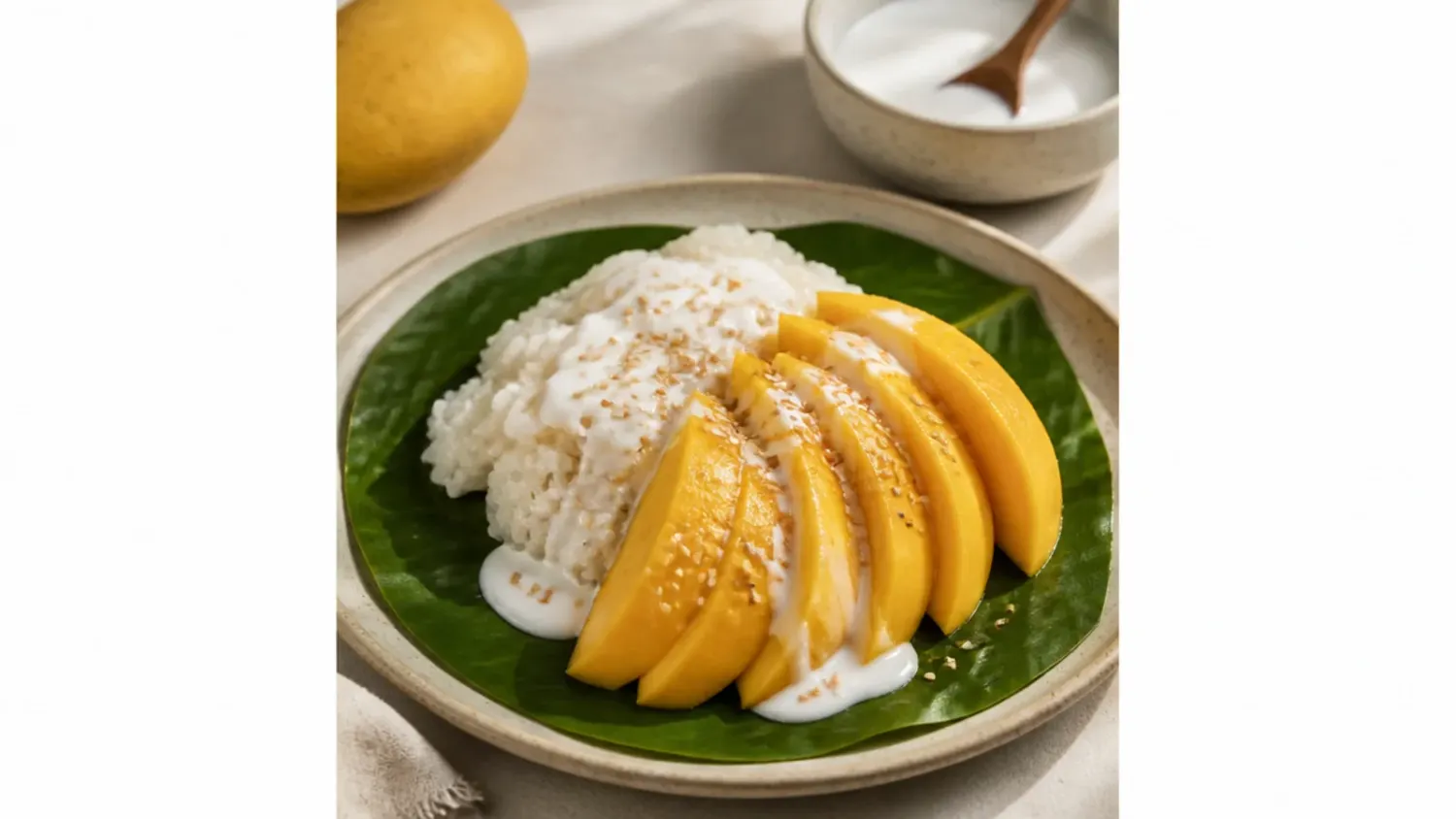
Mango sticky rice (khao niaow ma muang) is a Thai dessert built from glutinous rice, coconut milk and fresh ripe mango, served slightly warm or at room temperature. The rice is soaked, steamed until translucent, then folded with a warm coconut milk mixture sweetened with sugar and balanced with a pinch of salt. Once it has rested and absorbed the coconut, you plate it beside fanned mango slices and finish with a second, saltier coconut drizzle plus toasted mung beans or sesame seeds. The result is chewy, sticky grains that stay distinct rather than melting into porridge, with a savoury-sweet coconut richness. It shines in summer when Ataulfo or Alphonso mangoes are at their ripest and needs no oven at all.
Option 2: Classic Rice Pudding
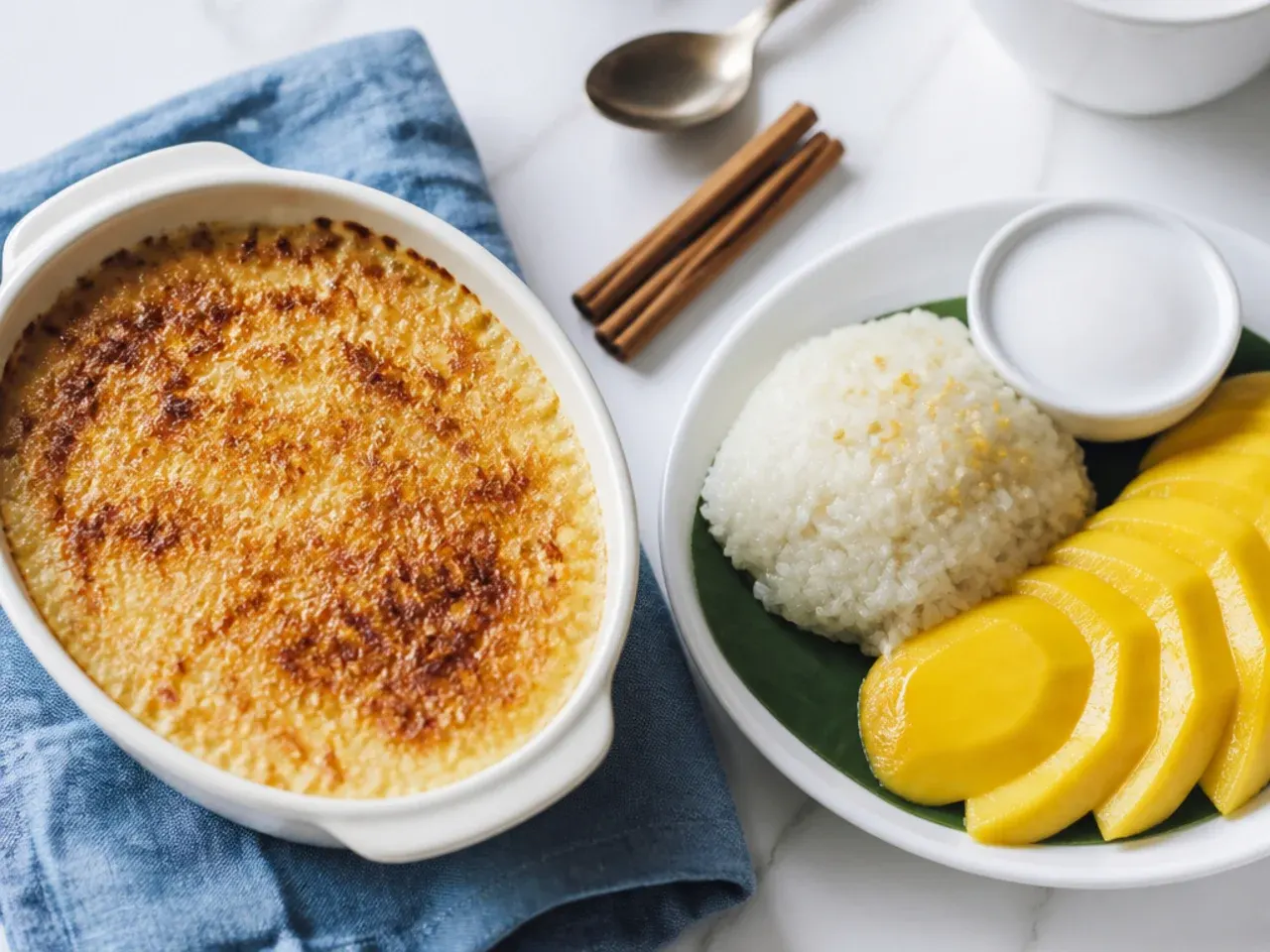
Traditional rice pudding is the European comfort dish: short-grain pudding rice slowly cooked in dairy milk with sugar, vanilla and often a grating of nutmeg. The classic UK version is baked low and slow at 150C (300F), Gas Mark 2, for around 2 hours until it sets into a creamy mass under a golden, freckled skin. Because pudding rice is high in amylopectin, it releases starch into the milk and turns luxuriously thick and spoonable rather than sticky and separate. Many recipes add evaporated milk or a knob of butter for extra richness, and it is almost always eaten hot, sometimes with a spoon of jam. It is nostalgic, hands-off and made entirely from storecupboard staples.
Cost Comparison
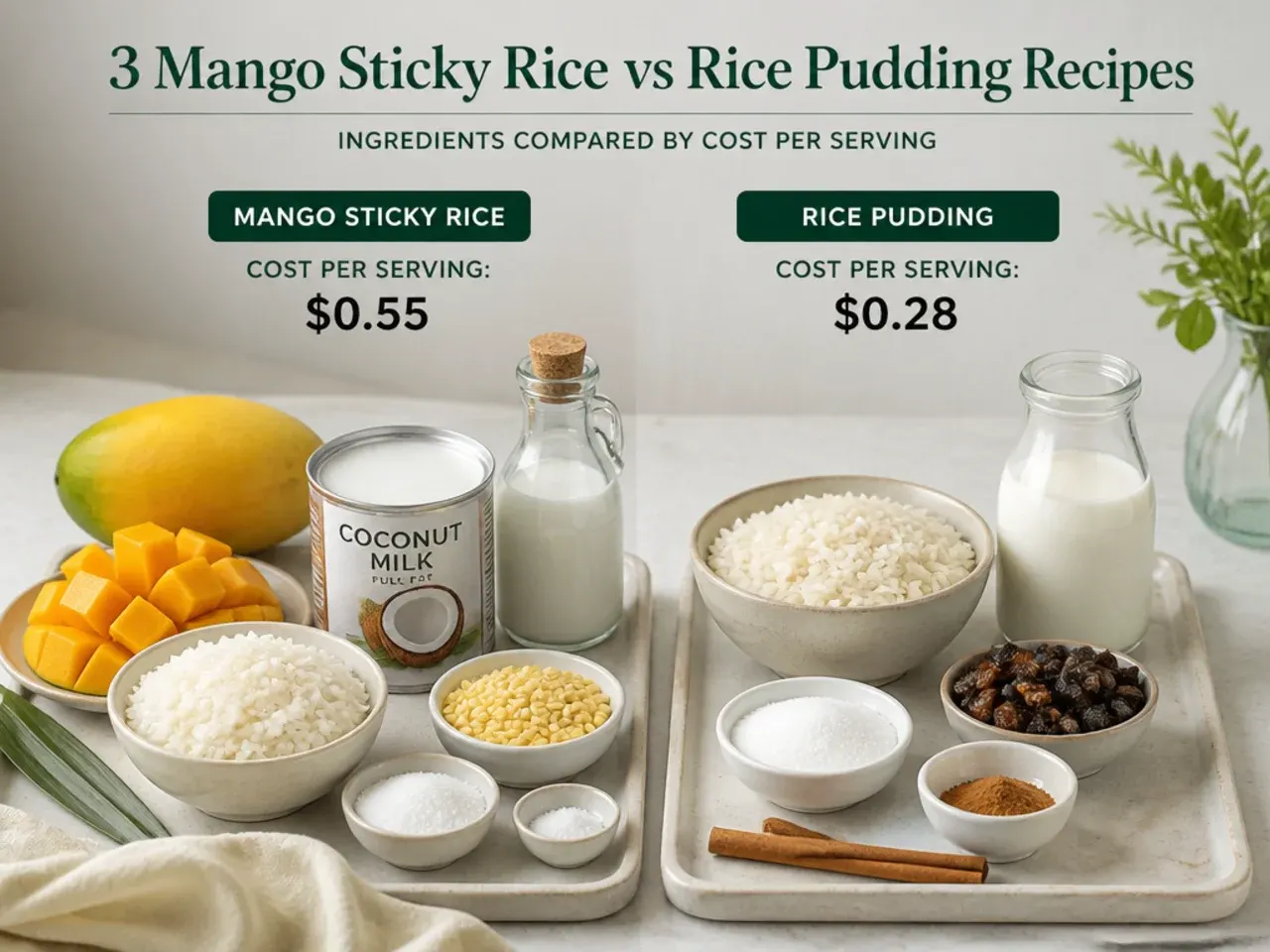
Rice pudding is the cheaper of the two by a clear margin. A batch serving four uses roughly 100g pudding rice, 600ml whole milk, 50g sugar, a splash of vanilla and nutmeg, landing around GBP 1.20 to 1.80 total, all from cheap storecupboard staples. Mango sticky rice costs more because the two signature ingredients are pricier: a 500g bag of Thai glutinous rice runs GBP 1.50 to 2.50, a 400ml tin of full-fat coconut milk is GBP 1 to 1.50, and two ripe mangoes add GBP 1.50 to 3 depending on season. That puts a four-serving batch of mango sticky rice around GBP 4 to 6.50. If you are cooking on a tight budget or emptying the cupboard, pudding wins; if mangoes are cheap and in season, the gap narrows.
Taste and Texture
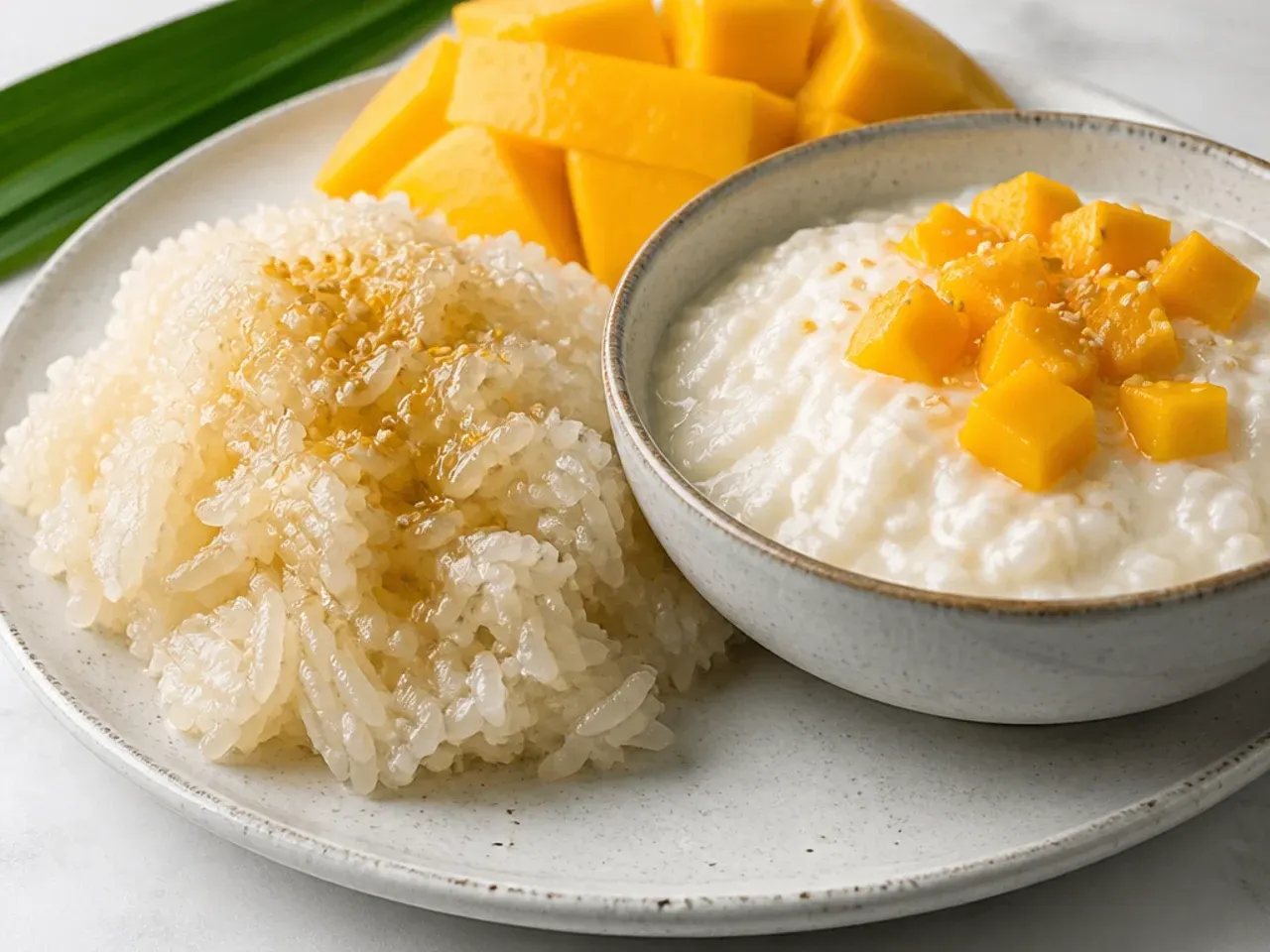
This is where the two desserts diverge most. Rice pudding is creamy, mild and milky, with warm vanilla and nutmeg notes and a soft, porridge-like texture that coats the spoon. Mango sticky rice is chewier and more complex: the glutinous grains stay separate and springy, the coconut milk brings a rich savoury edge cut by salt, and the mango adds bright, floral, tropical sweetness. Pudding is soothing and one-note in the best way, while sticky rice is a contrast of hot rice against cool fruit, sweet against a deliberate hit of salt. If you love comfort food, pudding delivers; if you want something that tastes like a holiday, sticky rice wins the flavour stakes.
Time and Effort
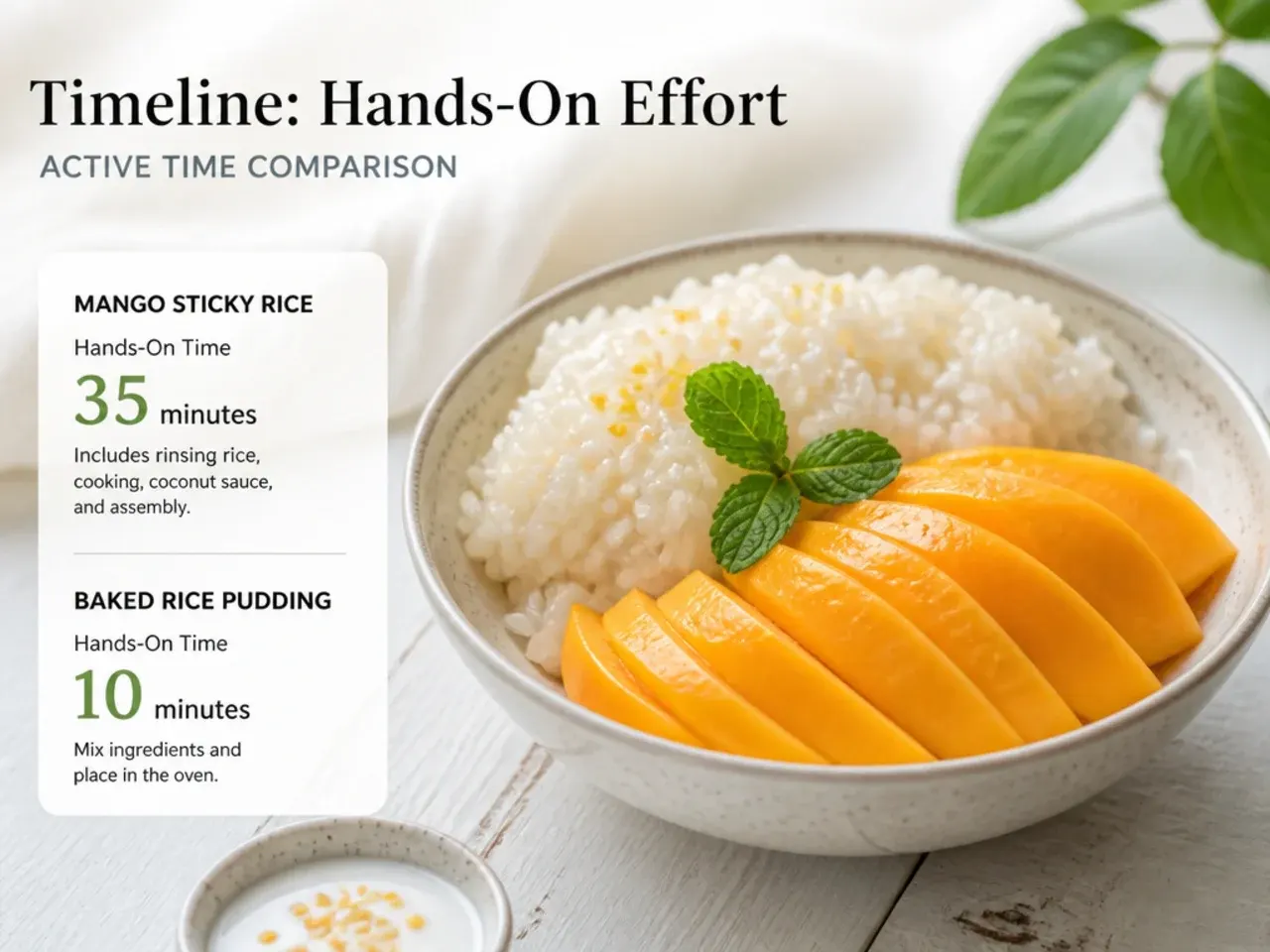
Pudding is nearly effortless but slow: about 5 minutes to stir everything into a dish, then 2 to 2.25 hours baking untouched apart from one stir at the 45-minute mark. Mango sticky rice is faster to cook but needs planning, because the rice should soak 40 minutes at minimum and ideally a few hours or overnight for the best chew. Once soaked, steaming takes 20 to 40 minutes, the coconut sauce takes 5 minutes, and it rests for 20 to 30 minutes to absorb, so active hands-on time is around 20 minutes. Neither is technically difficult. Choose pudding when you have a lazy afternoon and want a set-and-forget bake, and sticky rice when you can soak ahead but want it ready within the hour.
Best Choice by Situation
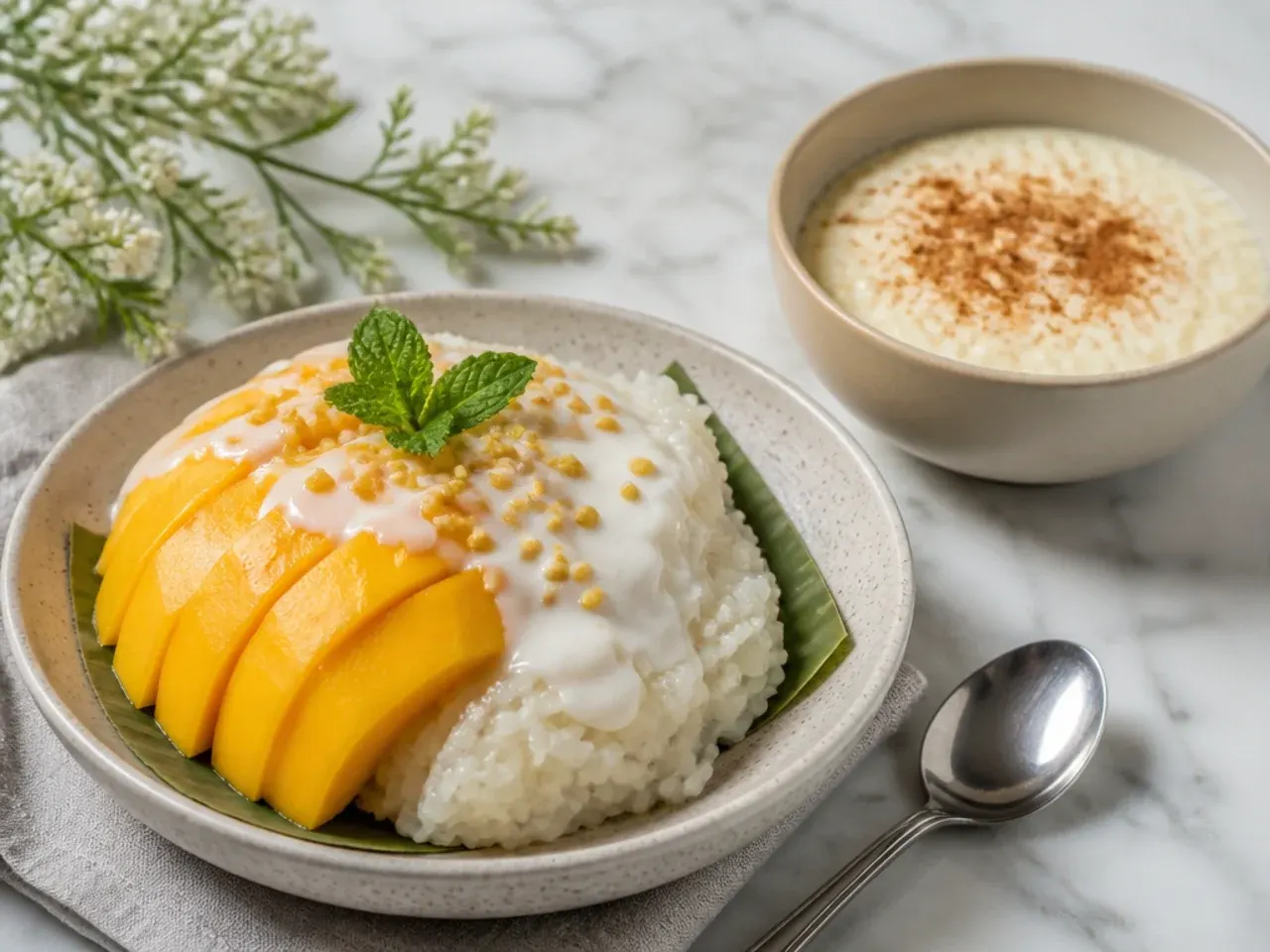
For a cosy winter night or a cheap family pud, make rice pudding: it is warming, forgiving and costs pennies. For a dinner party, a summer BBQ or a way to use up ripe mangoes, make mango sticky rice, because it looks striking on the plate and feels restaurant-special. If you are dairy-free or vegan, sticky rice is the natural pick since it is built on coconut milk, while classic pudding relies on dairy unless you swap it out. If you want a make-ahead dessert, pudding reheats better; sticky rice is best eaten the day it is made. Our overall recommendation, and the recipe below, is mango sticky rice, because it delivers the bigger wow for only a little more money and time.
The Recipe
The Recipe We Recommend
50 min (includes 40 min soak)
30 min
1 hr 50 min (includes resting)
4
Beginner
Ingredients 4 Person(s)
Directions
Step 1: Rinse and soak the rice
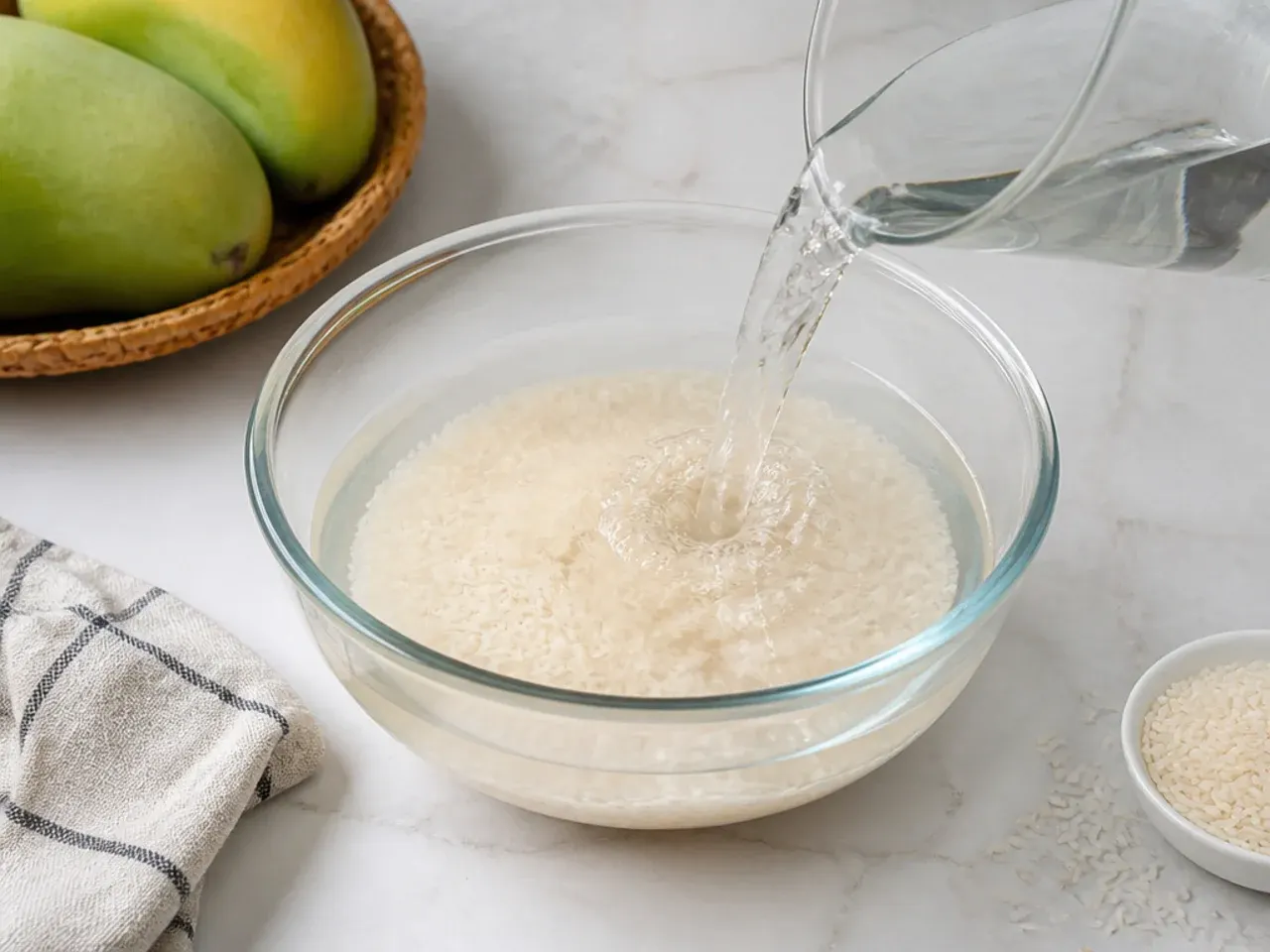
Put the glutinous rice in a bowl and rinse under cold water, swirling and pouring off the cloudy water 5 to 6 times until it runs almost clear. Cover with fresh cold water by 5cm and soak for at least 40 minutes, or ideally 4 hours to overnight for the chewiest grains. Drain well before steaming.
Step 2: Steam the rice
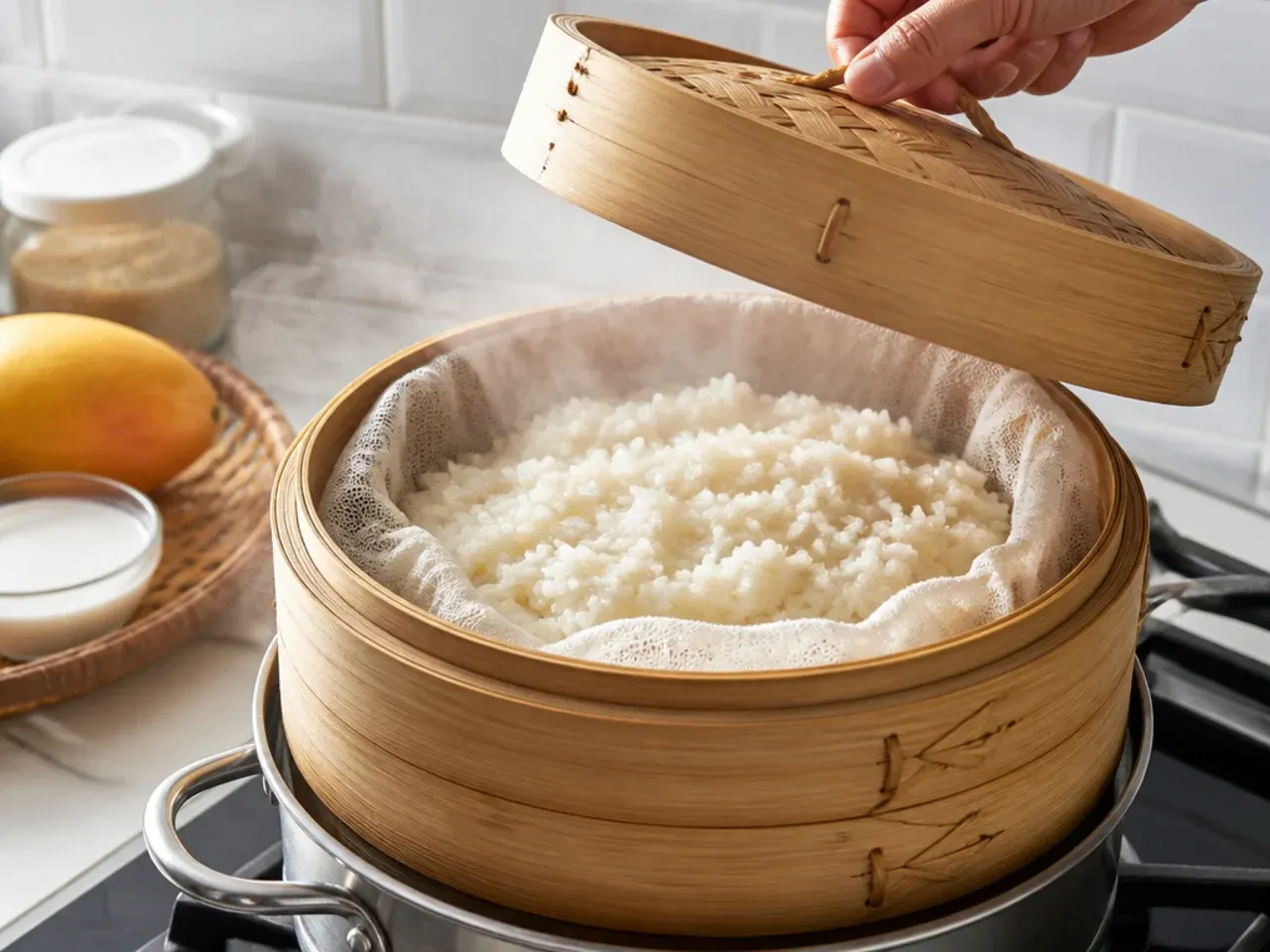
Line a steamer basket with muslin or a clean thin tea towel and spread the drained rice evenly. Steam over simmering water, covered, for 20 to 30 minutes until the grains are translucent, glossy and tender all the way through, giving it a stir halfway. No steamer? Combine the rice with 300ml water in a saucepan, cover, and simmer gently for 20 minutes until the water is absorbed.
Step 3: Make the coconut soaking sauce
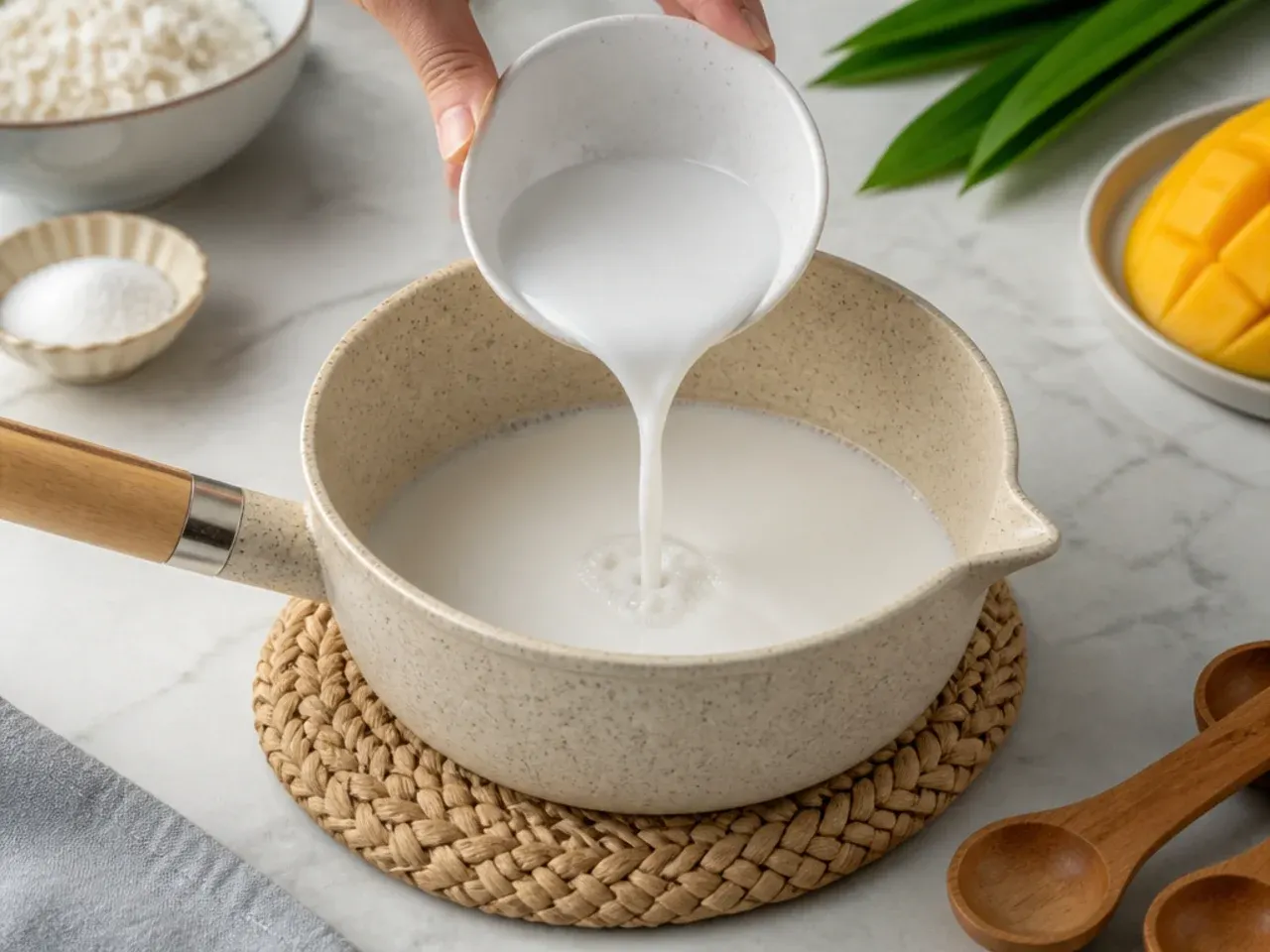
While the rice steams, reserve 60ml of the coconut milk in a small bowl. Pour the remaining coconut milk into a saucepan with the sugar and 1/2 teaspoon salt. Warm over medium heat, stirring gently in one direction, until the sugar fully dissolves and the mixture is steaming but not boiling, then remove from the heat.
Step 4: Fold sauce into the hot rice
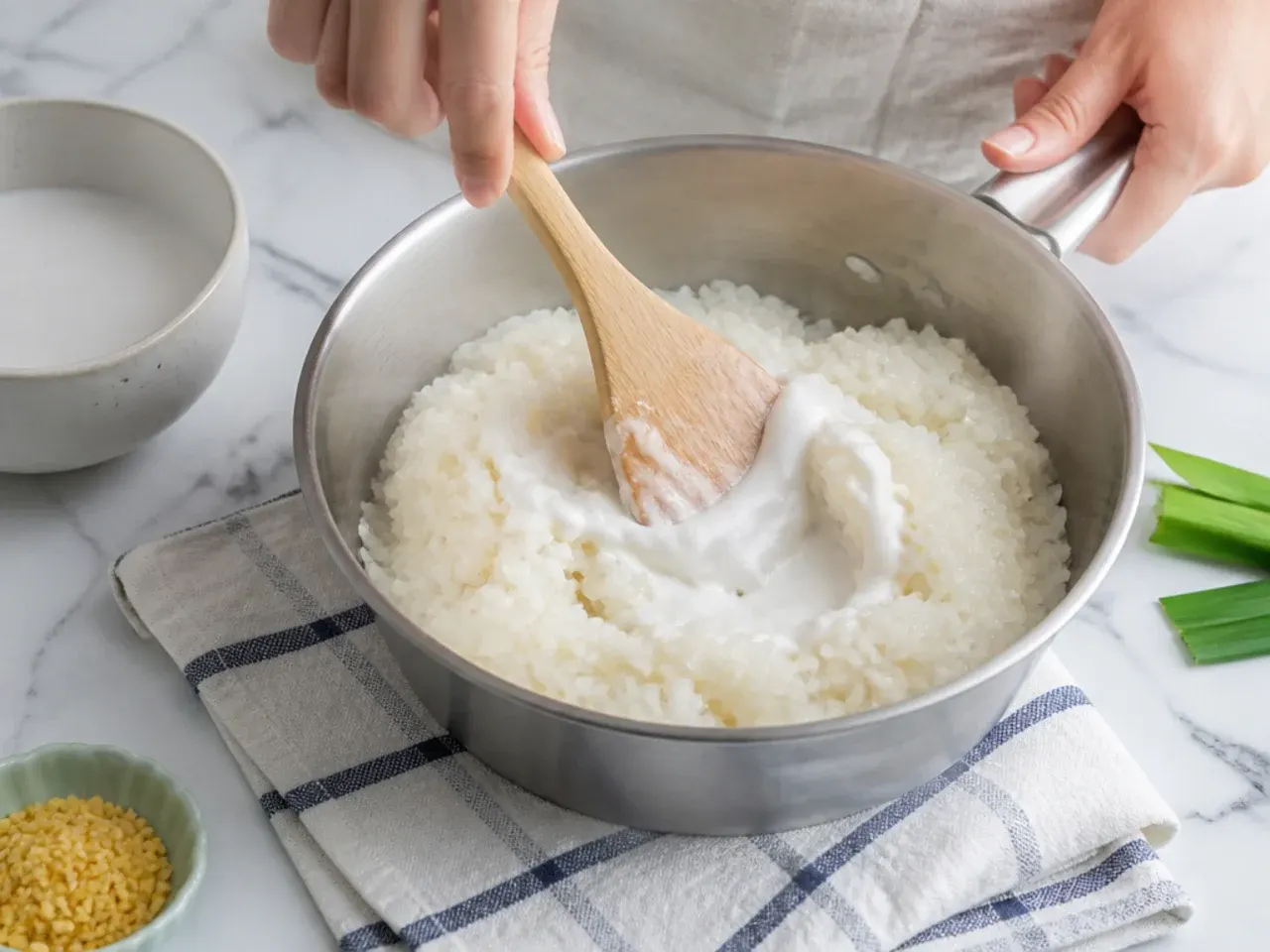
Tip the hot steamed rice into a bowl and pour over about three-quarters of the warm coconut sauce, adding it a few spoonfuls at a time and folding gently so the grains stay whole. It will look soupy at first, which is correct. Cover and leave to rest for 20 to 30 minutes so the rice drinks up the coconut and turns glossy and sticky.
Step 5: Make the drizzle sauce
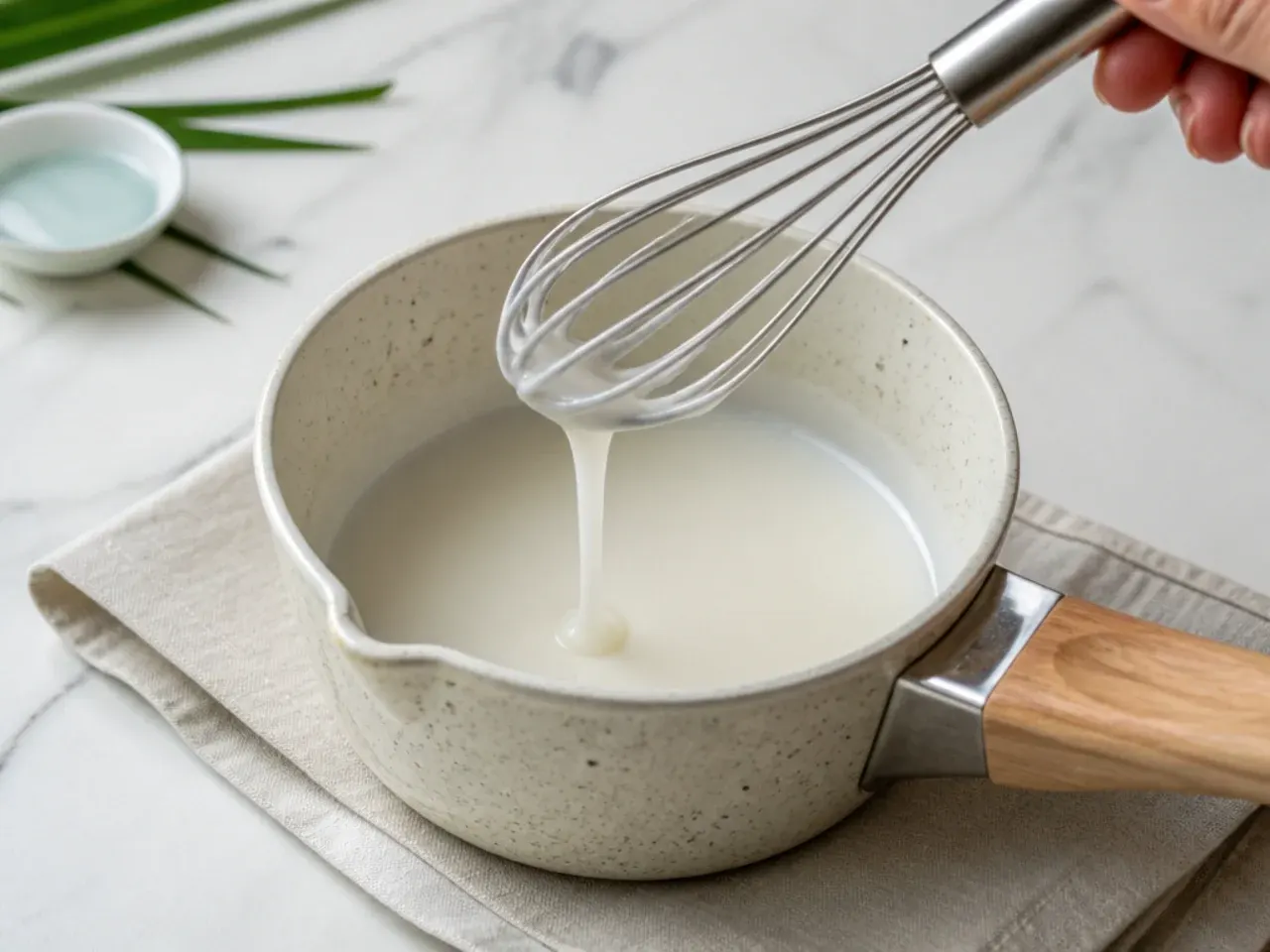
Stir the cornflour into the reserved 60ml coconut milk to make a smooth slurry. Add it to the remaining quarter of coconut sauce in the pan with the extra 1/4 teaspoon salt. Warm gently, stirring, for 1 to 2 minutes until it thickens to a pourable, slightly savoury cream, then set aside to cool a little.
Step 6: Prepare the mango
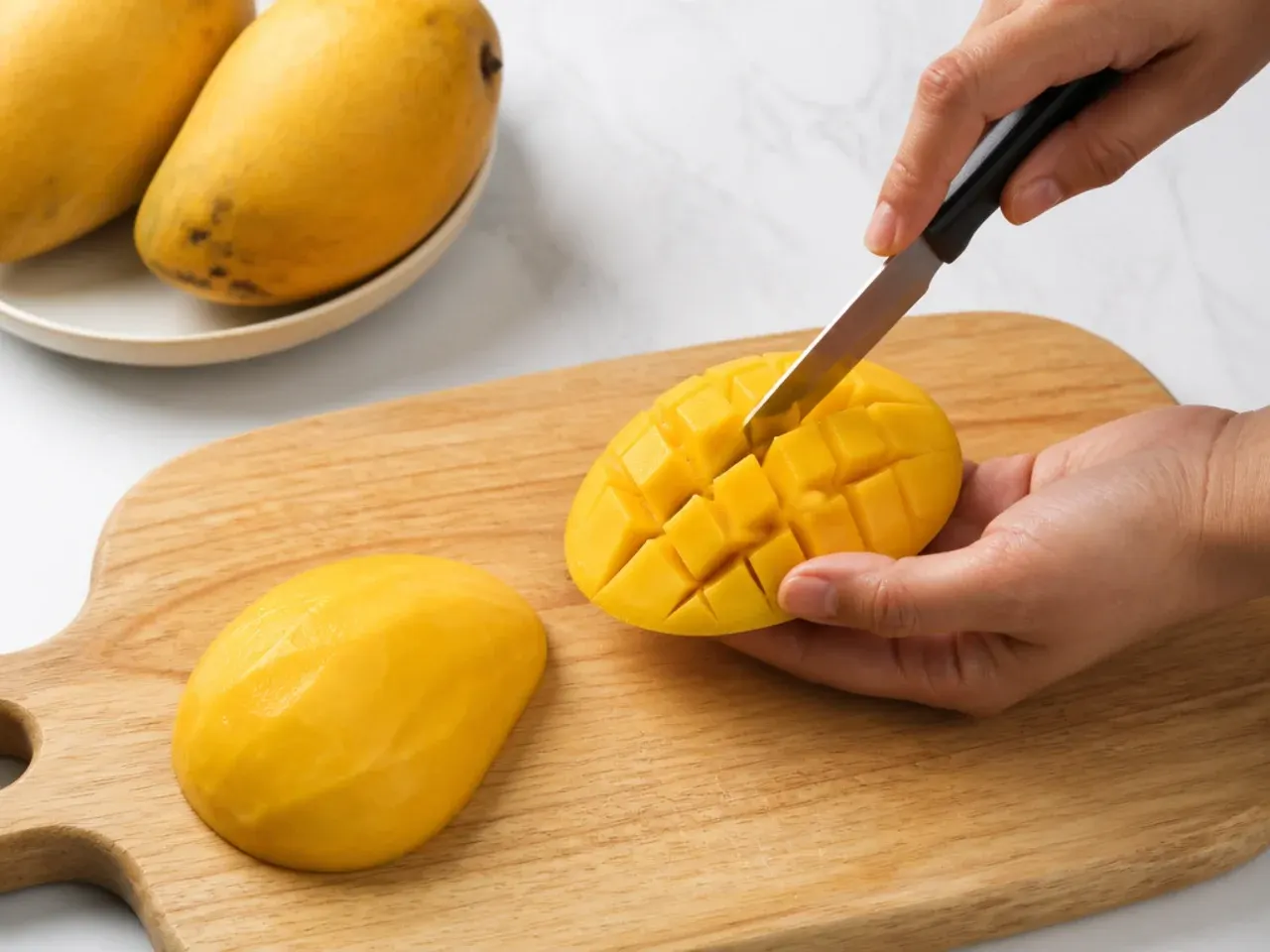
Stand each mango upright and slice down either side of the flat central stone to remove the two cheeks. Score the flesh in a criss-cross without cutting through the skin, then either scoop out cubes or peel and cut thin fans of slices. Chill the mango briefly so it contrasts with the warm rice.
Step 7: Plate and serve
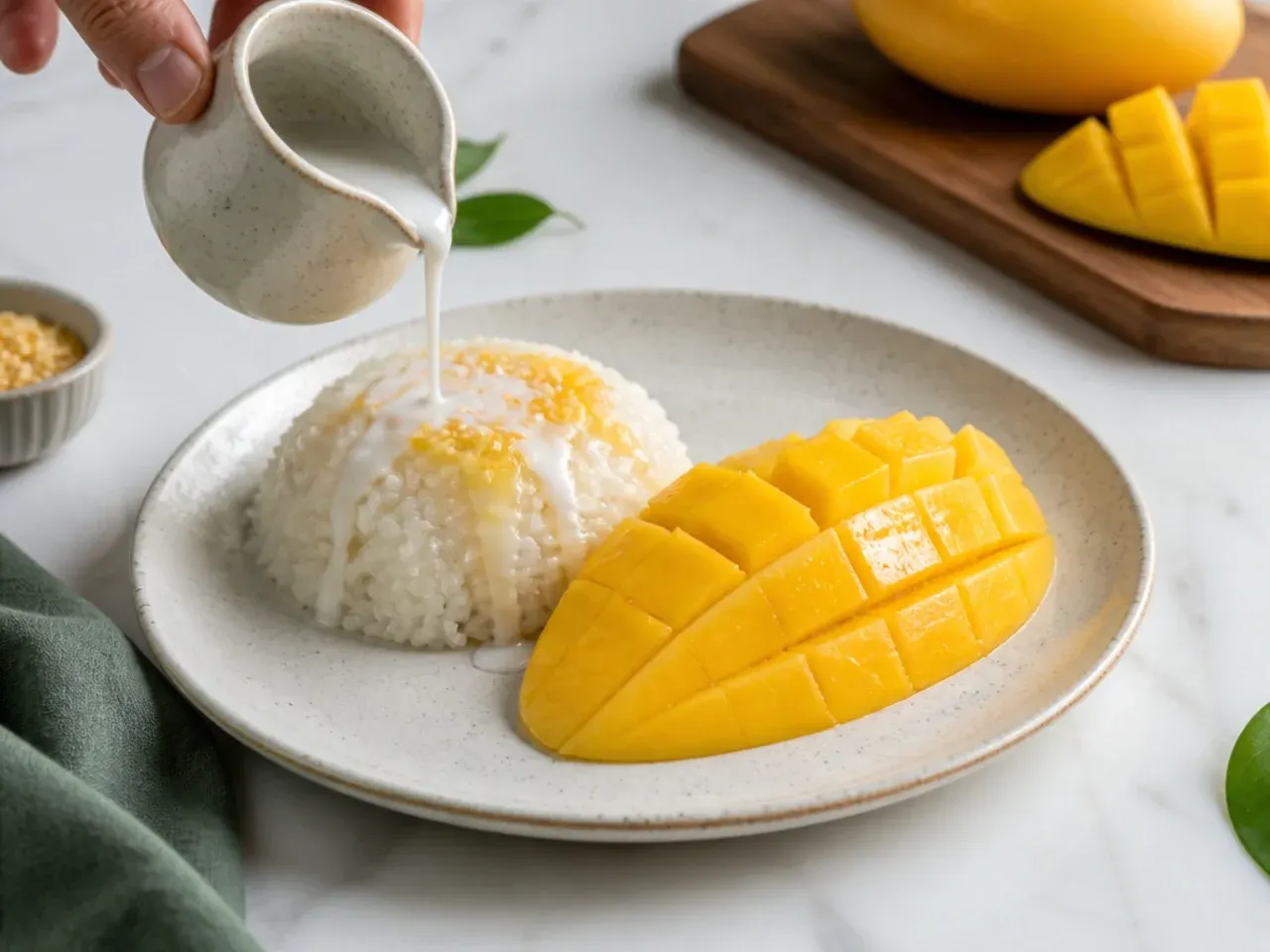
Mould a mound or neat scoop of the coconut sticky rice onto each plate and arrange the mango slices alongside. Spoon over the thickened coconut drizzle and scatter with toasted sesame seeds or mung beans. Serve warm or at room temperature the same day, while the rice is still soft and sticky.
Frequently Asked Questions
Not quite. Both are sweet rice desserts, but mango sticky rice uses Thai glutinous (sticky) rice cooked with coconut milk, so the grains stay chewy and separate. Classic rice pudding uses short-grain pudding rice cooked in dairy milk, which breaks down into a creamy, spoonable porridge. Different rice, different liquid and different texture make them distinct dishes.
Save this for later 📌
Pin this article to your Pinterest board so the full list is one tap away when you need it.
Save on Pinterest