30 Easy Mongolian Beef Bowl Ideas
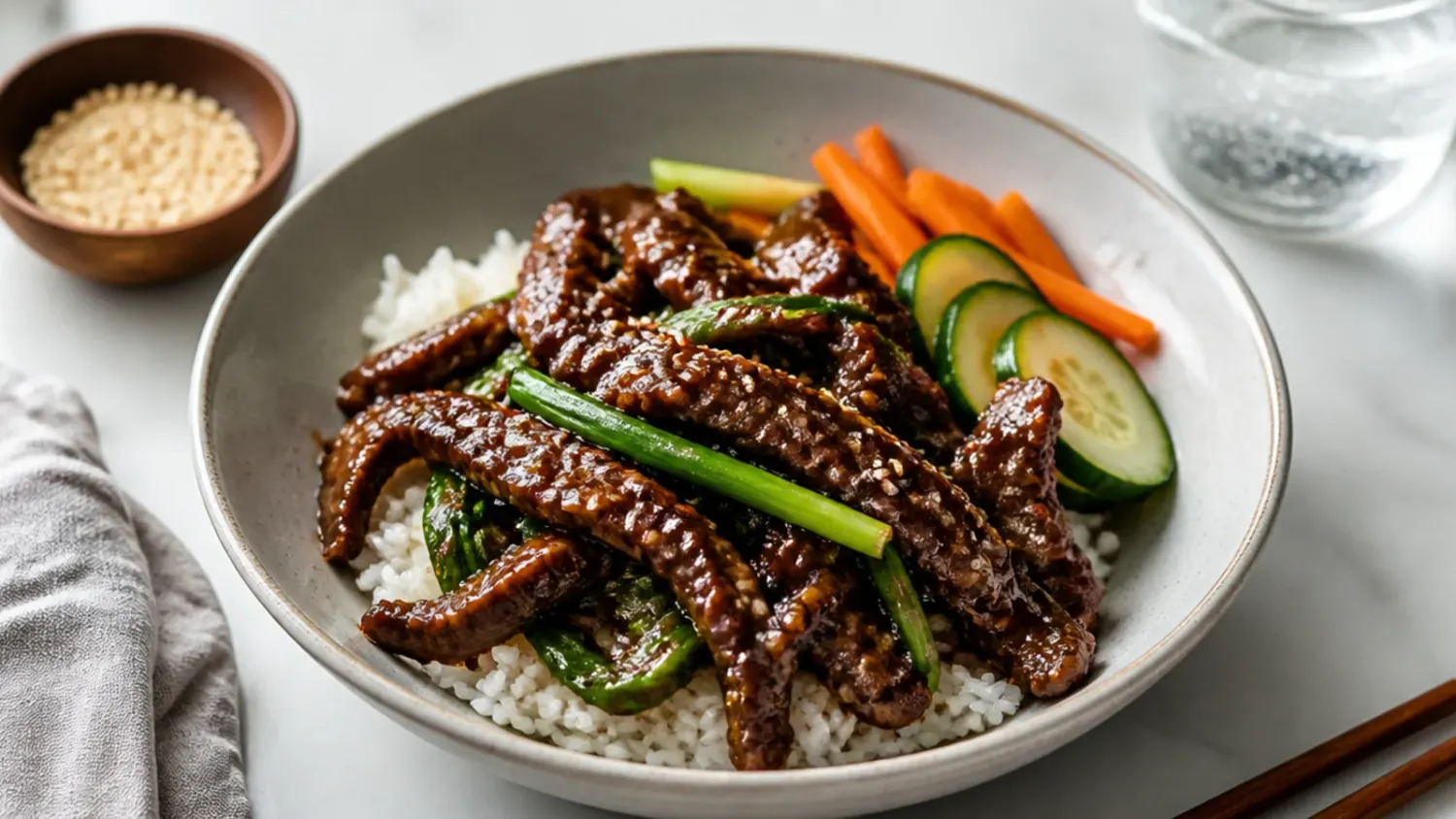
30 easy Mongolian beef bowl ideas built on one tested 35-minute recipe — crispy classic, noodle, low-carb, meal prep and spicy twists included. If you love mongolian beef recipe inspiration, start with our Mongolian Beef Recipes collection, then browse the full Dinner Recipes hub for more.
Save this for later 📌
Pin this article to your Pinterest board so the full list is one tap away when you need it.
Save on PinterestDinner Recipes
Beginner
Recipes
30 ideas
Table of Contents
- Why You'll Love These
- 1. Classic Crispy Flank Steak Bowl
- 2. 20-Minute Ground Beef Mongolian Bowl
- 3. Mongolian Beef and Broccoli Bowl
- 4. Spicy Gochujang Mongolian Beef Bowl
- 5. Low-Carb Cauliflower Rice Bowl
- 6. Mongolian Beef Udon Noodle Bowl
- 7. Slow Cooker Mongolian Beef Bowl
- 8. Air Fryer Crispy Mongolian Beef Bowl
- 9. Mongolian Beef Meal Prep Bowls
- 10. Garlic Fried Rice Mongolian Beef Bowl
- 11. Deconstructed Lettuce Cup Bowl
- 12. Pineapple Mongolian Beef Bowl
- 13. Crunchy Asian Slaw Mongolian Beef Bowl
- 14. Mongolian Beef Ramen Bowl
- 15. Honey Sriracha Mongolian Beef Bowl
- 16. Five-Spice Sirloin Mongolian Beef Bowl
- 17. Fried Egg Brunch Mongolian Beef Bowl
- 18. Coconut Rice Mongolian Beef Bowl
- 19. Mild Family-Friendly Mongolian Beef Bowl
- 20. Shiitake Mushroom Mongolian Beef Bowl
- 21. Crispy Rice Cake Mongolian Beef Bowl
- 22. Rainbow Veggie Mongolian Beef Bowl
- 23. Courgette Noodle Mongolian Beef Bowl
Why You'll Love These
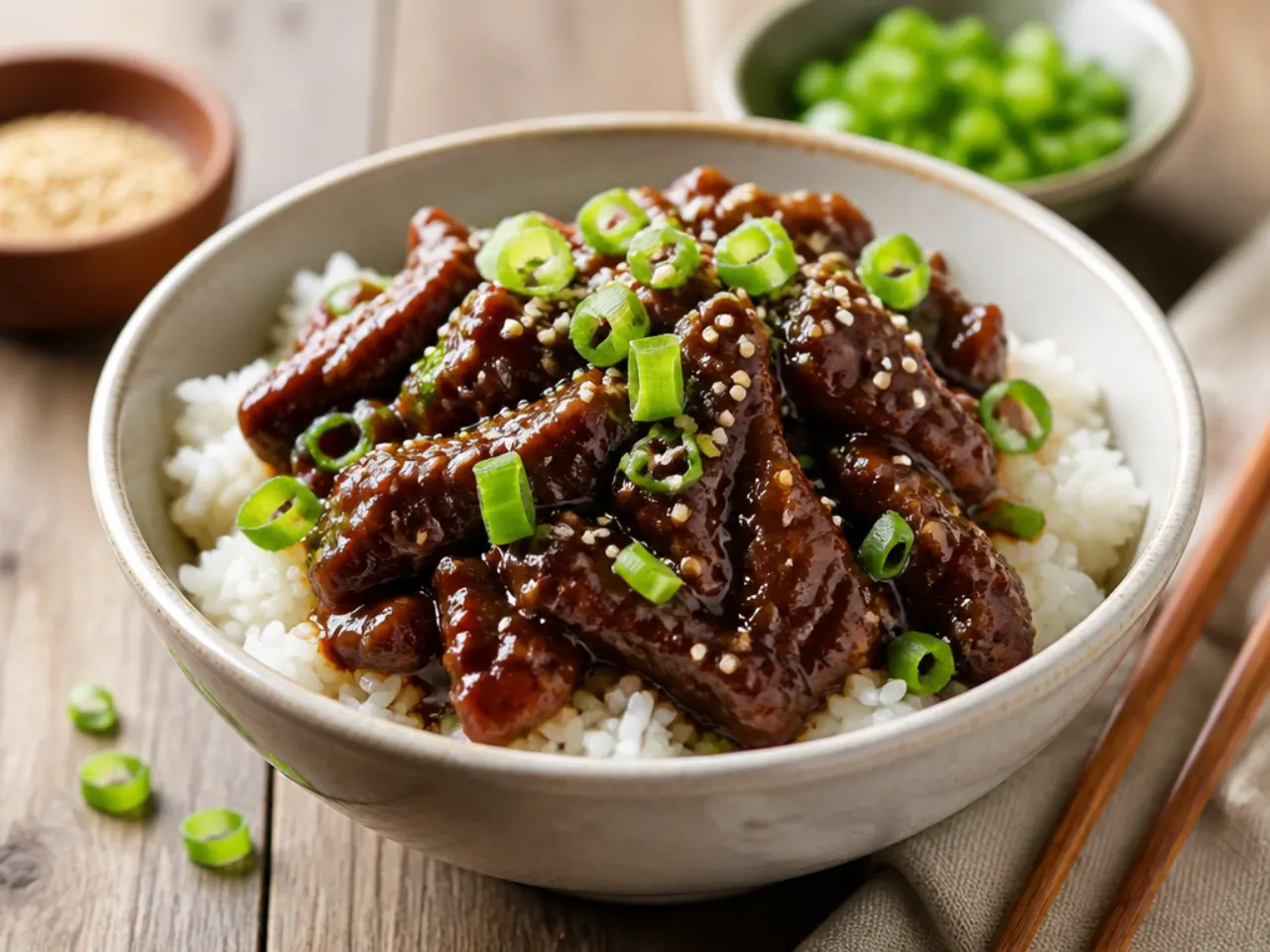
A Mongolian beef bowl scratches the takeaway itch for a fraction of the price — the base recipe below feeds four for roughly £6 and is on the table in 35 minutes. The sauce needs just five store-cupboard ingredients: soy sauce, brown sugar, garlic, ginger and cornflour. Every one of the 30 ideas builds on the same crispy-beef technique, so once you nail it you can change the bowl to match whatever is in your fridge. There are 20-minute ground beef versions for chaotic weeknights, low-carb swaps, and slow cooker and meal prep options for planning ahead. None of them needs special equipment beyond a large frying pan or wok.
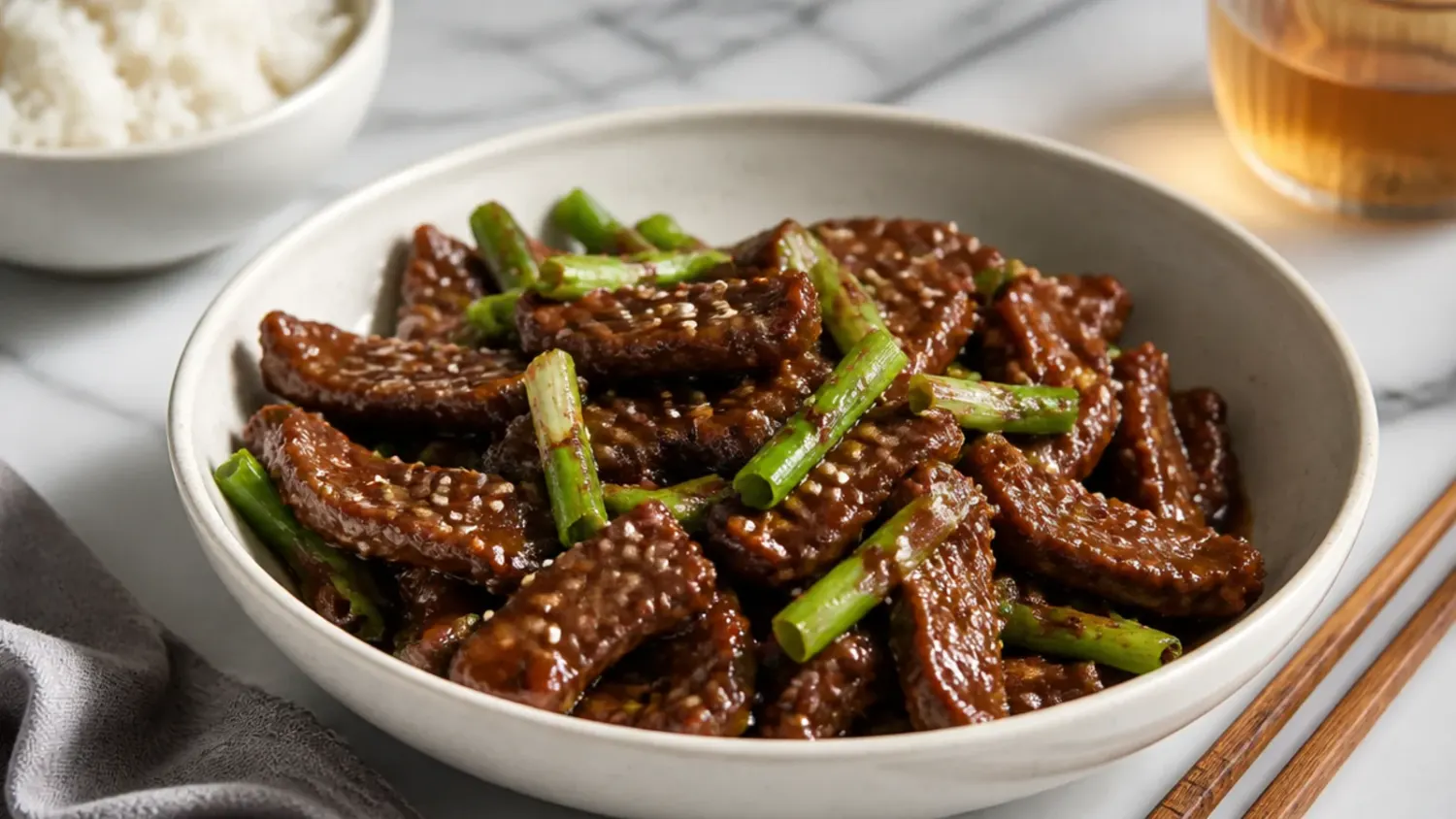
1. Classic Crispy Flank Steak Bowl
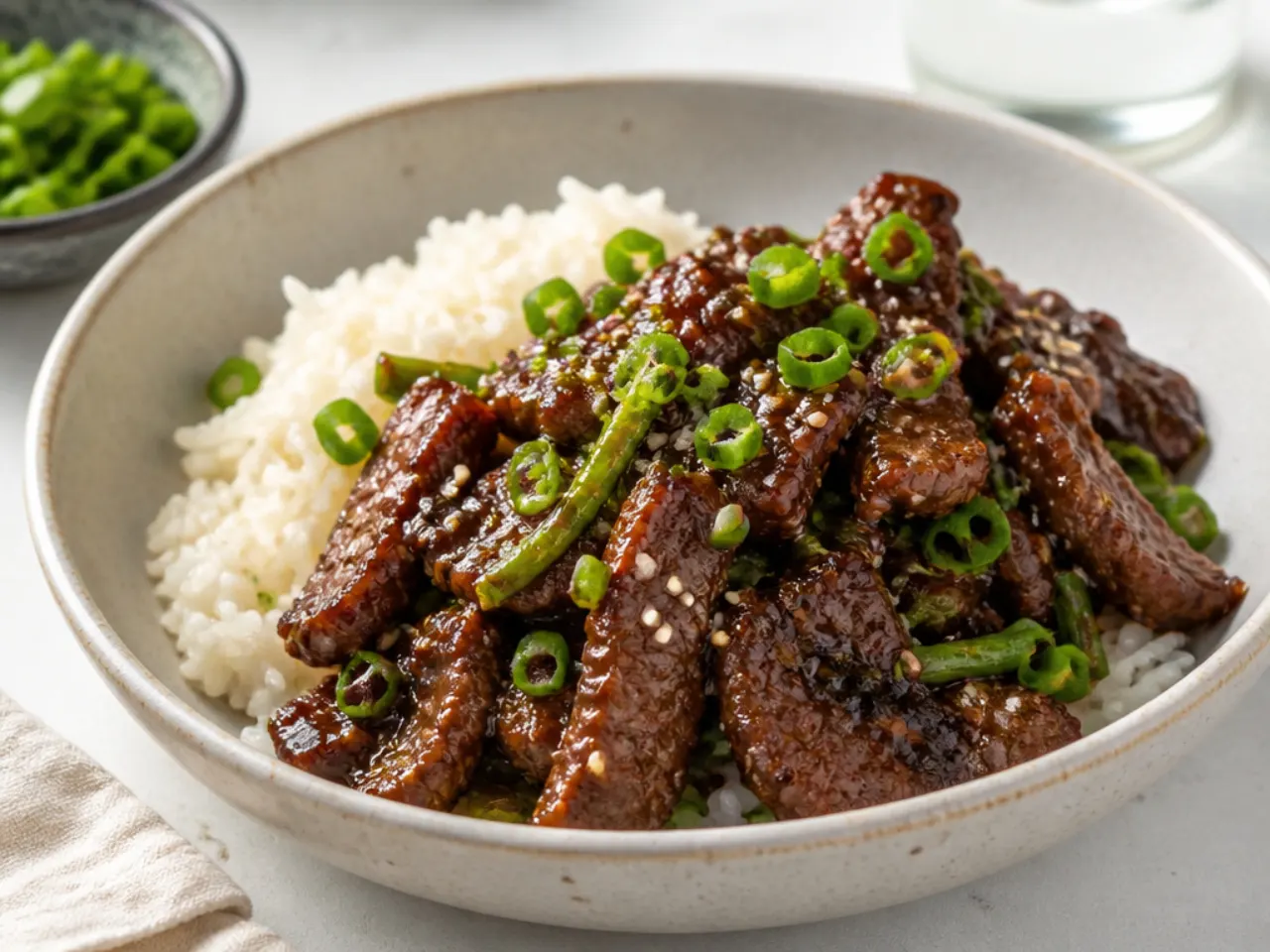
This is the base recipe every idea in this list builds on: flank steak sliced 5 mm thick against the grain, tossed in cornflour and seared in a screaming-hot pan for 1-2 minutes per side. The cornflour does two jobs — it fries into a light crust, then thickens the sauce into a glossy glaze as everything simmers together. Pile it over steamed jasmine rice so the sauce soaks into the top layer of grains. Finish with spring onions and a pinch of toasted sesame seeds. Follow the full method in the recipe card below and you will get sticky, crisp-edged beef on the first attempt.
2. 20-Minute Ground Beef Mongolian Bowl
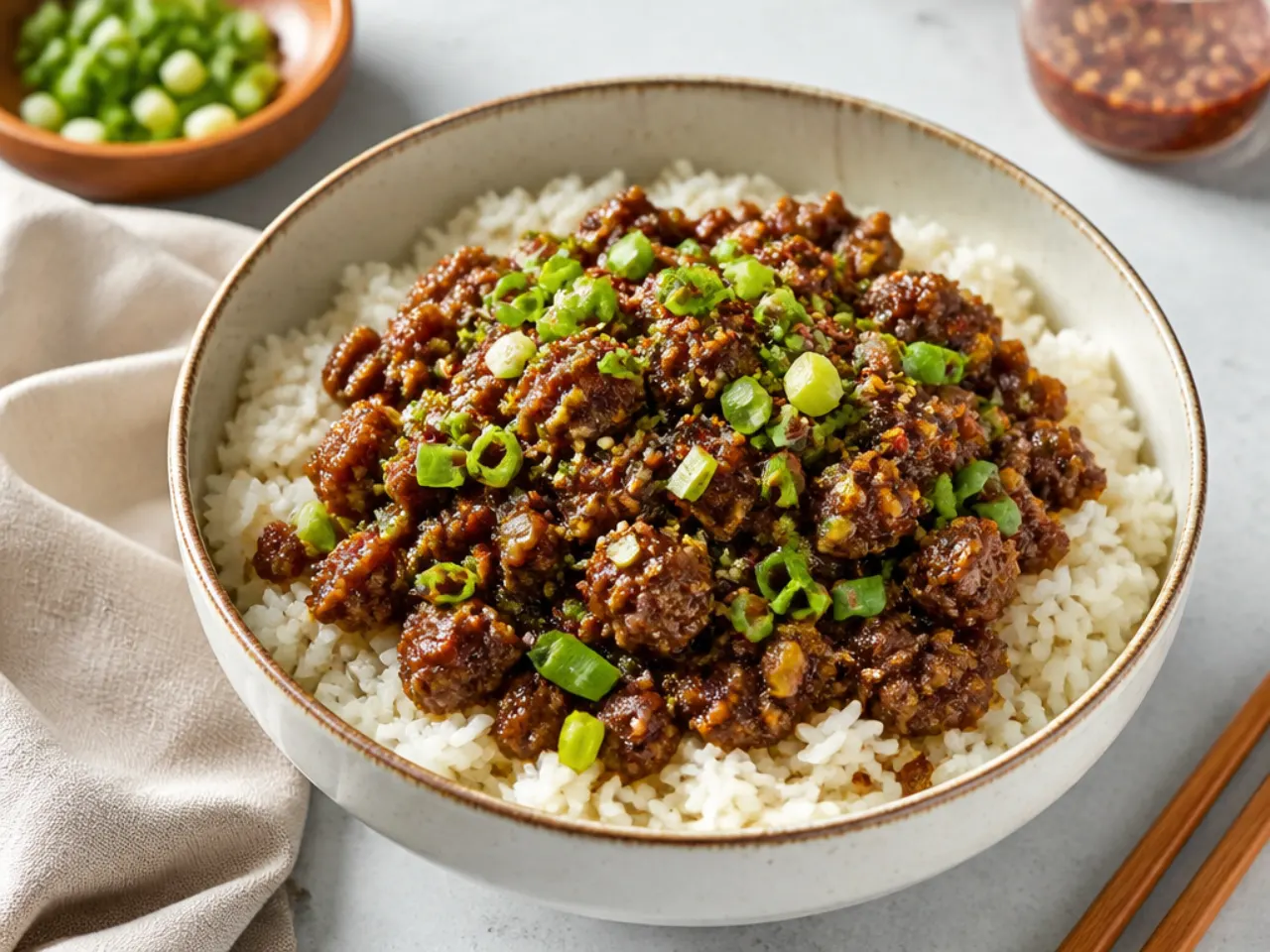
Swap the flank steak for 500 g of beef mince and you skip the slicing and coating entirely. Brown the mince hard in a dry pan over high heat for 6-7 minutes until crusty spots form, drain excess fat, then stir in the garlic and ginger followed by the sauce. Thicken with a slurry of 1 tablespoon cornflour whisked into 2 tablespoons cold water, simmering for 2 minutes until glossy. It is the cheapest and fastest version in this list — roughly £4 for four servings — and it reheats brilliantly for lunches.
3. Mongolian Beef and Broccoli Bowl
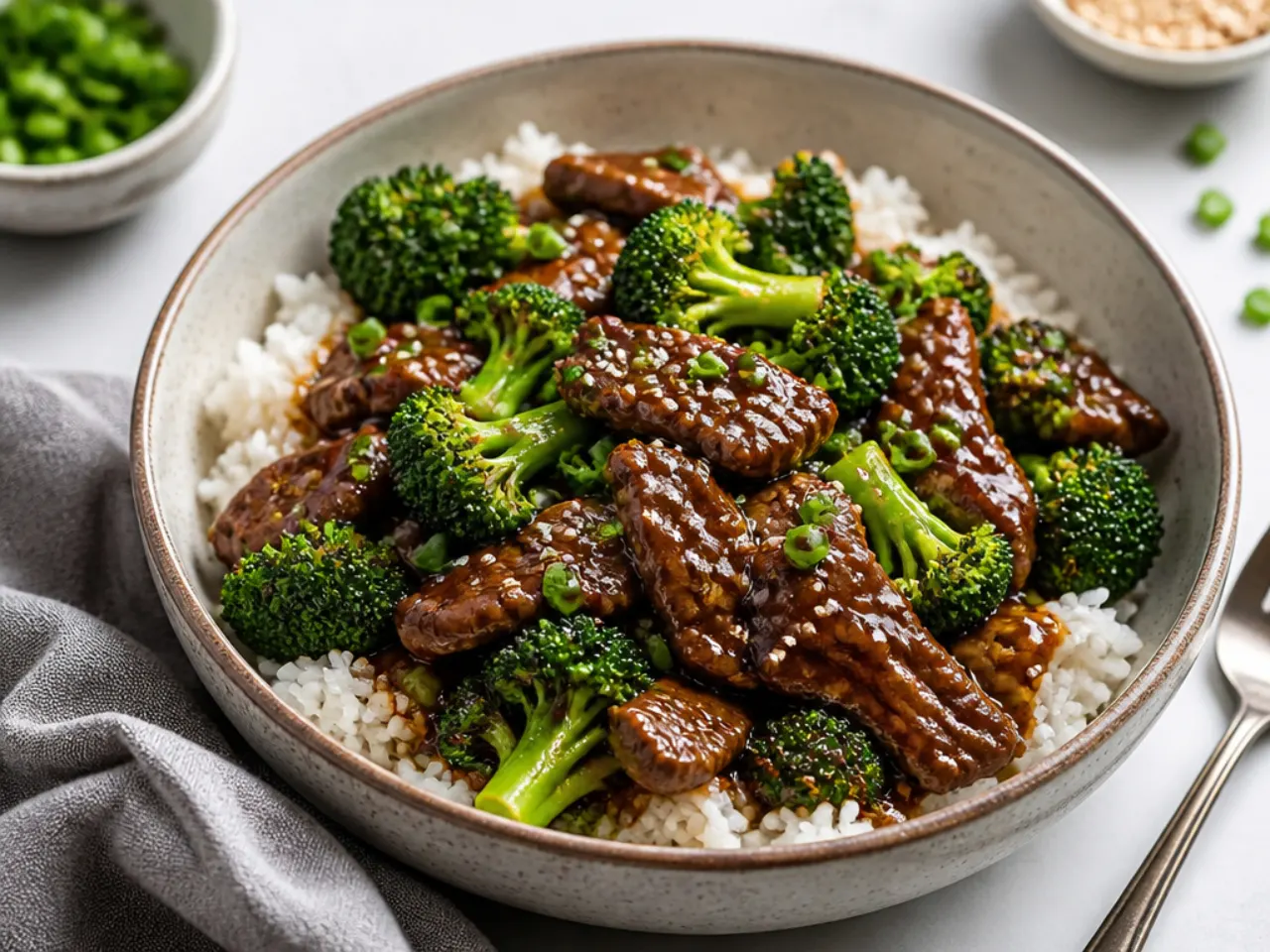
Broccoli is the classic partner because the florets act like little sponges for the sticky sauce. Cut one head into small florets and blanch them in boiling water for 2 minutes, or microwave them covered with a splash of water for 3 minutes. Add the broccoli to the pan for the final minute of cooking so it heats through without going soft. The bitterness of the greens balances the sweet soy glaze, and it adds a full portion of veg to the bowl. This is the version to make when you want takeaway beef and broccoli without the delivery fee.
4. Spicy Gochujang Mongolian Beef Bowl
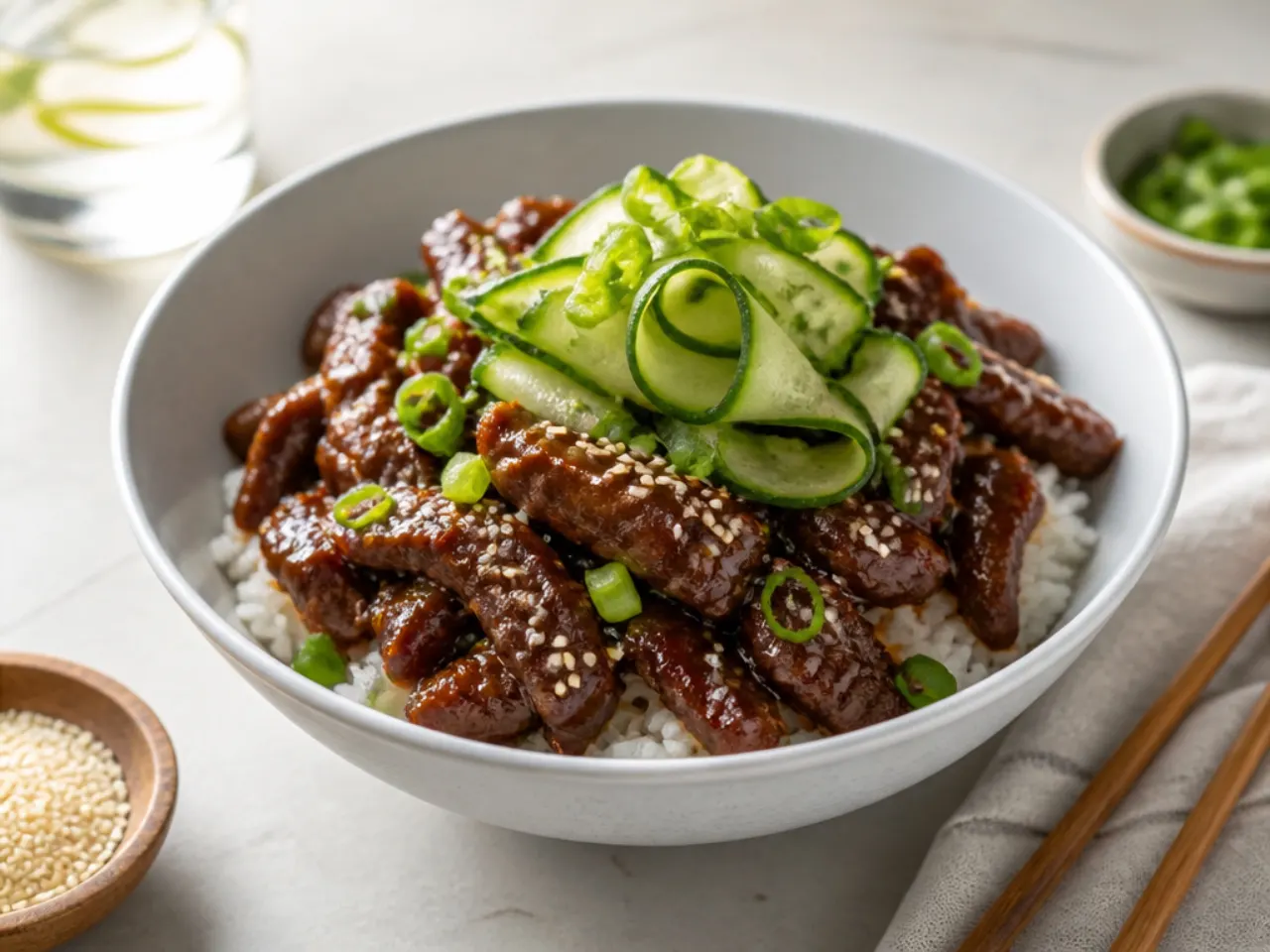
Whisk 1-2 tablespoons of gochujang (Korean chilli paste) into the sauce mixture before it hits the pan. Gochujang brings a slow-building heat plus a fermented depth that plain chilli flakes cannot match, and its natural sweetness means the sauce still turns beautifully sticky. Start with 1 tablespoon if you are heat-shy — 2 tablespoons gives a proper medium burn. Top the bowl with cucumber ribbons and a sprinkle of sesame seeds to cool things down between bites. Most supermarkets now stock gochujang near the soy sauce.
5. Low-Carb Cauliflower Rice Bowl
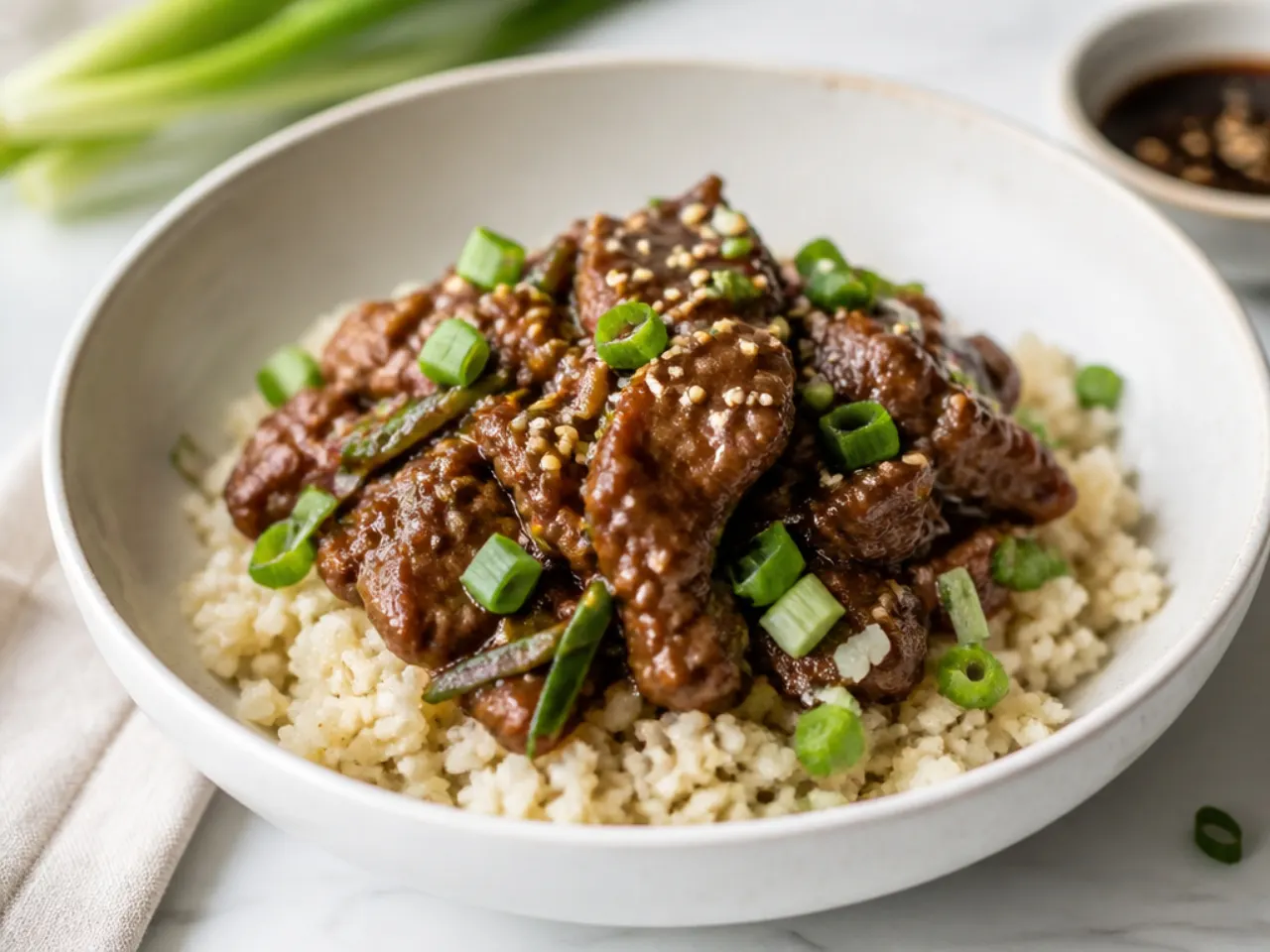
Swap the jasmine rice for 600 g of cauliflower rice sautéed in 1 tablespoon of sesame oil over medium-high heat for 4-5 minutes, seasoned with a pinch of salt. Cut the brown sugar in the sauce down to 40 g, or use a brown sugar substitute, to keep the carbs low without losing the sticky texture. The cauliflower stays slightly nutty and never turns mushy if you resist stirring it constantly. One bowl lands around 25 g of carbs instead of the 70-plus in a rice version. Squeeze fresh lime over the top before serving to brighten it up.
Save this for later 📌
Pin this article to your Pinterest board so the full list is one tap away when you need it.
Save on Pinterest6. Mongolian Beef Udon Noodle Bowl
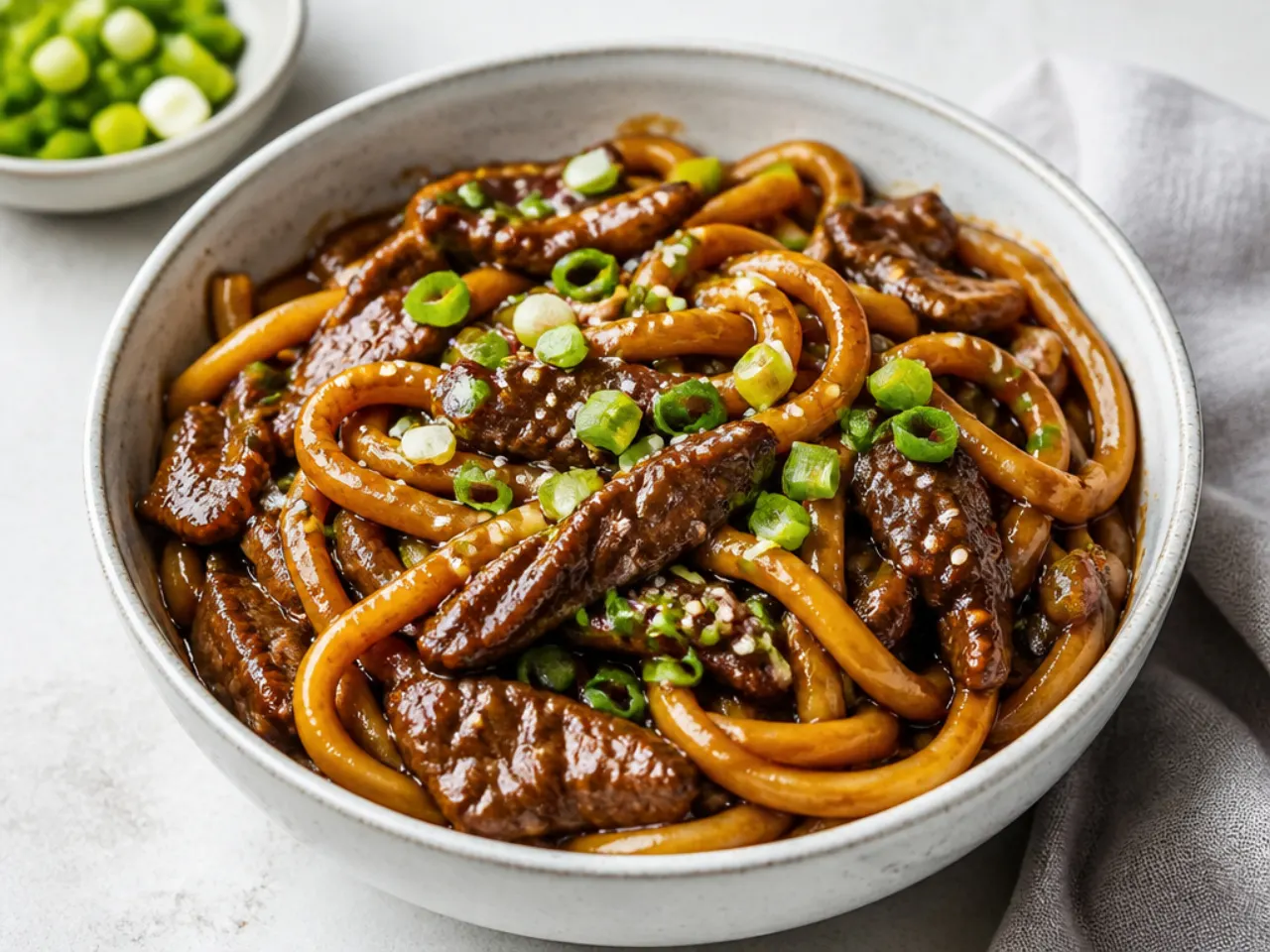
Thick, chewy udon noodles are made for this sauce — they grab it the way rice never can. Cook 400 g of fresh or straight-to-wok udon for 2 minutes, and add an extra 60 ml of water to the sauce so there is enough glaze to coat every strand. Toss the noodles into the pan with the beef for the final minute so they pick up colour and flavour. A drizzle of chilli oil and a scatter of spring onion greens finish it like a proper noodle bar bowl. Egg noodles or lo mein work if you cannot find udon.
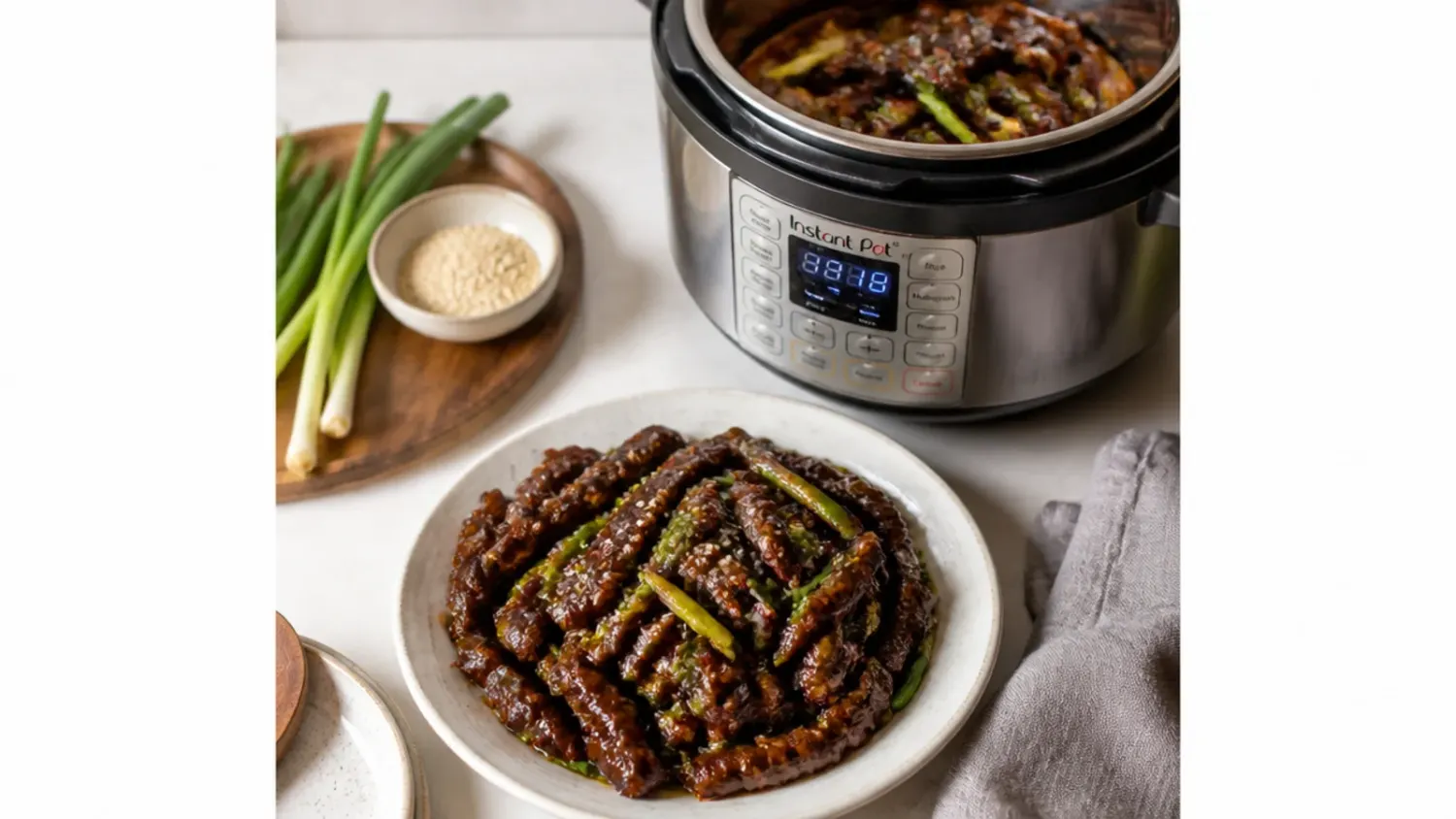
7. Slow Cooker Mongolian Beef Bowl
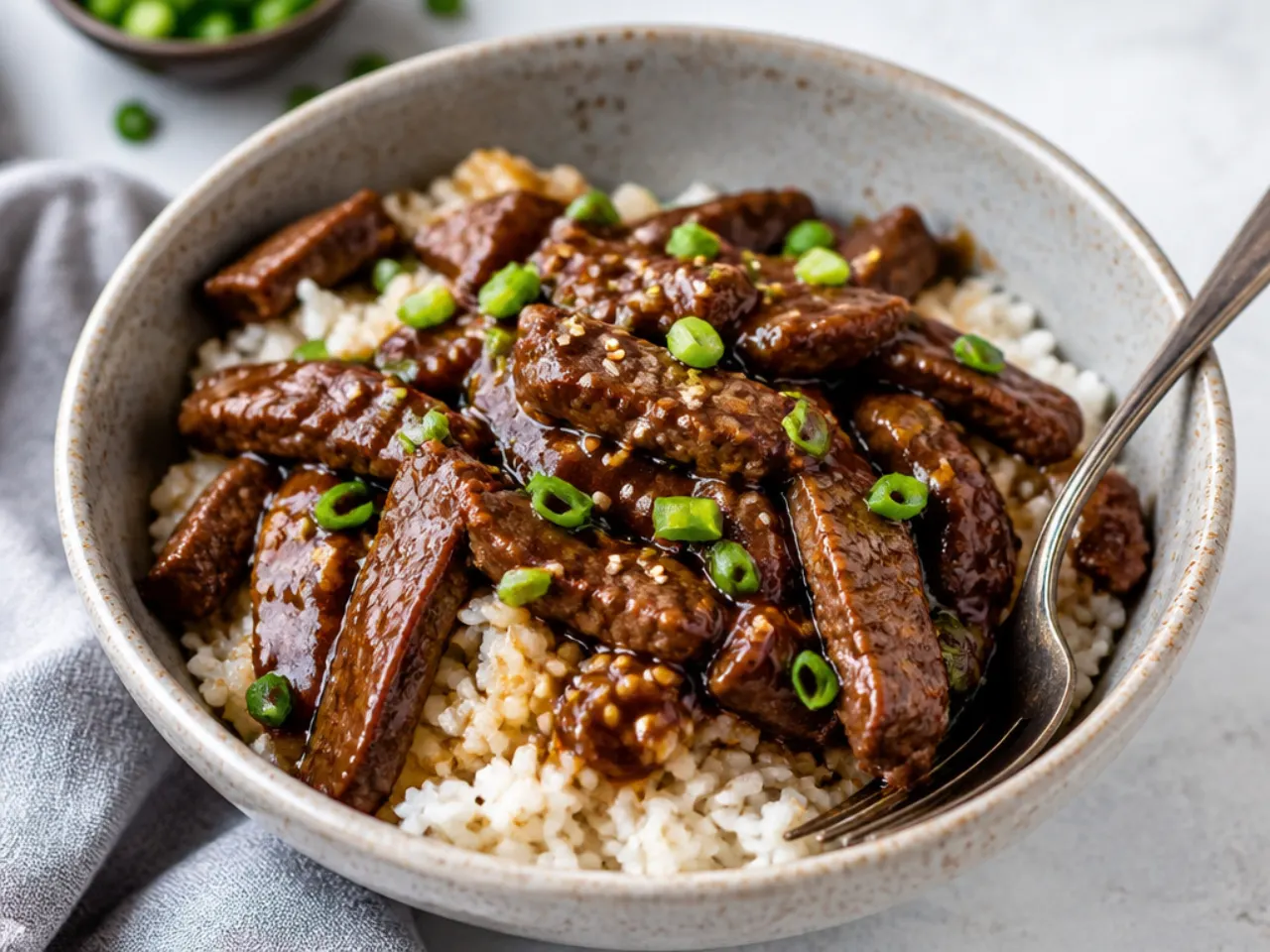
For hands-off tenderness, toss 700 g of sliced flank or braising steak in 3 tablespoons of cornflour, then add it to the slow cooker with a doubled batch of sauce. Cook on LOW for 4-5 hours until the beef pulls apart easily with a fork. You trade the crispy edges for melt-in-the-mouth texture — a different dish, but every bit as good over rice. Stir in the spring onions for the last 10 minutes so they keep some bite. This version is ideal for feeding a crowd because it holds on the warm setting for an hour without suffering.
8. Air Fryer Crispy Mongolian Beef Bowl
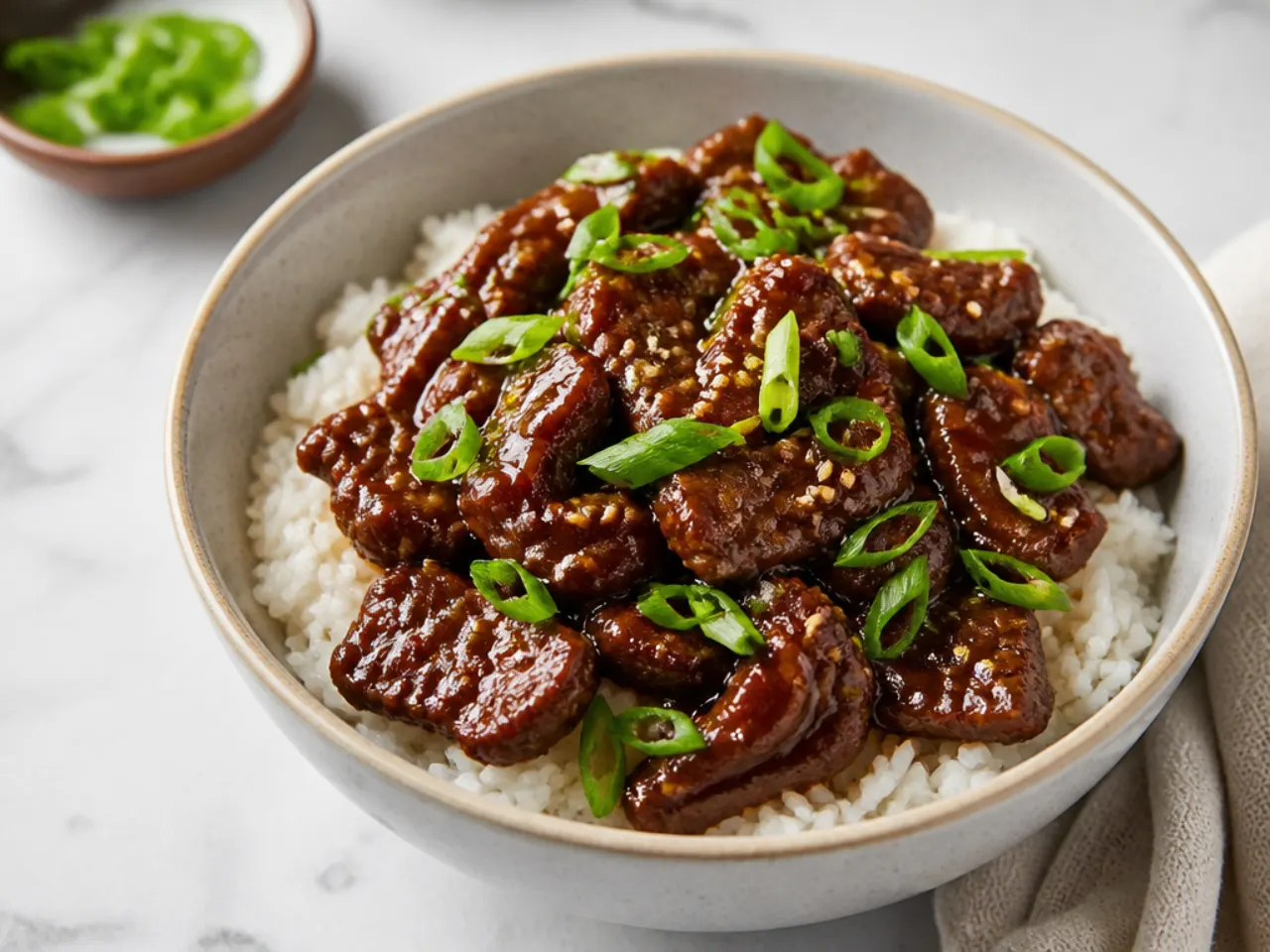
You can get genuinely crispy beef with a fraction of the oil by using an air fryer. Toss the cornflour-coated strips with 1 tablespoon of oil, spread them in a single layer, and air fry at 200°C (400°F) for 8-10 minutes, shaking the basket halfway. Meanwhile, simmer the sauce in a pan for 2-3 minutes until syrupy, then toss the hot crispy beef through it just before serving. Because the beef never sits in the liquid, the crust stays crunchier than the pan-fried version. Work in two batches if your basket is small — crowding steams the coating.
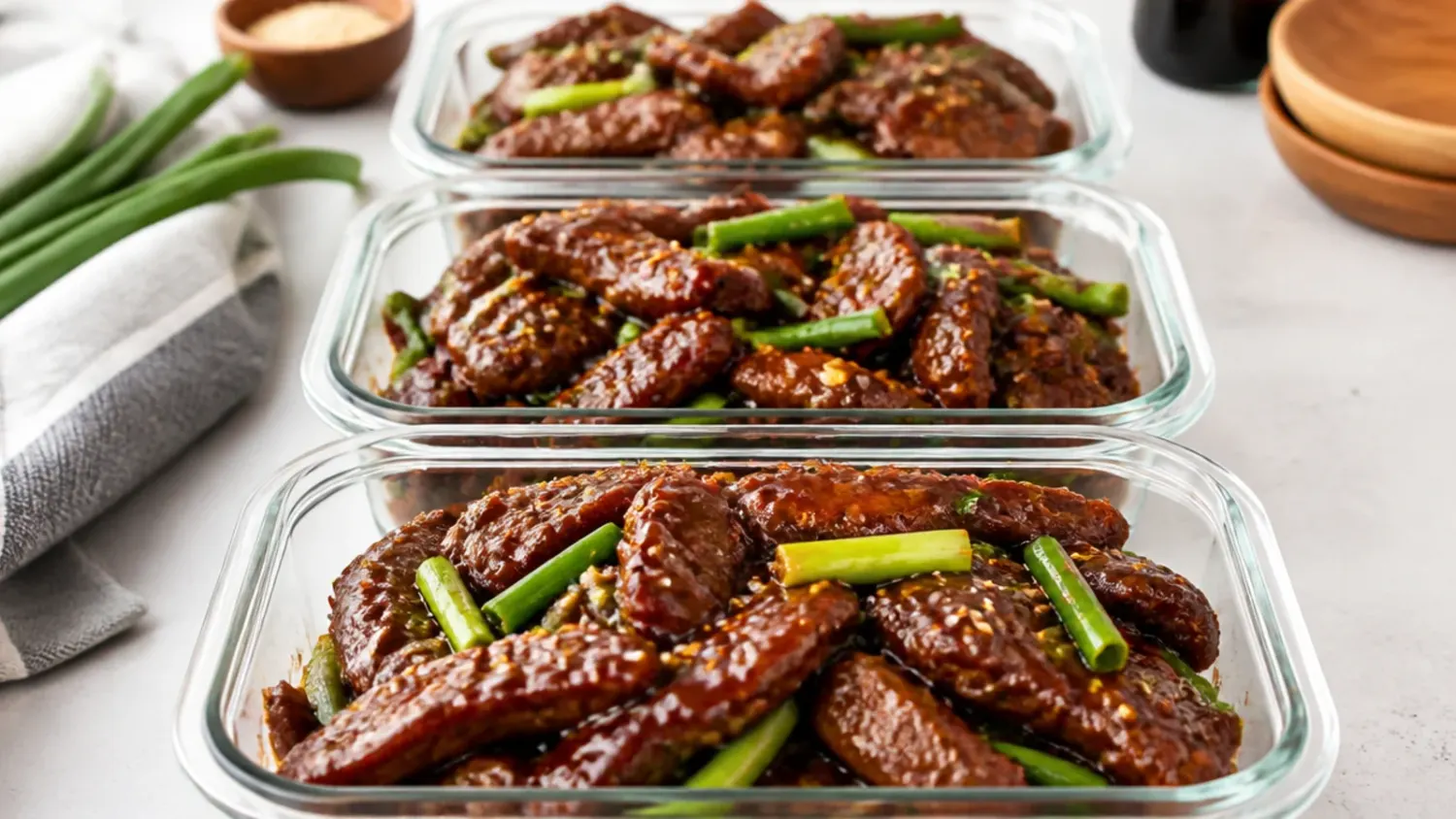
9. Mongolian Beef Meal Prep Bowls
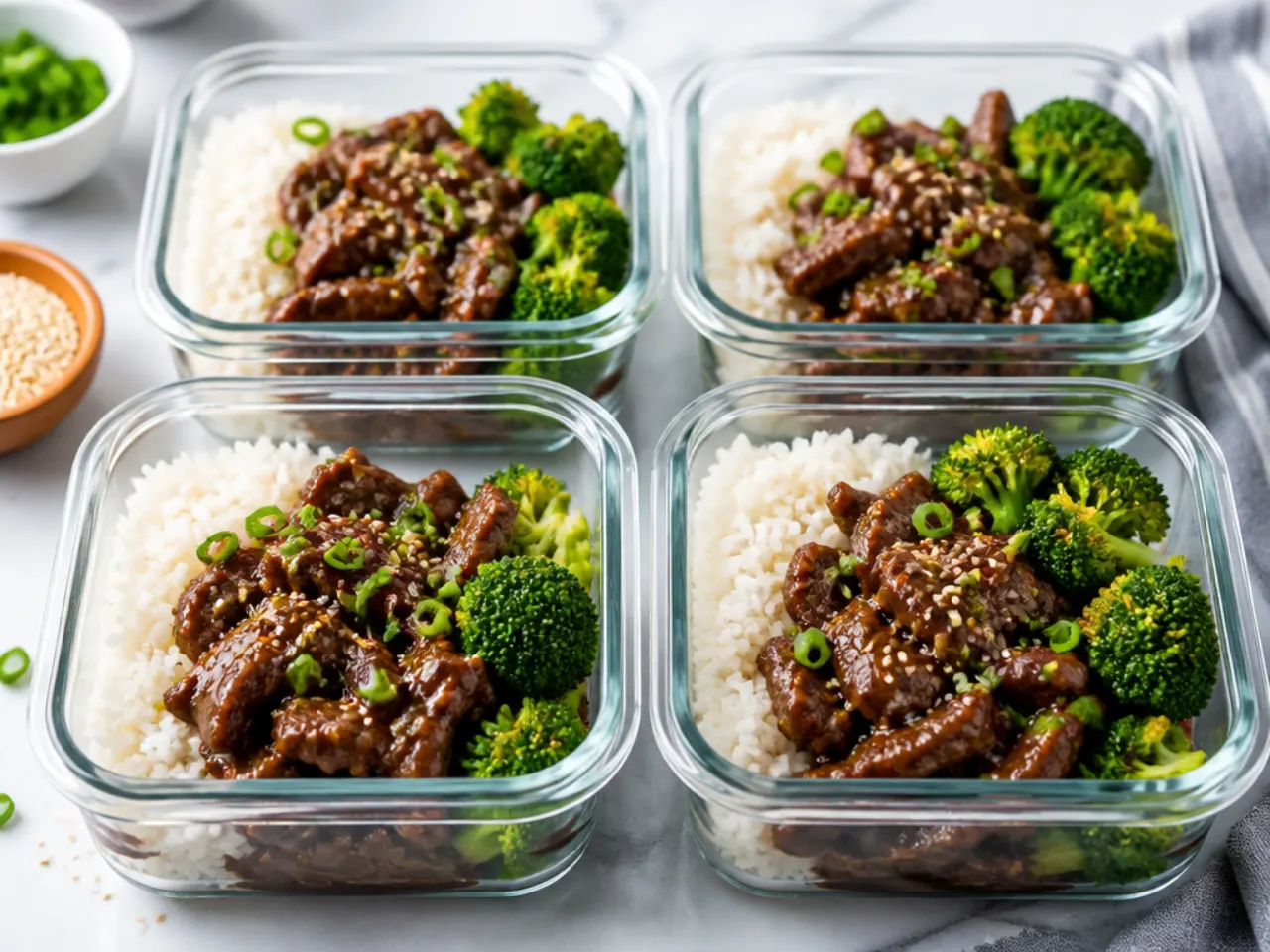
This sauce actually improves after a night in the fridge, which makes it a meal prep hero. Divide 150 g of cooked rice, a quarter of the beef and a handful of steamed broccoli between four containers, keeping the spring onion garnish in a separate bag so it stays fresh. The bowls keep for 4 days refrigerated. To reheat, add 1 tablespoon of water, cover loosely, and microwave for 2 minutes until piping hot throughout. Cool the rice within an hour of cooking before boxing it up — that is the food-safety rule that matters most with rice.
10. Garlic Fried Rice Mongolian Beef Bowl
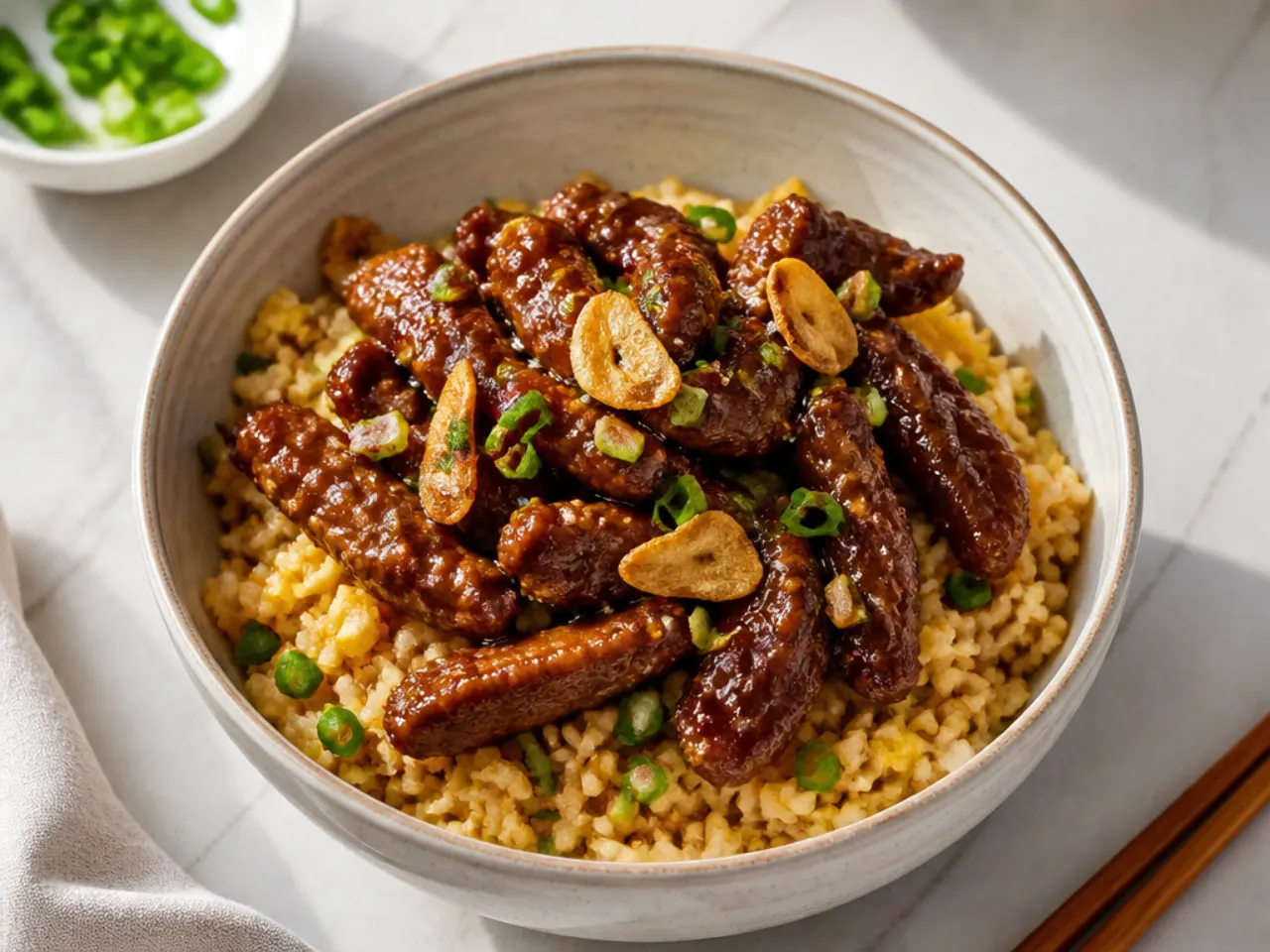
Upgrade the base of the bowl by turning day-old rice into garlic fried rice. Fry 3 thinly sliced garlic cloves in 2 tablespoons of oil over medium heat until pale gold, scoop half out for garnish, then add 450 g of cold cooked rice and stir-fry on high for 3-4 minutes until the grains separate and catch a little colour. Day-old rice is essential — fresh rice steams into a sticky clump. The toasty garlic base doubles down on the aromatics in the beef and makes the whole bowl taste like a restaurant dish. Season the rice with just a splash of soy so it does not compete with the sauce.
Save this for later 📌
Pin this article to your Pinterest board so the full list is one tap away when you need it.
Save on Pinterest11. Deconstructed Lettuce Cup Bowl
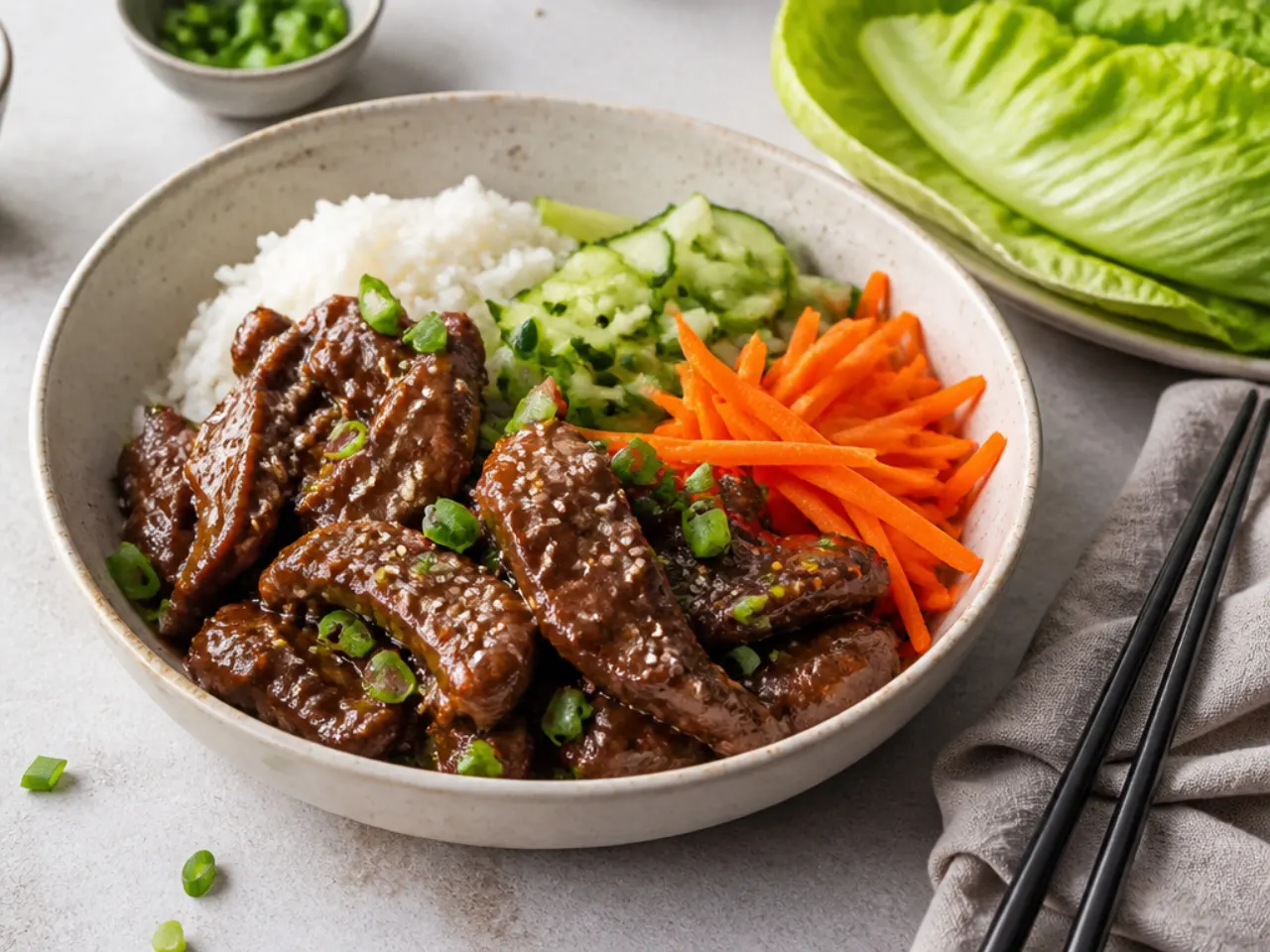
Serve the beef and a small scoop of rice in the centre of the bowl with 8-10 little gem or iceberg lettuce cups tucked around the edge. Everyone scoops beef into a leaf, adds cucumber matchsticks and eats it like a wrap — the cold crunch against the hot sticky beef is the whole point. Use the ground beef version from idea 2 if you want easier scooping. Pat the lettuce leaves dry so the sauce clings instead of sliding off. This makes a brilliant light dinner or a sharing starter when friends come round.
12. Pineapple Mongolian Beef Bowl
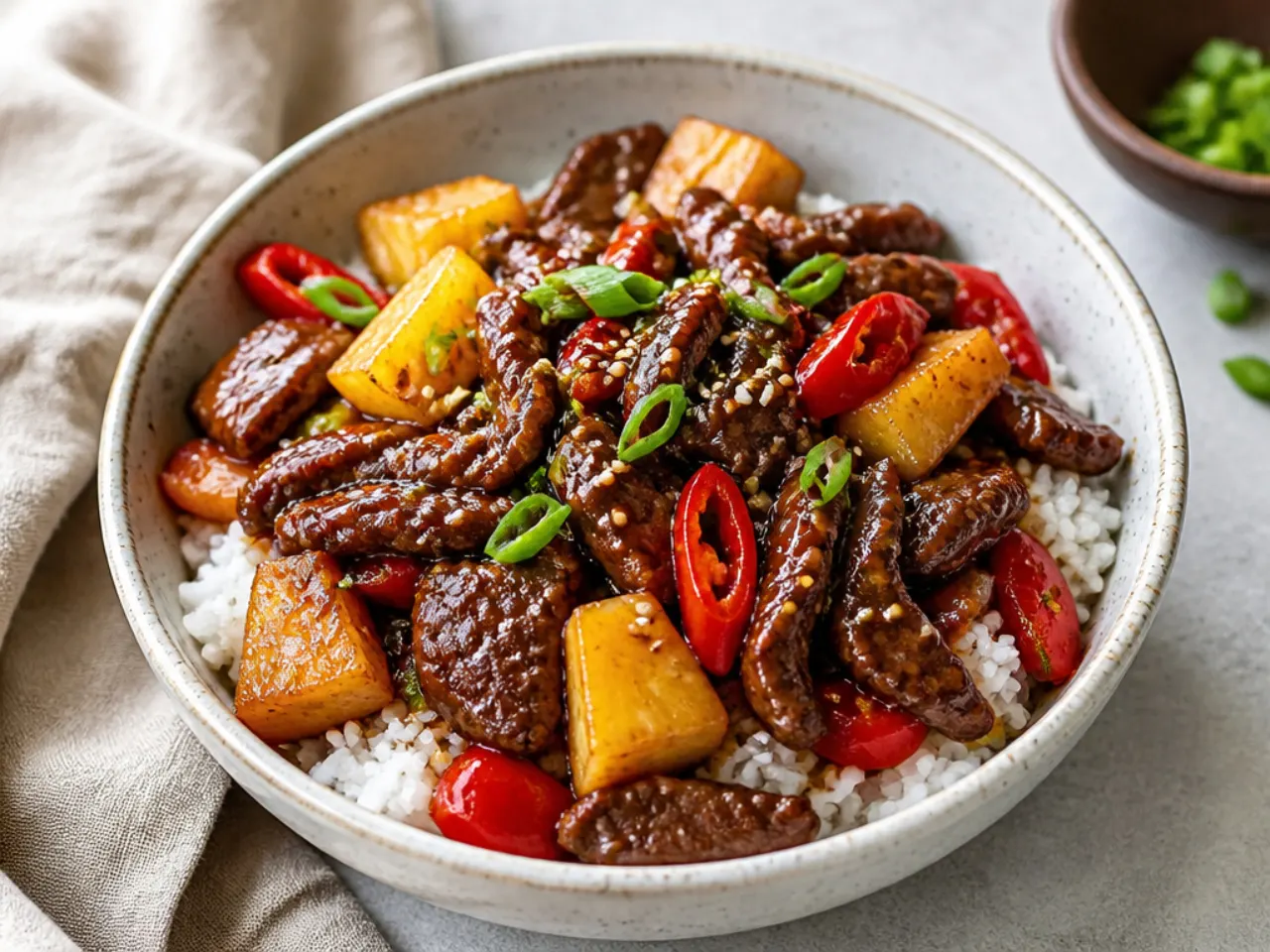
Sear 150 g of fresh pineapple chunks in the empty pan for 2 minutes per side until caramelised at the edges, then set aside and add them back with the beef at the end. The pineapple's acidity cuts through the sweet soy glaze so the bowl never feels cloying, and the caramelisation adds a smoky-sweet note. Fresh pineapple works far better than tinned, which turns mushy and waters down the sauce. Finish with a few slices of red chilli for a sweet-heat combination. This one is always the surprise favourite at the table.
13. Crunchy Asian Slaw Mongolian Beef Bowl
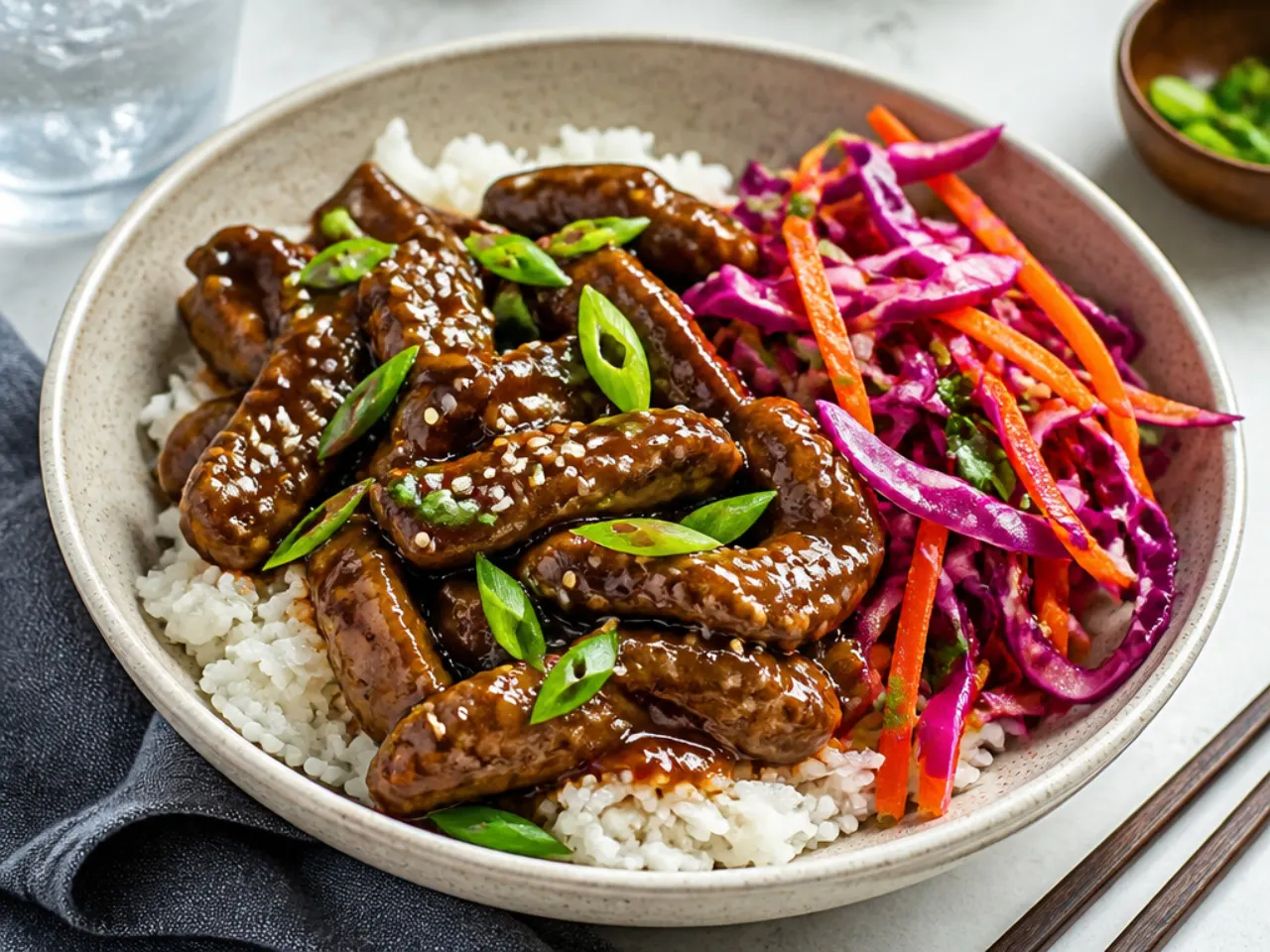
Pile one side of the bowl with a quick slaw: 200 g shredded red cabbage and 1 coarsely grated carrot tossed with 1 tablespoon rice vinegar, 1 teaspoon sesame oil and a pinch each of salt and sugar. Let it sit for 10 minutes while you cook the beef so the vinegar softens the cabbage slightly. The cold, tangy crunch against the warm sticky beef gives every forkful contrast — it is the texture trick most recipes skip. The slaw also keeps for 2 days in the fridge, so make double for tomorrow's lunch. Scatter crushed roasted peanuts over the top if you have them.
14. Mongolian Beef Ramen Bowl
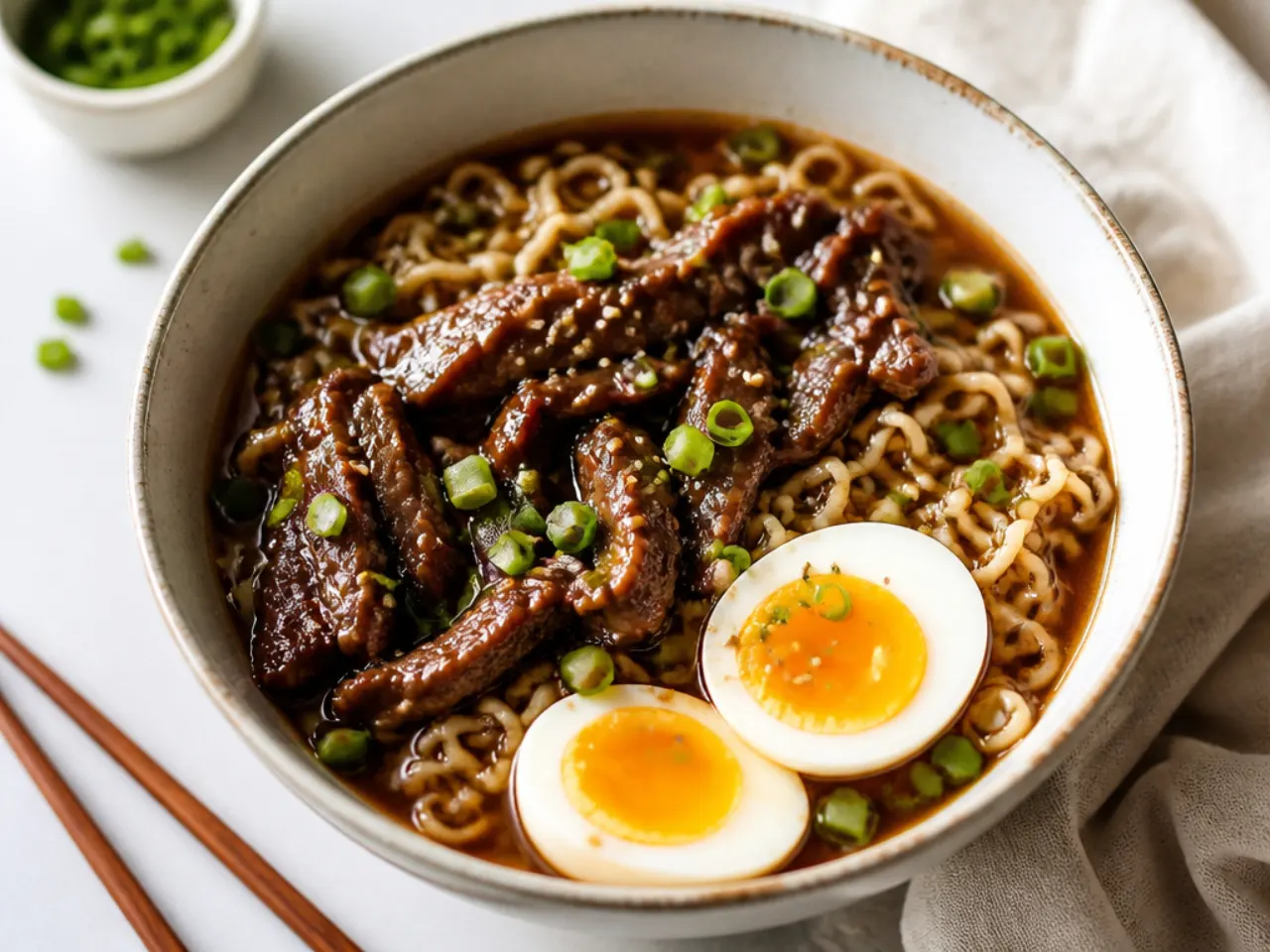
Turn the dish brothy by adding 500 ml of beef stock to the finished sauce and simmering for 2 minutes. Cook 2 nests of ramen noodles separately for 3 minutes, divide between deep bowls, ladle the beef and broth over the top. Add a soft-boiled egg — 6 and a half minutes in boiling water, then straight into iced water — halved so the jammy yolk enriches the broth. Finish with spring onions and a sheet of nori. It is a completely different eating experience from the sticky version, and perfect for cold evenings.
15. Honey Sriracha Mongolian Beef Bowl
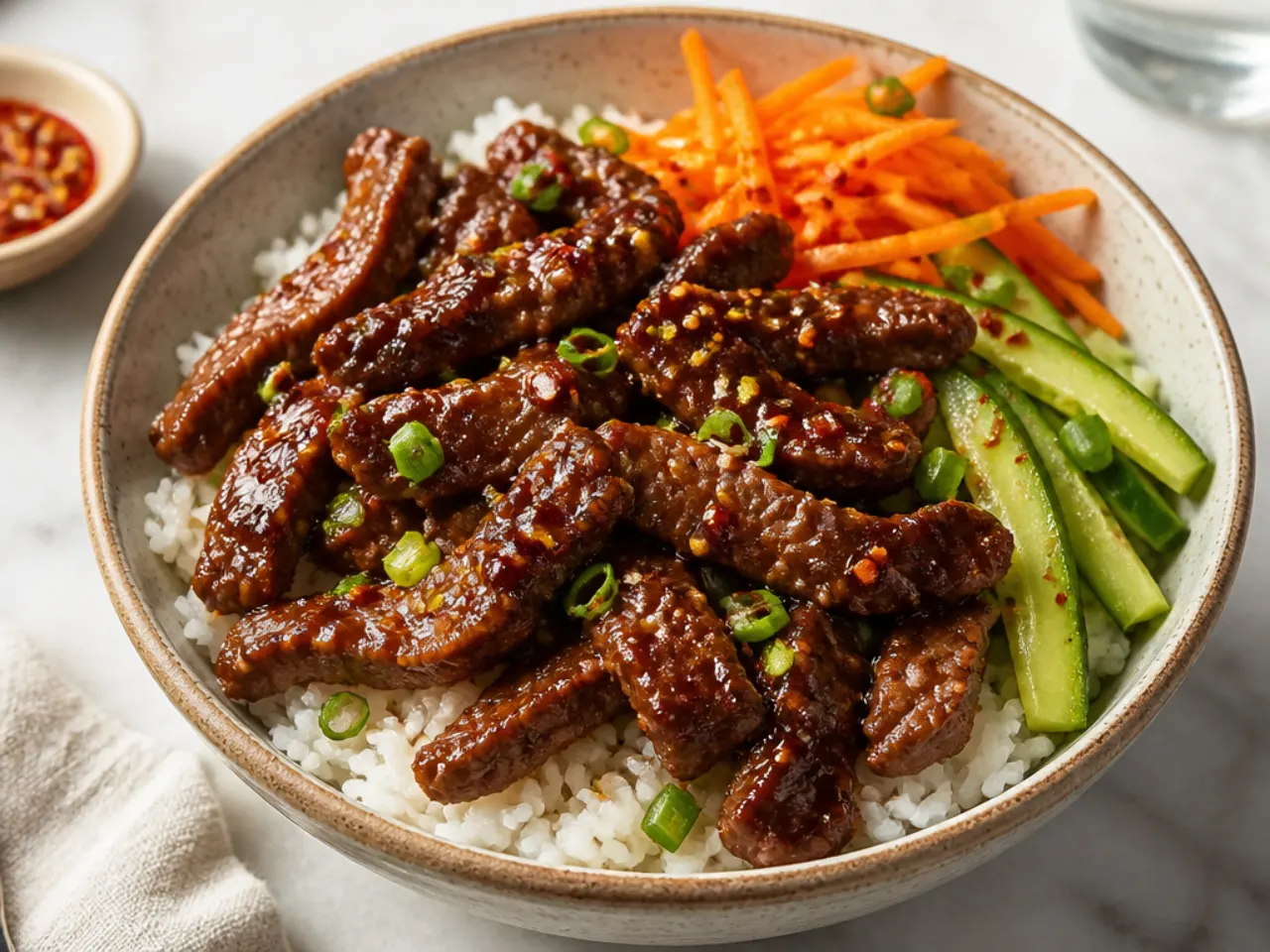
Replace half the brown sugar with 2 tablespoons of honey and whisk 1-2 tablespoons of sriracha into the sauce. Honey caramelises at a lower temperature than sugar, so the glaze turns even glossier and stickier — just keep the simmer gentle so it does not scorch. The sriracha adds vinegary heat that reads as brighter than dried chilli. This combination is what most people imagine when they think of addictive takeaway beef. Serve it over plain rice with extra sriracha on the table for the heat-lovers.
Save this for later 📌
Pin this article to your Pinterest board so the full list is one tap away when you need it.
Save on Pinterest16. Five-Spice Sirloin Mongolian Beef Bowl
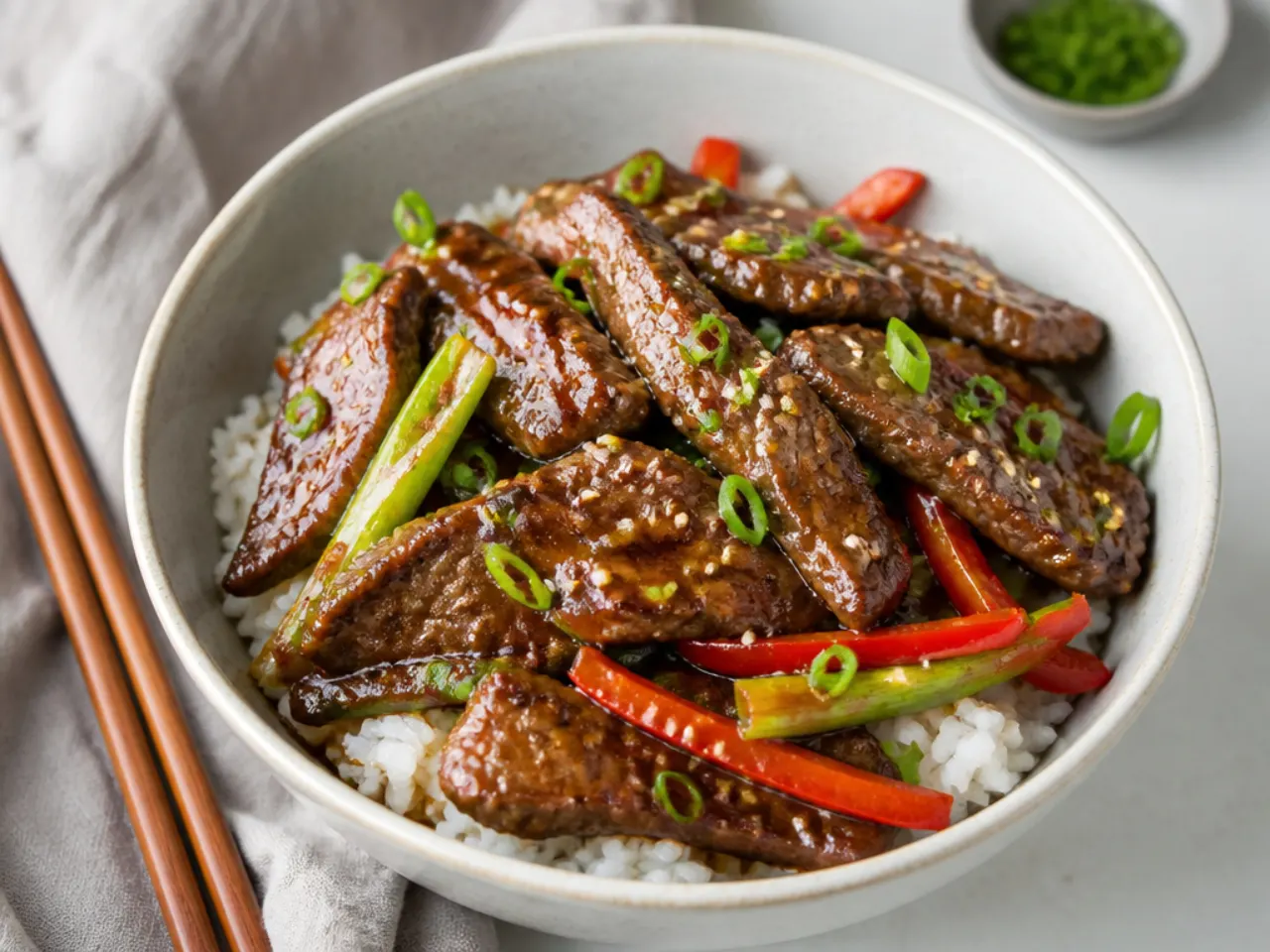
Use sirloin steak instead of flank and add half a teaspoon of Chinese five-spice to the cornflour before coating. Five-spice brings star anise and cinnamon warmth that plays beautifully against the brown sugar in the sauce. Sirloin is more tender than flank, so sear it for just 60-90 seconds per side to keep it blush-pink inside the crust. This feels like a proper Friday-night upgrade for only a couple of pounds more. A few strips of red pepper stir-fried alongside round out the bowl.
17. Fried Egg Brunch Mongolian Beef Bowl
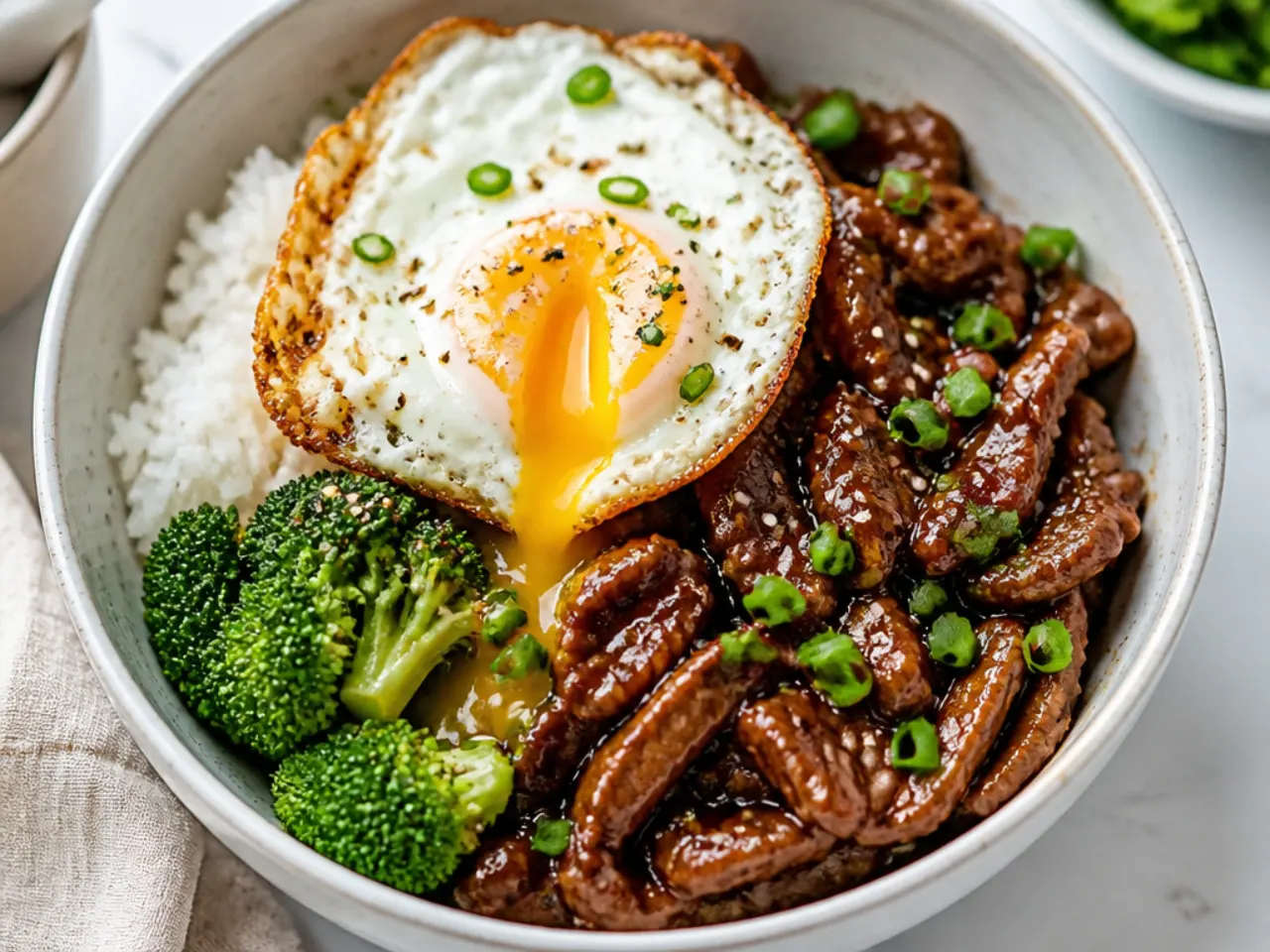
Leftover Mongolian beef makes an outrageous brunch: reheat it in a pan for 3-4 minutes while you fry an egg in 2 tablespoons of hot oil, basting until the edges are lacy and crisp but the yolk stays runny. Slide the egg on top of the beef and rice, and let the yolk run into the sauce like an instant enrichment. A shake of chilli flakes and a few drops of sesame oil finish it. This is the single best use for the one portion of leftovers nobody claimed. It works with the garlic fried rice from idea 10 for the full effect.
18. Coconut Rice Mongolian Beef Bowl
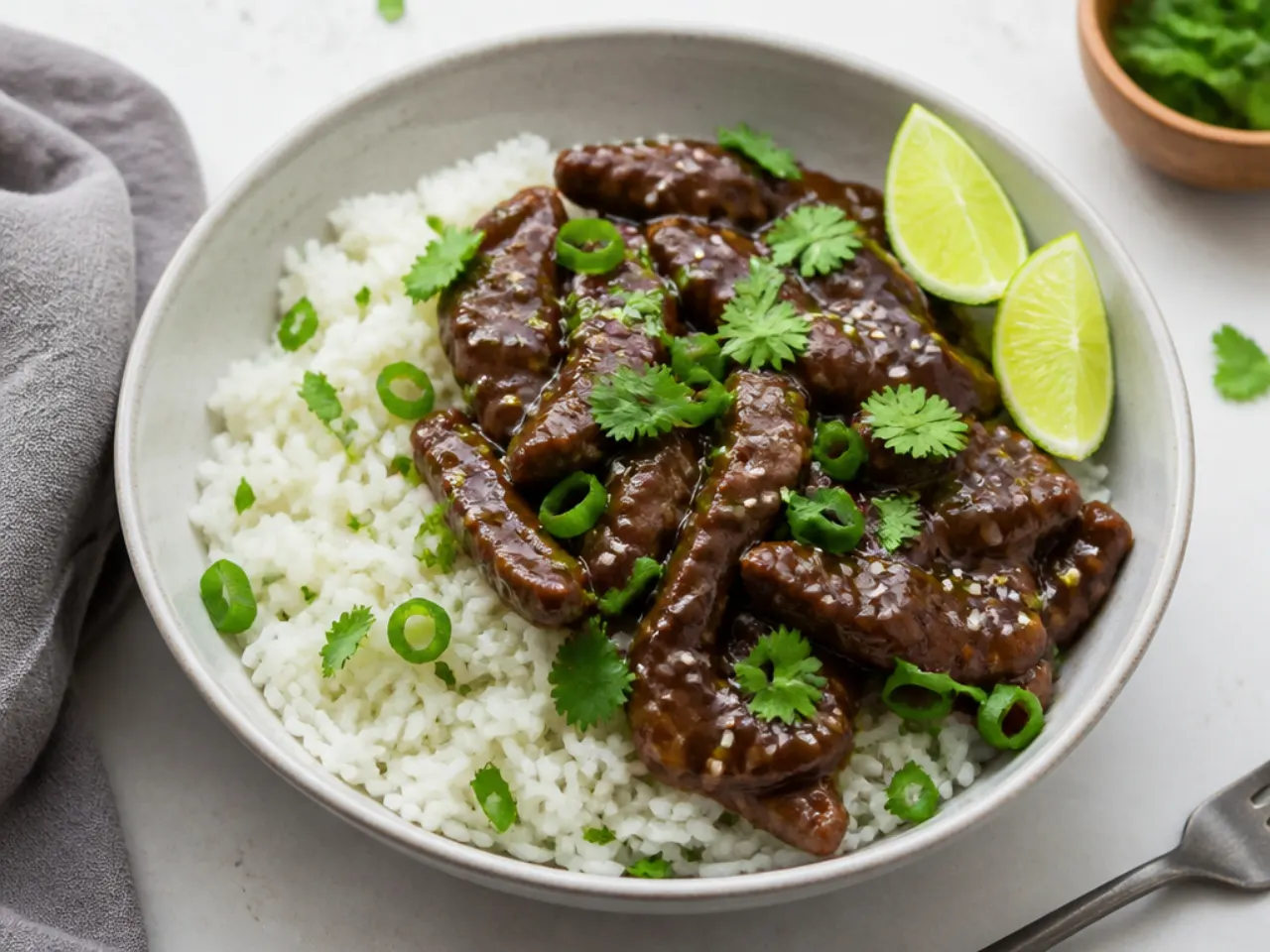
Cook the rice in coconut milk and the whole bowl changes character. Rinse 300 g of jasmine rice until the water runs clear, then simmer it with 400 ml of coconut milk, 100 ml of water and half a teaspoon of salt — lid on, lowest heat, 12 minutes, then rest 10 minutes off the heat. The subtle creamy sweetness softens the salty punch of the soy glaze. Top with fresh coriander and a wedge of lime to lift the richness. This pairing is common in Southeast Asian rice bowls but almost never shows up in Mongolian beef recipes, and it deserves to.
19. Mild Family-Friendly Mongolian Beef Bowl
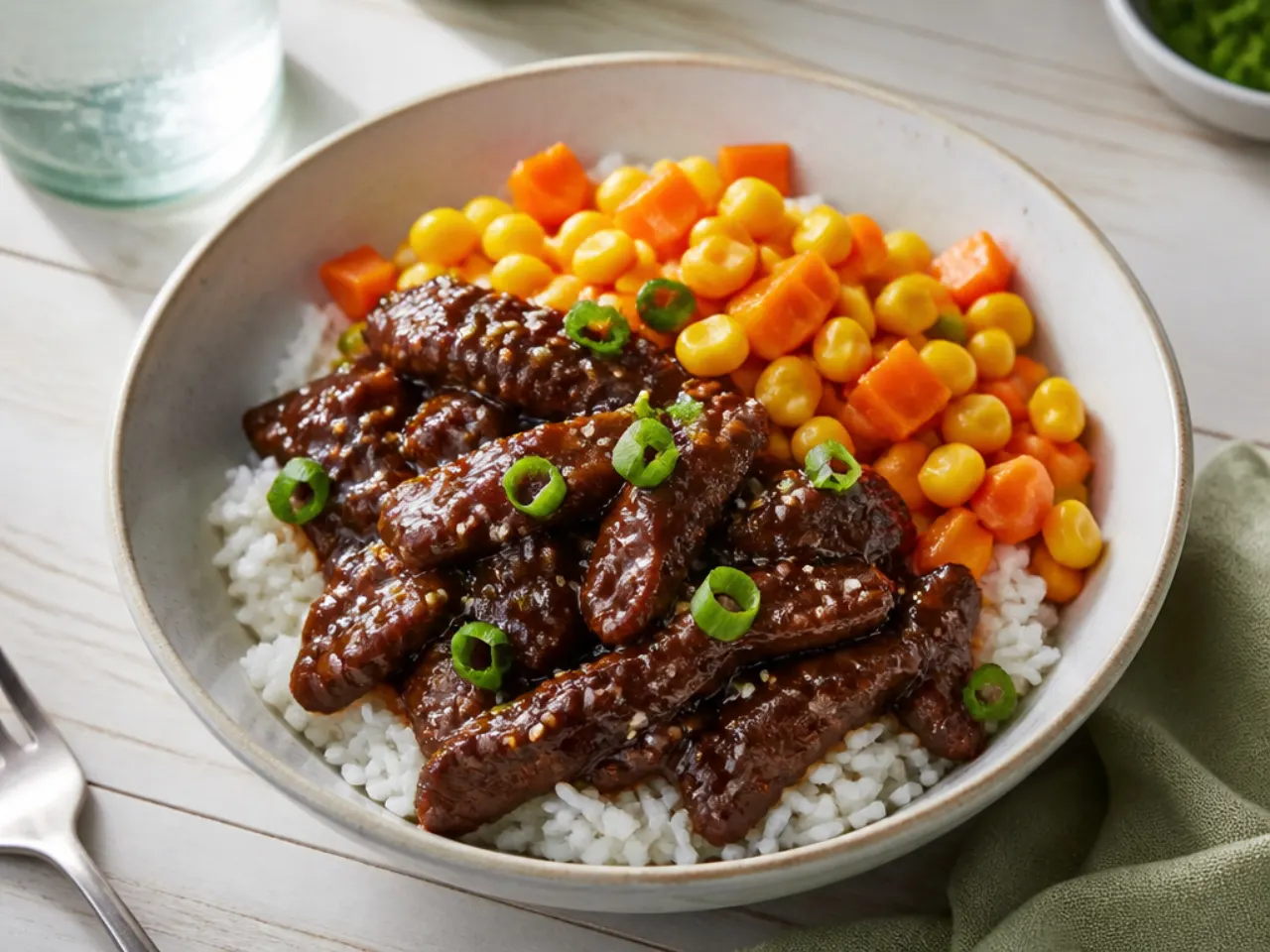
For younger eaters, leave out the chilli flakes entirely, drop the ginger to 1 teaspoon, and stick with low-sodium soy so the sauce is not too salty. Add a handful of sweetcorn and thin carrot coins in the last 2 minutes of cooking — the sweetness makes the bowl instantly kid-approved. Cut the beef into smaller 2-3 cm pieces so little forks can manage it. Let the kids build their own bowls from rice, beef and toppings; involvement is the most reliable trick for fussy eaters. The adults can add chilli oil at the table.
20. Shiitake Mushroom Mongolian Beef Bowl
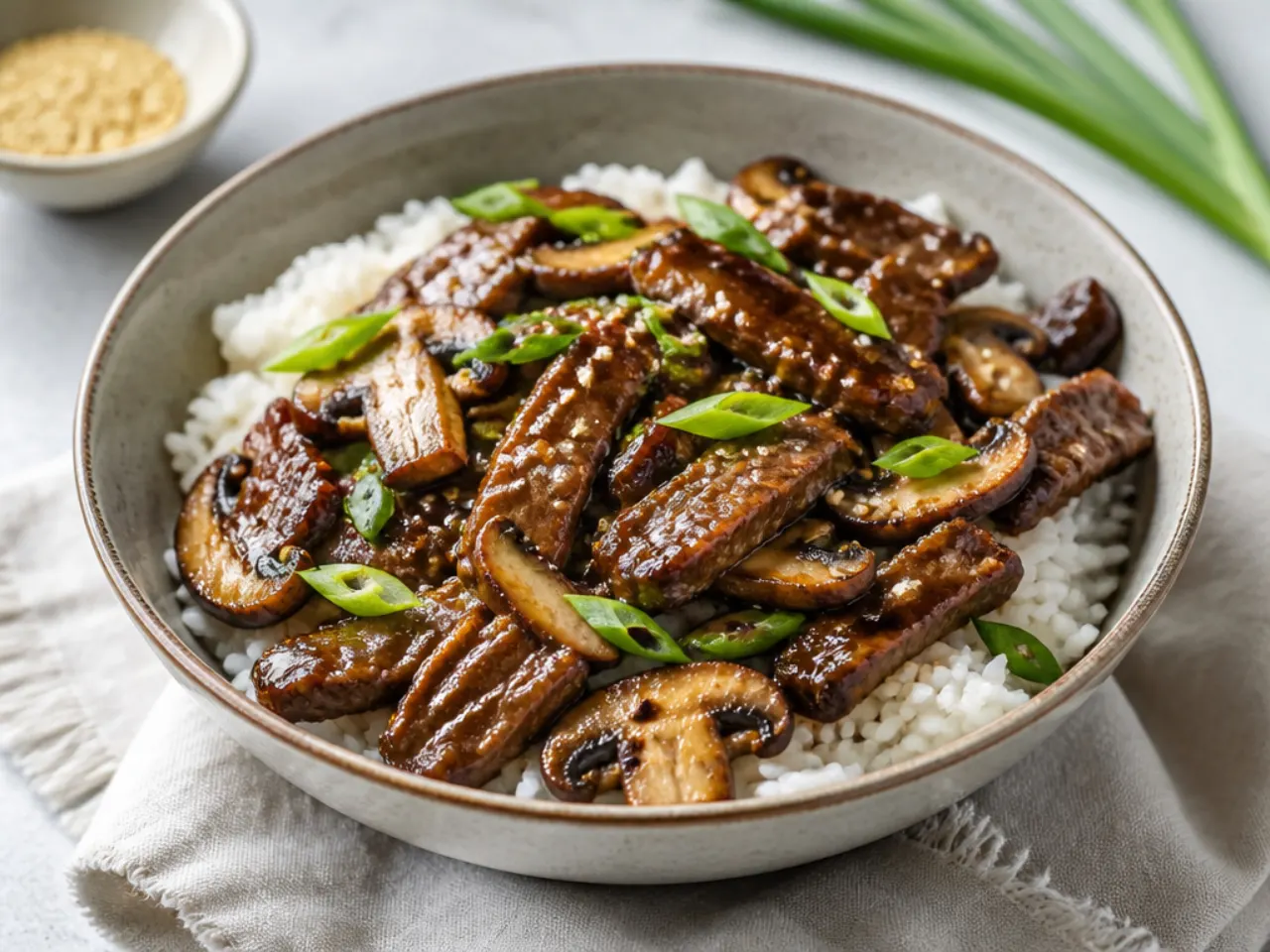
Sear 200 g of sliced shiitake mushrooms in 1 tablespoon of oil over high heat for 4-5 minutes, leaving them undisturbed for the first 2 minutes so they brown properly, then set aside and return them with the beef at the end. Shiitakes are loaded with the same glutamates that make soy sauce taste savoury, so they double the umami of the whole bowl. They also let you stretch 300 g of beef to feed four, cutting the cost without anyone feeling short-changed. Chestnut mushrooms work in a pinch, but shiitakes bring a meatier chew. Do not wash them — wipe with kitchen paper so they sear instead of steaming.
Save this for later 📌
Pin this article to your Pinterest board so the full list is one tap away when you need it.
Save on Pinterest21. Crispy Rice Cake Mongolian Beef Bowl
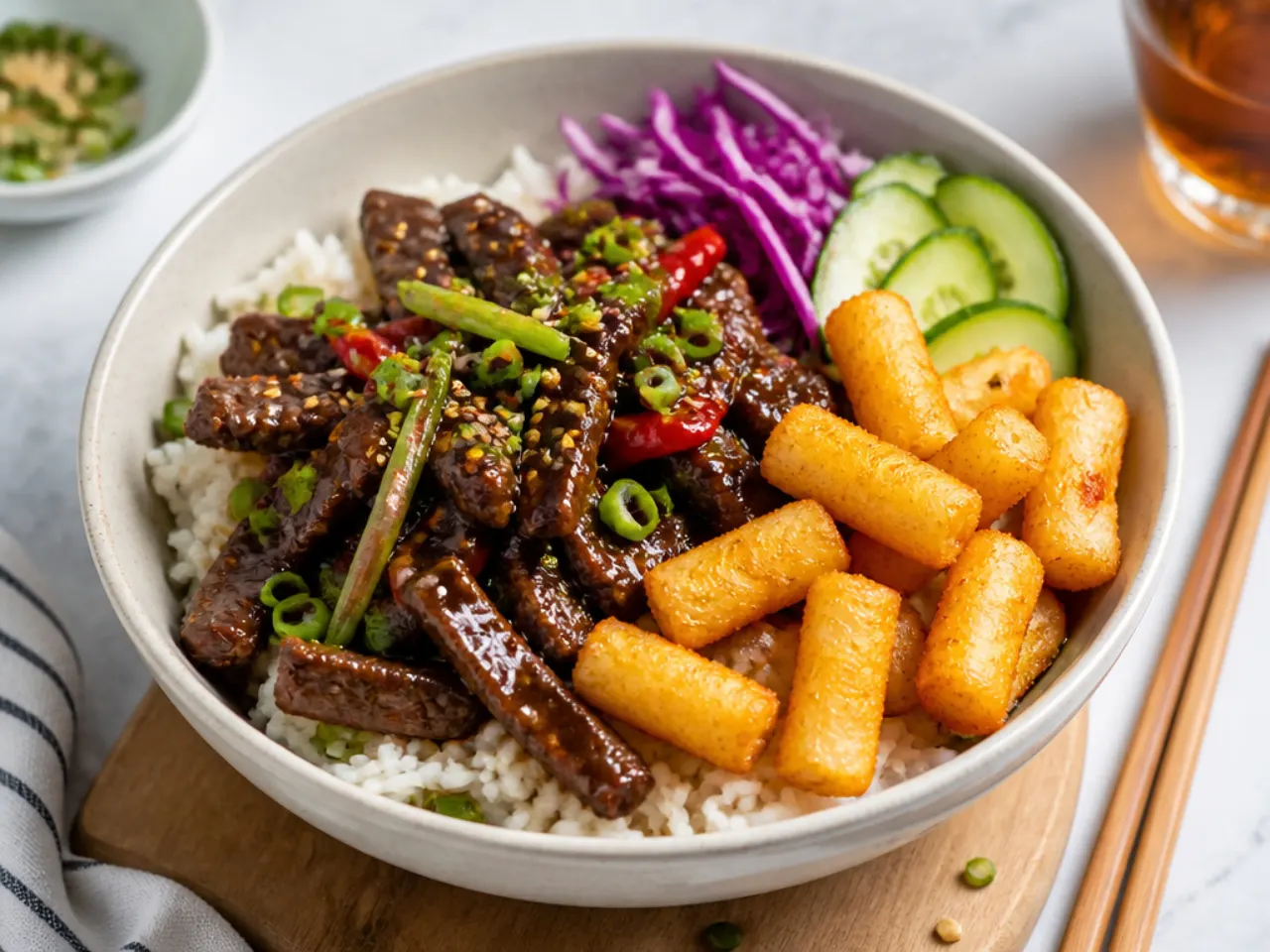
Press 450 g of warm cooked sushi rice into a lined 20 cm square tin, chill for 1 hour, then cut into 8 squares and shallow-fry in 2 tablespoons of oil for 3-4 minutes per side until deep golden. Arrange the crispy rice cakes in the bowl and spoon the beef and sauce over the top. You get three textures at once — shattering crust, chewy rice and silky sauce — which is exactly the trick trendy restaurants charge £16 for. Make the rice cakes a day ahead; they fry even better after a night in the fridge. Cut them small if you want scoopable, canapé-style bites instead.
22. Rainbow Veggie Mongolian Beef Bowl
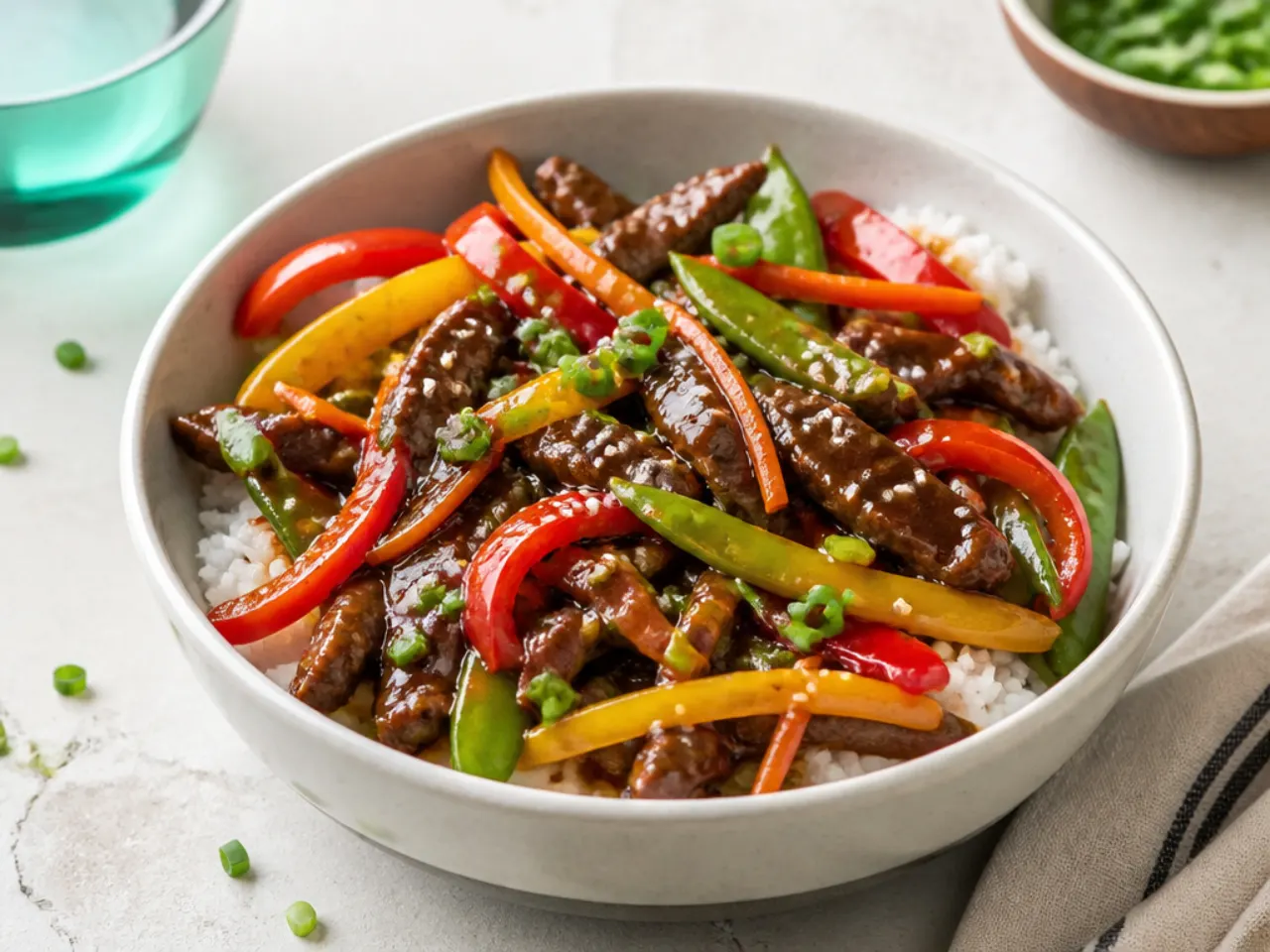
After removing the seared beef, stir-fry 1 sliced red pepper, 1 carrot cut into ribbons with a peeler, and 100 g of sugar snap peas over high heat for 2-3 minutes — no longer, so everything keeps its snap and colour. Add the sauce, then return the beef and toss. The peppers and snap peas stay bright because they never stew in the liquid. You end up with a bowl that covers your veg quota and photographs like a takeaway menu shot. Frozen stir-fry veg mixes work on desperate nights; just fry them from frozen an extra minute.
23. Courgette Noodle Mongolian Beef Bowl
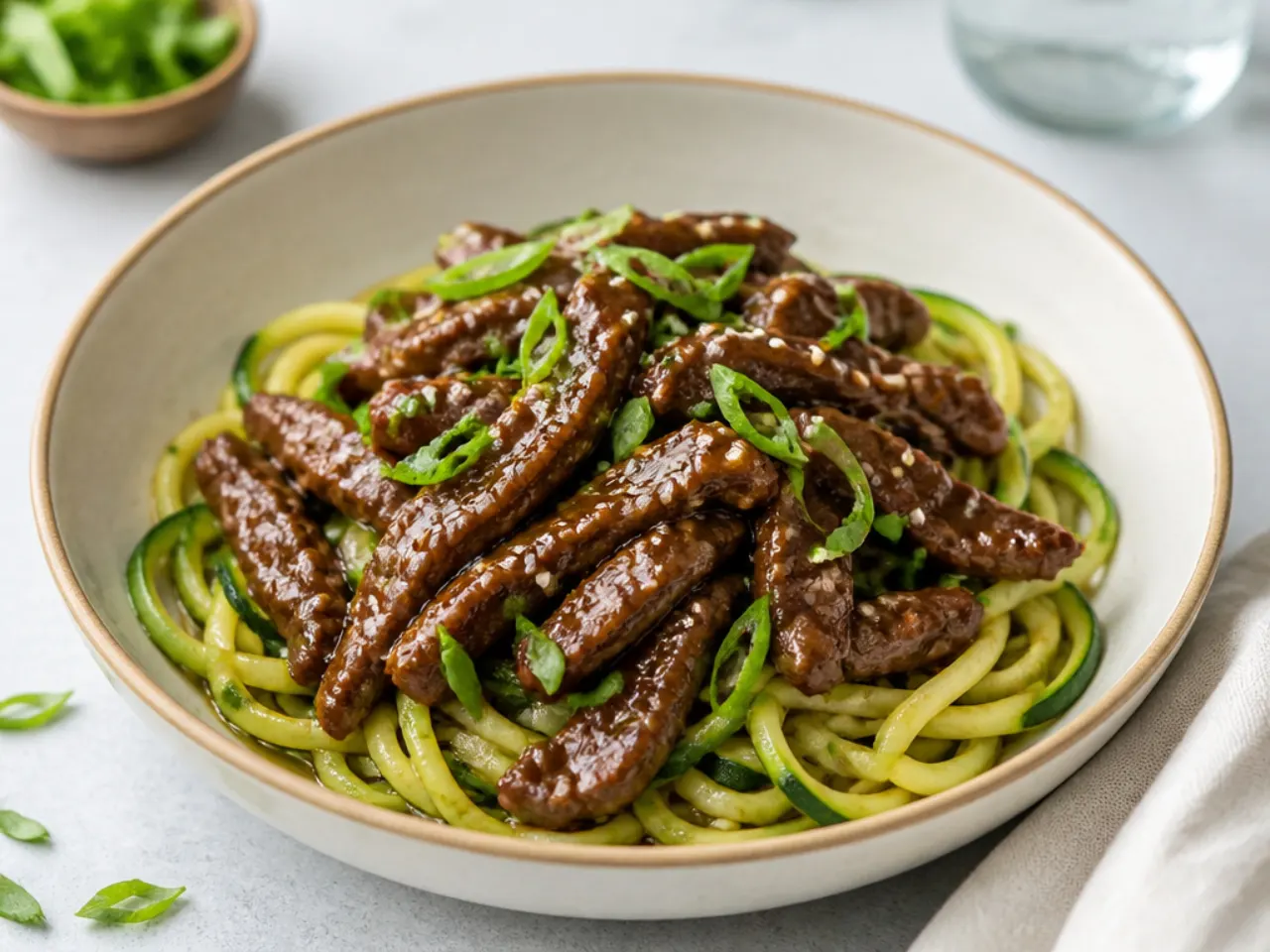
Spiralise 2 large courgettes, toss the noodles with half a teaspoon of salt, and let them drain in a colander for 10 minutes — this stops them flooding your sauce with water. Pat dry, then sauté for just 90 seconds in the hot pan before adding the beef back. Any longer and courgette noodles collapse into mush. The result is a light, fresh bowl at around 350 calories per serving instead of 550-plus with rice. It is the version to reach for when you want the flavour on a lighter week.
24. Sticky Orange Mongolian Beef Bowl
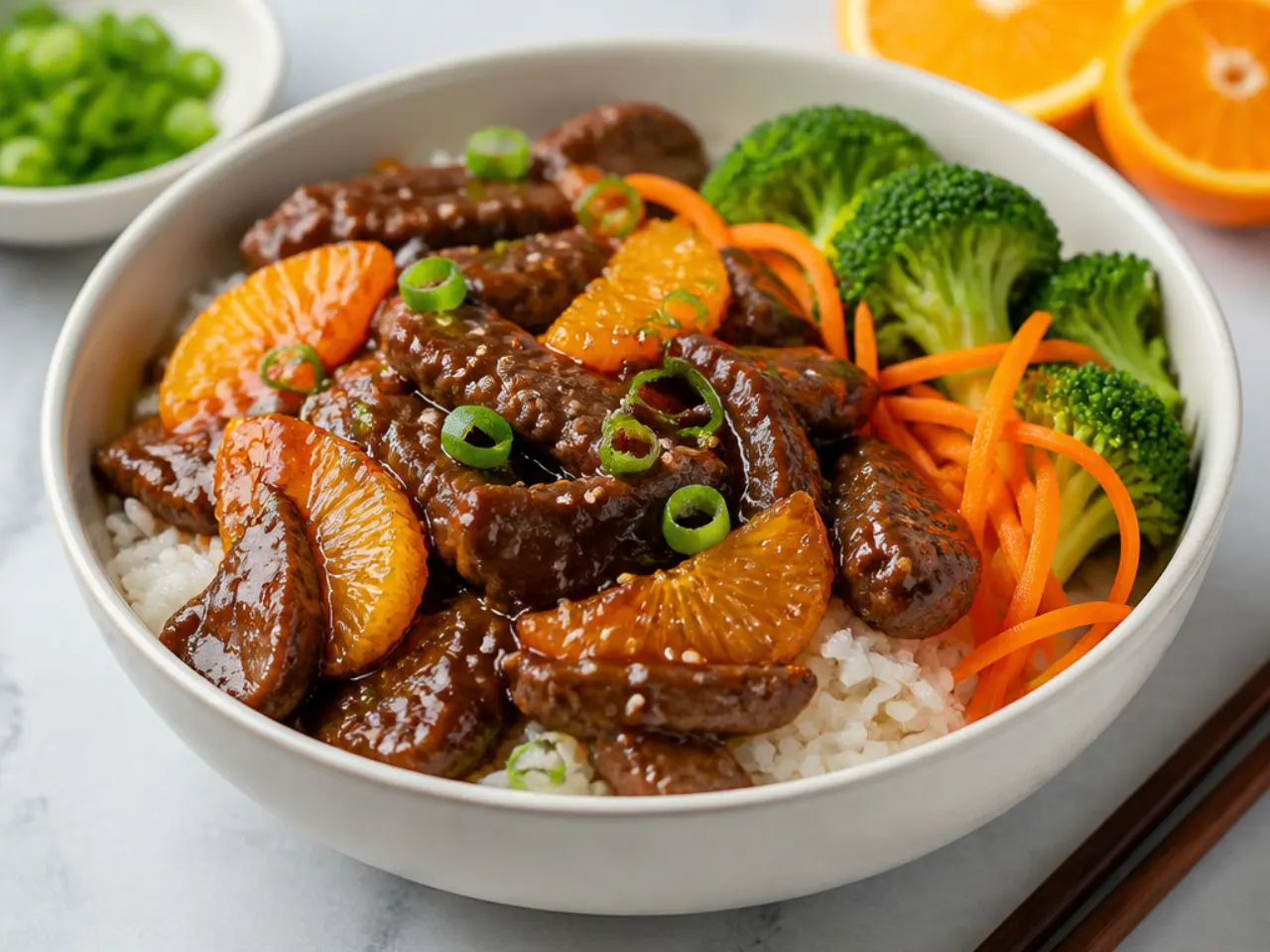
Add the zest of 1 orange and 60 ml of fresh orange juice to the sauce, reducing the water by the same amount. Drop a wide strip of orange peel into the pan while the sauce simmers and fish it out before serving — it perfumes the glaze without bitterness. The citrus turns this into a cross between Mongolian beef and the orange beef on every takeaway menu, and the natural sugars help the sauce lacquer the meat. Balance it with an extra pinch of chilli flakes so it does not tip too sweet. Garnish with a few thin twists of zest.
25. Bibimbap-Style Mongolian Beef Bowl
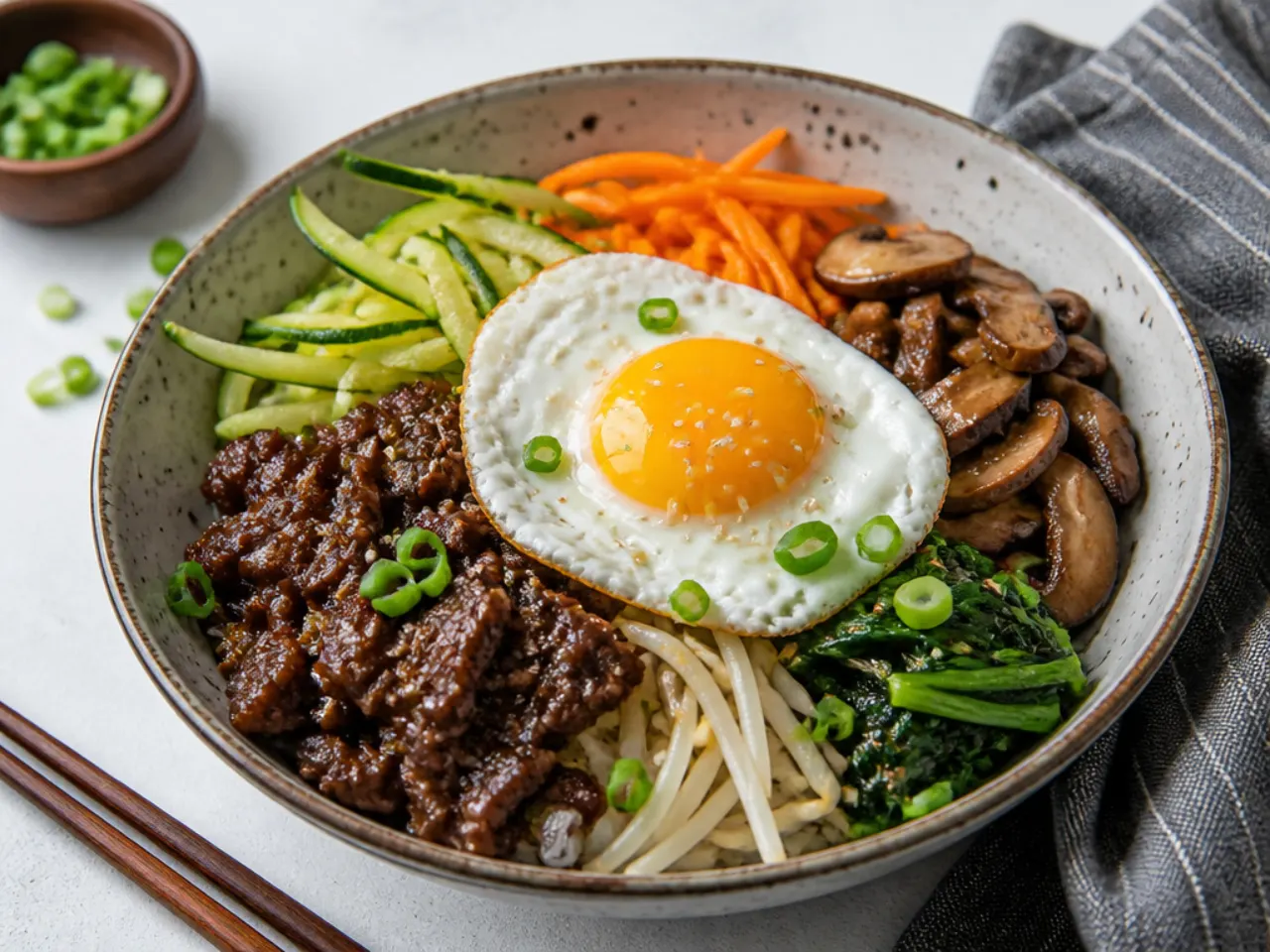
Arrange the components in separate piles over the rice, Korean-style: the beef, spinach wilted for 1 minute with a few drops of sesame oil, carrot matchsticks, blanched beansprouts and sliced cucumber. Crown it with a fried egg and a teaspoon of gochujang on the side, then mix everything together at the table. Keeping the elements separate means each keeps its own texture and temperature until the moment you eat. It looks spectacular for barely any extra work — most of the toppings take 2 minutes each. This is the bowl to make when you are feeding someone you want to impress on a Tuesday.
Save this for later 📌
Pin this article to your Pinterest board so the full list is one tap away when you need it.
Save on Pinterest26. Double Chilli Szechuan-Style Mongolian Beef Bowl
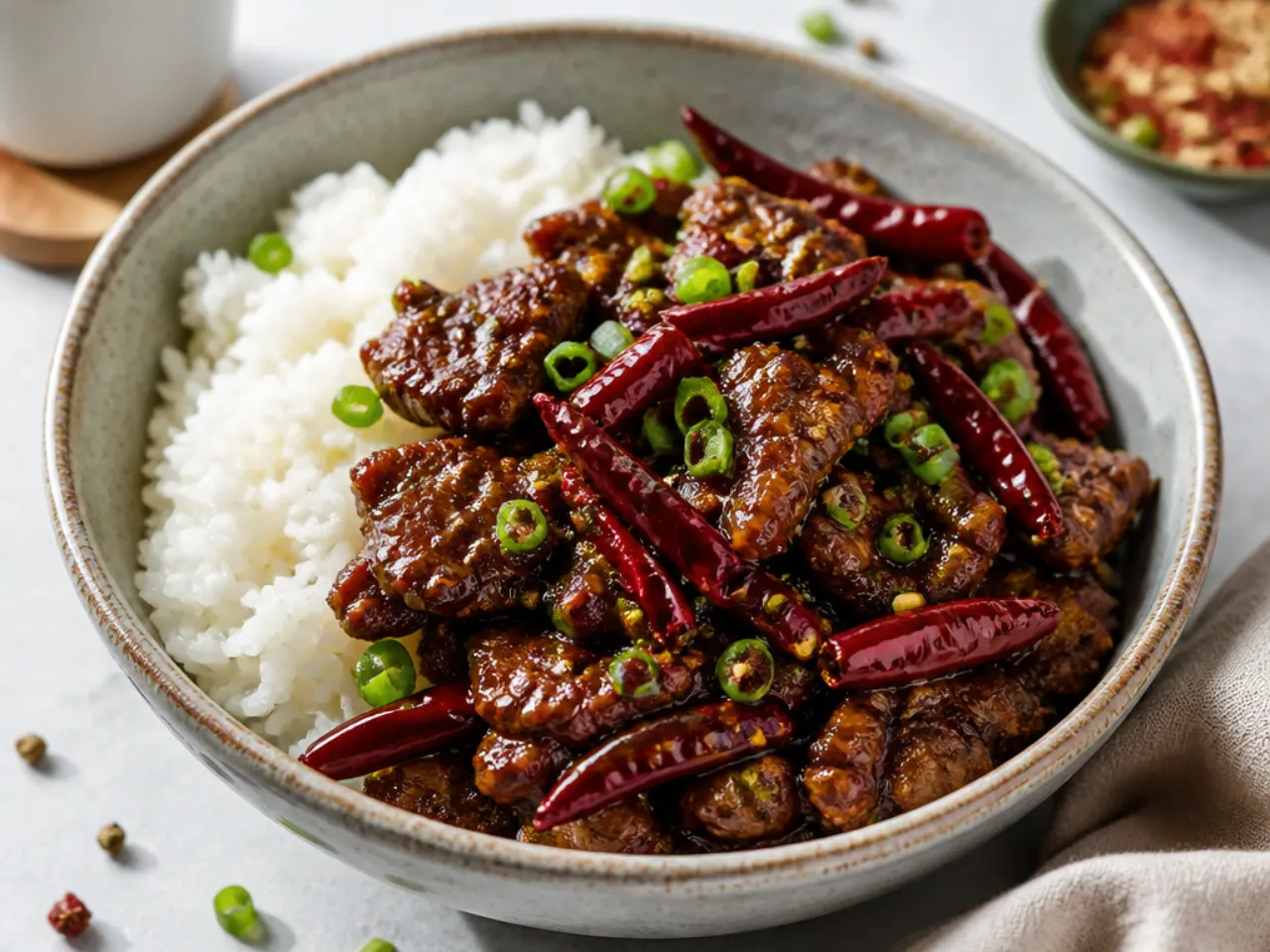
Bloom 6-8 whole dried red chillies and half a teaspoon of crushed Szechuan peppercorns in the oil for 30 seconds before the garlic and ginger go in — this is how The Woks of Life builds heat into the restaurant version. The dried chillies infuse smoky warmth without blowing your head off (warn people not to eat them whole), while the Szechuan peppercorns add their signature tingle. Keep everything else in the base recipe the same. The numbing-hot edge against the sweet glaze is seriously addictive. Serve with plain rice and something cooling like cucumber on the side.
27. Pak Choi and Sesame Mongolian Beef Bowl
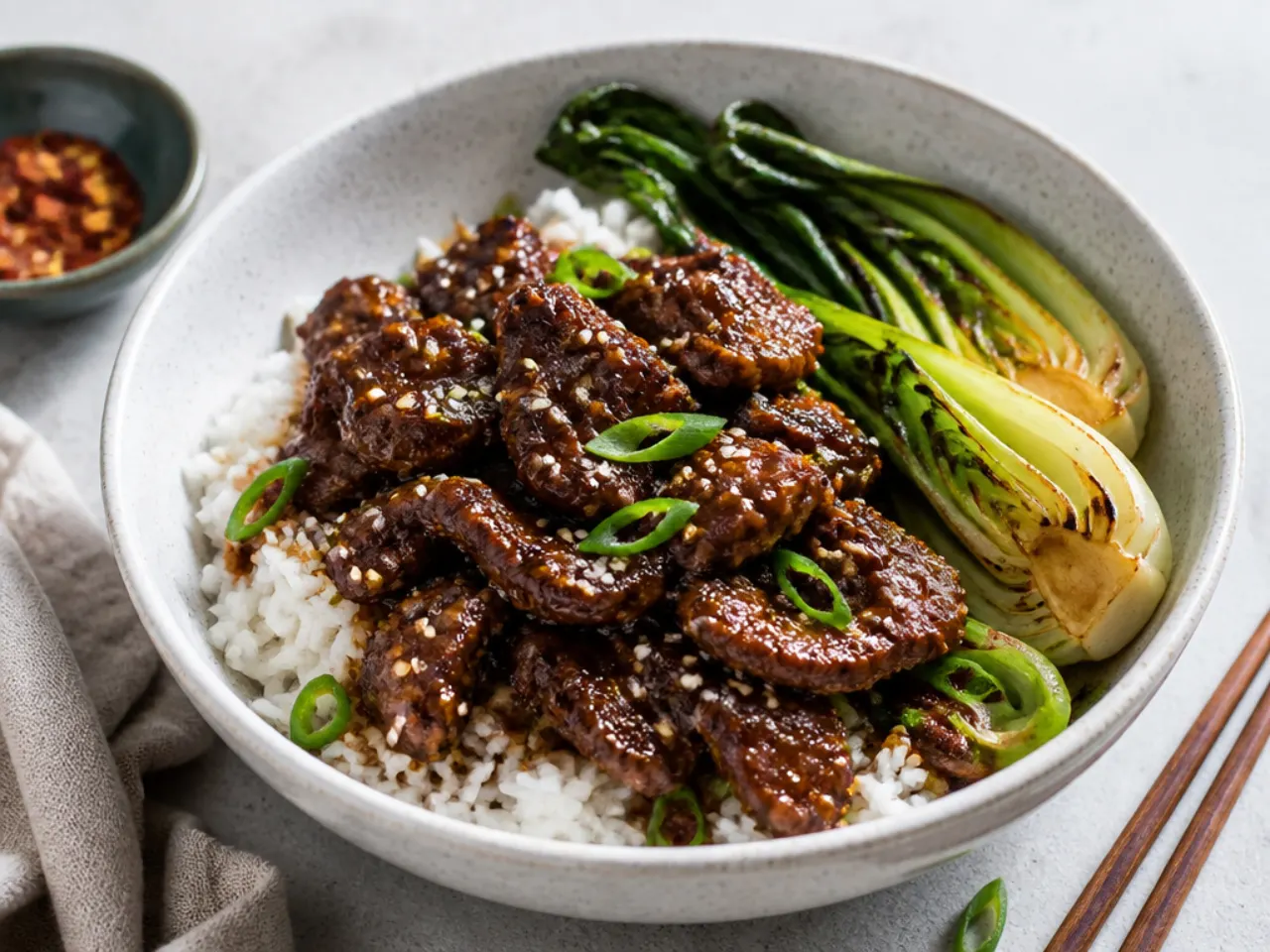
Halve 2 heads of pak choi lengthways and sear them cut-side down in the hot pan for 2 minutes until charred at the edges, then add a splash of water, cover for 1 minute to steam the stems tender, and set aside. Lean the pak choi halves against the rice with the beef in the centre and finish the whole bowl with a teaspoon of toasted sesame oil. The pak choi's mild, juicy crunch is a gentler partner than broccoli and looks elegant on the plate. The char adds a subtle smokiness that plays off the sweet sauce. Baby bok choy or choi sum work exactly the same way.
28. Retro Crispy Chilli Beef Bowl
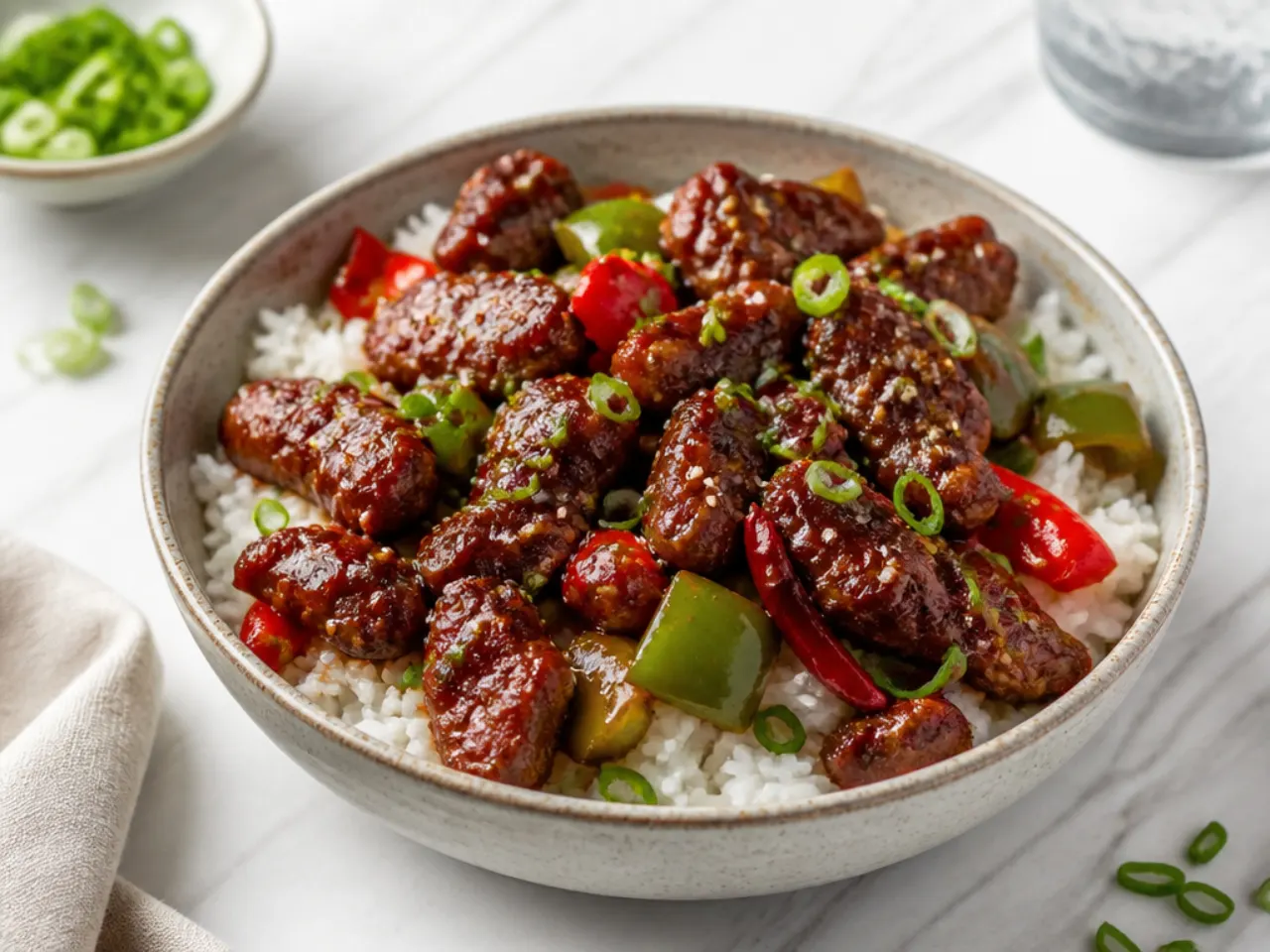
This is the British-Chinese takeaway classic given the bowl treatment. Slice the beef thinner — about 3 mm — coat it twice in cornflour (dip in beaten egg between coats), and shallow-fry in 1 cm of oil at 180°C (350°F) for 2-3 minutes until genuinely crunchy. Add 1 tablespoon of sweet chilli sauce and 1 teaspoon of white vinegar to the base sauce for that familiar sweet-sour tang. Toss the beef through the sauce at the very last second so the crunch survives to the table. Pile over rice with shredded spring onion — pure 1990s takeaway nostalgia done properly.
29. Mongolian Beef Sushi Bowl
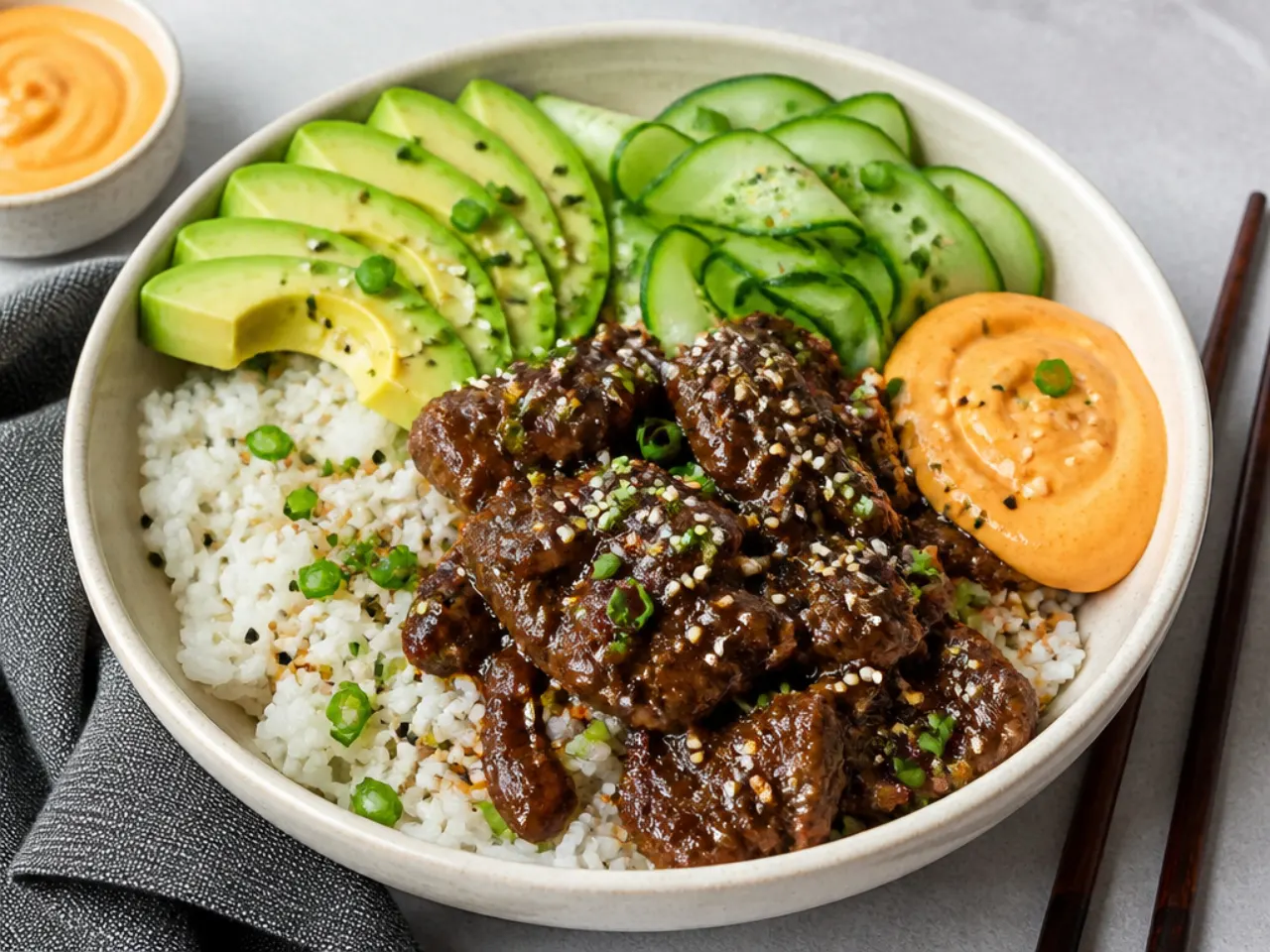
Season 450 g of warm cooked sushi rice with 2 tablespoons of rice vinegar, 1 tablespoon of sugar and half a teaspoon of salt, folded through gently. Top with the beef, sliced avocado, cucumber half-moons and a drizzle of sriracha mayo (2 tablespoons mayonnaise mixed with 1 teaspoon sriracha). Finish with snipped nori strips and sesame seeds. The tangy rice and cool, creamy avocado against the hot sticky beef makes this eat like a deconstructed sushi roll. It is a fusion angle you will not find on the takeaway-copycat blogs, and it converts sushi lovers instantly.
30. Date-Night Garlic Butter Mongolian Beef Bowl
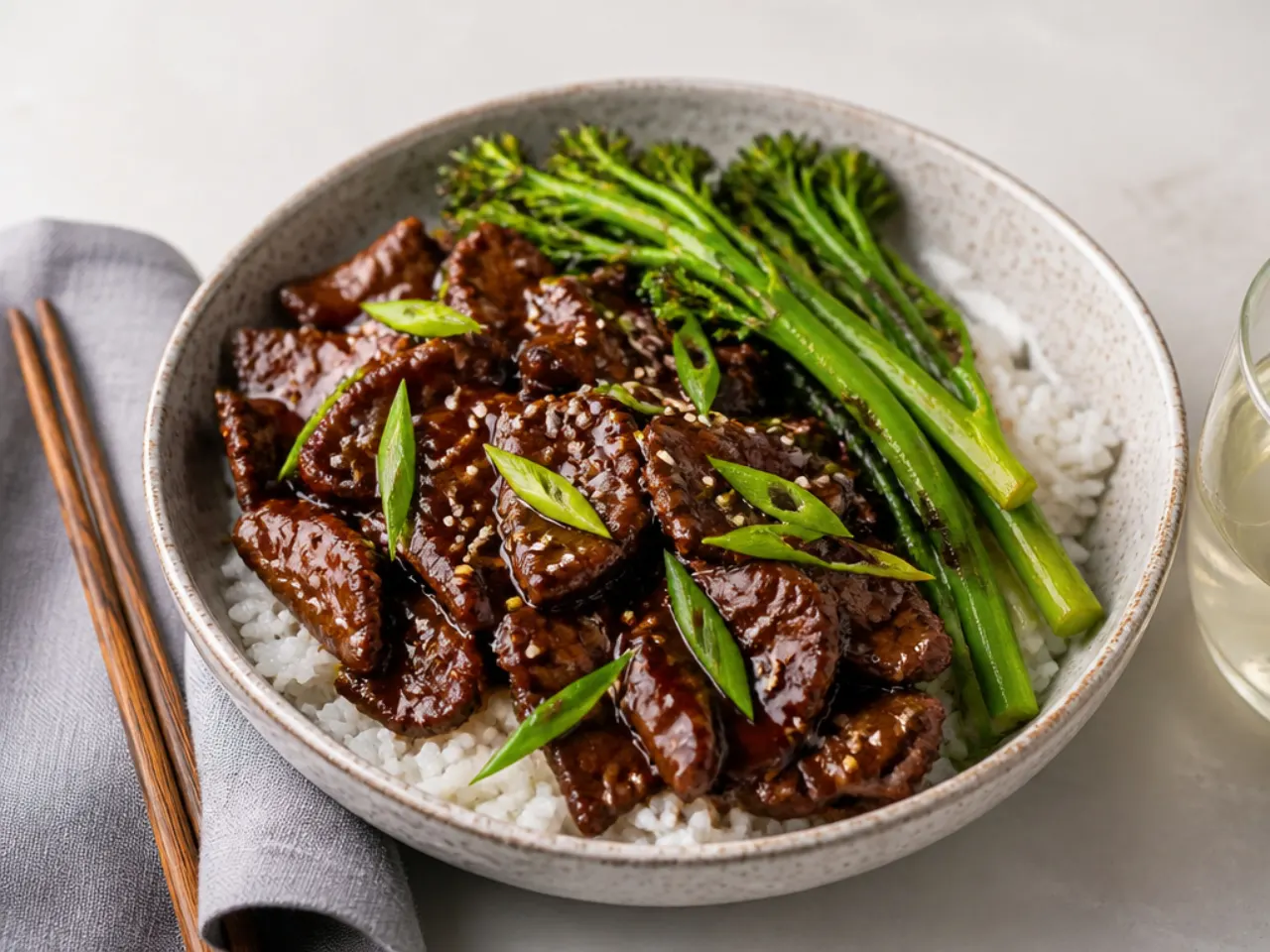
Make the base recipe with sirloin, and once the sauce has thickened, pull the pan off the heat and swirl in 20 g of cold butter one cube at a time. The butter emulsifies into the glaze, giving it a glossy, rounded richness — the same mounting technique French kitchens use for pan sauces. Fan the beef over the rice, lean a few spears of steamed tenderstem broccoli alongside, and finish with sesame seeds and micro herbs if you have them. It takes the dish from weeknight dinner to restaurant plate for the cost of a knob of butter. Serve with something cold and crisp to drink.
Pro Tips
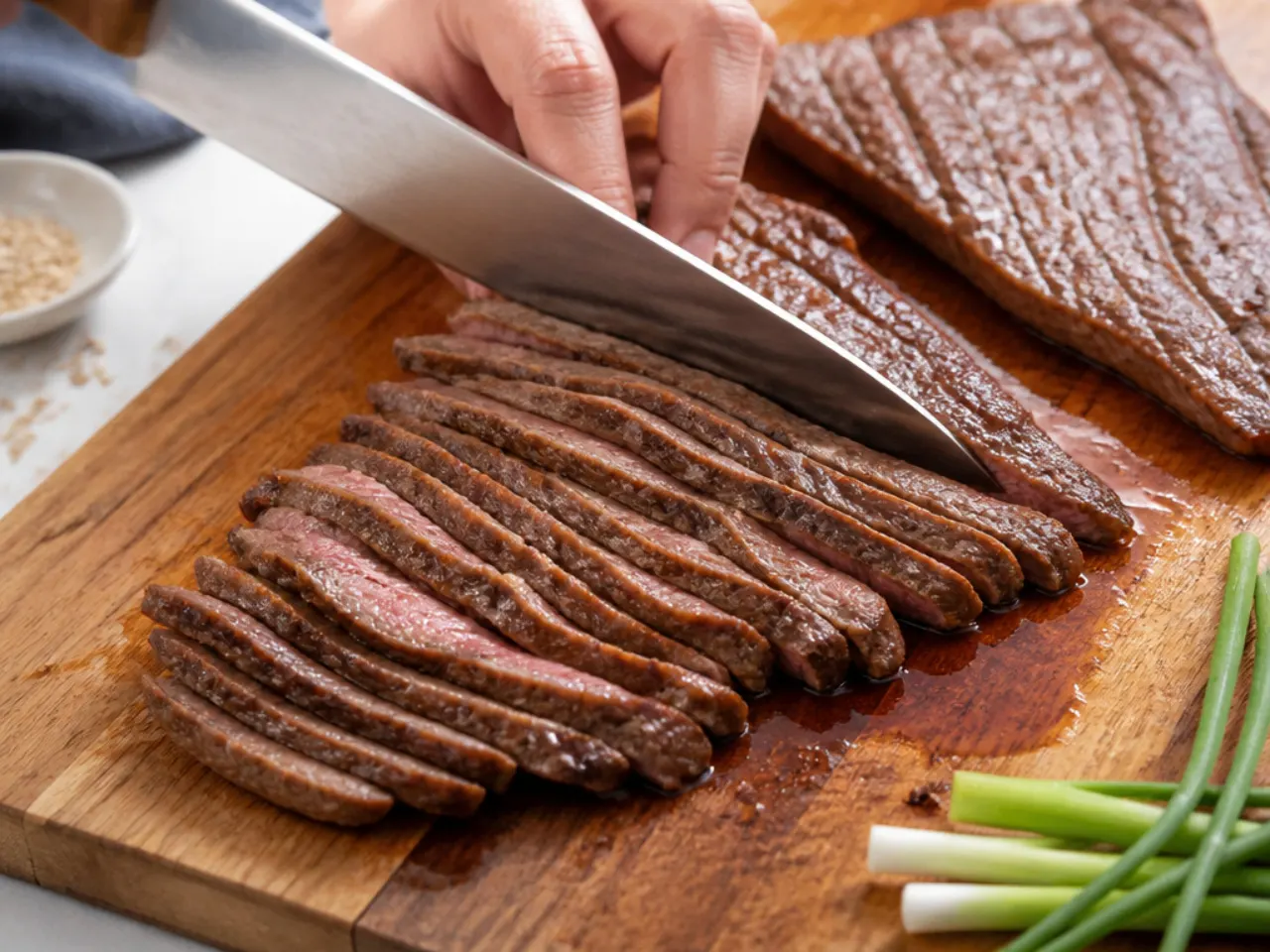
Freeze the beef for 30-45 minutes before slicing — firm meat cuts into clean, even 5 mm strips instead of ragged ones. Always slice against the grain: look for the direction of the muscle fibres and cut across them, or the beef will be chewy no matter how well you cook it. Sear in two batches in a properly hot pan; crowding drops the temperature and the beef steams grey instead of crisping. Let the cornflour-coated beef rest for 10 minutes before frying so the coating hydrates and sticks. Use low-sodium soy sauce — with regular soy the reduced glaze turns unpleasantly salty. The sauce is done when it coats the back of a spoon and a finger dragged through leaves a clear line.
Serving Suggestions
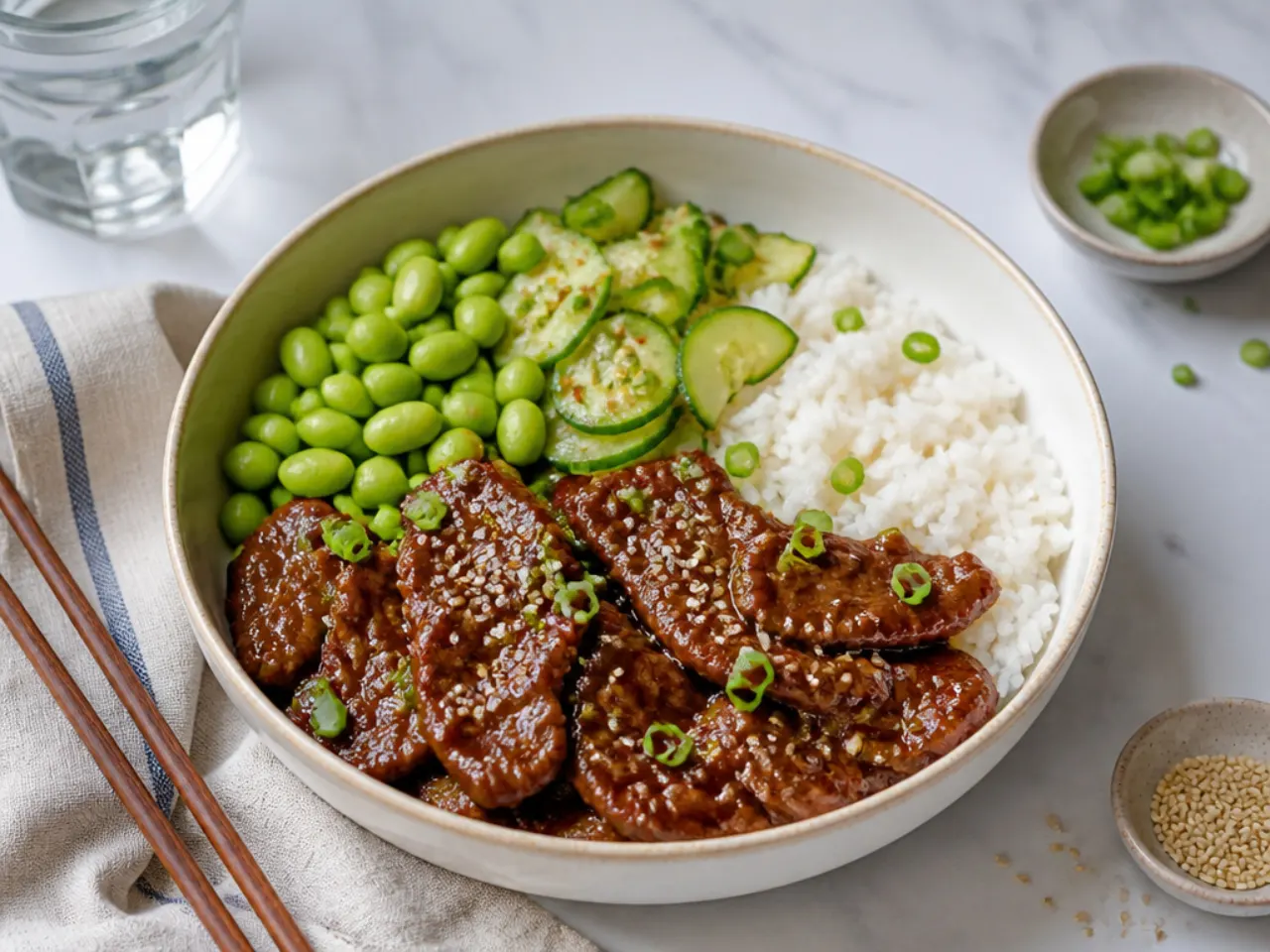
Steamed jasmine rice is the standard base — allow 75 g of uncooked rice per person and rinse it before cooking for separate, fluffy grains. Round out the meal with a cucumber salad (thinly sliced cucumber, 1 tablespoon rice vinegar, a pinch of sugar and salt) or steamed edamame with flaky salt; both cut the richness. For a bigger spread, add vegetable spring rolls or prawn crackers on the side. Garnish every bowl with sliced spring onion greens and toasted sesame seeds at minimum — they add freshness and crunch for almost zero effort. Chilled green tea, a crisp lager or a dry Riesling all stand up nicely to the sweet-salty glaze.
Storage and Reheating
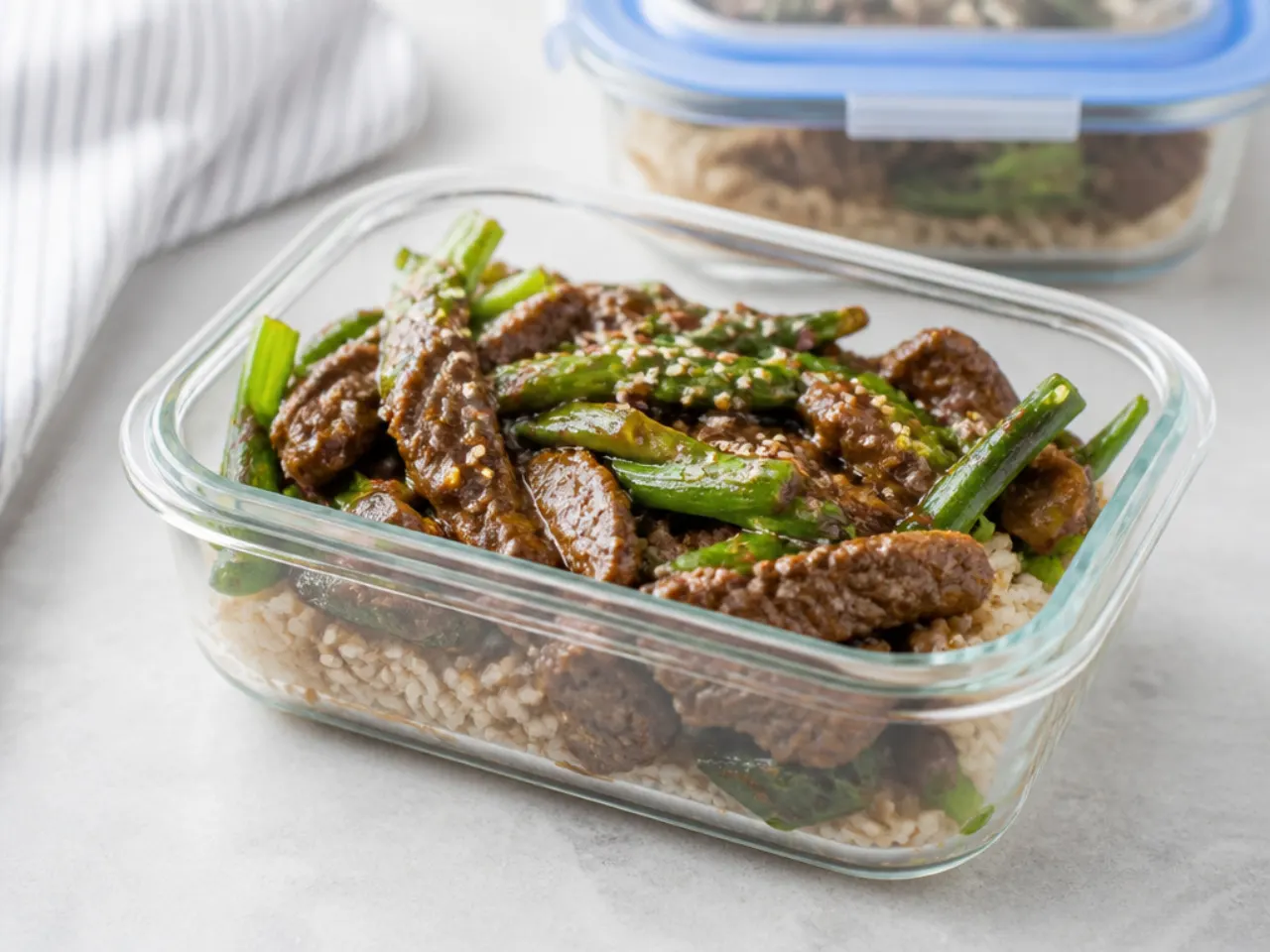
Cool leftovers within an hour, then store the beef and rice in separate airtight containers in the fridge for up to 4 days — rice cooled quickly and reheated until piping hot (74°C / 165°F) is perfectly safe. Reheat the beef in a frying pan over medium heat with a splash of water for 3-4 minutes to loosen the glaze, or microwave covered for 2 minutes, stirring halfway. The beef and sauce freeze well for up to 3 months; thaw overnight in the fridge before reheating. Do not freeze the courgette, cucumber or slaw variations — the vegetables collapse on thawing. To revive crispy edges, give reheated beef 3-4 minutes in an air fryer at 180°C (350°F) instead of the microwave.
The Recipe
The Master Recipe
20 min
15 min
35 min
4
Beginner
Ingredients 4 Person(s)
Directions
Step 1: Slice and Coat the Beef
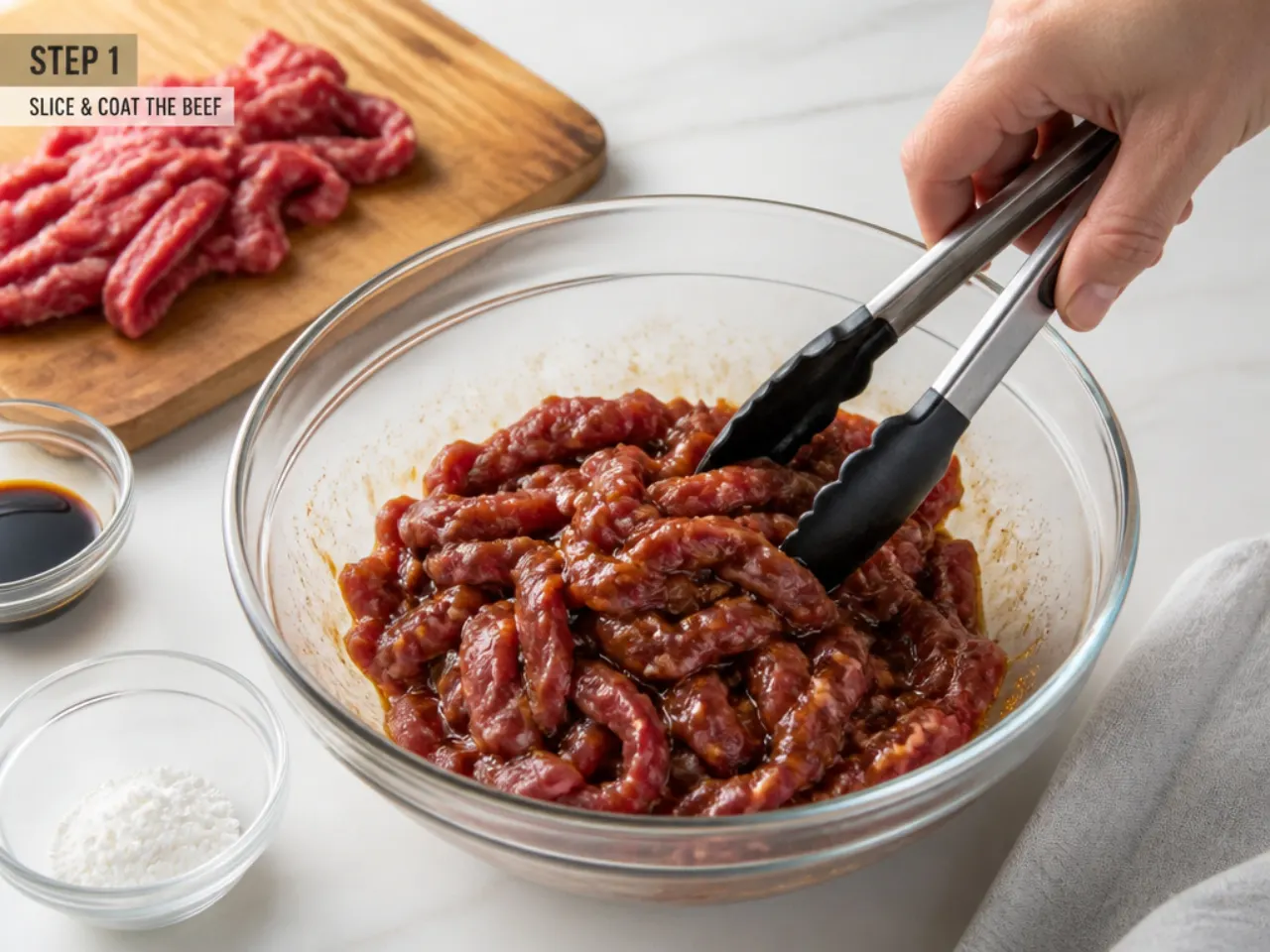
Freeze the steak for 30-45 minutes until firm, then slice it 5 mm (1/4 inch) thick against the grain — look for the direction of the muscle fibres and cut across them. Toss the slices with the cornflour until every piece is lightly dusted, shaking off any excess. Set aside for 10 minutes so the coating sticks during frying.
Step 2: Mix the Sauce
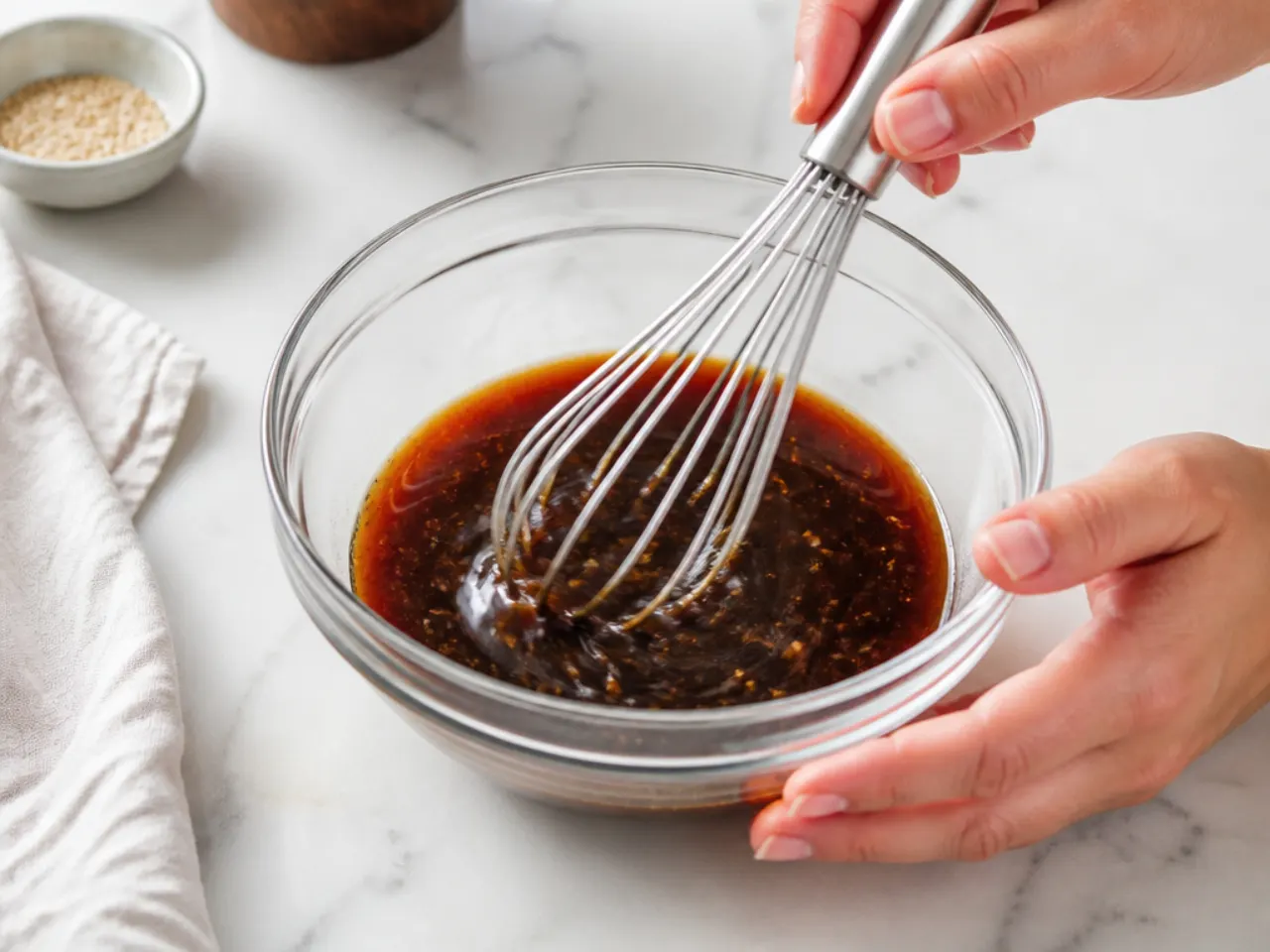
Stir the soy sauce, water and brown sugar together in a jug until the sugar has completely dissolved. Keep it next to the hob along with the minced garlic, grated ginger and spring onions — once the beef starts cooking, everything moves fast.
Step 3: Sear the Beef in Batches
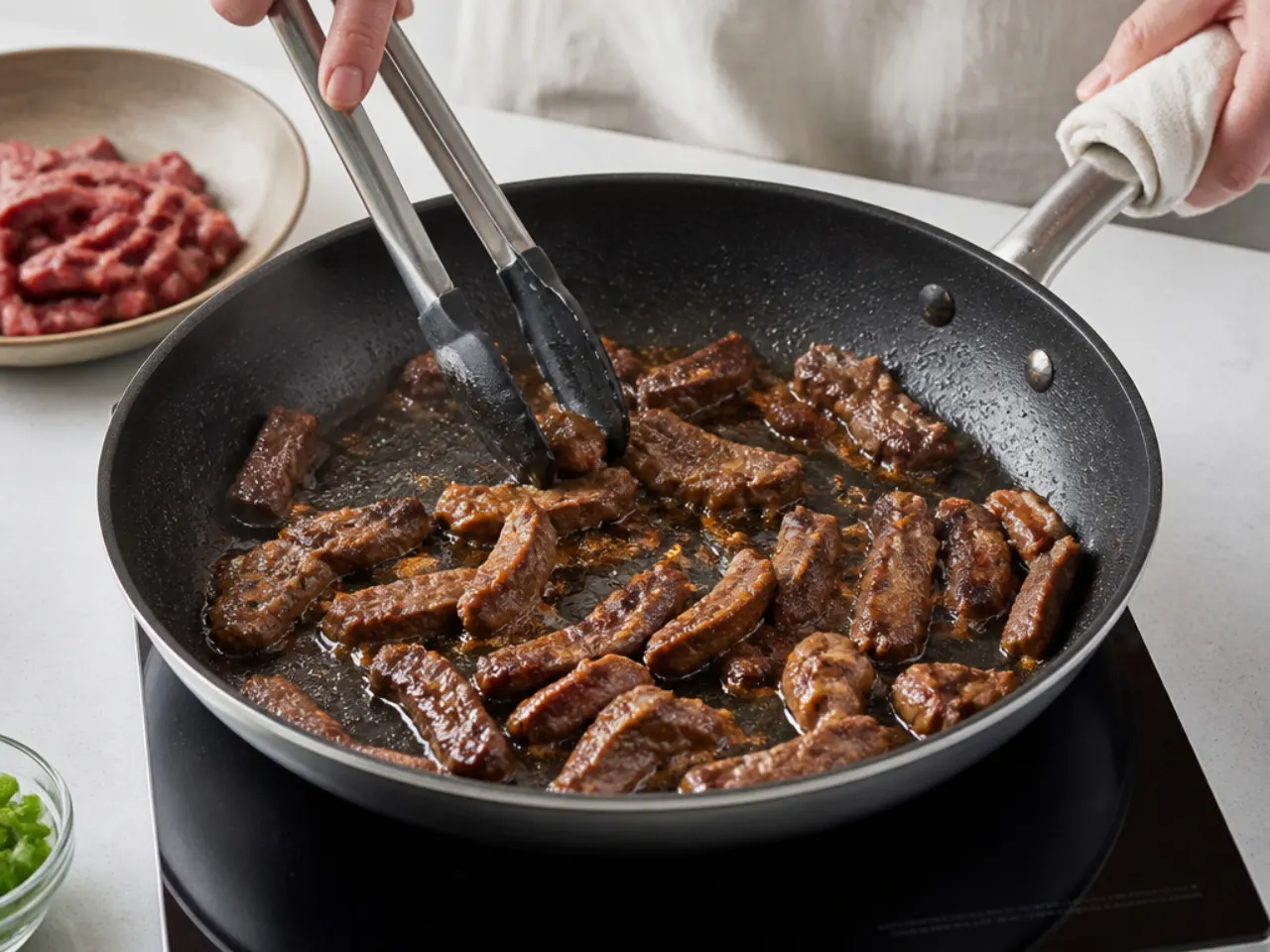
Heat the 3 tablespoons of oil in a large frying pan or wok over high heat until shimmering. Add half the beef in a single layer and sear for 1-2 minutes per side until the edges are browned and crisp, then transfer to a plate. Repeat with the remaining beef — crowding the pan makes it steam instead of crisp.
Step 4: Cook the Aromatics
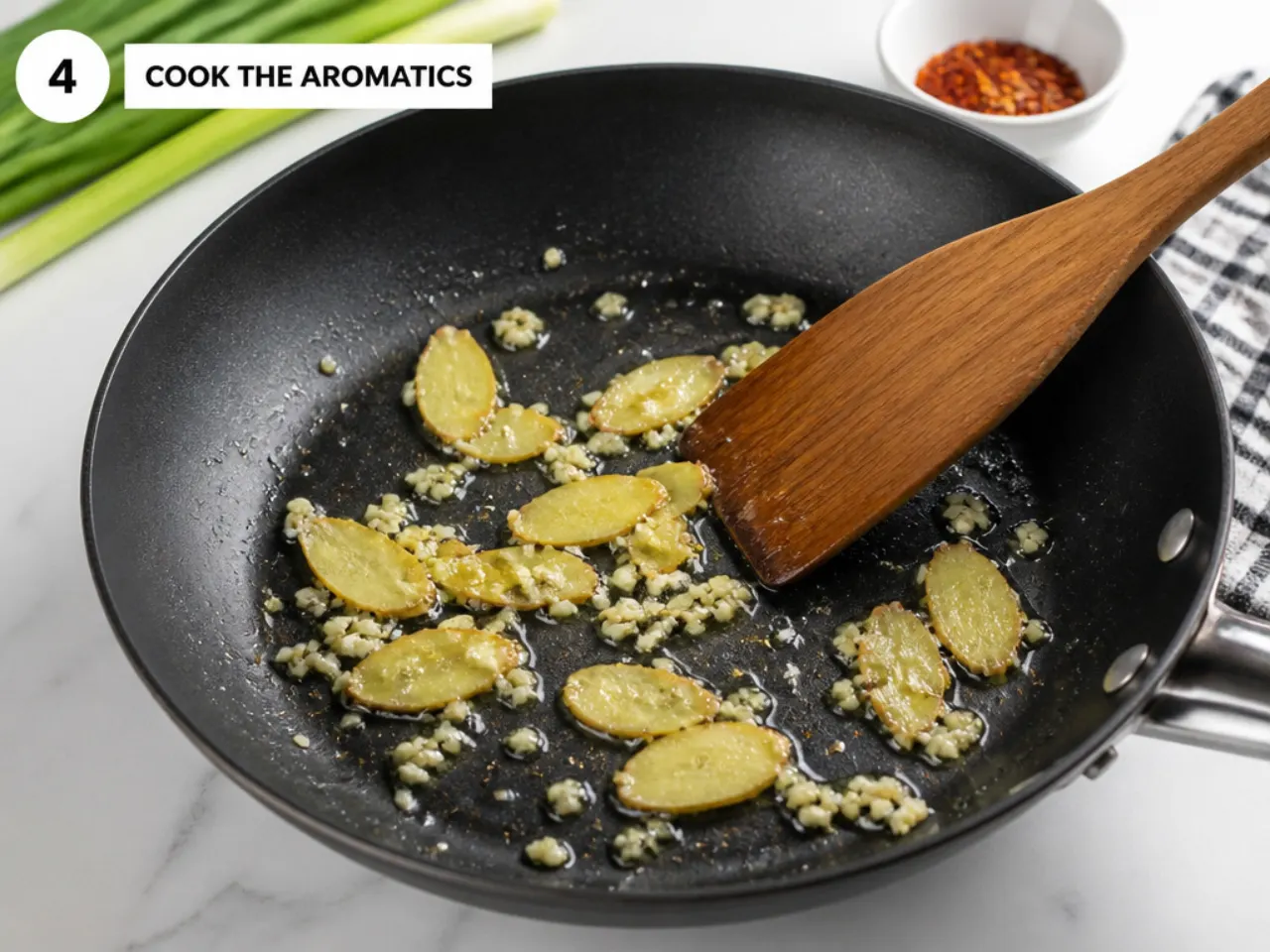
Reduce the heat to medium, adding the extra teaspoon of oil if the pan looks dry. Add the garlic, ginger and chilli flakes (if using) and stir constantly for 30 seconds until fragrant. Do not let the garlic brown or it will turn the sauce bitter.
Step 5: Simmer the Sauce
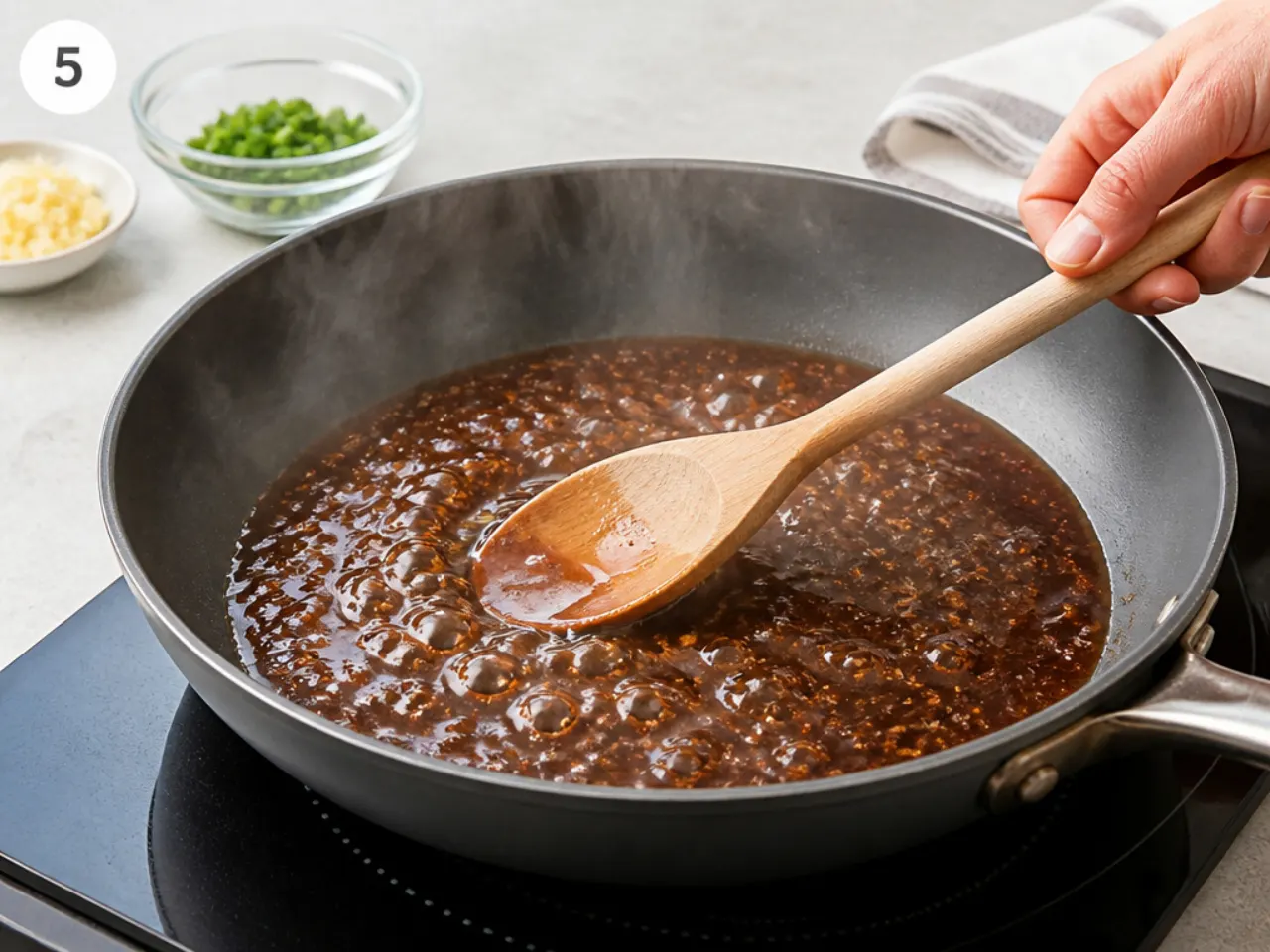
Pour in the sauce mixture and scrape up any browned bits from the base of the pan. Simmer for 2-3 minutes until it thickens slightly and turns syrupy — it should coat the back of a spoon, and a finger dragged through should leave a clear line.
Step 6: Return the Beef and Spring Onions
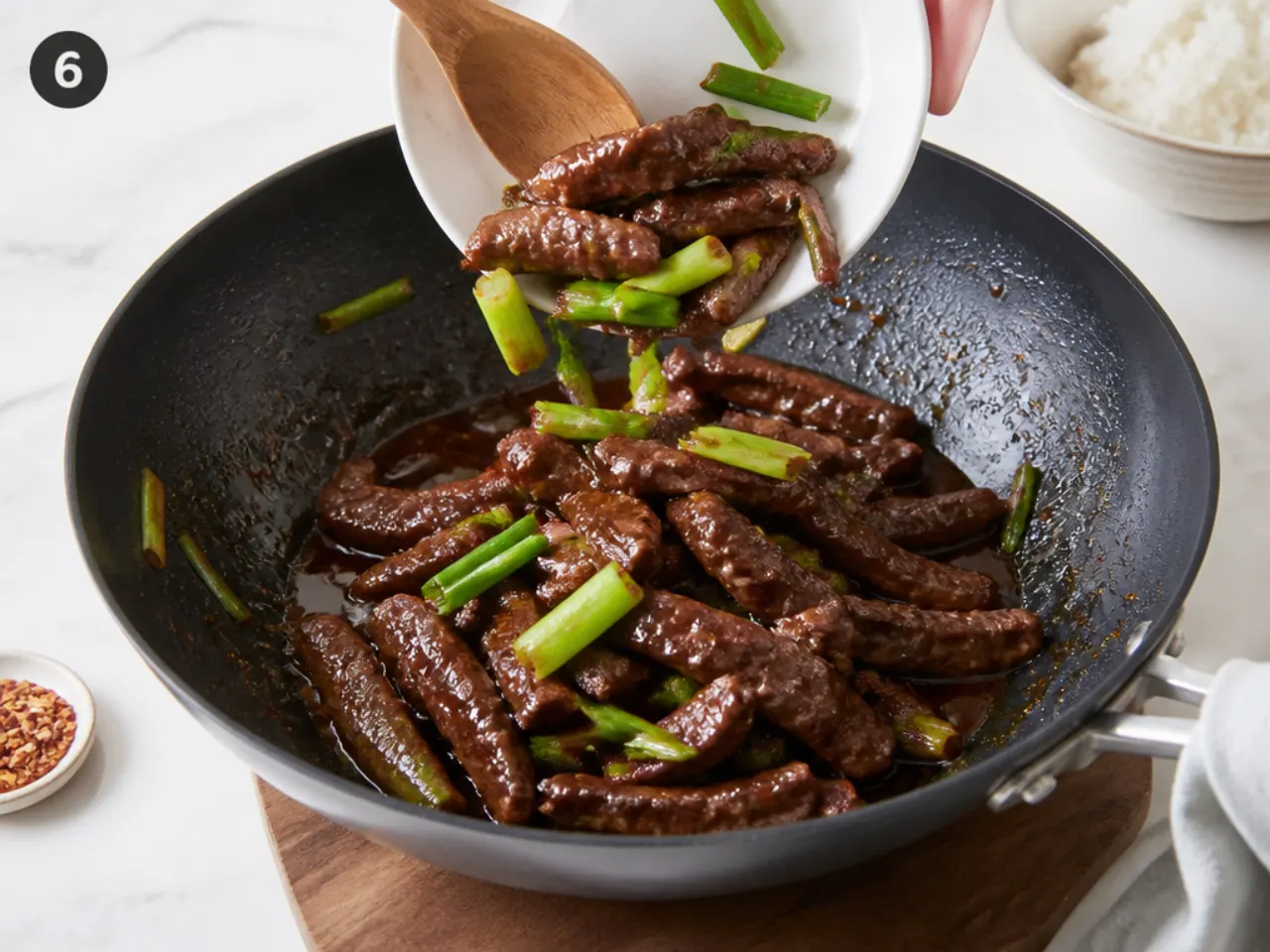
Add the seared beef and any resting juices back to the pan along with the spring onions. Toss for 1-2 minutes until every piece is glazed and almost no liquid pools in the pan — the residual cornflour on the beef will finish thickening the sauce.
Step 7: Build the Bowls
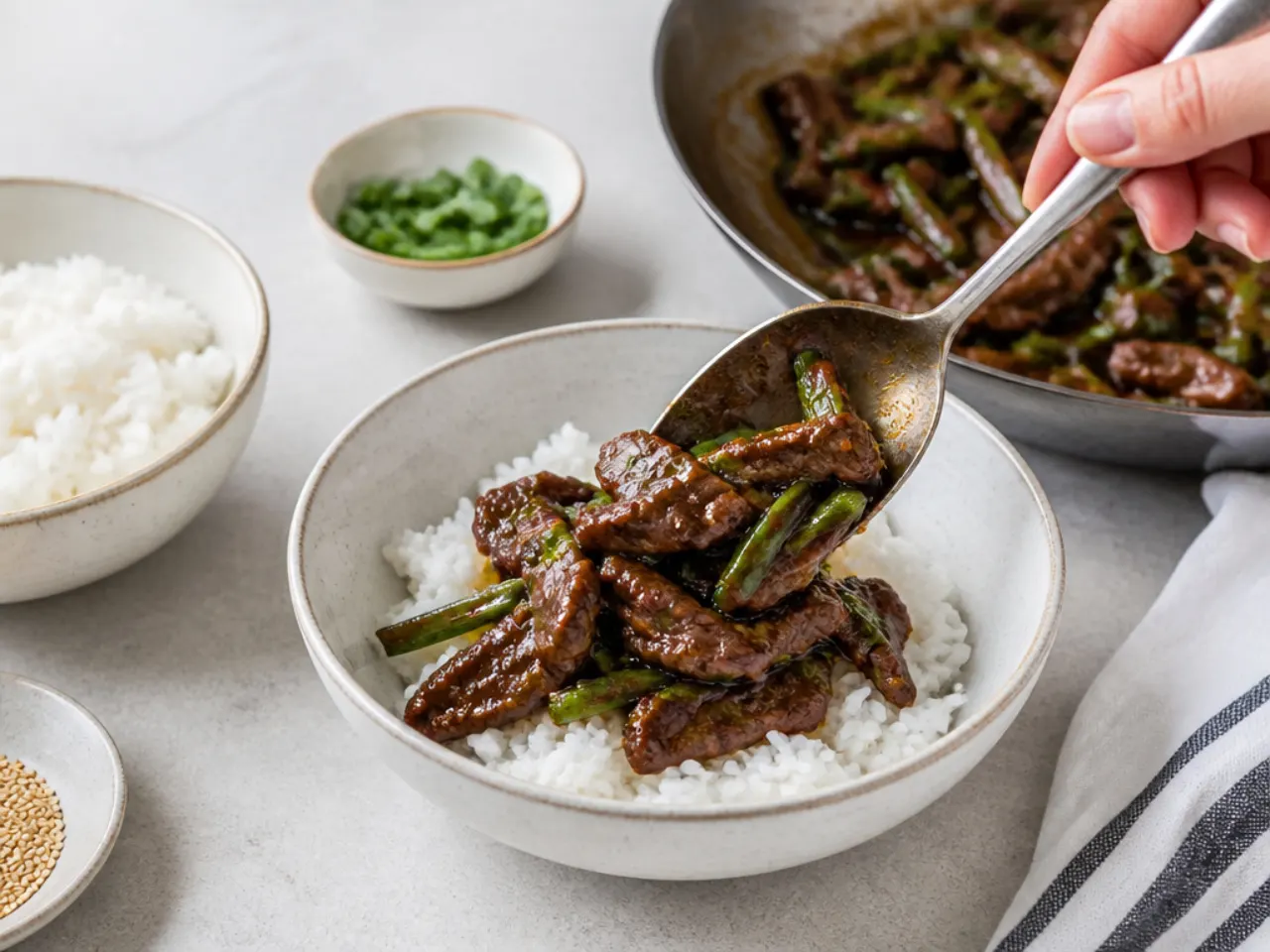
Divide the hot jasmine rice between four bowls and pile the beef on top, spooning over any sauce left in the pan. Scatter with the toasted sesame seeds and extra sliced spring onion greens. Serve immediately while the edges of the beef are still crisp.
Frequently Asked Questions
Flank steak is the classic choice — it is affordable, full of flavour and stays tender when sliced thinly against the grain. Sirloin, skirt steak and hanger steak all work well too. Avoid stewing cuts like braising steak for the quick pan-fried version; they need long, slow cooking and will be tough in a stir-fry.
Save this for later 📌
Pin this article to your Pinterest board so the full list is one tap away when you need it.
Save on Pinterest