15 Gorgeous Salmon Sushi Bowl Ideas
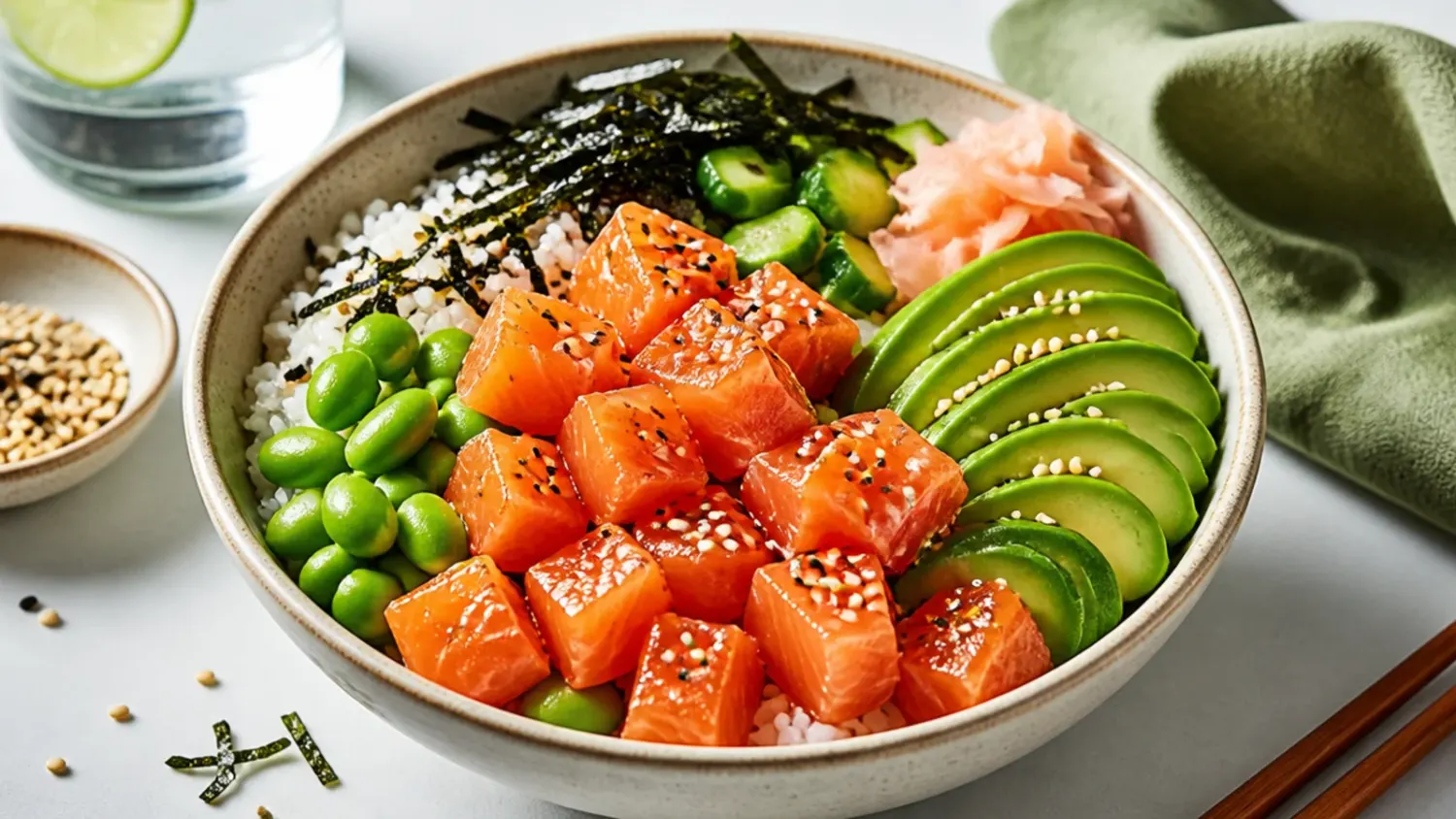
Fifteen gorgeous salmon sushi bowl ideas, from crispy rice to teriyaki, plus a foolproof base recipe with sticky sushi rice and sriracha mayo. If you love sushi bowl inspiration, start with our Sushi Bowl Recipes collection, then browse the full Dinner Recipes hub for more.

Save this for later 📌
Pin this article to your Pinterest board so the full list is one tap away when you need it.
Save on PinterestDinner Recipes
Beginner
Recipes
15 ideas
Table of Contents
- Why You'll Love These
- 1. Poke-Style Raw Salmon Sushi Bowl
- 2. 15-Minute Air Fryer Salmon Bites Bowl
- 3. Smoked Salmon and Wasabi Cream Bowl
- 4. Deconstructed California Roll Salmon Bowl
- 5. Crispy Rice Spicy Salmon Bowl
- 6. Sticky Teriyaki-Glazed Salmon Bowl
- 7. Rainbow Veggie and Mango Salmon Bowl
- 8. Five-Ingredient Weeknight Salmon Bowl
- 9. Build-Your-Own Sushi Bowl Party Bar
- 10. Kids' Bento-Style Salmon Sushi Bowl
- 11. Hot Honey Sriracha Salmon Bowl
- 12. Citrus Ponzu Salmon and Radish Bowl
- 13. Traditional Chirashi-Style Salmon Bowl
- 14. Low-Carb Cauliflower Rice Salmon Bowl
- 15. Budget Canned Salmon Sushi Bowl
- Pro Tips
- Serving Suggestions
- Storage and Reheating
- The Master Recipe
Why You'll Love These
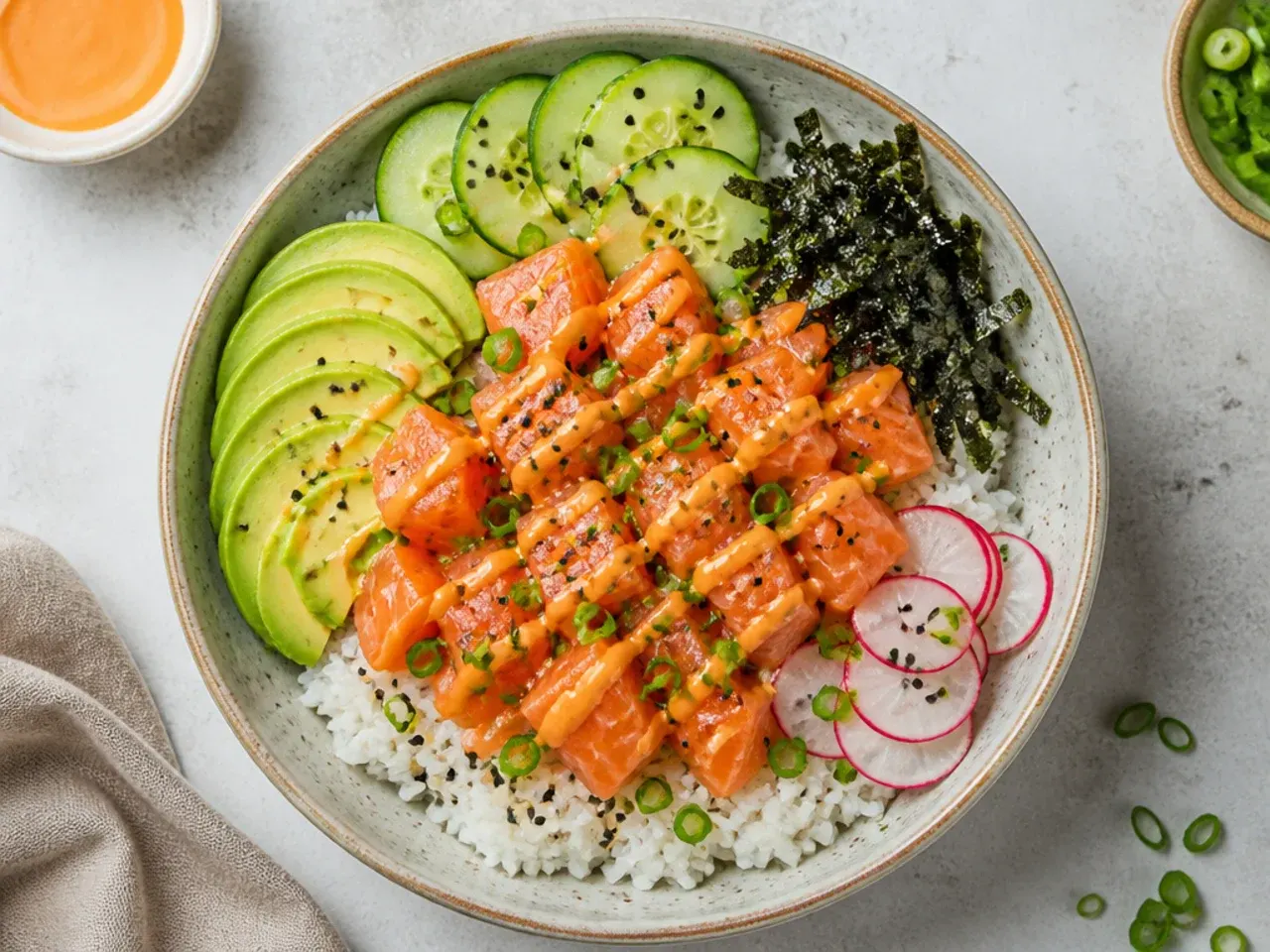
A salmon sushi bowl gives you all the flavour of sushi night with none of the rolling mats, nori-wrapping stress or hunting for sashimi platters. Every idea below builds on the same base: short-grain rice seasoned with rice vinegar, sugar and salt, topped with salmon, crunchy vegetables and a sauce you can whisk in two minutes. The full base recipe further down takes about 45 minutes, and most of that is the rice quietly simmering. Because the components sit side by side instead of being rolled together, picky eaters can skip what they don't like and you can swap raw salmon for baked, air-fried, smoked or even canned. It is one of the easiest ways to get a restaurant-style dinner on a weeknight table.
1. Poke-Style Raw Salmon Sushi Bowl
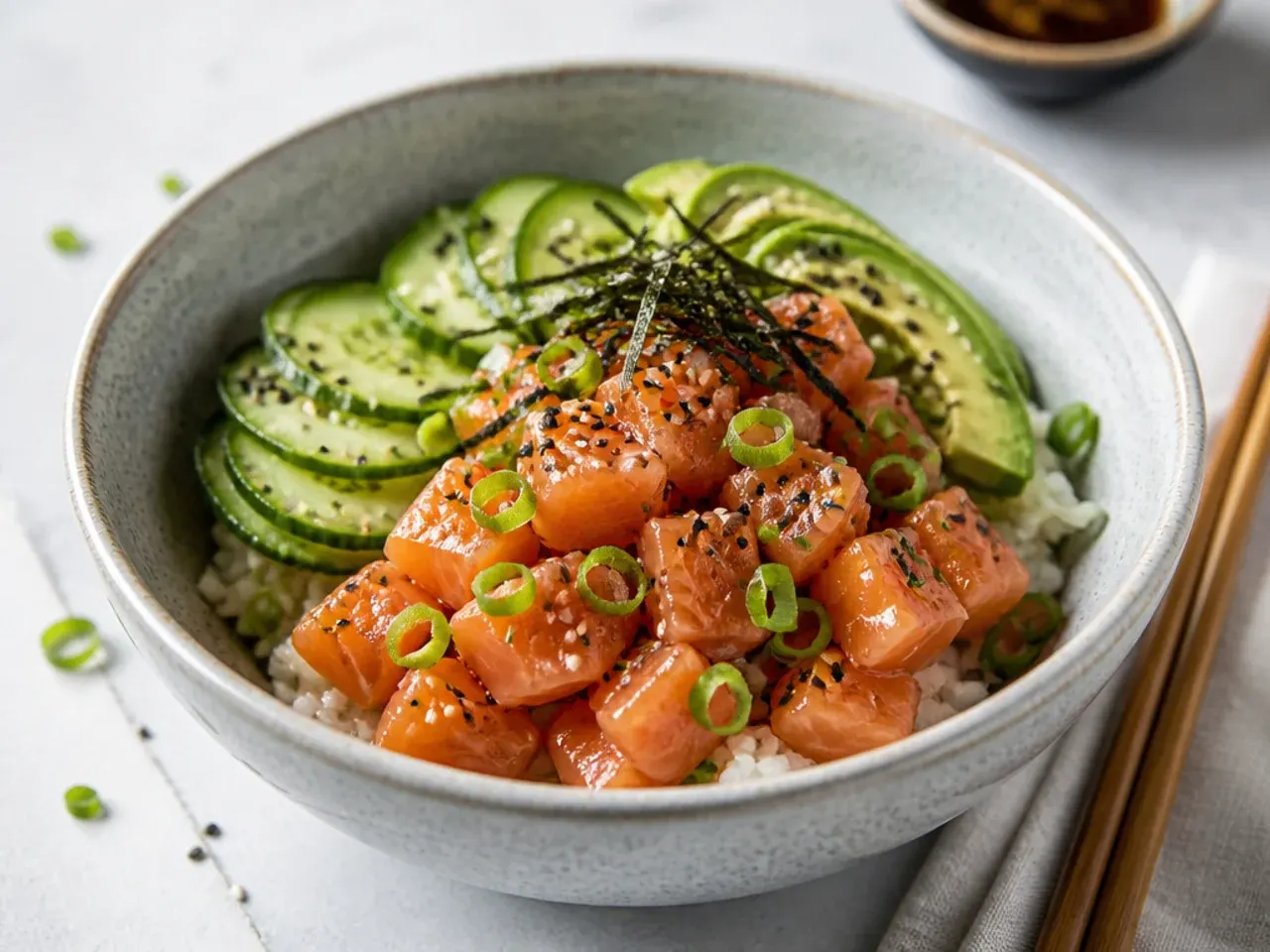
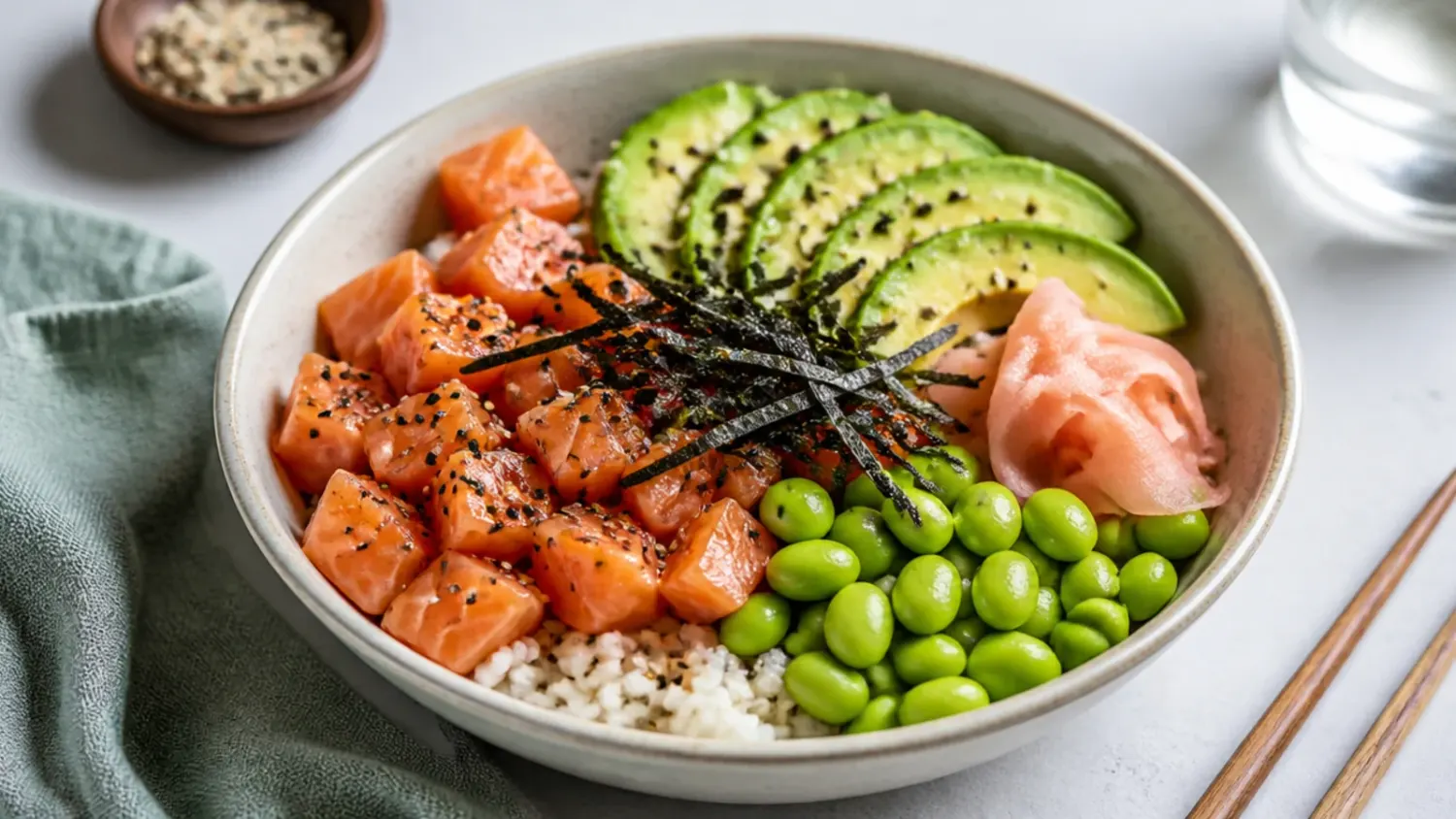
This is the bowl closest to restaurant sushi: cubes of raw salmon marinated poke-style. Cut 400 g (14 oz) of sashimi-quality salmon into 2 cm (3/4 inch) cubes and toss with 2 tablespoons soy sauce, 1 teaspoon toasted sesame oil and 1 teaspoon rice vinegar, then let it sit in the fridge for 10 to 15 minutes while the rice cools. Safety matters here: buy farmed salmon that has been commercially frozen to -20°C (-4°F) for at least 7 days, per FDA guidance, because a home freezer usually cannot hold that temperature reliably. Ask the fishmonger directly rather than trusting a vague "sushi-grade" label, which is not a regulated term. Pile the marinated cubes over seasoned rice with cucumber half-moons and a scatter of sesame seeds, and eat it the same day it is made.
2. 15-Minute Air Fryer Salmon Bites Bowl
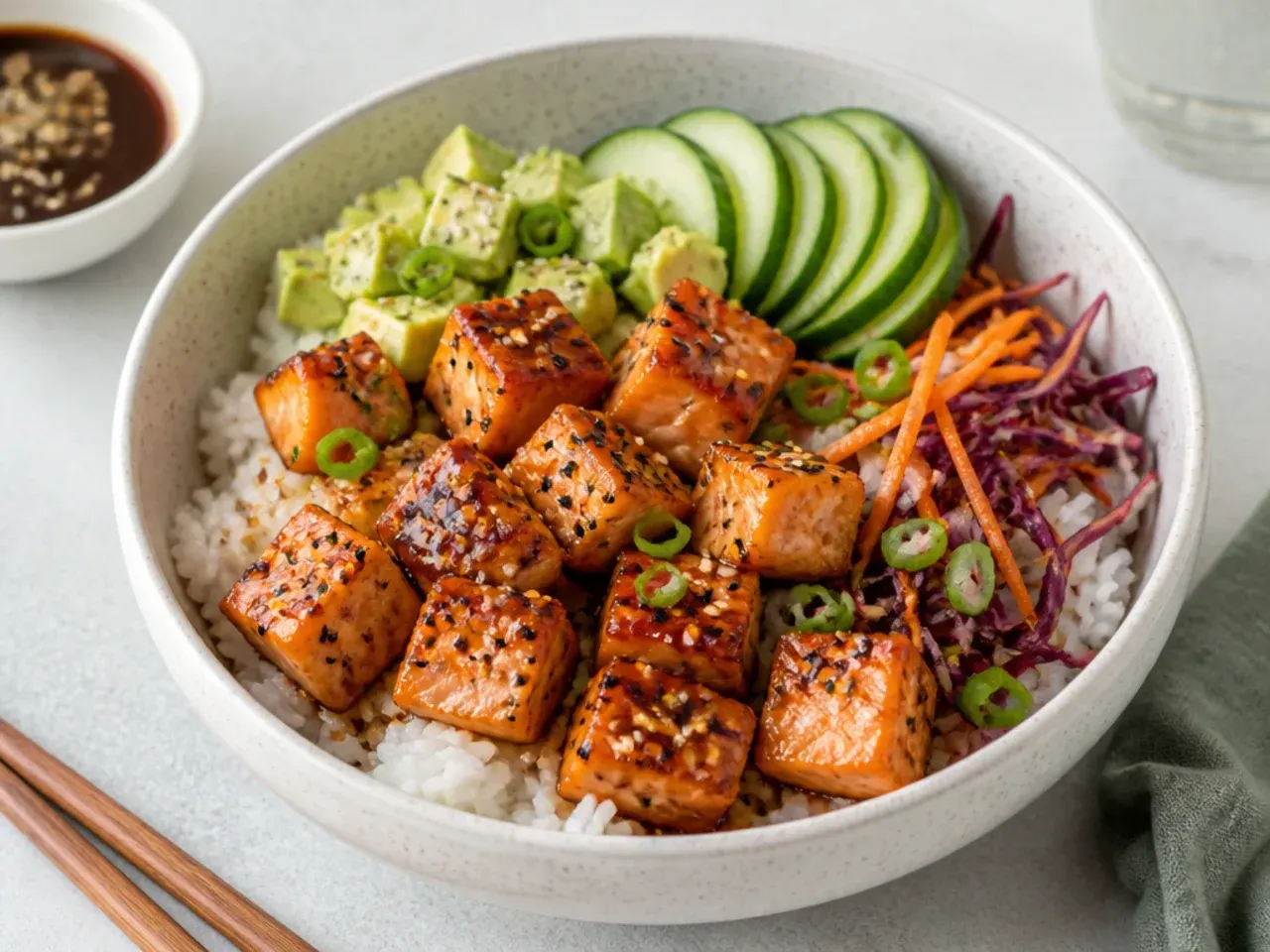
When you need dinner fast, cube 500 g (1 lb) of skinless salmon into 3 cm (1 1/4 inch) pieces, toss with 1 tablespoon soy sauce and 1 teaspoon honey, and air fry at 200°C (390°F) for 7 to 8 minutes, shaking the basket once halfway. The cubes come out caramelised at the edges and just cooked through in the centre. Use two 250 g pouches of microwave sushi or jasmine rice and stir 1 tablespoon of rice vinegar mixed with a pinch of sugar through the hot grains to fake the seasoned-rice flavour in seconds. Add whatever crunch is in the fridge, drizzle with sriracha mayo, and you have a genuine 15-minute salmon sushi bowl. This is the version to memorise for school-night chaos.
3. Smoked Salmon and Wasabi Cream Bowl
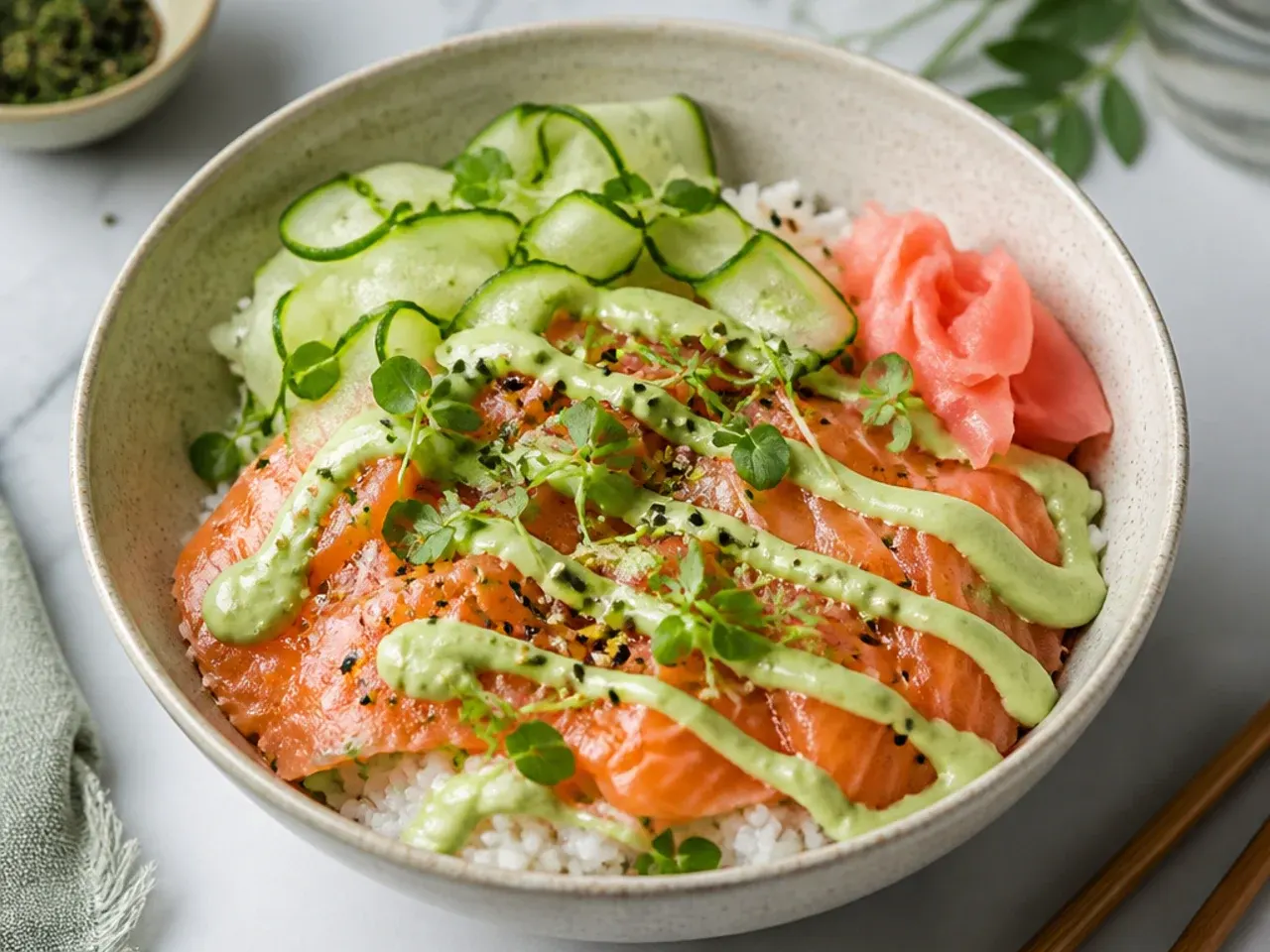
No cooking beyond the rice makes this the most elegant low-effort option, ideal for brunch or a light summer dinner. Drape 200 g (7 oz) of cold-smoked salmon into loose ribbons over the seasoned rice, then spoon over a wasabi cream made from 3 tablespoons creme fraiche (or mayonnaise), 1/2 teaspoon wasabi paste and a squeeze of lemon. The silky, salty salmon against the sharp cream mimics the classic salmon-and-wasabi nigiri pairing. Add thin cucumber ribbons made with a vegetable peeler and a few pieces of pickled sushi ginger to cut the richness. Because smoked salmon is already cured, this bowl also travels well in a lunchbox with an ice pack.
4. Deconstructed California Roll Salmon Bowl
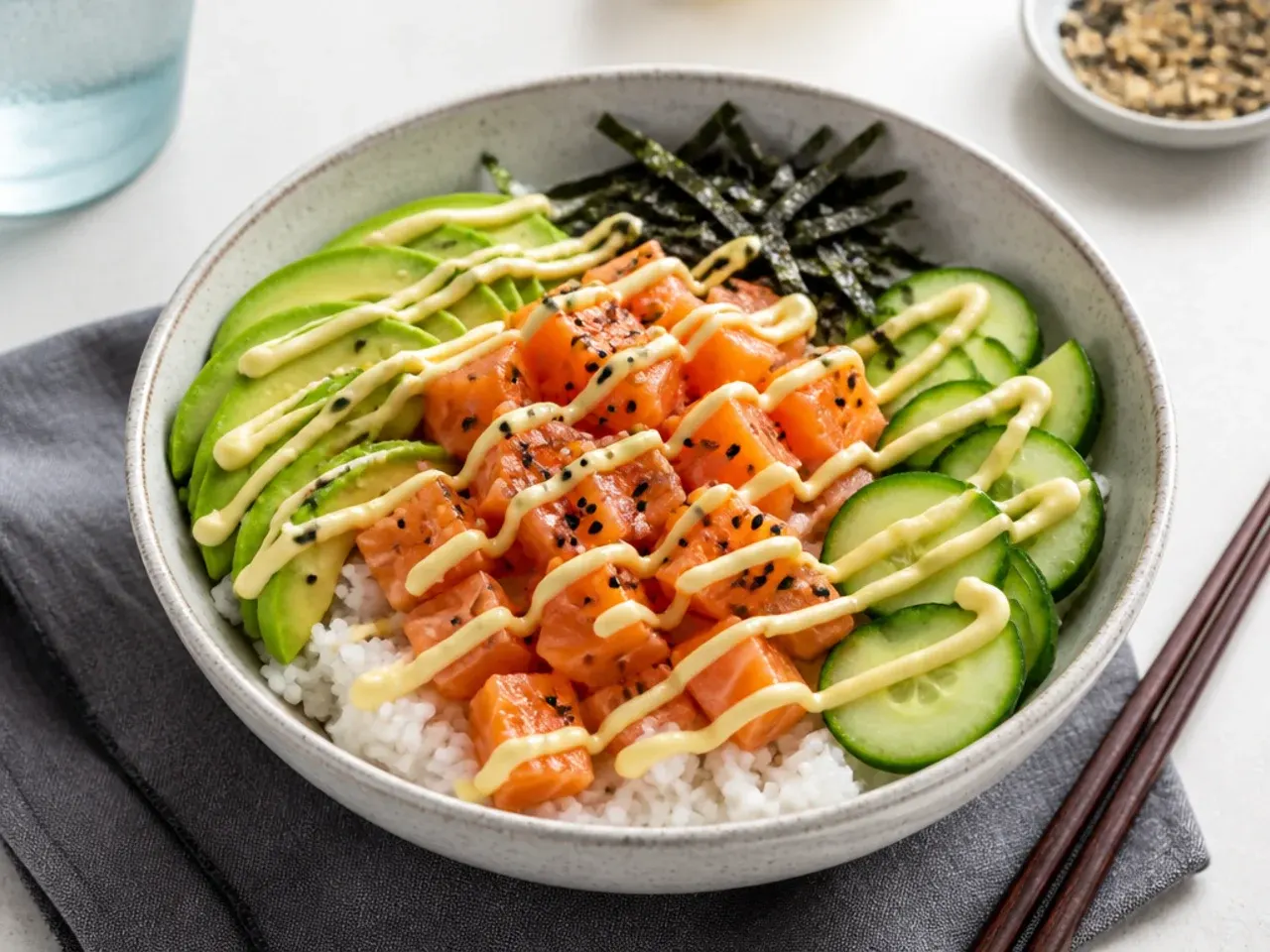
Take everything inside a California roll, add baked salmon, and lay it out in a bowl. Combine flaked cooked salmon with 4 chopped surimi crab sticks (or skip them and double the salmon), diced avocado, cucumber and a generous zigzag of Kewpie mayonnaise. Because everything is fully cooked or cured, this is the safest crowd-pleaser for anyone nervous about raw fish, including kids and pregnant guests. Finish with a spoonful of tobiko or a heavy sprinkle of toasted sesame seeds for that signature California roll look. Snip half a nori sheet into thin strips over the top so every bite still tastes like the roll that inspired it.
5. Crispy Rice Spicy Salmon Bowl
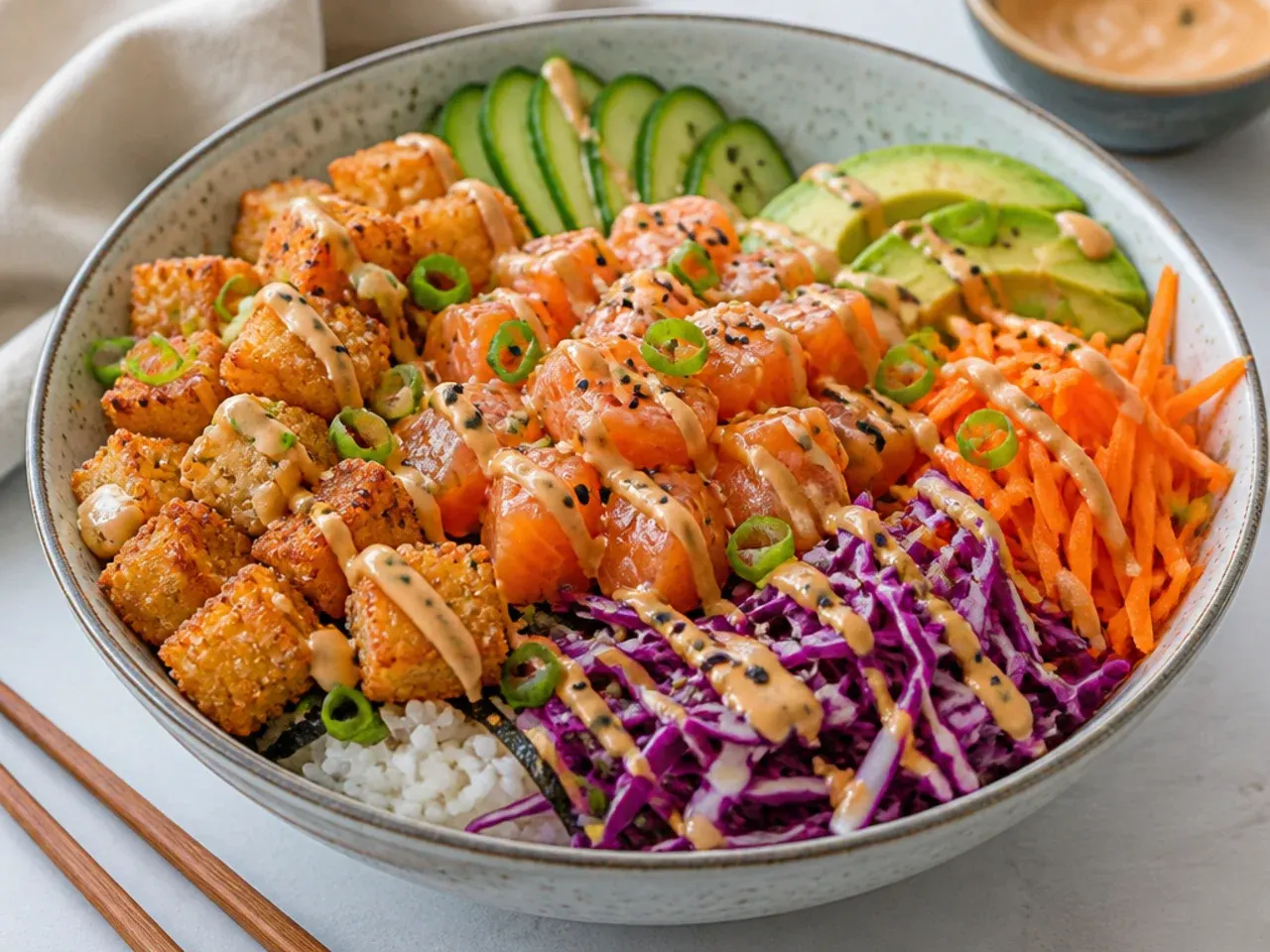
This one borrows the viral crispy rice trick: press leftover seasoned sushi rice into a parchment-lined 20 cm (8 inch) square tin about 2 cm deep, chill for 30 minutes, then cut into cubes. Pan-fry the cubes in 2 tablespoons of neutral oil over medium-high heat for about 3 minutes per side until deep golden, or air fry at 200°C (400°F) for 10 minutes. Top the crackly cubes with a spicy salmon mix of flaked cooked salmon, 3 tablespoons sriracha mayo and a sliced spring onion. The contrast of shattering crust, chewy rice centre and creamy spicy salmon is why this version gets saved more than any other. It is also the single best use for day-old sushi rice.
Save this for later 📌
Pin this article to your Pinterest board so the full list is one tap away when you need it.
Save on Pinterest6. Sticky Teriyaki-Glazed Salmon Bowl
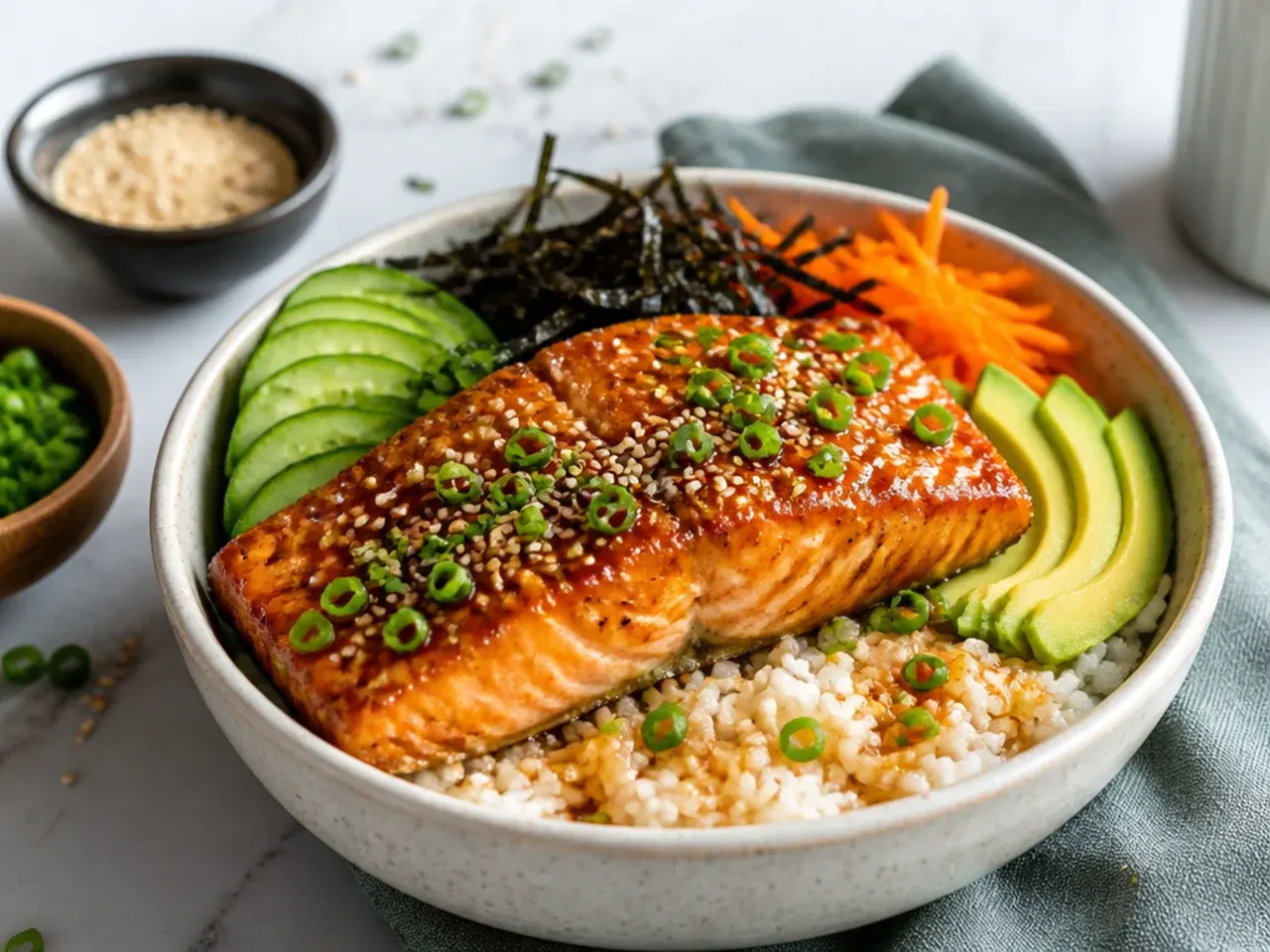
A pan-seared, glossy-glazed fillet turns the bowl into something that feels like a restaurant teriyaki don. Sear salmon portions in 1 tablespoon of toasted sesame oil over high heat for about 90 seconds per side, then pour in a mixture of 4 tablespoons soy sauce, 2 tablespoons honey (or mirin), 2 minced garlic cloves and 1 teaspoon grated ginger. Let it bubble for about 3 minutes until the sauce turns syrupy and the salmon flakes easily with a fork. Serve the fillet whole on the rice and spoon the pan sauce over everything, including the avocado. Brown rice stands up especially well to the big salty-sweet glaze if you want extra fibre.
7. Rainbow Veggie and Mango Salmon Bowl
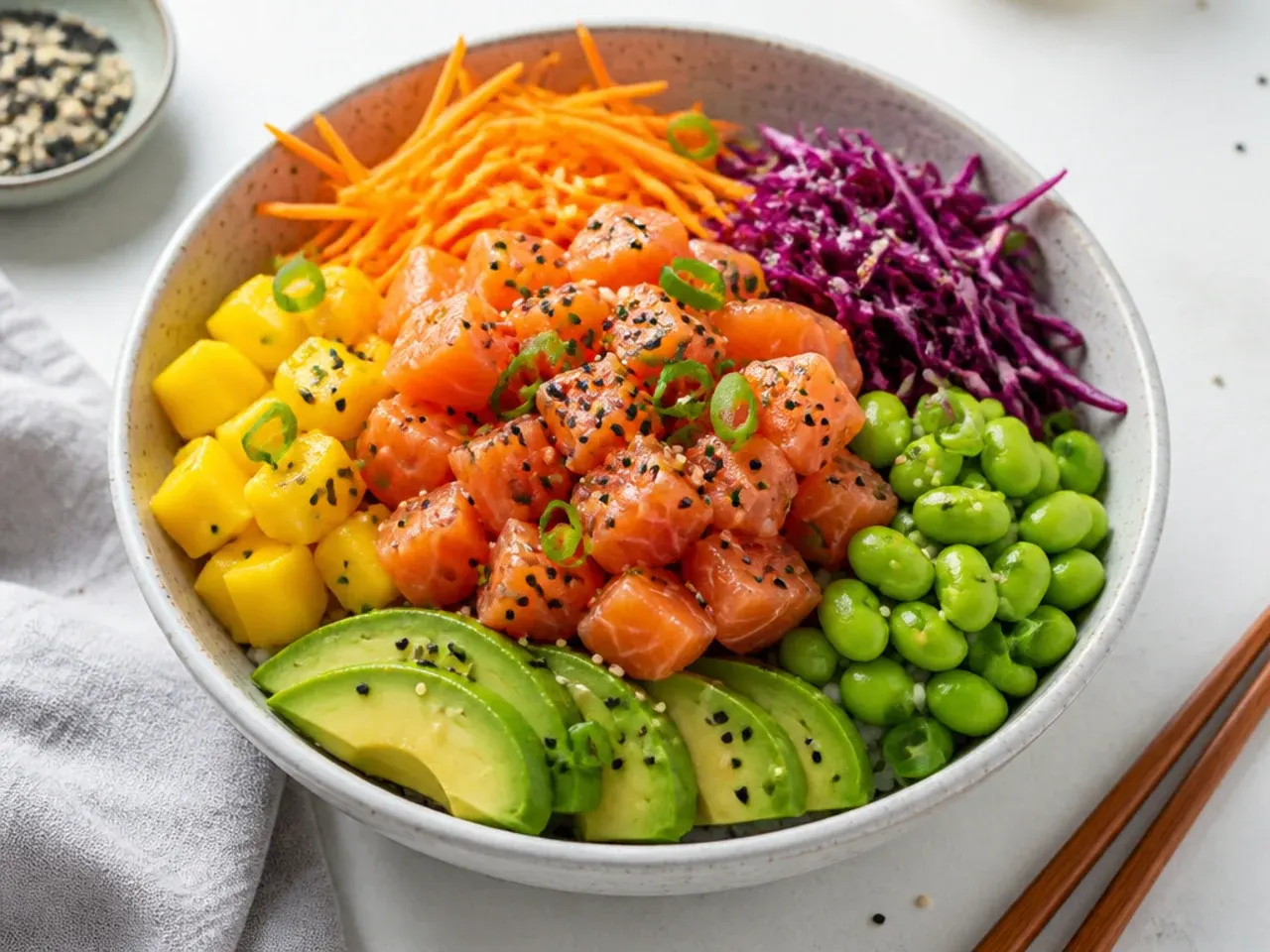
Arrange toppings in tidy wedges around the salmon so every colour stays separate: shredded carrot, shelled edamame, thinly sliced red cabbage, radish coins and diced ripe mango. Aim for about 1/2 cup (60 to 75 g) of each vegetable per bowl so no single topping dominates. The sweet mango is the sleeper hit against salty soy-glazed salmon, a pairing you will find in Hawaiian-style poke shops. A quick lime wedge squeezed over the top ties the fruit and fish together. This is the bowl to make when you want the photo as much as the dinner, and it is an easy way to get five different vegetables and fruits into one meal.
8. Five-Ingredient Weeknight Salmon Bowl
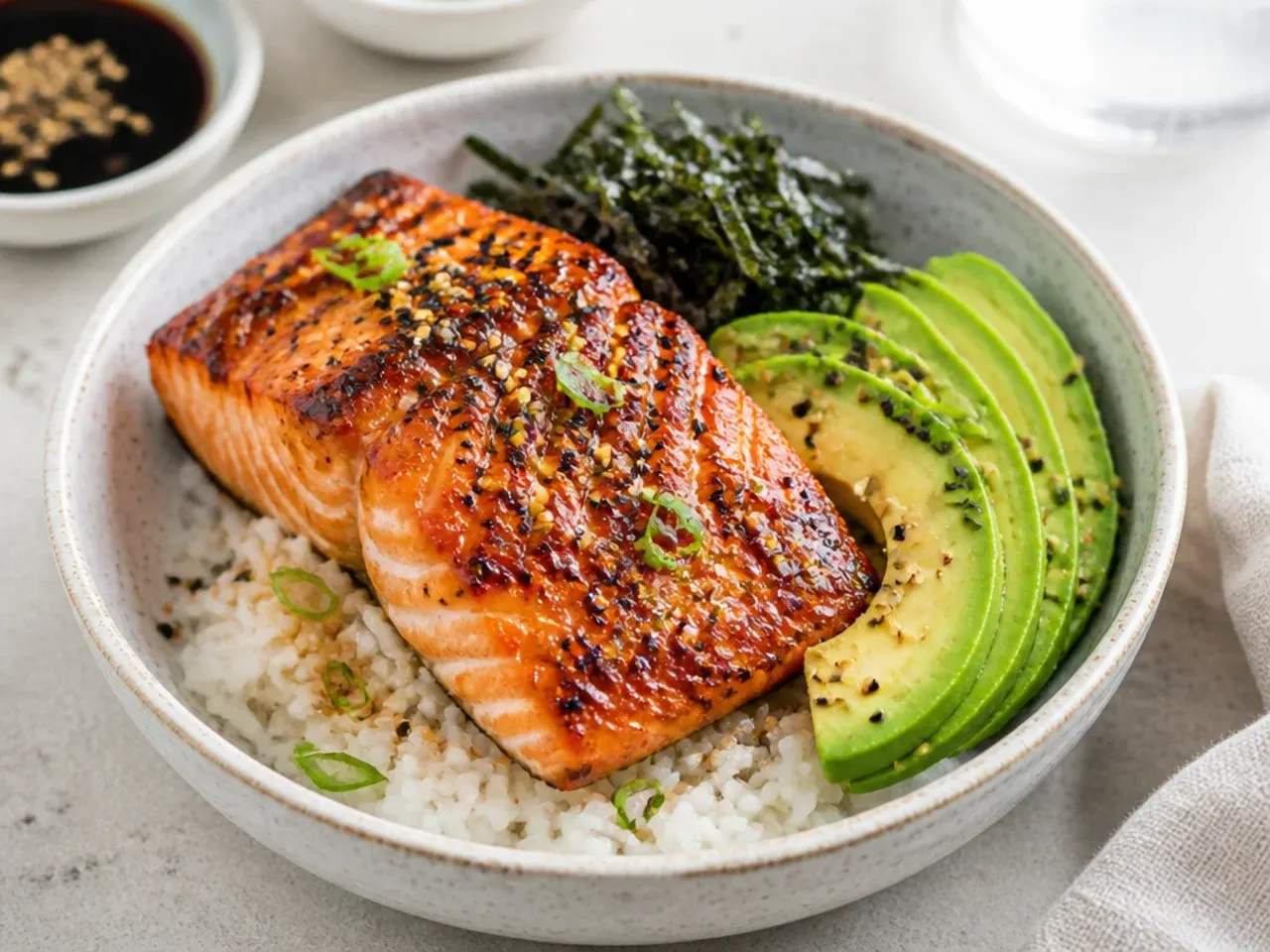
Strip the idea to its essentials: rice, salmon, avocado, soy sauce and sesame seeds. Broil (grill) seasoned salmon fillets on a foil-lined tray 10 cm from a preheated broiler for 7 to 10 minutes depending on thickness, until the surface is blistered and the centre flakes. Use a microwave rice pouch, slice one avocado, and drizzle 1 tablespoon of soy sauce per bowl over everything. With so few components, quality matters: use Japanese soy sauce and toast the sesame seeds in a dry pan for 2 minutes until fragrant. It proves a good salmon sushi bowl is more about method than a long shopping list.
9. Build-Your-Own Sushi Bowl Party Bar
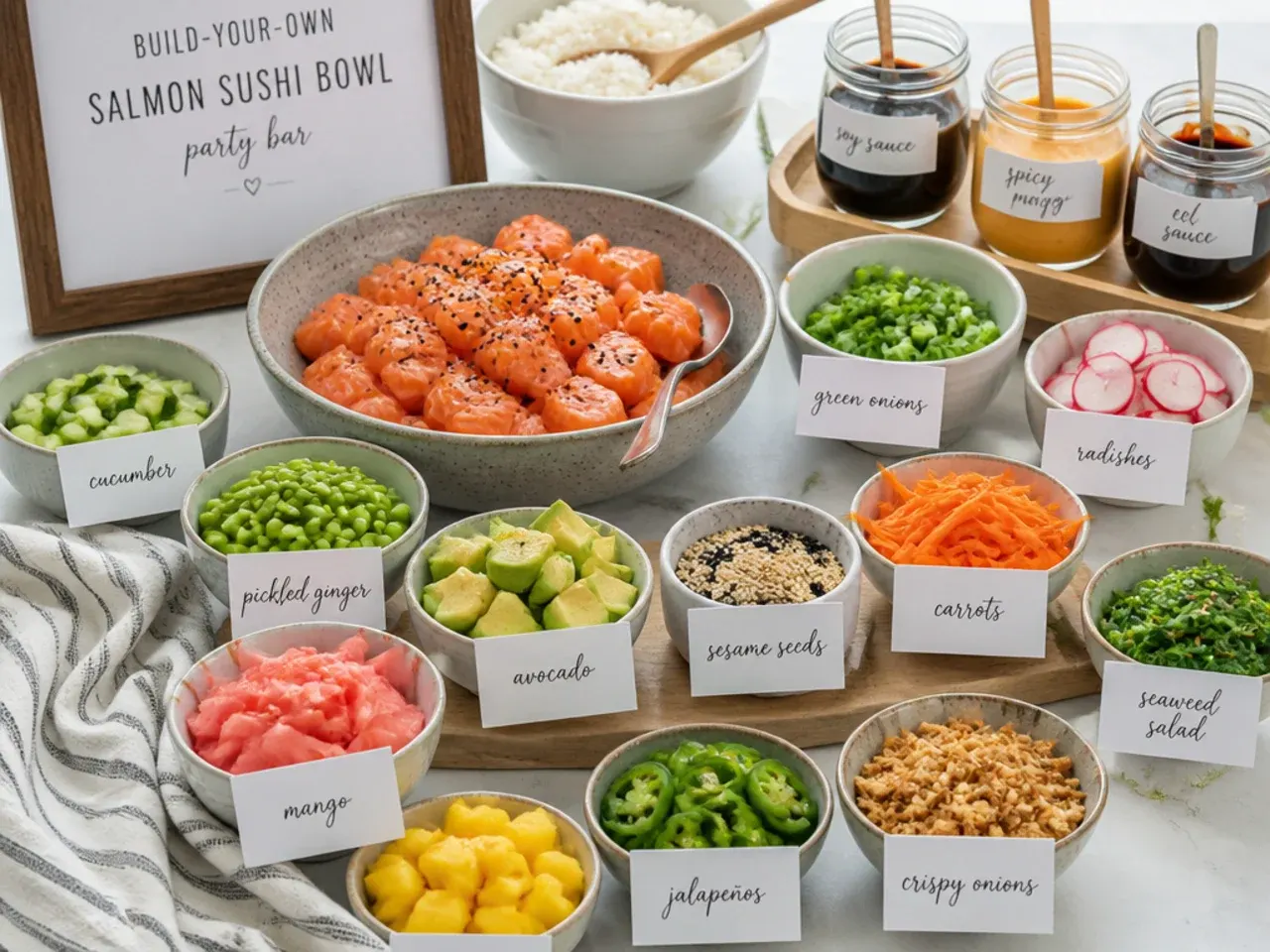
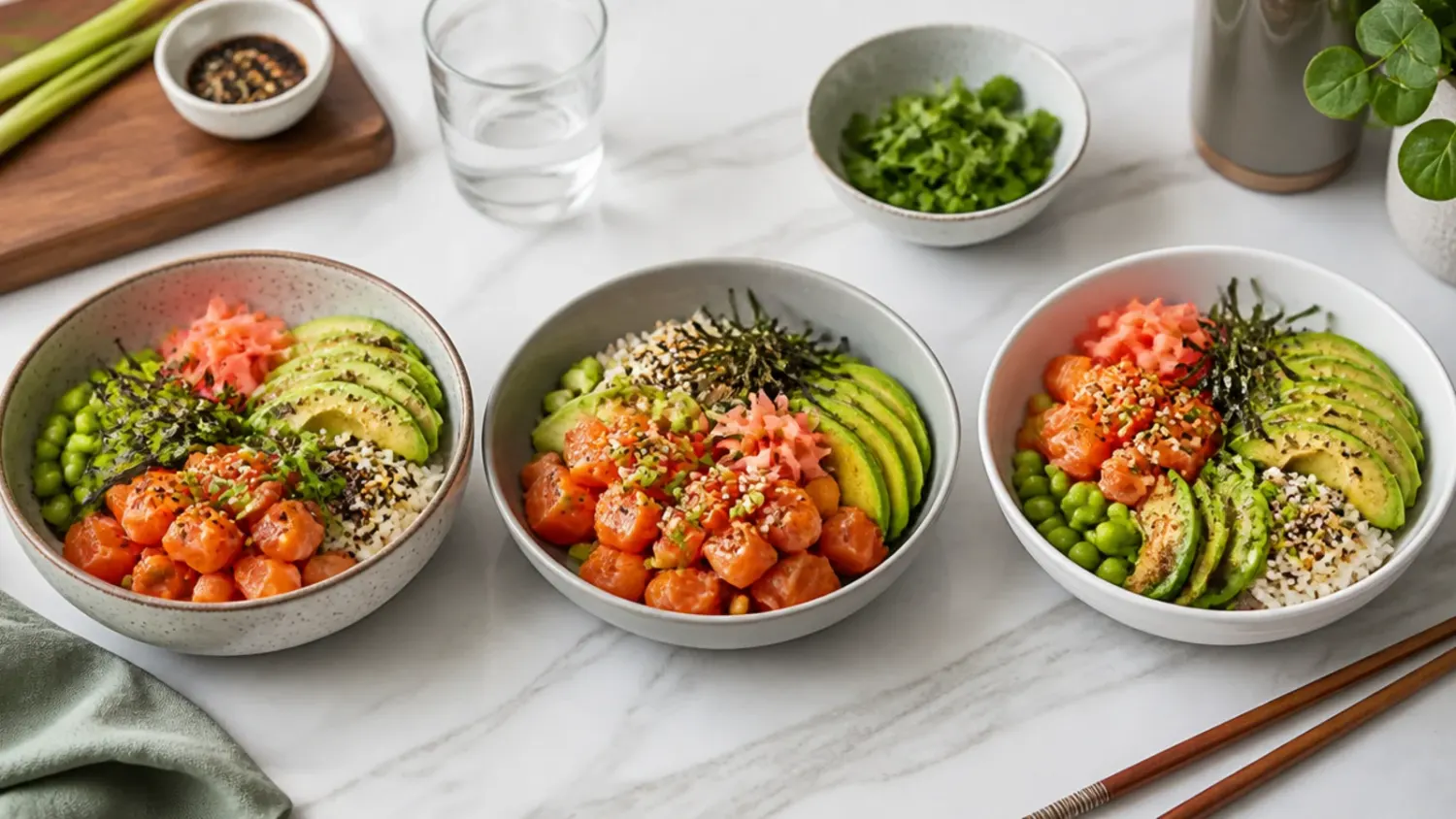
For birthdays or casual entertaining, set the components out buffet-style and let everyone assemble their own salmon sushi bowl. Budget per person: 150 g (about 3/4 cup) of seasoned rice, 100 to 125 g (3.5 to 4.5 oz) of cooked or smoked salmon, and small bowls of cucumber, avocado, edamame, carrot, pickled ginger and nori strips. Offer three sauces with labelled spoons: sriracha mayo, soy-ginger dressing and plain Kewpie for spice-averse guests. Keep the rice covered with a damp tea towel so it stays glossy, and keep any raw fish on a dish set over ice. Guests love the control, and the host does zero plating.
10. Kids' Bento-Style Salmon Sushi Bowl
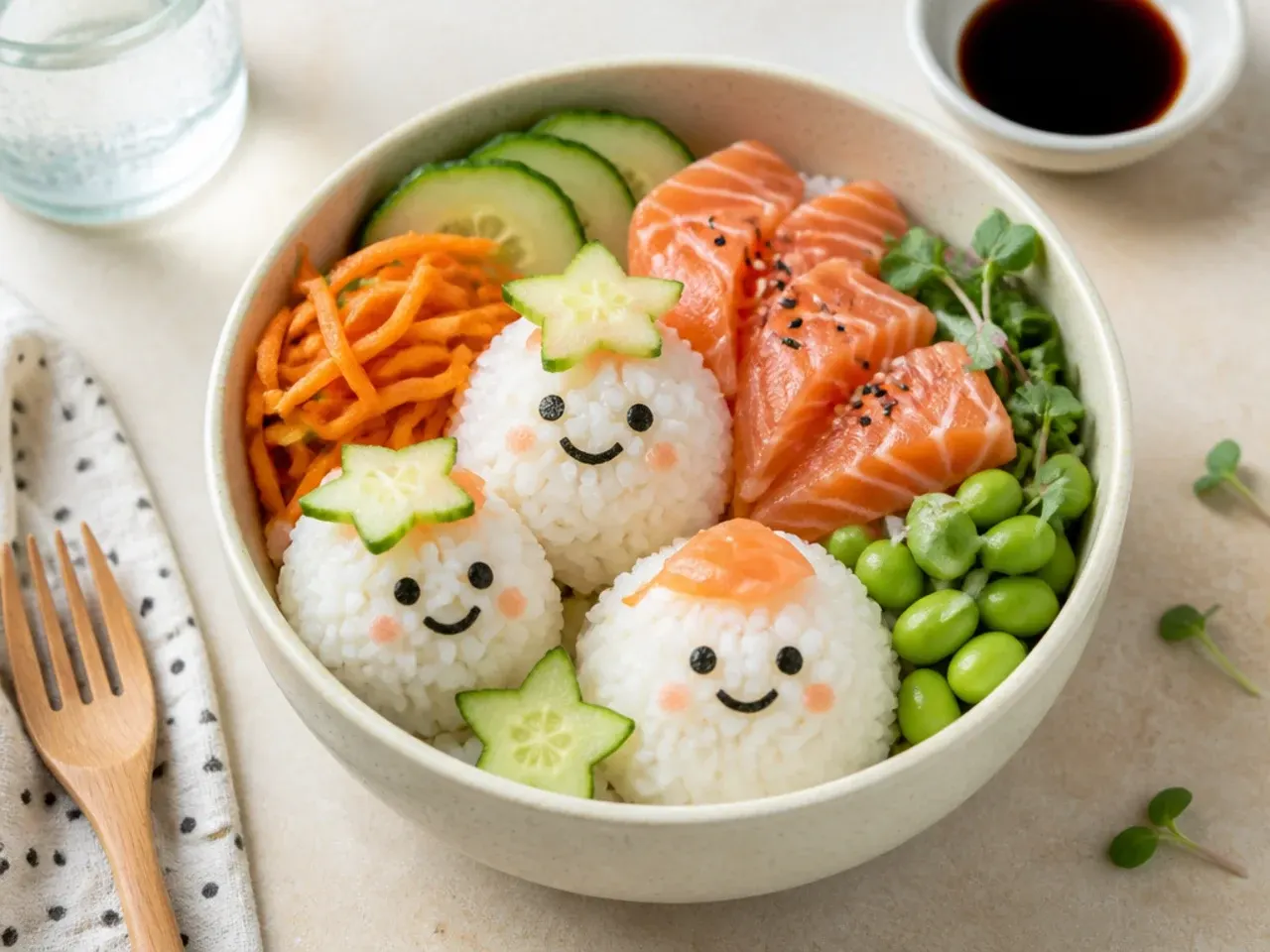
Win over small eaters by turning the bowl into a bento scene. Shape warm seasoned rice into two small balls per child using damp hands or cling film, punch faces from nori with a hole punch or snip them with scissors, and cut cucumber slices into stars with a small cookie cutter. Use mild flaked baked salmon tossed with 1 teaspoon of plain mayonnaise instead of anything spicy, and keep soy sauce in a dipping pot on the side so the rice stays fun to pick up. Sweetcorn and edamame make good "treasure" to hide under the rice balls. It is the same dinner as everyone else's, just staged for a six-year-old.
Save this for later 📌
Pin this article to your Pinterest board so the full list is one tap away when you need it.
Save on Pinterest11. Hot Honey Sriracha Salmon Bowl
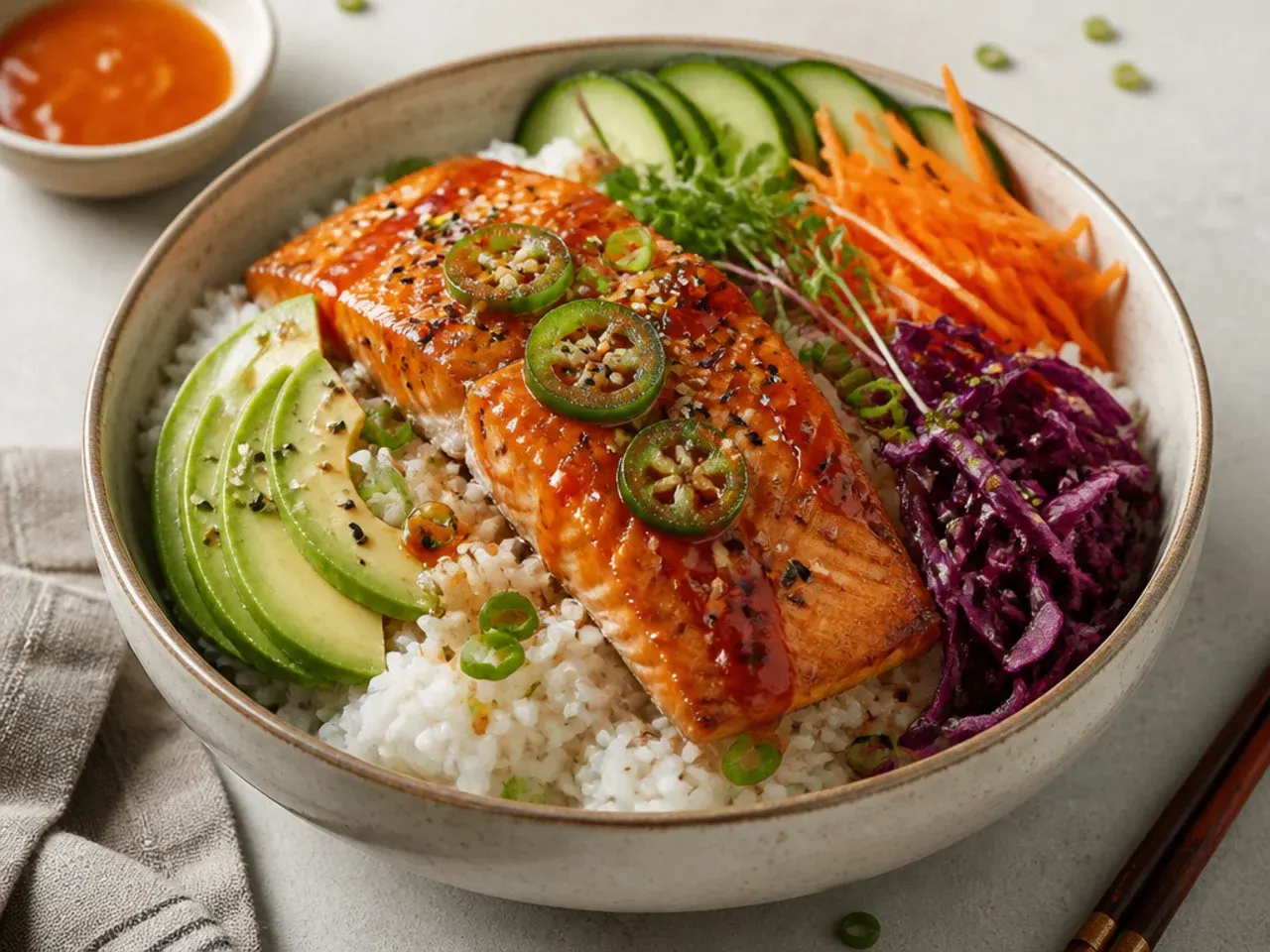
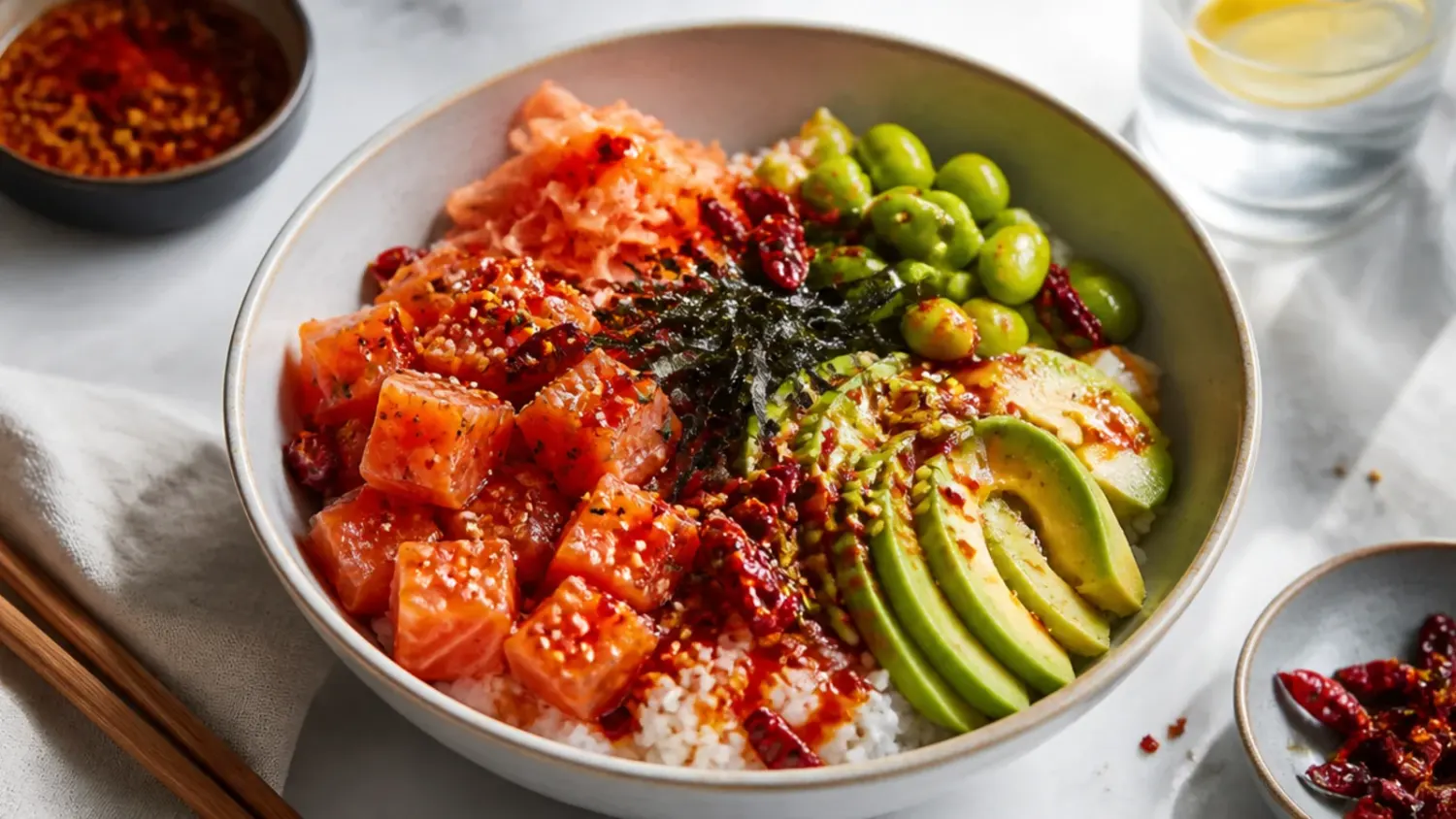
For heat lovers, whisk 2 tablespoons honey, 2 teaspoons sriracha and 1 tablespoon soy sauce, brush half over salmon fillets and bake at 200°C (400°F) for 12 to 14 minutes, then brush on the rest the moment they come out. The sugars caramelise into a sticky, chilli-laced lacquer that begs for cooling toppings, so pair it with extra cucumber and a bigger dollop of plain Kewpie mayo. Add a few fresh jalapeno or red chilli slices if your crowd wants real fire. The sweet-heat glaze also works brilliantly on the air fryer salmon bites from idea 2. Serve with lime wedges to balance the sweetness.
12. Citrus Ponzu Salmon and Radish Bowl
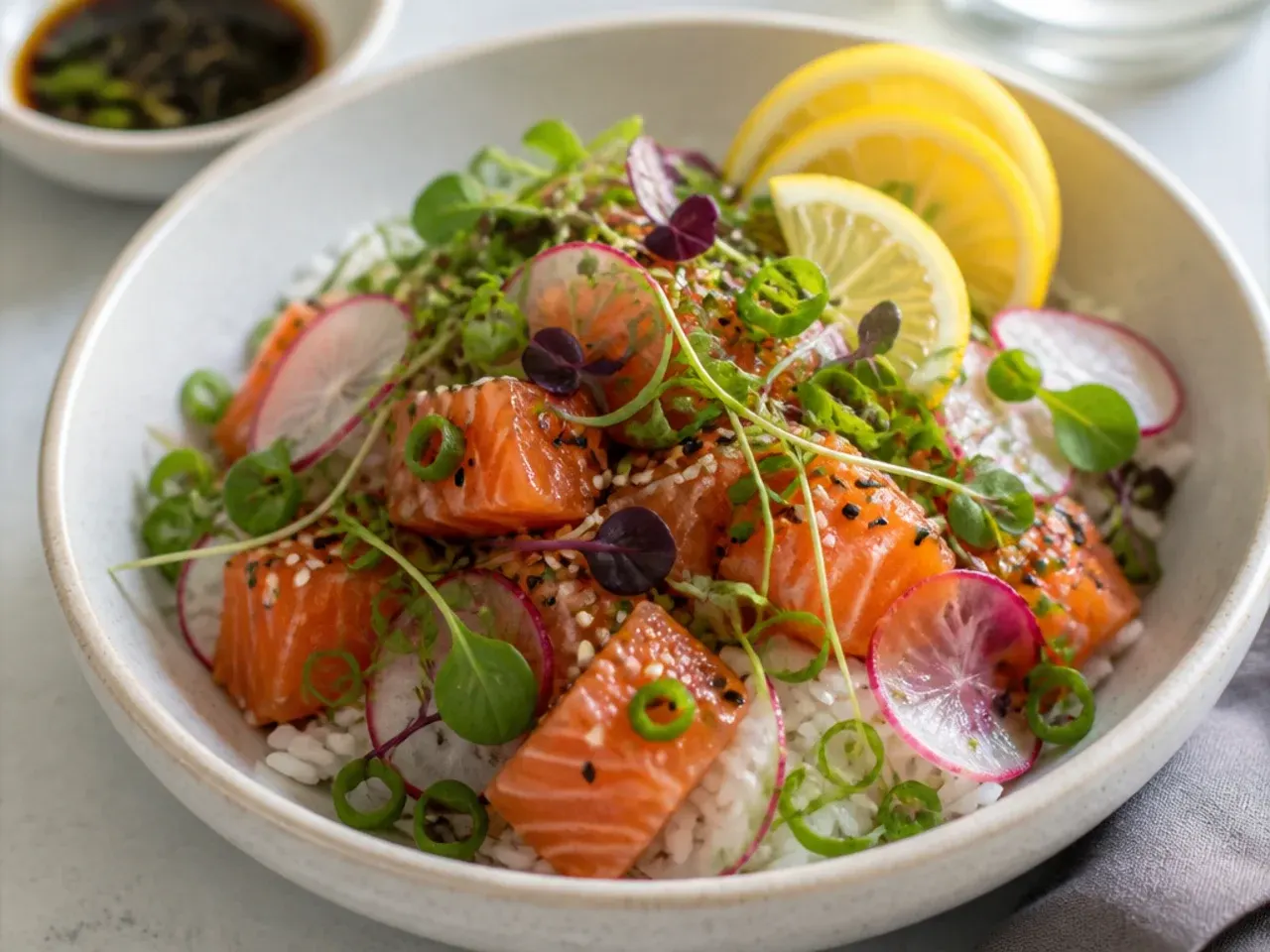
This is the light, mayo-free bowl for when you want clean flavours. Make a quick ponzu by stirring together 2 tablespoons soy sauce, 1 tablespoon fresh lemon or lime juice and 1 teaspoon mirin, and spoon it over gently baked or poached salmon. Shave radishes paper-thin on a mandoline (or with a vegetable peeler) and soak them in iced water for 5 minutes so they curl and crisp. Finish with microgreens or snipped chives and a few drops of sesame oil. The sharp citrus lifts the rich salmon the way yuzu does in Japanese kitchens, and the whole bowl feels bright rather than heavy.
13. Traditional Chirashi-Style Salmon Bowl
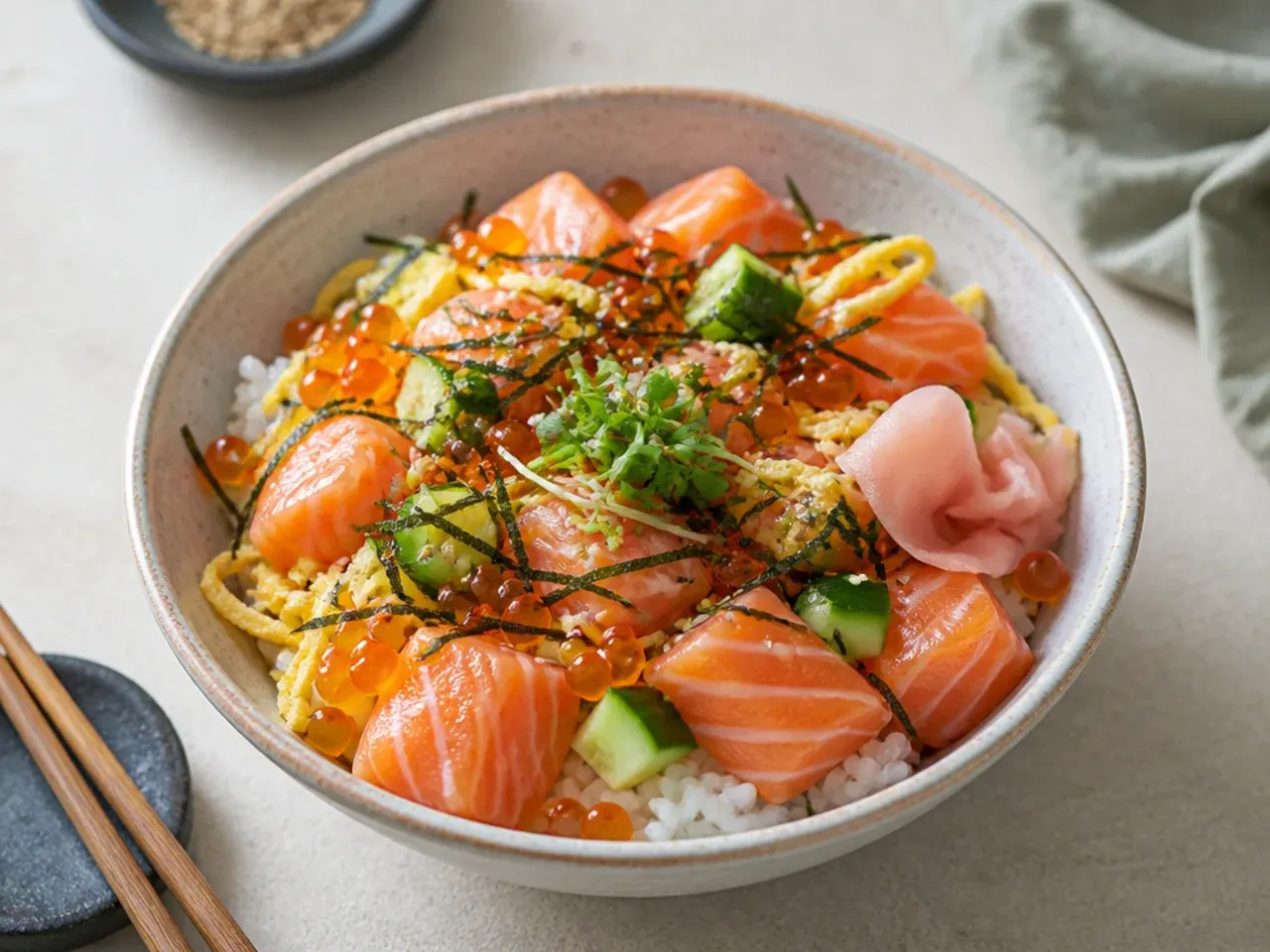
Long before poke bowls trended, Japan had chirashi-zushi, which means "scattered sushi", and it is the original sushi bowl. Scatter seasoned rice with flaked cooked or cured salmon, kinshi tamago (a thin one-egg crepe cooked for about 1 minute per side, rolled and sliced into golden ribbons), pickled ginger, blanched snow peas and toasted sesame. In Japan it is a celebration dish, traditionally served at Hinamatsuri in March, which makes it a lovely choice for special family dinners. The egg ribbons are the detail most Western sushi bowls miss and they take five minutes. Serve it slightly warm or at room temperature, never fridge-cold.
14. Low-Carb Cauliflower Rice Salmon Bowl
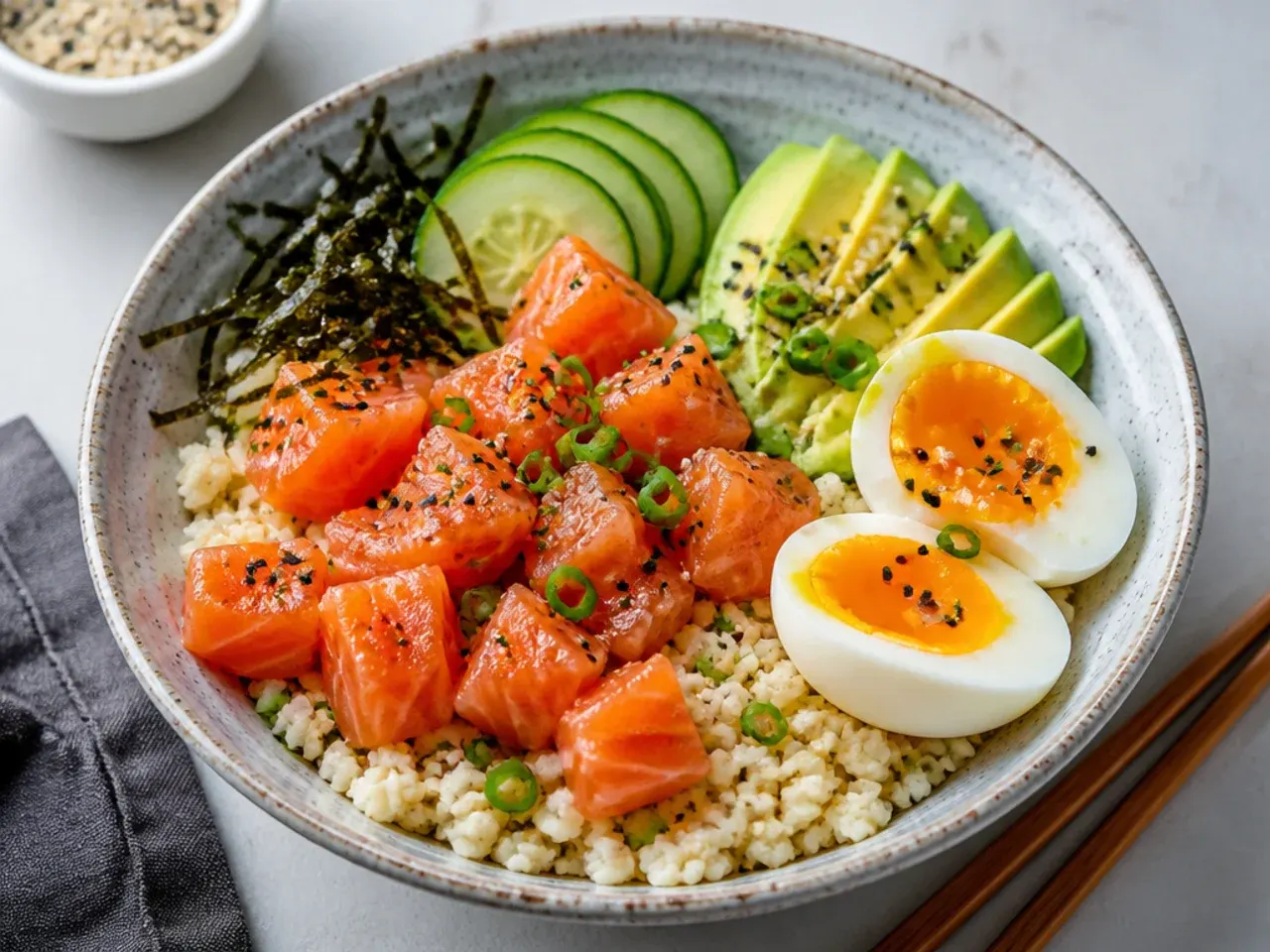
Swap the sushi rice for 500 g (about 4 cups) of cauliflower rice sauteed in 1 tablespoon of oil over medium-high heat for 4 to 5 minutes until just tender but not mushy. Off the heat, stir through 1 tablespoon rice vinegar and a pinch of salt (plus a pinch of sugar or sweetener if you like) so it still tastes like seasoned sushi rice. Because you lose the starchy comfort of real rice, add half an avocado per bowl and a soft-boiled egg for richness and staying power. Top with glazed baked salmon and plenty of sesame. It cuts the carbs of a standard bowl dramatically while keeping every topping intact.
15. Budget Canned Salmon Sushi Bowl
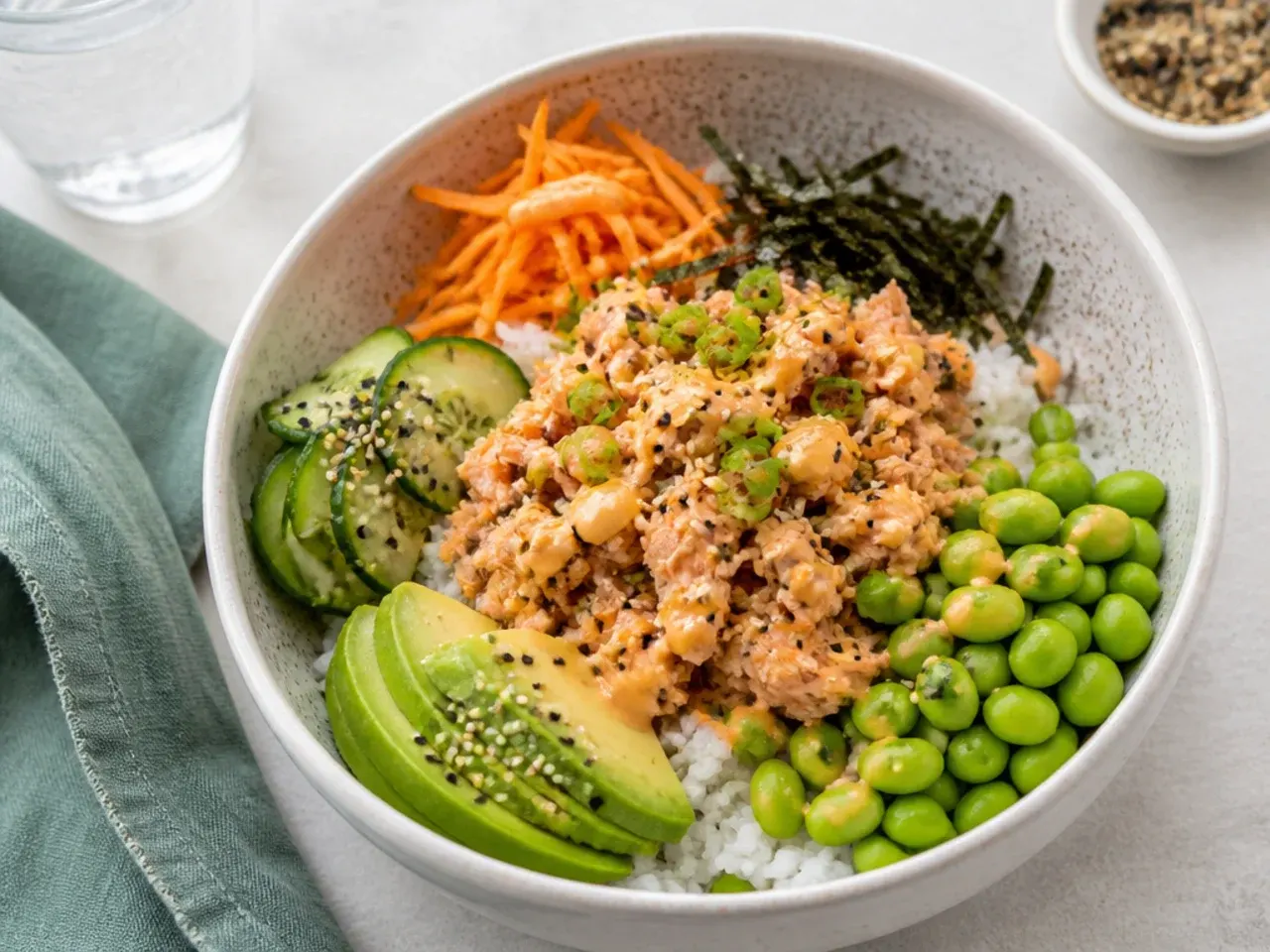
Two 145 g (5 oz) cans of pink or red salmon, drained and flaked, make a shockingly good bowl for pennies. Mix the salmon with 2 tablespoons Kewpie or regular mayonnaise, 1 teaspoon sriracha and 1 teaspoon soy sauce so it eats like a spicy salmon roll filling. Bulk out the toppings with freezer and pantry staples: frozen edamame boiled for 3 minutes, shredded carrot and pickled ginger. The seasoned rice does the heavy lifting, so do not skip the vinegar-sugar-salt step. Dinner lands at roughly the cost of a single supermarket sandwich per serving, which makes this the bowl to keep in rotation between paydays.
Pro Tips
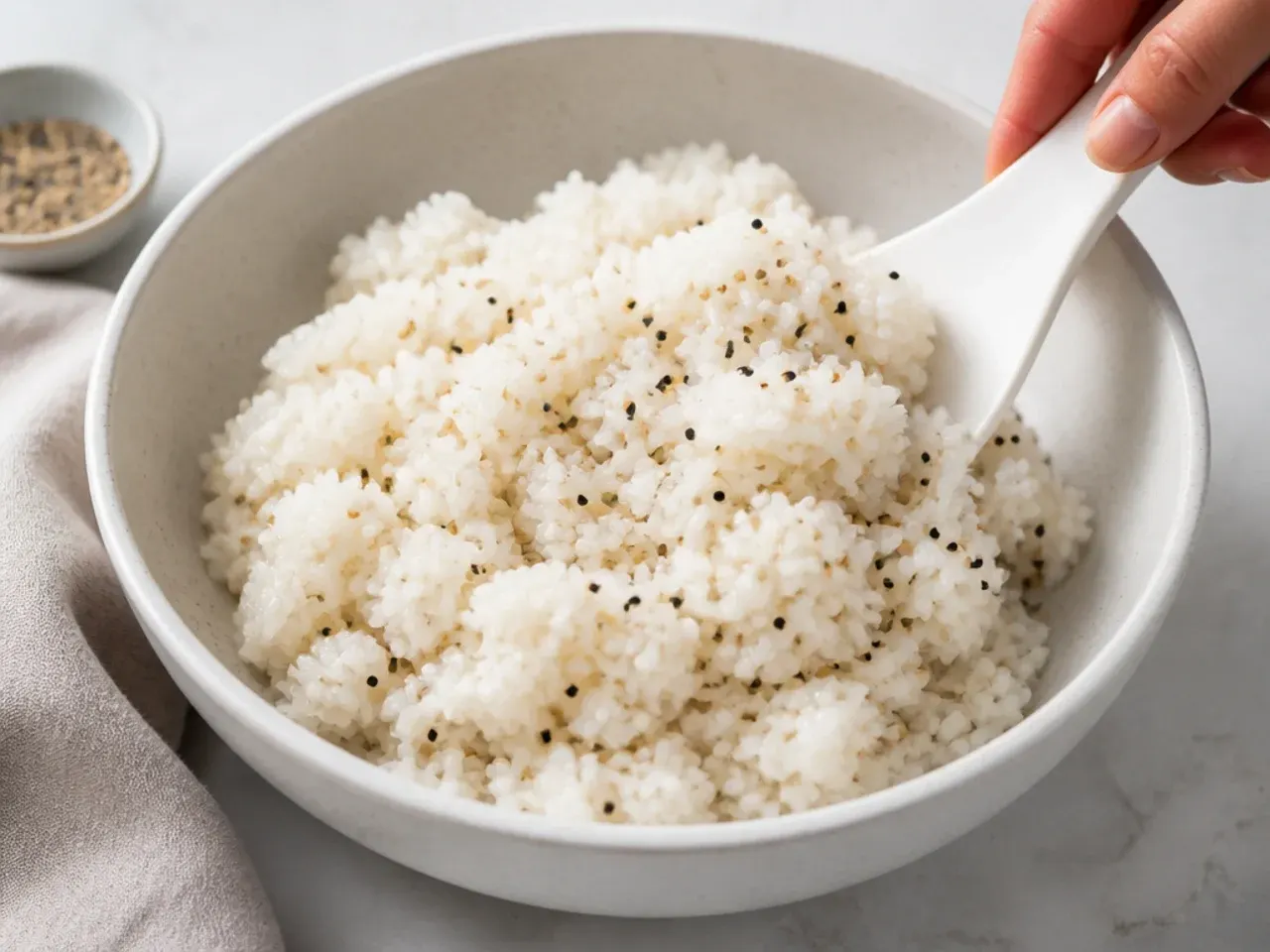
Rinse the sushi rice in a sieve under cold water until the water runs nearly clear, about a minute, or the finished rice turns gluey. Season the rice while it is still warm and fold the vinegar mixture in with a cutting motion using a spatula; stirring round and round mashes the grains. Cook salmon to an internal temperature of 63°C (145°F) at the thickest point if you want it fully done, or pull it at 52°C (125°F) for a softer, medium centre. For a crunch most home bowls lack, toast 40 g (1/3 cup) panko in 1 tablespoon of oil over medium heat for about 2 minutes until golden, season with a pinch of garlic salt, and scatter it over just before serving. Use Kewpie mayonnaise where you can; its egg-yolk richness makes sriracha mayo taste like the sushi shop version. Finally, keep seasoned rice at room temperature under a damp tea towel for up to an hour rather than refrigerating it, which hardens the grains.
Serving Suggestions
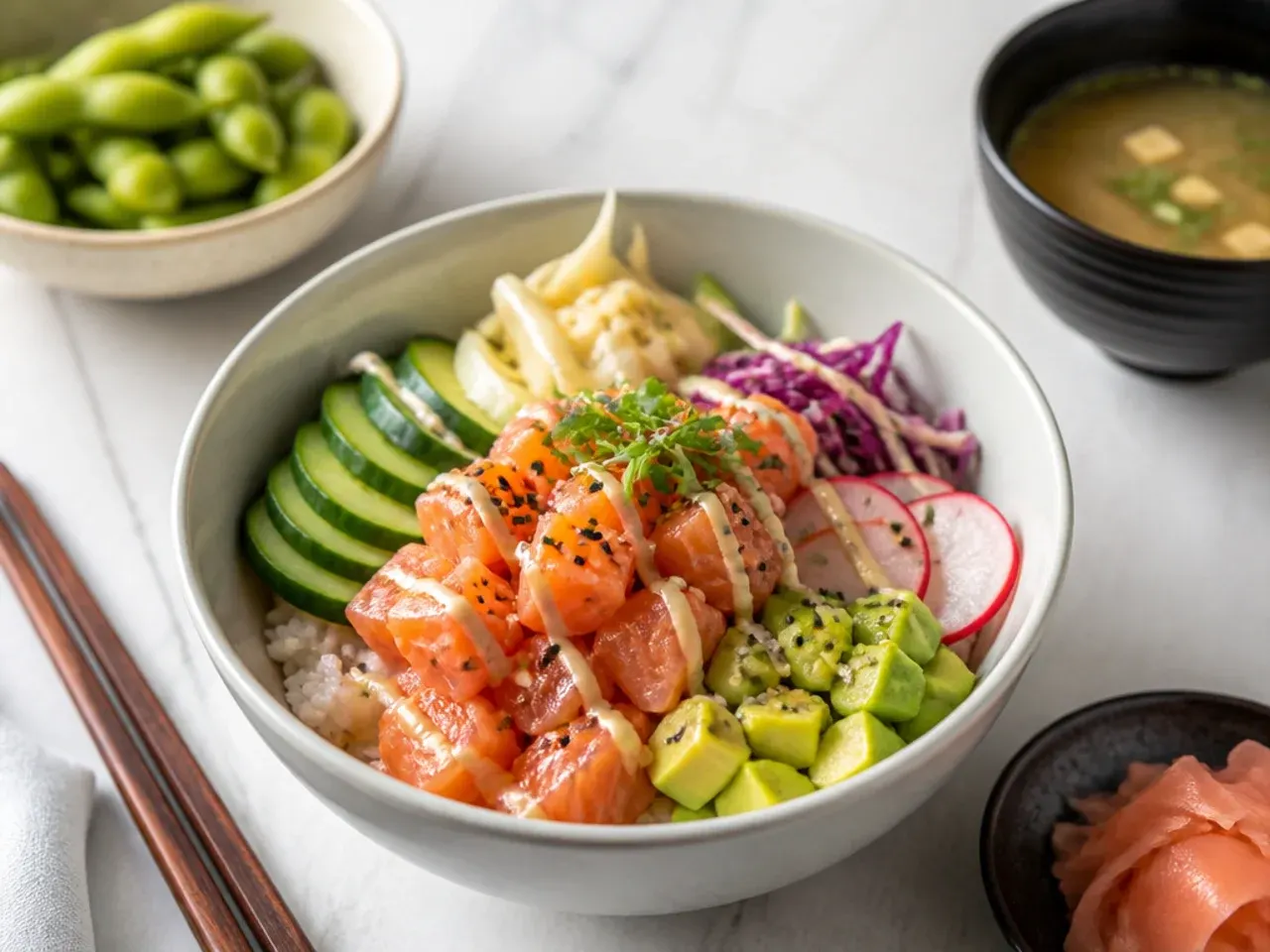
Round the bowl out the way a Japanese set meal would: a small cup of instant miso soup, steamed edamame pods tossed with flaky salt, or a bag of seaweed salad from the supermarket sushi counter. Plan on about 150 g (3/4 cup) of seasoned rice and 100 to 125 g of salmon per adult, and slightly less for kids. Serve soy sauce, pickled ginger and wasabi in small dishes at the table so everyone seasons their own bowl instead of you guessing. Cold green tea or a crisp lemonade suits the salty-sweet flavours better than heavy drinks. For guests, hand out chopsticks but quietly set spoons on the table too; seasoned rice is genuinely easier to eat with one.
Storage and Reheating
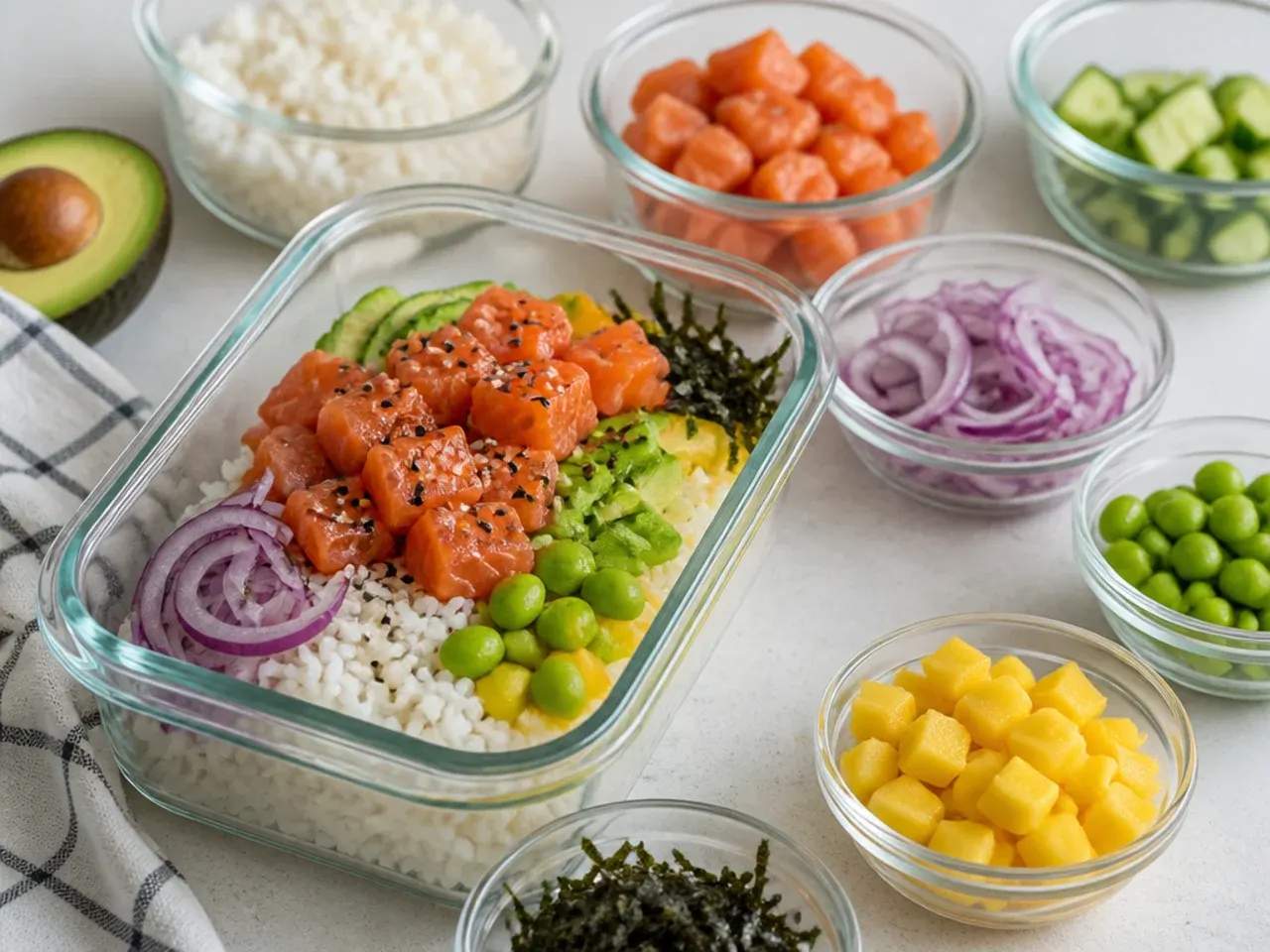
Store components separately in airtight containers rather than as assembled bowls. Cooked glazed salmon keeps for up to 3 days in the fridge; reheat it gently in the microwave in 30-second bursts or eat it cold, flaked over fresh rice. Seasoned rice keeps for 2 days; sprinkle it with a teaspoon of water, cover, and microwave for 60 to 90 seconds until steaming hot, which brings the sticky texture back. Any bowl made with raw marinated salmon must be eaten the day it is made and never reheated or kept as leftovers. Slice avocado fresh each time since it browns overnight, while sriracha mayo and soy-based sauces keep for a week in a sealed jar. Plain cooked rice also freezes well for up to a month in flat portions, but do not freeze the assembled bowl.
The Recipe
The Master Recipe
20 min
25 min
45 min
4
Beginner
Ingredients 4 Person(s)
Directions
Step 1: Rinse and cook the rice
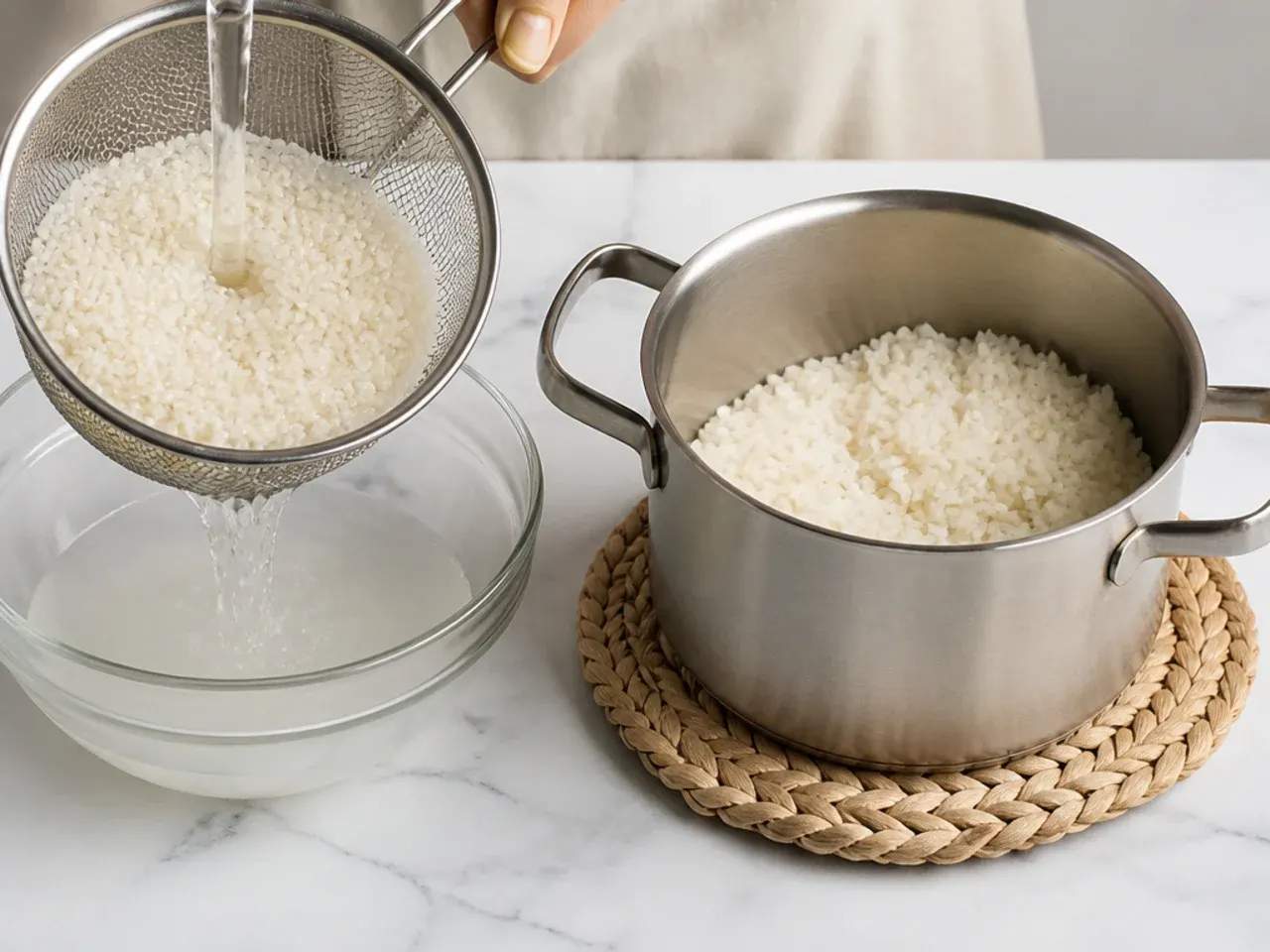
Put 300 g sushi rice in a sieve and rinse under cold running water for about 1 minute, swishing with your hand, until the water runs nearly clear. Tip it into a medium saucepan with 360 ml (1 1/2 cups) cold water, bring to a boil over high heat, then clamp on a lid and reduce to the lowest heat. Simmer for 12 minutes without lifting the lid, then take the pan off the heat and let it steam, still covered, for 10 minutes. The grains should be tender and glossy with all the water absorbed.
Step 2: Season the rice
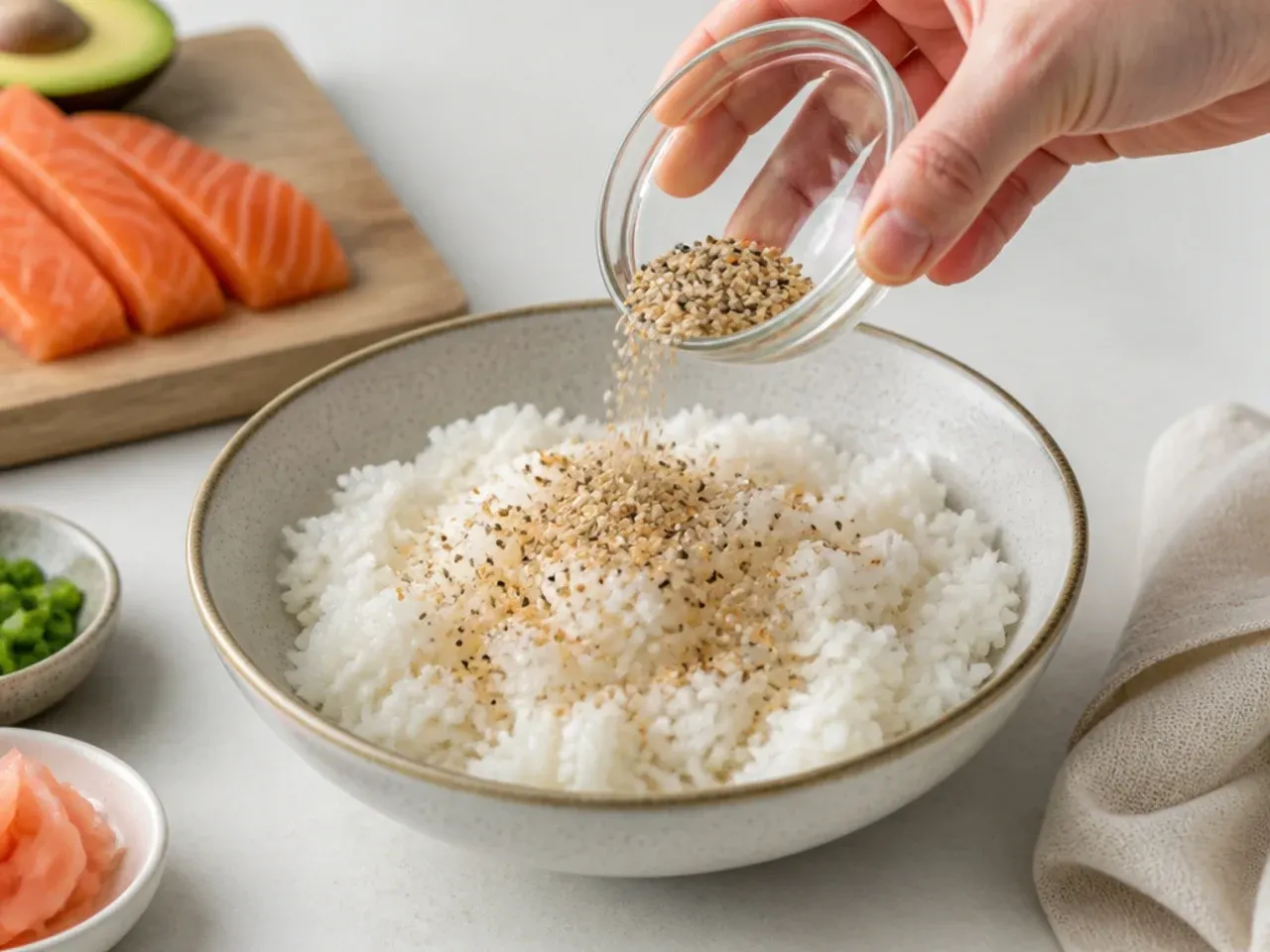
While the rice steams, stir 4 tablespoons rice vinegar, 1 tablespoon sugar and 1 teaspoon salt in a small bowl and microwave for 20 to 30 seconds (or warm briefly in a small pan) until the sugar dissolves. Turn the hot rice out into a wide, shallow bowl, drizzle the vinegar mixture over it, and fold it through with a spatula using gentle cutting strokes rather than stirring. The rice is ready when every grain looks shiny and it tastes gently sweet-sharp. Cover with a damp tea towel and set aside at room temperature.
Step 3: Mix the glaze and sriracha mayo
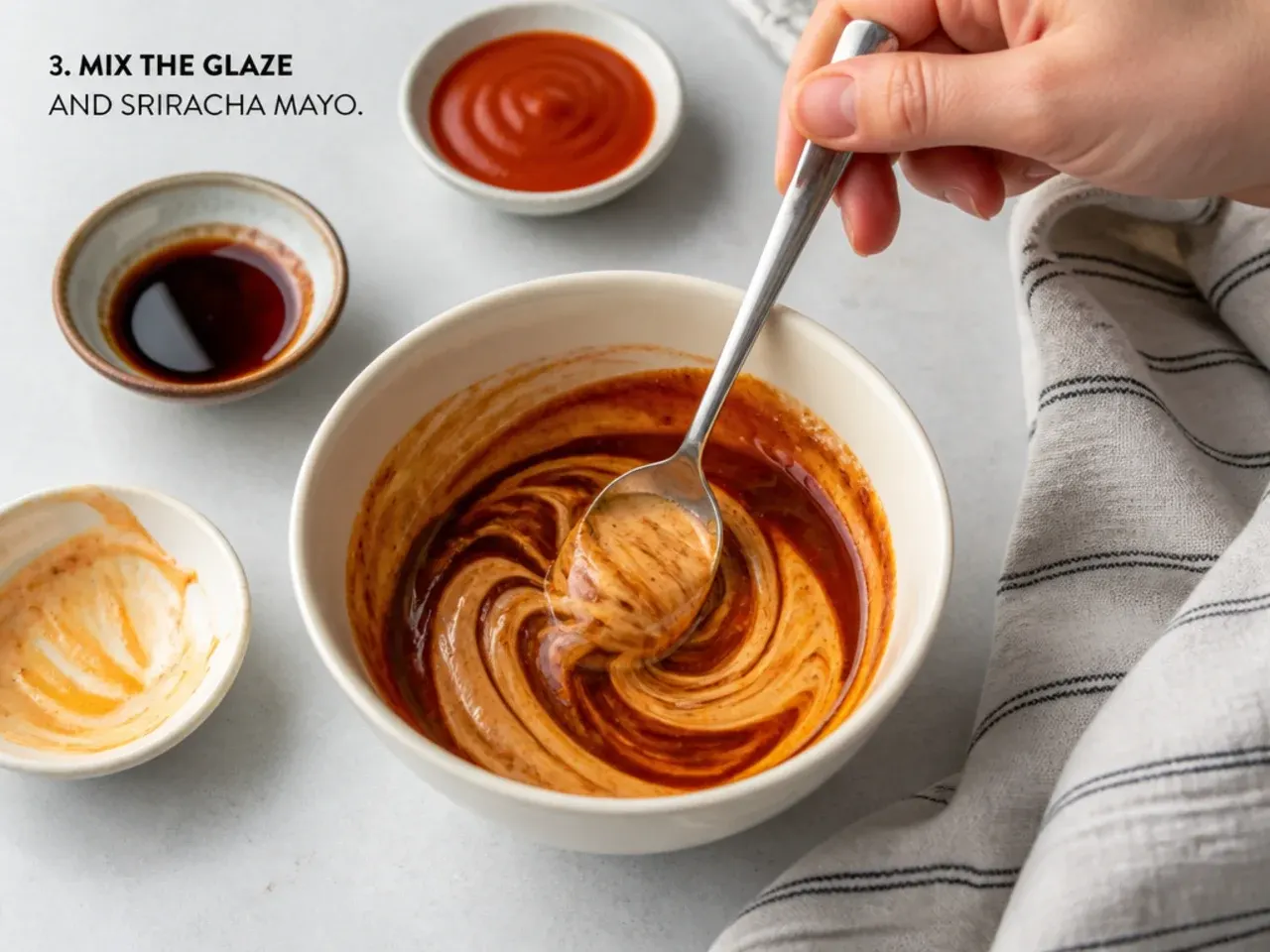
In a small bowl, whisk 2 tablespoons of the soy sauce with 1 tablespoon honey and 1 teaspoon toasted sesame oil to make the salmon glaze. In a second small bowl, stir 4 tablespoons mayonnaise with 1 tablespoon sriracha, loosening with 1 teaspoon of water so it drizzles easily off a spoon. Reserve the remaining 1 tablespoon soy sauce for serving at the table. Both sauces should be smooth with no streaks.
Step 4: Glaze and bake the salmon
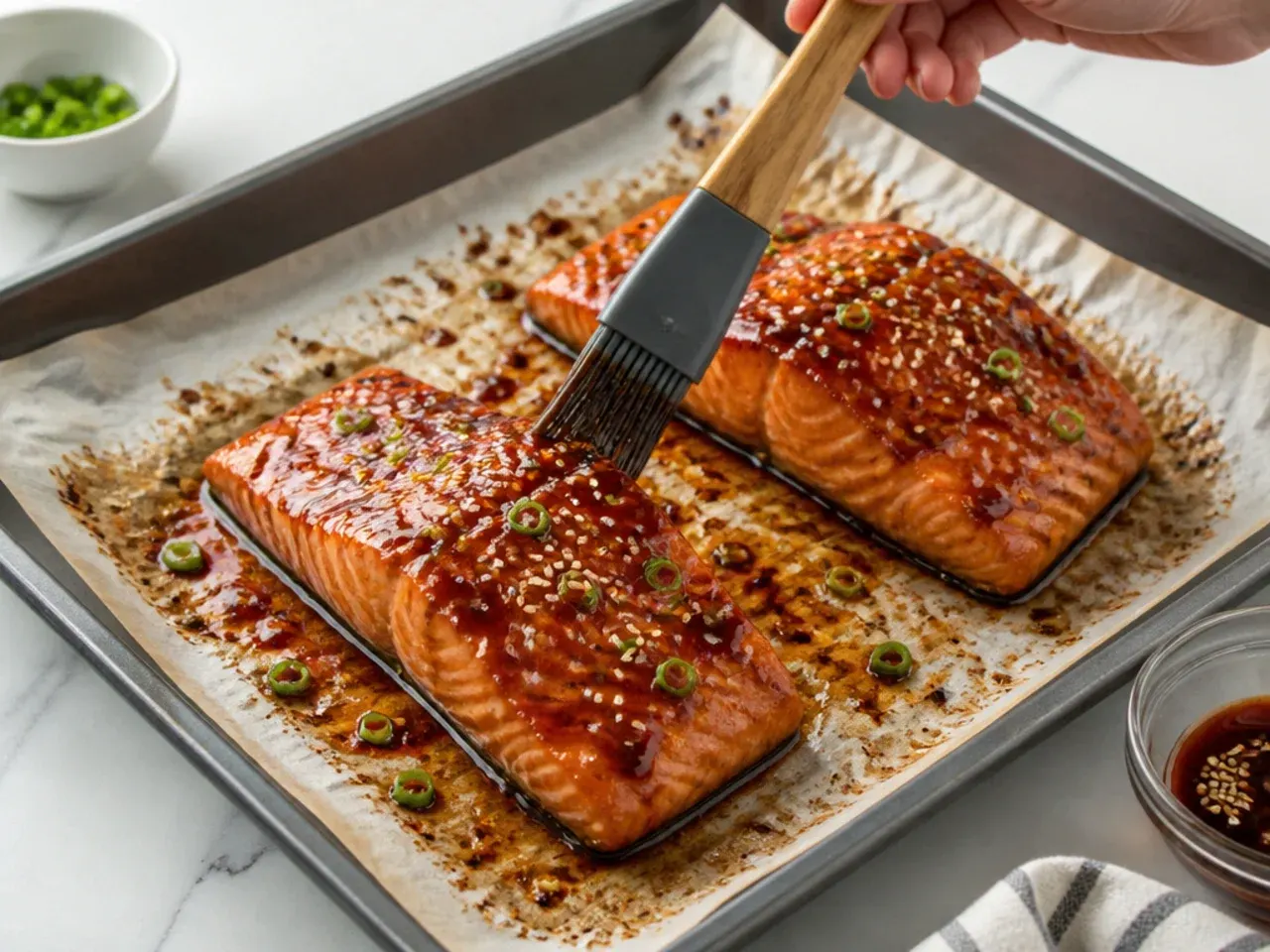
Heat the oven to 200°C (400°F) and line a baking tray with parchment. Pat the 4 salmon fillets dry with kitchen paper, place them on the tray skin-side down, and brush the tops and sides with about half of the soy-honey glaze. Bake for 12 to 14 minutes, until the thickest part flakes easily with a fork and reads 63°C (145°F) on a thermometer; if you prefer a softer, medium centre, pull it at 52°C (125°F). The surface should look lacquered and just starting to brown at the edges.
Step 5: Flake and dress the salmon
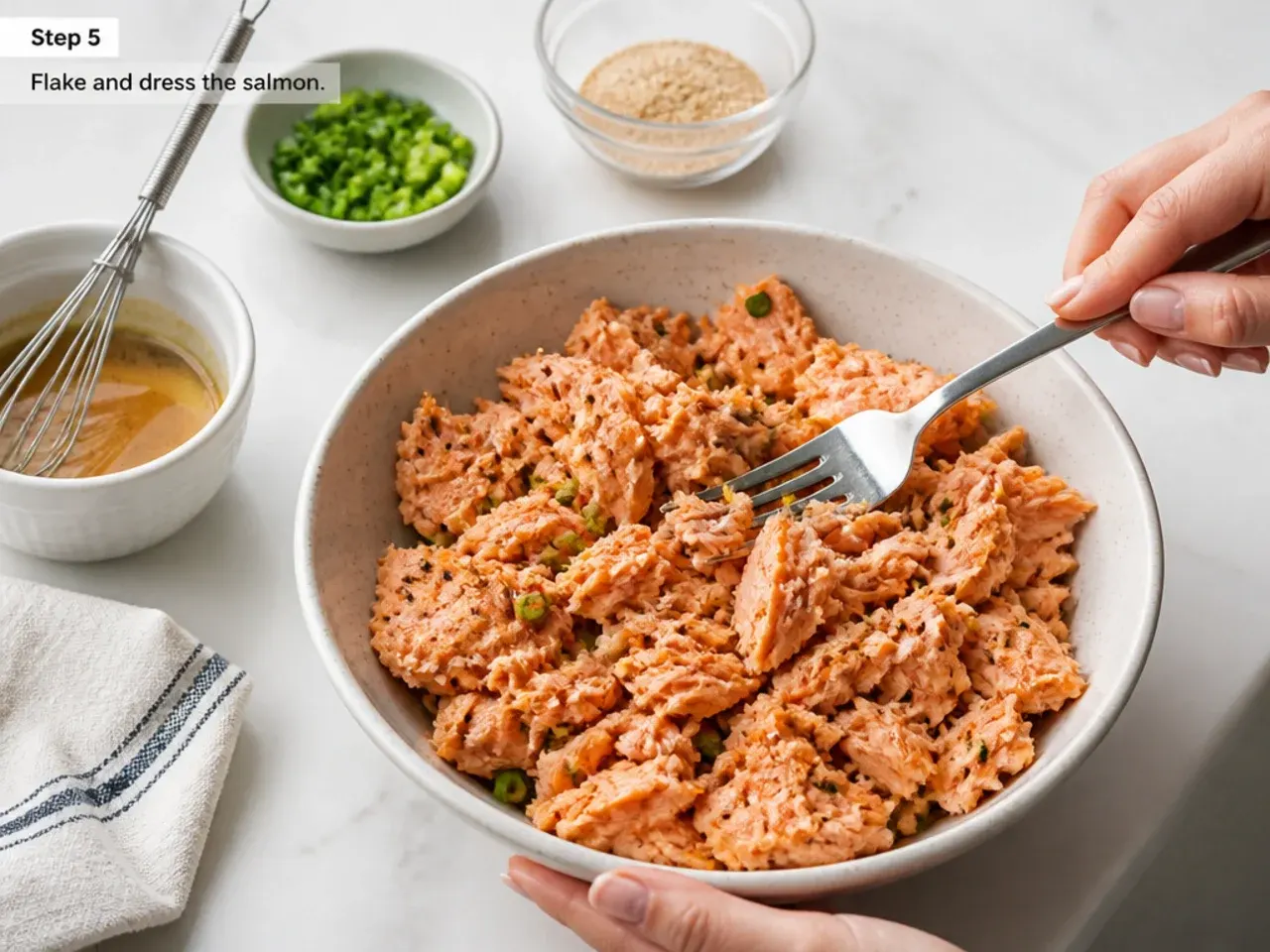
Rest the salmon on the tray for 2 to 3 minutes so the juices settle. Slide a spatula between the flesh and the skin if your fillets have it, then break each fillet into large 3 to 4 cm (1 1/2 inch) chunks with a fork. Spoon the remaining soy-honey glaze over the warm chunks and turn them gently so every piece is coated and glossy without breaking apart.
Step 6: Prep the toppings
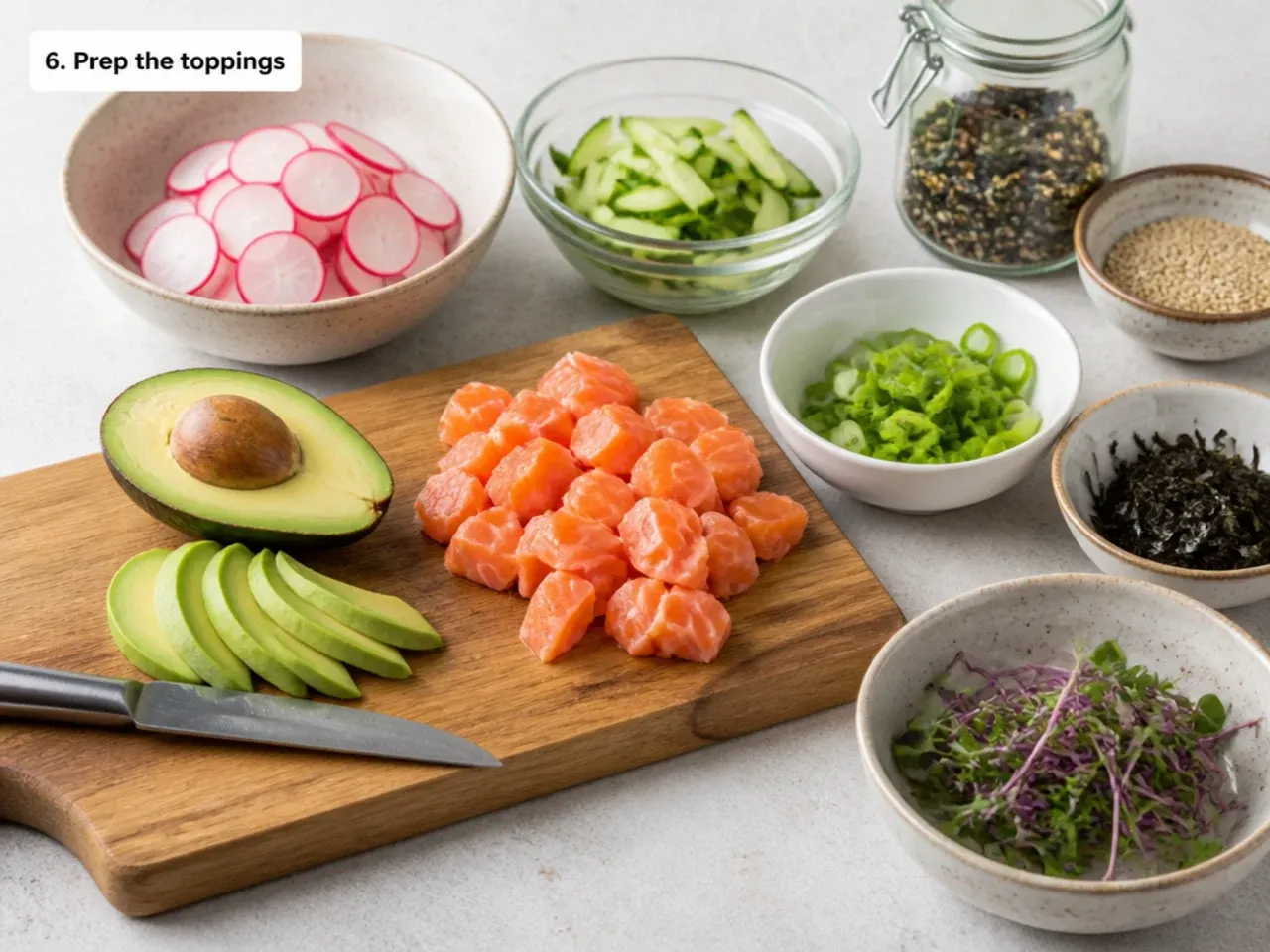
While the salmon rests, halve, stone and slice the avocado into thin fans, and cut the cucumber into thin half-moons about 3 mm (1/8 inch) thick. Snip the 2 nori sheets into short, thin strips with scissors. If your sesame seeds are untoasted, shake them in a dry pan over medium heat for about 2 minutes until golden and fragrant. Line everything up so assembly takes under a minute per bowl.
Step 7: Assemble the bowls
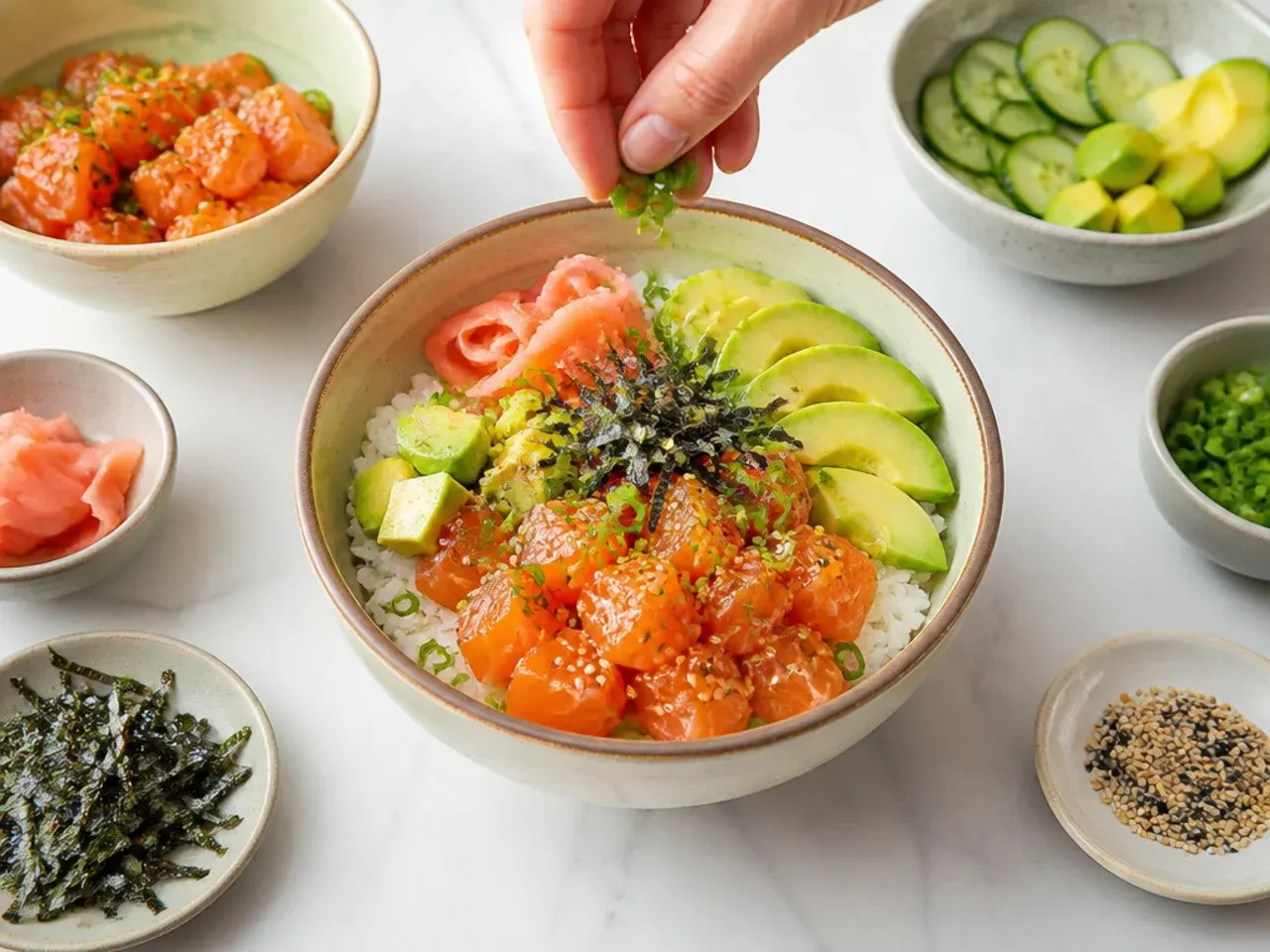
Divide the seasoned rice between 4 bowls, about a heaped 3/4 cup (roughly 200 g) each, and flatten it gently. Arrange the glazed salmon chunks over one side, then fan the avocado and cucumber around them so the colours stay separate. Drizzle each bowl generously with the sriracha mayo (spoon it into a small freezer bag and snip a corner for neat lines), then scatter with nori strips and toasted sesame seeds. Serve straight away with the reserved soy sauce at the table; each bowl should look layered and vivid, not stirred together.
Frequently Asked Questions
Yes, but only salmon that is safe to eat raw. Choose farmed salmon that has been commercially frozen to -20°C (-4°F) for at least 7 days, in line with FDA guidance for parasite destruction, and ask your fishmonger to confirm rather than relying on the unregulated "sushi-grade" label. Home freezers usually run around -18°C (0°F) and cannot reliably make store-bought fresh salmon safe. If in doubt, use baked, air-fried or smoked salmon instead; the bowl is just as good.
Save this for later 📌
Pin this article to your Pinterest board so the full list is one tap away when you need it.
Save on Pinterest