5 Things I Learned Making Gumbo at Home
Five honest lessons from making homemade gumbo — dark roux timing, warm stock, smart seasoning, and the chicken and andouille recipe that worked. If you love gumbo recipe inspiration, start with our Gumbo Recipes collection, then browse the full Dinner Recipes hub for more.

Save this for later 📌
Pin this article to your Pinterest board so the full list is one tap away when you need it.
Save on PinterestDinner Recipes
Intermediate
Kitchen Journal
5 steps
Table of Contents
- Lesson 1: A Real Roux Takes 40 Minutes, Not 10
- Lesson 2: The Trinity Goes Straight Into the Hot Roux
- Lesson 3: Warm Stock Only — Cold Broth Broke My Roux
- Lesson 4: Season at the End, Because the Andouille Does Half the Work
- Lesson 5: Skim the Fat, Rest the Pot — and Day-Two Gumbo Wins
- What I'd Tell a Friend Trying This
- The Recipe I Used
Lesson 1: A Real Roux Takes 40 Minutes, Not 10
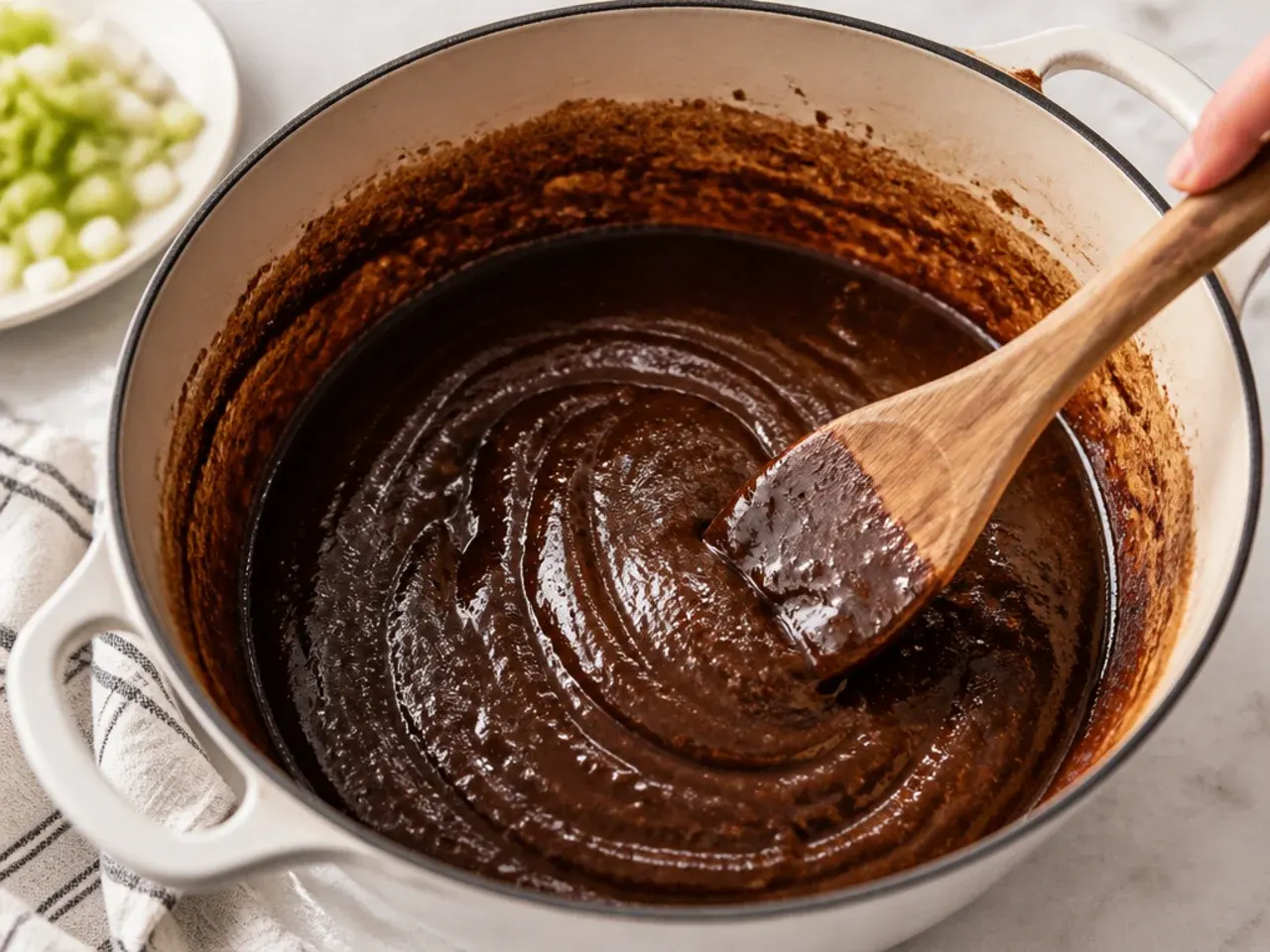
My first homemade gumbo failed because I gave the roux 12 minutes, called it done at a sandy beige, and ended up with a pot that tasted like wet flour. A proper Cajun roux is equal parts oil and flour cooked over medium-low heat for 30 to 40 minutes, stirred constantly, until it is the colour of melted dark chocolate. I now use a flat-edged wooden spoon so nothing catches in the corners of my Dutch oven, and I stay at the hob the entire time — the difference between chocolate brown and burnt is about 90 seconds. If you see black flecks or smell anything acrid, bin it and start again; oil and flour are cheap, and a burnt roux ruins everything it touches. If standing and stirring sounds miserable, an oven roux works: whisk the oil and flour in a Dutch oven, bake uncovered at 180°C (350°F), and stir every 20 minutes for about 90 minutes until it reaches that same dark chocolate shade.
Lesson 2: The Trinity Goes Straight Into the Hot Roux
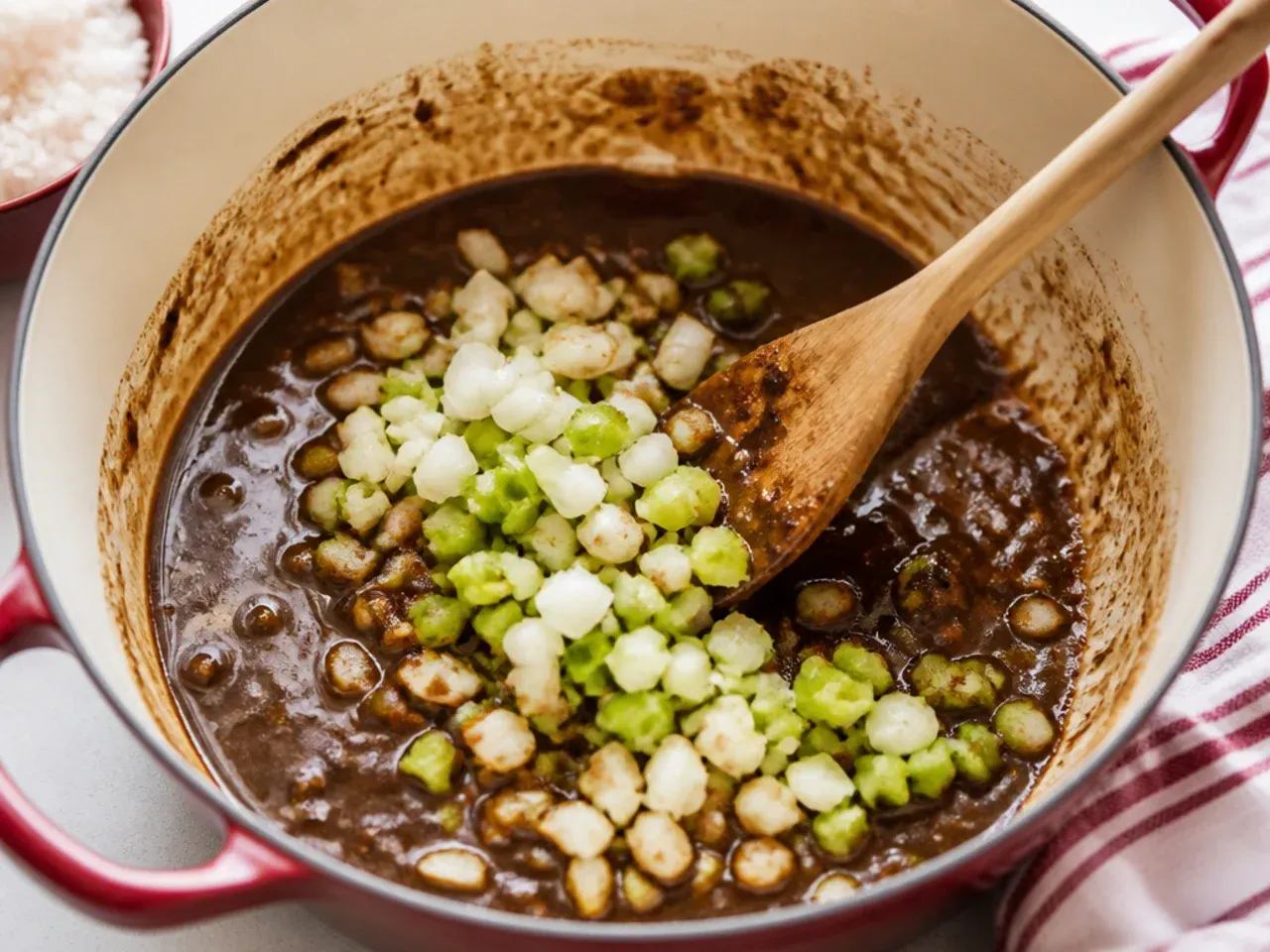
Here is the thing nobody told me: a roux keeps darkening even after you kill the heat, because the pot itself is holding so much energy. The fix is to have your holy trinity — one diced onion, one green bell pepper, and two celery stalks — chopped and waiting in a bowl, then tip the lot into the roux the second it hits the right colour. The vegetables drop the temperature instantly, stop the browning in its tracks, and soften right in that toasted flour for about 5 minutes, soaking up flavour as they go. I add the minced garlic only for the final minute, because it burns much faster than the rest. On my second attempt I chopped vegetables while the roux cooked, looked away too long, and paid for it — now everything is prepped before the oil ever hits the pan.
Lesson 3: Warm Stock Only — Cold Broth Broke My Roux
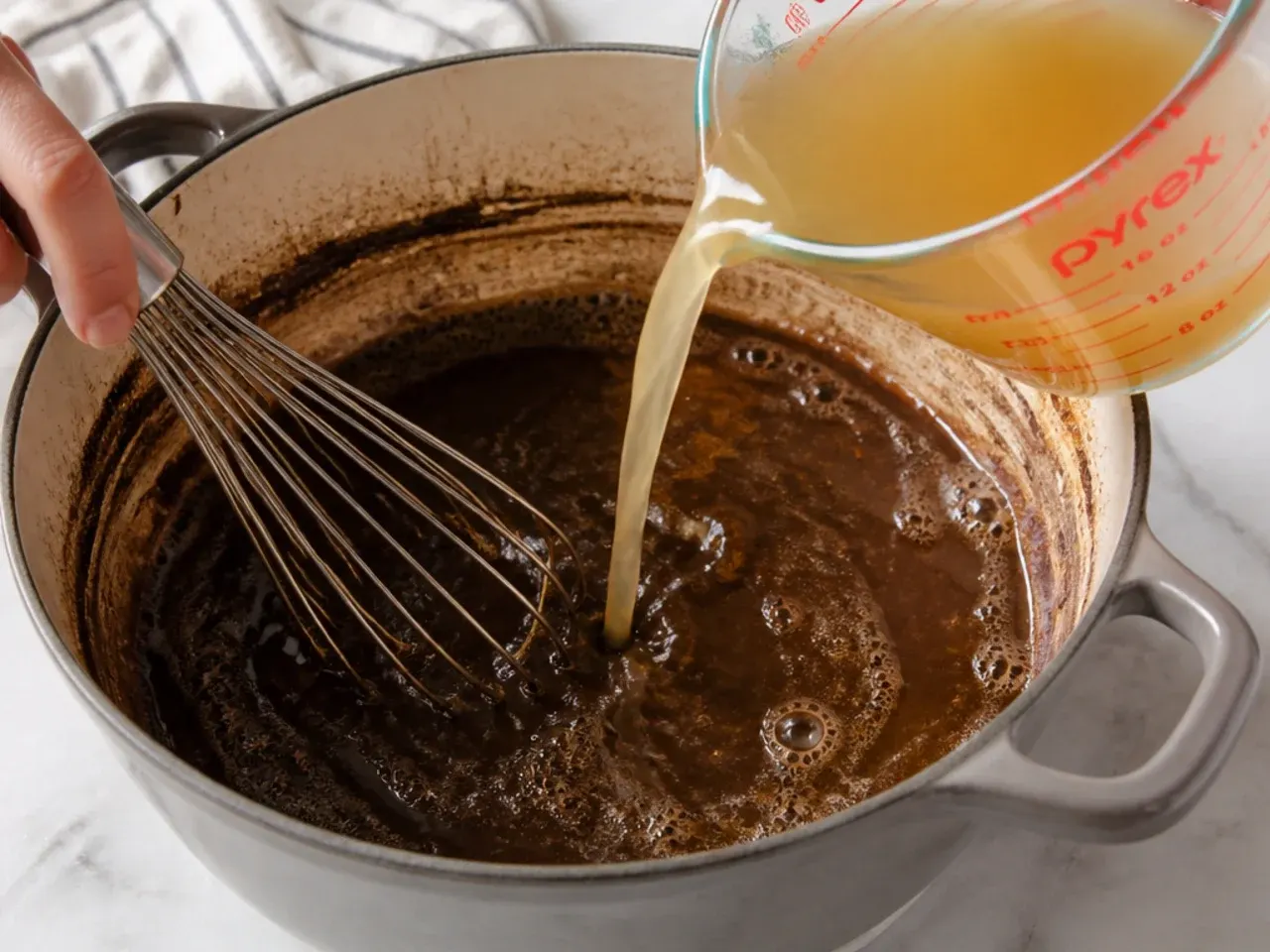
On attempt three I poured cold stock from the fridge straight into my beautiful dark roux and watched it seize into greasy lumps with a slick of oil on top. Cold liquid hitting a hot roux shocks it and can make it split, so now I warm the full 1.5 litres of chicken stock in a saucepan while the trinity cooks. I add it one ladleful at a time to start, whisking until each addition is completely smooth before adding the next, then pour in the rest once the base looks like glossy gravy. If your roux does break, take the pot off the heat and whisk steadily as it cools slightly — it will often come back together. This one change took my homemade gumbo from oily and grainy to silky, and it costs nothing but a second saucepan.
Lesson 4: Season at the End, Because the Andouille Does Half the Work
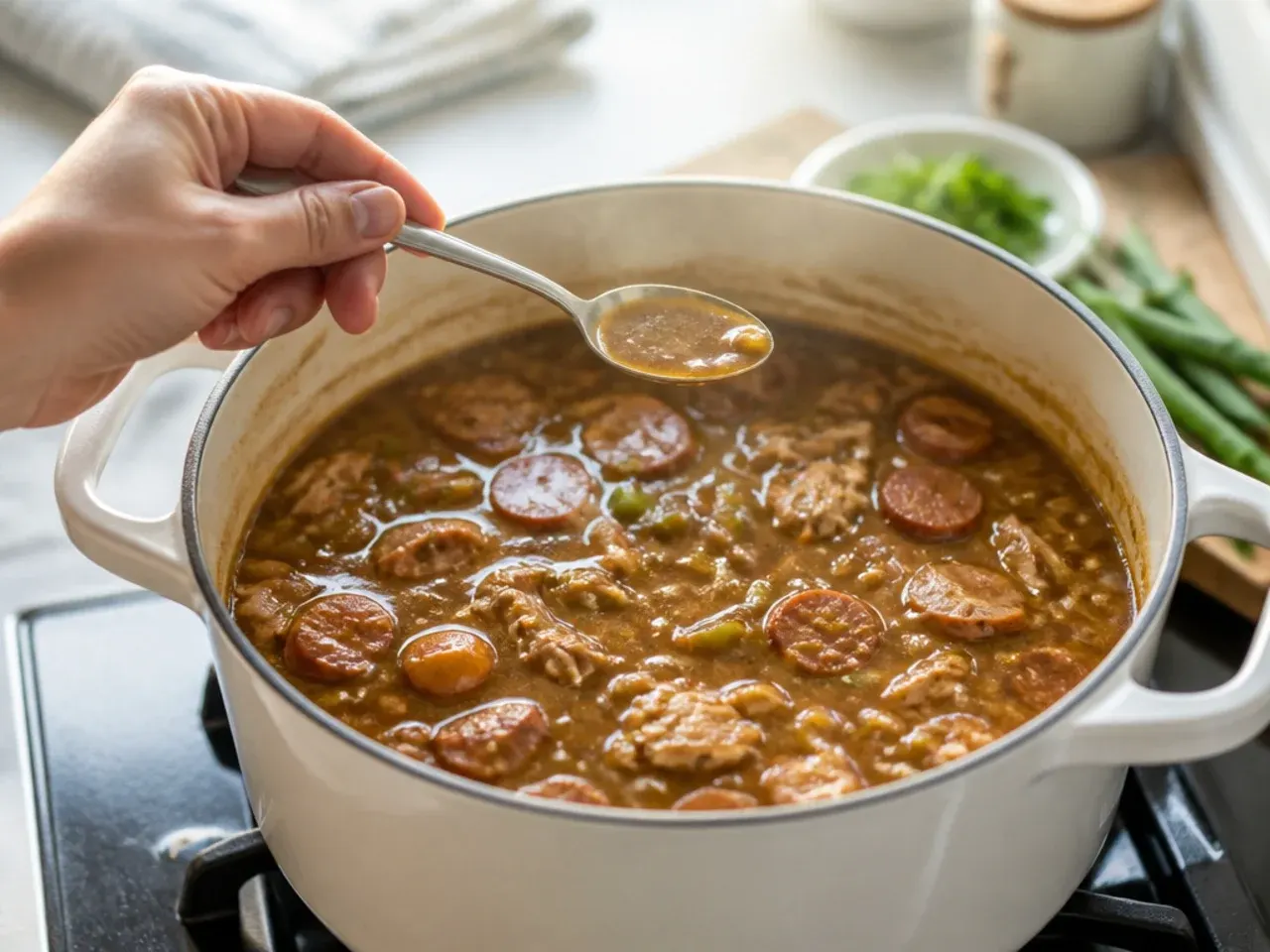
I over-salted my fourth pot because I seasoned it like a normal soup at the start, forgetting that andouille sausage, Cajun seasoning, and shop-bought stock all carry serious salt of their own. Now I add just 1 tablespoon of Cajun seasoning with the stock, then taste properly after the 45-minute simmer, once the sausage has released its smoke and spice into the broth. Brands vary wildly — some Cajun blends are half salt — so adjusting at the end is the only way to get it right every time. My finishing move is a pinch of cayenne for heat, a few dashes of hot sauce for vinegar tang, and an extra half tablespoon of Cajun seasoning if the broth tastes flat. A gentle squeeze of lemon right before serving brightens the whole pot without anyone being able to name what changed.
Lesson 5: Skim the Fat, Rest the Pot — and Day-Two Gumbo Wins
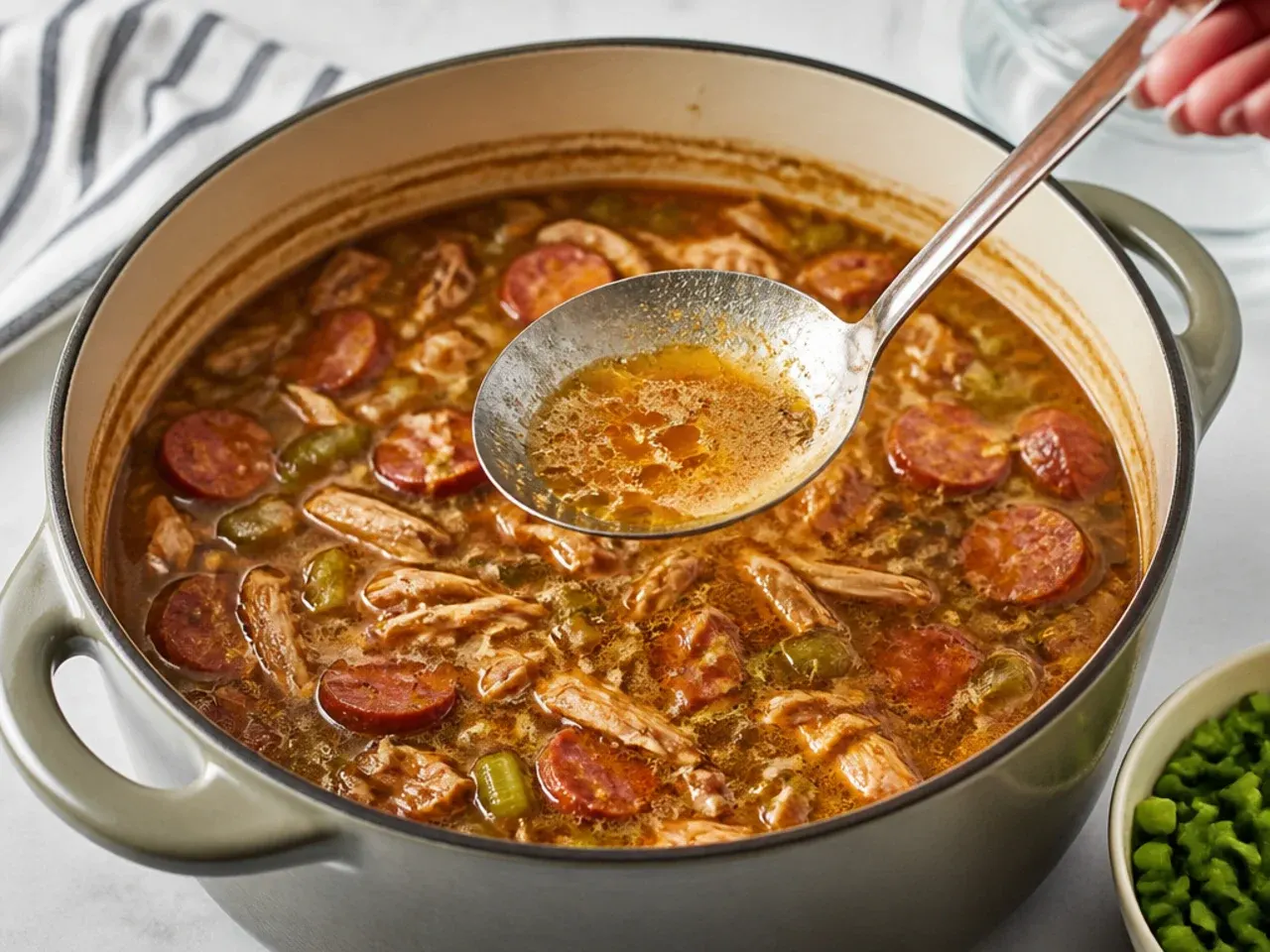
Gumbo releases a layer of orange-tinted fat from the sausage as it simmers, and leaving it there is why so many first pots taste greasy. I skim the surface with a large spoon every 15 minutes during the simmer, then let the finished pot rest off the heat for 15 minutes so the last of the fat rises for one final pass. The bigger discovery was that gumbo is genuinely better the next day: the roux flavour deepens, the trinity melts into the broth, and any remaining fat sets on top in the fridge so you can lift it off in one piece. Now when friends are coming over, I make the gumbo a full day ahead and just reheat it gently on the hob while the rice cooks. It stores in the fridge for 3 to 4 days, which makes this one of the best make-ahead dinners I know.
What I'd Tell a Friend Trying This

Clear a free evening, because homemade gumbo is a two-hour project and the roux will not tolerate multitasking — prep every single ingredient before the oil goes on the heat. Use a heavy-bottomed 5 to 6 litre Dutch oven or stock pot; thin pans create hot spots that burn the roux no matter how well you stir. Stick with a neutral oil like vegetable or canola rather than butter, since butter's milk solids scorch long before the roux reaches dark chocolate colour. Serve it over plain long-grain white rice with sliced spring onions and a bottle of hot sauce on the table, and freeze leftovers (without the rice) for up to 3 months. And if your first roux burns, welcome to the club — it happened to me, it happens to people in Louisiana, and the second one nearly always works.
The Recipe
The Recipe I Used
20 min
2 hr 5 min
2 hr 25 min
6
Intermediate
Ingredients 6 Person(s)
Directions
Step 1: Brown the Sausage and Chicken
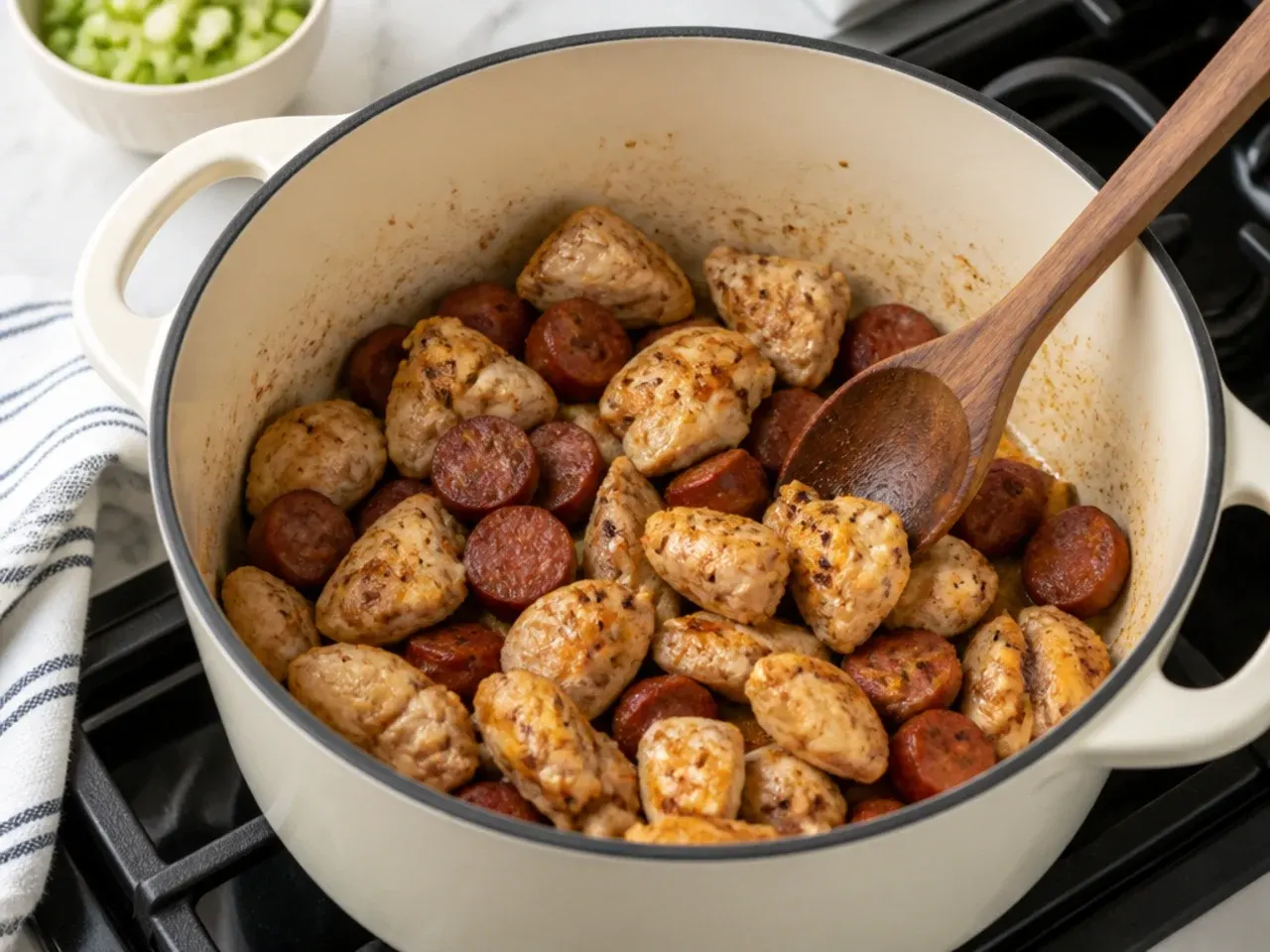
Pat the chicken thighs dry and season all over with 1 teaspoon of the Cajun seasoning. Set a heavy 5 to 6 litre Dutch oven over medium heat and brown the sausage coins for 2 to 3 minutes per side until the edges crisp, then transfer to a plate. Brown the chicken thighs in the rendered fat for 3 to 4 minutes per side — they will not be cooked through yet — and set them on the same plate. Leave the drippings in the pot.
Step 2: Cook the Dark Roux
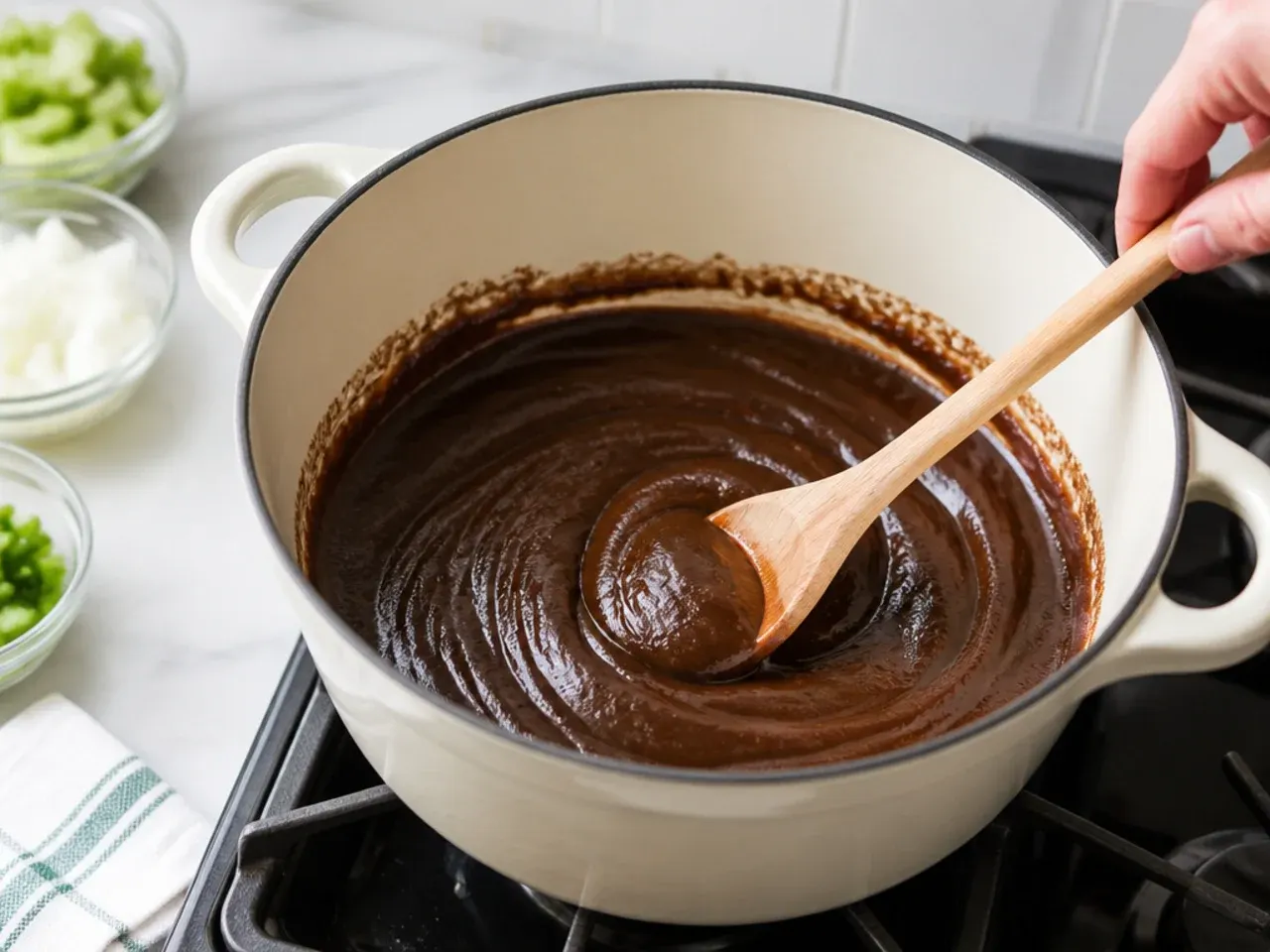
Pour the 150 ml oil into the pot with the drippings and reduce the heat to medium-low. Whisk in the 125 g flour until completely smooth, then stir constantly with a flat-edged wooden spoon for 30 to 40 minutes, scraping the bottom and corners, until the roux is the colour of melted dark chocolate. Do not walk away at any point. If you see black flecks or smell anything acrid and bitter, the roux is burnt — discard it, wipe the pot, and start again.
Step 3: Add the Trinity and Garlic
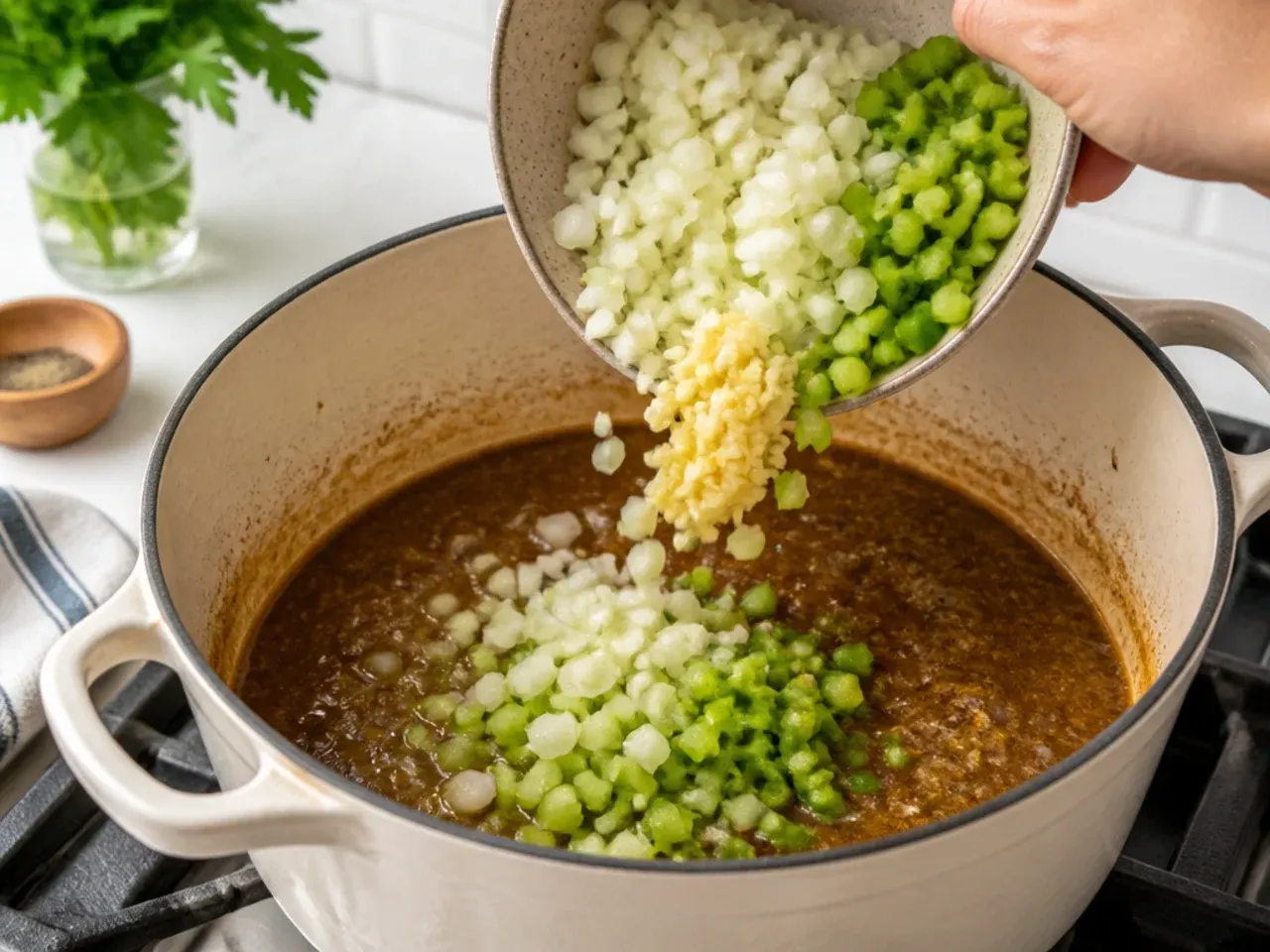
The moment the roux reaches dark chocolate colour, stir in the diced onion, bell pepper and celery — this immediately stops the roux from darkening further. Cook over medium-low heat for 5 minutes, stirring often, until the vegetables have softened. Add the minced garlic and cook for 1 minute more, just until fragrant.
Step 4: Whisk In the Warm Stock
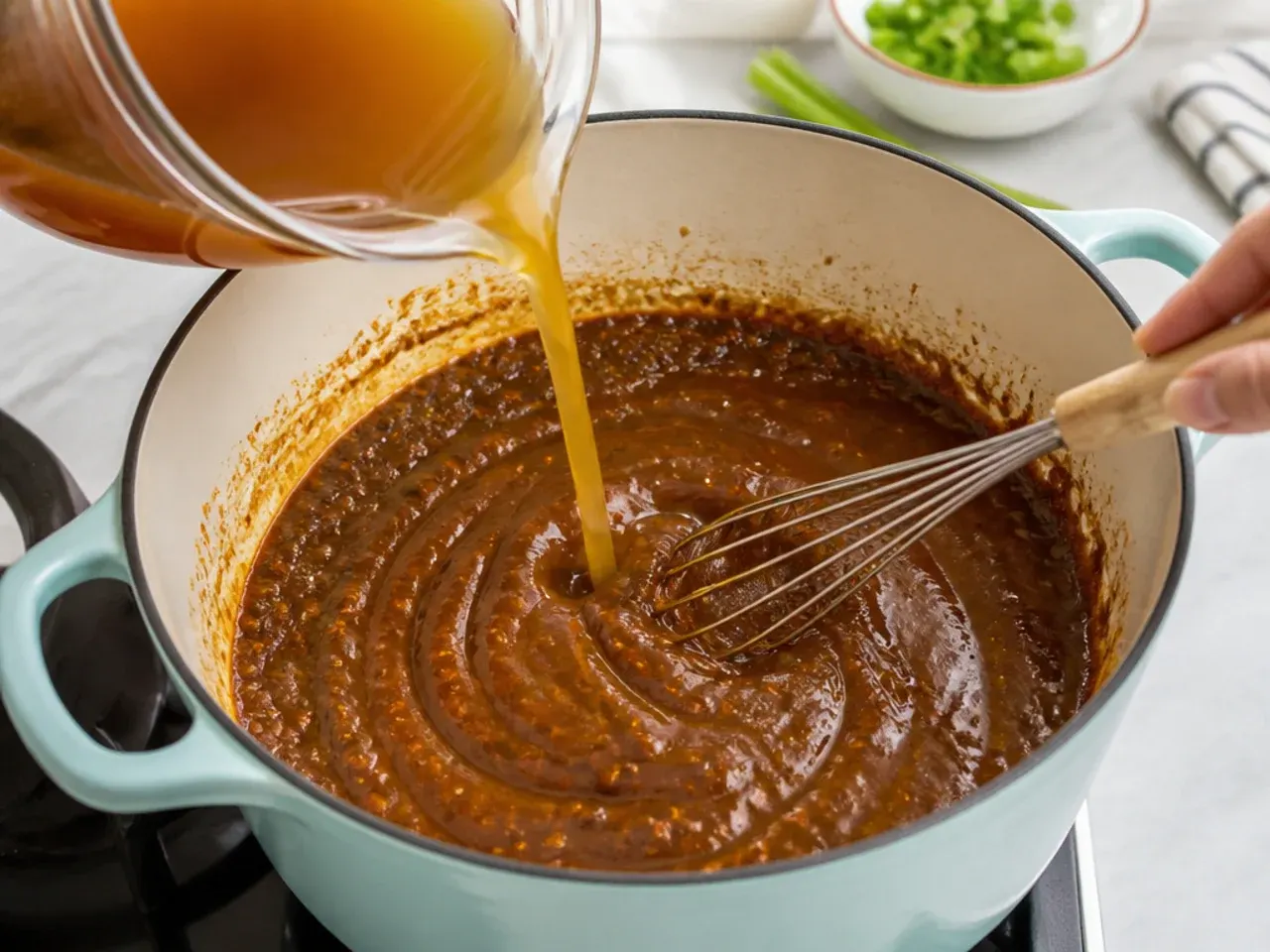
Add the warm chicken stock one ladleful at a time to start, whisking until each addition is fully incorporated and smooth before adding the next — cold or rushed stock can make the roux split. Once about half the stock is in and the base looks like glossy gravy, pour in the rest along with the bay leaves and 1 tablespoon of Cajun seasoning. Bring everything to a gentle boil over medium heat.
Step 5: Simmer Low and Slow
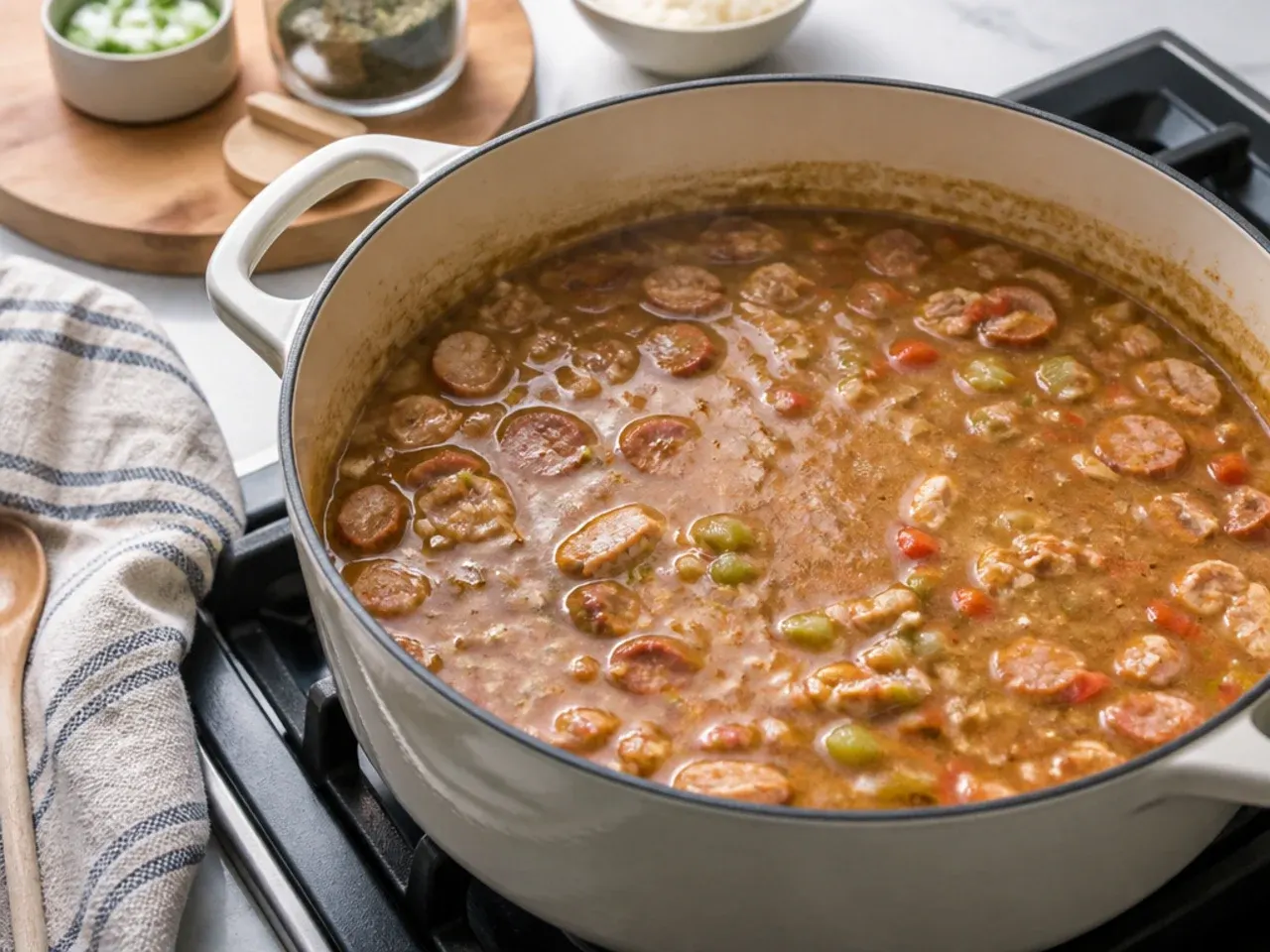
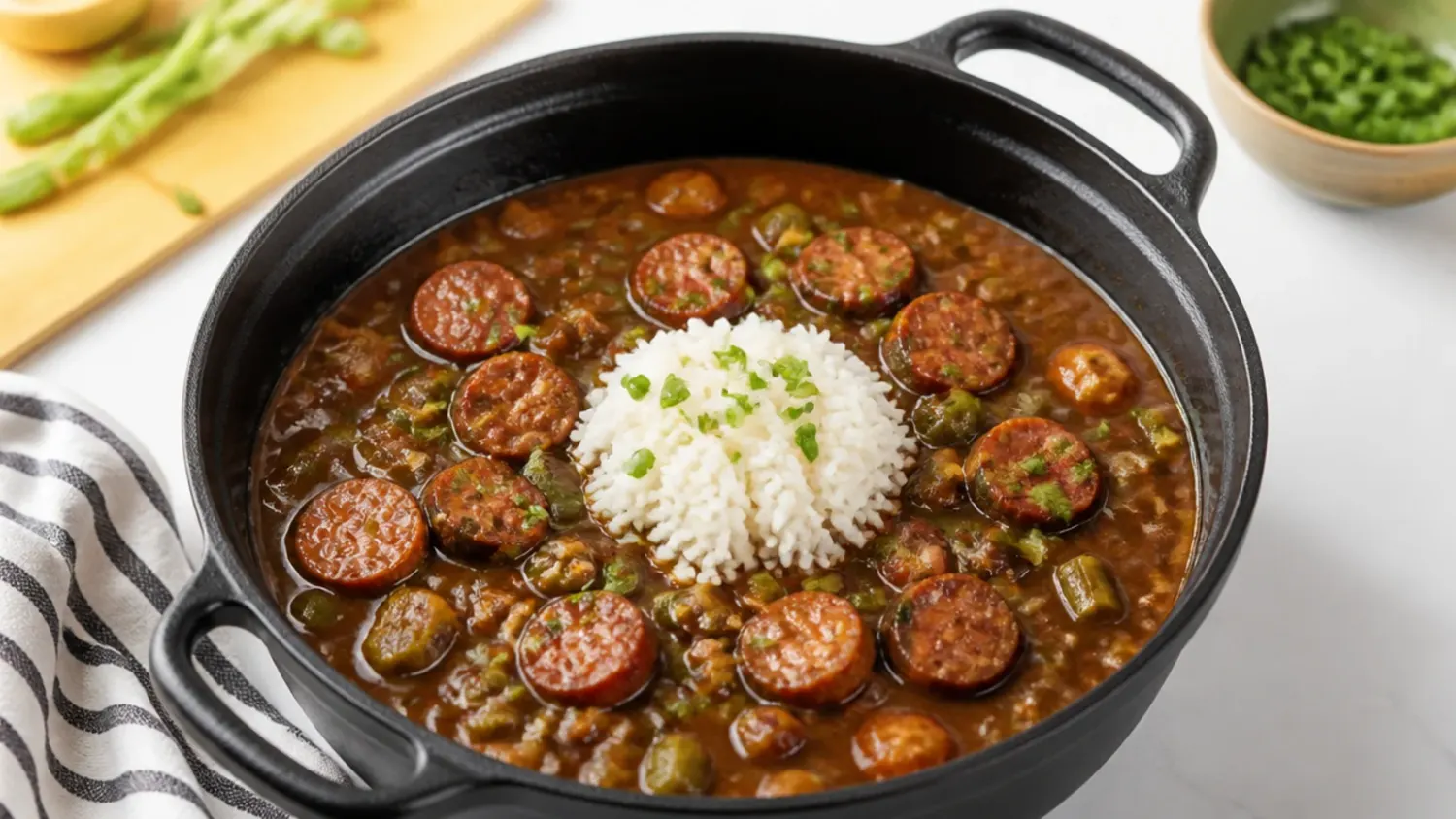
Return the browned chicken and sausage to the pot along with any juices from the plate. Reduce the heat to low and simmer uncovered for 45 minutes to 1 hour, stirring occasionally so nothing sticks. Skim the orange-tinted fat from the surface with a large spoon every 15 minutes or so — this is what keeps the finished gumbo from tasting greasy.
Step 6: Shred the Chicken and Adjust Seasoning
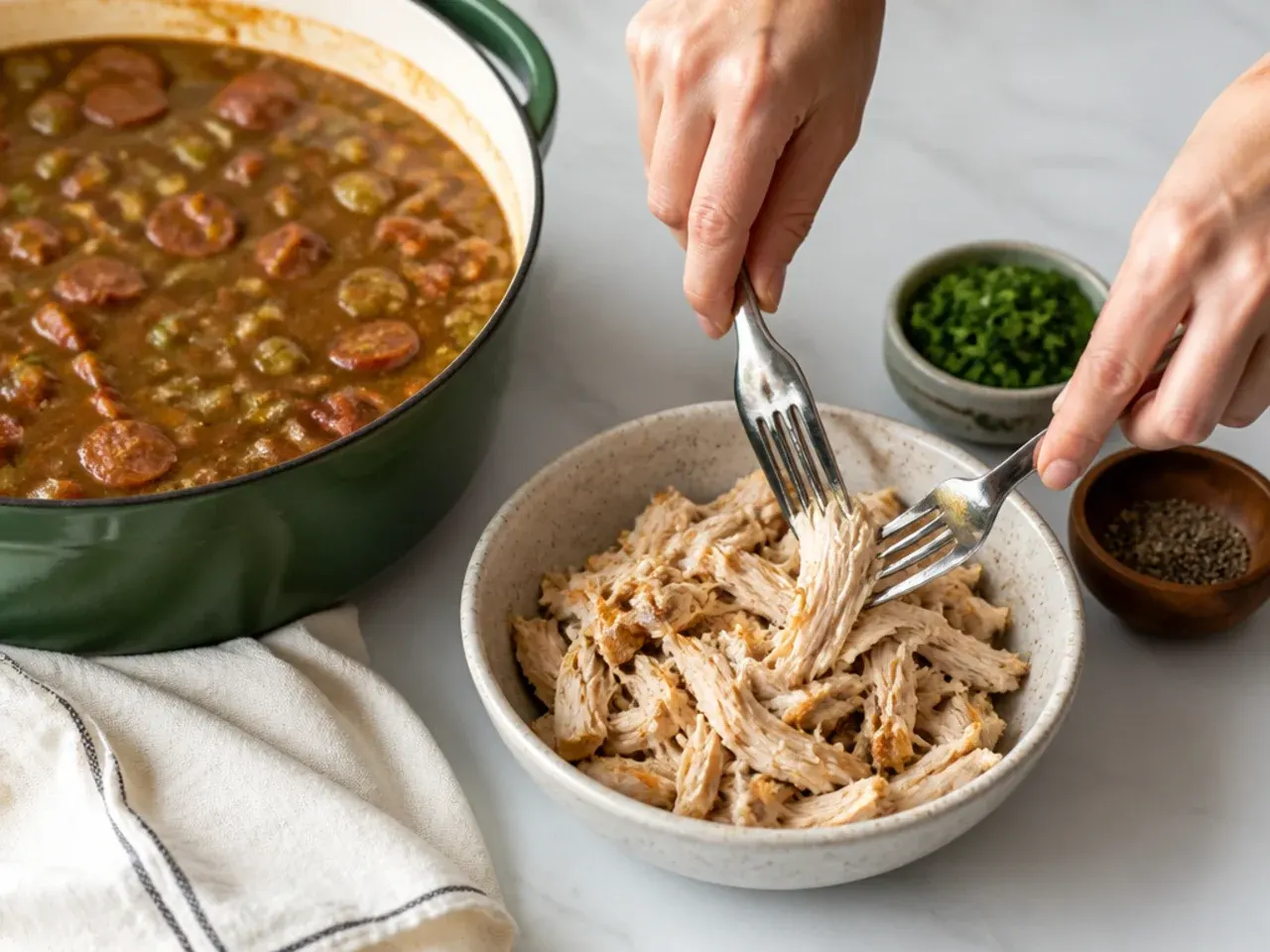
Lift the chicken thighs out onto a board, shred them with two forks, and stir the meat back into the pot. Taste the broth and adjust with salt, extra Cajun seasoning, a pinch of cayenne, or a few dashes of hot sauce — the andouille and stock carry salt, so always season at this stage rather than earlier. Simmer for 10 more minutes, then remove the bay leaves.
Step 7: Rest, Skim and Serve
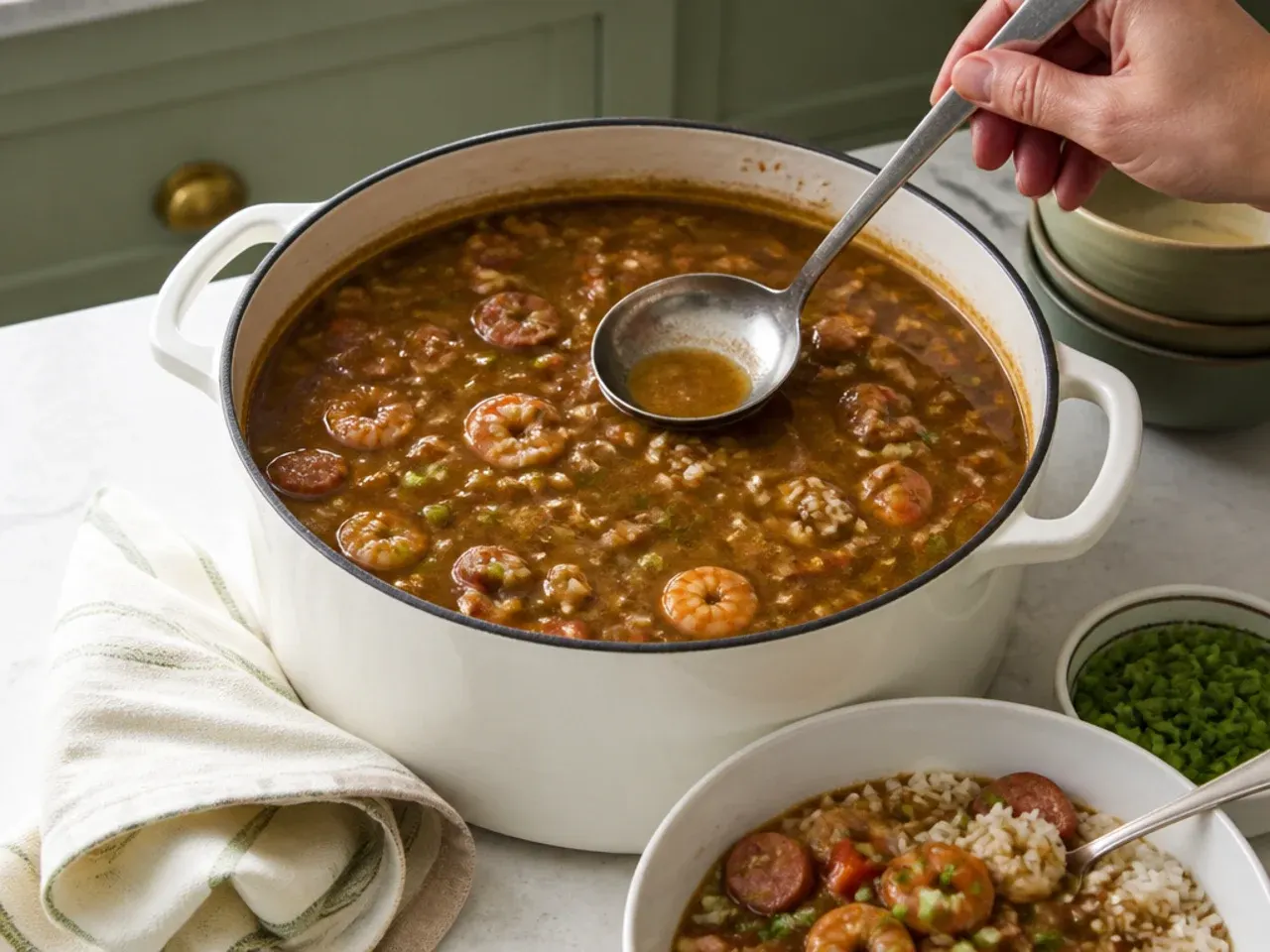
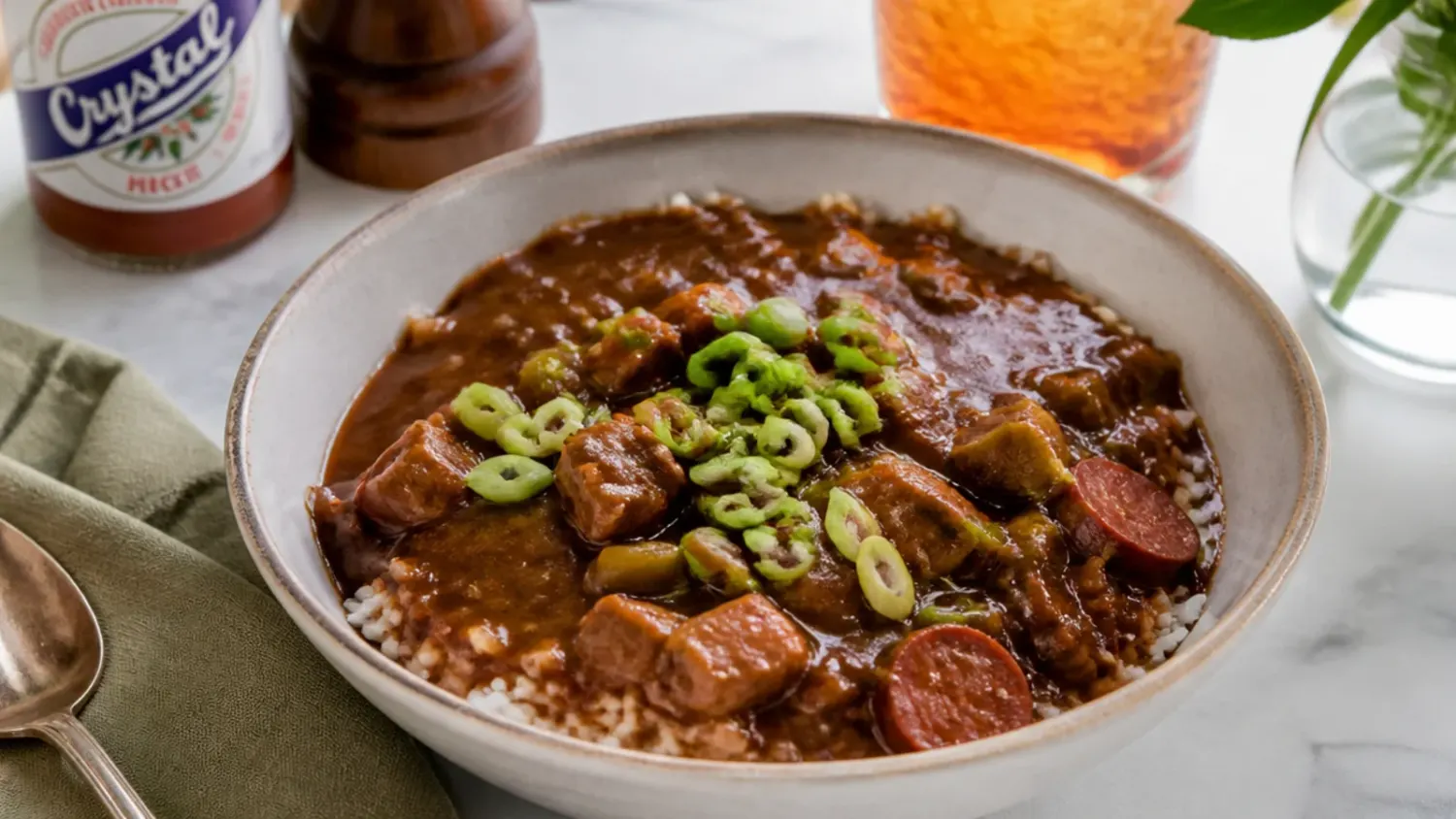
Take the pot off the heat and let it rest for 15 minutes — the flavours settle and any remaining fat rises for one last skim. Ladle the gumbo over hot long-grain white rice and top with sliced spring onions. If you like filé powder, stir about 1/4 teaspoon into each individual bowl off the heat; never add it to the simmering pot, as boiling makes it stringy.
Frequently Asked Questions
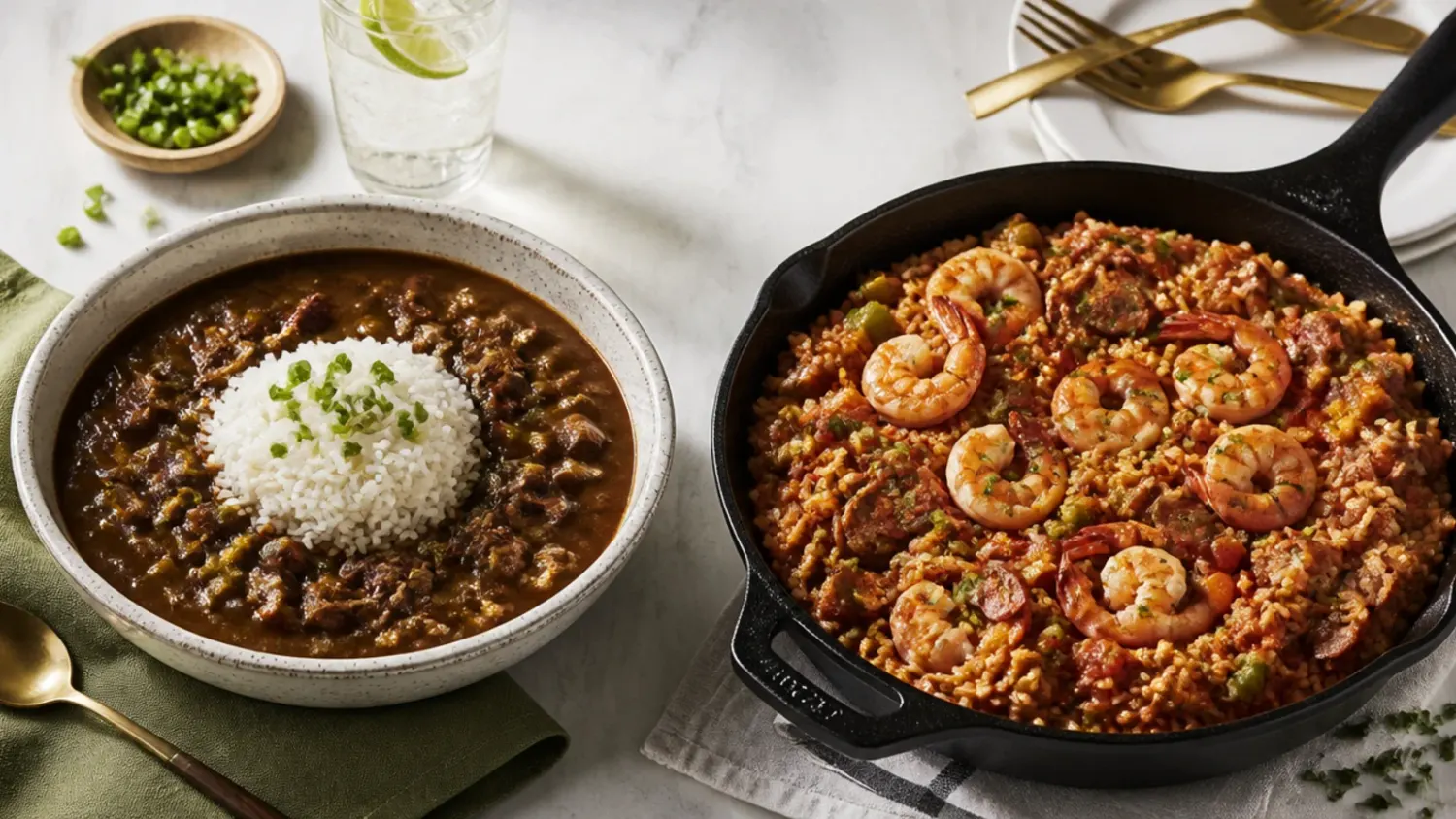
Gumbo is a roux-thickened stew that is cooked separately and ladled over rice, while jambalaya is a rice dish where the rice cooks directly in the pot with the meat and stock. If the rice is an ingredient, it's jambalaya; if the rice is a landing pad, it's gumbo.
Save this for later 📌
Pin this article to your Pinterest board so the full list is one tap away when you need it.
Save on Pinterest