5 Mistakes I Made Making Mango Sticky Rice
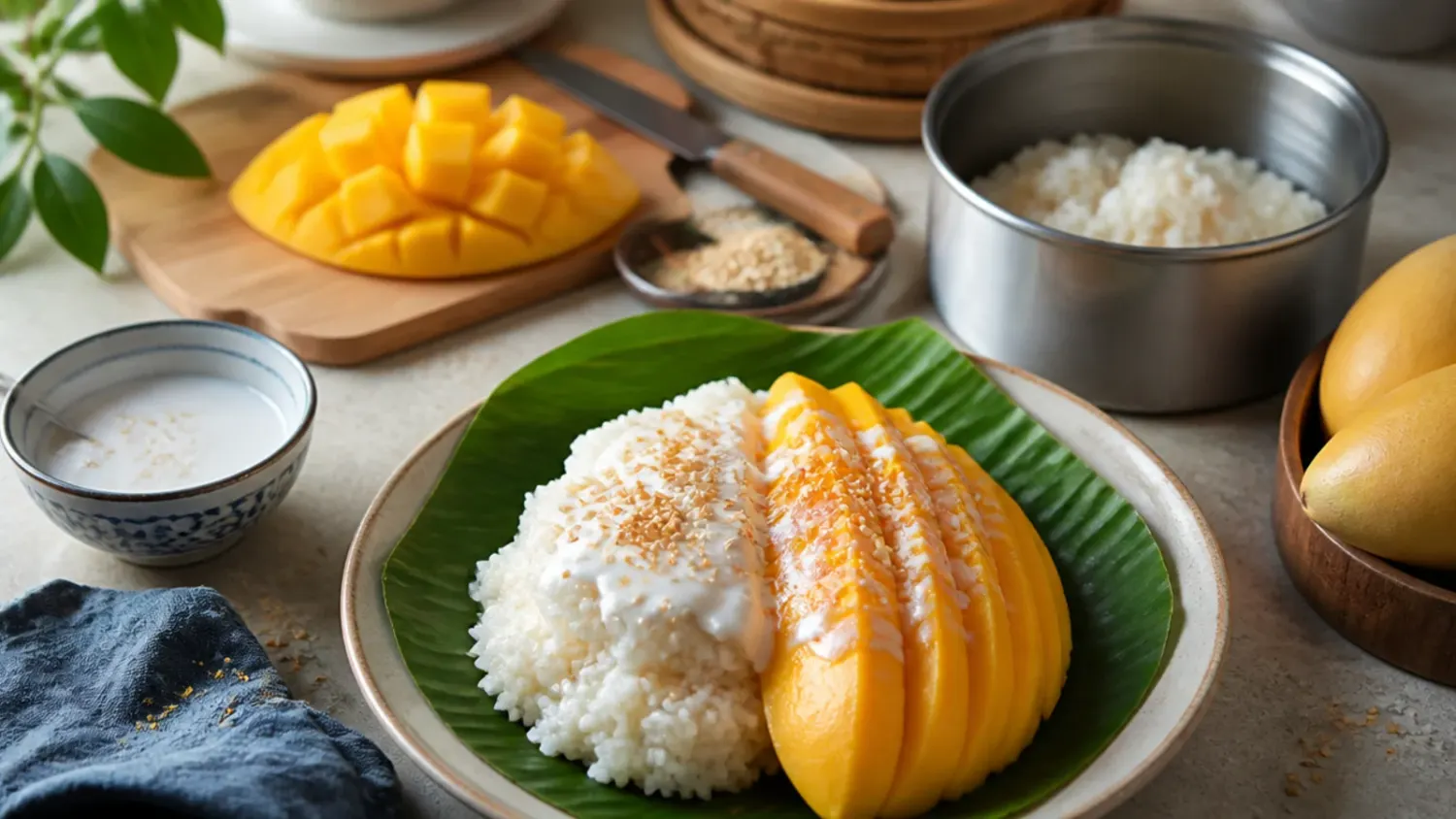
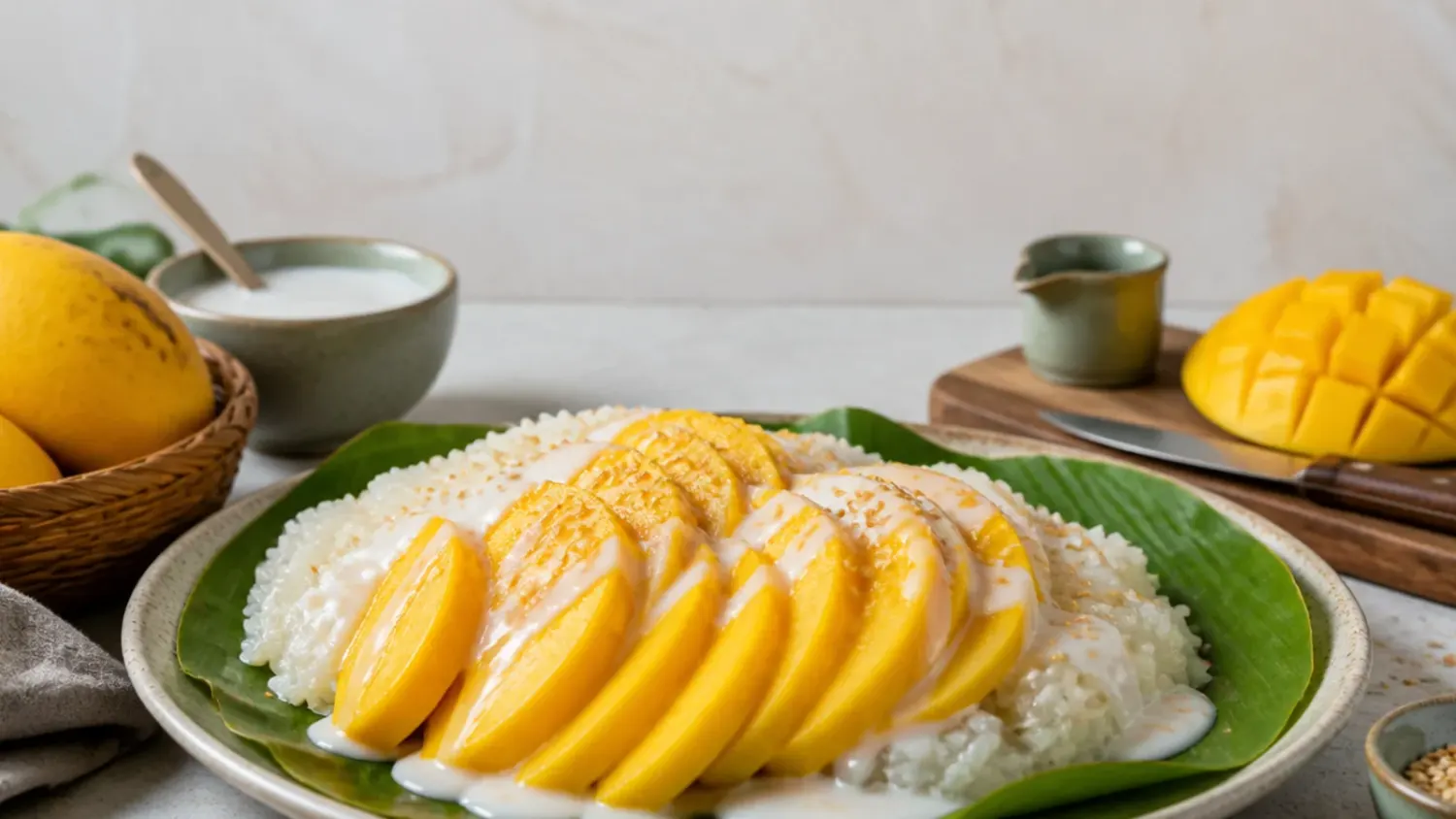
I ruined three batches of homemade mango sticky rice before getting it right. These five lessons cover the rice, the soak, the sauce and the mango. If you love mango sticky rice inspiration, start with our Mango Sticky Rice Recipes collection, then browse the full Desserts hub for more.
Save this for later 📌
Pin this article to your Pinterest board so the full list is one tap away when you need it.
Save on PinterestDesserts
Beginner
Kitchen Journal
5 steps
Table of Contents
- Lesson 1: Buy Real Glutinous Rice, Not Jasmine
- Lesson 2: Soak the Rice at Least 4 Hours, Ideally Overnight
- Lesson 3: Steam the Rice — Boiling Turns It to Glue
- Lesson 4: Heat the Coconut Sauce Gently, Then Let the Rice Rest 20 Minutes
- Lesson 5: Plan 3 to 5 Days Ahead for Properly Ripe Mangoes
- What I'd Tell a Friend Trying This
- The Recipe I Used
Lesson 1: Buy Real Glutinous Rice, Not Jasmine
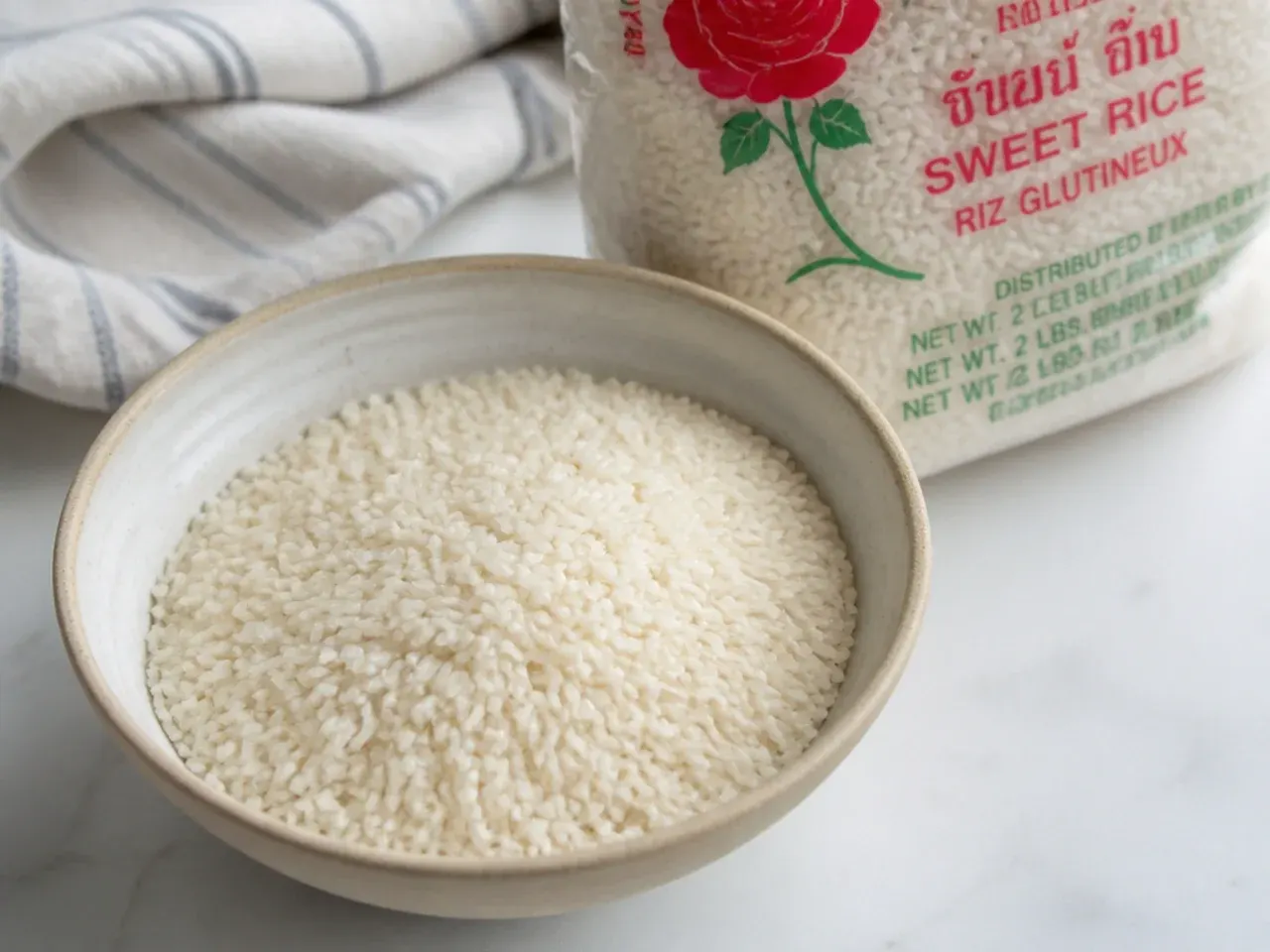
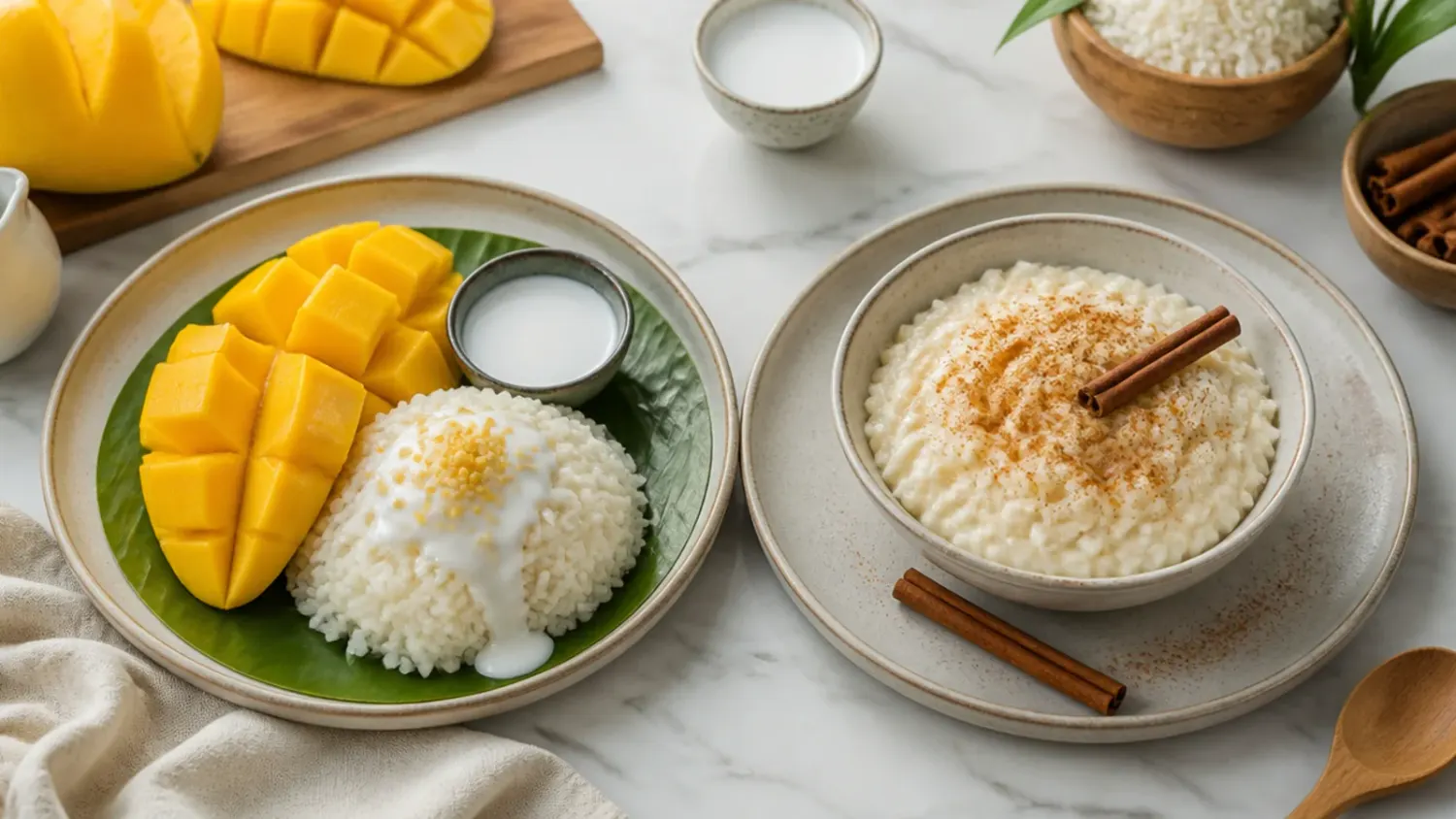
My first batch used jasmine rice because the bag said Thai fragrant rice, and I assumed that was close enough — I ended up with loose coconut rice pudding, not sticky rice. Glutinous rice (sold as sweet rice or sticky rice) is a different grain that is almost pure amylopectin starch, which is what gives the dish its dense, chewy, almost mochi-like bite. Look for Thai brands like Erawan or Three Ladies in an Asian supermarket or the world foods aisle; a 1 kg bag costs around £2 to £3 and keeps for months. Jasmine, basmati and regular long-grain will never set properly no matter how you cook them, because their starch structure cannot absorb the coconut sauce and hold together. If you truly cannot find it, short-grain sushi rice is the only substitute that gets you somewhere close.
Lesson 2: Soak the Rice at Least 4 Hours, Ideally Overnight
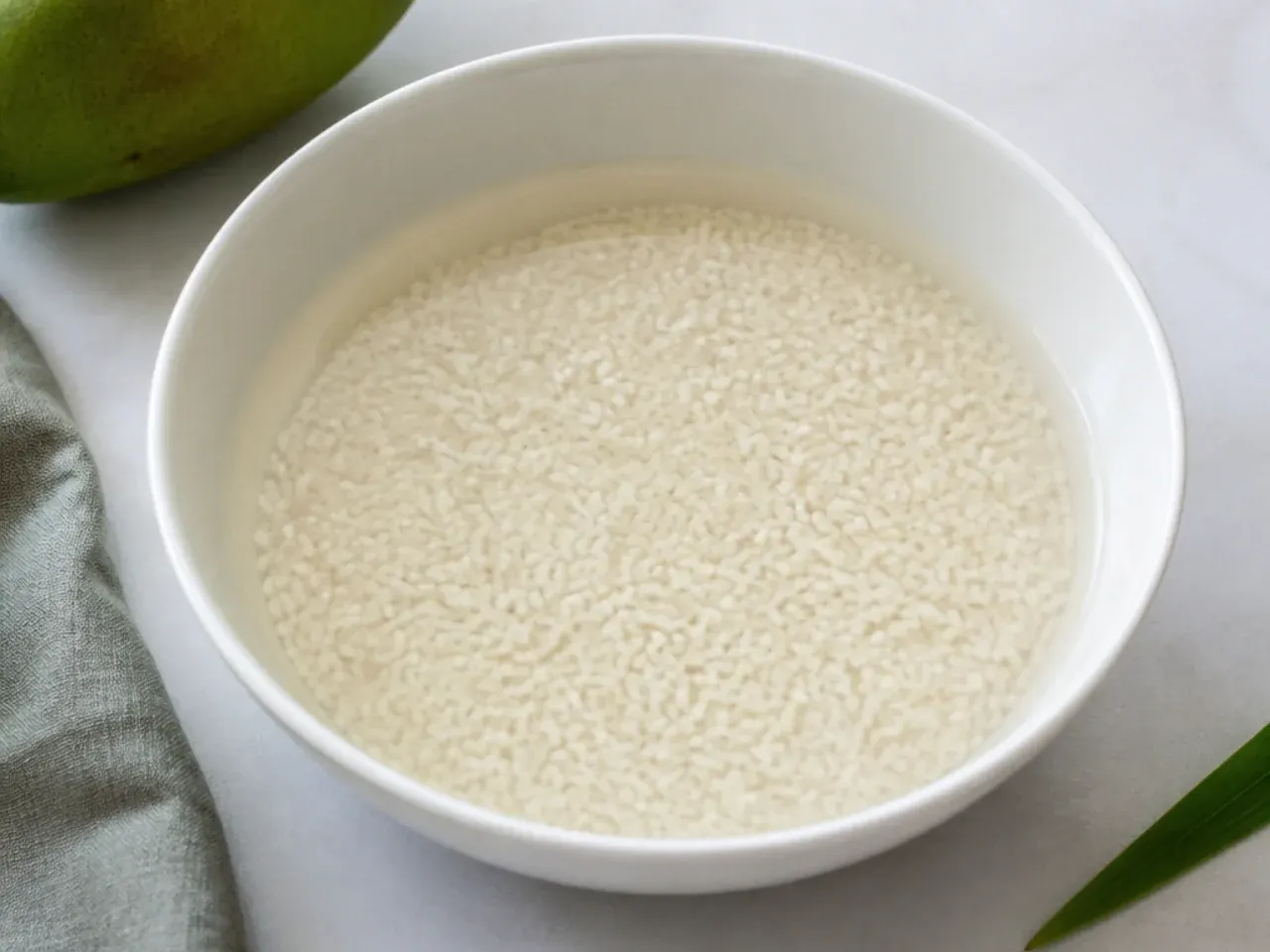
Batch two failed because I did a 30-minute quick soak, and the centres of the grains stayed chalky and crunchy even after 25 minutes of steaming. Glutinous rice cooks by steam alone, so the water it absorbs during soaking is the only moisture it gets — skip the soak and the inside simply never cooks. Rinse the rice in 4 or 5 changes of cold water until it runs mostly clear, then cover it by 5 cm (2 inches) of cold water and leave it for at least 4 hours; overnight on the counter is even better. You can tell it is ready when the grains have turned from translucent to opaque white and snap cleanly when pressed between two fingernails. Now I just start the soak before bed, and the rice is perfect by lunchtime.
Lesson 3: Steam the Rice — Boiling Turns It to Glue
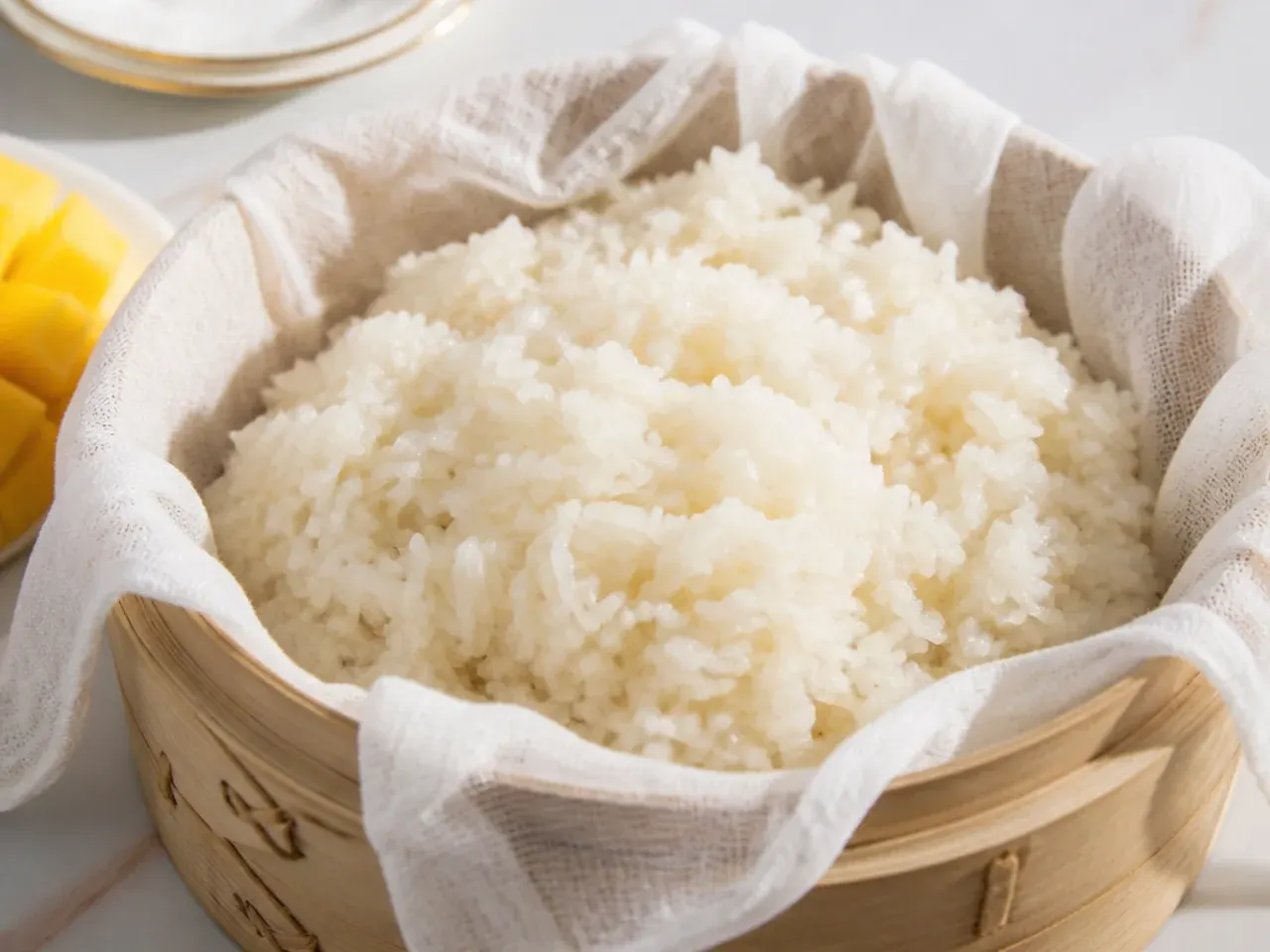
I boiled my second attempt like ordinary rice in a saucepan of water, and the outsides of the grains burst into a gummy paste while the middles stayed firm. Sticky rice must cook over water, never in it: line a steamer basket with muslin or cheesecloth, spread the drained rice in an even 2 to 3 cm layer, and steam over simmering water for 20 to 25 minutes, flipping the whole bundle once at the halfway point so it cooks evenly. The rice is done when the grains look glossy and translucent and a pinch feels chewy with no hard core. No steamer? Do what I did: set three scrunched foil balls in a large lidded pot with 3 cm of boiling water, rest a heatproof plate or metal sieve of rice on top, and cover. A rice cooker on the standard setting also works in a pinch, though the texture comes out slightly softer.
Lesson 4: Heat the Coconut Sauce Gently, Then Let the Rice Rest 20 Minutes
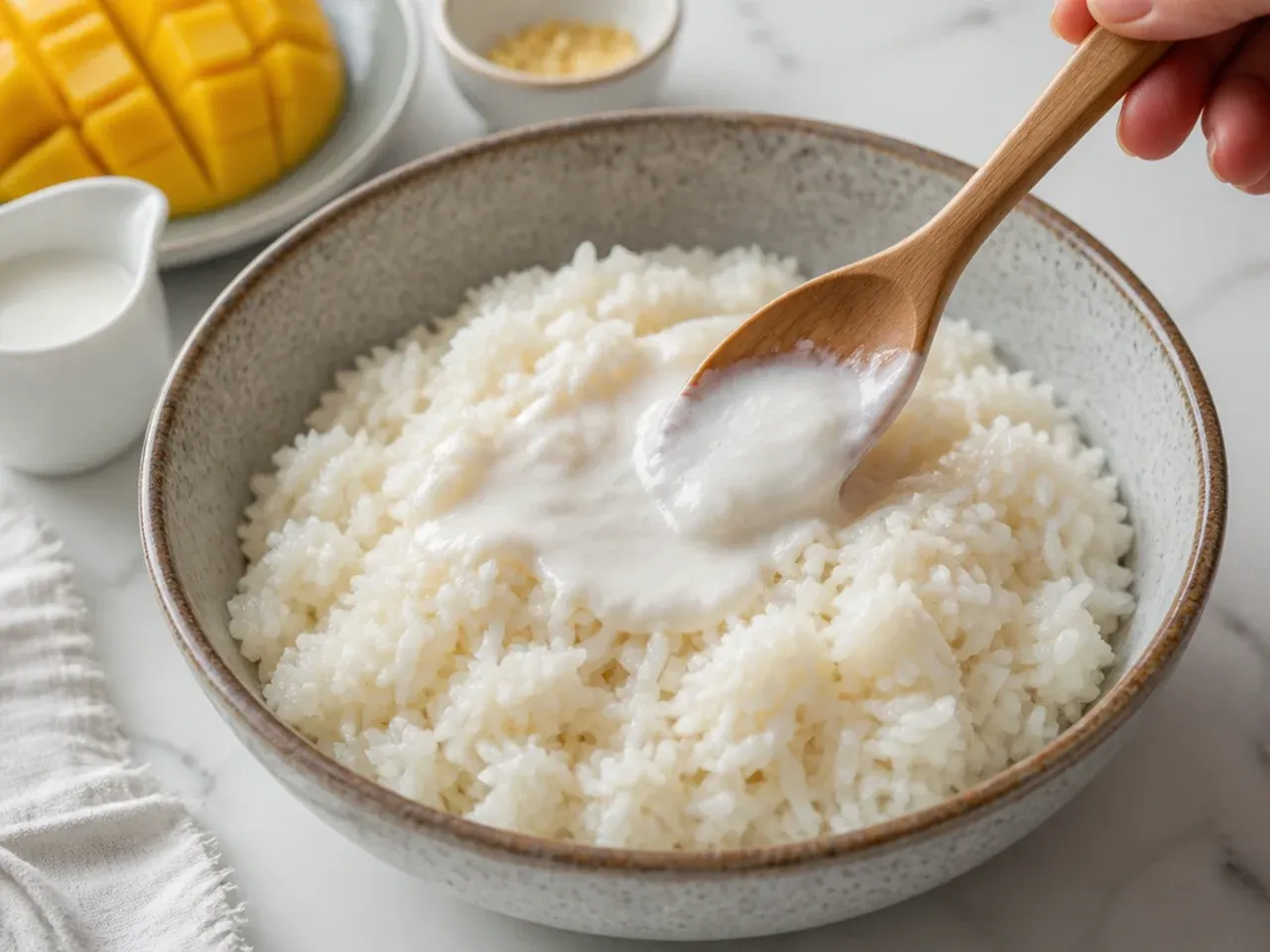
I split my first coconut sauce by boiling it hard — it turned grainy and oily instead of silky. Warm 250 ml of full-fat canned coconut milk with 70 g of sugar and half a teaspoon of salt over medium-low heat, stirring just until the sugar dissolves, then pull it off the heat before it bubbles. The salt is not optional; without it the dish tastes flat and one-dimensionally sweet instead of properly Thai. The bigger surprise was the rest: pour the hot sauce over the hot rice, stir, and it looks alarmingly soupy — I panicked and served it straight away the first time, and it was wet and bland. Cover the bowl and walk away for 20 to 30 minutes, and the rice drinks up every drop and turns glossy, rich and set.
Lesson 5: Plan 3 to 5 Days Ahead for Properly Ripe Mangoes
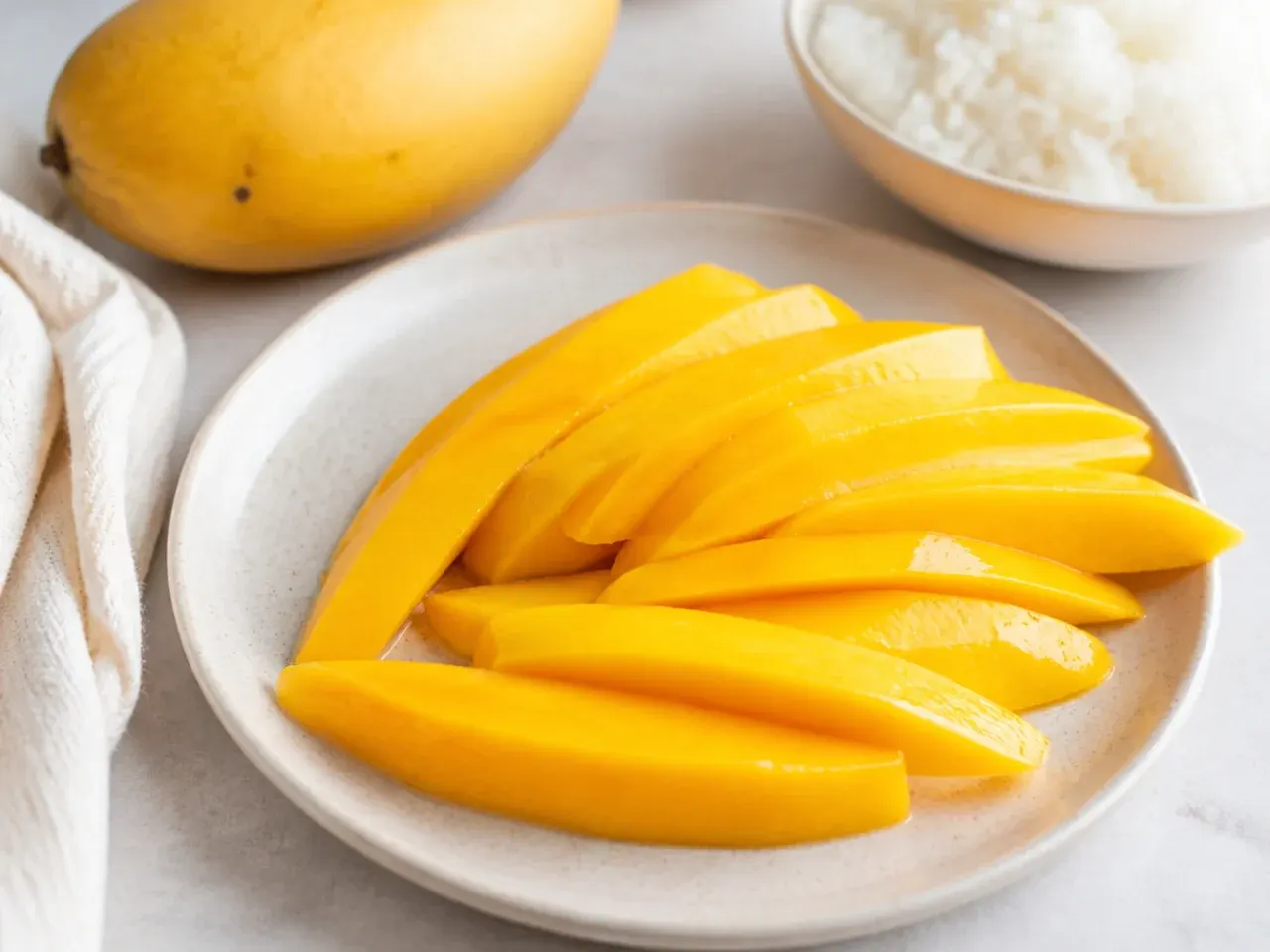
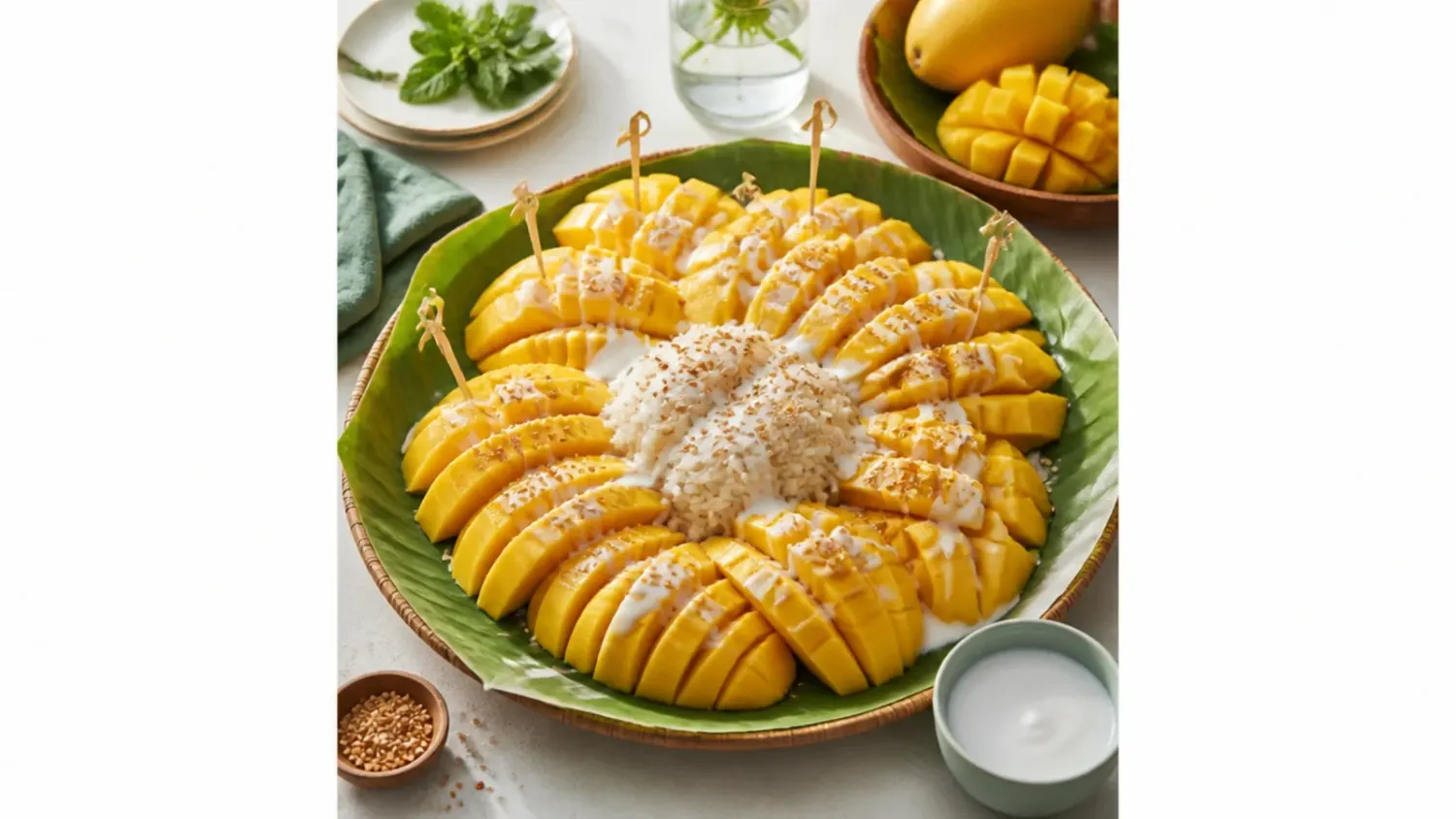
My saddest batch had perfect rice and a rock-hard, sour supermarket mango on top, and the whole dessert fell apart because of it. Supermarket mangoes are almost always sold under-ripe, so buy them 3 to 5 days before you cook and ripen them on the counter until they smell sweet at the stem and give slightly when pressed, like a ripe avocado. The best varieties are Ataulfo (also labelled honey or champagne mangoes) — small, yellow, and silky with no fibre — which are the closest match to the nam dok mai mangoes used in Thailand. Kent and Keitt are decent backups; avoid the big red-green Tommy Atkins, which is stringy and bland. To slice, cut the two cheeks off either side of the flat stone, score the flesh into strips, and scoop them out with a large spoon.
What I'd Tell a Friend Trying This
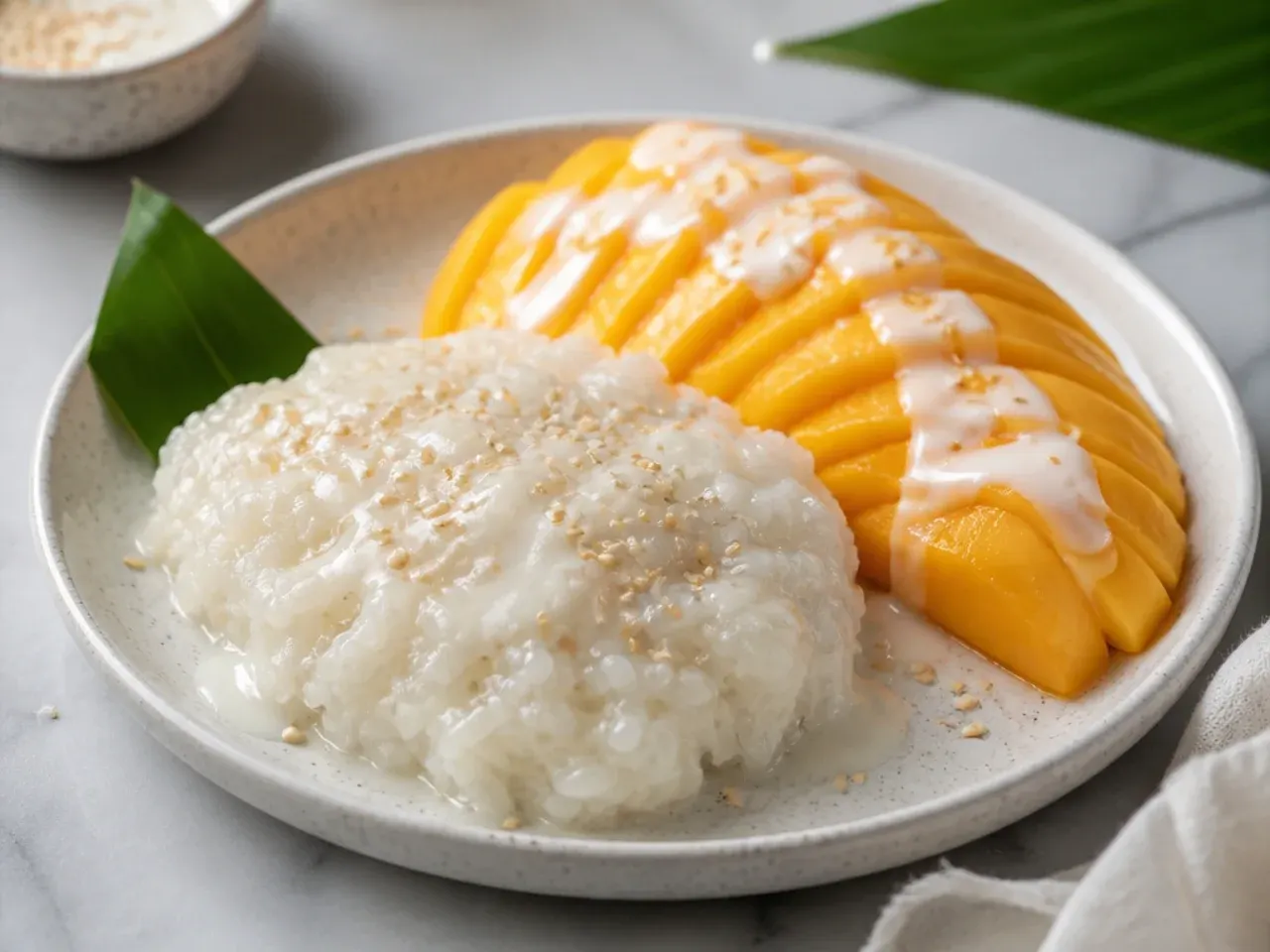
Start the night before: soak the rice and put your mangoes somewhere warm to finish ripening, and the actual cooking is barely 30 minutes of hands-on work. Buy full-fat canned coconut milk (at least 60 percent coconut extract on the label) — carton coconut drinks are watered down and the rice will taste of nothing. Make the salted coconut drizzle; it takes 3 minutes and that salty-creamy ribbon over the sweet rice is what makes it taste like the real thing from a Bangkok street cart. Serve it warm or at room temperature the same day, never fridge-cold, because chilling turns the rice hard and waxy. And if your first batch is not perfect, it will still get eaten — mine always did.
The Recipe
The Recipe I Used
20 min (plus 4 hr soaking)
30 min
4 hr 50 min
4
Beginner
Ingredients 4 Person(s)
Directions
Step 1: Rinse and Soak the Rice
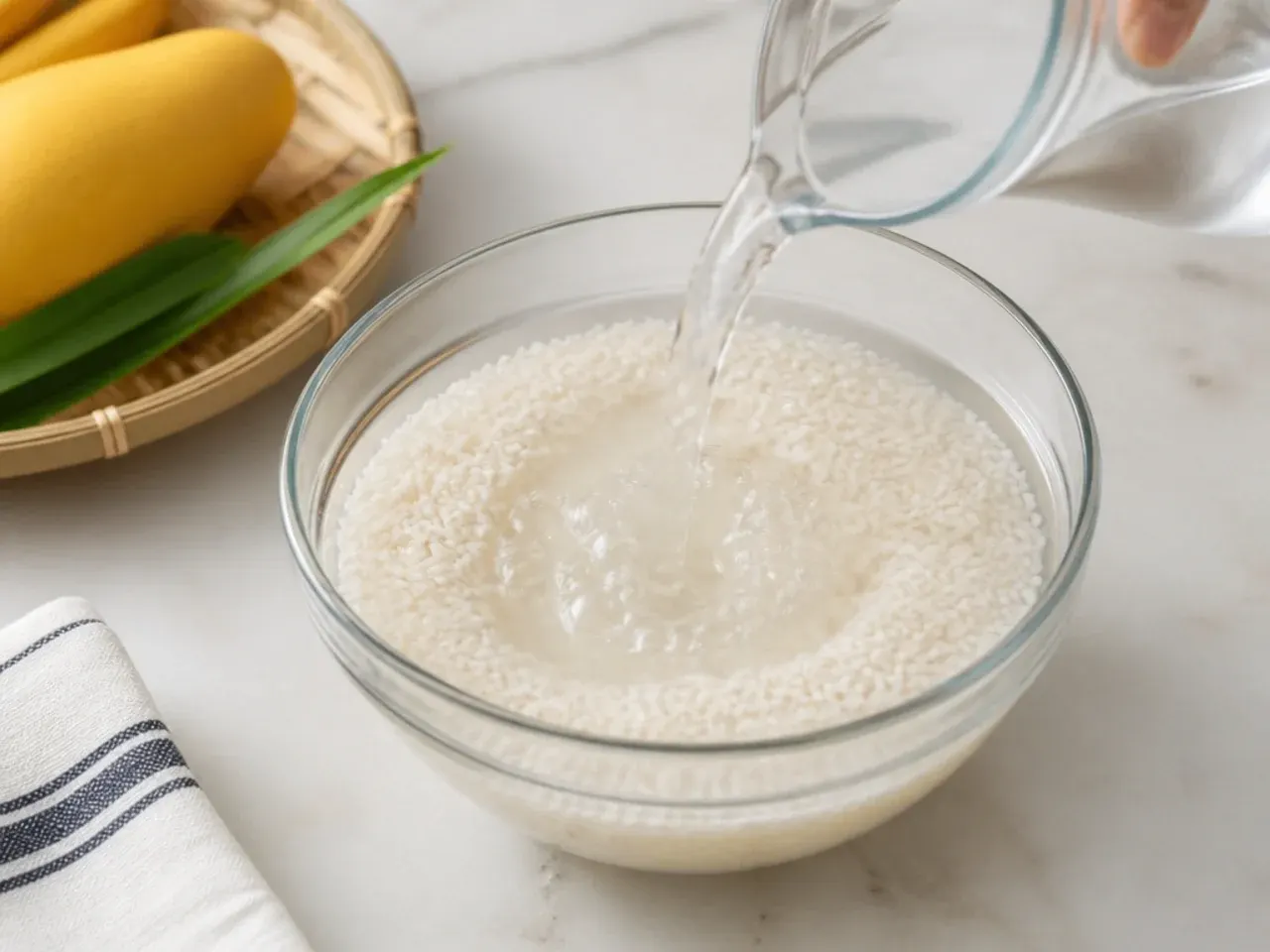
Put 200 g glutinous rice in a bowl and rinse in 4 or 5 changes of cold water, swishing with your hand each time, until the water runs mostly clear. Cover with cold water by 5 cm (2 inches) and soak for at least 4 hours, or overnight on the counter. The grains are ready when they look opaque white and snap easily between your fingernails. Drain well in a fine sieve.
Step 2: Steam the Rice
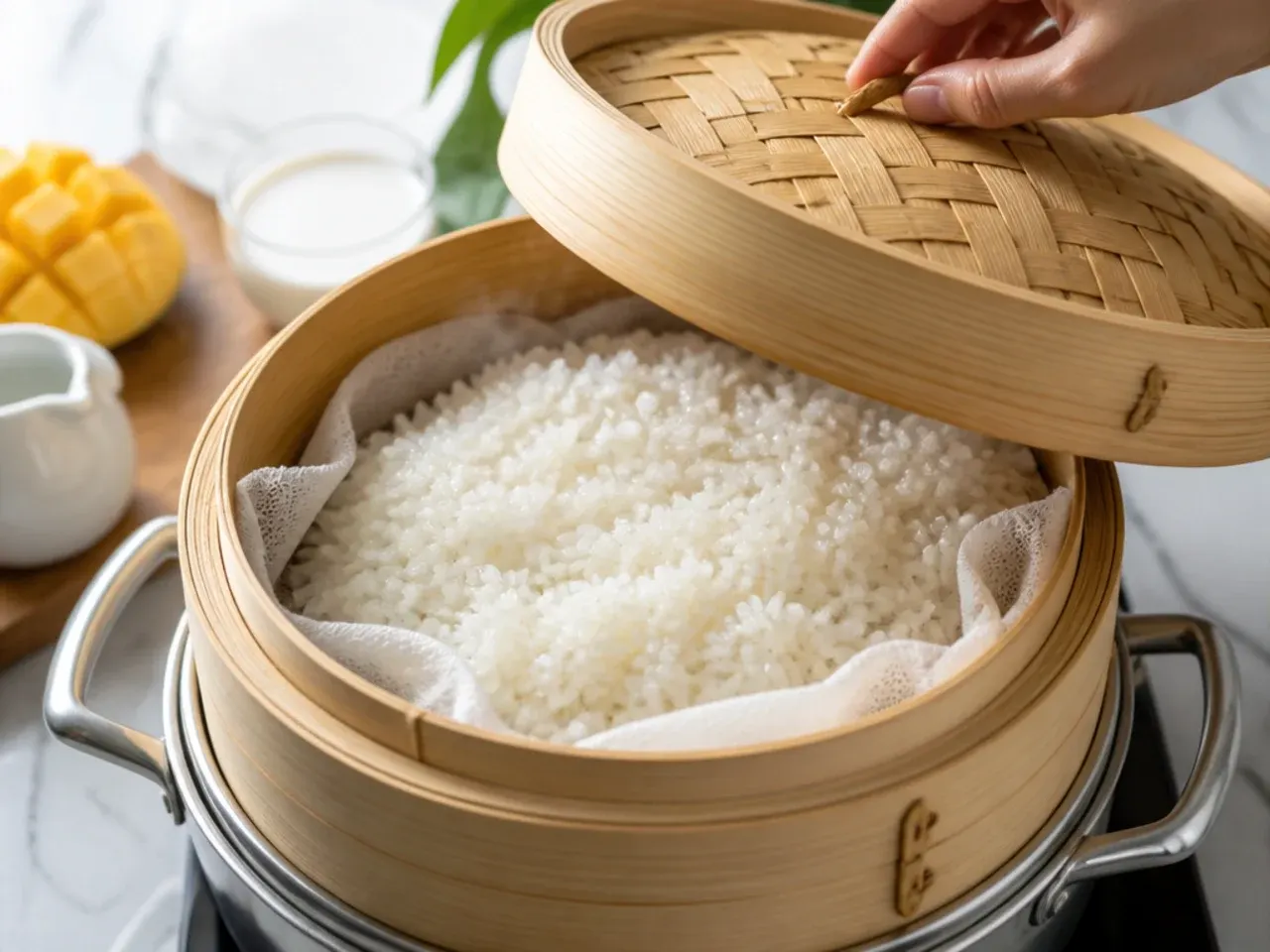
Line a steamer basket with muslin or cheesecloth and spread the drained rice in an even 2 to 3 cm layer. Set it over 3 cm of simmering water, cover, and steam for 20 to 25 minutes, flipping the rice bundle over once at the 10 to 12 minute mark. It is done when the grains are glossy, translucent and chewy with no hard centre. No steamer? Rest a heatproof plate of rice on three foil balls inside a large lidded pot of simmering water and cover.
Step 3: Make the Sweet Coconut Sauce
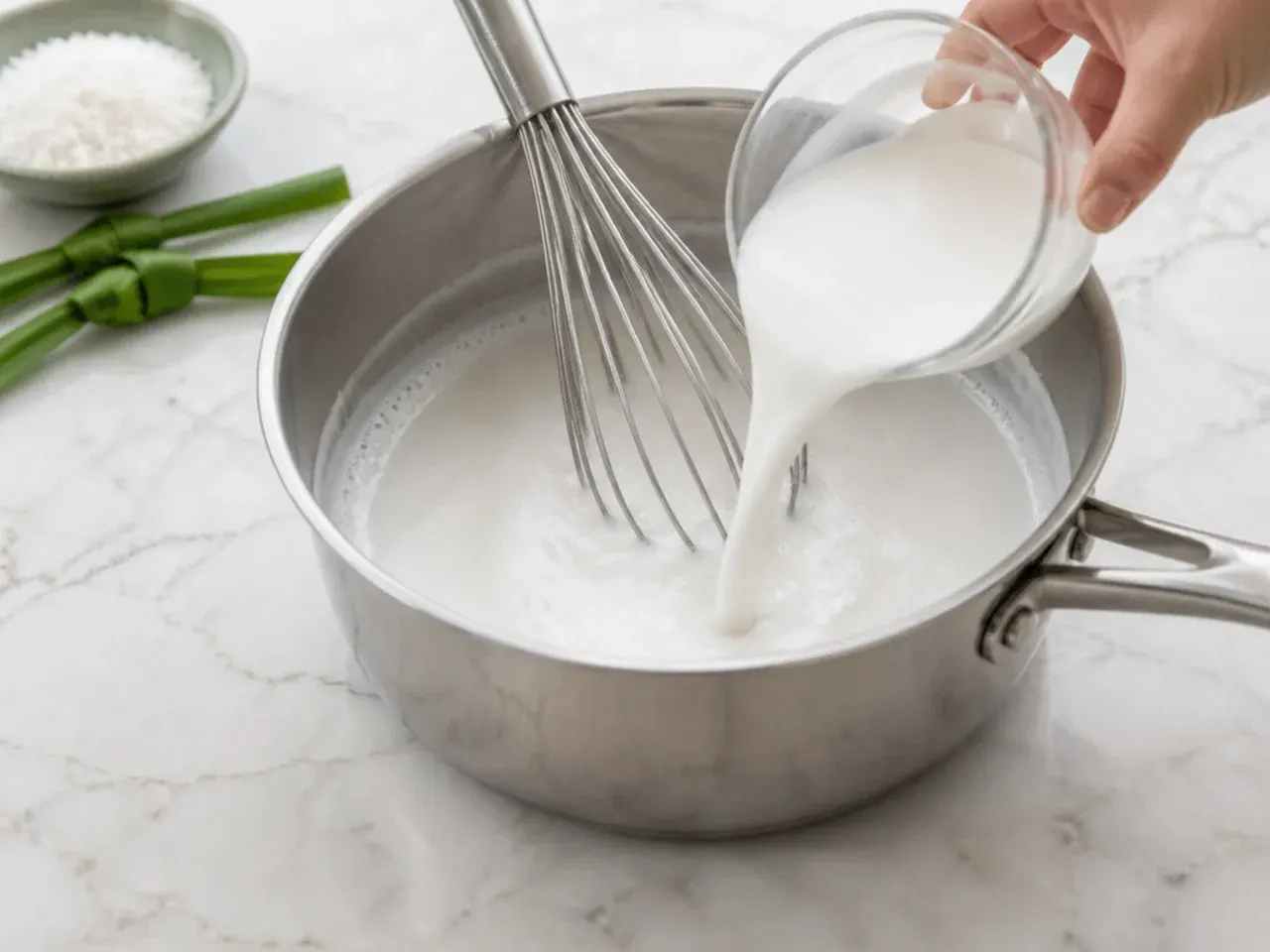
While the rice steams, combine 250 ml coconut milk, 70 g sugar and 1/2 tsp salt in a small saucepan. Warm over medium-low heat, stirring, just until the sugar fully dissolves — about 3 to 4 minutes. Do not let it boil, or the coconut milk can split and turn grainy. Take it off the heat and keep it warm.
Step 4: Combine and Rest
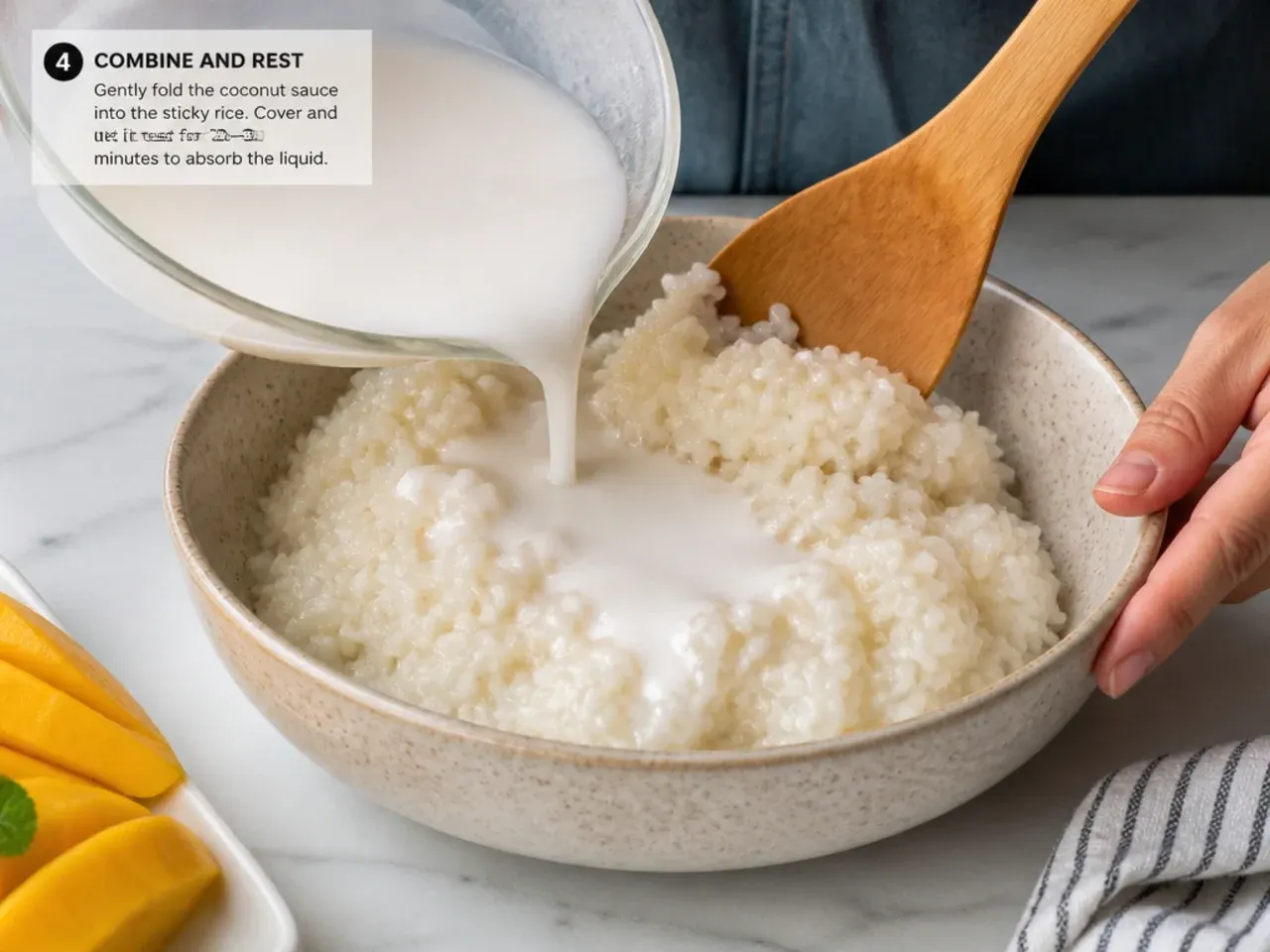
Tip the hot steamed rice into a bowl and pour the warm coconut sauce over it while both are still hot. Stir gently to coat every grain — it will look far too soupy, and that is correct. Cover the bowl with a plate or plastic wrap and let it rest for 20 to 30 minutes at room temperature so the rice absorbs all the sauce and turns glossy and set.
Step 5: Make the Salted Coconut Drizzle
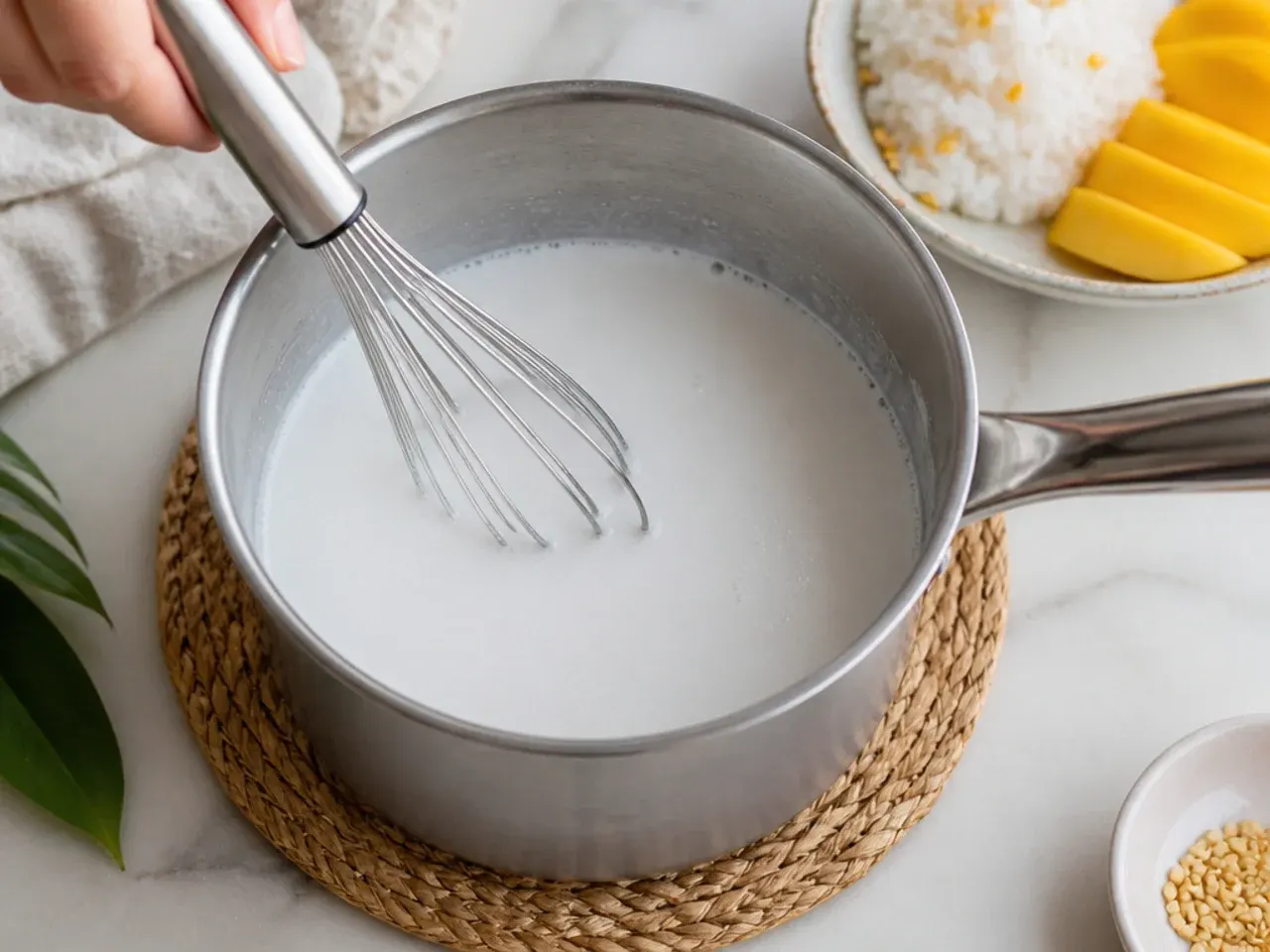
In the same small saucepan, whisk 1 tsp rice flour into 120 ml coconut cream until smooth, then add 1/4 tsp salt. Warm over medium-low heat, stirring constantly, for 2 to 3 minutes until it thickens to the consistency of single cream. Set aside — it will thicken a little more as it cools.
Step 6: Prepare the Mangoes
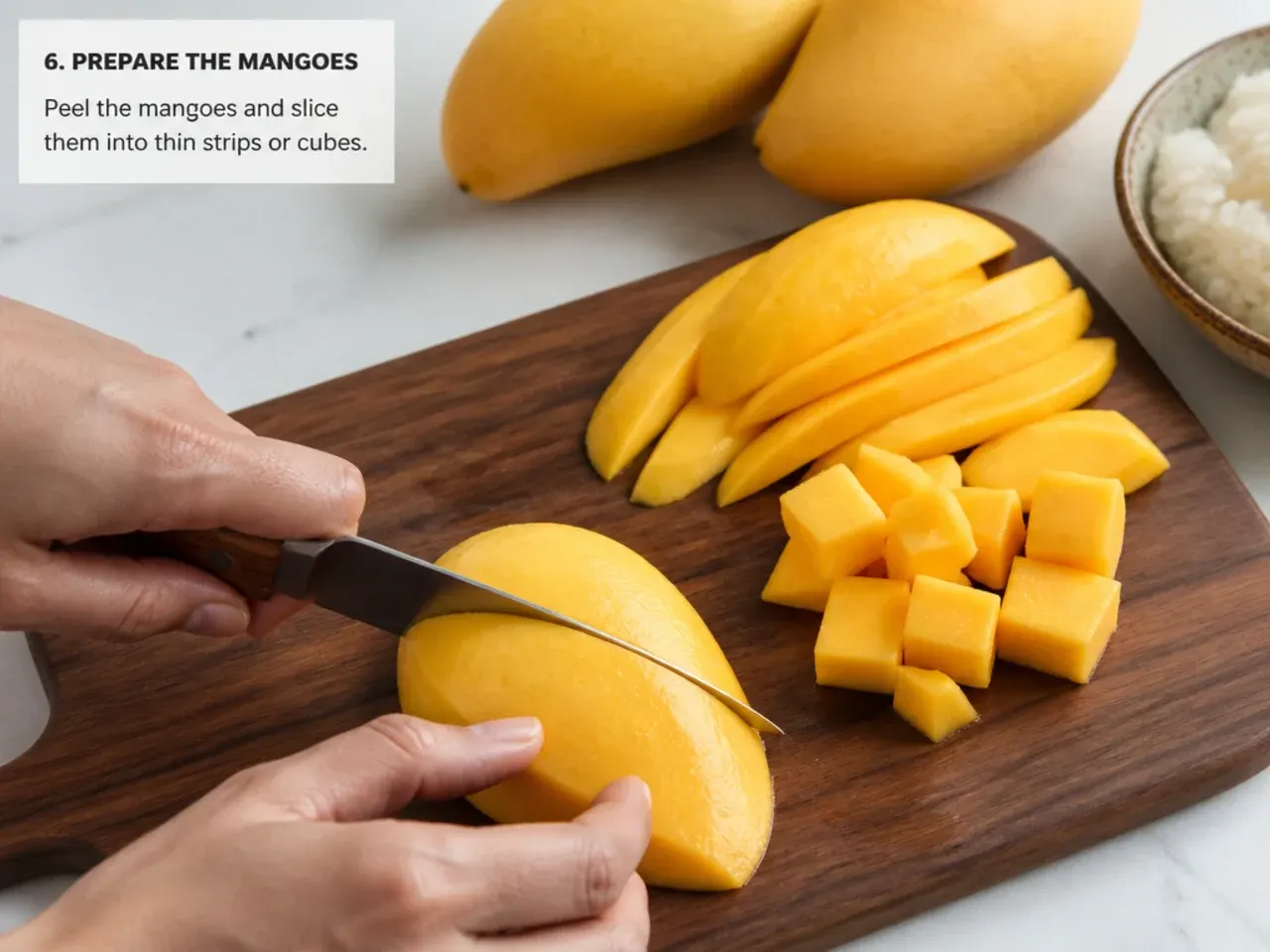
Stand each mango on its end and slice the two cheeks off either side of the flat central stone. Score the flesh of each cheek lengthways into 1 cm strips without cutting through the skin, then scoop the strips out with a large spoon. Trim any remaining flesh from around the stone for the cook to snack on.
Step 7: Assemble and Serve
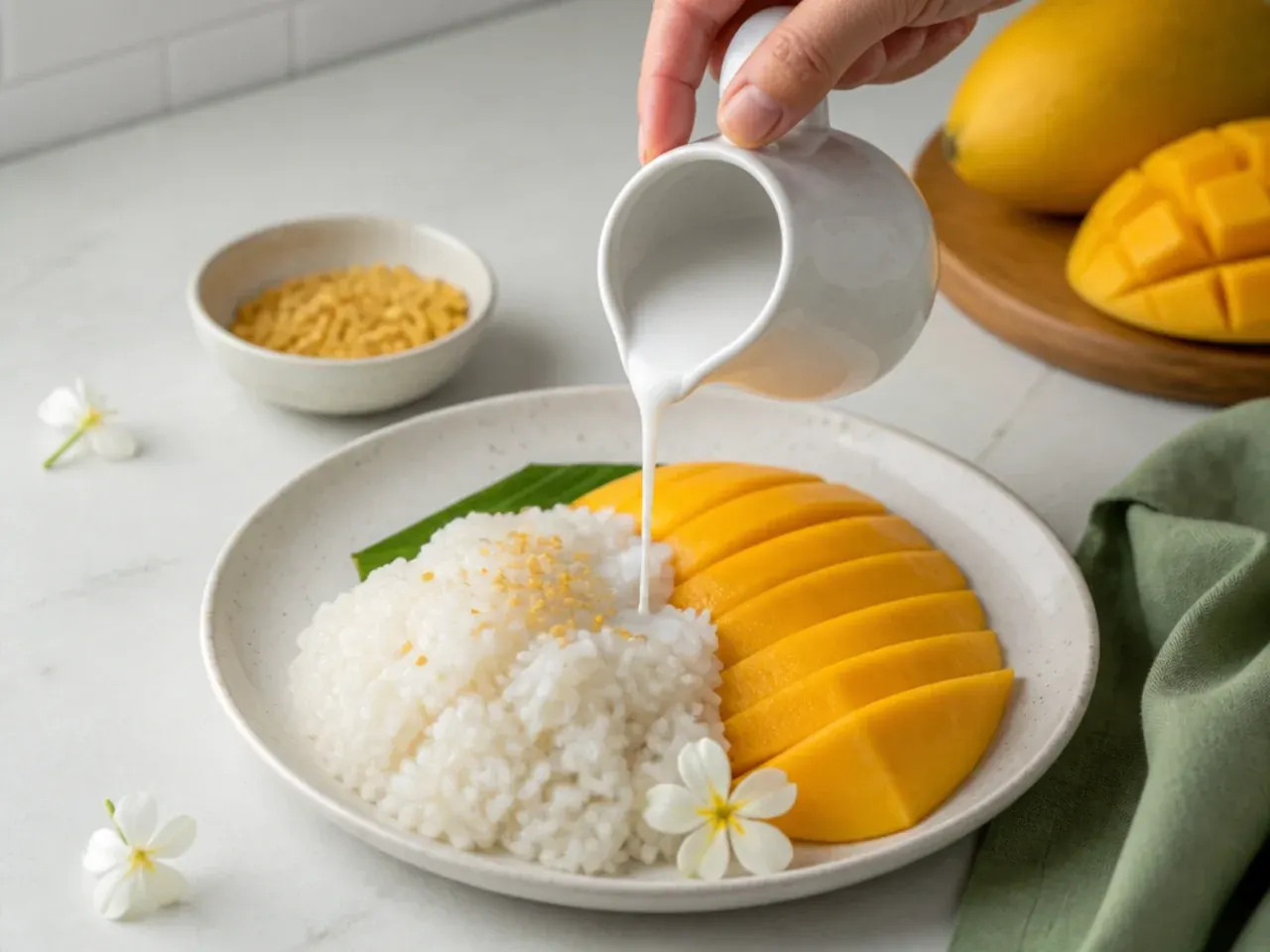
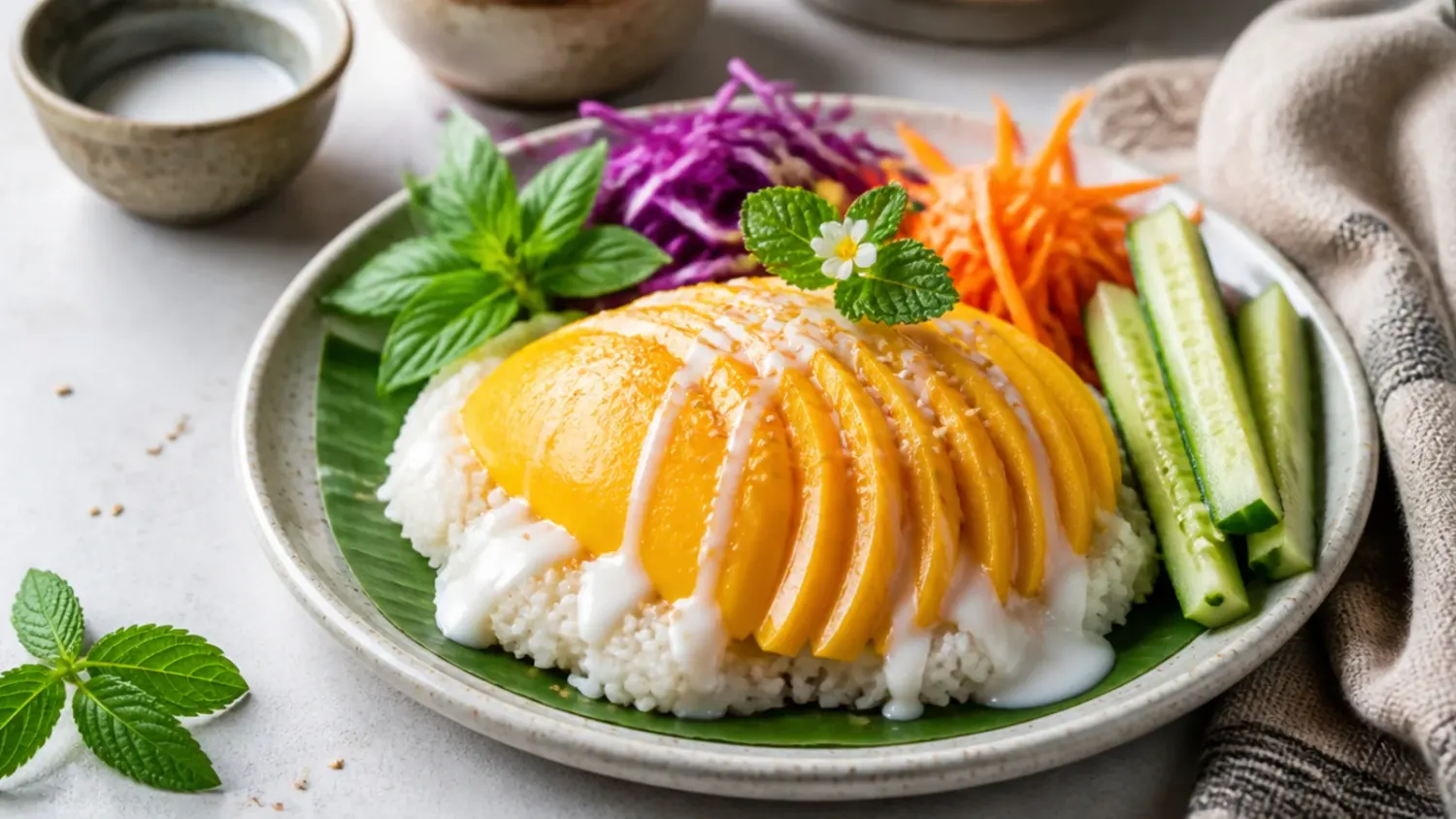
Press a quarter of the warm rice into a small bowl or ramekin and turn it out onto a plate, or simply spoon on a neat mound. Fan the mango slices alongside, spoon the salted coconut drizzle generously over the rice, and scatter with toasted sesame seeds or crispy mung beans. Serve warm or at room temperature the same day — never straight from the fridge.
Frequently Asked Questions
No — jasmine rice cannot replace glutinous rice. Sticky rice is almost pure amylopectin starch, which is what lets it absorb the coconut sauce and hold that dense, chewy texture; jasmine turns into loose coconut rice pudding instead. Look for bags labelled glutinous rice, sweet rice or sticky rice at an Asian supermarket. Short-grain sushi rice is the only workable substitute.
Save this for later 📌
Pin this article to your Pinterest board so the full list is one tap away when you need it.
Save on Pinterest