3 Homemade vs Takeout Mongolian Beef Meals
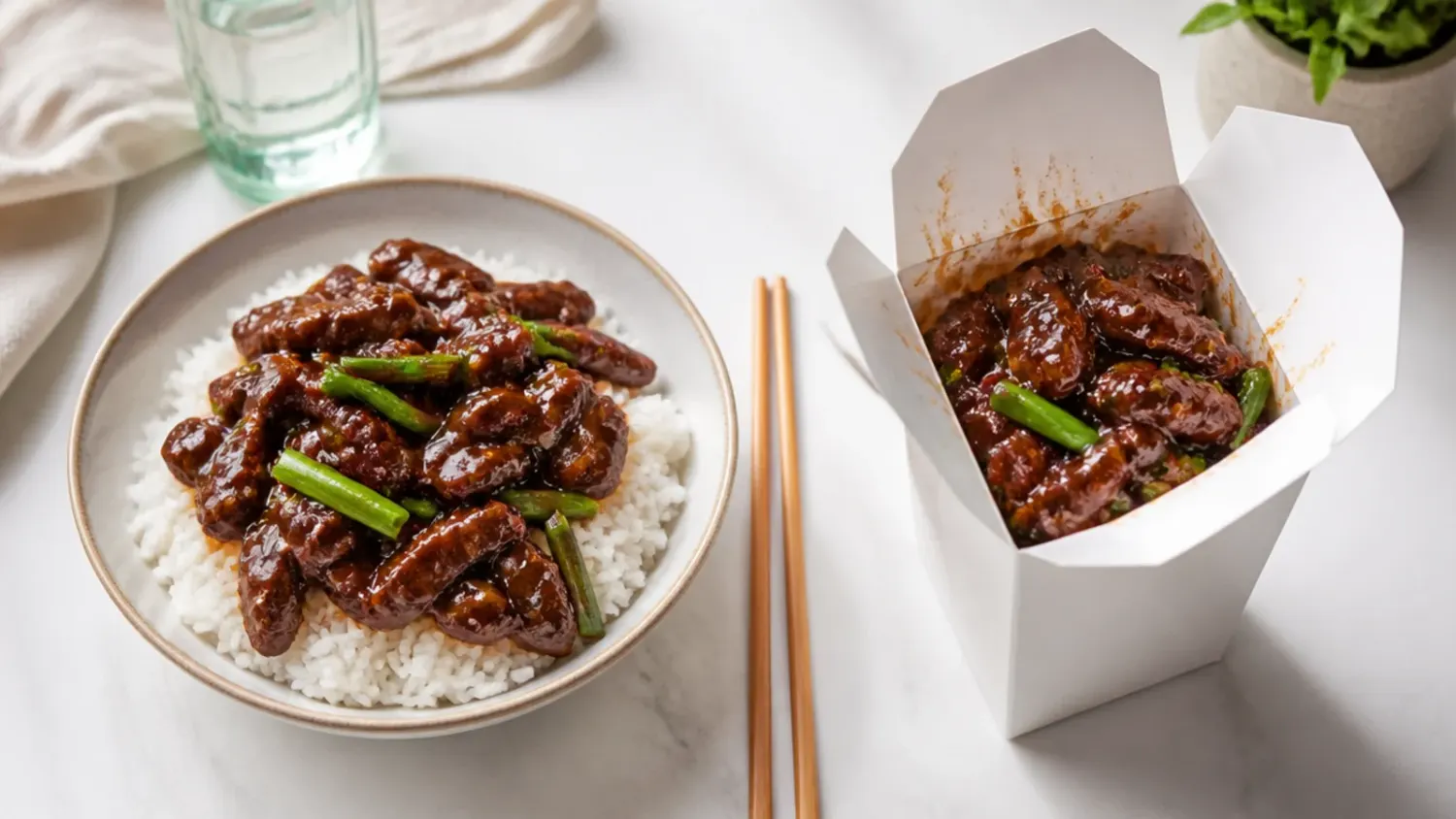
Mongolian beef vs takeout, compared honestly on real cost, taste, and time, so you know exactly when to cook it fresh and when to just order in. If you love mongolian beef recipe inspiration, start with our Mongolian Beef Recipes collection, then browse the full Dinner Recipes hub for more.
Save this for later 📌
Pin this article to your Pinterest board so the full list is one tap away when you need it.
Save on PinterestDinner Recipes
Intermediate
Comparison
3 compared
Table of Contents
Option 1: Homemade Mongolian Beef
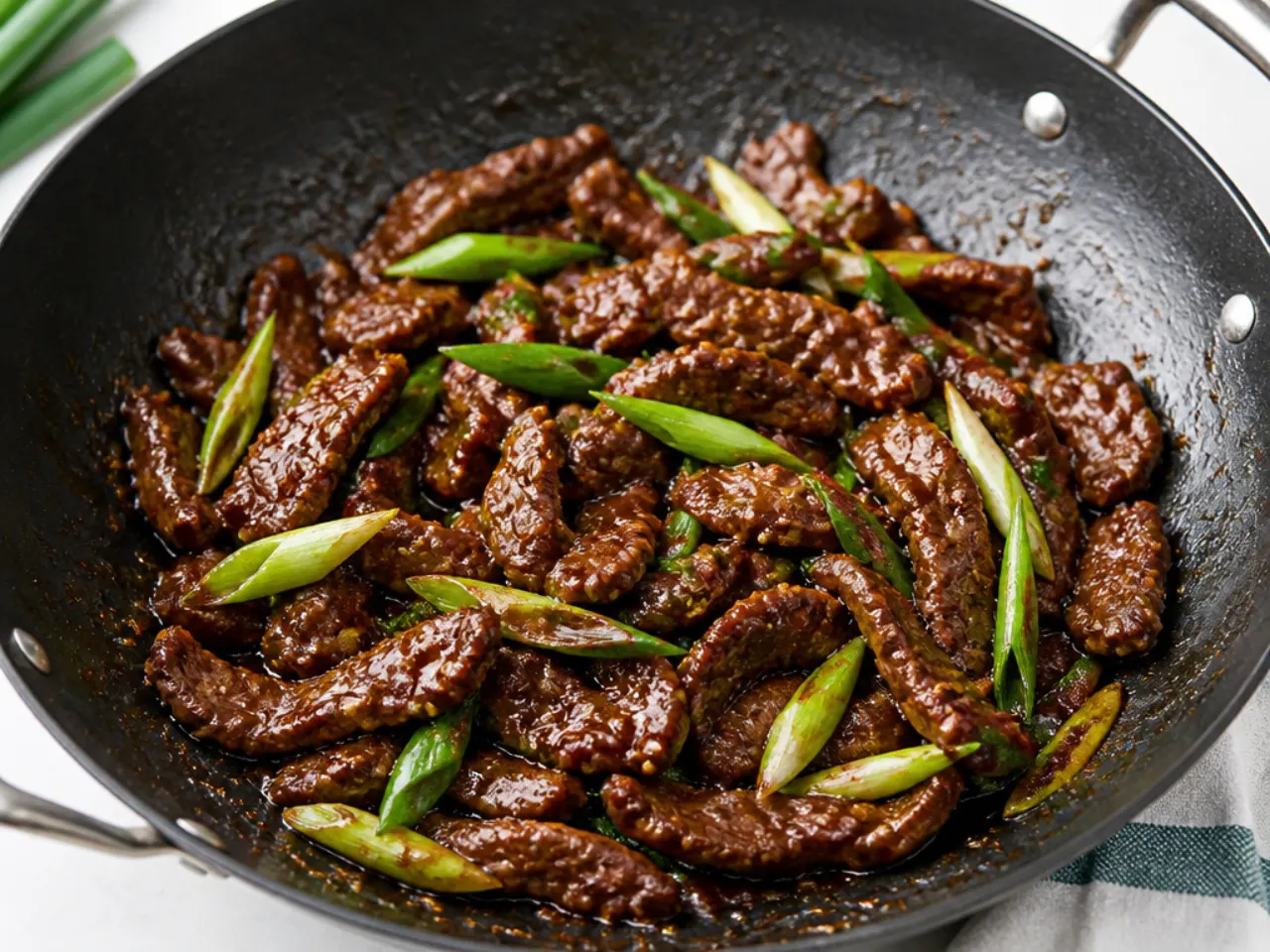
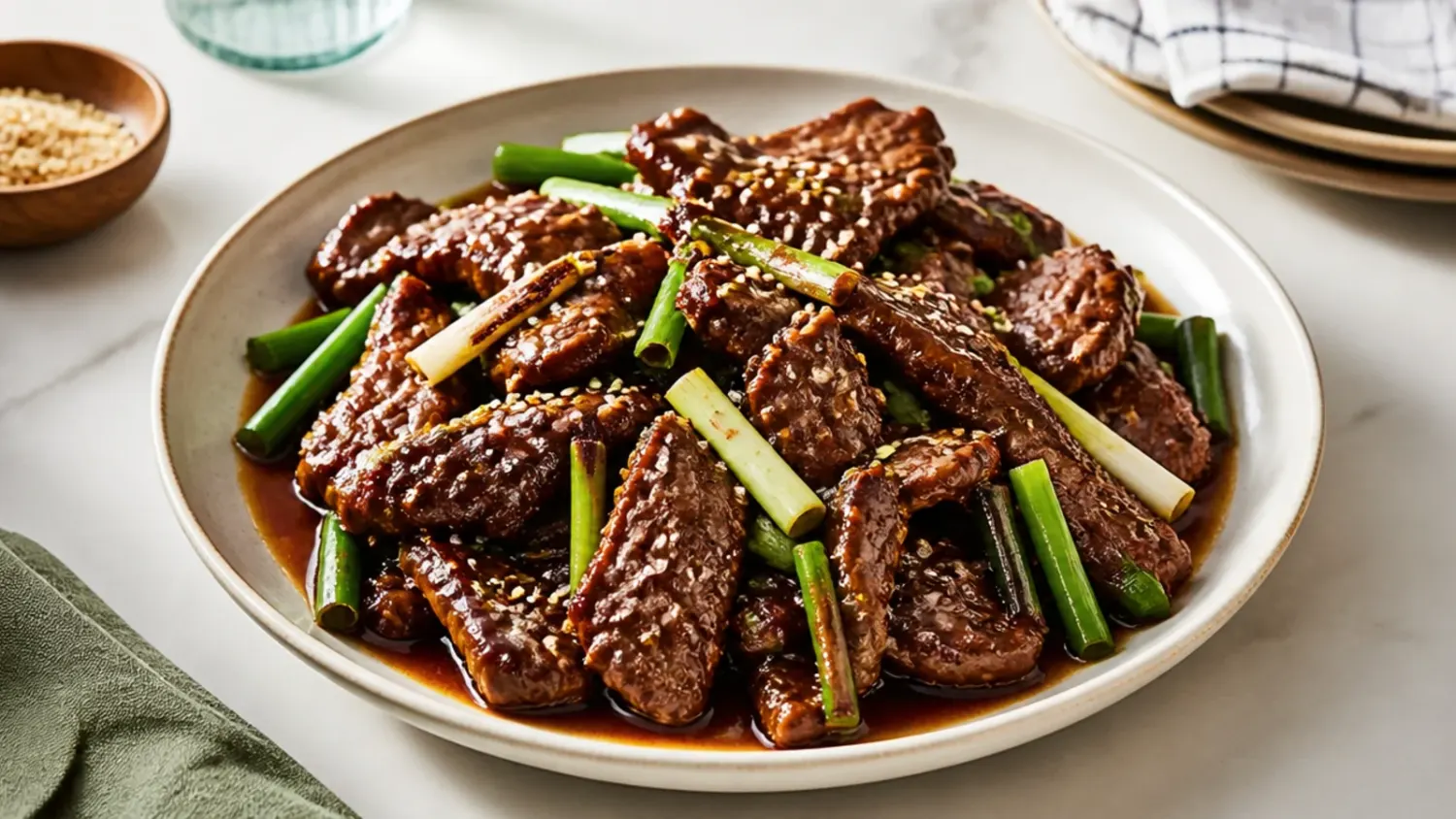
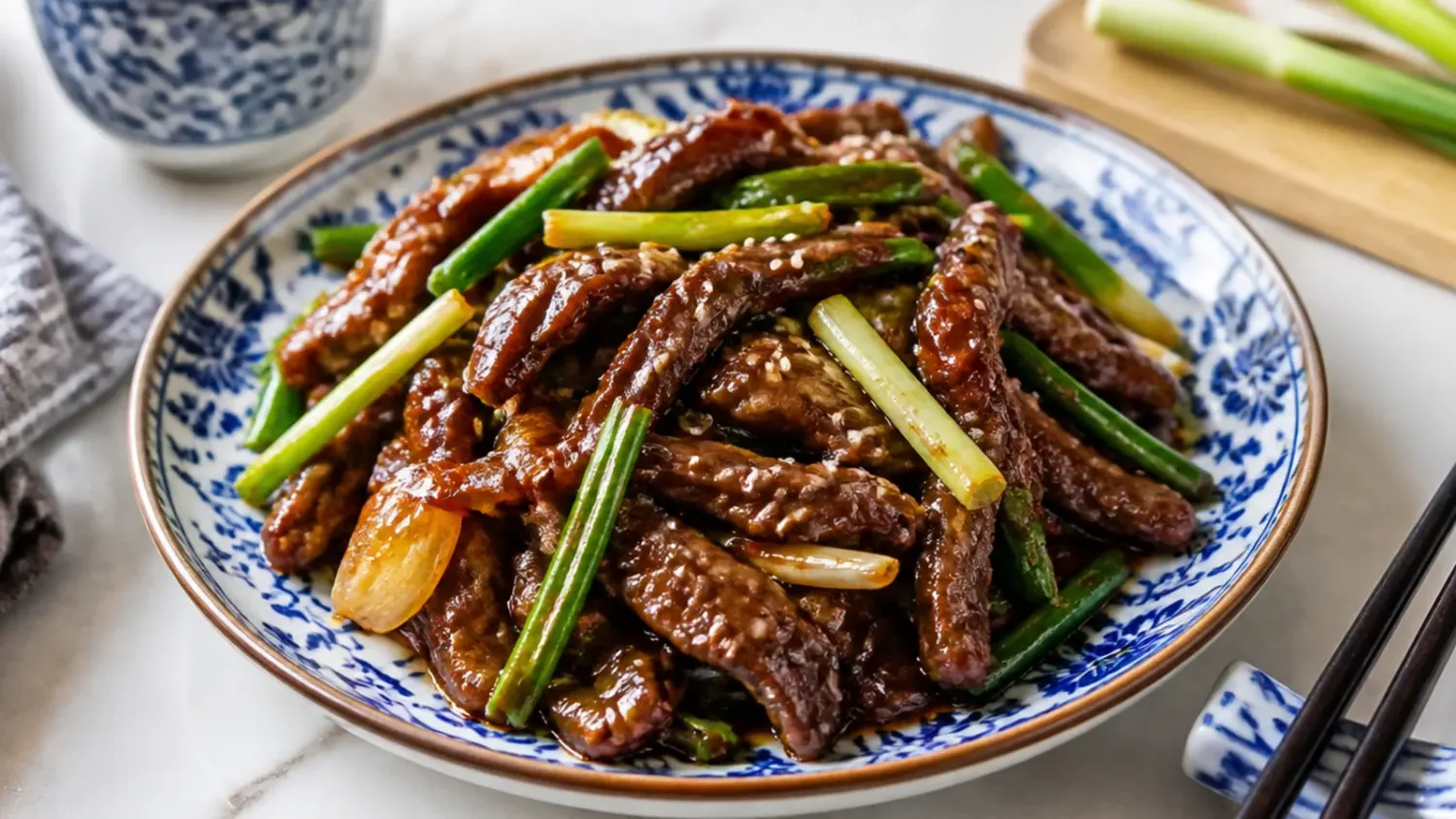
Homemade Mongolian beef is thin-sliced flank steak, velveted with a little baking soda, dredged in cornstarch, and shallow-fried until the edges go crisp, then tossed in a glossy sauce of soy, brown sugar, garlic, and ginger. Making it yourself means you control the salt, the sugar, and the oil, and you can hit that just-fried crunch that never survives a delivery drive. The whole thing cooks in about 15 minutes once the beef has marinated, so it is genuinely weeknight-friendly. You also get to scale it: cook for one or stretch it over rice for four without paying per-portion restaurant markup. The recipe further down is the exact version we recommend, cross-checked against The Woks of Life and Once Upon a Chef.
Option 2: Takeout Mongolian Beef
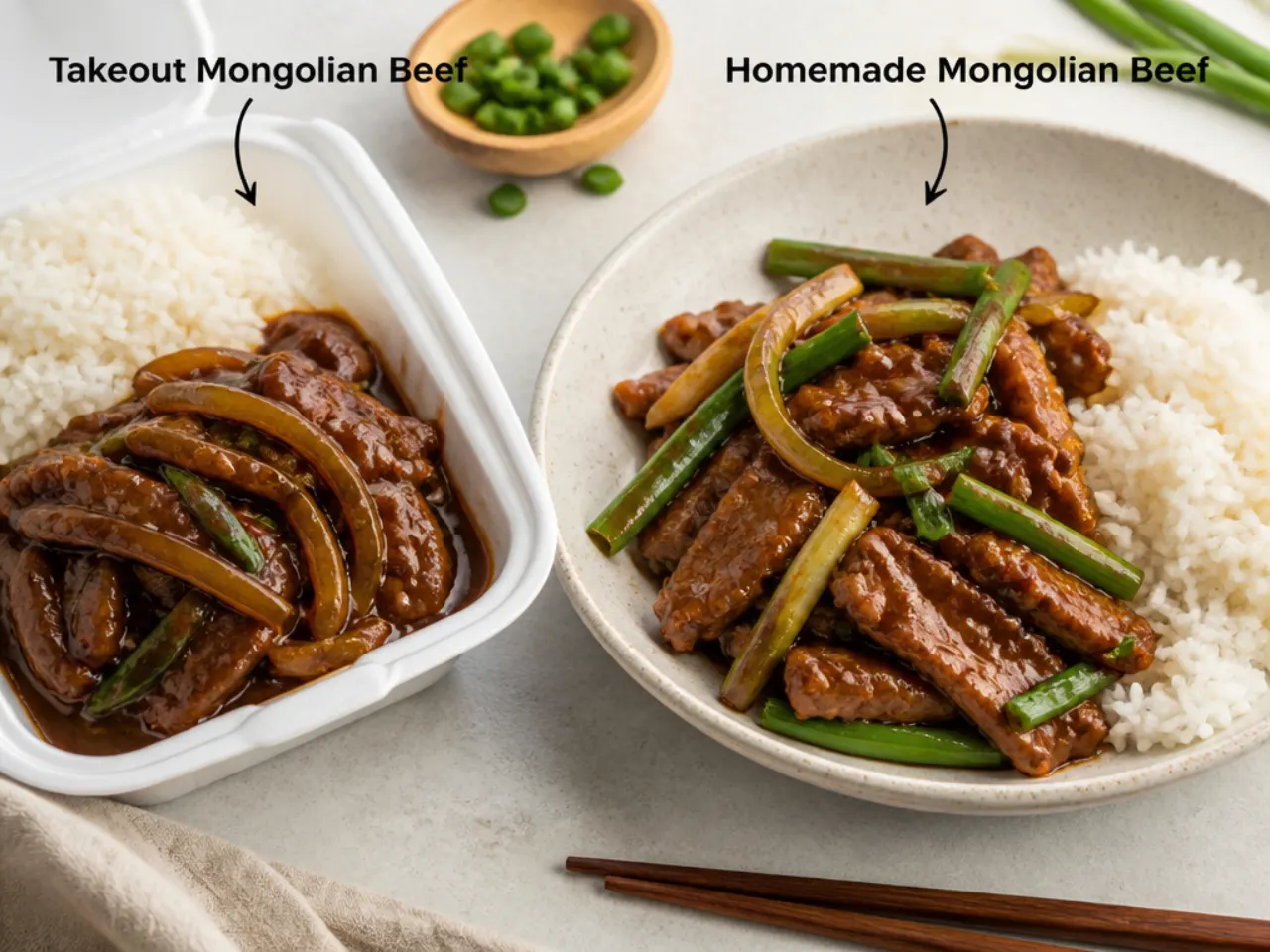
Takeout Mongolian beef is the convenient default: one tap on an app or one phone call and dinner arrives in 30 to 45 minutes with zero pans to wash. Restaurant versions lean sweeter and saltier, often around 800 calories for an 11-ounce portion, with a thick, sticky glaze and a generous pour of oil you cannot see or adjust. The trade-off is freshness, because the beef steams inside the container on the way over and the crisp coating softens by the time it reaches your door. You are also paying for labor, delivery fees, and tips, which quietly double the sticker price. It is the right call on a chaotic night, but it is rarely the cheaper or fresher option.
Cost Comparison
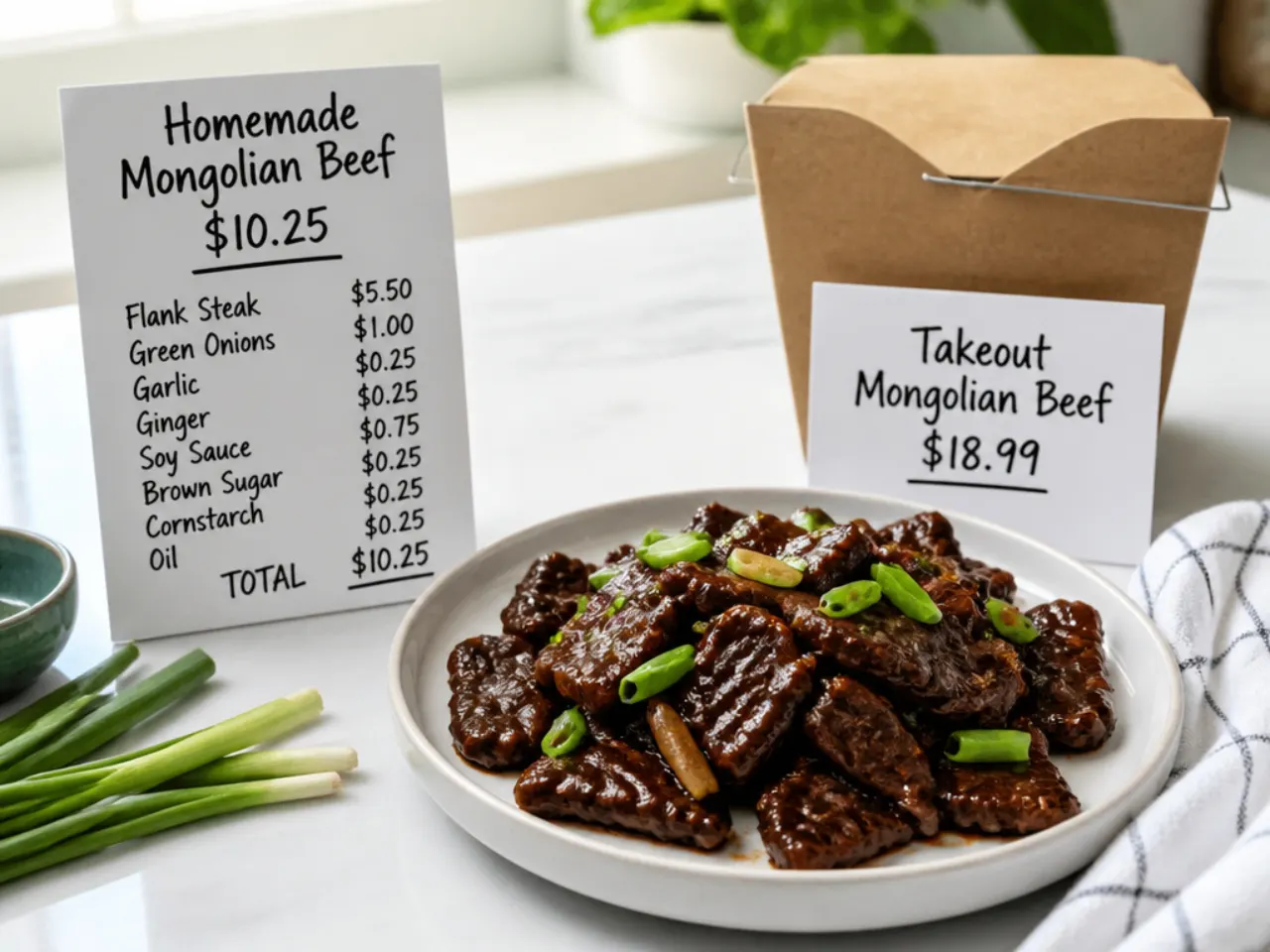
A single takeout order of Mongolian beef typically runs 14 to 18 pounds before you add delivery fees, service charges, and a tip, which realistically pushes one dinner past 20 pounds. Homemade, the math flips fast: 450g of flank steak costs roughly 6 to 8 pounds, and the pantry staples (soy sauce, brown sugar, cornstarch, garlic, ginger, scallions) add maybe 2 pounds spread across the batch. That is around 8 to 10 pounds total for a recipe that serves four, working out to roughly 2 to 2.50 pounds per person. Even accounting for the oil and the rice, you are spending about a third of what a single delivered portion costs. Cook it twice a month and you save enough over a year to buy a decent wok.
Taste and Texture
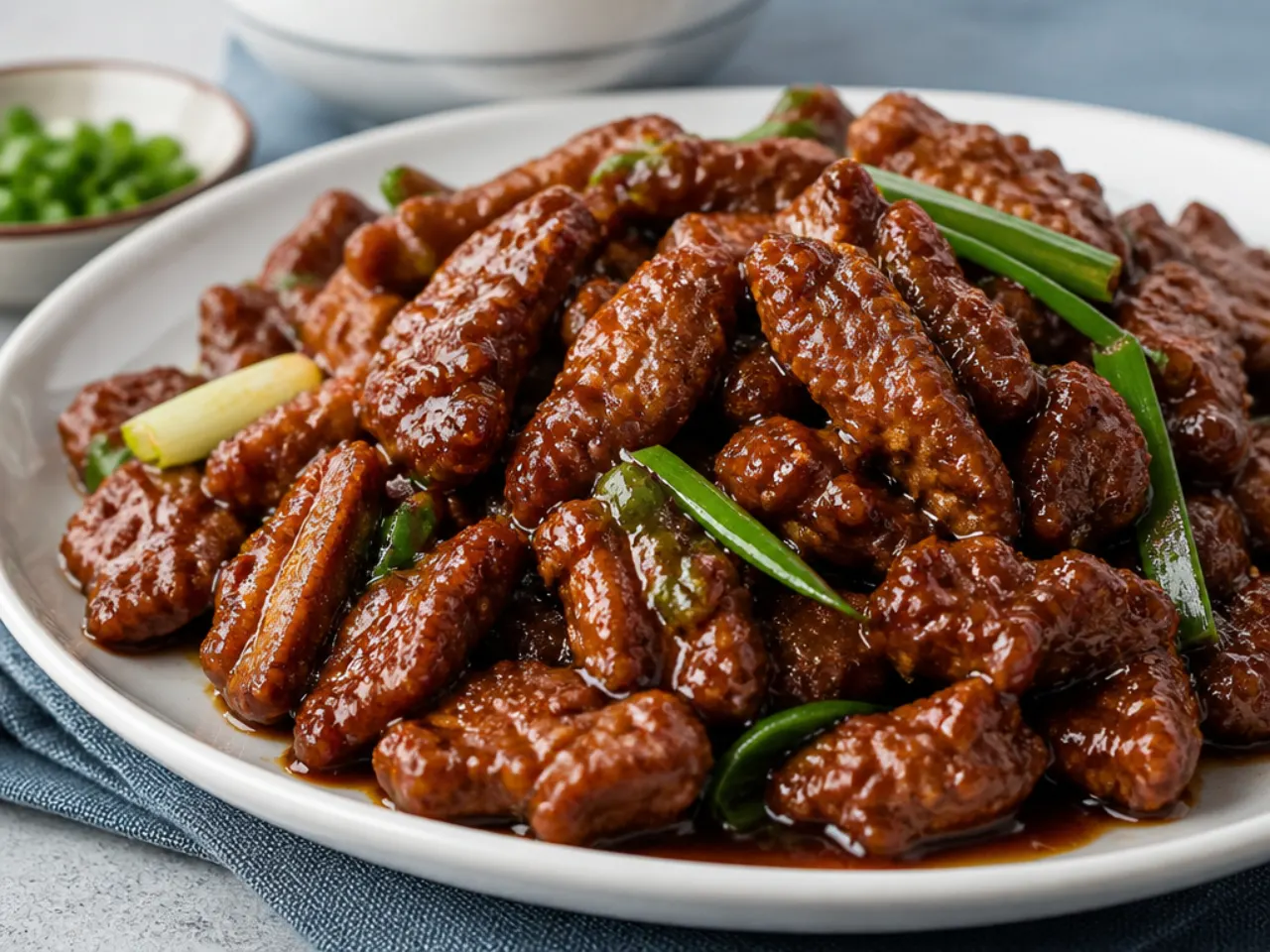
This is where homemade quietly wins if you nail one thing: the crisp coating. Dredging the velveted beef in cornstarch and shallow-frying in oil heated to about 190C (375F) gives you crackly, golden edges that stay firm when tossed in sauce, exactly the texture takeout loses in transit. Takeout usually delivers a more aggressively sweet, thicker glaze because sugar and cornstarch help it survive travel, but it often arrives with softened, slightly gummy beef sitting in pooled oil. At home you can balance the sauce to taste, cutting the brown sugar to a quarter cup and leaning on garlic and ginger so it is savory rather than candy-sweet. Fresh scallions added at the end give a snap and brightness that a reheated container simply cannot match. The honest verdict: takeout is more consistent, but fresh homemade tastes noticeably better.
Time and Effort
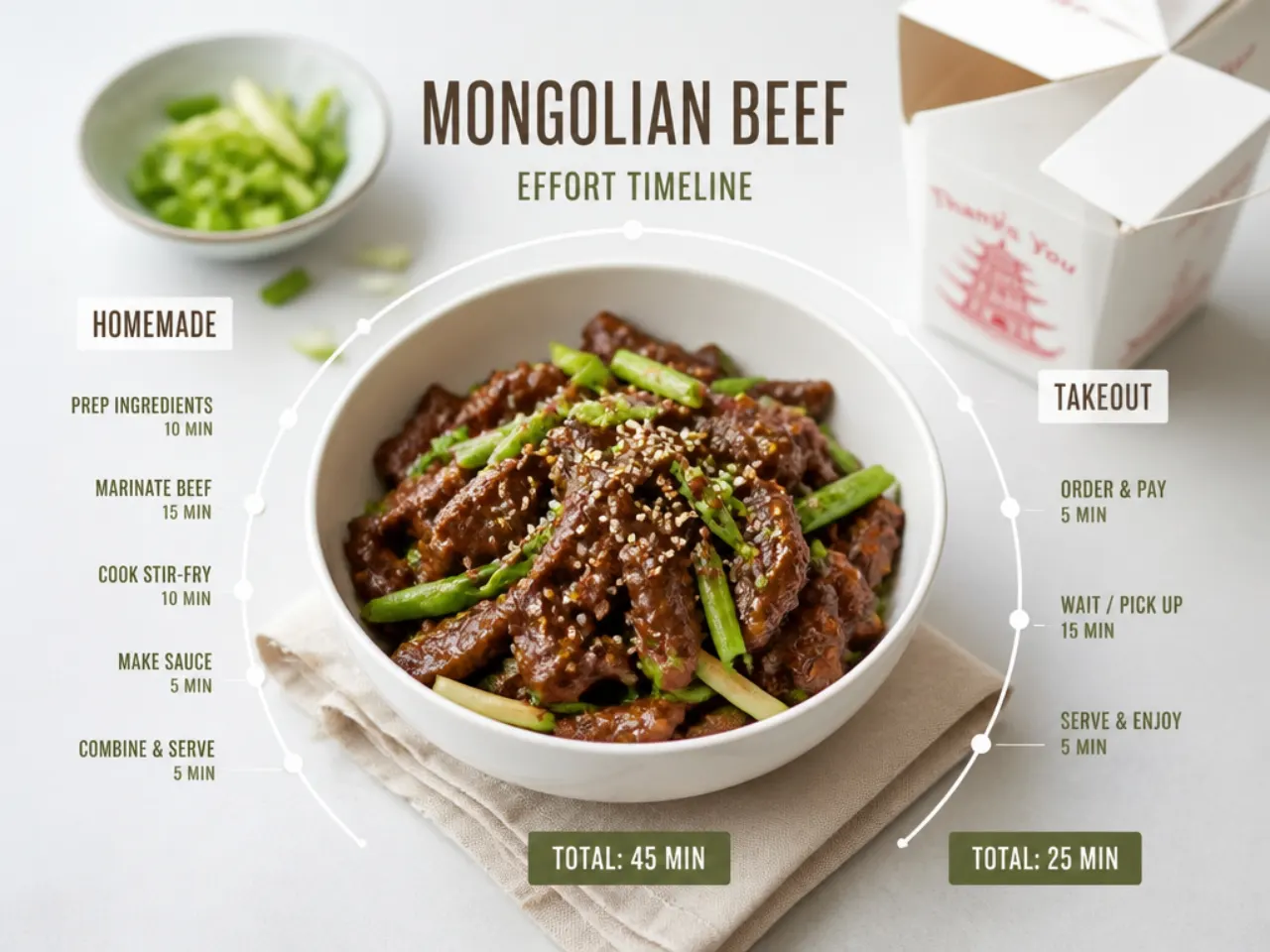
Takeout wins on pure hands-off convenience: you spend two minutes ordering and the other 40 minutes doing literally anything else while it travels to you. Homemade needs about 1 hour of mostly unattended marinating time, then 15 minutes of active cooking, plus a pan and a plate to wash afterward. If you slice and velvet the beef in the morning or the night before, the actual dinnertime effort shrinks to that final 15-minute stir-fry, which is faster than most delivery windows. The real effort cost is the shallow-frying: you are managing hot oil and cooking the beef in two batches so it sears instead of steams. It is not hard, but it is not zero, so be honest with yourself about how much energy you have that evening.
Best Choice by Situation
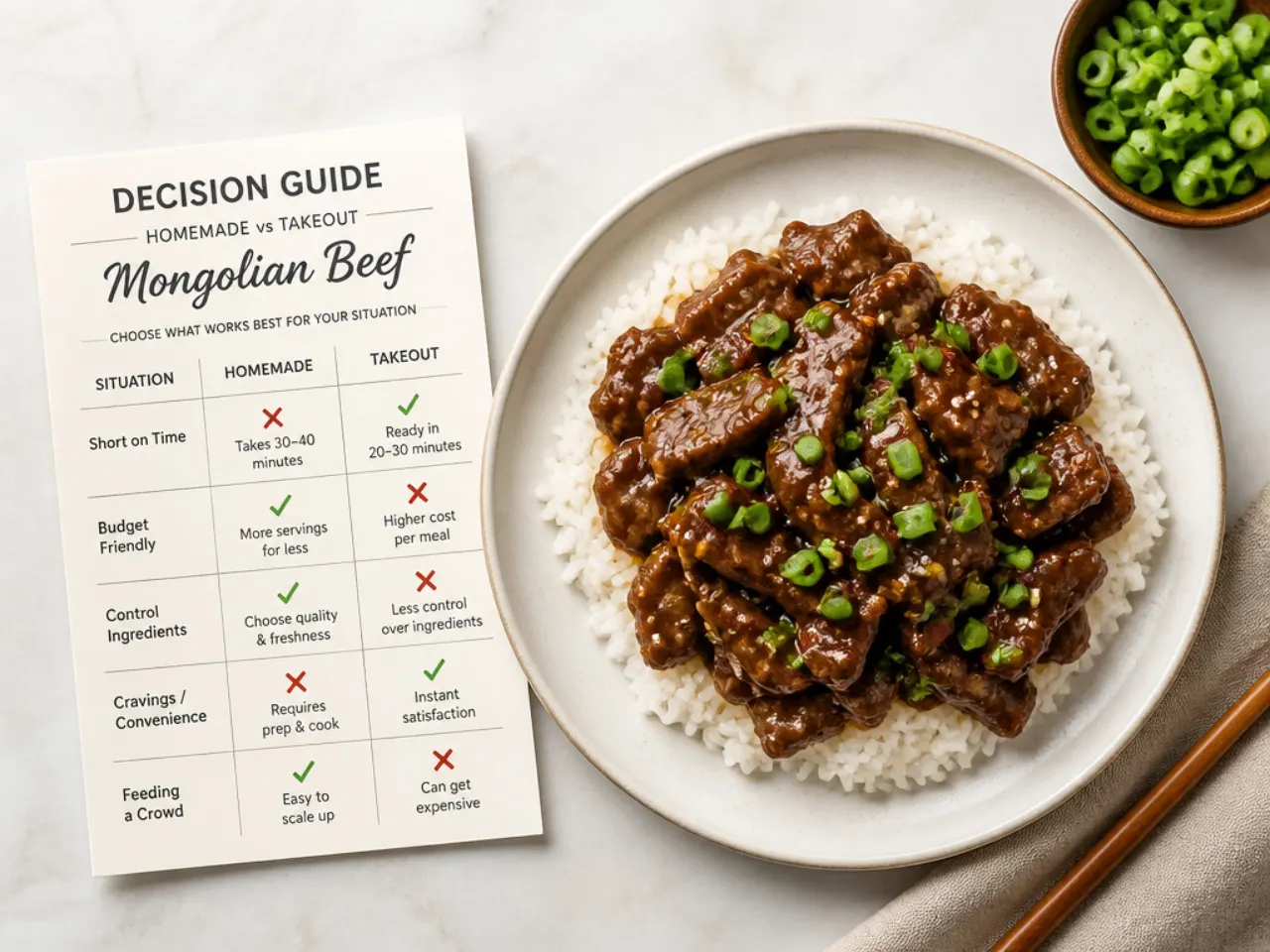
Order takeout when you are exhausted, feeding a crowd with wildly different orders, or it is late and the kitchen is already clean, because convenience genuinely has value on those nights. Cook homemade when you want it fresh and crisp, when you are watching your sodium or sugar, or when you are feeding two to four people and want to keep the bill under a tenner. Meal-preppers should absolutely cook it: velvet a double batch of beef, and you have two dinners for less than one delivery order. If you are new to stir-frying, do a homemade trial run on a relaxed weekend first so the weeknight version feels routine. The smartest move is keeping the pantry stocked so homemade is always an option, and saving takeout for the nights you have truly earned it.
The Recipe
The Recipe We Recommend
15 min
15 min
1 hr 30 min
4
Intermediate
Ingredients 4 Person(s)
Directions
Step 1: Velvet and marinate the beef
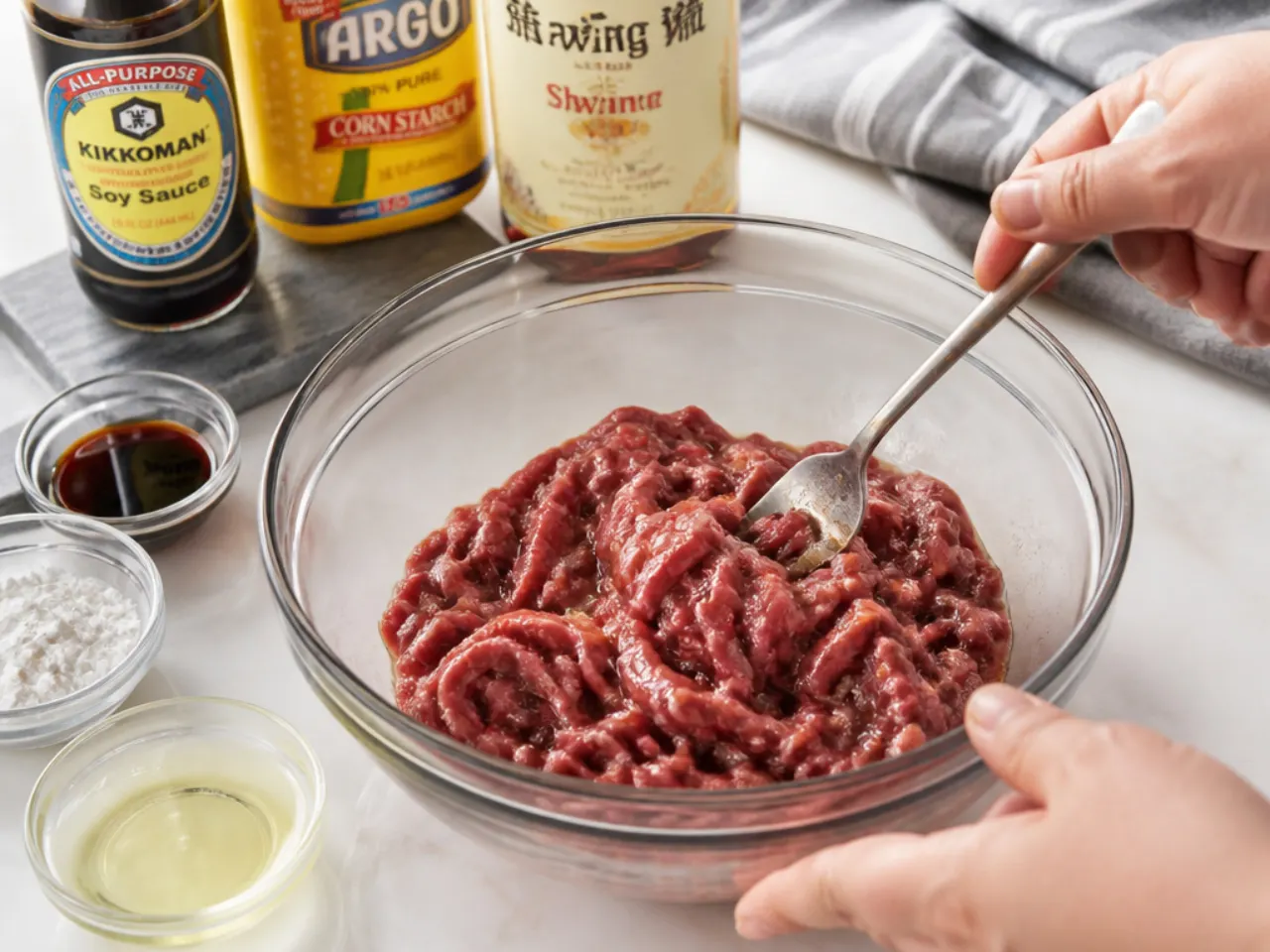
Toss the sliced flank steak with the baking soda, 1 tablespoon of the cornstarch, 2 teaspoons of the oil, and 1 tablespoon water until evenly coated. Let it sit at room temperature for 1 hour (or refrigerate up to overnight). This velveting step is what gives you that tender, restaurant-style bite. The beef should still look moist; if it seems dry, work in another splash of water.
Step 2: Mix the sauce
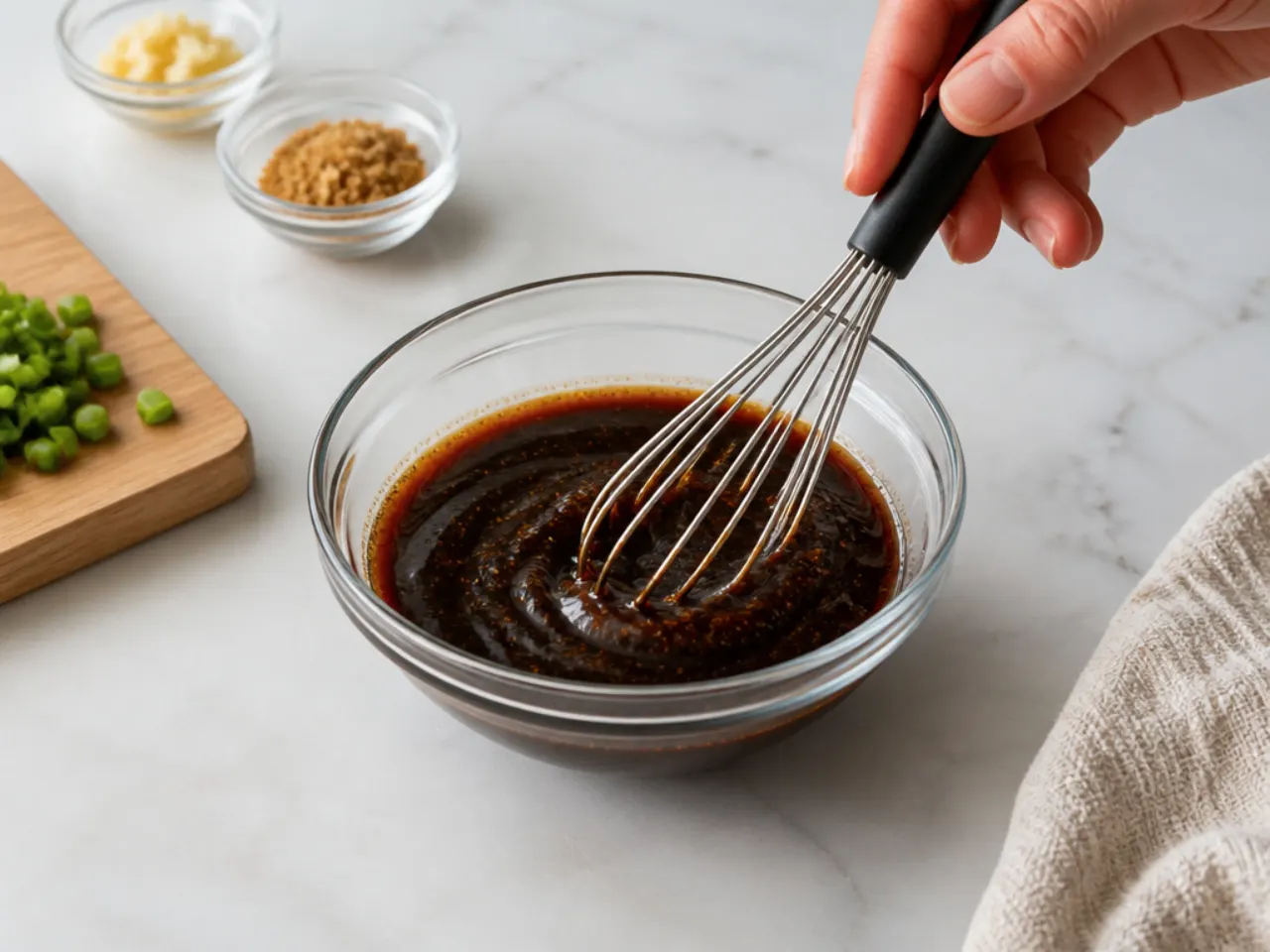
In a bowl, dissolve the brown sugar in the 3/4 cup hot water or stock, then stir in the soy sauce. Set this aside within arm's reach of the stove, because stir-frying moves fast once it starts. Taste it now and cut the sugar slightly if you prefer it more savory than sweet. For a darker, glossier color, add 1 teaspoon of dark soy sauce if you have it.
Step 3: Dredge the beef
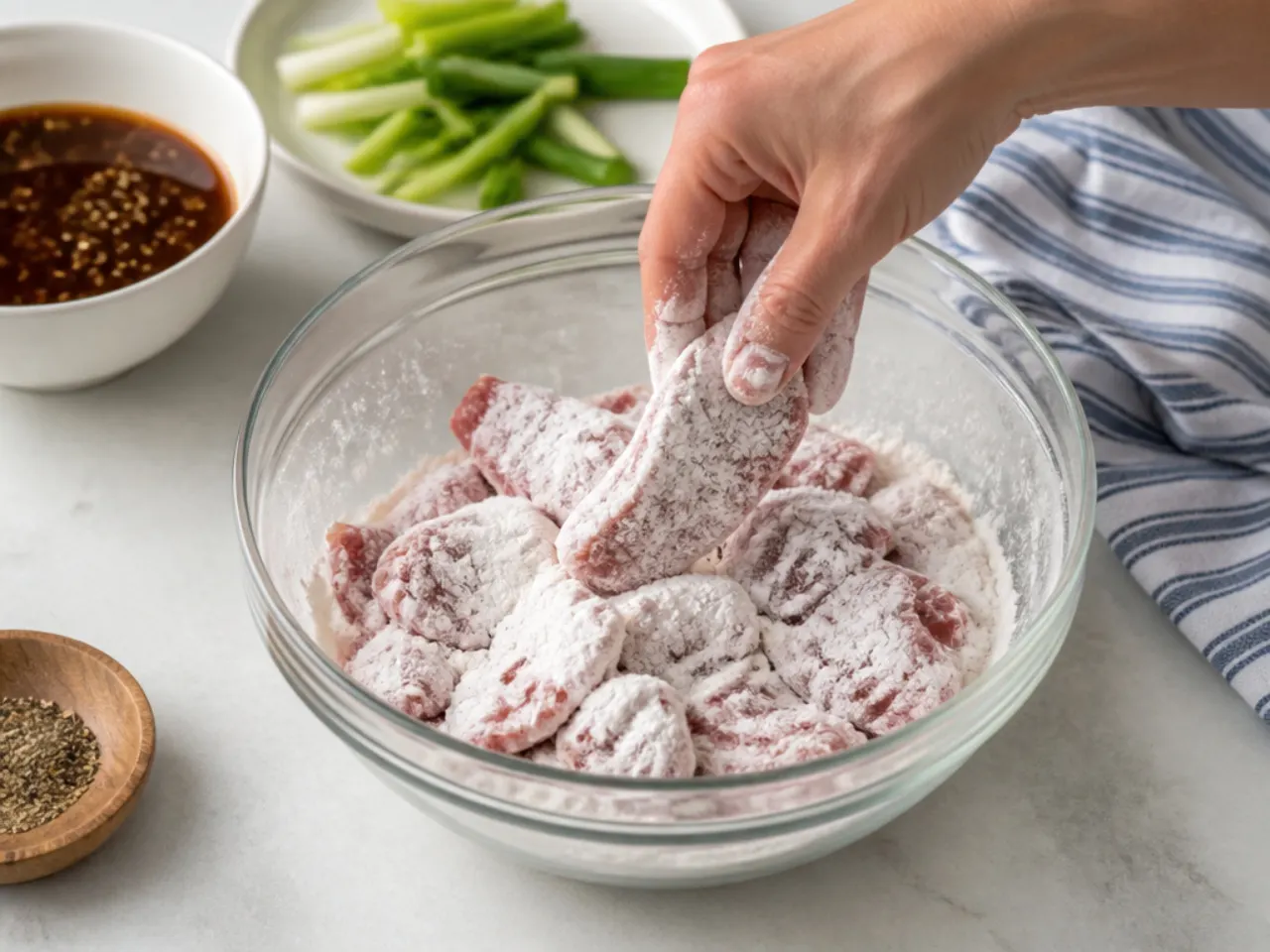
Spread the remaining 1/2 cup cornstarch on a plate and press each beef slice into it, coating both sides in a thin, even layer. Shake off the excess so it fries crisp rather than gummy. Lay the dredged pieces out on the plate in a single layer so they do not clump together. This coating is the crunch that takeout always loses on the drive to your door.
Step 4: Heat the oil
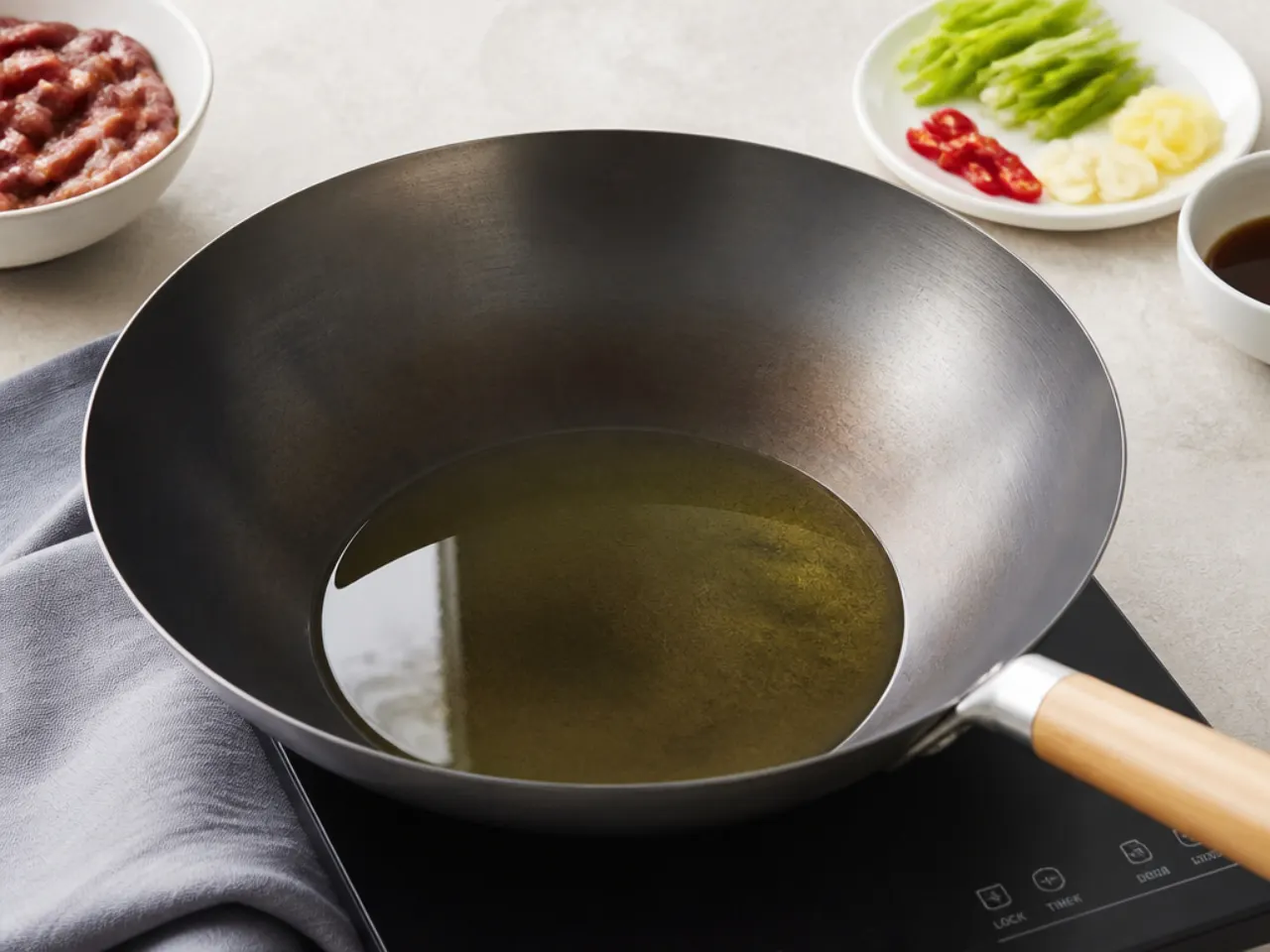
Heat the 2/3 cup oil in a wok or wide skillet over medium-high until it reaches about 190C (375F), or until just before it starts to smoke. A pinch of cornstarch dropped in should sizzle immediately. Getting the oil hot enough is critical; too cool and the beef steams and turns soggy instead of crisping. Have a plate lined with paper towel ready for the fried beef.
Step 5: Shallow-fry the beef in batches
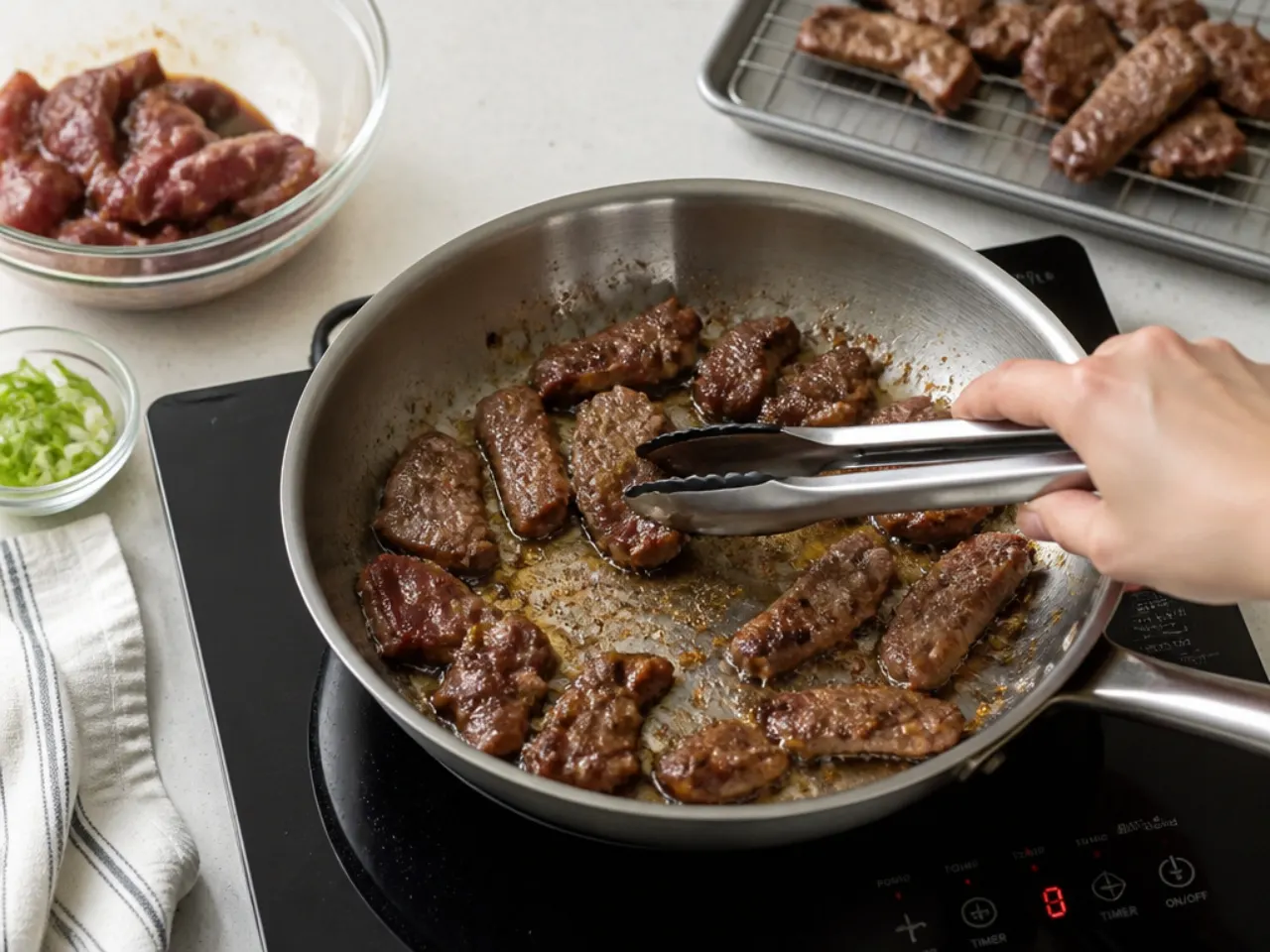
Fry the beef in two batches so the pan is not crowded, searing about 1 minute per side until golden and crisp at the edges. Crowding drops the oil temperature and steams the meat, so give each piece room. Transfer the fried beef to the paper towel and let the oil come back up to temperature between batches. Then carefully pour off all but about 1 tablespoon of oil from the pan.
Step 6: Build the sauce
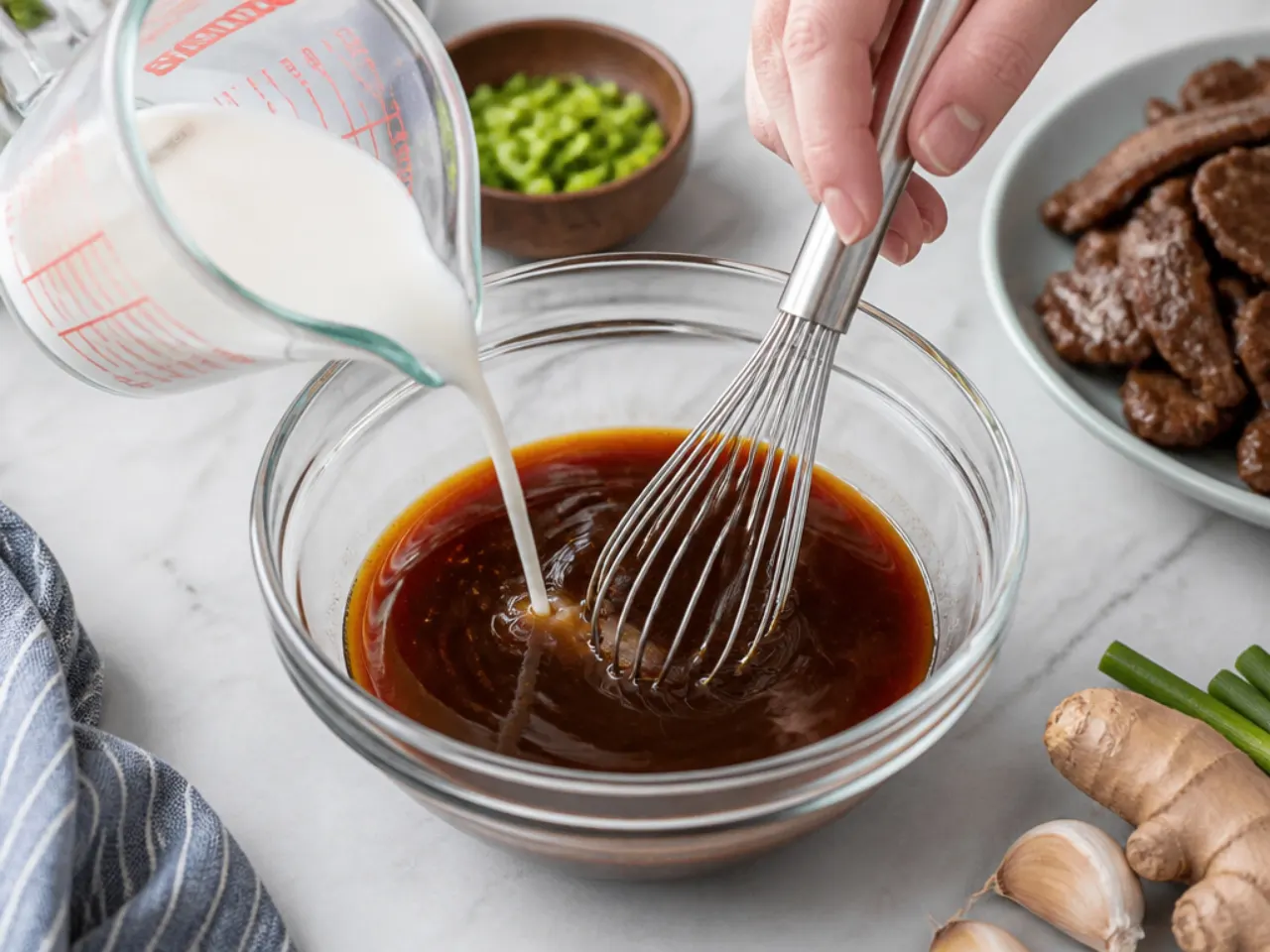
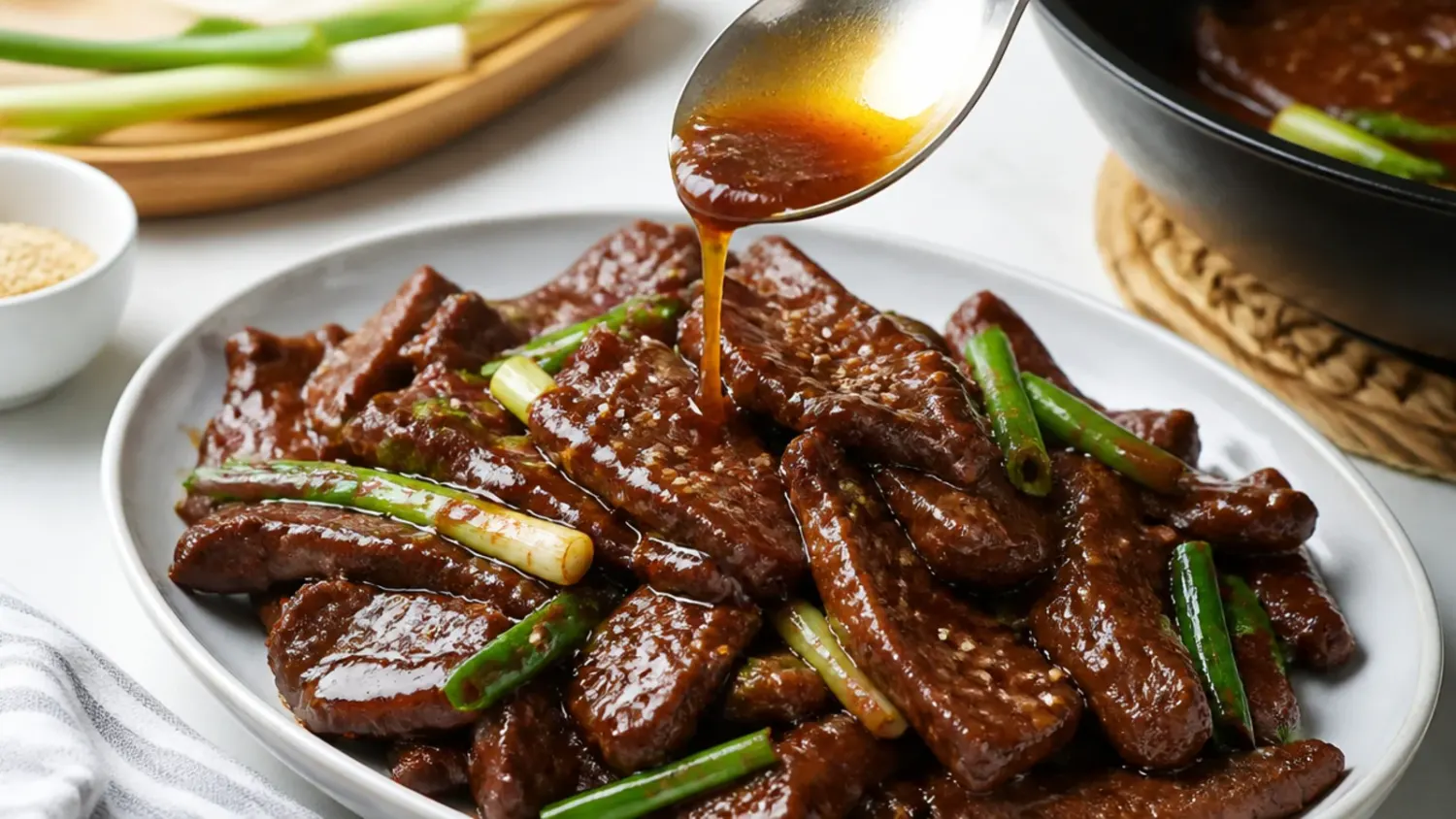
Return the pan to medium-high heat with that 1 tablespoon of oil and add the ginger and scallion whites, stirring for about 15 seconds until fragrant. Add the garlic and stir another 15 seconds, being careful not to let it burn. Pour in the sauce mixture and let it simmer for about 2 minutes to reduce slightly. If you want it thicker, stir in a slurry of 1 tablespoon cornstarch mixed with 2 tablespoons water and cook until it coats the back of a spoon.
Step 7: Toss, finish, and serve
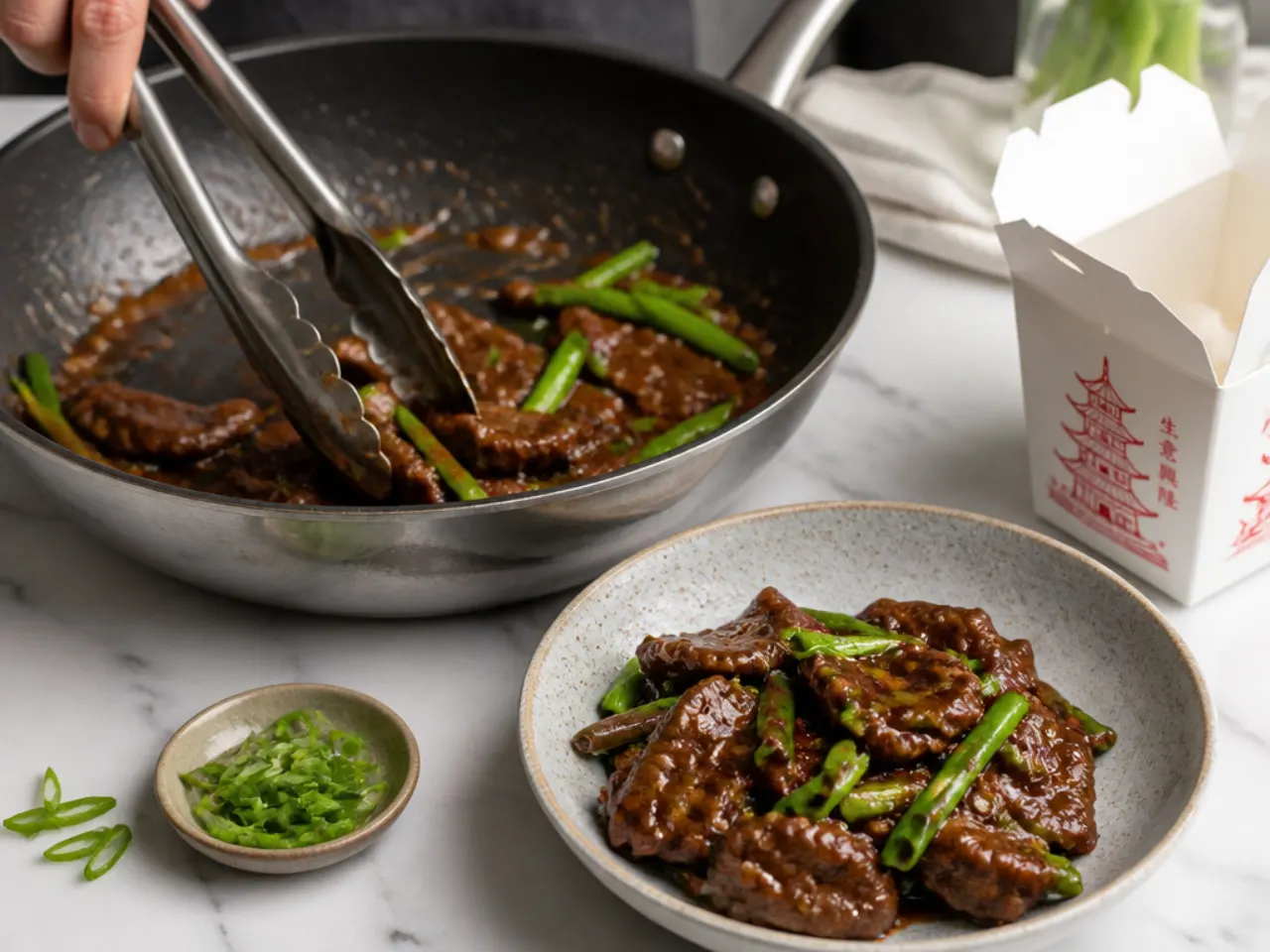
Return the crispy beef to the pan along with the scallion greens and toss for about 30 seconds, just until every piece is glazed and almost no loose liquid remains. Do not simmer it long here or the coating softens; you want the sauce clinging to the beef. Serve immediately over steamed white rice, spooning any pan sauce on top. Garnish with a few extra scallion greens or a sprinkle of sesame seeds if you like.
Frequently Asked Questions
Flank steak is the classic choice because it is affordable and stays tender when sliced thin and cooked fast. Sirloin or skirt steak also work well. Whatever you use, slice it 6mm (1/4 inch) thick against the grain so it bites tender rather than chewy.
Save this for later 📌
Pin this article to your Pinterest board so the full list is one tap away when you need it.
Save on Pinterest